With apologies to none at all
By Vikas Mehta
 Last week, Unilever sold off its D2C brand Dollar Shave Club to a private equity firm. This was quite a shocker, something that made me think away from the Cricket World Cup. There had been lot of media hype when Unilever bought the brand six-seven years ago for reportedly a billion dollars. It was a vindication of sort that direct-to-consumer (D2C) brands had arrived and maybe traditional brands were under threat. A lot was being made about the Millennials and Gen Z preferring new D2C brands. And the pandemic gave the D2C brands a bigger boost. Enough entrepreneurs started using social media platforms to peddle their wares directly to the consumers. From clothes to chocolates to baked food to homemade beauty products to accessories to collectibles, D2C was the buzzword.
And this was not limited to first time entrepreneurs working from home. In fact as a business model, it had started catching on since early last decade. Most of these like Nykaa, Mamaearth, Zivame, Bombay Shaving Company, Chumbak or even Pepper Fry, Lenskart, BoAt, Licious had used the online boom smartly. And some of them have even had successful IPOs. India is estimated to have more than 600 D2C brands with a market size of about $ 65-70bn in 2023. Not numbers to sneeze at. And, this was of course fueled by the fact that around 600 million Indians have access to internet with 185 million online shoppers.
On the face of it, D2C is a win-win for all. For the entrepreneur who need not get entangled with a distribution system or has to spend big monies on getting his consumers to the store. For the consumer it was hassle-free shopping from home and getting delivery at the doorstep.
Customisation, no geographic boundaries, choice and the spread of social media lead to a surge in this business model. And then there were ecommerce portals like Amazon, Flipkart and Meesho which were ready to embrace the D2C model. Indeed, Meesho differentiated itself by not only claiming to be doing social marketing but also keeping regular traditional brands at arms length and promoting D2C brands with their no fees model.
However, the very factors that initially spawned success for D2C have come back to haunt the model and caused a deceleration in its growth. Let’s look at some such factors.
Value proposition
D2C brands went into a value proposition overdrive (Read discounts and offers). BoAt was giving same for less. Same features of premium brands like Sony or Sennheiser but at discounted prices. Mamaearth, Nykaa, Bombay Shaving Company were all following this model. Lenskart was about more for same. Buy one and get one free. And then with the help of ecommerce companies these brands made discounts or freebies a habit. So, when there was no discount, the allure of buying D2C lessened. As a result, the pricing structure and strategy of most D2C brands was based on discounting. They had to therefore keep a close watch at their costs and any increase in costs hurt their margins.
No distribution setup
This was a big plus for the D2C players. They were not at the mercy of the distributors, wholesalers or retailers and could theoretically serve any customer anywhere on earth. So, when a brand In Bengaluru wanted to send stuff to someone in the metros or mini metros all it had to do was negotiate with logistic companies and ensure speedy and timely deliveries. But as an analyst put it, it was easy to do this in the initial phase and achieve a turnover of maybe Rs 100 crore. But after that one needed to penetrate into smaller towns. And the cost of sending courier to more than 100 towns in India, without any delay meant that each sale was burdened with a distribution cost which was unlike traditional distribution where the wholesaler or distributor send stuff in big bulk quantities thus ensuring low distribution cost per item. The dilemma was clear. Grow and increase your cost per order or hit a growth ceiling. This again was eating into the margins. Just online sales was not good enough.
Not surprisingly, most of the D2C brands are now into offline selling too. Nykaa, Mamaearth, Lenskart have all either opened their own stores or are trying to be available in regular offline stores. I am told that the Mamaearth IPO prospectus claimed that their offline sales is now 37% of their total turnover in FY ending March 2023. Anyways, D2C was a misnomer as a huge part of their sales, analysts say upto 75-80%, came form ecommerce platforms. Indeed in 2021-22 more than 80% of BoAt sales was through ecommerce platforms Amazon & Flipkart. Which meant that they had not only distribution cost of paying commission to ecommerce platforms but also the logistic cost of each piece shipped, which given the category, was not something to ignore.
And as I write this, comes the news that Big Basket, the quintessential D2C brand. Quoting from the Times of India “currently its offline business is on a pilot mode with some 25 stores across Hyderabad, Bengaluru and Kolkata. The idea is to experiment with different store formats with different price points and find the right store strategy before launching a broader rollout in the coming quarters.”
Returns
A big allure of D2C brands has been the return policy. If the consumer is not happy with the product then it can be returned at no cost. While in personal care this does not come into play, but in categories like apparel and electronics this can again be a margin killer. In apparel the return percentage is supposed to be as high as 30-35%. All this not only adds to the cost but also makes the value proposition difficult to sustain. How long can these brands survive with losses and VC funding?
Online spends and not traditional advertising
With D2C brands using online selling platforms they started spending money more on online. So, the objective was to direct traffic to their website or ecommerce platforms. Or use social media influencers. This was not very expensive compared to traditional advertising. But the focus moved away from brand building. With value into play (it was more discounting) the communication was more about discounts, offers and promotions. No effort was made to build an emotional connect or base with the consumers. Value or an influencer was the only emotional connect. This meant that the brands had difficulty in selling without discounts or offers.
So, when the brands needed to grow and break the ceiling of limited markets and they moved offline, they had no connect with traditional distributors. Traditional brands which had been nurtured and had long term association with distributors, wholesalers and retailers resisted these new upstart D2C brands. Also, since these D2C brands had not done much brand building they did not have sufficient consumer pull. As a result, product turnover, in terms of inventory, at retailers was a laggard to traditional brands which had build bonds with the consumers over a period of time. That did not help matters as the distribution channel was not too keen to stock products whose turnover time was in many cases three-four times than that of traditional brands.
Many D2C brands have now realised the need to do brand-building. That’s why many of these brands are now doing traditional TV advertising. Again, Mamaearth IPO states that while social media spends have increase three times TV ad expenditure is up by almost ten times. Lenskart is trying to cash on to the cricket fever on TV. And BoAt is also into traditional TV advertising.
With high inflation and funding becoming a problem most D2C brands have to start showing profitability or the path to profitability. Ironically, this is the time when their costs are going up. Offline distribution, spending on expensive traditional TV advertising while sustaining online presence to build brands are all factors which may hurt the future of D2C brands.
That’s one reason D2C brand are now talking more omnichannel. That’s their new buzzword. They are now trying to justify being jack of all trades. Their advantage against traditional brands is now their vulnerability.
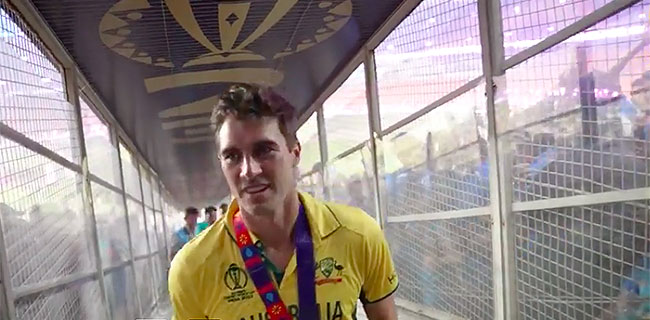
 Finally, it’s done. The six-week long Cricket World Cup culminated last Sunday, with an imperfect finale from an Indian perspective. Forty-eight games of potentially 100 overs played out over this period. In the age of instant gratification, where “short” is the way to go for most things, cricket administrators seem to have their own unique ideas, some of which seem rooted in another era.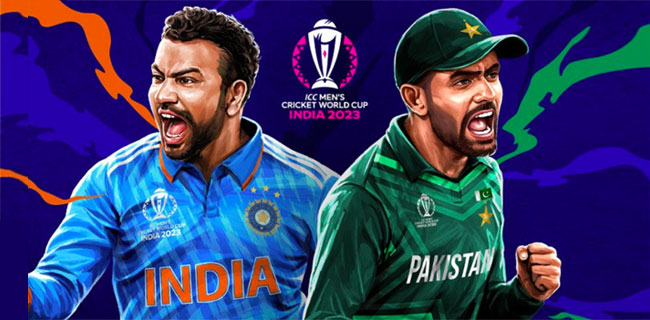


 The second decade of the twenty-first century was perhaps the most eventful phase in the history of the Indian M&E industry, where Indian media played a significant part in transforming Indian economy. When www.mxmIndia was launched in 2011, Indian the M&E industry had just come out of the effects of the economic slowdown of 2008-09 and a new beginning, the start of a digital metamorphosis was looming large on its horizon. Marketers and advertisers were looking forward to the implementation of the Digital Addressable System (DAS) which would transform the regional footprints of the TV channels to national; the only glitch was the delay in execution of Phase 3 of FM Radio.


 By Sanjeev Kotnala