Tag: creative

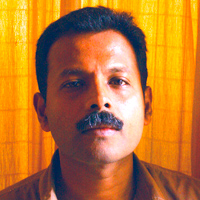
  • The Anchor: Lloyd Mathias on the 6 things every marketer learns on the job

    By Lloyd Mathias


    1. No matter how good your campaign is, it won’t work till you have your team fully aligned with it. So, as much as you spend time on zeroing on the consumer insight, researching the proposition, fine tuning the communication – it is important to “sell” the campaign to your internal constituents.  Hence the need for internal communication – point-of-sale material for trade, detailers for the sales force.  It is also critical to align campaign breaks with availability of field materials and widespread distribution.  The best campaigns don’t succeed without product in the shelves.


    2. The past is no guarantee to the future. Most marketers believe if it’s worked well in the past, it will work again. The fact is consumer tastes change over time. Even more importantly, the market dynamics change. Also, most consumers need fresh stimulation.


    3. Treat your agency as an integral part of your marketing team.  It is amazing how many marketers have near adversarial relationships with their agencies (creative, media, digital PR).  Your agency is the co-custodian of your brand – the more they know about your business and the issues facing it – the richer will be their input. Treat them as co-owners. Give them the freedom to do the occasional over the tip creative.  Long term they won’t let you down.


    4. Marketers tire of their campaigns much faster than consumer do. Remember most consumers see a whole lot less of your brand than you do.  Refresh if you need to, don’t revamp.


    5. Meet real consumers as often as you can. An hour with consumers is worth many hours of pouring over research data. Consumers today – more than ever – have a strong point of view and want to be heard. Some of the finest ideas come from immersing with your consumers. And remember – don’t confuse your sales force or trade partners with REAL consumers. No, not even analyzing the brands’ Facebook page responses or looking up the Twitter handle can beat real consumer face time!


    6. Always keep the larger business objective in mind. Remember the primary role of marketing is to drive sales & bring in revenues. Everything else comes next. So try not to be overly protective about the marketing budget – especially if the business needs cuts.  In the long run if business wins – marketing wins.


    Lloyd Mathias is Director, GreenBean Ventures. He was President & CMO, Tata Teleservices until late last year and was Sales & Marketing Director of Motorola India prior to that.


  • Five years of Creativeland Asia

    Sajan Raj Kurup

    By Tuhina Anand


    As Creativeland Asia (CLA) completes five years of existence, one cannot ignore the fact that the agency has managed to find a foothold in this industry and not just that but has managed to do very well for itself. At its birth in 2007, CLA was just another name started by an awardwinning ex-creative head with a few others but slowly and steadily it has managed to find a place for itself and this has only happened because of its cutting edge and consistently good work on accounts like Frooti or for German luxury automobile manufacturer Audi which won a GrandPrix at both Spikes Asia and Goafest. And of course the much acclaimed work for Hippo.


    Talking about CLA, Sajan Raj Kurup, Founder and Creative Chairman at CLA said, “Completing five years is a landmark especially in a market like India but what makes this even more special is that we have made it on our own terms. I believe that India is one of the most creative countries and I have wanted to show that creativity to the world. While on the downside, making it on your own in India also becomes difficult because of various reasons and that’s the challenge we took. We managed to reach this point only because of the unconditional support that we have received from our friends who have been with us through thick and thin and our clients who became our biggest investors by believing in us.”


    He added, “At CLA we have created a culture that is quite ingenious to our way of working. We have created a culture of excellence and most importantly we have stayed away from the muck. This has helped us in focusing on real work that has worked for the clients. We may have won awards but I can vouch that none of them were scams as we steer clear of them. There is no work for awards sake but only work that works, that’s been our motto and I can say that today people outside of CLA recognize this culture and there are many young people who want to join us only because they know of our culture and our commitment to creativity. I don’t know if we have created a perfect place but we have created a place we are proud to be part of.”


    Work@CLAVikram Gaikwad, Partner and Executive Creative Director, Creativeland Asia

    I realise that if you are doing what you really want to do, five years can go by before you know it. I am happy and proud that we have managed to live up to the plan we discussed the very first day of Creativeland’s inception, and we have stood by our principles from the very first day. We have consistently worked towards excelling in whatever we wanted to do. We also have our clients to thank who believe in us without whose partnership this achievement would not have been possible.


    Anu Joseph, Executive Creative Director, Creativeland Asia

    Sitting at Raj’s dining table five years ago, I knew we could be where we are today, if we stuck to Raj’s vision for Creativeland. There was clarity about how we were going to go about things. There have been ups and downs, heartbreaks and pressures, but it has been a pleasure walking into work every single day. And of course, there is so much we owe to our client partners who have invested their faith in us. They have been the force behind every piece of work we have done.

    These words clearly show that Mr Kurup is happy with the way CLA has shaped up. In fact, CLA is the first and the only agency from India that has made to the World’s Leading Independent agencies list in 2010. He points five events that made CLA in the last five years for the agency: CLA creating benchmark in creativity with every category it has worked on, from being a 4-5 member team to being 90-member team and creating a strong agency culture without any compromise, recognized as a leading independent agency and getting Grand Prix for real works, lasting relationship and innovative thinking and lastly being able to consistently deliver good work.


    Giving his take on working with CLA, Michael Perschke, Head, Audi India said, “I find Creativeland to be a good creative melting pot, one that is not restricted to typical media avenues. As an owner-driven agency, Creativeland is capable of doing things their own way and coming up with solutions, while keeping the core brand messages in mind. Their ideas have worked very well for us. Some of the work has been exposed to our colleagues in Germany, and has been appreciated.”


    Another of CLA clients is Cafe Coffee Day (CCD) where the agency has been working for long. K Ramakrishnan, President, Marketing, CCD, said, “Our journey with CLA is over five years old now. There is huge similarity between the organisational ethos of CCD and CLA in the sense that both started out as small organisations with a huge determination to make it big and to a large extent are on our way there. Another, is the spirit of youthfulness. Notwithstanding the growth that both the organizations have had, our relationship continues to be one to one.”


    “CLA’s focus on turnaround time where they have been able to churn out relentless number of creative outputs, on time each and every time, the youthfulness in their thought process and the spirit of a small agency in terms of ownership of brands and hunger for growth, contribute to their success in a short span of time, added Mr Ramakrishnan.


    As for the future of CLA, Mr Kurup is categorical as he says that while they are open to partnering provided it’s on their own terms however there is no plan to sell CLA to any bigger network. He said, “I have started CLA with the prime motive of building it up, selling it definitely not in the plan.” He added, “We have been growing on our own terms and have been saying no to businesses that we don’t feel comfortable working with. What CLA delivers is a personal touch to the clients and we don’t want to settle for anything less but only high quality ideas that delivers.”


    As for scaling up, CLA plans to open an office in London and is working on it. It has two offices in India and one regional office in Singapore. Also, the future for CLA is in getting on the content in a big way and it has taken a step towards this by getting into the movie business and more will follow in the future.


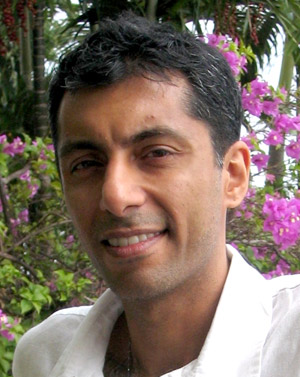
  • The Anchor: Sandeep Bomble on four ways agencies can attract top talent

    By Sandeep Bomble, founder, Palasa


    1. Money! The obvious five letter word that is expected to shoot up once the above question is fired. Let us first dig and understand the working of an advertising industry. Innovation is the crux of any agency. One must know that every department, be it creative, media, client servicing should possess the ability to compete with latest innovative ideas and ways to explore. But at the same time, a lot of them prefer sticking to the age old methods or ways of going about, and not take the risk of capitalizing energy, money or time by going off the track. And sadly a talent hits a dead end, driving it off. It is here, where a fine bait to attract a great talent lies.


    2. Of course, there can be zillion ways to source talents but, personally I believe, there is only one way an agency can hook a ‘great talent’ in their team and that is ‘The agency has to go Gutsy!’ An agency that has the courage to go bold and brazen in their thoughts and actions, is like a charged magnetic field. It automatically attracts to it unexceptionally talented people. A great talent is hungry and is constantly on a lookout for an agency which is in the position to explore ideas. They believe the agency will do justice to their ideas and will churn out the best from the deepest crevices of their mind. The gutsy agencies act as catalyst to the effervescing minds of ever-fangled talented guns who are ready to venture into a territory that will facilitate their ideas and take them to a next level altogether.


    3. Money is certainly an important part when you look to feed yourself but it is very subjective in this case. It is surprising but true that a great talent will least care about money and not look at it as their first priority. And if one delves deeper into the psychology of these people, one understands the logic behind their motive of not being money minded. They are confident of what shall follow next, once they find their base to breed their creative energies. They are self-assured and positive that visibility through good work only, can win them fame, that’ll get them noticed in the industry. Money and perks are the next obvious that will follow. When a talent believes in agencies good work and ability to take forward the idea, he/ she won’t be bound by any limitations then. Their minds are free to explore realms unexplored. They soar high to think big and different. And an agency should know that investing in a great talent is any day much viable option than having hundred workers with lack of talent.


    4. Today, it’s a pitiful state that a lot of agencies are simply satisfied with their cash registers ringing and look at work through business perspective and are not inclined towards exploring newer ideas; they play ‘safe’. With every passing day one can only hope that an agency dares to hone its powerful magnetic field. We are an industry that has courage to defy the conventional and passion to take a leap of faith in ideas we believe in. And what more can a great talent want than to truly, madly, deeply be in love with an agency that harbours such a principle.


    “Great Talent Will Never Ask For Money”


    Sandeep Bomble is founder, Palasa


  • The Anchor: Manish Bhatt on 5 myths people have about an independent agency

    Manish Bhatt

    By Manish Bhatt,Founder Director,Scarecrow Communications Ltd.


    Myth 1: Independent agencies are the land of scamsters

    Just like the world thought India is a land of snake charmers and elephants… We think every man in Jaisalmer wears a turban and has royal mustaches and a parting beard… People who haven’t visited the South of France always think that every beach of French Rivierais a nudist beach… People think independent agencies are the breeding grounds and shelters for scamsters. Dear Scamsters, beware… The creative department of Independent agencies are not governed by Global Creative Council in Chicago. Neither by those aspirant NCDs who want to score high in Cannes by indulging in some scams, so that he or she can attend the next global creative council meeting in the exotic destinations like Sao Paulo, Santa Clara or Jamaica.


    Myth 2: Independent agencies are cheap

    The Network Agency with presence in 24 countries and 100 offices across the world can charge premium. But thinking that Indian independent agencies with presence in 2 cities are cheap to hire – if this is true, then buying clothes from Big Bazaar (with around 1,000 stores across cities) should be more expensive than clothes sold at Versace or Armani with 2 city presence.


    Myth 3: Independent agencies are small creative hot shops

    If size would have always been proportional to the potential of things, then microprocessor chips would have never got invented. In 2 years’ time, Scarecrow has 2 offices, 50 people, a separate Design division, an Art Gallery, more than 25 brands across 4 cities, will you call us a creative boutique or a full service agency?


    Myth 4: Independent agencies can never attract MNC brands

    When an Indian can buyout global brands such as Jaguar and Land Rover, why can’t an Indian independent agency attract global brands? Look at Pepsi working with Taproot, Audi with Creativeland Asia and we at Scarecrow working with MNC Brands like Nestle, Eristoff (Bacardi), Viacom, Danone, Anchor Panasonic and Barclays.


    Myth 5: Independent agencies can never attract great talent

    People with good taste always prefer to stay in an isolated cottage, a countryside vs  a multi-storied apartment in the hustle bustle of the city. That’s why we have one of the best design minds of the country like Kapil Tammal in our Mumbai office and Andy at Delhi office – the man behind ‘Mein aur meri Maggi’ campaign.


    Manish Bhatt is Founder Director, Scarecrow Communications Ltd.


  • The Anchor: Robby Mathew on 6 reasons why life of a creative is different from that of others

    By Robby Mathew


    1. Most jobs are about patterns where the endeavour is to master the pattern. You do the same thing repeatedly till you are good at it. In creative, every day is new. You don’t know what marketing problem is going to be thrown at you. You have to relearn everything, every single day.


    2. Creative is the business for young people. In creative you start ‘losing it’ as you grow older, unless you make a conscious decision to stay young/ stupid/curious/eager/brave.


    3. Creative people have to be complex (like the colour white which includes all colours). Creativity allows for paradox, light, shadow, inconsistency, even chaos – and creative people have to experience extremes with equal intensity.


    4. Here in this field you can give birth to an idea, nurture it and make it big. And then, like a proud parent, you can show it to the whole world. How many other careers can offer that???


    5. In the creative business you don’t need any qualifications to shine. The idea is a great leveller.  A college drop out with a fertile mind can outshine a business school star in no time.


    6. In creative, you are only as good as your last job. Nothing keeps you on your toes like a job in any creative function.


    Robby Mathew is NCD, Interface Communications


  • Indigestion!

    Dabur Hajmola: Ad hazam nahin hua!

    Dabur has come up with a very ambitious idea in an effort to expand the market share for its digestive tablet brand, Hajmola. So far, if I recall correctly, the tablet was pitched at the over-eaters and the greedy pigs. But now Dabur wants you to have a Hajmola after every meal and snack! In short, they expect to net a whole lot of new consumers, many of who may never even have heard of the brand.

    Now when marketers attempt such a Himalayan task, it’s paramount that the advertising shines for them to harbour any notions of success. Sadly, Dabur has released a safe, dull, regressive commercial for Hajmola. It’s back to the ‘Desh ka choice’ route of the eighties. The commercial features all sorts of people eating all sorts of things and then topping it all up with a Hajmola. From burgers to paani puris to idlis to samosas to kebabs. ‘Hajmola kare khana complete’ is the new tagline.

    Total flop show. A tired idea and an even more tired execution. This is the sort of stuff we have seen over and over again. When what was needed out here was some advertising magic to go with such an ambitious project.

    Rating: (On a scale of 1 to 5): 0. Got a bad digestion!

  • FirstRand Bank calls for creative, media and PR pitch

    By Shubhangi Mehta

    FirstRand Bank (FRB) has called for a creative, media and PR pitch. The overall account size is estimated to be around Rs 10 crore.

    FirstRand Bank India is a branch of FirstRand Banking Group South Africa. FirstRand Bank, a pre-eminent financial services group in Africa is the first bank from the African continent to be granted a full scale commercial banking license in India. FirstRand has commenced its banking operations in India since April 2009 and currently has one branch set up in Mumbai.

    With a history dating back to 1838, FirstRand is a fully integrated financial services group and one of the big four South African retail, commercial and investment banks. Through its ownerships of brands like First National Bank, Rand Merchant Bank, Momentum and Wesbank, the group operates in almost every area of the financial services arena.

    The group has representation elsewhere in Africa, including Nigeria, as well as the United Kingdom, Dubai, Australia and China, and now more recently in India.As part of its international expansion strategy, FirstRand has identified India as a key market for future economic growth and set up its Representative Office in Mumbai, India in January 2008. A year later, it received its banking license, becoming the first South African bank to open a branch in India. FirstRand India currently has an office in Mumbai.

  • Anil Thakraney’s Debrief: Good strategy, poor creative

    There’s a new commercial on air for Parker Pens. And it stars brand ambassador Amitabh Bachchan. The creative thought is this: ‘What the world calls a pen’. And it’s a correct one. Because as we all know, pens as a category is on a fast decline on the product life cycle chart. There will come a time when the pen will become a historical product, much like the typewriter. So it makes sense to make the brand synonymous with the product, to own the category, and thus at least be a leader for as long as the product survives. I completely agree with this strategy.


    But the creative fails to leave a mark. Bachchan is seen sitting inside what looks like a hotel lobby. And he’s got the whole range of Parkers spread out on the table. What is he, a pen seller? That’s not explained. Suddenly, a firang arrives and asks if he can borrow a pen. But instead of lending him one, Big B begins educating the gent on how Parker is pronounced in various nations. Exasperated, the man asks for a Parker, which is immediately handed to him.


    Boring creative. After the first exposure, you will reach out for the zap button on the remote control. Because it’s laboured, un-engaging and witless. While I like the idea of getting the brand to be the hero, so that consumers ask for it at retail outlets, sadly the commercial is very dry. And no, Bachchan has no role to play out here… he’s forced in, as he usually is in ads.


    Rating: (On a scale of 1 to 5): 2. For a sound strategy.


    Anil Thakraney’s ad review column DeBrief will appear twice a week – Tuesdays and Thursdays.

  • Exploiting OOH’s true potential: Mukesh Manik

    By Nibha


    If developing strong and reputed brands makes good business sense, and if brands are what the consumers relate to, identify with, and buy, then it is important for marketers to exploit the true potential of billboards and other OOH media.

    More on this in an interview with Mukesh Manik, M-I-C (Man-In-Charge) at Encyclomedia Networks, the only Indian OOH media creative shop that is currently headquartered in Mumbai, India. It is represented in four markets under joint venture agreements – Australia & New Zealand out of Melbourne, Australia (www.mediatag.com.au), Latin America out of Buenos Aires, Argentina (www.encyclomediala.com) with offices in Guatemala and Mexico, Kiev, Ukraine and Jeddah, Kingdom of Saudi Arabia (www.encyclomedia.me). Besides, Encyclomedia is also represented through exclusive distribution contracts in Bangladesh, Kenya, Nigeria, Pakistan, Croatia, Kazakhstan and Hungary.


    Excerpts from the interview:


    Q: How has your journey been in the media Industry till date and what is it that excites you about billboards?

    Media and advertising has always intrigued and amused me. A message is sent out to the masses repeatedly over a period of time, and that this message has a multi-dimensional impact on the choices that are made by an individual and the perception of a product is fascinating. Billboards are my favourite as more and more people are spending time out of home. They also present their own set of challenges as they have to deliver a message while the viewer is moving in most cases at speeds of 60 km/hour. This gives just a few seconds to catch the attention, deliver the message and assist brand recall. The trick lies in the design which should be able to engage the viewer in those critical few seconds while there are other distractions like traffic, environmental landscape, music, etc. A well-designed billboard is easily one of the most powerful, consistent and effective means of communicating to an audience on the move. Marketers still have to exploit the true potential of this medium and this in itself presents an opportunity like no other.


    Q: What role do you think innovation plays in OOH media? And in the recent past can you name any campaign which can be termed as “really innovative”?

    Innovation isn’t just about using cutouts and neon, though I admit that they are effective at times. Innovation lies in understanding how best to use the tools available to enhance the billboard creative, to create an impact that has a lasting recall. Truly innovative billboards are remembered years later, much after the campaign is over. In the recent past, one of the most innovative billboards I have seen was the Barclays Bank Billboard which just carried their logo on a white background. The innovation was in its simplicity and ability to make the announcement that Barclays is now in India.


    Q: How does one justify the cost of innovations in terms of both the recall value and the rise in the market share especially when we don’t have any posting technology at place to justify the effectiveness of the OOH campaign?

    “Innovation” is perceived as being expensive but in actuality it is quite the opposite. In the Barclays billboard mentioned above, there was no additional cost of materials, cutouts, neon, etc. but it still had the desired impact. Innovation drives recall, recall fuels sales. Advertising is meant to provoke a response. If the ad is forgotten, it cannot possibly invoke a call to action. Though there is technology available to measure the effectiveness of Outdoor advertising, the true measurement is in the after effects of the campaign. Product advertising is easier to measure compared to a service as the advertiser can just take a look at their sales graph.


    Q: What difference can be made in terms of ‘Innovation’ for Outdoor (Traditional Media) and for Indoor (Alternative Touch Points)?

    I believe that a media plan consisting of an Outdoor campaign and an effective Point of Sale is sufficient to achieve sales objectives for a brand. Marketers need to appoint specialist agencies for the different media formats they advertise on. This is easier said than done. The creative and innovation has to be across all the formats. An agency specializing in TV commercials and Radio cannot possibly be expected to come up with innovative creative solutions for an Outdoor campaign.


    Q: According to you is accountability the factor that is keeping the clients at bay from the OOH Media, when it comes to the media plan? And do you think that the clients are ready to experiment with the real time innovations and not just cutouts and neons in the near future…?

    Clients are increasingly accepting Outdoor as an independent medium. The double digit growth in the Outdoor advertising industry confirms this trend. With over a 100 TV channels and hundreds of print publications, the chances of an advertisement being missed is higher than ever. Outdoor advertising addresses that issue easily as a good outdoor campaign cannot be missed when people are on the streets. The industry will mature with the growth in Outdoor spends. Cutouts and Neon are considered innovations in the absence of specialist Outdoor design studios.


    Q: How do you rate the change in the Indian OOH industry, especially in the past 3-4 years…? And according to you, what is it that will make OOH media more than just a reminder medium?

    The more clients see pathbreaking billboard designs by specialist agencies, they will demand the same for their brand as well. This will lead to fantastic creative innovation in Outdoor advertising and billboards will not be considered a poor cousin of mainstream advertising. There are many brands even today that successfully use only Outdoor Advertising to communicate their message.


    Q: How do you see the n-sync between the agencies, the media owners and the statutory authorities? And who according to you should take the initiative to improve the OOH industry overall?

    To expect the media owners, agencies and statutory authorities to come and work together is far-fetched. The change has to be from within. I believe that if media owners offer international standard media formats and quality media displays to agencies, it will encourage better designs and print quality. This in turn will change the cityscape for the better. It has already started to happen with the introduction of street furniture, modern bus stops, etc.


    Q: What according to you are the essentials of outdoor advertising?

    There are five essential skill set components in outdoor advertising.

    The first essential skill is creativity, the art of being innovative and imaginative. We must apply creativity to everything we do – tirelessly exploring innovative ways to communicate the brand USP in a meaningful, relevant way. The message has to break through and resonate with the consumer to be successful. Consumers are not waiting for your message. You must deliver it to them in an unexpected manner. An effective creative has an after-shock. It will be felt long after the campaign is over. When that happens, you’ve done your job. That’s creativity; you can’t put a price on.

    The second skill is being media-savvy. With the media fragmentation increasing exponentially, each medium must be understood for what it is really capable of delivering. It must be targeted precisely and assessed with the end user in mind. As with the creative, media planning and placement must build the clients business.

    The third is unyielding commitment. You are more than the agency; you must be an evangelist, preaching the virtues of your client to your staff, your client’s staff and public. We must be committed advocates as well as dedicated business partners. The entrepreneurial approach that we apply to each of our client’s business must be evident in every phase of the advertising development, from planning to creative to execution.

    The fourth essential skill is discipline. At Encyclomedia, we assist clients in focusing on the compelling, differentiating selling points that include consumer consideration. We must never lose sight of that focus as we move from creative development through media planning and execution. We seek to reach the targeted consumers with an effective, focused communication to which they will respond.

    The fifth is accountability. The bar is set with the client’s business objectives. Then we raise it a few notches higher. Our philosophy is the image-building and branding must always be balanced against the need to deliver on the bottom line. Advertising in Outdoor is a mean to an end, not an end in itself.


    Q: What’s your take on breakthrough ideas in the OOH domain, especially in terms of the changing scenario?

    Breakthrough ideas might appear to be instant or impulsive, but they are not. They are based on sound strategy, outstanding visuals, and the correct application of timing and media. The art is in ensuring that all elements of communication work together, so that the end result is more powerful and effective. It’s like conducting a symphony orchestra – all the instruments working together, the timing just right to make beautiful music. In outdoor advertising this is a total business solution.

    We’re a very visual audience. The world is changing in so many ways. Today, television shows and movies are quickly clipped, with constant talking and constant cuts. There are no more long scenes. In outdoor advertising one must understand that this is how people consume information, so one must work to bring them in, but then your campaign must nurture them and be there for a long time. Remember that an outdoor medium is not a “speaker’s point”.


    Q: And about the core component of the brand message?

    It is important to understand the life cycle of a category, a brand, and a product to take a brand to the next level and drive long-term success. New brands must establish a niche. A mature brand must find new life, possibly by re-inventing itself through extension or by creating a new identity that connects with today’s consumers.


    Q: Do you think the budget affects creativity and deliverables to the client?

    Outdoor advertising will always, like any other advertising, be dependent on the brand’s budget to some degree. Having inadequate money to spend puts undue pressure on the advertising. Whether you have the budget or not, the advertising must be truthful, relevant, eyecatching, memorable and downright pleasing; only then will it go through to mind and memory of the consumer. Smart advertisers know that outdoor advertising helps develop brand awareness, and they select a specialist outdoor design and production agency to deliver the job.


    Q: What’s the key to your success as a specialist OOH creative agency?

    To be successful, you must be involved. You must take the time to learn your client’s business and brand attributes well. Let the client know that you care as much about the business as he or she does. Analyze the business, its chief competitor its unique culture, mission, vision and trends of the category it’s in. Most importantly, stay focused on brand attributes upon which the client can build. Be single-minded, literally. Don’t throw many attributes out there in the hope they’ll take away just one. Be certain the one is the one you want them to take away. If you don’t know your client’s business intimately, you are likely to focus on attributes that aren’t really important to the consumer, often at the client’s request. It’s your uncomfortable obligation to be honest and say, “That’s an attribute that has no meaning to the consumer.” Recommend what is right for business, what is supported by logic, research and solid, strategic thinking; that which differentiates your brand from the competition. Only then can you communicate in a compelling manner, cut through the clutter and attract interest and attention.

  • Rotomac’s the write stuff for Ignite Mudra

    Rotomac Pens, a leader in the writing instruments market in India has appointed Ignite Mudra as its strategic partner to handle branding and creative duties for its corporate brand and for the writing instruments brands.

    Commenting on the development, Mr Rahul Kothari, President, Rotomac said, “The last decade has been exciting with the entry of many players and competition heating up. The market itself is undergoing a tectonic shift with increasing literacy and evolving tastes of the Indian consumer. In this challenging scenario, we needed a strategic partner who truly understands the Indian consumer as well as the nuances of the writing instruments market. Our interactions with Ignite Mudra have cemented our belief that they are the ideal partner to drive exponential growth for brand Rotomac in the coming years. We’re looking forward to a long-term relationship with them.”

    Commenting on winning this account, Mr Sudarshan Banerjee, Head – Ignite Mudra said, “Rotomac is a prestigious win for us. The brand is a leader in its business and has a strong residual image in the consumer’s mind. The challenge is exciting because we’re talking about a market where most of the purchases are ‘brand agnostic’ since the consumer doesn’t really pay too much attention to the brand of pen he/ she uses. Our approach on how we will get such a consumer to show discernment towards brands is what has won us the business.”

    Ignite Mudra has built memorable brands for several entrepreneurial ventures in the past three decades, such as Reliance (Vimal), Rasna, Dhara, Paras Pharmaceuticals (Itchguard, Dermicool, Moov, Krack, Recova, Livon), Electrotherm (YObykes), Zydus Cadila (Nutralite, Sugar Free, Everyuth) and many others. This legacy has given Ignite Mudra an intuitive understanding of the brand building needs of entrepreneurs.