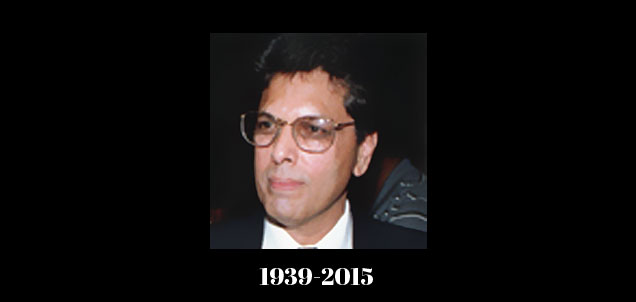
Tag: Colvyn Harris

  • Colvyn Harris to be conferred with AAAI Lifetime Achievement Award

    By Our Staff


    Colvyn Harris
    Colvyn Harris

    The Advertising Agencies Association of India (AAAI) announced that the AAAI Lifetime Achievement Award for 2022 will be conferred on senior advertising professional Colvyn Harris. This is the highest honour to be given to an individual in India for his/ her outstanding contribution to the advertising industry.


    Anupriya Acharya
    Anupriya Acharya

    Making the announcement, Anupriya Acharya, President, AAAI, said: “Colvyn Harris is in every sense a true pioneer and visionary. Apart from singlehandedly making JWT a top agency, he has also contributed significantly to the industry in various capacities, including as President of AAAI. He’s been a key driver and pivotal force in establishing Goafest as the largest advertising festival in India.  I am pleased to say that the entire committee was unanimous in selecting Colvyn as this year’s AAAI’s Lifetime Achievement Award winner. He is truly deserving of this honour.”


    Some of the past winners of this award include Subhas Ghosal, Alyque Padamsee, Mike Khanna, R K Swamy, Piyush Pandey, Sam Balsara, Prem Mehta, Roda Mehta, Ram Sehgal, Madhukar Kamath, and Arvind Sharma amongst others.


  • Thomas Pulliyel, Mr IMRB


    Thomas Pulliyel, long-time President of IMRB International, retires today (August 31). The IIM Calcutta graduate began his career with the Operations Research Group and first joined IMRB in 1981 as Manager for Overseas Projects, and a decade later, became Senior Vice President. In 1992, he moved out to Research International India as Country Manger, but was back at IMRB in September 2000 for a second stint. Friends, colleagues and even business rivals fondly remember the ‘strong and silent’ Pulliyel, and how he took the organisation to new heights.


    Dorab Sopariwala

    The Al-Futtaim group had asked IMRB to set up a market research unit for them. Thomas spent a year there and I spent the first and the last month. So that’s how I came to know Thomas; you needed to get to know him a bit, before he would open up to you. We were trying to see how we would run this company, and it was only through extensive discussions, that we could work. He would come back in the evening and work till eight pm. I don’t know how we managed for food and such. — Dorab Sopariwala, Consultant and Advisor to NDTV


    Sunil Karve

    I could trust Thomas very much. He is very straight and there are no lies or false claims with him. He helps you along even if you make mistakes, and is always there to support you. When he started Research International in 1992, nobody knew about it. It was a tough and challenging task for him at the time because there was IMRB and MARG, which were the biggies out there, along with MRS and others. I think that he built up an extremely good team, and the work ethics and output were the main reasons for the success of RI. — Sunil Karve, Partner at Autumn Leaves, Innovation and LLP, Varenyam Consulting


    Partha Rakshit

    I still remember the first Board meeting I had with Thomas. Everybody says that he is a man of few words. I found that this was, indeed, his way, but he could also be very firm. I can tell you that if Thomas has got something into his head, you cannot convince him to change his mind. It’s quite difficult to do that. But I think he was a great partner to work with. I think we got on pretty well, and I think of the time when even though we were fierce competitors on the outside, we had a fantastic relationship. — Partha Rakshit, Proprietor, Partha Rakshit Associates, and former MD for South Asia, The Nielsen Company


    Colvyn Harris

    I think the values of IMRB are the values of Thomas. When you think of Thomas, he is a strong, silent type of person. The leadership values of IMRB and the way Thomas conducted himself for the IMRB company, is what has kept the company where it currently is. — Colvyn Harris, Executive Director of Global Growth and Client Development at J Walter Thompson Company??


    Eric Salama

    Thomas has given all the freedom to his people to make their own decisions and even guided some of them over the years. He was always incredibly protective of IMRB – the company, the brand and the people within. He had a paternal instinct towards people and is incredibly patient. Incredibly also, he took both failure and success in his stride. I knew Thomas when he was at Research International, and he has been the heart of an industry that has grown [around him]. I can think of so many clients, so many competitors and so many colleagues who have worked for IMRB at one stage or another. As a talent magnet and a talent machine, IMRB has produced some of the most special people in the industry. Not just one or two people, but at scale, and Thomas has been at the heart of all that. — Eric Salama, CEO of Kantar Media


    Preeti Reddy

    It is always easier to take over a company which is not making money; where everybody hates the boss and hate each other. Fortunately, we are a growing company where everybody loves Thomas and he is a legend, so you can understand how much harder Thomas has made it [to hate the boss]. I would say that it is a huge legacy. Thomas has nurtured it for 15 years, but it is a 45-year legacy. IMRB has defined the industry and you have heard everybody talk about that. In a sense, it is actually giving the industry credibility. So it is a privilege to carry that legacy forward. I think that he epitomises the values of IMRB and, again, many people have said that. I think IMRB is what Thomas is, and he has been a mentor to not just me, but so many people. I’m hoping he will continue to be somebody whom we can turn to, in good times and bad, in the years to come. — Preeti Reddy, SVP & President-designate, IMRB International


    This story first appeared in dna of brands dated August 31


  • RIP, Mike Khanna. Chairman Emeritus,JWT


    A Correspondent


    To generations of advertising, marketing and media professionals in the country, Mike Khanna, short for Mahinder K Khanna has been an institution. Like the legendrary Subhas Ghoshal from whom he took over the reins of JWT (then HTA), Khanna was among the greats of Indian advertising who built their agency and the brands it nurtured to dizzying heights.


    Veteran adperson and Chairman Emeritus, JWT, Mike Khanna passed away late Saturday at age 76. He took over the reins of JWT (then HTA) from the legendary Subhas Ghoshal in 1984 and spent over 38 years with the agency before assuming the role of Chairman Emeritus in January 2004 when he passed the baton of the CEO on to Colvyn Harris.


    Khanna, always very proper and regarded as the man who ensured that HTA, and then JWT, emerged as the #1 agency in the country. Not just in size, but also in systems and processes.


    Speaking on his passing, Tarun Rai, CEO, JWT said: “J Walter Thompson owes so much to Mike. And many, like me, owe their careers to him.  He was a legend in Indian advertising and a great leader and motivator. For decades, he and HTA (and later JWT) were synonymous. His legacy is extraordinary. He will be missed.” Rai worked very closely with Khanna during his earlier tenure with JWT.


    Khanna, notes a JWT statement, built HTA into “not just the single largest agency in India but also one that was known to build some of the leading brands of the country”. He played an active role in industry affairs, such as the Advertising Agencies Association of India (AAAI) and the Advertising Standards Council of India (ASCI). Khanna started his professional life in market research with SSC&B, New York. An economics honours graduate, he obtained his MBA from New York University. He was awarded the Lifetime Achievement Award by the AAAI.


    There are several tributes via Twitter and Facebook, and we’d like to reproduce this by by Colvyn Harris in dna. Not only did Harris succeed him, he also worked with him closely and ensured the transition was smooth.

    By Colvyn Harris

    The legacy lives on Mike, in the stories we share about you. And in the  great institution you built. Many of us owe you for being mentor and guide in our professional and personal lives.

    How does one tell a story of the passing away of a true legend of our times, or words to express the impact Mike had on so many.

    We were blessed to have known him and his ideals and values, which still continue, and which have become the foundation of India’s finest advertising agency –  Hindustan Thompson Associates then, and now J Walter Thompson.

    His belief was best articulated in an oft-used phrase which summed up our purpose so appropriately: “to build the finest company, which would stand the test of time…”.

    Mike lived by human values of decency and grace, of professionalism and exactitude, and set the highest standards for us; so evident all across a company which thrives by those very values even today.

    In his footsteps, generations will follow, in our company and across the advertising industry where he played  such an invaluable role.

    Mike Khanna will be remembered for many aspects. The professional who was instrumental in the huge success of the company; the CEO who led us all to be what we are and what we achieved; for being the complete family man; and the charismatic and charming persona for the advertising fraternity given the man he was.

    For the advertising industry, his passing leaves a huge void, as many knew him as a friend having been the generation that together built our industry.

    For the professionals who walked the corridors of HTA and went on to greater success, their true inspiration was Mike.

    To sum it up in Nelson Mandela’s words:

    “when a man has done what he considers to be his duty…he can rest in peace”.

    You will be remembered Mike.  Always.

     Colvyn Harris is now Executive Director Global Growth & Client Development at JWT

    The funeral took place on Sunday afternoon in Mumbai.

     

  • Why India is a key office for JWT


    By Pritha Mitra Dasgupta


    Gustavo Martinez, the new global CEO of J Walter Thompson (JWT), says India will have to play a big role in pushing the advertising agency’s global growth rate to 6%-7% a year from less than 4% now. Mr Martinez, who spent about a year to know the network offices and set a growth agenda for 2020 before officially taking over as global CEO on January 1, 2015, started out by announcing new management structures in two of JWT’s biggest offices – New York and India.


    “I spent about 11 months to define and understand the company, to create and plan and now it is time to implement,” Mr Martinez said. He said the 2020 agenda is about growth, work, new kind of talent and new way of working. “I think we need to grow at least 6-7% per year globally between organic and inorganic,” he said. “Non-organic is clearly through acquisitions in new capabilities like digital, social content agency, content agency, digital platforms …. Organic is trying to expand our portfolio of clients.


    And that’s why it is important for people like Colvyn Harris to join my growth global team to specially deliver the organic growth,” Mr Martinez said. He expects India to be one of the biggest growth providers for the firm, adding he will be happy if JWT grows at about 8% rate in India. “India is a continent. It’s a region in itself,” he said. While JWT is still the largest agency network in India, industry estimate reveals that the JWT India suffered severe revenue losses of about Rs 55-60 crore, in the last two years. Mr Martinez denied this. “The facts are wrong. JWT India is still one of our largest companies and one of the most profitable companies we have in the organisation,” he said.


    “I also don’t want to measure JWT one year or the last six months performance. I will see the whole trend of the organisation. Clearly, in order to deliver the growth, we have set very ambitious targets and India needs to push the envelope.


    And therefore we are… reinforcing and reenergising the organisation.” On Tuesday, the firm had announced Tarun Rai as the new CEO of JWT South Asia, replacing Colvyn Harris who has been promoted as executive director, global growth and client development.


    In terms of improving skillset in JWT, Mr Martinez said ‘shopper marketing’ is an avenue that needs to be built in India. “Retail is still very traditional in India. I think because of the implementation of the new laws, the regulations it will catch up with the rest of the world. Shopper marketing will definitely become one of the fastest growing disciplines within our communication portfolio,” Mr Martinez said.


    He said that while global investor sentiment is positive towards India, the government needs to simplify regulations and processes as they are currently “extremely complex”. “My clients are definitely willing to increase their investments in the country. There was some kind of bitterness before because India didn’t crystallise enough.


    I think after the formation of the new government the sentiment is up again,” he said. Mr Martinez listed lack of infrastructure and legal problems among the hurdles that stopped big investment flow into India. “That for me will be the big challenge. It exactly what happened with Mexico two or three years ago. The new president put in the right changes and the laws but the problem was implementation.


    In India, the Prime Minister (Narendra Modi) will be successful only if he can implement his plan,” he said. He also said mobile phone will play a dominant role in the future. “We are already becoming a multi-screen kind of consumer. Everything is going to be mobile. Data is going to fundamental and third is creativity. How can be more creative taking advantage and leverage all the new resources and channels that we have?” Mr Martinez said.


    To deal with this kind of challenges, Mr Martinez is introducing a new style of management in the system that he called “channel agnostic”. “Focus on how we can deliver the new demands of the clients. More focus towards digital orientation and technology orientation. We need to have a management ready to embrace the challenges and try to even foresee those challenges and to readopt the structure in a nimble way for these changes,” Mr Martinez said.


    Source:The Economic Times

    Copyright © 2015, Bennett, Coleman & Co. Ltd. All Rights Reserved

    Licensed to republish


  • Change of Guard at JWT. Tarun Rai is new CEO South Asia


    By A Correspondent


    There is a change of guard at JWT in India. Gustavo Martinez, Chief Executive Officer of J  Walter Thompson Company,  announced that Tarun Rai will succeed Colyvn  Harris as CEO,  J. Walter Thompson South Asia, beginning early 2015. Mr Harris, 57, who has had a longstanding tenure with the company, will assume the role of Executive Director, Global Growth and Client Development, reporting to Martinez.


    In the role of CEO, Mr Rai will lead J Walter Thompson South Asia, which includes India,  Sri Lanka and Nepal, as well as J. Walter Thompson’s Indian companies, including  Contract Advertising, Hungama Digital Services, J. Walter Thompson Mindset, Encompass and Social Wavelength. He will report to Gustavo Martinez, and will work closely with Nick Romas, J Walter Thompson Asia Pacific CFO.


    “I am thrilled to welcome Tarun Rai back to J. Walter Thompson,” said Mr Martinez. “Tarun has the global business acumen and pioneering spirit needed to lead J. Walter Thompson South Asia. He was an important part of our, and now he will be a critical part of our future.”


    As was reported by MxMIndia on Monda, Mr Rai, 51, has announced his decision to leave Worldwide Media, where he held the role of CEO since 2008.


    “It’s wonderful to return home to J Walter Thompson during this pivotal time in the company’s history,” says Mr Rai. “Being away for a few years has given me an invaluable ‘outside-in’ perspective of the advertising business. Having a chance to head J. Walter  Thompson South Asia and work with Gustavo Martinez as he leads J. Walter Thompson into the next 150 years is a huge honour.”


    During his last tenure at J Walter Thompson, Mr Rai worked with clients like Hindustan Unilever, Diageo, GlaxoSmithKline, Pizza Hut, De Beers, ITC, Tata Steel, Nestlé, Hero, Godrej and Kellogg’s amongst others. He is someone who understands and reflects J. Walter Thompson’s values and ethics, notes a communique Mr Rai is an advertising and media professional with more than 25 years’ experience. He holds a business degree and is an alumnus of the London School of Economics.


    Mr Harris, who has spent 35 years at J. Walter Thompson, has been CEO of Contract Advertising and Managing Director of J. Walter Thompson Colombo, as well as holding various industry leadership roles and board positions, including President of the Advertising Agencies Association of India.


    Under his leadership, JWT has built a formidable reputation with a diverse spectrum of traditional, mainstream, activation, events and digital marketing services capabilities, including the acquisitions of Encompass, Hungama  Digital Services, Mindset and Social Wavelength, adds the communiqué. The agency also won its first Cannes  Grand Prix and first Titanium Lion under his leadership, and was the highest awarded Indian agency at Cannes 2014.


    “Every day has been an opportunity across my professional career at J. Walter Thompson,” said Mr Harris. “Building our capabilities to meet the ambition of our clients’ brands has been my relentless passion and purpose. I have worked with the most amazing and talented team one can ever hope for, and the bluest-of-blue chip clients across every category one can dream of. I am proud to have sustained and grown our client partnerships, and that our clients continue to be leaders in their respective categories for the ideas we have delivered for them. I look forward to being an integral part of the global client development team.”


    “I am deeply grateful for Colvyn Harris’ longstanding leadership and commitment to J Walter Thompson,” said Mr Martinez. “Colvyn has been a real asset and a great support during my first 11 months in the company. He will continue to help me further the growth of the company in this new role.


    “2015 will be a big year, especially for J Walter Thompson South Asia under Tarun’s leadership and vision,” he added.


  • Tarun Rai to take charge at JWT South, Colvyn Harris gets global role

    By A Correspondent


    Tarun Rai

    J Walter Thompson, one of the largest advertising agencies in the world, has named Tarun Rai as its new South Asia CEO, replacing Colvyn Harris, who has been heading JWT in India for 10 years.


    Mr Rai was the CEO of Worldwide Media, a wholly owned subsidiary of Bennett, Coleman & Co Ltd that owns The Times of India and The Economic Times. Mr Harris will take up a global role as executive director, global growth and client development. Both Messrs Harris and Rai will report to Gustavo Martinez, global CEO at JWT. “This change in India management is on the back of my vision of creating a new style of management,” Mr Martinez said. “Tarun (Rai) has the global business acumen and pioneering spirit needed to lead JWT South Asia.”


    Colvyn Harris

    JWT is India’s largest advertising agency with annual revenues of Rs 2,000 crore. The new management will take to office in the third week of February. Mr Rai is a JWT veteran, having had a 19-year stint at the agency before quitting in 2008.


    As JWT South Asia head he will be in charge of the agency’s operations in India, Sri Lanka and Nepal, as well as JWT’s Indian companies Contract Advertising, Hungama Digital Services, JWT Mindset, Encompass and Social Wavelength. He will work closely with Nick Romas, JWT Asia Pacific CFO. Harris, in his new role, will manage JWT’s global growth and will primarily work out of its New York, London and Singapore offices.


    Mr Martinez said that the process of selecting a successor for Harris has been on for a while. Talking about the new management and creative leadership in India, he said, “I want to give Tarun Rai the time to come in and make his point of view (which Bob Jeffrey gave me) and allow him to set up his team.” At JWT, Mr Rai handled several major clients including Hindustan Unilever, Diageo, GlaxoSmithKline, Pizza Hut, DeBeers, ITC and Tata Steel.


    An alumnus of the London School of Economics, Tarun Rai has over 25 years’ experience in advertising and media. Mr Harris has completed 35 years at JWT, and his roles included being Contract Advertising CEO, JWT Colombo managing director. “Every day has been an opportunity across my professional career at JWT,” Mr Harris said. “I look forward to being an integral part of the global client development team.”


  • Anuja Chauhan of ‘Yeh dil maange more’ fame back at JWT to pep up Pepsi campaigns

    By Pritha Mitra Dasgupta


    Anuja Chauhan, who built a solid reputation in advertising (‘Yeh dil maange more’) before veering off into chick lit (‘The Zoya Factor’), is returning to J Walter Thompson India as creative consultant. She will be part of the Power of One (Po1) team that the ad agency is putting together to work on the PepsiCo contract, the first time that JWT will have a group of people solely dedicated to the promotion of one brand. Chauhan is returning to advertising at the behest of PepsiCo, having worked on several campaigns for the company, including ‘Mera number kab aayega’ and ‘Nothing official about it’, apart from the one cited above.


    The agency set up the team about two months ago to work on the 15 PepsiCo brands that it handles. JWT has had the account for the last 25 years and it’s the agency largest.


    Colvyn Harris

    Colvyn Harris, CEO, JWT South Asia, said the agency has similar structure in other geographies which are formed “on the specific requests of clients, and depends on their scale and ambition.”


    The Po1 team is headed by Babita Baruah, senior vice president and executive business director, JWT Delhi. Baruah, who recently took over the account from executive business director Saurabh Saxena, will be assisted by senior VP Mythili Chandrasekhar on the planning side. On the creative side, the account has been divided into three–cola, foods and juices–and placed under various executive creative directors.


    Martin Sorrell

    Commenting on this new initiative, Martin Sorrell, CEO of WPP Group, of which JWT is a part, said: “In creating “Power of One”, JWT has brought together skills and capabilities from across our Group, for both foods and beverages, under one single unit to provide integrated solutions to PepsiCo’s brands and businesses.” Chauhan said she was “excited to be part of the team”, which she describes as nimble and flexible.


    PepsiCo is upbeat about Ms Chauhan’s return. “It’s great to have Anuja make a strong comeback on the PepsiCo portfolio,” said Deepika Warrier, vice president of marketing at PepsiCo India. “She conceptualised the #BackToSchool video that we recently released digitally. It became a big hit overnight!”


    Santosh Desai

    Santosh Desai, managing director and CEO of Futurebrands, said: PepsiCo needs to take risks and lead the youth rather than following them. Anuja Chauhan is associated with some of greatest ads and therefore the answer is clear. The company needs to go out on a limb and create some great advertising for others to follow.”


    Source:The Economic Times

    Copyright © 2014, Bennett, Coleman & Co. Ltd. All Rights Reserved

    Licensed to republish


  • Rajesh Gangwani, Himanshu Saxena, Joy Chauhan new heads of JWT Mumbai, Bengaluru & Colombo offices

    By A Correspondent


    Colvyn Harris

    JWT South Asia CEO Colvyn Harris announced leadership changes across his key offices in Mumbai, Bengaluru and Sri Lanka. Rajesh Gangwani, head of JWT South, is being appointed as Senior Vice President and Managing Partner, JWT Mumbai effective immediately. Himanshu Saxena, currently President, JWT group companies, Colombo will succeed Rajesh Gangwani as Senior Vice President and Managing Partner, JWT South. Joy Chauhan will be taking over from Himanshu Saxena as President, JWT group of companies, Colombo. Announcing their appointment, Mr Harris said, “Rajesh and Himanshu are both dynamic leaders with strong connections to the markets, the consumers and the clients. By leveraging their strengths and strategic insights, JWT is uniquely positioned to maximize growth in these critical markets.”


    Rajesh Gangwani
    Himanshu Saxena
    Joy Chauhan

    “Having successfully established brands like Pepsi foods, Nestle’ and more recently Airtel, Joy’s move to Sri Lanka will help develop his career further. He has managed large teams and big brands and that experience will hold him good stead. JWT Colombo is one of the most admired agencies in Sri Lanka and that will continue under Joy’s leadership,” he added.


    Tista Sen, National Creative Director, JWT India, will be Rajesh’s creative partner and together they complete the leadership team at JWT Mumbai.


    “I look forward to my second innings in Mumbai and to the opportunity of leading our flagship office. Having been part of some amazing journeys on brands like Nike, Levi’s, Madura, Lifestyle and others, it’s going to be exciting times ahead.  Mumbai has a great portfolio of brands, a fabulous client mix and a fantastic talent pool,” said Mr Gangwani on his appointment.


    It’s a homecoming for Mr Gangwani, who joined JWT Mumbai as a Management Trainee in 1991 and worked on Hindustan Unilever, and other Mumbai clients. He was later transferred to Bengaluru in 2002 and has been leading the office since Jan 2008 and later as Head of South, since 2011.


    With 22 years of experience in Advertising, Branding, Consumer Research and Sales, Himanshu Saxena comes in with diverse experience of leading brands, offices and cross functional teams. As Head of the JWT Group in Sri Lanka, Himanshu was overseeing JWT and the recently set up Contract advertising.


    “In our 150th year JWT India has reached great heights of achievement.  It is both an honour as well as a huge responsibility to lead a region as dynamic as JWT South. I look forward to carrying on the good work and pushing the bar higher. Leading JWT Sri Lanka was truly an enriching experience and I am glad to move on to the next professional assignment after three years in Colombo.” said Himanshu Saxena on his new role.


    Senthil Kumar

    Senthil Kumar, National Creative Director, JWT India, will continue to lead JWT South and Kolkata as Himanshu’s creative partner.


    “It is an immensely exciting opportunity for me to be a part of a great legacy like JWT Sri Lanka. To be a part of a growing market like Sri Lanka, is the high that I really wanted at this point in my career. Armed with the rich experience of some of the best national and international brands like, Pepsi foods, Nestle, Hero and Airtel, I feel my learning will help me grow the brands and businesses at JWT Sri Lanka. JWT will continue to shine,” said Joy Chauhan on his move to Sri Lanka.


  • Other agencies should’ve participated in the Abby: Colvyn Harris


    Colvyn Harris, CEO, JWT South Asia is delighted as his agency won the maximum number of metalsfrom among the entrants at the Creative Abby. This included a Grand Prix for Direct. Shobhana Nair caught up with him hours after the achievement.


    Forty metals and the #1 agency in the Creative Abby at Goafest 2014. Your comments on this victory?

    The team is extremely delighted. As South Asia we have won 41 metals (Contract Advertising included) of which we have won 6 Golds. It’s fabulous to win so many awards. We have won across many client categories including digital, direct and traditional.


    What does winning so many awards including the Grand Prix mean for JWT?

    Personally, we want to do the best for our clients and their brands. This happens to be a validation of the work we have done. We are delighted when we win for our clients. As far as the creative team is concerned, their winning is a validation that the work they do is better than what the industry does.


    What’s your personal favourite from amongst the winning entries?

    The Grand Prix winning is obviously a favourite. If you get recognition from peers through a fair jury process, why would you wish anything better?


    What was the idea behind ‘Genomusic Project’ for Bay Beat Collection which won a Grand Prix in the Direct Response Digital Category?

    The idea around this was that your DNA can be used to create a unique music track. It’s an end-to-an end platform. On Facebook, there is an app to express why you should be there. Somebody is sent across to take your DNA samples which will be blended in to the music. So it’s unique and never done before.


    Back to the Creative Abby, did the fact that some top agencies not participating increase your chances?

    The Olympic Games takes place despite countries not participating in them. In Cannes, some agencies participate and some don’t but the ones who win believe their work is good. Coming back to India, Goafest is a property by the industry, for the industry. It’s very easy to boycott an industry function. Do we want to do that? No. We want to support this institution thinking that it will do well. If some agencies choose not to enter for whatever reasons, it’s not political. This is a clean event as there’s a jury. People have done a good job and they should be recognized.


    What would you say to all those agencies who decided to stay away?

    I think they should have participated. The other awards show (Kyoorius Awards) has other agencies which doesn’t worry us. The right approach to this would have been to enter both the awards.


    The Abby is an institution. We continue to enter this event by supporting it because it has been created by the industry. But it’s over now! We are happy and delighted.


  • JWT acquires majority stake in Social Wavelength


    By A Correspondent


    Leading marketing communications agency network JWT has agreed to acquire a majority stake in leading social media agency Social Wavelength.


    Social Wavelength is a Mumbai-headquartered full-service social media agency specialising in social media offerings right from strategy to execution that includes social media marketing, online reputation management, social CRM and social media for HR.


    “JWT’s acquisition of Social Wavelength is a logical confluence of social media and mainline expertise, coming together to create integrated communication for brands. The rich experience of five years that we have, in this young industry of social and digital media, will find the next leap of growth, through this partnership,” said Hareesh Tibrewala and Sanjay Mehta, Joint CEOs and promoters of Social Wavelength.


    Established in 2009, the agency now has over 170 professionals servicing over 50 brands across their offices in Mumbai, Delhi and Chennai.


    “We want to be a critical resource partner across the many solutions we provide to our clients. As we continue to relentlessly transform our offerings, Social Wavelength adds a huge dimension to our existing clients and the brands we steward,” said Colvyn Harris, CEO, JWT South Asia. This is JWT’s second digital agency acquisition in India, the first being Hungama in June 2012.


    Acquisition part of JWT plan to be future-ready: Colvyn Harris 

    A quick chat with Colvyn Harris, CEO, JWT South Asia on the Social Wavelength acquisition and whether he is looking at any more buys in the future.


    01. This is the second digital agency that JWT has acquired in India. Would you be looking at acquiring any more soon? Or is this it?

    We are transforming the JWT group of companies to be future-ready. And digital is an important part of the mix. We have a definite roadmap on digital and while Hungama has been doing well, when it came to social media, we were looking at a good agency and Social Wavelength was the answer. So, in future, if something good comes along and if we find that we are unable to develop skills and build capabilities and if we think it’s better to acquire, we will do that.


    02. Social Wavelength is known more for work on the implementation and execution than strategising for brands and corporates. Will it stay that way?

    If you look at a specialised space like social media, the strategy that you develop is what you need to execute. Typically, the creative agency will look at the brand and its personality, while Social Wavelength will look at the social media implementation. Now that it is part of JWT, if we identify opportunities for our clients, Social Wavelength will definitely be able to deliver on that proposition. Also, they have their own clients for which they have been doing work and will continue to do so.


    03. Would you see India becoming a hub for servicing digital deliveries for other JWT offices?

    Across the globe, JWT has many digital offerings. In fact there’s a major global push that we have on digital. On being a hub, it all depends on what are the skills we can offer and if there is a requirement for then from within the JWT or WPP fold…


    04. With digital in most agency set-ups being a full-service activity, we now have creative agencies doing media work and vice versa. As an advertising industry veteran, do you think we are headed in the direction where all agencies will turn full-service?

    That may not happen. Media agencies have gone far ahead of the curve. Both media and digital agencies have developed and invested a fair deal expertise. But the client is central to our work so if it means working within the JWT or within the WPP fold, we work very seamlessly.


    05. You acquired Mindset in Hyderabad two years back, Hungama after that and now Social Wavelength. Would JWT be looking at any other acquisition? Any other business – new or old – that you would like to be looking at growing inorganically?

    In JWT, we believe in planning and we have considerable depth in that. Encompass is part of JWT which takes care of activation and big events. But yes, there are areas like mobile and analytics which are growing. We put the client’s business at the centre of what we do and where we identify a gap, we will definitely try and close that gap.


    ‘The JWT structure enables us to continue to be entrepreneurial and reasonably independent: Sanjay Mehta
     

    Q&A with Sanjay Mehta, co-founder and Joint CEO, Social Wavelength


    01. One more homegrown digital firm gets gobbled up. Wouldn’t it have been nicer for you to have stayed independent rather than become a part of a large global advertising network?

    Well, that’s always a dilemma for any entrepreneur. We weighed the pros and cons of the two options, and found it more exciting to join hands with a global major and grow faster.


    The WPP / JWT structure enables us to continue to be entrepreneurial and reasonably independent, and yet derive the benefits of a larger agency network. That looked like a good option for us.


    02. Is this (getting acquired by an international biggie) the only way to go for digital independents?

    Certainly not. One can remain independent and grow. Will there not be a Madison in the digital world? Why not? There would be one (or more) and it could be maturing even as I write this.


    03. From when did you start looking towards getting acquired? And how did the entire process start and how much time did it take?

    We were not consciously looking to get acquired. In the sense that we never mandated someone to find us an acquiring prospect, etc. We did have a few conversations which were all proactive and direct. We were prepared to look at opportunities that came our way, without being in any rush of any kind, as we were growing well, on our own steam. But we were open to strike a deal, if we found the proposal interesting. This one turned out to be that type.


    As for the process, it has taken several months, and we believe it was worth the time. As any relationship involves the getting-to-know-each-other phase, and the time was well utilised for the same.


    04. Is the choice of JWT a case of whoever gave the best price or is there also a fitment of cultures?

    We were genuinely very happy with the chemistry we saw with the folks at JWT. And that was the driving force. There are many other factors, including what the association can create together, and how it can yield benefit to us, over time. And sure, there was a factor of the right price too.


    05. What happens now with Social Wavelength being part of JWT?

    First of all, Social Wavelength remains an independent unit and continues to run its business completely independently. Operationally, some processes of WPP / JWT do get into place, but for most parts, we run the business like we have been doing. Quite independently.


    What we do get is the benefit of JWT’s local and global reach of clients, the best practices, the knowledge resources, etc. Which we reckon, will propel us to higher levels of growth, rapidly.


    06. Will there be synergies with the Hungama part of the business?

    Yes, there are plans to have a great working set up between JWT, Hungama and Social Wavelength. Details will be figured out as we run the course over the next few weeks.


  • 2013: Year of Shame (Part 1)


    If the adspend numbers that have been published by leading media agencies are to believed, India didn’t do all that badly in the media and entertainment sector in 2013.


    Loads of milestones: 175 years of The Times of India, 90 years of Hindustan Times, 25 years of NDTV, 5 years of Colors… the list could go on.


    There were some other interesting, or shall we say heartening, developments. Various constituents of broadcast got to blows many times over but settled down eventually. Indians continued their march to adopt global or regional roles. Entertainment television saw a new superstar in Kapil Sharma, the fast-talking funnyman.


    However, Twenty-thirteen has been a year that would be best remembered for the wrong reasons. And that’s why we’ve called it the Year of Shame.


    In the first of our year-end reviews, we bring you our overall view of the year that’s going to down shutter soon. Presenting: The Year of Shame – Part 1


    All love lost:

    The three key industry components of the broadcast sector fought as if there’s no tomorrow. And there’s no doubting the fact that they need to co-exist in the often-adverse business conditions. Digitization and the adding on of LC1 markets for TV viewership measured led to mayhem. Numbers of some channels zoomed up and many others dropped. Then there was a debate on the way billings were done by ad agencies.


    Later, there was a standoff on TAM with the broadcasters’ body ending their subscriptions to the measurement company. In retaliation for taking what they termed was a unilateral decision, many advertisers and their agencies adopted a tough stand and pulled out their advertising from channels who ended their TAM subscription. All in all, an avoidable fight.


    The Shabby Abbies

    The Creative Abby organised by the Advertising Club saw crises that threatens its very existence. At first the issue was the non-participation by Ogilvy. NCD Abhijit Avasthi told us that the Abby didn’t energise his team.


    But even as the industry reconciled itself to an awards minus Ogilvy and Lowe (“the show must go on” was the refrain), a huge scam surfaced one of the biggest players in adland. A JWT creative for Ford was entered for the Abby with due clearance from Ford. The ad brought embarassment to Ford globally which could’ve cause problems for a billion-plus-dollar contract between the auto giant, and WPP, JWT’s holding company.


    JWT chief creative officer Bobby Pawar quit owning up for someone in his team who he didn’t know and so did a senior Ford marketing manager. The auto firm didn’t name the executive though some publications put out his name. We felt that Bobby Pawar and the Ford marketing manager shouldn’t have been the only ones to lose their jobs. JWT CEO Colvyn Harris should’ve stepped down too, but that didn’t happen.


    Later, the Abby got into crazier controversies. A Leo Burnett ad for Tata Chemicals was found to have been entered without client approvals. It required some activisty zeal for Tata Chemicals to be made aware of the issue and Leo Burnett pulling out its awardwinning entry. There was also a controversy over ads found to have striking similarities with international ads. A superjury was formed to look into plagiarism charges. The superjury in its wisdom chose to not change any of the winnings. While there is calm before the storm, a statement from Mr Avasthi last week that Ogilvy will participate only if the changes it demanded are effected left one wondering whether Abby 2014 will see the normally-in-black Ogilvy creatives in attendance. Also, other than Lowe and Ogilvy, could there be others who may want to opt out?


    On Thursday (Dec 26):

    Concluding Part of Year of Shame::

    Radio – waiting for Phase 3 and news:

    Journalism – Charu Deshpande, Hindu… and more


  • #Scamadgate | Anil Thakraney: Let’s face the facts

    By Anil Thakraney


    For many creative people, it’s not been a long weekend to celebrate. I noticed there was high action on social media, as folks got busy venting over Bobby Pawar’s unfortunate sacking. While on one level I am delighted to witness this ‘standing up for a colleague’ campaign, must say that in all the furious excitement, people seem to have overlooked some key considerations. Also, I could not help but notice a similarity between the outcry and another campaign that’s underway simultaneously: And that’s ‘Pardon for Sanjay Dutt’. In one case, Bollywood has launched a massive PR drive to save their ‘hero’. And in the other one, ad land is seeking justice for their own fallen star. Both campaigns have one thing in common: Lost in emotion, we aren’t able to view the situations objectively.


    So allow me to deal with the main arguments put out by the creative people:

    It’s not a scam, the posters were approved by the client: This is technically correct. If a Ford executive endorsed the ads, they become official work. And the news is that Ford has sacked the concerned employee. This seems fair. However, that still doesn’t change the fact that these ads were created purely for winning awards, that they were never intended for media usage, and therefore they still fall in the ‘scams’ category. In my previous post, I have already discussed the issue of scam ads, and on what needs to be done thereof. Scam ads are rampant in the ad world, several guys and gals do it. But the JWT gang got caught with their hands in a very messy scam, and therefore there had to be retribution.


    Bobby Pawar is the convenient ‘fall guy’: Ermm, not really. When work produced by an ad agency brings global disrepute to a client (as has happened in this case), the buck must stop at the desk of the creative chief. The captain has to take full responsibility of his ship, that’s the right way to go about professional life. Sacking only the crazed, award-hungry youngsters is a cop-out, that would send the wrong signals. Also, now that it’s clear that Ford had indeed endorsed this work, it’s no longer a case of some stupid kids jerking off in the back office. JWT’s responsibility becomes total and absolute. And the leader of the pack becomes directly accountable.


    But shouldn’t Colvyn Harris have been punished too?: Supporters of this line of argument believe thus: Why must only creative people suffer when advertising is supposed to be team work. And that surely there were servicing people involved in this campaign. Also, as the big JWT India boss, Harris should have been the one to pay. Indeed there is merit in this argument, and am hoping that the client services director who approved this work has been sacked too. However, I am against the idea of penalizing the agency CEO. For the simple reason that Harris would (assumedly) leave the charge of all creative work to his NCD, that’s the professional thing to do. That’s why you hire a national creative director at a very high cost, so that he/she controls the agency’s output. Therefore, logically, that’s where the buck must stop. Let me give you a parallel: If a newspaper runs a false, misleading, illegal story, it’s the editor who will get axed, and not the publisher. Even though bringing out a newspaper is teamwork.


    The agency should have stood up for its creative people: I entirely agree with this point of view. If you are expecting your creatives to raise the bar, be prepared to back their edgy work. If you are reluctant to do so, stick to hiring only the safe players. So far, so good. However, in Ford Figo’s case, the creatives didn’t raise the bar, they lowered it to a new low (refer to the para below). And this resulted in a very angry large multinational client, a client that the agency had to assuage, or risk losing forever. Some senior blood had to spill, and Sir Martin Sorrell himself would have been left not very amused if it hadn’t. So before you trash Colvyn Harris (and I carry no candle for him), you must also view this issue from his angle; perhaps the CEO had no choice. I am quite certain if this work had happened for a local, small-time mosquito coils maker, Bobby Pawar would still be inside his cabin. These are harsh realities of the global world, and we have to accept them.


    These ads are tongue-in-cheek, we’ve lost the ability to laugh: I must tell you I am always first in queue to back work that challenges the acceptable boundaries. All along in my career, both in media and advertising, I have landed in trouble for believing and indulging in this principle. I am also always ready for a good laugh; safe and boring work pisses me off, my ad reviews will tell you that. But to create a campaign where women are projected as ‘mobile commodity’ is being totally insensitive to the gruesome rapes that keep happening every other day in India, often inside moving vehicles, AND THAT IS NOT FUNNY. If you find these ads hilarious, you need to get your head examined and your values sorted. This nation is deeply misogynistic, and women have been paying a heavy price on account of this sick mindset for a very long time. So please get this right: If you can’t be a part of the solution, for god’s sake don’t be a part of the problem.


    Anil Thakraney is a senior journalist and commentator. He is also Editor-at-Large, MxMIndia. The views expressed here are personal. Follow him at @anilthakraney.