Tag: Cogito Consulting

  • Mahuya Chaturvedi joins Cogito as Managing Partner

    By A Correspondent


    Mahuya Chaturvedi

    Mahuya Chaturvedi has joined Draftfcb Ulka group’s brand and strategy consulting division Cogito Consulting as Managing Partner. Prior to joining Cogito she was with the Aditya Birla Group for five years handling several brand launches and brand extensions.


    Said M G Parameswaran, ED & CEO of Draftfcb Ulka Advertising: “Mahuya brings in some really valuable experience to our Cogito Consulting arm. She is no stranger to the Group having worked for five years at Lodestar. It is a second innings for her and I am sure, just as the first time, she will once again be a great contributor to the intellectual fire power of the agency group.”


    Said Ms Chaturvedi: “The impressive array of clients that Cogito has worked on, its international quality tools and its strategic contribution to some of the leading brands in the country is an opportunity that I greatly value to work with.”


  • Into the printed world of luxury


    By Johnson Napier


    Be it a shopping mall or a supermarket, one cannot help but notice some loud and in-your-face visuals that crave the consumer’s indulgence. In fact this practice is not just limited to malls and large stores where consumers flock in droves – these humongous posters seem to greet us everywhere.


    And they are familiar sights – one sees them not just outdoors but within the pages of glossy magazines as well. Most of these larger-than-life posters are for luxury brands. While out-of-home is generally the medium of choice for brands, it still doesn’t compare to what the medium of print has been delivering as it continues to rule the course where advertising of niche and lifestyle-centric brands are concerned. At least that’s what can be inferred from a survey released by Cogito Consulting.


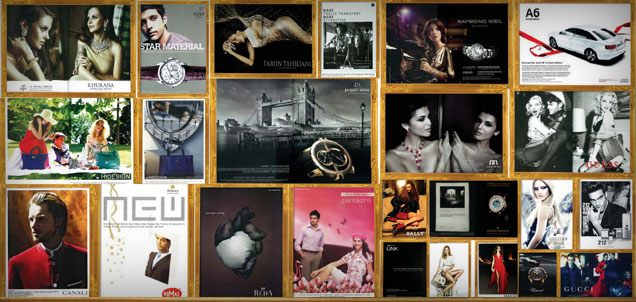
    In its report ‘An Analysis of Marketing Communication of Luxury Brands through the Lens of Luxury Magazines’, Cogito Consulting decided to do a deep dive into leading upmarket magazines carrying advertising for luxury brands to unearth key trends and semiotic codes of luxury advertising in India.


    The report is an analysis of some 511 advertisements in leading luxury magazines like Vogue, Verve, Time N Style, GQ, Harper’s Bazaar, MW and Cosmopolitan. All the ads were mapped quantitatively on various parameters and additionally, a qualitative analysis along with few expert interviews were done to arrive at some key learnings.


    Kinjal Medh

    Sharing his thoughts on the study, Kinjal Medh, COO, Cogito Consulting said, “The idea was to understand whether there were any patterns or codes that were common to most luxury brands. What we observed through our course of analysis over a six-month period is that a lot of luxury brands follow a similar pattern of advertising. We sampled over 500+ publications which typically feature advertising by luxury brands.” In fact according to Mr Medh, the unique trend that this study throws up is that “Luxury brands have grown perhaps more than the other brands in the market as they are not sensitive to economic conditions. As a result, people who can afford them can do so without being worried about what the economic climate in the country is. In fact my guess is that this sector will grow even faster and has a long way to go in India.”


    Composition of Ads

    According to the study, personal adornment brands feature the maximum number of ads in the magazines under study. On the other hand, products which do not directly enhance personality are advertised far lesser. For example: Apparel and watches which are a direct gateway to status elevation have the highest number of ads. While categories like real estate, home furnishing, hospitality etc. are relatively lesser.


    Affirms Mr Medh on the trend: “Where the composition of ads is concerned, it has remained somewhat the same. In fact it has not changed since the coming in of international brands in India. Before that there was not much of luxury brands who advertised; just a few jewellery brands. This was a trend prevalent almost about a decade ago. But that has now changed with the coming of international titles in India who brought with them the scope for luxury brands to associate with.”


    Another important trend that the study analyzed was the use or rather non-use of celebrities for luxury advertising. The study notes that only 12 percent of the ads studied, featured celebrities. Among the ads which featured celebrities, Watches, Jewellery, Perfumes and Apparel were the top categories using celebrities in their advertising. Further, of this 12 per cent, the majority (52 percent) were international celebrities while 48 percent featured Indian celebrities.


    Sharing his views on the trend, Mr Medh asserted, “One of the things happening in India is that there is a celebrity overplay. In fact there are instances where a same celebrity endorses high-end products and then also endorses hair oil, which is contrasting in a sense. As a result the level of exclusivity that luxury brands require is often not possible. This is not the case with international celebrities who are very selective in terms of the brands they accept to endorse.”


    Paradoxes of Luxury Advertising

    An important facet of the study or rather a paradox is the occurrence of luxury brands going increasingly local while mainstream Indian brands were going international. The study goes on to state that lot of Indian brands are trying to project an international imagery by using international models in the advertising. Approximately 14 percent of Indian brands advertised have used international models in their advertisements, it claims. “It is part of the experimentation that luxury brands do to discover new ways of marketing themselves. So while international brands tend to look inside India most Indian brands are looking outside to expand their base,” Mr Medh commented.


    Another interesting finding that the study highlights is that most of the brands advertised in the magazines have no body copy. About 60 percent of the ads analyzed did not have any copy, it noted. They featured only visuals and brand name. The ads project visuals which define the personality of the brand and along with visuals just the brand name. For those consumers well versed with the personality of the brand, only the name is enough and for the uninitiated, sharp visuals work in attracting them.


    Ironically, from the consumer’s point of view the financial investment in luxury brands is far higher than mass brands and the justification from the seller’s point of view is correspondingly far lesser. In other words, Mass brands’ advertising sell, Luxury brands’ advertising evoke Desire.


    The analysis revealed that primarily there are six key tenets that form the basis of most luxury brand advertising. These 6 codes include The Two Tone Code, The Exclusivity Code, The Sensuality Code, The Craftsmanship Code, The Origin Code and The Heritage Code. Of the whole lot, the study noted the Two Tones Code to be more effective. In its analysis of 511 ads, about 66% of brands that were advertised had black/white logo. On the other hand, in the case of mainstream Indian brands, logos do not necessarily follow a black and white pattern.


    Asserted Mr Medh about the popular Code, “I think that the Two Toned Code is the most interesting be it for its advertising or even the use of logo which mostly is black & white. I expect this trend to continue going forward as black and white tones do lend a certain amount of mystique and sophistication; unless certain brand advertising demands the use of colour I largely see two toned as the most popular form of advertising.”


    As for the Sensuality Code, the study observed that advertising for luxury brands is much more sensual than mass brands. Probably it is one of the ways to create a desirable personality and distance luxury brands from others brands. From perfumes to handbags to watches, sensuality is an integral part of luxury advertising, it noted.


    Where the Exclusivity Code was concerned, the study noted that luxury brands try and create an aura of uniqueness since it gives an assurance of being owned only by selected people. Over abundance and easy availability of a luxury brand can cause dilution of luxury character, hence many brands try to maintain the perception that the goods are scarce.


    Where the Craftsmanship Code is concerned, the study states that luxury brand advertising lays more emphasis on the craftsmanship and intricate mechanisms involved in the product. For example, an apparel ad shows the cut and fabric up close or a watch ad shows the mechanisms inside the watch.


    The study further notes that for the Origin Code, some luxury brands elucidate the luxury quotient of their brand by mentioning the country of origin of the brand. Going ahead, luxury marketers are taking a step further and using the city of origin and bringing in more credibility to the brand.


    As for the sixth code, the Heritage Code the study notes that the heritage of a brand builds an aura of several years of finesse and excellence in providing luxury products. It exemplifies the years of mastery or lineage to add a mystique to the brand. A mystique is generally built around the exceptional legendary founder character of the past, making up an integral part of the brand story and brand personality.


  • Cogito team wins Young Managers competition

    By A Correspondent


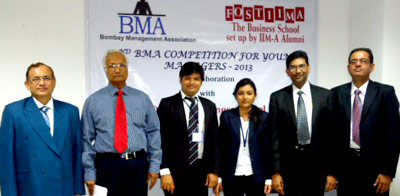
    The winning team from Cogito Consulting with the judges

    Saket Agarwal and Sonam Jain from Cogito Consulting, the independent consulting division of the Draftfcb Ulka group, won the BMA-FOSTIIMA Institute competition for young managers. The competition was judged by Hemant Kombrabail – Director of Marketing, Etch Square Medinet & E-Trading Pvt. Ltd. and Shyamkant Surve – Marketing Professor at Sinhgad Institute of Business Management.


    Into its second year, the competition witnessed participation of teams from leading corporates such as Tata Consultancy Engineers Limited and Blue Star Limited, and management colleges like Mumbai Educational Trust (MET), Sydenham Institute of Management Studies, Jankidevi Bajaj Institute of Management Studies, etc.


    The Cogito team selected the topic ‘It’s a leader who makes or breaks the companies – Indian Story.’ As part of the process, they submitted a 2,000-word article and also made a presentation to the panel of judges. As a part of their rigour, the team conducted extensive research including interviews with people who had experience in organizations with great leadership. They put forth some interesting cases on companies which saw ups and downs primarily because of the leadership. The team also wove in important lessons from the Ramayana to support the fact that corporate leaders are no less than the leaders from Indian mythology.


    The winning team said, “We were thrilled to win a competition held by an iconic institution – the BMA, which is today almost 60 years old. Our victory can be attributed to our learning from various projects that we execute at Cogito Consulting and the mentoring our seniors gave us. This great start to 2013 has motivated us to achieve much more.”


  • Info explosion has made India smarter: ‘New Realities 3.0’ study

    By Robin Thomas

    The Interpublic  Group (IPG), one of the world’s premier advertising and marketing services companies, has come out with its global ‘New Realities 3.0’ study that provides a unique window into how the Indian consumer is coping with information overload. The study provides insights on the decision-making process of the consumer in today’s era of information explosion. The study also aims to answer the unanswered queries of marketers on whether the information explosion has made consumers smarter or confused, the role of social media in a making consumers more informed, the role of brand advocates and much more.


    The study covered five countries namely, India, China, Brazil, America (US) and Germany. The India leg of the interview was conducted by Draftfcb Ulka’s independent consulting agency, Cogito Consulting. Over 600 online interviews were conducted in each of the five countries between October 26 and November 10, 2011. Some of the findings from the ‘New Realities 3.0’ study reveal that most Indian consumers feel they have grown smarter with the available product information, which is higher than the other countries. Further, the study notes that consumers in India rated a reasonable 7.3/10 when asked whether the available product information made them feel smarter compared to China that showed a rating of just 3.9/10, the US at 6.8/10, Brazil at 6.4/10 and Germany reporting 7.0/10.


    Interestingly, despite consumers in India claiming to feel smarter and not confused or frustrated with the product information available to them, they do not trust the information they see on brands, especially from the manufacturers end. Further, 32 per cent of Indian consumers say they do not trust most of the information they see on brands, whereas 31 per cent say they do not trust information from manufacturers or providers.


    The trust deficit that brands have among Indian consumers is higher than the other four countries, for instance only 11 per cent of Germans say they do not trust any information from brands whereas 22 per cent say they do not trust information from manufacturers or providers. Even Chinese consumers seem to trust information from brands and manufactures as compared to the Indian consumers. 19 per cent of Chinese say they do not trust information from brands whereas 24 per cent Chinese do not trust information from manufacturers or providers. 16 per cent of those interviewed in the US say they do not trust information from brands whereas 15 per cent do not trust information from manufacturers.


    Another interesting finding is that with the exception of Germany, the remaining four countries interviewed – India, China, Brazil and United States have said that product learning is a source of joy and fulfillment. 54 per cent of Indians have said that they enjoy researching the information for buying decision whereas 52 per cent of them say they find the information on brands fulfilling.


    Terry D. Peigh

    The findings have also revealed that most Indians learn product information to build an expertise about a certain product and brand as well as because it helps them stand out in their social circle. 53 per cent of Indians said that the reason they stay informed about certain products is because ‘people value me and my knowledge about certain products’, whereas 52 per cent of them said it helps them enhance their self-esteem.


    In addition to these, the study also revealed that consumers in India and China are most likely to turn into brand advocates and become a media channel and that in India, Brazil and China, especially, social networking sites are a good source for word of mouth information on brand experience.


    As vague and unique as it sounds, MxM India’s Robin Thomas got Mr Terry D. Peigh, Managing Director and Senior Vice President, IPG to relay more outcomes from the study, the role of social networking sites in decision-making capabilities and much more.


    New Realities… is an online study across multiple countries, including India. What is the sample size that was chosen for this study? Who are the respondents i.e. the TG for this study?

    We interviewed 600 people in each country i.e. in India, China, Brazil, United States and Germany. Out of the 600 people sampled, one-third were Gen X, one-third were Gen Y and one-third were boomers. 50 per cent of those polled were men and 50 per cent women.


    What was the key objective of the study? What, according to you, are the learnings for the Indian market, as well as the global market?

    The key objective was to better understand how the consumer has changed because of the new media. We came across the idea years ago as we noticed that the number of information sources available to consumers today has grown exponentially. So we found out if people were confused, frustrated, overwhelmed, and how are consumers viewing the overall experience of absorbing product information and using that information.


    We learnt that consumers have evolved over the years and hence they are not confused or frustrated with the information explosion. Consumers have not only learnt to easily filter or absorb the information but, they have also learnt how to manoeuvre their way through all the multiple choices of product information available to them.


    We have also learnt that surprising number of consumers, especially from India, are now very open, willing and eager to learn about product information as they find a lot of joy and satisfaction in learning about product information. In fact, our research also shows that people in India are most likely to really enjoy research and product information.


    One of the reasons why many in India are willing or open to product information is because they find it of social value as it allows them to have an expertise in certain products. We have also learnt that consumers are aggressively willing to become advocates of brand. Our research also shows that they are now interested in continuing to learn about a product even after they have purchased a product as they want to learn more about the product and advance their knowledge about that product.


    What this reveals is that communication should not stop at the time of sale and that marketers must continue to talk to their consumers even after they have purchased the product. As a result marketers may convert their consumers to brand advocates.


    The study reveals that Information explosion in India has led consumers to become smarter and helped them beat the system – much higher than what the other countries have reported. What are some of the factors that influence the consumer’s decision-making process around a product?

    We see a dominant role of family and friends in a consumers’ decision-making process. Although social media is still small, its role as a channel is growing, but too often social networking sites are limited to ‘likes’ or number of friends which is wrong. It’s too easy to get someone to push the like button or accept a friend request, even though they may really not like the brand or want to be their friend. A research from Australia finds that less than one per cent of friends are actively engaged and want to be truly engaged to the brand. So we keep encouraging our clients to go beyond ‘friends’ or ‘likes’ on a social networking page but, instead seek true engagement.


    As India becomes more tech-savvy, do you anticipate further information explosion to come about that could lead to further increase or decline in consumers who are confused or frustrated with the information?

    We were, in fact, surprised that the confusion or frustration numbers were not higher. My projection, however, is that it (frustration and confusion) will not go up as consumers have learnt the role of technology very quickly. Technology is fast reaching to the lowest common denominator very quickly so, I think people are learning to process information very quickly.


    Will there be a Phase II of the ‘New Realities 3.0’ study?

    Yes. We will soon be out with the second phase of the study in another 18 or 20 months, which will help us understand more trends. In China, for instance, during Phase I and II we have seen dramatic changes in over 18 months. We found that the Chinese were much more inclined to use the internet for product research. In China, the internet was used primarily for entertainment purposes, now it’s used for product information.


    Not surprisingly, consumers in India do not trust brand information especially from the manufacturers. This is not so with other countries, particularly Germany, US and China. How would you explain this? What must brands / marketers in India do to build the trust deficit among their consumers?

    I believe it is because of the newness of the consumer culture in India. In the US, for instance, there has been a mass market of consumer culture for 100 years and the same in Western Europe. I think consumers need to develop trust for their products. Brands must not be afraid to enter into the world of social media and hearing negative comments about one’s brand. There is probably no quicker way to gain trust with the consumer than to actually legitimately and honestly respond to criticism and fix the problem. This, I believe, is one way for brands to gain trust of the consumers.


    With the exception of Germany all other countries seem to enjoy product learning. What makes the consumers in Germany not really enjoy product learning?

    Yes, German people usually do not associate joy from product information. The Germans usually get their joy from music and food


    How has social media changed consumers’ decision-making across the globe? What role do you see social networking sites play in the near future in India?

    The role of social networking sites as a tool for brand advocates will increase. One thing we have noticed in the western world is that the number of people visiting brand pages on social networking sites is on a decline in Europe. This is not the case in India. In the western world a lot of consumers say that they do not visit Facebook for brands, but for friends therefore, it will be interesting to see if it will be any different in the developing economies. Nevertheless brands like Coca-Cola have leveraged social media well by finding ways to reach out to the consumers by engaging in a good conversation and get them to participate in brand activities. Right now the data shows consumers are willing and eager to visit social media to learn about products or brands.


    Even though broadband penetration is still low in India as compared to the US, why are consumers in the US and Germany reluctant in using social media for product research?

    This may be because brands that first started using the social media didn’t do a good job in engaging the consumers. The consumers may have clicked ‘like’ or may have become friends but, the brand may not have received anything else. Brands must, therefore, learn to go beyond the ‘likes’ and adding of friends to adding value in a consumer’s life as the consumer is not accessing social networking sites for brands but for something else. Therefore, in order to leverage the social media, brands need to operate in a different way. Increasingly, many brands are beginning to use social media effectively to engage with their consumers.


    How do you plan to reach the brands or marketers with the study? What can brands or marketers expect from the study?

    This study is important for clients because it is consumer based, is fresh, is in-depth, is broad, it looks at many different segments by product category, by demographic and it is the consumer telling us what he or she is thinking about.

     

  • DraftFCB Ulka’s Cogito Consulting & Asterii Analytics Release India 2061 Report

    By A Correspondent


    Cogito Consulting and Asterii Analytics present a fitting finale to the Draftfcb Ulka Group’s 50 Year Celebration, with a projection of whatIndiacould be when the Group celebrates its centenary. After digesting reports from over 150 sources, more than 1000 pages of data, talking to experts, economists, academics, a concise form was put in public domain on February 29.


    Coming from the context and belief that brands have a potential for immortality and last well beyond brand managers and sometimes even companies and owners, it may be necessary to plan for brands well beyond just the next 3-5 years.  The supplement highlights some important scenarios that will help build brands for not just the next few years, but well into the next 50.


    Some key aspects of the report on ‘India 2061’.

    • From a pre-dominant rural population today urbanization will lead to rural population constituting to about 43 per cent of the total population.
    • Average life expectancy to go up to 79 years and number of senior citizens to grow from 8per cent  to about 24 per cent  of the population.
    • Within the next 10 years, literacy levels are projected to jump to 95 per cent  with almost complete literacy achieved by about 2030.
    • Internet penetration will touch 92.7 per cent  with over 1592 million users.
    • Per capita income will be up to Rs11,63,000 from the current Rs. 37,000.
    • There will be an estimated 319 million four-wheelers and 573 million two-wheelers making a total of 900 million vehicles on the Indian roads.
    • Number of air travellers will double every decade andtouch 860 million in 2061.
    • Televisions are expected to achieve a 97 per cent  penetration with over 50 per cent  homes boasting of multiple TV sets.
    • Ad spends are expected to grow to Rs33 trillion by 2061 and contribute a wholesome 1.5 per cent  of the GDP.
    • The movie industry acrossIndiawill produce about 2234 films in 2061 i.e. more than all the Hindi movies produced between 1961 and 1991 in India.


    The knowledge piece has been released in a leading publication and is available on www.cogitoconsulting.com