
Tag: CODA

  • 5 Tips, 5 Books & 5 Movies that can Help Us Mainstream Deaf Individuals


    By Shruti Pushkarna


    Shruti PushkarnaHow many of you have watched the Academy Award winning movie CODA? A film that won the Best Picture, Best Supporting Actor and Best Adapted Screenplay at the 94th Oscars.


    CODA (or Child of Deaf Adults) features deaf actors Marlee Matlin and Frank Kotsur portraying their disability on screen. The film centres around Ruby Rossi, the only hearing character in this family drama.


    What really stood out for me in this fictional representation of a complex issue, is its ending. When their seventeen-year-old daughter (Ruby) decides to follow her passion and leaves for college to pursue music, the deaf family is left to fend for themselves. But throughout the movie, the filmmaker never puts the onus of inclusion on the disabled, and same is true of the conclusion. Their surrounding community, which is the (hearing) fishing community figures out ways of communicating and transacting with the Rossi family.


    September is observed as the Deaf Awareness Month and this year the theme is ‘Building Inclusive Communities for All’, where deaf people feel connected to their community as well to those without a hearing impairment.


    Officially, India has only 250 certified sign language interpreters for a deaf population of ranging between 1.8 and 7 million.


    With an estimated count of 700 million people (globally) to experience hearing loss by 2050, it’s time we learn ways of including deaf individuals in mainstream conversations. And what better time to start than the Deaf Awareness month!


    The obvious question to ask is how can we include deaf individuals in day-to-day activities, at work or even in social settings?


    Here are five easy tips.


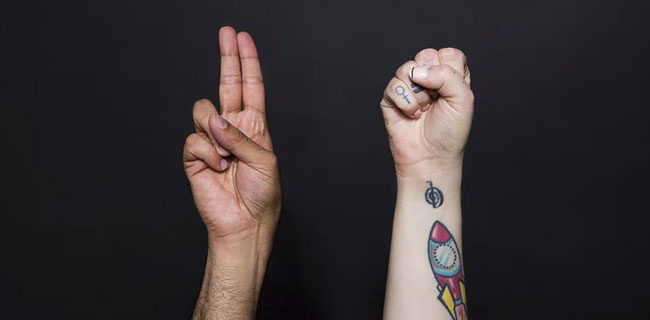
    1. Learn basic sign language to initiate communication with a community severely dependent on visual cues. In 2017, the United Nations officially recognised September 23 as the International Day of Sign Languages. The aim was to raise awareness about the importance of sign languages as a means of communication and as a fundamental human right of deaf individuals.

    2. Speak clearly without overemphasising or speaking too loudly or slowly, remaining natural in your delivery.

    3. It always helps to communicate in quiet environments because noisy backgrounds can make it harder for the deaf (and hard of hearing) to focus on what is being said.

    4. Always face the person you are communicating with while speaking or signing. Deaf individuals rely on gestures, facial expressions, and lip movements to communicate effectively.

    5. Use visual aids like whiteboard, notepad or smartphone apps makes it easier to engage with the deaf especially if it involves information exchange.


    In case you are curious about life with hearing impairment, here are five books that focus on the theme of inclusion using deaf characters.


    1. El Deafo– This is a graphic novel based on the childhood experiences of American author, Cece Bell. It’s a heartwarming and humorous tale of a young girl navigating the world with her hearing aid, recounting her challenges and triumphs.

    2. You’re Welcome, Universe– This book by Whitney Gardner features an Indian teenage deaf girl who gets expelled from her school for spraying graffiti on the wall. In her new school, she tries to find new friends and embarks on a journey of self-discovery.

    3. Wonderstruck– This is an illustrated novel by Brian Selznick which follows the story of Ben, a deaf boy traveling to New York in 1977, and Rose, a deaf girl traveling to New York in 1927. The two stories overlap around the themes of connection and belonging.

    4. Deaf Like Me– This novel by Thomas S Pradley and James P Pradley, is based on a true story. It recounts the journey of a hearing family raising a Deaf child. It delves into the challenges they face and their efforts to support their child’s communication and inclusion.

    5. Deafening– This is a novel by Frances Itani, set during/before World War I, which tells the story of a young woman who becomes deaf due to a bout of scarlet fever.

    And in case you are someone who prefers movies to books, here are five cinematic recommendations with diverse portrayals, exploring themes of deaf culture and inclusion.


    1. Sound of Metal (2019)- Directed by Darius Marder, this film tells the story of a heavy metal drummer who begins to lose his hearing and must adapt to a new way of life within the Deaf community.

    2. Iqbal (2005)- Directed by Nagesh Kukunoor, Iqbal is centred around a Deaf and mute aspiring cricketer. The film highlights his determination to overcome obstacles and pursue his dream of playing cricket at the national level.

    3. The Shape of Water (2017)- Directed by Guillermo del Toro, this fantasy drama features a mute, non-verbal female lead who communicates using sign language. The film explores the power of communication beyond words and the connection between the characters.

    4. Children of a Lesser God (1986)- Directed by Randa Haines, this film revolves around the romantic relationship between a hearing teacher and a Deaf custodian at a school for the Deaf. It explores issues related to communication, love, and societal expectations.

    5. Soundtrack (2011)- Directed by Neerav Ghosh, this film is loosely based on the life of musician and composer Suman Sridhar. The film features a DJ who loses his hearing but continues to create music. It explores his journey of adaptation and resilience.


    Change is not easy to come. Especially not in a country as diverse and complex as ours. It’s true that it takes more than one to transform and build an accessible world. But it’s the action of one that translates into a collective movement for change.


    Can you commit to learn to sign at least one word this September?


    Wondering why MxMIndia publishes a disability advocacy column? Well, we strongly feel that the media can dramatically transform the world of persons with disabilities. This series attempts to help bring forth issues that the media must champion to create a truly inclusive and accessible India. Writing  this column is Shruti Pushkarna, a former journalist and  now a disability inclusion advocate based in New Delhi. Her views here are personal. To access the archives of her 75-plus columns, please visit: https://www.mxmindia.com/category/ columns/shruti-pushkarna/


    If you have a view on the issues raise or would like to align with MxMIndia on this cause, write to us at editor [at] mxmindia.com.


  • 5 Tips, 5 Books & 5 Movies that can Help Us Mainstream Deaf Individuals


    This article has been updated at https://www.mxmindia.com/columns/5-tips-5-books-5-movies-that-can-help-us-mainstream-deaf-individuals/

    By Shruti Pushkarna


    Shruti PushkarnaHow many of you have watched the Academy Award winning movie CODA? A film that won the Best Picture, Best Supporting Actor and Best Adapted Screenplay at the 94th Oscars.


    CODA (or Child of Deaf Adults) features deaf actors Marlee Matlin and Frank Kotsur portraying their disability on screen. The film centres around Ruby Rossi, the only hearing character in this family drama.


    What really stood out for me in this fictional representation of a complex issue, is its ending. When their seventeen-year-old daughter (Ruby) decides to follow her passion and leaves for college to pursue music, the deaf family is left to fend for themselves. But throughout the movie, the filmmaker never puts the onus of inclusion on the disabled, and same is true of the conclusion. Their surrounding community, which is the (hearing) fishing community figures out ways of communicating and transacting with the Rossi family.


    September is observed as the Deaf Awareness Month and this year the theme is ‘Building Inclusive Communities for All’, where deaf people feel connected to their community as well to those without a hearing impairment.


    Officially, India has only 250 certified sign language interpreters for a deaf population of ranging between 1.8 and 7 million.


    With an estimated count of 700 million people (globally) to experience hearing loss by 2050, it’s time we learn ways of including deaf individuals in mainstream conversations. And what better time to start than the Deaf Awareness month!


    The obvious question to ask is how can we include deaf individuals in day-to-day activities, at work or even in social settings?


    Here are five easy tips.


    1. Learn basic sign language to initiate communication with a community severely dependent on visual cues. In 2017, the United Nations officially recognised September 23 as the International Day of Sign Languages. The aim was to raise awareness about the importance of sign languages as a means of communication and as a fundamental human right of deaf individuals.

    2. Speak clearly without overemphasising or speaking too loudly or slowly, remaining natural in your delivery.

    3. It always helps to communicate in quiet environments because noisy backgrounds can make it harder for the deaf (and hard of hearing) to focus on what is being said.

    4. Always face the person you are communicating with while speaking or signing. Deaf individuals rely on gestures, facial expressions, and lip movements to communicate effectively.

    5. Use visual aids like whiteboard, notepad or smartphone apps makes it easier to engage with the deaf especially if it involves information exchange.


    In case you are curious about life with hearing impairment, here are five books that focus on the theme of inclusion using deaf characters.


    1. El Deafo– This is a graphic novel based on the childhood experiences of American author, Cece Bell. It’s a heartwarming and humorous tale of a young girl navigating the world with her hearing aid, recounting her challenges and triumphs.

    2. You’re Welcome, Universe– This book by Whitney Gardner features an Indian teenage deaf girl who gets expelled from her school for spraying graffiti on the wall. In her new school, she tries to find new friends and embarks on a journey of self-discovery.

    3. Wonderstruck– This is an illustrated novel by Brian Selznick which follows the story of Ben, a deaf boy traveling to New York in 1977, and Rose, a deaf girl traveling to New York in 1927. The two stories overlap around the themes of connection and belonging.

    4. Deaf Like Me– This novel by Thomas S Pradley and James P Pradley, is based on a true story. It recounts the journey of a hearing family raising a Deaf child. It delves into the challenges they face and their efforts to support their child’s communication and inclusion.

    5. Deafening– This is a novel by Frances Itani, set during/before World War I, which tells the story of a young woman who becomes deaf due to a bout of scarlet fever.

    And in case you are someone who prefers movies to books, here are five cinematic recommendations with diverse portrayals, exploring themes of deaf culture and inclusion.


    1. Sound of Metal (2019)- Directed by Darius Marder, this film tells the story of a heavy metal drummer who begins to lose his hearing and must adapt to a new way of life within the Deaf community.

    2. Iqbal (2005)- Directed by Nagesh Kukunoor, Iqbal is centred around a Deaf and mute aspiring cricketer. The film highlights his determination to overcome obstacles and pursue his dream of playing cricket at the national level.

    3. The Shape of Water (2017)- Directed by Guillermo del Toro, this fantasy drama features a mute, non-verbal female lead who communicates using sign language. The film explores the power of communication beyond words and the connection between the characters.

    4. Children of a Lesser God (1986)- Directed by Randa Haines, this film revolves around the romantic relationship between a hearing teacher and a Deaf custodian at a school for the Deaf. It explores issues related to communication, love, and societal expectations.

    5. Soundtrack (2011)- Directed by Neerav Ghosh, this film is loosely based on the life of musician and composer Suman Sridhar. The film features a DJ who loses his hearing but continues to create music. It explores his journey of adaptation and resilience.


    Change is not easy to come. Especially not in a country as diverse and complex as ours. It’s true that it takes more than one to transform and build an accessible world. But it’s the action of one that translates into a collective movement for change.


    Can you commit to learn to sign at least one word this September?


    Wondering why MxMIndia publishes a disability advocacy column? Well, we strongly feel that the media can dramatically transform the world of persons with disabilities. This series attempts to help bring forth issues that the media must champion to create a truly inclusive and accessible India. Writing  this column is Shruti Pushkarna, a former journalist and  now a disability inclusion advocate based in New Delhi. Her views here are personal. To access the archives of her 75-plus columns, please visit: https://www.mxmindia.com/category/ columns/shruti-pushkarna/


    If you have a view on the issues raise or would like to align with MxMIndia on this cause, write to us at editor [at] mxmindia.com.


    An earlier version of this article had misspelt Movies in the main headline as Bovies. It has been corrected. Our apologies – Ed


  • Representation matters. Inclusion matters. Disabled lives matter.

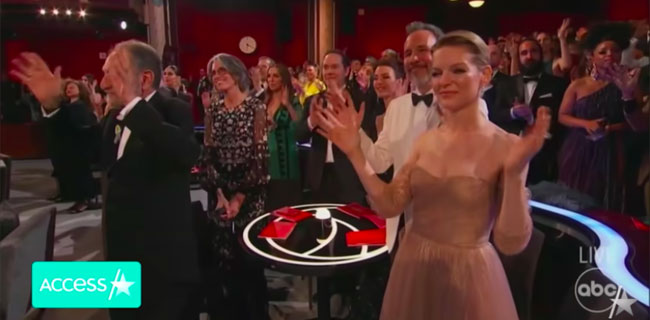
    The Oscar audience applauding Best Supporting Actor Troy Kotsur in sign language. Picture: Screengrab from the Oscar award ceremony – Access/ABC


    By Shruti Pushkarna


    Shruti PushkarnaCODA (Child of Deaf Adults) was named the ‘Best Picture’ at the 94th Academy Awards presented in Los Angeles on March 27, 2022. Equal rights and disability inclusion advocates across the world, reveled at this historic win.


    Personally, I felt vindicated. As someone who firmly believes in integrating persons with disabilities into the mainstream, I have consistently decried stereotyping, misconstrued portrayals and minimal visibility of the subject and the community in the media.


    We have seen several Hollywood and Bollywood productions in the past, focused on the subject of disability and social issues around it. What makes CODA worthy of such an esteemed accolade?


    Unlike its predecessors, the disabled characters in this gripping family drama are played by deaf actors. The central character of the movie is seventeen-year-old Ruby Rossi who is the sole hearing member of a deaf family. She is torn between her desire to pursue her passion of singing and helping her parents and brother with their fishing business. After years of playing the interpreter and the link to the ‘speaking’ world, she finds it hard to prioritise her dreams.


    The film has several scenes which bring out the unique identity of each family member, through the interactions between parents, children, siblings and the external environment. In an emotional exchange following her choir recital, Ruby’s father feels her vocal cords as she sings exclusively for him, so he can ‘experience’ what others can ‘hear’.


    Soon after the official announcement, social media platforms were full of admiration for the cast and their outstanding performances. Troy Kotsur became the first deaf male actor to win an Oscar (Best Supporting Actor) for his role of Frank Rossi (Ruby’s father) in the film. Sign language memes and GIFs populated timelines with ensuing threads on accepting differences, accommodating diverse groups and adopting new ways of communication to stop the ‘othering’.


    There was also a flurry of coverage in the Indian media, especially news items showcasing awe-inspiring stories of successful hearing and speech impaired people. Journalists and critics compared the American production to some of the Indian films that have tackled similar themes. One piece deemed CODA as the ‘spiritual successor’ of Sanjay Leela Bhansali’s film Khamoshi that released in 1996. It’s true that both the movies revolve around a young girl torn between responsibilities towards her deaf family and personal aspirations to pursue music. Yet, the depiction, characterisation and messaging vary in more ways than one.


    Following the coverage on cinematic representations of deafness and disability, I also recalled the 1972 Sanjeev Kumar and Jaya Bhaduri starrer, Koshish. It’s the story of a deaf-mute couple and their everyday struggles, including the challenges of raising a son. Unlike the Oscar winner, there is little use of sign language on screen and the hearing child ends up giving in to his parent’s desire.


    None of the Bollywood productions have been brave or open enough to cast disabled actors for an authentic performance. In a way, we have only witnessed an ableist act projected on the big screen. Films like Black, Margarita with a Straw, Paa, Guzaarish et cetera attempted to address the social stigma around different types of disabilities but somehow, ended up propagating a misconceived idea. Exaggerated fictional accounts and over-dramatisation reinforced stereotypes in the minds of audiences.


    The same is true for some Hollywood portrayals. Disability advocates have criticized the shallow understanding of issues and incorrect depictions in films like Rain Man, The Theory of Everything, My Left Foot and so on.


    Does the prerequisite to entertain supersede the need to educate and sensitize? Does dressing up the reality make it more palatable and less alienating?


    More than the credible rendition, what truly sets CODA apart for me, is a critical shift in the approach towards inclusion. Through the movie and ultimately through Ruby’s choice of going off to Berklee College of Music, the onus to include no longer lies only with the deaf. The surrounding able-bodied fishing community takes cues from the Rossi family and finds ways of interacting, socialising and transacting in mutually beneficial ways.


    Shruti Pushkarna is a former journalist who now works as a programmes and media specialist for the inclusion of persons with disabilities. Shruti was part of the founding team of MxMIndia and now writes for MxMIndia every other Thursday. Her views here are personal. She can be reached via Twitter at @shrutipushkarna