Tag: CNN International

  • CNN, IBN/TV18 bhai-bhai, again!

    By A Correspondent


    TV18 and CNN International have announced the extension of their collaboration on CNN-IBN. Earlier this year – in end-June to be precise, the two broadcasters had announced their decision to part ways with effect from January 2016. There were very active rumours of CNN inking a tie-up with Zee Media Corporation Limited. In fact, soon after this development, Zee even announced the English news channel and appointed an Editor-in-Chief. While Zee Media never confirmed the possibility of a tie-up with CNN, according to sources talks were on at an advanced stage.


    The fact remains that by using the CNN prefixing the channel, IBN gained much credibility in the early days to ward off competition from NDTV,  in later years, other than the name of the channel, IBN really hasn’t gained much from the alliance. Save the children’s entertainment genre, the Turner/CNN network has had a mixed record in India.


    Announcing the extension, Adil Zainulbhai, Chairman, Network18 said, “We are delighted to announce the renewal of this extremely cherished partnership between two most respected brands in journalism. In this second term of our collaboration, we aim to present a brand new CNN-IBN that will bring news with even greater speed, accuracy, clarity and credibility and keep the viewers tuned in to the latest news and developments much ahead of others. We also intend to cut through the noise and clutter that is currently present in the Indian television news space and offer best practices of journalism that will lead to better understanding of issues. The channel will organize meaningful debates and raise issues that touch the lives of our viewers. With this renewed partnership, we will enhance the process of newsgathering and delivery to our viewers in an informative and enlightening manner.”


    Speaking on the occasion, Rani Raad, Chief Commercial Officer, CNN International, said, “We are really excited about the future of CNN-IBN and together with the new management at TV18, are going to build upon the success we have already achieved. I look forward to the brand continuing its lead in the dynamic Indian news industry and am delighted that CNN IBN is staying in our family of CNN-branded channels around the world that include CNN Turk, CNN Chile, CNN Philippines, CNN Indonesia and CNN Greece.”


  • BBC’s Sunita Rajan to head CNN’s adsales in APAC

    By A Correspondent


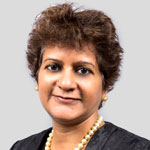
    Sunita Rajan

    She’s always made money on news, now she’s making it. After over a decade-and-a-half at the BBC, Sunita Rajan is joining CNN International Commercial’s executive team under Chief Commercial Officer Rani R Raad with a remit to continue building CNN’s business growth trajectory in the Asia Pacific region. That’s what the press release tells us. Simply put, Sunita Rajan is joining CNN in March 2015 to head sales for APAC which includes the Mumbai and Delhi offices of the broadcast major.


    Ms Rajan will oversee an extensive client base across the breadth of the Asia Pacific region and will lead teams based across five offices in Hong Kong, Singapore, Tokyo, Delhi and Mumbai and a network of representatives across Asia, overseeing the strategy to drive advertising revenue for CNN’s global portfolio of multi-platform products among Asia Pacific based advertisers. She will also be part of Mr Raad’s management team which guides the brand’s international commercial strategy.


    “Sunita’s wealth of experience coupled with her dynamic leadership style will be a huge asset to CNN as we look to continue our growth path in the Asia Pacific region,” said Mr Raad.


    “This is a tremendous opportunity to build further growth for the global news leader across its extensive portfolio of TV and digital products in a region as exciting and dynamic as Asia Pacific,” said Ms Rajan. “I’m looking forward to taking up this new role working with such a highly talented team.”


    Ms Rajan’s media career has spanned 25 years and has included roles at Star Television, News Television (India) and BBC Worldwide, where she was most recently Executive Vice President Advertising Sales, Asia Pacific.


  • CNN’s Sumnima bags inaugural Women’s Empowerment Journalism Award

    By a correspondent


    CNN International’s Delhi-based correspondent Sumnima Udas has been awarded ‘Journalist of the Year’ at the inaugural Women’s Empowerment (WE) Journalism Awards for her sensitive and incisive reporting on gender issues including the December 2012 New Delhi gang-rape, the plight of acid attack victims in India and the courageous stance taken by young Indian women, fighting back to ensure the safety of women in their neighbourhoods.


    The Awards held in Singapore, honour outstanding achievements in reporting on women’s issues. Udas’ work was recognised amongst entries by distinguished journalists across Asia Pacific including Australia, Cambodia, China, India, Indonesia, Korea, Malaysia, Philippines, Singapore, Thailand, and Vietnam.


    Udas reported extensively on the aftermath of the December 2012 Delhi gang rape, explaining how the crime shook the nation and prompted a landmark change in how society handles violence against women. Her almost year-long reporting culminated in the documentary film ‘Nirbhaya: The Fearless One’ which featured in-depth interviews with the victim’s parents, who movingly reveal how their daughter was the pillar of strength for the family. Her reporting on related gender issues also featured first-hand interviews with Indian women on the streets, shedding insights onto the vulnerability of sexually abused women, victims of acid attacks and the horrific practice of female feticide in parts of India. She has also chronicled the courageous story of a group of brave adolescent women who have banded together to form ‘Red Brigades’, acting as foot patrols to increase the safety of females in their neighbourhood.


  • CNN & BBC top intnl channel viewership

    By A Correspondent

    Findings from both the latest Pan-Asia Pacific Cross-Media survey (PAX) and Europe’s Media and Marketing Survey (EMS) reveal that CNN International reaches more viewers globally than any other international news channel. The PAX survey reveals that no international English news channel reaches more Indian viewers on a monthly basis than CNN International. In India, CNN International is more of a daily habit than BBC World News among business decision makers and top management.


    Tony Maddox, Executive Vice President of CNN International, said: “What we are seeing is that there continues to be a strong appetite for global news, and that people throughout the world are turning to CNN for that news – and in great numbers. Add in our commitment to global business news and our excellent sports and cultural programming and there is a clear, compelling proposition for viewers.”


    In addition to CNN International’s leading on-air positioning, the PAX survey shows that CNN International’s leadership also extends to its digital platforms.


    The PAX survey also shows that in India, BBC World News is the top international English news channel and the news destination of both the young and upwardly mobile mid-level corporate managers. BBC World News was also shown to be the most watched international news channel for mid-level income earners, women, tech enthusiasts and those under the age of 30. The channel is also the most watched news channel amongst key audiences such as potential car buyers, international travellers and consumer durable owners.


    Colin Lawrence, Commercial Director BBC World News said: “BBC World News and BBC.com are strongly demonstrating impact to Indian audiences-not only top management but also those with their careers on the rise. Our platforms deliver a targeted route to these discerning viewers and it’s more and more clear that our style of impartial international news and business coverage is increasingly relevant to viewers and advertisers across the country.”


    The Ipsos PAX study surveys international and local media consumption and product consumption among affluent adults and business professionals in the Indian cities of Mumbai, Delhi and Bangalore. The latest survey covers Q1 2011 to Q4 2011.


    EMS 2012 examines the media and product consumption habits of affluent Europeans. The latest research was carried out across the full year of 2011. 49 million qualifying adults aged 21 and over, across 21 markets, comprise the EMS universe.


  • @FF12: NBSA chief suggests independent regulation for media

    By A Correspondent


    In 1950, Jawaharlal Nehru said that freedom of speech should be granted to good and bad editors, but they should use it in national interest for he believed that if it is left to the government to decide, the good editors will be jailed and the only the chamchas will survive. This was the opening Justice JS Varma, former chief justice, Supreme Court and  News Broadcasters Standards Association (NBSA) Chairperson used for his keynote address for the session ‘Freedom of Media: Significance of self regulation’.


    Justice Varma said that freedom of speech is precious and we have to preserve it. The way to do so is self regulation as the media is mature enough to know to do it themselves and ward off the danger of state regulation.


    He said that it is not media’s right but rather an obligation to keep the people informed so that they can participate in government decision making process. It is the media’s duty to ensure transparency to ensure accountability.


    Justice Varma emphasised that the media should not give the government a chance to step in and hold it accountable. He said that the media (which reports) and judiciary (which decides) are the two strongest pillars of our democracy and they shouldn’t use their strength (power) to harm anyone, lest their power be curtailed due to lack of their accountability.


    Moving on, Justice Varma criticised the media, especially the broadcast media’s tendency for breaking news. He said that the key tenets of journalism should be kept in mind while reporting ‘breaking news’- is it true, fair and in public interest. He said that objectivity and due diligence must be applied while covering news. He cautioned the media, which has tremendous reach, to be cautious in its reporting as the effect of the news it flashes is instantaneous. He closed his address by saying “The more potential for damage, the more is the accountability you have”.


    The moderator, Barun Das, Zee News CEO and Vice President, News Broadcasters Association (NBA) spoke about how the media can’t be regulated as it is an essential pillar of democracy. He opined that free media can be good or bad but media which is not free can never be good.


    Mr Das said that regulation is a process of evolution. The media needs to introspect and understand where it stands.


    He outlined the dilemmas faced by the media while trying balance the content and the bottomline where news is trivialised for gaining eyeballs. The broadcast media especially is constantly grappling with trying to strike a balance between what the audience ‘would like to see’ and what they “should see”.


    The stage was then thrown open for the panel discussion. Each of the panellist was given time to speak and answer questions by the moderator.


    The discussion was opened by KVL Narayan Rao, executive vice chair person NDTV and President, NBA.


    Mr Rao said that there is no question of compromise on the fact that that media is free and that is the way it should be in a democracy. He said thatIndiais the largest free news market with a reach of 500 million households (news TV reaching nearly 115 million households).


    He said that in the early 2000s, after the private players were allowed in, they got together to set up the NBA to set up a code of programming and ethics which will regulate their broadcasting. He emphasised that it was important to have an independent and respected authority to keep a vigil on what is happening in the industry. He was proud of the fact that they telecast a scroll reminding the viewers that they have a forum to go to if they have any complaints.


    He also spoke about the NBSA which has been an advisory to the media with regards to improvement in news coverage and takes up issues suo moto if the media is found lacking.


    When questioned by Mr Das about balance or conflict on interest between news and business, Mr Rao was emphatic that there should be a “Chinese wall separating news and commercial interests”. He opined that news is to inform, educate and entertain the public independent of government and advertisers. He allowed that some compromise may take place but said that with digitisation, more cost can be spent on content and hence the scenario will change.


    Next to take the mike was Nitin Desai, Former under Secretary General, United Nations and member NBSA.


    Mr Desai started by saying that he disliked the term self regulation and “independent regulation would be a more appropriate term”. He said that emphasis should be given to developing the independent regulation in such a way that it is credible in the eyes of the media, the people and the view makers.


    His main concern was about the emergence of new media and challenges presented to regulate it.  He reiterated the need for due diligence to be given to fair and unbiased reporting, rights of an individual to privacy and avoiding trial by media.


    He said that he had already noticed a change in the fact that the mindset of the editors and the non-media members on the NBSA was converging due to the internalising the sense of responsibility.


    When questioned about the trivialisation of content, Mr Desai said that it was being done as the measurements showed that the audience preferred it. He said that there was a need for a different measuring system for news channels. He also opined that news channel have to stop behaving like money making operations and take responsibility to cover news that “people should know”.


    Phillip Turner, Chief of Bureau, CNN International, South Asia said thatIndiahad a long tradition of journalism but we tended to forget it. He emphasised that focus should be on stories that have a relevance to the rest of the world and maintaining the integrity of the media. He agreed with Mr Desai that the new media is presenting a challenge for regulation but he was of the opinion that everything would work out if the media stuck to the basic tenets of journalism – fair, relevant, responsible and accurate reporting.


    When asked about the need for a NBA-like worldwide authority, he wasn’t sure that such a platform could work globally.


    Kiran Karnik, member NBSA and former president of NASSCOM spoke about the challenges of new media. He said that today, when the news is available instantly as reported by citizen journalists and through the new media, it is the responsibility of the media to separate what is true and what is not. He also opined that news media today has shifted from reporting news to making news. He cautioned them to use the power they have responsibly by maintaining their standards and not infringing on the rights of the people.


    When questioned on the challenges thrown up by the new media, he agreed that technology is not amenable to censorship and also the consumer is becoming the creator and consumer. But he emphasised that there should be zero tolerance for unverified news and the news media as the aggregators of news should use their own censors.


    Mr Das wrapped up the session by stating that now is the time to convert challenges into opportunities and inclusive growth through media is the way forward.