
Tag: CNBC

  • What Ails English News Channels in India? – A Marketing Perspective


    By Ashoke Agarrwal


    Ashoke AgarrwalI am not a media critic. MxMIndia has a trenchant one in Ranjona Banerji, whose twice-weekly column makes for exciting reading whether or not you agree with her.

    However, as a brand and marketing strategist, it is clear that English News Channels in India is a declining product category.

    Both in terms of share of attention and advertising. What gives?

    The product category’s essential advantage is that it potentially addresses an affluent target audience of the educated professional class.

    The crucial factor ailing the product category is that it is steadily losing its core audience. I have only anecdotal evidence to support the assertion, but a reliable poll will prove it as a fact.

    The core reason educated professionals these days shun the gaggle of English news channels is that they find them irrelevant. The tragedy is that despite this quickening decline, their anchors and management do nothing to address the issue.

    Is it because the overweening odour of self-importance prevents them from smelling the coffee? Or are they deer caught in the headlights of impending doom?

    Going by the content they put out daily, it is a sad mix of self-importance and fear.

    At the core of this morass is their focus on politics at the expense of everything else. Further, they practice political news primarily as a debate between second-rate “experts” and political spokespersons from two distinctly opposing camps moderated by an anchor whose bias clearly shows. Night after night, prime time after time, these debates on the minor issues of the day devolve into shouting matches that would embarrass any right-thinking individual. Once in a while, they latch on an “exclusive” – usually a leaked video or document on a minor issue whose authenticity they assert they have not verified but push all day and into that night’s debate!

    Is it any wonder any national aspirationally-positioned brand that values its credibility is reluctant to advertise on these channels? So, it is no surprise that they fight for a shrinking pie of advertising from second-rate brands and rah-rah ads paid through Government coffers. And even this fight is embarrassing as they put out conflicting numbers about viewership, with every channel claiming to be number one.

    From a marketing perspective, the solution for English news channels to become relevant in India is to look hard at the core potential market of educated professionals and entrepreneurs and work towards a better market-product fit.

    At the outset, the channels need to go easy on domestic politics. While their core audience might lean one way or the other regarding domestic politics, most are not rabid enough to even remotely enjoy the kind of nightly debate and slanted news coverage the channels indulge in. They should also realise that the politicians and the powers that be do not care what the English news channels put out.

    The politicians know that the audience for English news is too niche to matter in electoral politics and also the kind that is not swayed by rabid anchors or dueling talking heads. Instead, the politicians focus on regional language channels that deliver pliable audiences by droves. So, the management of English news channels must put aside the notion of currying favour or fearing disfavour based on what they cover on their channels. They can do this by leaving hard-core politics to their regional languages brethren.

    Instead, each channel should focus on building a unique non-political position for themselves. Wion has done so by focusing on international news from an Indian point of view. With better funding, more correspondents and camera teams worldwide and a couple of name-brand anchors, that position is viable, especially as India gains traction as a player on the international stage.

    The other positioning that a channel could build substantial and lasting market share on as a genuinely pan-Indian reporting entity with solid reportage from all, not just Delhi or Mumbai but from all State Capitals as well as the other critical metros anchored by on-the-ground, well-trained, well-spoken reporters. NDTV, during the heydays of Prannoy Roy, delivered on this. But over the past few years, it lost its way as it looked to fight a political headwind by pissing into it. Will the current ownership recognise the strength of the brand DNA and restore it? I will be pleasantly surprised if it does.

    The other positioning is investigative journalism. At one time, the newspapers were the champions of investigative journalism. Alas, they are these days just broadsheet rags fluttering weakly in a digital storm.

    With the India Today DNA, one would have thought that India Today TV would have been the one to fly the investigative journalism flag. Alas, even the mother brand, let alone the TV off-shoot, has sacrificed investigation (except the occasional. mood-of-the-nation or sex survey poll) at the altar of convenience and cost-cutting. If India Today is to reposition the magazine and India Today TV on real investigative journalism, it could regain its lost sheen of being India’s public square where the well-read and the well-intentioned gather to take stock.

    There are nuances in investigative journalism that allow multiple channels to find a unique position under its broad umbrella. For example, one channel could focus on stories with a societal and human angle, investigating developments in cultural mores, health, education, crime, etc.

    Another channel could investigate stories in hard-edged areas like business, management, science and technology. The one English news channel that does well is CNBC because it focuses on a specific area of interest to the educated professional or entrepreneur. This other channel would have a broader focus than CNBC and go beyond the stock market and financial results to developments driving trends and changes.

    Yet another channel could focus on personalities from across cultural, business, scientific and technical fields with bio-documentaries and skillfully conducted long-form interviews.

    The above examples illustrate that there are viable positioning options for English News channels that will take them out of the swamp of politics and regain their core audience. This audience will pay reasonable subscription fees and attract brands with deep advertising pockets.

    The repositioning will take work – it will require substantial capital investments and hiring and retraining people. The alternative, however, is for all the brands in the category to continue on a demeaning race to the bottom.


    Ashoke Agarrwal writes on MxMIndia every other Thursday. He focuses on the intersection of technology, marketing and communications, but sometimes like this time around, he dwells on other issues as well. His views here are personal.

     

  • Shivi Chopra to set up Ads2OTT next month

    By A Correspondent


    361 Degree Entertainment & Media Pvt Ltd is set to launch Ads2OTT, an integrated OTT exchange in October 2020.


    Said Shivi Chopra, who was formerly with BTVI and CNBC and is now Co-Founder, Ads2OTT: “The rise of OTT platforms has presented a great opportunity for advertisers. The advent of the festive season along with the upcoming IPL will boost advertising and brands will look at investing in the OTT space in a big way. The question is no longer about whether to invest in OTT but rather How and How much. OTT offers a formidable combination of the impact of television along with the power and precision of digital. Our prime focus will be to help regional and local brands to experience the efficiency and effectiveness of the category. At the same time, we will be catering to national brands who are looking at conveying their brand’s message or extending their existing broadcast reach. We are extremely bullish about the future of OTT and the exponential ROI it will generate for advertisers. Ads2OTT is envisioned to play a critical and catalytic role in forming OTT into a separate category within the media advertising landscape.”


  • Return of The Sorrell


    By Prabhakar Mundkur

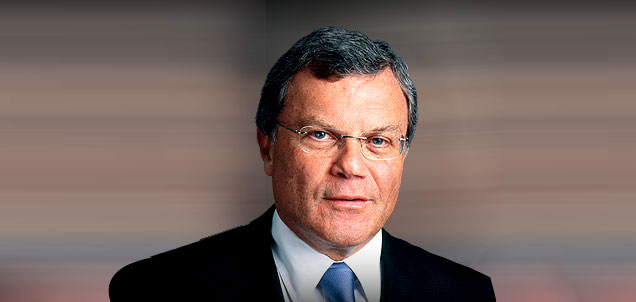
     If you thought that Martin Sorrell’s exit from the WPP group was the end of a great career you were wrong. Sorrell now 73, who stepped down from WPP a few months ago, is making a comeback with a new advertising (and marketing services) venture.


    With his experience of taking over an unknown firm called WPP which was largely a shell company 33 years ago, it was natural for him to try his hand again at a similar experiment.


    Sorrell now is taking charge of another shell company – Derriston Capital – which he intends to turn into an advertising venture. Confirmation of the Derriston deal was confirmed first by Sky News.  Derriston as a company has been on the New York Stock Exchange since 2016.


    In this first interview with Anant Rangaswami on CNBC last night at Zee Melt, Sir Martin spoke on a number of issues with his usual eloquence. For those branding experts who are wondering about the significance of S4, it stands for four generations of Sorrells in the UK. (His grandparents came to the UK from Eastern Europe in 1899.) He quoted Brian Whipple the CEO  of Accenture Interactive while speaking about how competition from consulting might affect the advertising agency business.  Quoting  an interview that Whipple gave he said: “the consulting companies don’t compete with the agencies head-on.  They go above the agencies to the CEOs and CFOs, the CMOs and the CIOs and CTOs. And they say to them you are going through significant change, they might describe it as a digital disruption. You are spending a lot of money. Let’s look at it as one and let’s see how we can improve your productivity, improve your technological response, digitise your company, transform your company and at the same time spend less money. And by the way pay us on the basis of what we save. Which is a very alluring concept”.


    Whipple has led Accenture Interactive’s disruption of the traditional agency landscape by creating a new service model.  Whipple is known to have said “[Holding companies] are changing, but the pace of change is woefully slow. And it’s not because of the intent. It’s because of the structure and the culture.”  One couldn’t help feeling that Sir Martin is welcoming the fact that by starting on a clean slate he might be able to do things differently with S4 than what he could do with WPP.


    As a new way of doing business Sorrell said in the interview that S4 would not only like to sharpen its tactical response but also develop its strategic response at the higher levels of the company.  He reiterated the need to be ready for change, whether cyclical or strategic.


    But what shape might Sorrells new venture take?  Given his penchant as a ‘math man’ and his various criticisms of the ‘mad man’ era of advertising he is likely to be more interested in the world of data and digital.  It is quite likely that Sorrell’s new venture might be devoid of the traditional advertising agency.  In any case revenues of all his advertising agencies put together in WPP were much smaller than the media company or the research company.  Which goes to show that he perhaps thought that advertising was really an old-world phenomenon.  Sorrell is putting in his own personal investment of £40 million into the new venture.  Institutional investors include Lombard Odier, Miton, RIT Capital Partners, Schroders and Toscafund would add a further £11 million.


    That of course does not mean that the new venture will be devoid of creativity in other forms.  Sorrell always believed in creativity and the power of ideas although he is often accused of marginalising creativity.  Sorrell always said that the definition of creativity needs to change because he said “we are not in the advertising business anymore”.  Sorrell in the past has also said “75 per cent of what we [WPP] do now, Don Draper and maybe even Sir John Hegarty wouldn’t recognise.”


    So what might we expect from Sorrell’s new venture is perhaps a smaller WPP minus traditional advertising and the traditional way of doing business by holding companies.  But like WPP it would grow through acquisition.


    To go back to Whipple he is known to have said that for agencies to survive they must leave the founder’s culture behind.  In the case of Sorrel it might well the opposite.  A case of the founder leaving his agency’s culture behind.


    Prabhakar Mundkur, better known as Prabsy, is a veteran advertising agency professional, having led agencies in India and globally. And if he’s not thinking brands and strategies, he’s into music, cycling and writing. A prolific writer, he was LinkedIn’s most influential voice in 2016. He also writes ‘Ad Buzz’, a weekly column on MxMIndia.


  • Journo assaulted outside Emvies venue, Ad Club biggies accused of casual response

    By A Correspondent


    On Friday night, soon after the last of the Emvies 2015 awards was presented and dinner was served, three journalists left the venue and move to the cab stand, with one of them – Shibani Gharat of CNBC – being assaulted by a person who was at the venue and who hit one the journalist saying she had slapped him at the Emvies venue.


    The matter has been widely posted, commented on and reported at least in one newspaper – Mumbai Mirror. Ad Club President Pratap Bose has been quoted in the report.


    Deplorable. Sad. Scary.


    One of the journalists who accompanied the journalist – Pritha Mitra Dasgupta – assaulted has now spewed on Bose.


    We think things are going out of hand now, and it requires intervention of a senior industryperson. Former Ad Club president Shashi Sinha, who is out of the country, has promised action on his Facebook posts. Perhaps Dentsu Aegis chief Ashish Bhasin, who is among the agency biggies, who has expressed his support for the journalists, should step in.


    Clearly, someone from Ad Club ought to have been more responsible, and swung into action. And not just because there were journalists involved, but it could have been anyone. I am told that one of the top officebearers was attending to four women who had passed out.  What about the others?


    Fountainhead, the agency, which gave out the pass to the assailant, deserves a sack for this. Just a reprimand or the sacking of the employee who gave out the pass won’t do. Yes, Brian Tellis is a permanent fixture at all Ad Club awards and is good at his job, but they can keep him for the emceeing. His company needs to go.


    Meanwhile, media entities sending out journalists for late-night assignments need to be alert on the safety of their employees. What’s happened to the threesome on Friday evening could happen to anyone.


    For, as Prasad Sangameshwaran, the other journalist who was with Shibani and Pritha, commented to a post, “The most shocking part of this entire incident is the attitude of senior ad men and a large media agency, that was chasing us for good media coverage just a couple of hours before the incident. We always suspected that they are fair weather friends. Last night confirmed our suspicion. They chickened out and how!” Fair weather indeed. Am sure some of them will rush to Pritha Mitra Dasgupta for that exclusive in ET soon!


    Read:

    Shibani Gharat’s post on Facebook:

    I was walking out of Ad Club’s Emvies event with two fellow journalists Pritha Mitra Dasgupta and Prasad Sangameshwaran when at the exit gate of Phoenix Mills a random guy came from behind and started stabbing and hitting me on my left shoulder with his arm. He claimed that I slapped him-which is untrue as I spent my entire evening with Prasad and Pritha at the event and hadn’t seen this person ever in my life. We called the Phoenix security officials to first take charge of the guy-who showed no sign of being sorry. Then we informed the police and the police arrived. The most shocking part about this whole incident was that the guy was present at the event. He had an official event pass. He is a peon at some garment company in bandra. What business does he have attending an ad industry event. So, when the police probed it was found out that the guy had been given a pass by a member of the event management company Fountainhead as the culprit insisted that he wanted to visit such an event. ‘MAJOR SECURITY LAPSE’. Why can’t the organisers have every member scanned who enters the event, just like any other event.


    Now, if this is not enough when this incident happened two people present with me Pritha and Prasad tried reaching out to a few senior ad club committee members neither of them came forward to even come and see what has happened. No one accompanied us to the police station to lodge an FIR. They sent a few students who stay around lower parel to the police station. I am amazed by this gesture.


    Now, I have finally filed an FIR against the person whom I absolutely don’t know from anywhere who just randomly came a hit me. Hope to get justice.


    Pritha Mitra Dasgupta’s post on Brand Equity website: http://brandequity.economictimes.indiatimes.com/news/media/shock-and-horror-at-the-emvies-journalist-assaulted-by-drunken-goon-after-security-lapse/48934863


    Part of Pritha Mitra Dasgupta’s post on Facebook:

    @pratapbose: I did not call you to provide medical aid for Shibani. I called you because we were alone and helpless and didnt know what to do. I trusted you more and therefore I called you before calling the cops. I think 11.30 pm to 3 am was a really long time to turn around your car and come and stand by us. I want to know what would you have done if your daughter were in a similar situation? In the last couple of months me and Economic Times provided you relentless support to fight your cause. The least you could have done is show up. I am shocked and hurt beyond repair. This enquiry has actually opened a can of worms which we publish soon.


    Prasad Sangameshwaran’s Facebook comment:

    The most shocking part of this entire incident is the attitude of senior ad men and a large media agency, that was chasing us for good media coverage just a couple of hours before the incident. We always suspected that they are fair weather friends. Last night confirmed our suspicion. They chickened out and how!


    Mumbai Mirror report:

    http://www.mumbaimirror.com/mumbai/crime/Man-arrested-for-attacking-woman-scribe-at-ad-event/articleshow/48951630.cms


    Kalyan Kar comment on the incident on BestMediaInfo:

    http://www.bestmediainfo.com/2015/09/commentary-ad-clubs-emvies-night-of-shame-as-shibani-gharat-is-assaulted/


  • Alok Nair appointed EVP at Bloomberg

    By A Correspondent


    Alok Nair

    Bloomberg TV India has appointed Alok Nair as its Executive Vice President. As part of his new portfolio, Nair will be responsible for P&L, business strategy, marketing, content, distribution and overall growth strategy of the channel. He will be working with the board of Business Broadcast News Ltd.


    During his tenure at Network 18, Alok’s last assignment was as the National Revenue Head – CNBC TV18 & CNBC Prime HD.


    Nair comes with a rich experience in Print, General News and Business News domain. Having worked and interacted with the finest minds in the industry, he has many firsts to his repertoire. At Network 18, he was a part of the initial team and has seen the network grow from one channel – CNBC TV 18 and one portal – www.moneycontrol.com to one of the biggest integrated news network. Alok was instrumental in creating pathbreaking formats and properties across business and general news channels. He eventually went on to head the FOCUS business across the News Network.


    Lavneesh Gupta

    Commenting on Alok Nair’s appointment, Lavneesh Gupta, COO – Bloomberg TV India said, “Alok brings a unique blend of talent, experience and deep understanding of the News Channel business and will surely add tremendous value to the group. I am confident that he will be a prodigious asset to the organization and will help us reach the next level through his keen understanding of the business. We endorse Alok’s belief that there is serious value unlocking to be done in the Business News space & Bloomberg TV India, a part of the world’s world’s most influential news network, can surely lead the way. The year 2015 will be exciting with many disruptive and differentiated media products that will be offered by the channel. It will definitely ensure a higher impact for advertisers as well as viewers.”


  • CNBC and Burson-Marsteller reveal outcome of global survey

    By A Correspondent


    CNBC and Burson-Marsteller have unveiled the results of the CNBC/Burson-Marsteller Corporate Perception Indicator: A Global Survey from Main Street to the Executive Suite.  Exclusively for this sweeping report, research firm Penn Schoen Berland surveyed more than 25,000 individuals from the general public and more than 1,800 business executives in 25 global markets on their opinions about the roles and responsibilities of corporations in society and in contributing to the economy.


    The survey uncovered a sharp divide between the developed economies of North America and Western Europe, and emerging economies like China, Russia and Brazil, particularly in people’s disposition toward corporate influence over government, corporate stewardship of the environment, and perhaps most importantly, the role corporations play as engines of job creation and economic growth.


    According to the survey, the general public in developed economies has a much more cynical view of corporations compared to the general public in emerging economies. In developed economies, 52 per cent of the general public has a favorable view toward corporations versus 72 per cent of the general public in emerging economies. A deeper dive into those emerging economies finds that the general public and business executives are much more likely to see corporations as a source of hope, rather than fear, when compared to their developed country counterparts.


    When it comes to corporate taxation, however, the major markets are generally in agreement. Fifty-seven percent of the general population and 53 per cent of executives say corporations take advantage of tax loopholes to avoid paying their fair share rather than paying what they owe. Most of the global markets agree that it’s important for corporations to pay their “fair share” of taxes including 70 per cent of the general population and 67 per cent of business leaders in the United States saying it’s very important.


    “We discovered in our initial reporting that there is a serious dearth of data spotlighting the way corporations are perceived from all points of view,” said Nikhil Deogun, SVP & Editor in Chief, CNBC Business News. “These findings will ignite debates and discussions important to CNBC’s audience across all platforms.”


    “Six years after the economic crisis hit, this major survey makes clear that, while the reputations of corporations and business leaders are improving, there is still real work to do to dispel doubts about their impact,” said Donald A. Baer, Worldwide Chair and CEO of Burson-Marsteller. “The good news is this survey is a corporate compass that points in the direction of even deeper engagement between corporations and their leaders and the broader public about their essential roles in building the economy and improving society.”


    For more information including more in-depth results as well as exclusive videos, stories and graphics visit www.cnbc.com/corporate-survey.


  • CNBC-TV elevates Sidharth Zarabi to National News Editor

    By A Correspondent


    It’s the season for elevations at leading business channel CNBC-TV18. After a slew of moves over the last fortnight, the channel has announced further strengthening of its top deck with a new role assigned to senior editor Sidharth Zarabi. He will now be National News Editor. In this new capacity, Mr Zarabi’s mandate will be to drive reporting teams nationally apart from leading special news programming initiatives on the channel. He earlier was the Economic Policy Editor and the Delhi bureau chief for CNBC-TV18.


    Speaking on this development, Anil Uniyal, CEO, CNBC-TV18 & CNBC Awaaz, said: “Sidharth has played a critical role in CNBC-TV18’s leadership so far and going forward his expertise will be invaluable in terms of how CNBC-TV18 contributes as well as benefits from our integrated business newsroom”


    Commenting on the move, Shereen Bhan, Managing Editor, CNBC-TV18 said “Siddharth is a versatile and prolific journalist with over 16 years of experience. He has brought energy and dynamism to the news room. In his new role as National News Editor, he will work closely with me to drive CNBC-TV18’s team of reporters. He will also front special news based shows for the channel


    Speaking on his elevation, Sidharth Zarabi added “It’s been a momentous journey so far and my experience with CNBC-TV18 has been intense and enriching over the years. I hope to bring it to bear as we thrust ahead and further strengthen its leadership”


  • Peter Mukerjea: GoodCo, BadCo & NewCo

    By Peter Mukerjea


    So it has finally happened. The break up of a mega corp. And it’s happening before our very eyes, and like global warming, it’s a sign of the times. In years to come, students at media schools in India and elsewhere in the world will be reading how the media landscape evolved and how new media slowly, but surely, took it’s place in society. The demise of print and eventually, television, along with the numerous obituaries on the subject will all be in the history books eventually. How media moguls like Rupert Murdoch and James Murdoch were literally pushed off their lofty perches and new names and faces like Mark and Sergei took their places will all be a chapter or two in reference books. The erosion of the powerful dominance of print media brands will be replaced by brand names like Google, Facebook, Instagram. This period in social history will be seen by students of media studies as part of a process of evolution and not much more.


    But for those of us who are seeing this unfold, it’s indeed an interesting and captivating phase.


    Speaking to friends and ex-colleagues in New York, LA and in London recently, it seems many of them are seeing this as the transitioning of one company which comprises of both GoodCo and BadCo to several NewCos. Many of them are also now wondering how many more NewCos will emerge from this, and how soon, but more importantly for them, who will run them. The share price of the company stock has always been a subject of conversation amongst those fortunate enough to get share options, and the fact that it has been static or of negative value for long periods of time has been a source of annoyance. But the fact that this announcement has caused a flutter of activity and raised the share price is seen by many to be a good thing for them personally, so they can now actually make some use of the stock options and realise some value. Most also believe that this value will increase more dramatically when the family gives up control but that could be like waiting for Godot.


    Let’s not forget that it’s the profits of today’s so called BadCo that  were used to acquire, build and grow the television businesses in the first place, which are now seen as today’s GoodCo. Like God made little green apples, surely there will come a day, very soon, given that the seed of thought has been planted, when these very television businesses at GoodCo will also be spun off into individual entities, driven by the same principles that are the cause for the split today – providing better shareholder value and value creation. But that’s the way the cookie crumbles.


    The company which is the largest revenue driver within GoodCo could well find a viable financial spreadsheet reason and which showcases a scenario where better shareholder value could be created if certain parts of their GoodCo were then hacked off and cut away into separate entities as they were losing money or were no longer beneficial to their shareholders.


    I do think that the possibility that billions of dollars of further investments into the UK and Europe being stopped and being diverted to the US is more of a veiled threat than reality, but the possibility that the Euro Zone and their currency itself may not survive for too long, will have financial planners everywhere crunching their numbers and hedging their bets in all sorts of different currencies, anyway. So for Rupert Murdoch to say this so plainly in a recent CNBC interview is not altogether surprising but is reminiscent of childhood cricket games, where if one could not get to bat then, they would pick stumps, bat and ball and go home so no one else could play either. Maybe some of those billions will head to India or Afghanistan or Pakistan, where there’s plenty of low hanging media fruit and bargains to be had for those with pockets of cash.


    In India though, the trend compared to the UK seems to be the reverse and where each of the various media segments – print, television, cable, radio, outdoor and new media are all growing – albeit in an unregulated and pressure cooker kind of environment. This has to be great news for those working in the industry, and the business case for setting up several GoodCo, BadCo and NewCos would be different but the ethos and principles would of course be the same.


    Maybe it’s time for the head of an Indian conglomerate to sail across to meet the boss of the media company that is now busy setting up GoodCo, BadCo, NewCo and  ‘make him an offer that he can’t refuse’ as they say in Mario Puzo’s The Godfather. Not that this is in any way connected to the words used by British MPs in the select committee set up to investigate the hacking scandal in the UK – when asking James Murdoch if he ever felt that he was running a mafia company or words to that effect? James Murdoch was, of course, most offended by that question and as expected, he refuted it completely.


    Nevertheless, maybe it’s time for an Indian company to do what Rupert did some decades ago when he moved out of Australia and bought papers in the UK, thus  creating a global media company. For an Indian company now to own a few internationally acclaimed newspaper titles around the world, then cut losses by injecting Indian cost control systems and management into them would create real shareholder value – rather like the brilliant way in which Tatas have done with the Tata Motors acquisition of Jaguar Land Rover which was a real BadCo and is now a true GoodCo.


    Maybe this is where the NewCo will come in.


  • Digital adoption by Asian CEOs limited to device ubiquity: MEC-CNBC study

    By A Correspondent


    Top executives are taking up digital technology, but their extent appears to be tempered by their need to remain in control of their business ecosystem, according to new research by MEC and CNBC. The research surveyed 32 CEOs in multi-national companies across Singapore, Hong Kong, India and China.


    Adoption of digital technology is currently limited to new devices (smartphones, tablets, and so on), being used for information aggregation and synchronization.


    Attitudinally, CEOs in Asia acknowledge the positive benefits of using digital technology in the work place, citing upturns in growth and productivity, a levelling of the playing field and changing business formats. They believe that digital technology will change the way they work in the future. “We’ve only just started but digital technology will significantly change the way we deal with our peers, colleagues, clients and suppliers”, said a CEO from India.


    Behaviourally, Asian CEOs consider themselves “fast followers” and claim to be undaunted by the proliferation of new gadgets – they remain in control over how and when these devices are to be used. A CEO in Singapore said he does not “want to be controlled by anyone or a piece of machinery”. An example of this is how mobile phones are often switched off and handed over to secretaries during meetings, for undivided attention.


    These CEOs believe that digital technologies are not the “be all and end all” of everything. The same expectations in communications from the past applies in today’s digital age too, from “paying full attention when someone is talking” to having control of their time. As a CEO from a HK company said: “When I’m at home, it’s my time. Unless it’s very urgent, everything can wait till the next morning.”


    In essence, CEOs continue to and expect to remain in control of their time and schedules.


    CEOs tend to have well-established working behaviours, so technology and devices perform an efficiency or enhancing role, especially on a personal level. New technology has not intrinsically changed the way they behave; it is merely facilitating existing behaviours. “I want to be thoughtful, not just compelled to reply right away. I use these devices to add meaning,” explained a CEO from Singapore.


    However, it is clear that CEOs recognize the benefits of technology and how it can revolutionise their business, but also recognise that they have a long way to go.


    iPad – the game changer?

    Interestingly, the iPad is possibly the one gadget that has been observed to subtly alter the CEO behaviour. With the trend of consumerisation of technology and more companies embracing the BYOD (bring your own device) policy, the iPad has quickly become a business as well as a personal device.


    The iPad is a perfect fit for the needs of this niche target audience. CEOs have expressed a fondness for it, especially for browsing and presenting. A CEO from Singapore said: “When the opportunity arises, I take out my iPad and make a presentation, rather than use my laptop which makes me look like a salesman.”


    It is slowly replacing the laptop for short trips and they express a certain liberation that comes with doing that.


    “Given that they need to manage complexity, tablets satisfy a specific need from CEOs – simplicity. CEOs are highly selective with their content and only consume what they perceive will add real value to their work and personal lives.  Therefore, brands seeking to communicate with CEOs need to ensure that content is delivered in a concise manner and optimised to be viewed and interacted with on these devices,” said Junji Sumitani, Vice President, Advertising Sales, CNBC, Asia Pacific.


    Selective levels of engagement with social media

    Asian CEOs acknowledge that the social media bandwagon is a wave they have yet to, or are hesitant to ride on, either for themselves or for their companies. Personally, they cite valuing their privacy as the reason they are, at best, passive observers of social networks.


    Due to the inherent social nature of these networks, there seems to be a fear of opening up access to themselves and not having the bandwidth to deal with it. As a CEO from Hong Kong described it: “There are all these requests I need to accept and I just don’t want to get started on dialogues.”


    The innate need to remain in control would clearly be at risk.


    However, they do realise the potential of using it for their businesses. Internally, there is some but limited use of social networks for internal communications, stemming from a need to provide a platform for employees to air their opinions rather than as a way to connect and engage with them. “Clearly young people today feel they have a right to question and understand why something is working the way it is and if you don’t provide a mechanism for them to ask that questions and express themselves, they will go outside.  So it is better for us to provide that space within the organization,” said a CEO from India.


    Externally, CEOs are starting to explore the benefits of what these networks can do. “It becomes a very interesting B2B tool, so that’s something we are experimenting within the office – how to use social networking for marketing and promotion and positioning for the company.”


    “Social networks are not the way to best communicate with CEOs since they are reluctant to lose control of their communication structures. However, they seek recommendations as much as anyone else, often through respected media brands. Hence B2B brands have an opportunity to partner with these media brands to provide valuable, timely content,” commented Jon Wright, Head of Analytics and Insight, MEC Asia Pacific.