By Rahul Sachitanand

- Rahul da Cunha
The raid by the social service branch of the Mumbai police dominated dinner chatter at Cafe Zoe, a hip restaurant in Lower Parel a few days ago. Affluent diners whispered about the people who were stuck in the restaurant on the day of the raid, how rudely the police behaved and even made bad jokes about what to do if they should turn up again mid-meal.
All this was a bit much for Rahul Da Cunha, ad man and theatre person who was having dinner at the joint recently. “Mumbai’s brand has taken a bad beating,” he complained.
“The spirit and hustle that defined the city is ebbing away.” Over-reaching law enforcement tangling repeatedly with the city’s commercial capital is hardly the sole factor battering its brand. Living in a city of 15 million people – give or take a couple of million hapless immigrants – has become increasingly impossible.
Narinder Nayar, chairman, of NGO Bombay First, has worked with four chief ministers and five chief secretaries, and a raft of other politicians and bureaucrats to try to rejuvenate India’s commercial capital, but has rarely seen his forum’s ideas get beyond the stage of conceptualisation. “Everyone is receptive to ideas and suggestions,” said Mr Nayar in his office in the commercial district of Nariman Point. “There are lots of ideas but the thought behind them is poor and their execution tardy.”
He points to the Bandra-Worli Sea Link, initially planned as a Rs400 crore proposal to connect the suburb of Bandra to Haji Ali towards the southern tip of the city. While the sea link up to Worli in central Mumbai helps decongest some of this north-south traffic, commuters will have to slog through jams for some time more, since the second leg of this sea link has been scrapped.
“Mumbai has 15 different agencies responsible for its upkeep …some are based in the city and some like the railways in Delhi and they rarely talk to each other,” said Mr Nayar. The city’s infrastructure as a result has struggled to keep pace – no new railway lines have been added to the existing network in over four decades and monorail and metro plans are behind schedule.
Mumbai’s perception only takes a further beating when you look at other factors that influence a city’s brand image. For example, it has few open spaces and gardens for its inhabitants to relax in, antiquated laws, exorbitant rentals for matchbox housing and once a year during the monsoons they prepare for the worst as clogged insufficient drains usually bring India’s capital of commerce to a standstill.
“We are a city living with 19th century infrastructure and 21st century population,” said Mr Nayar. While the administrators of Mumbai may seek to position it as a global business nerve centre, the likes of Shanghai, Dubai, Hong Kong and Singapore have stolen a giant march on it.
Sanjay Nayar, who returned to India a decade ago – after stints in the US and Europe – to run Citibank’s India unit and then moved to private equity giant KKR, is incensed at the state of affairs.
“As a city to live in, Mumbai’s reputation has crumbled,” he said. “There is little governance and the city is in total neglect.” Hobbled by two different parties controlling Mumbai and the state administration, few sweeping civic reforms have been possible and the patience of corporates is beginning to wear thin. “There is a lack of direction and conviction with the people running this city and that’s adversely affecting its perception,” he added.
Some corporates have even begun to work out of Singapore and Hong Kong, even though they live in India, he claims. It is these over-the-top solutions that are hurting Mumbai’s reputation and its brand on the global stage the most.
Luis Miranda, a veteran investor who lived in south Mumbai before moving to the tony suburb of Bandra, said overall the city’s no longer the same.
“There is a sense of lawlessness in this city and a breakdown in civic sense everywhere,” he said. The result is that characteristics that defined Mumbai – like lifestyle and diversity have vanished. For instance, the city was always one that welcomed outsiders and despite the odds, gave them a fair opportunity to start from scratch.
“This is no longer the can-do city where you can get your job done and then relax without being worried that you’ll be thrown in jail,” said Rahul Akerkar, managing director and director, cuisine of de-Gustibus, a hospitality business which runs the popular Indigo chain of fine-dining restaurants.
Jacques Challes spent four years in India as managing director of cosmetics and personal care giant L’Oreal’s country operations and has seen the city evolve in that time. While he lived a cushy life in south Mumbai, he began to increasingly look forward to heading out on an Enfield motorbike to take in the Indian countryside.
“I was happy as an expat, although I could understand the desperation of my Indian friends with a city that is evolving so slowly and maybe in the wrong direction,” said Mr Challes who returned to France in May this year to take up a bigger role at L’Oreal. For a multinational, the opportunity for growth in India may outweigh valid concerns pertaining to quality of life. “As long as there is growth and potential in India, people will live with these conditions,” Mr Challes admitted.

- Agnello Dias
Agnello Dias, co-founder of Taproot, says the city may be paying a price for its commercial success. “Mumbai’s economic rise has resulted in its spirit being taken away,” said the long-time resident who has seen the character of the city transform over the past decade or so to a point where people have little ownership of it and therefore, take little interest in its upkeep.
“Mumbai has become a cash cow for the country,” he added. “Bombay has been broken up into many Mumbais.” Mumbai is doubtless a struggling brand, and ad folk have a few suggestions on how to renew its jaded brand.

- Josy Paul
According to Josy Paul, chairman & chief creative officer of BBDO, Mumbai should focus on its people, arts, culture and heritage. “Mumbai is a melting pot of talent,” he said. “People can make cities great.”
Mr Paul also says that as part of a re-branding exercise, the city’s administrators can use existing natural resources to brighten brand Mumbai. At the end of the day, Mr Paul says, Mumbai is like the world’s largest piece of blotting paper, willing to absorb an astonishing amount of people. “The key to fixing Mumbai’s brand is building a sense of belonging among everyone who call the city home.”
Source: The Economic Times
Copyright © 2012, Bennett, Coleman & Co. Ltd. All Rights Reserved
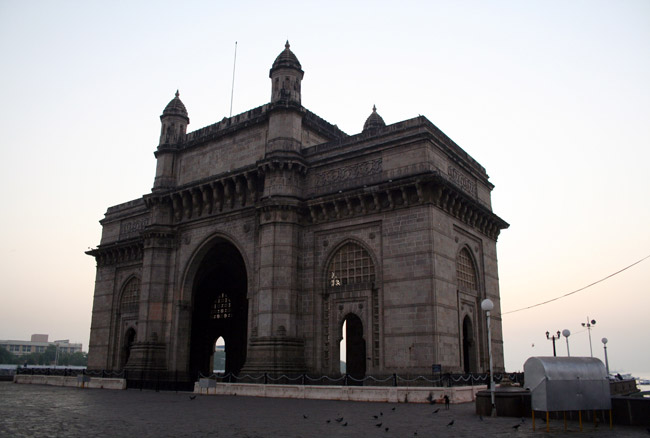
Photograph of Gate way of India: Fotocorp
 By Anil Thakraney