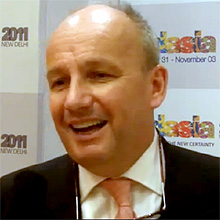
Tag: Chris Thomas

  • Chris Thomas: BBDO India’s performance has been fantastic

    By Tuhina Anand, Video-Shruti Pushkarna


    Chris Thomas, Chairman and CEO of BBDO in Asia, Middle East and Africa and Chairman of Proximity Worldwide, has spent over 25 years in the communications industry, and the majority of his time working for BBDO. In an exclusive interview with MxM India, Mr Thomas shares his views on the network and his view on BBDO’s performance in India and the road map ahead.


    Q: Are you satisfied with the way BBDO brands are performing in India?

    I think we’ve seen tremendous developments in the BBDO brand in the last three years. Our partnership with RK Swamy BBDO has been a tremendous success and continues to grow and develop. BBDO India has been ranked as one of the most creative and the most effective networks in India.


    Chris Thomas on BBDO expansion plans

    You measure their performance at Cannes, by winning the first Indian effectiveness awards at Cannes; there has been tremendous progress.


    BBDO India’s performance has been fantastic. We’ve gone from nothing in BBDO India to an agency that punches well above its weight in terms of size, is winning on the world stage, is developing our multinational clients’ businesses and brands in a way that’s highly compelling and effective.


    Q: With the recent development of Mudra, would it in any way also affect the scheme of things for BBDO?

    Well, that is a tremendous commitment and recognition of the importance of the Indian market. For Omnicom, there’s been a long standing relationship with Mudra. Obviously from the BBDO perspective, Omnicom’s continued commitment to the Indian market is very important and supportive.


    Chris Thomas on Omnicom Mudra acquisition

    Q: Are you looking at expanding your footprint any further? If yes, where would it be?

    The only thing I’m looking at expanding is quality. What I’m always interested in, is doing great work that’s talked about and moving consumers in the Indian market. If we have specific needs to be addressed in specific geographies, then we develop those needs. But the most important thing to expand is to make sure that we are doing the best work in the market and expansion comes after that, not before.


    Q: So if you were to define BBDO, would you say it’s small, mid-sized or big?

    BBDO is a network around the world, so obviously it’s enormous. But it’s not what we focus on, what we focus on is on being good. BBDO is defined by what we call the work, the work, the work, producing the best and the most compelling commercial content on behalf of our clients.


    So in this market, we absolutely live up to and deliver on that promise, and that’s why it’s been fantastic for our clients.


    Q: In the current times, what are the two challenges that you are facing?

    The challenge… it’s true in all of the Asian markets, it’s around the world, I think. But I think particularly in India and China, the key for all of our networks is to make sure that we are attracting the best people into the industry, we are retaining them and we are developing and growing them. So for me, I spend a huge amount of my time on attracting talent, developing our talent, and making sure that we have got an unfair share of great talent.


    Chris Thomas on current challenges

    Q: So what is your formula for attracting talent?

    Well we have a phrase, ‘culture eats strategy for breakfast’, and what we mean by that is, it’s about the power of the brand and the power of the culture. The fact that we are indisputably the most creative network in the world, the fact that this year we’ve been ranked as the No. 1 effectiveness network in the world means that we have a very powerful culture, we are aligned around a set of beliefs and what we care about, and that tends to attract good people. And that’s what we preserve and protect at all cost. So culture ahead of anything else.


    Q: We’ve been hearing about a talent crunch but there’s also the issue of being paid well. Is that an issue or is it being blown out of proportion?

    I think there’s a difference between accountability and effectiveness, and I think as an industry, we are spending quite a lot of time thinking about accountability. There are things we can count, like the cost of production, cost of media and so on. And we need to be concentrating a lot more on effectiveness and the value we add as a business to our client’s business. If you do that and you can demonstrate that case and that value, then you can command a premium. But it’s for the clients to see value and that’s about generating effectiveness and effective work. And I think if you can get that right, then the remuneration conversation can follow from there.


    Chris Thomas on his formula for attracting talent

    Q: Can you tell us about Proximity in India?

    We launched Proximity about a year ago now. Obviously as a network, it’s a rapidly growing direct CRM and digital network. I think there’s been a huge amount of conversation around social media, digital CRM, and we are seeing good growth in that business and I think that will continue in India as digital media, broadband penetration, use of mobile – which is enormous in this country – continues to grow, there are tremendous opportunities ahead.
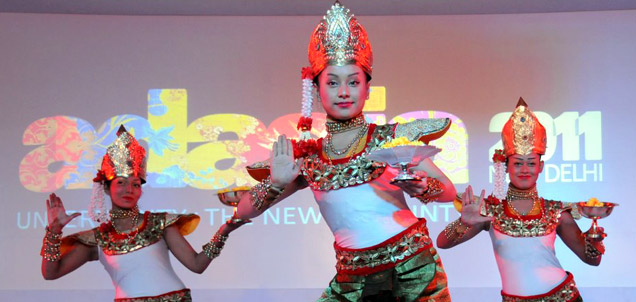
     

  • Video Report: The ‘AdAsian’ experience


    [youtube width=”320″ height=”250″]http://www.youtube.com/watch?v=iaNsKVHeQpI[/youtube]

    By Shruti Pushkarna


    Whether it was Swami Sukhabodhananda’s inspiring words of wisdom, Joseph Tripodi’s ‘engaging’ presentation or Will Sansom’s ‘Contagious’ ideas, there was something for everyone to take home from the AdAsia 2011 conference that concluded yesterday in New Delhi.


    Were expectations met? Did this AdAsia wash away the Jaipur 2003 memories? Did the Dilli chaat and the manganiyas charm the foreign delegates enough? Could it have been better? For answers to all of the above and more, MxM India caught up with some AdAsia veterans as well as first-timers on the last day of the congress.


    It was an experience to remember for quite a few, especially for the strong line-up of speakers. While first-timer Anita Nayyar, CEO-India & South Asia, Havas Media, was impressed with the creative line-up of speakers and topics, for Alok Agarwal, COO, Cheil Worldwide, India, some great content came from the non-advertising lot. He said, “…the presentations made by the non-advertising people were far fresher in their thinking…”

    Looking at the line-up, a few turned up at the congress in the hope of interacting with the industry icons. But the format of the sessions didn’t leave too much room for interaction. Coming from Pakistan, Mehwish Rafi, Chief Strategy Officer, Adcom Pvt Ltd, had a different picture in mind before she attended the sessions. But nevertheless, the sheer association with the ‘AdAsia family’ as she calls it, made it a great experience for all the 90 delegates from Pakistan.

    AdAsia loyalist, Raymond So, CEO, Mastershub, also came with huge expectations which he admitted were almost met but for the cultural experience. Recalling his grand Jaipur experience, he said, “…Jaipur had given me an excellent experience, the cultural exposure was great…and this time because of the hotel arrangement, it wasn’t as impressive as the previous AdAsia.”

    Sonal Dabral, Creative Head Asia & Chairman Bates 141 India, like most others was impressed with the content coming out of AdAsia 2011 but sharing his experience from Cannes, he gave some interesting feedback on how the content could have been showcased better. Stressing on the keyword of the trade, ‘advertising’, he said, “…I don’t think the separate seminars that happened were properly advertised… if we are in the business of building expectations, of teasing people, to creating desire about a product, I think that should have been done for each of the seminars.”

    For Chris Thomas, Chairman and CEO of BBDO in Asia, Middle East & Africa, the biggest takeaway from the conference was the vibrancy in the industry in Asia. Referring to the great work and conversations shared through the three-day congress, he said, “…there is absolutely a passion for the work, there is a sense of creativity and new techniques to be applied, and I think Asia is demonstrating its vibrancy and its importance on the world stage, and particularly in India.”

    Paresh Nath, Owner, Delhi Press, admitted to have had a great time at AdAsia 2011 as well. He said that the conversations were not just about advertising but about “communication” which happens to be an integral part of publishing.

  • Ad Asia: Acts, not Ads

    By Akash Raha

    Times have changed and with that has changed strategies of communication from brand to consumers. For much of its history, the art of advertising revolved around the creation of the ad: an expertly crafted message conveyed through traditional media and consumed by end audiences. But the audiences today have changed, they way the consume media today has changed. Audiences today consume several media forms at the same time, and to get a message across to them now is a difficult task.

    Digital and social media have upended the erstwhile models of communication. Marketing messages are now more visceral and participatory. In this era, consumers themselves can play the critical role in conveying the brand promise while energizing others to greater levels of awareness, empowerment and inspired action.

    Chris Thomas, Chairman and CEO of BBDO in Asia, Middle East and Africa & Chairman of Proximity Worldwide and Simon Bond, Chief Marketing Officer, BBDO/Proximity Worldwide in the session titles ‘Acts; Not Ads’ at AdAsia 2011 showed how ads are no longer enough. This session, deconstructed how, in today’s multidimensional media landscape, advertising messages are evolving into true social movements and acts that can affect and drive positive change. There are some old certainties which still remain certain and yet there are things that have changed forever.

    Mr Thomas said that there is a lot of uncertainty led through the forces of globalization the forces of urbanization. However, what really brings about this uncertainty is change. Giving examples from their life, both the members showed how their lives spent a decade apart had so many changes… from vinyl records to iPods, from friends on Penthouse to those on Facebook etc. These changes that we have seen in technology, has happened quicker and faster. And now, we see how information is dispensed quicker and faster in unimaginable volumes. Like a decade or two back, our values and creativity is no longer shared by two or three people but rather millions of people on digital and social media space. To emphasize this dynamic change further, Mr Bond said, “People will look back at today like they did the Industrial Revolution. It is a fundamentally changed world.”

    The panelists of the discussion gave several examples to drive home their point. The first such example was that of Yellow Pages, with an age old advertisement and with a current one. The point that they were trying to emphasize was that earlier engaging with consumers was easy as there was less interference. But today we are living in a interconnected word and customers want to interact and converse with the brand. The need is to engage with the consumers, hence, what is needed today is acts and not ads.

    A recent Yellow Pages advertisement innovated to show the efficacy of yellow pages, and an act was created, where the consumers could participate and feel one with the brand. It shows the effectiveness of advertising in the yellow pages. The implication is that the company is the same as it used to be, the customers are the same as they used to be, but the times have changed drastically. Hence, one needs to engage and innovate. Today, the consumer is in control and is in a state of absolute power. Word of mouth, trust is one of the most important things for the customers today.

    For advertisers, the essence is to create compelling content and yet, it remains important to have a clear purpose behind it. The type of communication that we are doing today is just based on the fact as how consumers react. How people buy what they buy. With modern scientific techniques one can perhaps understand this a little better now; how they buy, what they buy, but the essence to understand is why the buy. People buy not what you do, but why you do it?

    Talking about Apple as a brand and Steve Jobs the panelists stressed on how they have unleashed the power of creativity. Similarly, Starbucks too went on to say “We don’t fill bellies, we fill souls” as their campaign went from using paper cups to reusable mugs. In a new data driven world, never has creativity been more important. We know more about the consumers than ever before. But there is a danger since there is so much of information and we have to differentiate between accountability and effectiveness. We must not spend much all our attention on things that we can easily calculated and can be accounted for. The primary driver should be effectiveness… It is a little hard to predict and a little hard to account for yet it remains superior.

    Furthermore, the panel gave examples of how successful acts were created by Aviva Life Insurance and Gillette through their campaign on ‘donate books’ and ‘women against dirty stubble’ respectively. Moreover, these acts generated good content too. Similarly Volkswagen created a campaign for people car in china which became immensely successful. Through several examples, the panel showed the efficacy of acts and showed how ads are no longer as compelling. What the consumers of today need is Acts, acts which they can live and be a part of.