Tag: China

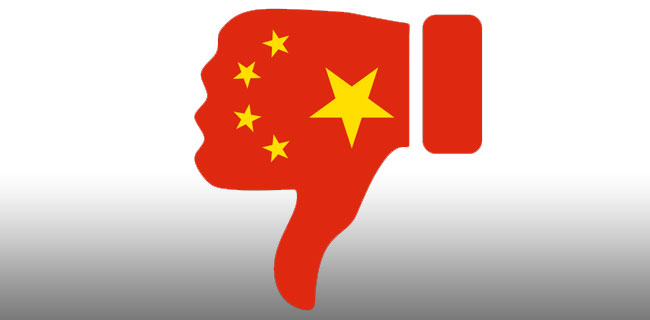
  • To China, With Hate


    By Avik Chattopadhyay

     

    China is a baaaaaaaad word nowadays.


    Dare anyone say even a neutral word about the country on the streets and that person shall be neutered. Those “chinkies” are evil. And all that needs to happen to them is be banned. A couple of days back I attended an international webinar on “dealing with the dragon” with powerful people from the EU and US deliberating on how to create a Trans-Atlantic team to counter and control China…over Zoom!


    Geopolitics and socio-economics are strange bedfellows. They end up quarrelling much more than making love to each other. Throw in the aspect of a country being a “brand” and the entire relationship gets further muddled. And, if you add individual brands from that country into this pot-boiler in the form of people and products, then it is as complex as a Manmohan Desai movie plot.


    A country as a brand is like a public transport map of a metropolis. There are arterial routes, stops, diversions, multiple modes, peripheral connectors and lots of lights and signages. A country as a brand is made up of its history, its culture, its celebrities, its political system, its political leadership, its thought leadership, its products, its view of the world, its view of your country and of course, its football team! In the timeline of the country, certain aspects come to the fore, either by design or by chance. And the world, at different stages of her larger timeline, looks at that country through different lenses.


    My father’s lasting memory of China points to the silk traders in the 1940s in the streets of Calcutta [then] saying “Tek tek o notek notek…ek baar to chi” which actually meant “Take, take, or no take, no take… once at least see”. He remembers the Chinese as industrious and practical people. But China is not to be relied upon as a country as “Chou stabbed Nehru in the back after Panchsheel”! For my mother, China is all about 1962 when she donated her gold earrings to the cause as a student. But the Chinese are all about exquisite handcrafted shoes, terrific cuisine, China Town and an extremely proud people when she interacted with them in business delegations.


    My first exposure to China was my grandfather’s Hero fountain pen… dark maroon, gold cap, with a golden arrow at the writing tip. It was far superior in design and finish to the Indian options of a Wilson or Ratnam, and far more affordable than a Parker. As a student, I was elated when my parents got me a Wing Sung with that incredible wraparound golden nib. We never wanted a Chelpark or Chairman or Bittoo as they were much inferior. As a professional, in a meeting with a Chinese delegation, I noticed most of them having a Gold Leaf, Hero or White Feather in their pockets while we proudly displayed our Parkers, Sheaffers and Pilots. On asking one slightly friendly counterpart as to why they did counterfeits of Mont Blancs and Parker Duofolds, he said: “Those are for you people. We have our own.”


    China for me is a myriad of images, concepts and contradictions.

    It is an oppressive authoritarian expansionist state. Yet it is also Hiuen Tsang and Fa Hien.

    It is an open aggressor conspiring with Pakistan, Nepal and Sri Lanka to destabilise India. Yet it is also amazing advancements in technology and open consumerism.

    It is the terrible Cultural Revolution and Tiananmen Square. Yet it is also Yao Ming, Li Ning and Lin Dan.

    It is a subversive surveillance system that plans to digitally control not only its own citizens but all users of its software and digital products. Yet, it is also the enterprising little mom-and-pop food outlet in every corner of the world, shouting aloud with a smile as you enter, “Wayyycom…wha you have today ah!”


    When Germany finally capitulated in 1945, did the world throw out Bach, Beethoven, Kant and Marx along with Hitler, Himmler and Goering? Did the world ban Mercedes-Benz cars and Grundig radios? If the football teams were banned, West Germany would have never won the 1954 World Cup under Fritz Walter!


    When you talk of Italy, do you remember Mussolini, the Mafia or Maserati?

    When you talk of Japan, do you remember Tojo, tofu or Toyota?


    Similarly, when we shall talk of China, shall we talk of the Communist Party, Chairman Mao or Chinese Cuisine? It depends very much on what China wants us to remember them by. It is a result of what aspect of the country is more enduring… its negatives or its positives. It is an outcome of what legacy the Chinese people want to leave their future generations and the world at large.


    We could very well be sipping some amazing jasmine tea in an open café on Tiananmen Square listening to an openly political poetry recital. Or we could be blindfolded and put in a car to be taken to a hospital for an unscheduled and unplanned emergency. I leave it to the Chinese to decide.


    Avik Chattopadhyay is a senior marketing and strategy consultant. He writes a fortnightly column for MxMIndia. His views here are personal

  • Havas Media launches Meaningful Brands study

    By A Correspondent


    Havas Media has come out with findings of its research that suggests that 20 per cent of brands have a notable positive impact on our sense of well-being and quality of life. Some of the findings also suggest that majority of consumers are willing to pay 10 per cent more for socially and environmentally responsible goods in India and China and 95 per cent and 85 per cent say they trust companies with a responsible or social profile more than those without in China and India respectively.


    This is the fourth yearly study done by Havas Media, which started initially with a study on sustainability and has evolved further to studying Meaningful Brands.


    What is intriguing is that for the second year running, Havas Media found that most people would not care if 70 per cent of the brands ceased to exist. Further, it argues, that the existing approaches to building and measuring brand value are out of date. As a direct response, Havas Media has launched ‘Meaningful Brands’, a global framework that offers a new index, analysis and proprietary tools to measure and build brand value in the context of today’s demanding environment.


    This innovative global undertaking that covers India and China in Asia Pacific enables, for the first time, to connect brands with our quality of life and well-being. It does this by measuring the perceived impact of brands on our personal wellbeing – their influence on factors such as our health, fitness, happiness, values, social relationships, financial security, lifestyles and habits – and our collective well-being, that is, how brands help to improve communities, societies and the environment.


    Speaking to MxMIndia, Vishnu Mohan, CEO of Havas Media Asia Pacific, said: “The findings suggest that the brands in the emerging markets like Asia have a much more positive impact and score higher on trust as compared to western market. It would have been believed that vice versa would be true but this study shows that the future of brands is higher in emerging markets like India. My interpretation is that valued brands are those that have values too. Hence those brands that are considered meaningful also have been performing well on the stock index.”


    The research was carried out from March to June 2011 across 14 markets – France, Spain, UK, Germany, Italy, USA, Mexico, Brazil, Colombia, Chile, Argentina, China, Japan and India. The research took into account the views of 50,000 consumers via online panels. Mr Mohan explained that the plan is to include more markets and consumers to make it more robust.


    The findings of Meaningful Brands analysis are especially relevant for marketers in Asia. It clearly shows the seriousness with which consumers in Asia look at the social, ethical and environmental aspects of a brand. As a region, which is growing at a rapid pace, the findings provide us a huge opportunity to create the context that promotes the growth of meaningful brands. Companies and brands operating in our region can play a big role in transforming the lives of millions of people and contribute to the progress of their societies.


    Some of the key consumer trends in China and India include:


    • 74 per cent and 62 per cent say they would pay 10 per cent more for socially and environmentally responsible goods in China and India (highest globally, aside from Chile).
    • Information and expense are the main barriers to socially responsible consumption, with credibility being another key issue in both markets.
    • 84 per cent in China feel it’s the responsibility of companies rather than the government to solve social and environmental issues (compared with 64 per cent in 2009) and 76 per cent in India, with a similar increase, since 2009.
    • 95 per cent and 85 per cent say they trust companies with a responsible or social profile more than those without in China and India respectively.
    • Empowerment is down in China: 64 per cent feel that they can make a difference to how companies behave and this is static in India at 71 per cent.
    • But so is cynicism: 71 per cent feel that most companies are only trying to be responsible to improve their image and only 12 per cent trust what companies say in this area.


    The analysis suggests that the next generation of brands will come from emerging economies. People in fast growing economies, such as Asian and Latin American markets, record a stronger and healthier relationship with brands. The proportion of brands making a notable positive contribution to our lives increases to around 57 per cent in China, 30 per cent in Latin America, compared to 8 per cent in


    European markets, where people tend to be more skeptical and less engaged with brands. In the US, it’s 5 per cent. By contrast, the situation in developed economies is the opposite. Brands in these regions are no longer seen to improve people’s quality of life.


    Meaningful Brands helps us to develop this type of relationship by understanding exactly what people expect from brands. It also helps us track how successful companies are responding to these needs by understanding how these companies are contributing to our wellbeing, both as citizens and individuals, and how they communicate these values to us. It also shows us that there’s a big business opportunity for brands which are able to satisfy consumers by creating wellbeing in the context of their new values, expectations and local market realities.


  • Kejriwal’s TOI article: same old same old

    By Ranjona Banerji


    Arvind Kejriwal has reached out to fellow Indians in a plea in The Times of India today. The front page of The Times of India says ‘Team Anna confused, does not know the way forward’. It quotes from an article which Kejriwal has written for the paper. But while the front page report talks about the “apparent” confusion in Team Anna, especially after it has been attacked for going after the Congress while being soft on other parties, Kejriwal’s article is, in fact, the same old same old. He does not talk about the Mumbai debacle; he adds a throwaway line about the BJP and corruption but concentrates the article on the perfidy of the Congress.


    Anna Hazare’s ill-health, he conjectures, had more to do with the bad Lokpal bill presented by the government than anything else. If one can venture an opinion, it is this single-minded insistence on attacking only the Congress which has worked against Team Anna. If it loses media sponsorship, it might find the way forward a tad tough. Kejriwal has asked concerned citizens for ideas on how the movement should proceed. It will be interesting to see those suggestions.


    Meanwhile, Hazare’s health remains a matter of concern, with most newspapers and channels focusing on it. TV continues to target members of the anti-corruption movement. The BJP is not the flavour of the week at the moment and if you do not come out strongly against it, then TV will not forgive you – this week at least. This leaves the leaders of the anti-corruption movement floundering a bit since they have not had their core committee meeting to decide on what to do yet! Till the triumvirate speaks, all are lost!


    * * *


    The Indian traders who were detained/ tortured/ attacked in China got so much play on TV that newspapers have started giving the incident more attention. Of course, newspapers have the advantage of setting aside nationalistic outrage and looking at the larger picture. Which includes: other traders not wanting to stop going to that part of China since stuff there is cheap and China requesting Indian traders to follow their laws! This makes for a much larger and more complicated story.


    * * *


    Inflation is down the newspapers tell us and interest rates may be cut as well. Presumably, this is good news.


    * * *


    Will Friday night and Saturday morning be all about slamming the Indian cricket team for its dismal performance so far in Australia? I’m not a fortune teller but my crystal ball says that heavy weather is approaching for MS Dhoni and company!
