By Shailesh Kapoor
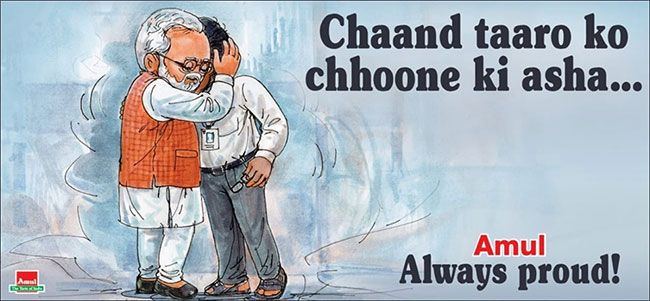
 Late night last Friday, the nation was hooked to watching the Chandrayaan 2 landing on the South pole of the moon. In the wee hours of Saturday morning, when it became evident that the lander Vikram has deviated from its trajectory and gone incommunicado, the nation gasped together. The next day, the now-famous image of the Prime Minister consoling the ISO chief Kailasavadivoo Sivan was the subject of many front pages, social media posts and memes.
Outside sport and war, there has been no event in recent memory that has managed to generate a collective interest from across the country to this extent. Live telecast from ISRO across news channels and GECs took the mission to the masses, fueling discussions in real time that night, rather than the next morning. This, perhaps, was the most important difference in this case, vis-à-vis several other space and nuclear missions India has undertaken in the past. ‘Seeing is believing’, it is said. And the live images from ISRO, including the presence of the Prime Minister there, made the entire mission come across as a lot more ‘real’ and palpable than it would have been otherwise.
The events of Friday and Saturday were intriguing, to say the least. The disappointment was soon overtaken by a sense of pride at having attempted the mission the first place. There was widespread support, cutting across the political and ideology spectrum, and in general, there seemed to be a sense that India has achieved something significant, despite the lander missing its course in the final phase. There were the jokes too, all in good taste.
Does a country of so many people care about its space programme? How does it affect their lives in any way? Last weekend, most Indians were not thinking on those lines. What we saw can be termed as ‘pop patriotism’, whereby a nation comes together through an event that becomes a popular symbol of its strength, and through poster boys (the ISRO chief and the Prime Minister in this case) who are helming the event.
In the day and age of social media, this could be the new normal. Patriotism and national pride may be easier to evoke through audio-visual stimulus, such as the live telecast and the follow-up conversations here, than through well-researched essays on history, science or humanities. It is almost certain that a vast proportion of those who watched the telecast live Friday night wouldn’t know anything about Chandrayaan (except the obvious reference to the moon in its name) before the day. It is highly doubtful that they would know much after the day either. But when there’s a collective, social energy at work, knowledge can, and perhaps should, take a backseat.
There has been aggressive nationalism on display, especially in the electronic media, in the recent years via the surgical strikes and the air strikes that followed the Uri and the Pulwama attacks respectively. Finally, with Chandrayaan 2, the media found a non-Pakistan topic to celebrate the pride of our nation.
Pop patriotism may sound like a bad word, but it’s in, nevertheless. And it will be the new kind of patriotism that the old school has to get used to.
 By Avik Chattopadhyay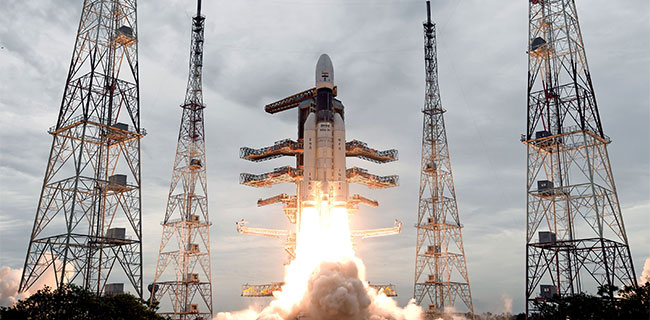
 My heart bleeds for those who watched news television after the successful launch of Chandrayaan 2 by ISRO, on Monday. The lack of depth in newsrooms was on display in all its glory. It was as if TV journalists had regressed to childhood and were reading from the “1000 words from space travel” some hopeful uncle or aunty had given them as a third birthday present. Although, I’m being unfair to those books. If anyone had really read them, the news commentary would neither have been so ignorant, lacklustre and full of meaningless bluster.