The children’s genre in the country has never been child’s play. Major networks have fought each other to remain ahead and with summer holidays on, the battle only intensifies.
Krishna Desai
The Turner network which has two children’s channels – Cartoon Network and Pogo – to its credit is going all out to be on top. So, what has been their secret to lure children to their channels? “As such there is no recipe or element for success, but over the years, our experience in the genre has taught us what appeals to kids. The key is to provide the ultimate entertainment experience that meets the needs of kids,” says Krishna Desai, Senior Director & Network Head – Kids, South Asia, Turner International India Pvt Ltd.
Their show Chhota Bheem is the most popular TV choice for kids according to Ormax in the year 2012. The network feels that the reason it is the most popular character because children aspire to be a good-hearted superhero like Bheem. “Also, one cannot strike out another important element to ensure kids keep coming back to the same show again and again and that is – humour! It is for the above reasons that Tom and Jerry is a timeless show. It’s been going for over 70 years, but is still one of the most popular shows on television across the world,” says Mr Desai.
But today kids have a lot of options – shows on the internet, computer games etc – so what is the best way to keep the TG hooked? The network believes in giving kids the ultimate consumer experience. And, hence, engage kids across 360 degrees ensuring they are entertained at every touch point.
“On air, we periodically conduct innovative contests wherein kids who win are rewarded with prizes such as iPods, PSPs, etc. For instance, last year, we did a highly successful exam contest with Roll No. 21 around the exam time that was a stress buster for kids. Annually, Turner conducts on-ground events for both, Cartoon Network and Pogo,” explains Mr Desai.
Through their School Contact Programs, the network has increased the reach to over 1 million kids between Cartoon Network and Pogo. “These SCPs provide an excellent platform for our advertisers as well to interact with the end consumer,” adds Mr Desai.
And considering the growth in popularity of mobile and internet platforms among kids, the network has also leveraged all their popular shows across these mediums. “Our strategic efforts of providing innovative games to kids across our websites and mobile applications have enabled us to make cartoonnetworkindia.com and pogo.tv the leading kids’ websites in the country with each site receiving over 5 lakh unique viewers per month. The Ben 10: Xenodrome mobile game that was launched a few months ago has got over a million downloads in India,” says Mr Desai.
The network feel that digitization will bring about the biggest change to the broadcast industry including the kids’ genre. “With phase 2 under way, it will be interesting to see the level of STB and satellite penetration, thereby determining reach of all channels. It will also help broadcasters get a better understanding of the content consumption by audiences which in turn will enable broadcasters to deliver content better attuned to consumer demand. Digitization will also determine the effectiveness of the current revenue model. The current ad-driven model under-values and under-prices the kids’ genre. With a subscription based revenue model, broadcasters will hopefully receive a fair share of the revenue pie,” Mr Desai explains.
So where does the network see the genre in the next few years? It feel that the growth of multi-TV households in India is also boosting the growth of the kids’ genre. And the demand from kids to be able to consume content ‘Anytime, Anywhere’ will lead to broadcasters aggressively focusing on delivering quality non-linear content.
In a first-of-its-kind endeavour, Cartoon Network, Film Kraft Productions and Toonz Animation have partnered to create four animated movie sequels based on the Bollywood movie Krrish.
A series of four movies will be created between 2013 and 2014, the first of which, titled Kid Krrish, will air on Cartoon Network on July 14, 2013.
Siddharth Jain
Siddharth Jain, Managing Director, South Asia, Turner International India Pvt. Ltd. said, “At Turner, our aim has always been to push the boundaries and deliver innovative and entertaining content across all our channels. Cartoon Network, the ultimate destination for fun and animation, will now be home to Bollywood’s biggest superhero in a whole new animated avatar. The Krrish franchise has been very well received by kids across the country and we are certain that they will be enthralled and excited to watch this adaptation of their superhero on Cartoon Network!”
These movie sequels will follow the childhood adventures of Krishna (from the movie Krrish) who discovers that he can help people and save the world with the special powers bestowed upon him by Jadoo (from the movie Koi Mil Gaya). But in order to protect his identity and loved ones from the wrath of his enemies, he must don the mask of superhero Krrish!
Rakesh Roshan, Director, Film Kraft Productions (India) Pvt. Ltd. said, “I have always pushed the limits by making different kinds of entertainment films and have always planned new strategies to promote them. Since Krrish 3 will be ready for release this Diwali, I wanted to revive the memory of Krrish with children and the newer generation who may have not seen Koi Mil Gaya or Krrish. I am happy to have collaborated with Turner, the oldest and most popular children’s channel in Asia and Toonz Animation, who are the best in creating animated content in Asia, to make this first of its kind animated film series, where a live action film is adapted to make animation series for television.”
“The animated Krrish franchise are fun films that are guaranteed to be a visual treat with mass appeal. It is not every day that 11 year olds get to be super heroes! We are thrilled about partnering with the legendary Rakesh Roshan and Cartoon Network. This is a huge milestone as far as Toonz Animation is concerned,” said P Jayakumar, CEO, Toonz Animation India Pvt. Ltd.
Cartoon Network has partnered with Rovio Entertainment to bring Angry Birds Toons, an animated TV series based on the globally successful and trendsetting game, Angry Birds, to Indian children’s television. Premiered on Saturday, March 16, the weekly series will air in the mornings.
The series is based on the life of the Angry Birds living on Piggy Island. Red and his fearless feathered companions, Chuck, Matilda, Bomb, Blues and Terence, must band together to protect their eggs – and their future – from the wily plotting of the Bad Piggies. With only their wit and determination to guide them, they must overcome the Piggies’ superior technology and seemingly insurmountable numbers. But they have one great edge…t he Piggies’ astounding stupidity! Angry Birds Toons brings to life the characters and adventures from the popular game, and reveals the fun and sneaky worlds of the Birds and their nemesis Piggies.
“We’ve long wanted to tell our fans the story of the Angry Birds and the Bad Piggies, to introduce their personalities and their world in detail,” said Mikael Hed, CEO of Rovio. “We’re delighted to partner up with some of the best video-on-demand providers and TV networks across the world. It is an important milestone for us on our journey towards becoming a fully-fledged entertainment powerhouse.”
“We’re delighted to introduce the Angry Birds and Bad Piggies characters and their world in more detail to our Indian fans. We combine the look and feel of cartoon classics with modern twists to slowly reveal a vast backstory. Our team has been working tremendously hard to once again delight our fans with a new way to experience these loveable characters”, said Nick Dorra, Head of Animation at Rovio Entertainment.
Krishna Desai
Krishna Desai, Senior Director and Head of Kids vertical, Turner International India Pvt. Ltd. said, “At Cartoon Network, we pride ourselves on understanding kids and delivering innovative and entertaining content to them. The Angry Birds games are a global phenomenon with kids and adults and we look forward to partnering with Rovio Entertainment as the broadcast partner for Angry Birds Toons animated series. We are certain that kids will be enthralled and excited to watch this adaptation of Angry Birds on Cartoon Network!”
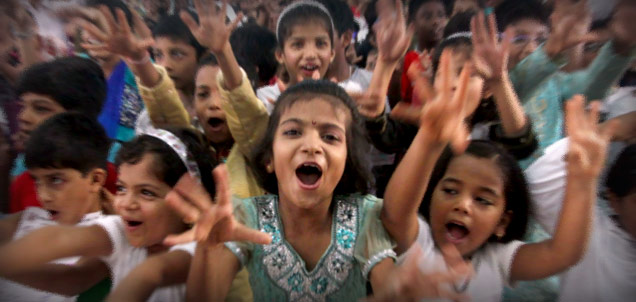
Representational photograph (Kids participating in laughter therapy session in in Mumbai… Photograph by Fotocorp)
Â
By Ananya Saha
There was a time, not so long ago in the 1990’s, when the Sunday slot of Mahabharata and animated series meant family viewing or kids genre. Kids were allowed to watch TV with parental permission. And today, kids genre in television media is the third largest after Hindi GECs at 27.6 per cent and Hindi movies at 11.9 per cent according to the FICCI-KPMG 2012 report.
Anita Nayyar
Acoording to Anita Nayyar, CEO, Havas Media, India & South Asia, the advent of Discovery Channel in 1999 saw a segment of kids watch it for education or interest. “Star World in 2004 had programmes like ‘Full House’ starring kids, but it was really post-2006 when kids became dominant. Their growing viewing needs and dedicated channels for them were addressed by various slots on various channels and some dedicated channels like Cartoon Network, Pogo, Disney Channel, Nickelodeon, Hungama, etc,” she points out. However, there is no denying the fact that there is not enough programming and print magazines for the young adult making them an underserved audience.
Nina Elavia Jaipuria, EVP and Business Head, Sonic and Nickelodeon India concurs, adding, “In terms of getting their daily dose of entertainment, this TG needs to flirt with options available across multiple platforms – be it TV, online or print.”
Sashwati Banerjee
Apart from television content, on the print content, Sashwati Banerjee, Managing Director, Sesame Workshop Initiatives India PLC added, “Books / print is another matter. This is not a generation that is growing up with print awareness and it is reflected by the recent ASeR report which showcases that children in Grade 5 are reading at Grade 2 level. There is a serious crisis in education, and reading, comprehending and fluency are critical indicators to children’s lifelong learning. There is a large number of publishers in India, but very few publish children’s books and a still smaller number specialize in publishing children’s books. Recent reports have indicated that ebooks have a higher growth potential. However, wider access is still an issue as these books require high end mobile devices (cell phones and tablets) to access and use.”
Nina Elavia Jaipuria
Catering to infants to kids upto eight-years, Galli Galli Sim Sim has evolved in multiple ways since it’s inception in 2006. It evolved the format from the classicSesame Streetmagazine style to a more narrative ‘block style’ based on research that children in India are more used to stories or narration. Considering that access to television is limited, Galli Galli Sim Sim produced a radio programme, that is being aired by 10 community radio stations to reach populations with critical messages around health, hygiene, literacy and girl child education.
Talking about Nicklodean and Sonic, Ms Jaipuria, said that Nickelodeon reaches out to 11 million kids pan India. “With media spends on kids channels approximately in the range of Rs 270cr, It is slated to grow further due to a slew of new channel launches in FY 13, she asserted. She also said that with the launch of Sonic in 2011, the investments in the kids genre has grown.
According to a recent E&Y study the children’s genre has emerged as the largest viewership segment after India’s general entertainment channel (GEC) sector. The segment comprised 18.3 per cent of the viewership among 4-14 year olds in 2011, as compared to 16.9 per cent in 2010. The study also states that advertising revenue generated by the children’s genre totalled Rs 2.4 billion in 2011, up from Rs 2 billion in 2010. This is attributed to the growth in the viewership in the children’s genre from 43 million in 2010 to 48 million in 2011. This segment focuses on its target audience through a total of 14 channels in the age groups of 2-4 years and 4-14 years, comprising the majority of the market, as well as 14-18 years.
The market for kids programming is huge, and the audience in this segment is growing. No wonder then that this November Zee launched ZeeQ, a 24×7 edutainment channel for kids aged 4-to-14-years. There are talks and suggestions of a DD Kids given Doordarshan’s reach. Kids seem to be pampered in the true sense and it is positive pampering.
Even as the category sees more entrants trying to woo the young audience, in terms of advertising pie, this genre ranks after general entertainment and sports. “We’ve seen a range of products and services making the kid the hero – from financial like insurance say an ICICI Smart Kids with the kid at the dinosaur museum or Bank of India with the kid putting his piggy bank in the locker to a flipkart.com with kid avatars of the elders contemplating a buy; simply because they are either targets or influencers and their starring role has the potential for breaking clutter. We’d estimate the kids ad-market between Rs.200crores to Rs.260crores. The pioneer in using kids to demonstrate pester power was Maruti Suzuki’s Esteem report card commercial,” elaborated Ms Nayyar.
With evolving societal structure as well as keenness on kid’s development for the future, Ms Nayyar predicts that “edutainment” will be the biggest driver in the category growth. Kids today are also more exposed .They are more amenable to instruction through entertainment. According to her, the vehicles that will drive the growth will be television, print and online, with online gaining lead.
“Word-of-mouth in this category has really been underestimated but here is a core audience for this marketing phenomenon,” said Ms Nayyar.
Challenges
Content creators and television channels for kids are increasingly experimenting with applications for cellphones and low-cost tablets and migrating content from a traditional linear medium such as TV to non-linear mediums to expand access to populations that need it the most as well as to enhance and enrich learning experiences for children. Notwithstanding the fact that the advent of digitization in India will be a key driver to the growth of the genre in the near future, mobile devices rather than the television set will be the primary driver to engage children in the future. “We’re seeing this change in theUSas well,” said Banerjee.
But the genre is facing very many challenges even as it looks at growth. As Ms Jaipuria points out:
– The kid’s category is still hugely under-indexed despite the category contributing 8% to viewership on an All India Level at 4+ age group. TV adsales are under 2% for this genre. Hence investments in the business are under pressure.
– The fragmentation in the kid’s category is increasing by the day with over a dozen players existing currently. This makes it possible for the broadcasters to offer differentiated content across genres and platforms.
– Kids as an audience are a tough bunch to target. They do not consume print and outdoor as primary consumers. A large chunk of the marketing investment is on BTL activities such as School Contact Programmes, Retail activation, direct consumer contact using multiple on-round vehicles which have an extremely high cost per contact.
– Distribution and carriage remains a challenge for this category.
Also, as Ms Banerjee explains, children today are “exposed to all kinds of programming especially in single TV homes. There is also extremely low awareness amongst parents on what children should view and what they should not. There is an imperative need to provide rating guidelines as well as awareness on how media affects children.”
While the experts believe that the greatest challenge is the creation of original content, or even good adaptation, quality is a major issue. There needs to be a very clear understanding of the sub-slice segment categories to contain the spill to international programmes, CDs and the online world as also increase the share of viewership of the media vehicle.
Says Ms Nayyar: “A lot of content and marketing is done and created for the Sec A and B but we miss a whole other India which invests heavily to educate its kids to give them another destiny. Here, affordable print with in-school promotions with reach beyond the creamy layer would create a whole new bottomline. Also, regional is a huge emerging market; again content with localization and language are opportunities and challenges. Content as always will be both the game player and game changer!”
The growth might also come from other content and entertainment avenues such as gaming. The only challenge is to tap into the potential with the right content.
# 1 There’s not much difference between what children from metro and non-metro cities are watching on TV: One would assume that kids living in metro cities are over-exposed to television and would have choices different from their non-metro counterparts. But our recent survey showed that irrespective of their location, kids prefer the same channels. This means that their choices in other areas of life are also converging to make Indian kids into a homogenous group.
#2 Just 22% of kids watch TV after school: The EduMedia survey conducted revealed statistics that are shocking. Children spend at least 8 to 10 hours in school. Assuming most children and finish school by 3pm, they are left with about 7 hours approximately before going to sleep. Besides the amount of time that these children spend on travelling, they dedicate about 3 hours to coaching classes or completing a heap of homework, they actually have very little time left for leisure activities. This daily routine of children leaves them with little time for family, friends and entertainment – including spending time in front of TV.
#3 Sony and Discovery channels are the topmost favourite channels withkids: In our survey of kids between 11 and 17, we found that instead of children’s and youth channels, it is Sony and Discovery channels which are ruling the roost when it comes to kids’ favourites. It is surprising that kids’ channels like Cartoon Network and youth channels like MTV and Channel V are not the top favourites. Does this mean then, that kids are not getting to watch what they want? Or are they growing older faster?
#4 Kids actually don’t like watching TV alone; they prefer watching with their families: Contrary to popular assumptions that kids are tantrum-throwing monsters who will hog the TV viewing space, it was observed that they in fact like to sit down with their family while watching TV. This would lead them to step out of their ‘me’ zone and learn to accommodate other family members’ choices.
#5 Watching too much TV can lead to children hitting puberty faster!A wide array of current scientific research in the field of child health tells us that TV is the cause why children are hitting puberty earlier today. Needless to say, children are growing up at a much higher pace than we can catch up with. This has a good as well as a bad side to it. They seem to understand the dynamics of the adult world and often deal with situations like adults. They become more aware and informed about the happenings around them. While we appreciate this, we might also want to take a look at the rising rate of pregnancies, drug abuse and anti-social activities among children.
Tabassum Modi is Executive Director at EduMedia India
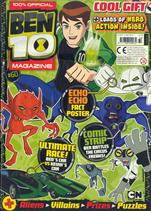
Image of Ben 10’s UK version, courtesy Newsstand.co.uk
By A Correspondent
It’s time for Ben10 fans to rejoice. Cartoon Network and Sterling Publishers are launching the first ever, bi-monthly, Ben 10 magazine in India on September 30, 2012.
The Ben 10 series are an international phenomenon and have successfully been leveraged into the biggest global licensing and merchandising franchise. Taking it to the next level, Cartoon Network and Sterling Publishers will launch the magazine loaded with 32 pages of endless fun. Kids can indulge in playing games, battling with their friends on alien adventures, solving puzzles, cracking codes, reading action-packed Ben 10 adventures, and collecting facts about Ben’s alien transformations, enemies and their origins. Each magazine comes with a unique pull-out poster.
Gaurav Brar, Director, Cartoon Network Enterprises, South Asia, Turner International India Pvt. Ltd. said, “Kids across India adore Ben 10 and constantly demand new and innovative branded products. The launch of this unique and interactive Ben 10 magazine will give kids an exciting portal into the adventurous, fantastical, alien world of Ben 10. This is yet another attempt mode by which Cartoon Network Enterprises aims to bridge the gap between kids and their favourite TV characters so that they too can be a part of the toon world they admire!”
Gaurav K Ghai, Director, Sterling Publishers Pvt. Ltd. commented on the launch of the new Ben 10 magazine: “Sterling is excited to partner with Cartoon Network to launch the first-ever Ben 10 magazine in India. Ben 10 has a strong and special connect with boys 4-10 years. This magazine is packed with fun facts, games, puzzles and everything Ben10. We are sure this magazine will bring hours of reading and activity fun for Ben10 fans.”
The magazines will be available at all key retail stores like Landmark, Crossword, Time Out, Big Bazaar, WalMart and also at individual book stores across India for Rs. 60.
After holding the number 1 title in kids’ genre over the past 6 months (*Source: Tam, All India, Kids 4-14, Weekly GRP), Pogo has achieved the highest GRP of 174 in almost the last 6 years in the kids’ genre (Cartoon Network earned 181 GRP’s in week 21 of 2006).
Also, the premier of the movie Chhota Bheem: Dholakpur to Kathmandu delivered a TVR of 2.4, the highest of any movie or show in 2012. This combination of GRP and TVR has led to POGO dominating the viewership pie with 25.6per cent relative share.
Monica Tata, General Manager, Entertainment Networks, South Asia, Turner International India Pvt. Ltd. said: “We are elated with Pogo’s increasingly better performance, and the irrefutable contribution of Chhota Bheem in making the channel reach such a milestone. The response received from our viewers is nothing but an encouragement to continue to provide quality and engaging content so as to surpass these accomplishments.”
Pogo, a multi-genre channel created exclusively for kids in India, was launched successfully by Turner on January 1, 2004 and is distributed by Media Pro Enterprise India Pvt. Ltd. POGO is available in over 24 million cable & satellite homes.
Asia’s largest convention in the business of entertainment, FICCI Frames 2012, will be held at The Renaissance, Powai in Mumbai from March 14 to 16. In its 13th year, Frames is a three-day global convention covering the entire gamut of media and entertainment ranging from films to broadcast, which includes television and radio, to digital entertainment, animation, gaming and visual effects.
The Summitwill be inaugurated by Government of India’s Information & Broadcasting Secretary, Mr Uday Kumar Varma. Senator Chris Dodd, Chairman, Motion Picture Association of America will deliver the keynote address at the inaugural session. Japanis the partner country at FICCI Frames 2012 and will be present with a high-powered delegation comprising key stakeholders from the Japanese media and entertainment industry.
Frames 2012 will present opportunities for business networking, lobbying, and creative and financial collaboration and partnerships. There will also be a series of workshops and master-classes that will be conducted by venerated global gurus who will be busy highlighting the way forward to the assembled delegates. Nearly 2,000 Indian and 800 foreign delegates are expected to attend the event.
The Who’s Who of the Indian media and entertainment industry will join hands with the global industry leaders and experts to discuss and debate and to announce new initiatives at FICCI Frames 2012. Mark Hollinger, CEO, Discovery, Carolyn Everson, VP-Global Marketing Solutions, Facebook, Cameron Bailey, Co-Director Toronto International Film Festival, Bruce Beresford, Director of Oscar-winning movie Driving Miss Daisy, Silas Hickey, Regional Creative Director for Animation at Cartoon Network, Max Howard, Global Animation Consultant and Lecturer on Producing Independent Animated Feature Films for the International Markets, Oscar-winner Harvey Lowry, Hollywood’s Special Effects Guru, and John Bashford, Vice Principal, LAMDA (The London Academy of Music & Dramatic Arts) are some of the globally well-known names who will be delivering keynote addresses, conducting workshops and master classes, and joining the panel discussions in various sessions at Frames.
Other eminent speakers from the world of television, radio and print that would be present include television czarina Ekta Kapoor, Barkha Dutt and Vikram Chandra of NDTV, Sunil Lulla of Times TV, and Puneet Goenka of ZEEL. Print will be represented by Shekhar Gupta, Editor-in-Chief of the Indian Express Group and T.N. Ninan, Editor of Business Standard.
Bollywood too would be adequately represented through eminent faces such as Yash Chopra, Karan Johar, Vidya Balan, Kamal Haasan, Imtiaz Ali, Anurag Kashyap, Farah Khan and Zoya Akhtar.
The theme of this year’s event is ‘Embracing the Digital World’. Dr J S Sarma, Chairman, Telecom Regulatory Authority of India (TRAI) and Mr Uday K Varma, Secretary, Ministry of Information & Broadcasting, will identify and address immediate areas for successful implementation of the digital switchover and also on what’s next in the regulatory and market framework to enable and sustain the transition.
The move to embrace digitization in Cable and Satellite TV services has become imperative as such services have grown exponentially inIndiain the last 17 years. A separate session at FICCI Frames 2012 will deliberate on ways to maximize the power of digital distribution. Industry leaders will share their experiences with Frames delegates, their perspectives on how funding challenges have been overcome in other jurisdictions and the takeaways forIndia. The panelists include Vivek Couto, Founder, Media Partners Asia; Anshuman Mishra, MD, Turner International India; Vikram Chandra, CEO, NDTV; Jagi Mangat Panda, CEO, Ortel; Prof Jonathan Askin, Professor of Law, Brooklyn School of Law, Former Senior Legal Advisor, FCC; Anita Wallgren, US Department of Commerce.
The FICCI-KPMG study on Indian Media & Entertainment for 2012 will also be released on the occasion. Strong growth in tier 2 cities, the continued march of regional media and the rapidly expanding new media business helped the media and entertainment industry log a 12 per cent increase in revenues to Rs729 billion in a troublesome 2011, according to the report. Overall, the industry is expected to grow at a compounded annual growth rate (CAGR) of 15 per cent to Rs.1,457 billion by 2015.
Further details on the event will be available at: http://ficci-frames.com/
If you thought Cartoon Network, Pogo, Disney, and Hungama TV were kids’ channels, look who’s watching them – nearly a fifth of those watching these channels are between 25 and 44 years. And nearly four out of ten viewers of these channels are more than 14 years.
Most children, on the other hand, either prefer or are forced to watch what adults are watching on general entertainment channels – soppy serials or reality shows. According to TV viewership data shared by TAM Media Research, only 15 per cent of all children viewing TV, watch kids’ channels. The rest –Â 85 per cent — watch general entertainment channels (GEC).
Needless to say, this has become a big opportunity for advertisers, especially those who try and reach out to parents through their children. “Parents are increasingly looking at children as representatives of the new world and latest technology. Consequently, children between 10-14 have a considerable say while buying a car or a gadget,” said Santosh Desai, chief executive officer at Futurebrands.
In fact, for Turner International India, which runs Cartoon Network and Pogo, nearly 35-40 per cent of their advertisers last year came from what would seem like “non-traditional categories such as auto, consumer electronics, finance and telecom,” said Monica Tata, general manager for entertainment networks at Turner in India.
Chairman and chief creative officer at ad agency BBDO India Josy Paul, while explaining the rationale behind these channels attracting non-traditonal categories of ads, says that brands don’t want to miss out on any opportunity of talking to the mother who is the anchor of the house. Traditionally, one would expect kids’ channels to air ads by ice creams, chocolates, F&B, and toy companies.
Insurance major Aviva India is a case in point. Aviva spent 5 per cent of its advertising budget on kids genre in 2011 and had run the ‘Aviva Young Scholar Hunt’ contest between July and October 2011 on Pogo. The impact was telling. “Of all the insurance plans sold by Aviva, the share of child plans went up from 2-3 per cent in 2010 to 11-12 per cent in 2011,” said Gaurav Rajput, director of marketing at Aviva India.
Sony tablet computers and Hewlett-Packard printers too are advertising across all kids channels these days. In fact HP, which launched its printer campaign across kids channels two weeks ago, is something they have done after several years.
“My target group for the campaign is parents of school-going children, so the kids channels were a natural fit,” said Ayesha Durante, country manager for marketing HP India. For Anuradha Aggrawal, senior VP for consumer insights at Vodafone India, whose team spends a lot of time researching the dual viewership (kids and adults), says it helps in choosing their icons — the pug and the ZooZoos, which connect with children, actually help to build an early brand association with these young consumers.
Mr Desai cautions that this could be a long-term strategy which only sectors like telecom can afford as they have “cash to burn”. He further added that in a one-TV system, everybody has his/her time slot to watch TV. Therefore, if a child is watching a kids channel, the parent has no option but to watch it.
For the genre, this means big business. The Disney channel has more than doubled its ad revenues last year while Hungama TV’s revenues rose by 35 per cent, said Vijay Subramaniam, business head at Disney Kids Network India which runs the Disney channel, Disney XD and Hungama TV in India. Disney enjoying highest share of viewership at 22 per cent among kids aged between 4-14, according to TAM.
Subramaniam says that the return on investment is not proportional to the viewership as kids genre corners just over 1.6 per cent of total revenue of the television industry against the over 6 per cent share of viewership.
According to the 2011 FICCI-KPMG report, the TV industry is projected to grow to 33,700 crore by 2015 from the current 14,400 crore (2010) at a CAGR of 17 per cent. And the kids genre gets the maximum in terms of viewership after GECs and movie channels, which lead currently.





 By Tabassum Modi