It was a mixed Day 2 for the Indian contingent at Cannes Lions. Seven metals in PR, Outdoor, Promo & Activation and Glass Lions categories including two Golds. But no metal in Print & Publishing.
In Outdoor, Ogilvy bagged a Gold for ITC’s Savlon Healthy Hands Chalk Sticks while McCann Worldgroup India won a Silver for Cat, Dog and Rabbit – for World for All.
L&K Saatchi&Saatchi Mumbai missed the Grand Prix that India has been winning over the last two years but bagged a Gold for its #GiveHer5 campaign of the Ammada Trust.
Ogilvy bagged a Gold and a Bronze in PR for Savlon Healthy Hands Chalk Sticks, and BBDO India took home a Silver for #ReleaseThePressure created this year for soft drink Mirinda.
Ogilvy also won the solitary metal in Promo and Activation Lions – a Bronze in this case.
The big downer of the day was a no show in Print and Publishing and also misses for some campaigns that many thought would definitely win more than just a shortlist.
The Indian men’s cricket team’s performance on Sunday may have been a downer, but for the Indian contingent who came in early and even those who were just wheeling their bags in, there was was reason for job. Indian agencies bagged as many as 14 metals on Day One alone.
India sent in 1227 entries this year, less than the 1317 sent last year. Last year, Indian entrants returned with 27 metals followed by 15 in 2015, 27 in 2014, 33 in 2013 and 14 and 24 in 2012 and 2011 respectively. Given the rich haul of 14 metals on Day 1 including a Grand Prix, there is reason to bring out the bubbly, a fair bit of which is already flowing. Last year, there was one Grand Prix (Mindshare), three Golds, seven Silvers and 14 Bronzes. In the shortlists announced on Sunday, India has seven nominations in PR, two in Glass, nine in Print, 13 in Outdoor and 10 in Promo & Activation. India drew a blank in Cyber.
McCann Health Delhi bagged the Grand Prix for Good plus four Golds and there were nine others which came in to the Indian contingent.  Titled Immunity Charm created for the Ministry of Public Health, Afghanistan. McCann bagged four Golds in the Pharma category which ensures it will be right on top in the final tally by the end of the festival. This also helped take McCann Health India to taking third place in the Healthcare Agency of the Year award with McCann Health being the Healthcare Network of the Year.Last year’s Healthcare Agency of the Year was runner-up this year, bagging two Silvers for the Indian Paliative Care Association.
There are many near-permanent fixtures covering Cannes Lions from India. With reason. Cannes Lions is the most sought after advertising festival for the A&M frat. While there are many from our country who are on the jury, there are very, very few who are accorded the privilege of speaking or moderating a session at the week-long festival.
So it’s a matter of pride for the Indian contingent and especially the media covering A&M that one of our own has been invited to moderate a session at Cannes Lions, and this isn’t sponsored by his own publication, but is organised by the hosts.
Campaign India managing editor Prasad Sangameshwaran, who has spent some two decades in the media across various publications – Business Standard, Economic Times, BusinessWorld, Hindu BusinessLine and now the India edition of Campaign which he joined in January this year – has been invited by Cannes Lions to moderate a session of global creative captains.
The session titled ‘Chief Creatives on the Beach’ is scheduled for Tuesday, June 20 from 1 to 2pm on the beach. While Sangameshwaran will moderate the session, Chris Garbutt (Global CCO, TBWA), Bruno Bertelli (Global CCO, Publicis Worldwide) and Laura Jordan Bambach (CCO, Mr President) are the speakers on his panel.
Interestingly, this is Sangameshwaran’s first visit to Cannes Lions.
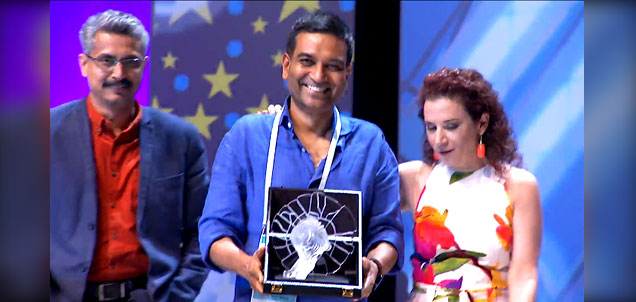
The Cannes Lions International Festival of Creativity has announced that David Droga, Founder & Creative Chairman of Droga5, will be honoured with the Lion of St Mark award at this year’s fest.
Droga is one of the most awarded creatives at the Lions. He won his first metal at age 19 and has achieved more than 70 Gold and 15 Grand Prix / Titanium Lions in his career to date.
“The Lion of St. Mark recognises an individual who has made a significant and outstanding contribution to creativity in our industry,†said Jose Papa, Managing Director of Cannes Lions. “His drive, passion and unbounded creative skill has led him to deliver continual award-winning results. He’s set the global standard.â€
Added Droga: “I have worked with more talented people and had more opportunities than one creative person deserves. The Lion of St Mark honour is beyond my wildest ambitions. It’s incredible to be recognised with this, when you still feel you have so much more to do and prove. But I will soak it up with pride and humility.â€
Droga will be presented with the Lion of St. Mark at the Festival awards ceremony on Saturday, June 24. He will also be speaking on the Cannes Lions stage a day earlier.
Cannes Lions has announced changes to its juries. The size of the jury panels present in Cannes will be reduced by 92 members across the board, ensuring the highest standard of meaningful debate can take place.
“Protecting the integrity of the Lions is down to getting the right people in the judging room,†said Jose Papa, Managing Director of Cannes Lions. “Some juries have been much larger than others in the past as a result of the number of entries they have to judge – but it is the Titanium jury, of ten extremely well-qualified people, that is the gold-standard. After extensive consultation with previous jurors and the wider industry, we have concluded that we can reduce the number of jury members while still allowing them plenty of time to judge the work.â€
2016’s Titanium Jury President, John Hegarty, founder of Bartle BogleHegarty, commented, “I would rather be judged by fewer jurors who are more focused, more responsible and better qualified. Collective responsibility and the quality of discussion are lost if you have too many judges. Size is no guarantee of strengthâ€.
Added Philip Thomas, Chief Executive of Cannes Lions:  “The standard of judging and quality of our juries is one of the major factors that contributes to the longstanding value of Cannes Lions. Upholding the value of the Lion is paramountâ€.
Now, the Global Creativity Report showcases the award-winning work, highlights the world’s most creative countries and cities, agencies and networks, and identifies the trends and themes at the heart of branded communications. Results from Cannes Lions, Lions Health, Lions Innovation and the new Lions Entertainment are incorporated. Other than agencies, offices and clients, the report also ranks top performing creatives including art directors, copywriters, creative directors and directors. Nicolas Hardy from Argentina becomes No1 director, a first time for the country, and Atul Kattukaran is the first Indian director to rank in the Top 10.
Who is is Atul Kattukaran? We googled and figured that he’s the director of the Reshma and Nike Films and is co-promoter of 1st December Films. We figured the office was very close to ours, called them and hopped across to meet Atul and his co-partner Ganesh Pareek. While most of the questions were answered by Atul, there were a few which Ganesh also responded to. Read on…
Ganesh Pareek
So how come you didn’t know about this?
I absolutely had no idea about it.
I must confess, the industry doesn’t know enough about you, though we all love your work and are familiar with it. So tell us about yourself. The only newslink I found via Google was to a Hindu feature on destination weddings!
So, work-wise I would like to start by saying work began with experimentation in films and I used to do a lot of stuff on my own this was back when I was in Bangalore. And there was lot of stuff that I tried. We made this film on Bangalore which went viral
Team 1st December Films
So when was that?
This was back in what 2011–12. And then I met gentleman Ganesh (points to him) who is now a Producer and we spoke about this whole thing of doing something in advertising in general.
Where did you learn the craft?
On my own, this is a self-taught thing …
Sitting in Bangalore…
Yes, sitting in Bangalore, computer, internet.
School, college regular?
Regular school, college; I have a B.Com degree, no film background at all.
Which school?
St. Joseph’s. College was St Joseph… everything was St. Joseph.
Ganesh interrupts: You can tell him you are dyslexic??
I am very slow at reading, that’s why I don’t read too much. But dyslexia is not a big issue anymore. So coming back, I met Ganesh randomly and we got chatting and we spoke about advertising in general in India. Now the thing is there is some stuff happening here but we want it to do it something more, maybe bring in new technology, bring in new techniques.
Family background?
My dad was in business, mom homemaker…
No one in the media, nothing to do with films?
Not really, my brother is a photographer that’s it.
Elder?
Yes, elder brother.
So some influence was around?
No we started around the same time.
You met Ganesh after that?
I met him and we got talking. We did this one film called put up online it is called Little Bangalore I don’t know if you have seen it.
No.
So it went viral and we tried a new technique called Tilt Shift or everything it looks miniature I don’t know if out know about it.
That was in 2012?
Yes, and this whole idea of stop motion in photography is when we got chatting and we actually pitched the same idea to a few agency… I don’t want to take anybody’s name.
Incredible India?
We went there and met them like I said okay let’s pitch.
And how old were you at that time, how old are you now?
I am 30 now I just turned 30 so about 4 years ago so it could be 26. It would be 25 or 26.
You didn’t do anything after BCom, didn’t take up a job?
No nothing, ever since I was a kid I wanted to make films that’s something I always wanted to do. So anyways so we got these things we met these guys.
So let’s cut to your first big project. Incredible India
It was a big pitch, they loved it
And?
Forget it. We didnt’ get through it. Later on, with the same idea of stop motion and same technique is where Nike came in.
But stop motion as an art, as a form is nothing new…
Yes
So?
Of course, even the idea of tilt shift is not something which we have discovered but it is something which is not being done in our country. Everybody has this sense of ownership of his own country, his own city. Hence I wanted to make something for the city that I was born and bought up in hence a video for that city. Hence Little Bangalore.
And then Nike happened…
Yes, and we had the opportunity now to do something different. The brief was very cool and simple. Get the whole country to bowl one ball.You have seen the film, right?
Yes, How did you get to JWT.
One of my shots in Little Bangalore was from the JWT office in Bangalore. In Bangalore there are not too many high skyscrapers and this office was from the 12th floor. I met the films head and she let me go to the terrace and the cafeteria. There is a football scene in this that all is shot from the JWT office and I have even thanked them in the film. So basically everybody in Bangalore saw the film. It went viral for the first two days and was a big hit.
That’s how you got Nike from JWT?
Yeah, then there was this Nike campaign and we were briefed about it.. about stringing the the whole country and it is just one delivery, one ball. So we started coming up let’s do this and that. We spent close to one-and-half months including post-production. We went to 18 cities shooting, for which a lot of pre-production than the actual shoot was involved.
Whose idea was it?
So like I said that the brief that they gave us was to let the whole country bowl one ball, stop motion is something they had seen us doing before, and hence they wanted to explore the idea, they wanted to explore the technique. It was their idea to show the kids all over the place. They also give us the flipbook idea…
And that was your first big ad film? Well, your first ad film – big or small?
Yes.
And from then on it’s been a smooth ride
Ganesh: The moment Nike came out we knew we have lot of value, because of my art background I spoke to a lot of my firends, and, yes, from then we have had a lot of work.
Atul: We stated thinking about a lot of ideas, we met a lot of people …
Why 1st December… you all met that day?
No, 1st December 1903 was when the first-ever commercial film was released. But honestly there is not much philosophy behind the name
So let’s look at fast-forwarding through your work… after Nike came what?
Hmmm. What did we do after that? Peter England We did hotstar this year, 5 rivers last year.. there was Maruti Baleno.
What would do you say is your best piece of work. Stuff that you are proud of?
Ganesh: No, no see Nike has taught us, it’s the first film that we did. I know it has got a lot of awards and it has all that behind it.
Atul: We have been growing we have doing better work ever since Nike, Nike was the start it will always be special, because it’s the first it’s the first film that we ever did…
Which has been your best work so far?
I personally like the Maruti film, I really like Channel V films and of course the Reshma film, which is so very different from all of these. It has a lot of meaning behind it. Frankly, I don’t want to pick favorites, but that one film is something different.
Mose satisfying? So with the Reshma film, was the idea of the film yours or Ogilvy’s?
The Reshma film started with them coming to us this is the concept of Stop Acid Sale. It’s an NGO we met.  Harshad and his partner from the agency [Ogilvy], told us about the NGO. We wanted to meet with the NGO person Ria Sharma. We actually met this girl, we went to her house, met her family, heard her story. It’s a terrible story. The acid attack you know was not even meant for her, but that day she was in wrong place at the wrong time. So now the thing is how do you connect with everybody and tell them that there is a problem in this country, and it has to be addressed the issue. Acid sale is there everywhere… people use it to clean their toilets, but we had to connect all these people to make them understand that the petition needs to be signed send to our Prime Minister that something needs to be done… which happened. After talking to her, we decided to go forward even though being an NGO, there we no budgets.
Ganesh: And then Atul spoke to his wife, and we didn’t charge anything. We spent our own.
Hmmm.
Now, you know, one of the most watched things online are tutorial videos, makeup tutorial videos specifically. We spoke with the agency and we came up with this plan and idea together. It wasn’t easy, given what happened to her. Half the face was missing… it’s very difficult to see. We were in tears. Every one in her family is very very good looking. Obviously she was in shock. The one person who really helped her was Ria from Delhi who started this NGO. She is almost like a second mother to Reshma, she helped her understand that as the ambassador of this campaign she can help a lot of people in the future.
So this whole idea of it the campaign etc. was essentially yours or it’s his or it is combined?
Atul and Ganesh: We can’t say because we discussed a lot.. it took us some three months to work on the concept, the script…
And you did all of it free of cost?
Yes. we have put all the money. Because otherwise the idea was not going to see the light of the day.
And clients and awards?
See with Nike, a lot of people came to us… we have got 100 + awards till. But this was different,
Hmmm
We were there in Cannes this year. but more than the award, it’s for the girll. Like in one of the three films, she is teaching everybody to put an eyeliner. Now, she doesn’t have eyelashes even. So it was very touching. She has immense hidden power.
How come you haven’t put up the Reshma film in your body of work on the site?
Reshma is not an ad for us actually.We didn’t go to any awards first. Even at Cannes we didn’t go to collect the award although we were there. If it wins an award, we are happy because that girl’s life will get better.
But the credits to the production company and direct exist?
Yes, they put it that is their choice.
But you don’t want to…
W did it for different reason, we did it for Reshma.
Tell me, what does being among the Top 10 directors of the world meant to you?
I don’t know I am trying to process it (laughs)… I just don’t know. Cannes was a real eye-opener where we saw amazing work being done. If you go back to the beginning of our conversation, our whole objective is to do good stuff, do good films and put it out there. If you see films that come out of Brazil for instance are amazing. So they have really dug deep into their culture, their roots their problems. India, with the second-largest population in the world, has so much material to talk about, so many subjects to cover, but I don’t we are doing justice to things around us for us. We have even met so many agencies and we’ve told them let’s collaborate, the whole system of writing scripts, going to your client they look at 25 and 50 scripts and pick 1 I don’t know, because the marketing guy said this will work and then they come to us and we look at it and we say that if you come at Stage 1 when one is writing those 50 ideas or you have a thought it will make much more sense we will be able to tell you which direction it can go and how it can be made.
But is that practically possible?
We did it, we have done it with one of our that is another thing we have gone directly to companies like Star India. The whole network actually. They gave us six films in one year and they took all our idea and gave us money and they’re very happy. Whatever you see of Star, except hotstar is stuff that we’ve gone directly. Everything starts with a thought: what do you want to do? What do you want to say?
Are agencies okay with it? To find that you’ll directly with the client?
Ganesh: We’re not telling you that we will tell you how the brand is. I’ve spoken to a lot of creative people and we’ve figured out they have a lot of work. They are very talented but clients somehow dominate and they don’t listen to great ideas. They also have a job to do. So, they told us they have good ideas. We thought we’d help contribute… Because, at the end of the day it comes to the film maker.
What according to you got you the award… it is for Cannes Lions and you say you didn’t even enter the awards for Reshma. And they selected you. You have sett the benchmark for creative excellence, it’s the definitive ranking is from the Annual Cannes Lion Global Creativity report has been announced
We haven’t sent it. We didn’t enter for it. This is the film that they [Ogilvy] sent.
That is commendable because… it was sent not for Film Craft… you’ll haven’t sent it and they’ve still selected you despite the fact that you didn’t enter.
Ganesh: I showed my wife that see, this girl is our inspiration. We feel we should have the courage she had. It’s all her I believe. If she didn’t want to do this film, it wouldn’t have happened. It’s her destiny. You know there was actually a court hearing on the subject. Everyone has woken up suddenly. When something big happens, that’s when… They also posted it. People are rooting for her also, that she should win the case. So, again, why? So, all of this has been led…
Moving on, Iis there something specific that you’ll are good at and you’ll like to do…
Yes, films related to sports is something I’m obsessed with. I want to tell the story of sports in this country through advertising, feature films, whatever it is. That’s one area. If you ask me as a subject, that’s something I want to do something about. There are stories on sports that we have seen from India specifically. It’s good, it can be better.
So, you’d like to eventually look at feature films.
Of course.
Is there something you’re working on?
You can say, there is something that we’re working on. It’s not something we can talk about at this stage but when the time comes.
Is there any timeframe you’re looking at?
It’s something that we’ve discussed. We’ve set a timeline. It’s very near. We have to completely exit advertising. We will do things parallel.
So you’ve set up this thing with Anup Joseph?
He’s my brother. He uses the shorter version of our surname. I use Atul Kattukaran.
Also based in Mumbai?
No, he’s in Bangalore but he keeps flying because his family is there.
Okay. Given the fact that there are reasonably big film makers here in India this is the first time somebody from India has been selected to be in the Top 10.. it’s huge. Where do you see yourself in the midst of all the others around us?
I don’t want to compare with anyone out there the kind of films we do. That’s one decision we’ve made pretty early in this career we’ve had so far. In India there are a lot of story-based films on mother, father or all those things… Those are something we won’t touch. I’m talking about advertising specifically. Most of our Indian films are based on family. You know what I’m talking about. The kind of work we do is very different. If you go by our showreel, it’s very edgy. It’s very fast. It’s very visual-based. If you look at it in that little universe, the people doing that kind oif work are much fewer than everybody else in the ad fraternity. Wouldn’t you agree to that?
I agree. But I must confess I hadn’t heard of you’ll.
We mutually decided to stay low. Let’s focus on work. Social media is a lot of self-appreciation, self-praise and it distracts you.
I only saw one article of yours which was about your destination wedding.
We turned down the Reshma interview because we didn’t want to promote ourselves.
So, what next?
Ganesh: There’s a lot that’s coming. Let’s see. There were a lot of commercial offers but he said no (pointing to Atul). Then I also decided I didn’t want to get into this stuff. I said they’re asking us to do what everybody is doing. What’s the point?
So, for every offer that comes to you, how many do you turn down?
Ganesh: I think 44 to 47 offers in a month. That’s the status from the last 11-12 months. Now it’s one per 90-95. It’s just the fact that we believe in what we do. We say we won’t work on these kind of things.
Atul: We do something like one film in a month but we do have to believe in what we do. It’s only then that you’ll see the results. If you don’t believe in something, it will show in it’s reproduction.
Next step is a feature film or more ads?
Right now, we want to do a lot of ads. Like he said, there will be a stage where we know that enough has been done and the ball is rolling. We want to spend some time in advertising. We want to make good films. So, maybe the trend of good films…
And more money?
Of course, money is always good to have. In the creative process, that stream of consciousness, some of the ideas stay with us, we make them into the film.
We’ve had Happy from Bangalore being acquired recently. Would you ever be looking at getting bought out?
I don’t think so. No chance. Our purpose between us is that we want to do this only for a limited time till we know that we’ve done enough and then it’s… we will move on.
Ganesh: I’ve turned down a lot of money as well, as a producer. I’ve said no completely to directors outside. We are sticking to that. We know what we are. 100%. The kind of material we have right now, we can easily rock for the next 10 years. We develop a lot of ideas. It’s all here.
What is the team strength here?
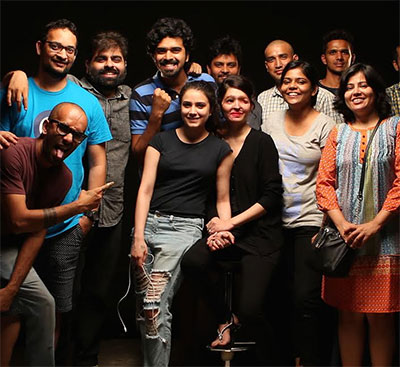
7-8 permanent and the rest is all depending on work. But, I think these people are groomed in terms of philosophy. We go with a fresh mind, we train them. We have a module where we decide this is how we have to think. This is our process. That’s all! And the process is… the first think we teach to be creative is… Don’t get into self promotion. Come up with your own ideas. Everybody follows that. You won’t know about our team also. They’re so silent, but they are brilliant. People have hired our editor because they can’t get us. He’s a freelancer. Everybody hires him and they realize, he works into combination.
Razorfish has launched a new data intelligence platform, COSMOSâ„¢. COSMOS is the first-of-its-kind offering that combines cognitive algorithms, data intelligence and machine learning to create timely, relevant and seamless brand experiences across all touch points.
The platform was debuted during Razorfish’s main stage seminar, titled “Cracking the Code of Creativity,†at the 2016 Cannes Lions International Festival of Creativity on Monday, June 20. In partnership with Contagious Communications, the agency was given exclusive access to a 15-year archive of Cannes Lions awards submission data, which they analyzed using COSMOS to devise a formula for creativity and demystify commonalities in award-winning work.
Powered by patent-pending artificial intelligence algorithms, COSMOS solves the challenge of fragmented audiences, disparate customer data sources and siloed brand experiences. By mining behavioral data, and in turn predicting the needs, wants, and motivations across the entire customer journey, marketers are able to unlock new streams of revenue and create business impact.
“New business models are changing old paradigms and companies must now adapt to connect with consumers who are more empowered than previous generations, with more touch points than ever before,†said Shannon Denton, chief executive officer, Razorfish. “With COSMOS, we can now harness intelligence from online and offline data to create a single view of the customer, while at the same time creating experiences that will not only disrupt and drive growth for businesses but also improve the lives of their customers.â€
COSMOS is modular, allowing organizations to either deploy the platform at scale or purchase need-based solutions that can be integrated with existing marketing and technology platforms. COSMOS learns, reasons and activates deep customer insights by introducing cognitive optimizations that drive loyalty, customer retention and experiences in a never-before-seen level of personalization.
“Relevance has always been key in marketing. The opportunities to be highly relevant have increased tremendously with the omniscience of mobile and programmatic media. By the same token, the difficulty in finding the right moment of interaction has also increased. Our digitally connected economy is forcing brands to fundamentally redefine the way in which they interact with consumers, †said Rishad Tobaccowala, chief strategist, Publicis Groupe. “COSMOS helps solve this problem, unlocking moment marketing opportunities by quickly delivering data and insights that can be activated in real time across channels.â€
The COSMOS intellectual property was developed and is led by Razorfish Chief Intelligence Officer Samih Fadli and is fueled by more than 1,500 data consultants and 6,000 delivery resources across 21 countries globally.
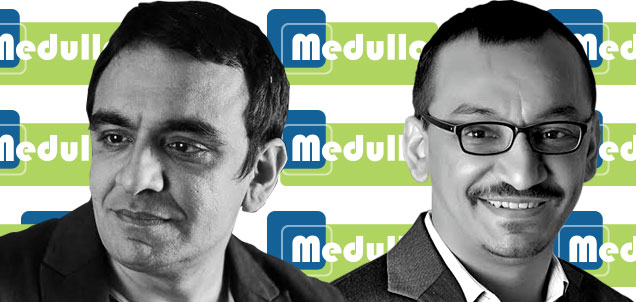
India had a great start at the 2016 Cannes Lions Festival of Creativity, with Mumbai-based Medulla Communications bagging the Healthcare Agency of the Year in the Lions Health category – a first for the country. Praful Akali and Amit, former Grey creative chief , front men of the agency, bagged seven Pharma Lions in all: two Golds, two Silvers, and three Bronzes. Their campaign, ‘Last Words’, for the Indian Association of Palliative Care, hit home. They speak to Anuka Roy about their win, the healthcare advertising scenario in India and what lies ahead.
You are a young agency, having been set up in 2008, but your works have been winning awards over the years. But being ‘Healthcare Agency of the Year’ is a big deal. Your sentiments as you look back on your eight-year journey…
Praful Akali (PA): We feel proud to have won ‘Agency of the Year’ for India. We are happy to have made India proud.
A B-Pharm degree followed by a PGDM from an IIM is a winning formula to lead a healthcare agency. Plus a brother who is among the top creative professionals in the country. So what would you attribute your success to?
PA: Our success is based on our philosophy of integrating medical, creative and strategy, which is why all our communication — whether for clients or awards — has been appreciated. The rest has been about focusing on the advertising basics. If you look at any healthcare advertising agency, either in India or even abroad, they understand healthcare but not necessarily advertising. So the planning pieces of advertising, the basic creative and strategic processes, are not followed. An advertising agency does not necessarily get healthcare and very few have a healthcare arm. We felt that we needed an agency which got both advertising and healthcare. When Amit joined us, we used him as Chief Creative Officer to bring a basic creative strategy and philosophy on board, and also hire great creative people.
Amit Akali (AA): When I left Grey two years ago, I felt that the level of strategy and creativity in a niche industry, was not the same as in mainline agencies. In the healthcare agency that already existed six years ago, called Medulla, while the strategy (coming from Praful’s background of IIM) was world-class, and their medical team was among the best in the world, where creativity was concerned Medulla had benchmarked itself against the Indian healthcare industry. We were clear that with the medical expertise already there, the creativity had to be benchmarked to the best in the world, and so we benchmarked it against Cannes. Last year was the first time we entered at Cannes, and became the No. 3 agency in the world. That is when we decide that we owe it to ourselves to now become No. 1.
What are the challenges of being a healthcare agency as against a regular creative shop?
PA: The communication you have in healthcare can genuinely impact the lives of people. But the regulatory barriers, in terms of more complex messaging, also have to be medically robust. The complexity of medical advertising means that my creative has more pegs to hang things on. And the other things – like medically robust communication, saying the right thing and being ethically correct — is the same for all kinds of advertising. Agencies from Mexico, South Korea and Indonesia have been telling us that they are glad that an Indian agency won because the work has been truly inspiring for them.
AA: Healthcare has its regulations and restrictions. All your life you work on briefs for cold drinks, chips and chocolates and suddenly, over here healthcare is a completely new sector and the briefs are very specific. For me, coming from mainline, the propositions were really fresh. In healthcare, you also have a medical team that is part of the creative process. They come up with the knowledge of the product and they really give you very sharp briefs to reap off.
Tell us about your client, the Indian Association of Palliative Care, for whose campaign (‘Last Words’) you bagged two Golds and a Silver.
PA: ‘Last Words’ is not a simple campaign. It is a huge project for the Indian Association of Palliative Care (IAPC), and gave us a lot of emotional connect with everyone, including the jury. The campaign has been a personal journey for us. Our mother was suffering from cancer and wanted to die at home, and not in the hospital. At the last stage, she was in such bad shape that we had to move her to a hospital, and she died in the ICU. We were not sure if we had done the right thing since we had not heard of palliative care. Later, when IAPC was looking for a campaign, we were inspired by our own journey. Palliative care reduces pain in the last stage and provides counseling to both the patient and the family to prepare them. You always expect that your last words will be heard by your family, but when we realised that the last words are actually heard by nurses, we did this campaign with nurses, and chose the strongest last words to become a part of the AV and online film.
Healthcare advertising is not really big in India. Do you think winning ‘Agency of the Year’ will change that?
PA: I think it is already happening. When we were there, we met everyone from the Indian advertising fraternity, and they were all proud of the win. A lot of them may not have heard of Medulla because healthcare advertising was not necessarily on their radar, but they were proud. Realising the potential of healthcare advertising is already happening. Between last year and this year, I think the number of entries from India in the Cannes Lion Healthcare category has increased five-fold while entries from across the world have gone up by 40 per cent. People are realising that healthcare advertising can genuinely change lives and is an opportunity for people to do more impactful communication.
AA: At Cannes, we presented JWT’s Blood Bank project and the Blue Dot project by McCann. Clearly, the focus this year was on healthcare, not just from Medulla but India. Healthcare is a very important sector in a developing country like India. Twenty years back, Ogilvy worked for the Pulse Polio campaign and helped eradicate polio. In a country like India, healthcare and healthcare communication have importance, but specialised healthcare agencies are not doing as much creative work as the mainline agencies. That is something Medulla set out to change two years ago, and that has clearly happened.
A Grand Prix still eludes you. Are you aiming for that next year?
PA: The ‘Last Words’ campaign, we were later told, was considered for a Grand Prix. For us the big aim was clearly to become Agency of the Year. I do not think that a Grand Prix is necessarily the peg, but there are pegs of winning even more awards the next year, and making people realise that it was not a flash in the pan, but that Indian advertising is very mature when it comes to healthcare. We want to do some of the best international advertising work in pharma and healthcare, and if tomorrow we do that and people laud the work done by an Indian agency, that would mean more for us than a Grand Prix.
This interview first appeared in dna of brands on June 27
“99% of advertising is bad work,†said Sam Ball, Creative Director , M&C Saatchi as he started the session ‘Misfits and Madmen’  hosted by M&C Saatchi, adding: “A bunch of like minded people in a room is the worst thing in the world for creativity but that is generally how advertising agencies like to operate.†But that is what happens in majority advertising agency. Most of the times, productivity is given more importance than creativity.
Ball noticed that when a group of people work, everyone goes for the happy medium, the dissenters are shut down. The solution suggested by him is ‘Diversity of thought’. “Diversity of thought is bigger than people, we have to inject it in to clients, our processes and inside people,†he said. He gave some examples of diversity of thought from other creative industry which included the structure of the Pixar building, which was built to encourage people to collaborate and not be confined to their own space.
The creative director conducted an experiment where he got 10 people, who would have never have thought of working in the advertising agency. He put them in the creative department and gave all of them the same creative brief. The purpose was to see how people from different background will come up with different ideas. The ‘misfits’ ranged from data manager to investment banker to cage fighter and even a poet. And, during the exercise different creative people will come and talk to them.
The brief given to them was: How do we make a newly brought Converse more appealing to young men and how do we find a way to make them look the way they want quicker. Before showing some of the ideas that the people came up with, he showed a video that captured some of the moments from the experiment as well as a few interviews of the misfit that he took.
He showcased some of the works that the misfits presented. Ball started getting emails from the misfits after the experiment was over. Most of them thanked him for the opportunity and some of them were ready to look at new career options. “That blew me away. 10 random people who never thought of working on the advertising industry, three of them asked for a job,†Ball said. And, the takeaways that from this experiment for Ball was as follows:
:: Be open to ideas of those who know much less than you because they may really know much more.
:: The future belongs to the agencies that inject diversity of thought in to their people and their process
:: Your most extraordinary ideas are not in you, they are all around you.
It’s been happy days for the Indian contingent at Cannes.
Some rich pickings in the awards that were presented on Monday evening, the second day of the International Festival of Creativity, better known as the Cannes Lions.
After Medulla being crowned the ‘Healthcare Agency of the Year’ on Day 1, Day 3 saw really rich pickings for India, even though there may have been some disappointments for a few favourites.
Mindshare India bagged the Grand Prix for Glass Lions for ‘The 6-Pack Band’, a branded content campaign for Hindustan Unilever’s Brooke Bond Red Label tea.
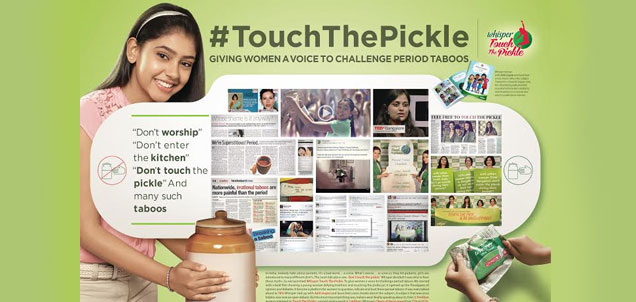
This is the second consecutive year where an Indian agency has won a Grand Prix in the Glass Lions. Last year, it was BBDO India for Touch the Pickle. The award was picked up by Ashutosh Srivastava and Gowthaman Ragothaman as Mindshare South Asia CEO Prasanth Kumar was in Mumbai.
Meanwhile, BBDO India and Ogilvy bagged Gold at Glass Lions for their works ‘Ariel Matic – Dad, SharetheLoad’ and ‘Make Love Not Scars – Beauty Tips by Reshma’ respectively.
Earlier in the evening, in Radio Lions, L&K Saatchi & Saatchi was awarded two Silvers for Thomas Cook and Contract Advertising won a Bronze for Nokia in the same category. In Print & Publishing, JWT won a Bronze for its Sleep Apnoea campaign. In Promo & Activation, Leo Burnett India brought home a Bronze Lion for Bajaj V.
The Cannes Lions International Festival of Creativity has announced changes to the 2016 awards which will see the Press Lions become the Print & Publishing Lions and Digital Craft split from the Cyber and Mobile Lions.
The addition of the Press Lions is considered to be a milestone in Cannes Lions’ history, being the second award to be added to the competition. Simon Cook, Director of Awards, Lions Festivals, commented, “This is an award that’s been with us since 1992. By renaming it the Print & Publishing Lions, we are evolving the category, just as the print and publishing world itself is evolving, to recognise other forms of publishing, along with best uses of press and interactive press.â€
Commenting on the splitting out of Digital Craft, Terry Savage, Chairman, Lions Festivals, said, “The Cyber and Mobile Lions juries have told us that with more and more UX and Craft focused entries, it is necessary to have experts in this field sitting on the jury. We’ve chosen to split it out so that this specialist area can have its own dedicated jury, which will also make the hugely labour intensive Cyber Lions judging much more manageable going forward.â€
The Digital Craft Lions will celebrate the creative skills and digital craftsmanship behind the content including the quality of design, the technical execution and the overall experience across all digital platforms and devices.
Additionally, Cannes Lions has adapted and changed other Lions for 2016. After continued consultation with a network of product design advisors, the Product Design Lions evolve significantly for 2016 with expanded and redefined categories that recognise the importance of the product as both a medium and brand embodiment, with new additions including Service & Interactive Design for Products.
The Titanium & Integrated Lions are being separated, with Titanium and Integrated now being judged as standalone Lions. Elsewhere, the Design Lions see a new suite of Experience Design categories and an expanded Social section, and the Outdoor Lions grow to include a large Digital Outdoor section.
As previously announced, the launch of Lions Entertainment will see two associated Lions. The Entertainment Lions will replace the Branded Content & Entertainment Lions, while the Entertainment Lions for Music are launching due to music’s significant role within the entertainment sector.
Whisper’s curiously-titled but hard-hitting campaign was awarded the Grand Prix in the newly-created Glass Lion category at Cannes Lions this year. The awards went to creative agency BBDO India. Spokespersons from the brand’s parent company, Procter & Gamble, responded to questions from Dyanne Coelho on why the movement, which aims to eradicate the taboos and age-old myths around menstruation, received an overwhelming response both at the international festival as well as back in India.
How did the idea behind Whisper’s ‘Touch the Pickle’ campaign come about?
Whisper’s brand purpose is to advocate for, and empower, women, to reach their fullest potential. The Touch the Pickle movement was conceived when we realised that a majority of Indian women feel restricted from achieving their dreams because of irrational taboos around menstruation. We believe women should not feel restricted on their period days, and an overwhelming number of women across the country responded to our campaign with their own stories of breaking taboos. A survey by market research firm Ipsos on understanding these taboos revealed that among urban women, 59 per cent still don’t touch pickle, and more than half prefer not to venture out of their homes, during their periods. In light of these findings, Whisper embarked upon the journey to launch a nationwide movement — across not just TV but also PR and digital. ‘Touch the Pickle’ was one of the most irrational taboos and was an apt metaphor for all the other irrational taboos that hold women back.
Many argue that these so-called taboos have been passed down over years because they are healthy practices women should adhere to, during menstruation. And that it is only now that these practices are being labelled taboos. How would you respond to that?
There are two kinds of taboos that Indian women follow. Irrational taboos, like not washing their hair, not touching the pickle, sleeping in areas away from the house, have no relevance to menstruation today and are age-old myths imposed by families that considered periods as impure. The other set, like not wearing whites, not leaving the house and not exercising, started at a time when good sanitary protection did not exist and women had to use cloth, rags or even sand or ash during periods. Today, when there is superior technology in terms of sanitary pads, women shouldn’t worry about following such unreasonable practices. About 99 per cent of gynaecologists believe sanitary napkins are the best form of protection during menstruation as per a national study by the Feminine and Infant Hygiene Association and Ipsos. In the 21st century, when there is a solution, there is no need for women to restrict themselves.
Was the impact to the campaign different in Tier II and III cities from the metros?
An eyeopener for us during the research conducted by Ipsos is that even in urban towns, most of these taboos are still observed. For example, 65 per cent of women from urban India perceive periods as an obstacle in achieving their full potential and some 54 per cent are not allowed to water plants at this time. Our focus has been to drive awareness of the irrelevance of these taboos and encourage consumers to help change the social behaviour and gender inequality that restricts them. We’ve done this in different ways via TV, PR and digital, but we’ve also focused on educating young women and their communities on menstrual hygiene. We’ve also pledged to educate 15 million girls by 2017 on menstrual hygiene, and saw this impact in the sudden surge of conversations, discussions and debates women across India were having around menstruation, where many of them were questioning the myths that were holding them back.
The campaign received positive publicity elsewhere in the world, more than in India. What do you think the reason for that is?
Touch the Pickle was an integrated movement not restricted only to television. Women Achievers like Aditi Gupta (founder of Menstrupedia), Ishita Malviya (India’s first female surfer), Nungshi and Tashi (the first twins to scale Mt Everest), anthropologist Suneela Garg and film personalities like Parineeti Chopra, Kalki Koechlin and Shradha Kapoor, all came together to support this movement to eradicate taboos. The winds of change are blowing through India and the world, and insights regarding taboos around menstruation resonated with global audiences because taboos related to periods are not an Indian phenomenon only.
There are some who believe that while this campaign had a positive impact on many in India, it also paints a socially-regressive view of our society, when that is not the case.
Although 65 per cent of Indian urban women observed these taboos, 82 per cent wanted to break free of them. Interestingly observing irrational taboos is not just an Indian thing. Across the world, women hide their sanitary pads. You will find it heartening to know that in the last year, a surge of Indian women have expressed how normal menstruation is, and how important it is to eradicate these taboos — whether it is the Jamia Millia university [campaign], the Rupi Kaur Instagram incident or even the Menstrupedia comic (which we partnered with) which educates women on menstruation. This means Indian women are empowered and unstoppable in leading this movement.
Has the campaign resulted in a growth in sales for Whisper? If so, by how much?
Touch the Pickle was an integrated movement across touchpoints, including PR, TV and digital, where the central idea was the consumers’ need to be empowered and lead this change. Consumers rewarded us by choosing Whisper, and we have seen our business grow in the last year.
After the overwhelming response it got, are you thinking of running the campaign again?
We are thankful to Cannes Lions International Festival of Creativity and Lean In for instituting this much-deserved award category, the Glass Lion, and awarding us a Grand Prix. We have our partner agencies BBDO, Madison PR, Mediacom, Quasar and Encompass to thank. This is an important movement and we’ll continue to stand for empowering women.
 There are many near-permanent fixtures covering Cannes Lions from India. With reason. Cannes Lions is the most sought after advertising festival for the A&M frat. While there are many from our country who are on the jury, there are very, very few who are accorded the privilege of speaking or moderating a session at the week-long festival.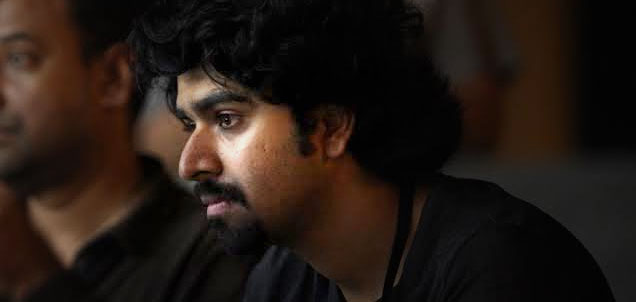
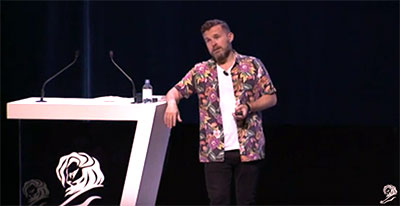 “99% of advertising is bad work,†said Sam Ball, Creative Director , M&C Saatchi as he started the session ‘Misfits and Madmen’  hosted by M&C Saatchi, adding: “A bunch of like minded people in a room is the worst thing in the world for creativity but that is generally how advertising agencies like to operate.†But that is what happens in majority advertising agency. Most of the times, productivity is given more importance than creativity.