Tag: Cannes Lions 2016

  • Integrating medical, creative and strategy, the Medulla Way


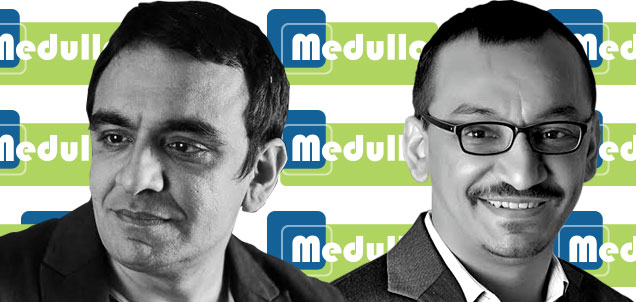
    India had a great start at the 2016 Cannes Lions Festival of Creativity, with Mumbai-based Medulla Communications bagging the Healthcare Agency of the Year in the Lions Health category – a first for the country. Praful Akali and Amit, former Grey creative chief , front men of the agency, bagged seven Pharma Lions in all: two Golds, two Silvers, and three Bronzes. Their campaign, ‘Last Words’, for the Indian Association of Palliative Care, hit home. They speak to Anuka Roy about their win, the healthcare advertising scenario in India and what lies ahead.


    You are a young agency, having been set up in 2008, but your works have been winning awards over the years. But being ‘Healthcare Agency of the Year’ is a big deal. Your sentiments as you look back on your eight-year journey…

    Praful Akali (PA): We feel proud to have won ‘Agency of the Year’ for India. We are happy to have made India proud.


    A B-Pharm degree followed by a PGDM from an IIM is a winning formula to lead a healthcare agency. Plus a brother who is among the top creative professionals in the country. So what would you attribute your success to?

    PA: Our success is based on our philosophy of integrating medical, creative and strategy, which is why all our communication — whether for clients or awards — has been appreciated. The rest has been about focusing on the advertising basics. If you look at any healthcare advertising agency, either in India or even abroad, they understand healthcare but not necessarily advertising. So the planning pieces of advertising, the basic creative and strategic processes, are not followed. An advertising agency does not necessarily get healthcare and very few have a healthcare arm. We felt that we needed an agency which got both advertising and healthcare. When Amit joined us, we used him as Chief Creative Officer to bring a basic creative strategy and philosophy on board, and also hire great creative people.


    Amit Akali (AA): When I left Grey two years ago, I felt that the level of strategy and creativity in a niche industry, was not the same as in mainline agencies. In the healthcare agency that already existed six years ago, called Medulla, while the strategy (coming from Praful’s background of IIM) was world-class, and their medical team was among the best in the world, where creativity was concerned Medulla had benchmarked itself against the Indian healthcare industry. We were clear that with the medical expertise already there, the creativity had to be benchmarked to the best in the world, and so we benchmarked it against Cannes. Last year was the first time we entered at Cannes, and became the No. 3 agency in the world. That is when we decide that we owe it to ourselves to now become No. 1.


    What are the challenges of being a healthcare agency as against a regular creative shop?

    PA: The communication you have in healthcare can genuinely impact the lives of people. But the regulatory barriers, in terms of more complex messaging, also have to be medically robust. The complexity of medical advertising means that my creative has more pegs to hang things on. And the other things – like medically robust communication, saying the right thing and being ethically correct — is the same for all kinds of advertising. Agencies from Mexico, South Korea and Indonesia have been telling us that they are glad that an Indian agency won because the work has been truly inspiring for them.


    AA: Healthcare has its regulations and restrictions. All your life you work on briefs for cold drinks, chips and chocolates and suddenly, over here healthcare is a completely new sector and the briefs are very specific. For me, coming from mainline, the propositions were really fresh. In healthcare, you also have a medical team that is part of the creative process. They come up with the knowledge of the product and they really give you very sharp briefs to reap off.


    Tell us about your client, the Indian Association of Palliative Care, for whose campaign (‘Last Words’) you bagged two Golds and a Silver.

    PA: ‘Last Words’ is not a simple campaign. It is a huge project for the Indian Association of Palliative Care (IAPC), and gave us a lot of emotional connect with everyone, including the jury. The campaign has been a personal journey for us. Our mother was suffering from cancer and wanted to die at home, and not in the hospital. At the last stage, she was in such bad shape that we had to move her to a hospital, and she died in the ICU. We were not sure if we had done the right thing since we had not heard of palliative care. Later, when IAPC was looking for a campaign, we were inspired by our own journey. Palliative care reduces pain in the last stage and provides counseling to both the patient and the family to prepare them. You always expect that your last words will be heard by your family, but when we realised that the last words are actually heard by nurses, we did this campaign with nurses, and chose the strongest last words to become a part of the AV and online film.


    Healthcare advertising is not really big in India. Do you think winning ‘Agency of the Year’ will change that?

    PA: I think it is already happening. When we were there, we met everyone from the Indian advertising fraternity, and they were all proud of the win. A lot of them may not have heard of Medulla because healthcare advertising was not necessarily on their radar, but they were proud. Realising the potential of healthcare advertising is already happening. Between last year and this year, I think the number of entries from India in the Cannes Lion Healthcare category has increased five-fold while entries from across the world have gone up by 40 per cent. People are realising that healthcare advertising can genuinely change lives and is an opportunity for people to do more impactful communication.


    AA: At Cannes, we presented JWT’s Blood Bank project and the Blue Dot project by McCann. Clearly, the focus this year was on healthcare, not just from Medulla but India. Healthcare is a very important sector in a developing country like India. Twenty years back, Ogilvy worked for the Pulse Polio campaign and helped eradicate polio. In a country like India, healthcare and healthcare communication have importance, but specialised healthcare agencies are not doing as much creative work as the mainline agencies. That is something Medulla set out to change two years ago, and that has clearly happened.


    A Grand Prix still eludes you. Are you aiming for that next year?

    PA: The ‘Last Words’ campaign, we were later told, was considered for a Grand Prix. For us the big aim was clearly to become Agency of the Year. I do not think that a Grand Prix is necessarily the peg, but there are pegs of winning even more awards the next year, and making people realise that it was not a flash in the pan, but that Indian advertising is very mature when it comes to healthcare. We want to do some of the best international advertising work in pharma and healthcare, and if tomorrow we do that and people laud the work done by an Indian agency, that would mean more for us than a Grand Prix.


    This interview first appeared in dna of brands on June 27
     

  • Discussing Content with Spike Jonze and Shane Smith at Cannes 2016

    By A Correspondent


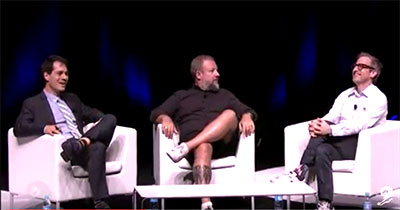
    ‘Content is King’ is one of the over used lines in the last few years. But what content does the youth want to see is something that everyone is figuring out. To try and find more about it, Vice hosted a discussion on ‘Making Content We Care About’ with Shane Smith, Founder and CEO, Vice and Spike Jonze, Co-President, Viceland, Vice. The session focused on the importance of making content that young people care about and was moderated by Joel Stein, a well-known journalist from Time magazine.
     

    A video made by Vice was aired before the conversation began. The video dealt with issues that today’s youth are concerned about, from LGBT issues to adventure sports. ‘Quirky’ was the best way to describe the discussion. Stein started the conversation by asking Jonze on how it feels to see so many mobile phones focused at you instead of people. Though Jonze ducked the question and blamed jet lag as the reason that he cannot think anything right then, it was Smith’s mocking reply about how technology is the future and he feels good about it, cracked up the audience.


    The conversation was to an extent dominated by the old school media versus the new school media debate. With the former being afraid to make content which did not follow traditional rules while the latter almost broke all the rules. “I think we are not scared of making something that we feel strongly about is because we do not have the fear of getting fired. So, we make things which we believe in,” said Academy Award winner Jonze. Smith added, “What we do is, we just say make it. Just go out and do it. If it is bad we will fix it or not make it and if it is good we will make it.” The key point here is that most of these new age content makers are not afraid to experiment and make new content. They have embraced failure as a part of the journey and not a hindrance to it.


    They also discussed about the transition of Vice. Stein felt that it has become more serious. Which both men agreed to and said that it is a part of their growing up as people and also the organisation getting expanded. So, what is it that appeals to the youth? They have a different view about almost everything and they are opinionated. “There has to be some purpose and meaning to the content they watch. It just cannot be another reality or talent show,” said Smith.


    Meanwhile, on the awards front, India has received seven shortlists in the Film category. Indian agencies have bagged 23 metals so far, one of which is a Grand Prix and with four Golds. Guess just a day before we get the final picture.


  • Brands and their Future


    By A Correspondent


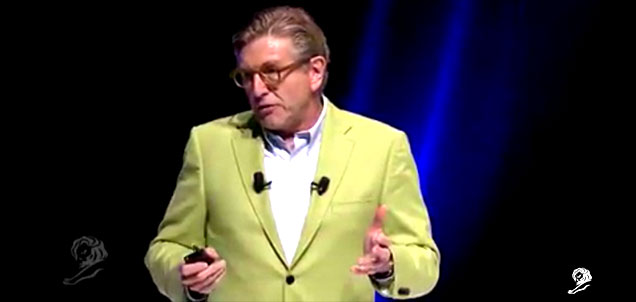
    The question about future of brands has been doing the rounds for quite some time. Keith Weed, CMO of Unilever, tried to explore the future of brands in a world where information and experience eclipse ownership as the key to growth at Cannes Lion 2016.


    “Brands! Love them or hate them, they are an integral part of our lives,” was Weed’s opening statement for the session ‘The Future of Brands’ hosted by Unilever. But what exactly is the future of brands in this dynamic, complex and ever changing world? Weed tried to answer this question in his a little over 30 minutes session.


    “I believe the future of brands is best represented by i to the power n,” continued Weed but was quick to add that it is not going to be a math lesson. This equation, in the context of brands, signifies what is going on in this technology driven world. So, i equals individuals, influencers and impacts. He explained each of them one by one.


    Said Weed, “With technological advancement, now, we can market to individuals. We have gone from mass marketing to massive customisation.” So, marketing is about engaging individuals. “From Unilever’s perspective, we want to build a relationship with a billion brands- a billion people around the world,” he continued.


    Weed emphasised that as much as we have to do work globally, we must engage people locally as well. The combination of the two, according to Weed, is ‘magic’ done by technology. He gave an example of the Axe ad which showed the changing modern man. It was a good example of connecting with individuals. Weed urged brands to use data about individuals to connect with them.


    Influencers do play an important role in building a brand. In this part, Weed explained the changing face of influencers. The re-launch of the ice cream Magnum double was used as an example to explore the role of influencers. Kendell Jenner was used as an influencer to promote and magnify the brand. Twitter as a tool for influence was also lauded by Weed. “We need to think about influencers more as we build a brand,” he said


    While explaining impact he looked at it from three different points- campaigning brands, challenging stereotypes and what consumers want. “In some ways they say campaigning brands is the right thing to do but I think we should campaign brands which make good economic sense,” said Weed. Unilever’s climate change video was showed as an example to prove this.  Addressing the audience about challenging stereotypes, Weed focused on how women are portrayed. According to a research done by his organisation, 80% women do not identify with most of the ads. “We can create better advertising, if we create progressive advertising,” he said. Weed said, “We found 54% of people would buy a product if they find it socially and environmentally sustainable,” while speaking about consumer needs. Focusing on consumers wants is extremely important for brands.


    The fact that brands can take their products to endless number of people with the help of technology is quite commendable. “With all that is going on in technology, consumers have been ahead of marketers,” said Weed. So, using these ‘i’s multiple ways and times, brands can be successful and that is the future of brands, Weed concluded.


    Meanwhile, on the awards circuit, there were no golds added to the kitty.  In Media Lions, Rediffusion Y&R bagged a silver for Dipper Condoms and a bronze went to PHD for Hindustan Unilever’s Wheel detergent. BBDO India picked another metal – albeit a bronzed one – in Cyber Lions for its Ariel “ShareTheLoad campaign.


  • @Cannes2016: Sessions on VR & Gender Equality


    On a Virtual Reality adventure!

    Google took the audience on a Virtual Reality adventure at Cannes Lions 2016


    By A Correspondent


    Virtual Reality (VR) has arrived. For the first time, you can step inside experiences and feel like you are actually there. VR lets you travel to faraway destinations, stand on stage with your favorite artists, and play in new worlds. From Cardboard beginnings to fully immersive experiences, Google is bringing virtual reality to everyone.


    On Tuesday, Google hosted the session ‘Adventures in Virtual Reality’ at Cannes Lions 2016. The session was started by Clay Bavor, Vice President of VR, Google. “The thing that is so compelling about virtual reality is something that you really got to see first-hand to get it fully,” he said. Bavor did a quick poll, through a show of hands, about people who have used a VR instrument. The results were impressive as most members of the audience had experienced VR.  He explained what really appealed to him about the concept of VR. Bavor’s ‘obsession’ with VR began from his childhood when he saw pictures made with acrylic and oil paints, which felt very really. He said, “I have always been intrigued by this idea of creating something that looks and feels real out of stuff that is not.” VR, according to him, is not just going to be restricted to gaming but it will change the way we communicate, create, travel and how we think and remember more. He gave the audience a glimpse of that future.


    Not only was the future of VR was explained, Bavor took the audience through the journey of VR at Google. The VR projects that the organisation is working on or has introduced in the space of VR were also showcased. Through VR brands can bring in people to experience their products virtually. He spoke about ‘Daydream’ one of the projects to enhance VR expiences on mobile phones.


    Bavor went on to explain how ‘Story, art and memory’ will be influenced by VR. Basically, when a story is unfolding in VR, you will be in that story. And, to explain further JessicaBrillhart, VR filmmaker, Google took the stage. Brillhart has been with Google for seven years and made films about search, quantum computing and artificial intelligence. “And, just when I thought my career cannot get any more nerdy, a year and a half ago Google engineers gave me this,” said Brillhart. She showed a clip shot with the help of VR. In the process, she realised VR is not about filmmaking. She said, “It is an existential crisis for a filmmaker, whose job is to make VR content.”


    But filmmaking in this context can be used as framework to create something new. From the filmmaking point of view, the frame is the most important thing. In traditional filmmaking you cannot move the frame but in VR if you are not moving it, then you are doing it wrong. “VR is the potential for frames and the frames can be everywhere and anywhere,” Brillhart explained. She explained the use of VR with the help of some more videos.


    Bavor came back to explain VR’s influence on art. Artists can create things that look and feel real with the help of VR. “There are artists who are using it to create and express their art,” Bavor continued. But he handed it over to Glen Keane, Animator / Artist, Glen Keane Productions who has worked on many Disney projects to explain the concept about the new type of VR paint that can be used. “I can be anything I imagine,” began Keane. After spending 40 years in Disney, his desire to find something new out there made him leave the job.  He introduced and demonstrated the ‘tilt brush’ to the audience. With that tool he made a painting in front of the surprised audience.


    “We place enormous values to our memories,” said Bevor by explaining the effects on memory. Photographs are something which everyone is attached to as they help people recreate those memories and experience that are captured in it. Bevor spoke about a prototype camera that he used to capture some moments of his life. “A few years from now, I will be able to relive those moments virtually,” he said. With VR people will be able to connect with people who live afar whenever they like.


    “VR would be profoundly additive to the human experience,” Bavor said in conclusion.


    @Cannes2016: Gender equality: No laughing matter

    Gender Equality Is No Laughing Matter was by The Girls’ Lounge at the Cannes Lions 2016


    By A Correspondent


    Gender equality has been a burning issue these days. Right from advertisements to movies everyone seems to be trying to advocate this issue. And, discussing this issue in the context of humour on Day 3 of  Cannes Lions 2016, Shelley Zalis, Founder & CEO, The Girls’ Lounge hosted a panel discussion with three cast members of Saturday Night Live (SNL)- Cecily Strong, Aidy Bryant, Vanessa Bayer and Linda Yaccarino, Chairman, Advertising Sales and Client Partnerships , NBCUniversal. The topic was ‘Gender Equality Is No Laughing Matter’, Gender parity or gender parody? Sensationalise gender equality to make you laugh, so you don’t cry. Let’s get real.


    “The best conversations are unplugged, nonlinear and conversational. And, that is how we are going to do it,” said Zalis. She referred to it as ‘girls’ style of conversation’ rather than a panel discussion. “Sometimes we have to sensationalise the issue to know where we are going,” Zalis began. She gave an example of how a candy bar is sold at a lesser price to women than men to kick start the conversation about ‘gender parity’.


    The discussion began with Yaccarino answering about NBC’s initiative towards bringing more women to comedy and behind the camera as well, in the light of equality. “Commitment to women and diversity is one of the top priorities of the entire company. Our news division, the on air talent, has over 40% women. And, when you look behind the camera it is equally important for the company. We are leading in this front and would hopefully continue to do so,” was the NBC Chairman’s reply.


    But we have been seeing that in the case of comedy shows, it is the men who get their independent shows more than women comedians or actors. Also, the fact that many believe, ‘Men are funnier than women’. So, does it affect any of the actors who have been doing sketch comedy in SNL for quite some time? “No!” came a quick reply from Bryant. “I do not get that statement but I am sure there are people who think that way, you just need to ignore them, because it is boring to even answer them,” she said.


    The star cast also discussed how in most of the scripts that they are offered they are supposed to just push the plotline. “It is like you are never given the joke, you are the hot girl,” said Strong. But these women have used these stereotypes to create funny sketches on the show, which has been extremely popular. They spoke how earlier women were afraid to speak up due to the fear of getting fired but now with more women joining comedy and other parts of the industry, it has changed but there is still a long way to cover.


    Well, with so much talk in the media about gender equality, it sure is headed in the right direction. But to reach the finish line, the path is quite long.