Tag: By Invitation

  • By Invitation: Puneet Singhal: Ableism in One Picture: A Disappointing Stance by The Economist

    By Puneet Singhal

    The recent cover of The Economist, featuring a walker adorned with the Presidential Seal and the headline “No Way to Run a Country,” is a blatant display of ableism. This image, from a publication that prides itself on insightful and balanced journalism, is both shocking and deeply disappointing.
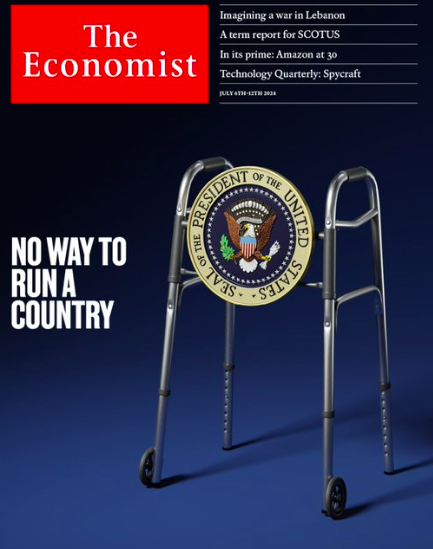


    An image of a walker with the Presidential Seal of the United States attached to it. The cover headline reads "No Way to Run a Country," suggesting a negative stereotype about physical disability and leadership. This is the cover of The Economist magazine for the week of July 6th-12th, 2024.
    An image of a walker with the Presidential Seal of the United States attached to it. The cover headline reads “No Way to Run a Country,” suggesting a negative stereotype about physical disability and leadership. This is the cover of The Economist magazine for the week of July 6th-12th, 2024.

    The Implications of the Cover:

    1. Perpetuating Harmful Stereotypes: The cover reinforces the damaging stereotype that physical disability equates to incompetence or incapability. By implying that a person who uses a walker is unfit to lead, The Economist dismisses the abilities and potential of millions of individuals with disabilities.
    1. Undermining Inclusivity: At a time when society is striving to be more inclusive and accepting, this cover sets us back. It suggests that those with physical disabilities cannot hold positions of power or influence, which is not only false but incredibly harmful.
    1. Disrespect to Disabled Leaders: Many leaders with disabilities have made significant contributions across various fields. This cover disrespects their achievements and perpetuates a narrative that physical ability is a prerequisite for leadership, which is a gross misrepresentation of reality.


    The Economist’s Responsibility:

    As a respected news organisation, The Economist has a responsibility to challenge stereotypes and promote inclusivity, not reinforce harmful biases. This cover fails in that responsibility and highlights a troubling acceptance of ableism within its editorial practices.


    A Call for Accountability and Change:

    The Economist must be held accountable for this ableist representation. It should:

    – Issue a Public Apology: Acknowledge the harm caused by this cover and apologize to the disability community.

    – Commit to Inclusivity: Implement editorial guidelines that prevent such discriminatory content in the future.

    – Highlight Disabled Voices: Dedicate space to stories of leaders and achievers within the disabled community to counteract the negative message this cover sends.


    This cover by The Economist is more than just a poor editorial choice; it is an affront to the progress made towards disability inclusion. It is a stark reminder of the pervasive ableism that still exists in media and society. We must demand better from our news organisations and continue to fight for a world where disability does not define a person’s worth or ability to lead.


    Puneet Singhal is Co-founder, Billion Strong and Curator, Curator, Green Disability. Based in New Delhi, Singhal is a leading voice for issues and causes for Persons with Disability, especially on areas on inclusivity and accessibility. He tweets at @puneetsinghal22. The views expressed here are personal. The comment above is from a tweet posted by Singhal.

  • By Invitation | Prabhakar Mundkur: Rediffusion – Never too late?

    Prabhakar MundkurBy Prabhakar Mundkur


    “Tomorrow is nothing, today is too late, the good lived yesterday”.


     Marcus Aurelius


    Rediffusion has come a long way since WPP’s Martin Sorrell made a bid to up his 26.7% stake in the agency in the early millennium, which had a tripartite shareholding of WPP, Dentsu (13.3%) and 60% owned by Dewan Arun Nanda and Ajit Balakrishnan.  The two international shareholders holding 40% were strange bedfellows making the once highly regarded agency a bit of an oddity.   The agency touted some of the industry’s best people once upon a time including the late Dr Ashok Bjiapurkar and Kamlesh Pandey who later moved on to script writing in Bollywood. Not to mention many other well-known names like V Shantakumar. Why, even Mohammed Khan was one of the original founders before he went on to start Enterprise.


    Like many agencies of its ilk, it kept attracting back some its best names in some consultative capacity or the other.  Mr Nanda is known to have had good ties with most of the people who worked for him and that could be the reason.


    According to the grapevine those days, Nanda might have paid dearly for refusing Sorrell’s offer to increase his stake in the early millennium.  Sorrell was known to be very clear in the ownership patterns of his acquisitions. He always wanted a clear majority and typically the starting point would be at least 51% share before engulfing most of the remaining stake in the shortest period of time.  People those days spoke in hushed whispers that Sorrell had threatened that if he couldn’t increase his stake in the agency, he would pull out its largest piece of business which at that time was Colgate, being a global Y&R account and terminate the Y&R partnership with Rediffusion. Moving global accounts to another agency is not a piece of cake, but Sorrell finally seems to have carried out his threat by moving Colgate to Bates 141, which created a special unit to handle the account, reporting directly to the Y&R global management. This gave credence to what thus far was attributed to agency gossip.


    Team Colgate was a typical WPP style business unit that that had become Sorrell’s favourite model, a prime example being GTB for Ford.  This ensured that Sorrell had direct control over some of the most important global accounts in the group.  There is a bit of history there, since the agency heads of individual accounts can become quite powerful with time. A great example was Peter Schweitzer at JWT, who by heading the Ford account which once upon a time contributed to almost 25% of JWT’s global revenue, grew too powerful for Sorrell’s liking. When Schweitzer retired as CEO, Sorrell quickly moved Ford from JWT into WPP’s special unit called GTB thereby retaining direct control over this large piece of business.


    When Colgate left Rediffusion, it was a telling blow.  Losing large accounts didn’t faze Rediffusion. They had lost Airtel in the first decade of the millennium. And after Colgate they it lost the Tata Sons PR business which was placed in their partnership with Edelman to Adfactors.


    In the M&A business, timing is critical. Both for the buyer and the seller. Rediffusion no doubt was well past its best valuation having waited too long for someone to come along.  But the ego and the resilience of the founders kept it plodding along.  What has Sandeep Goyal really bought into, one is not quite sure. The press release talks of its past glory rather than anything else clearly making it a ‘has been’.


    So it would be interesting to speculate on what Goyal would do with the agency he has bought.  He would necessarily have to fill the shell with some meat. If one goes by his earlier reputation, he is known to walk into agency pitches with a bag full of advertising campaigns, something that used to shock advertising professionals 20 years ago because it painted a picture of the ‘servile’ model for advertising.  Servility in the advertising business has peaked since then and also contributed to its downfall.


    The industry did little to continue the legacy of equal partnership and mutual respect with clients.  It needs to be seen however whether the same tactic will work today.  His long-term gameplan of course would be to dress up the bride.  For this, he would need to build adequate value in Rediffusion to attract a global agency for an acquisition.  Of course he can hardly be underestimated. His aggressive business stance is well-known.  As is his passion for hard work, and particularly his extreme dismay at losing.


    But it may take a while for the once famous agency of yore to re-acquire its earlier halo!  For Rediffusion, Sandeep Goyal might well be its Angel Gabriel, the Arch Angel of Resurrection, the Voice of God and the Bringer of good news.


    Prabhakar Mundkur is a veteran advertising person, a former agency CEO – in India and elsewhere in the world, a musician, a music producer, a talkshow host, a prolific commentator and a great conversationalist with an infectious laugh. His views here are personal.


  • By Invitation: Challenges for PR given post-lockdown disruption in Indian media: Bhaskar Majumdar

    Bhaskar MajumdarBy Bhaskar Majumdar


    We have all heard the popular adage, “Change is the only constant!” Nothing can be truer than this and it is relevant across everything we can think of, and the business of communication, of which, public relations is an integral part, is no exception. What it also means that, whoever fails to keep pace with the changing times, will be rendered redundant, sooner or later. Of late, as the global pandemic accelerated the pace of digital transformation, we began to hear terms like ‘reskilling’, ‘upskilling’, ‘relearning’, all the more than ever before. The answer to the ‘why’ is encapsulated in the adage I quoted above.

    The public relations industry, since the very beginning, embraced ‘relationships’ or ‘media relations’ as the be-all and end-all of success. Professionals who had robust relations or can get client’s stories, not only landed better job offers but were also revered by bosses and colleagues alike. Reputed and large PR firms harnessed this skill set and recruited the conversationalists who had good understanding of the media environment as well as equally good media relations. Although there is nothing wrong in that, but, what was once held as a ‘must have’ skill amongst PR professionals, is now just a ‘good to have skill’.

    The reason for this can be attributed to the fact that, apart from rapid digitisation that was already underway; since March last year, the Covid-19 pandemic had an adverse impact on traditional or print media’s advertising revenues and marketing budgets. On the other hand, simultaneously, content consumption behaviour underwent a seismic shift, as more and more individuals started preferring bite-sized snackable content that they can consume on the move, over any device of their choice.

    This, if we reckon, also pushed several traditional print publications to branch out into the digital domain – experimenting with AR-based content, interactive videos, and more. Many newspapers have started their own digital counterpart, along with their print editions, and are delving into newer digital content formats, such as apps, podcasts, videos and webinars, beyond just articles, to keep the audience engaged and immersed. And this worked out just fine, as amidst the nationwide lockdown last year, we witnessed a staggering 453% rise in news app usage. Apart from that, many print publications went completely online during the lockdown, seeking better ROI and staying relevant with the changing times.

    Therefore, with digital, #digitalMedia and #socialmedia increasingly becoming a de facto choice for content consumers, there has been a paradigm shift in the role of PR professionals and corporate communications experts too, a move away from relying only on media relations to a more strategy-centric approach – an Omni channel integrated one. This trend has even altered what was once thought to be outside of the ambit of public relations discipline, such as internal communication, efficient employee engagement, digital/social outreach (creatives, video’s), CSR (conceptualisation, planning and execution), investor relations, public affairs and policy, secondary research, brand audit, media dipstick to many newer things.

    Given this dominant scenario, the roles and responsibilities of public relations and communications agencies and consultants are also undergoing sea-changes. More and more agencies are now offering strategic services and are building competencies for new age story telling. The need for building adequate capacities and offering services which are more suited to the current times, will be critical for agencies going forward. Whoever misses the gun and fail to reinvent themselves will fall behind and eventually become comparatively irrelevant. The firms which earlier solely relied on traditional media, especially print, will now have to realign their strategies to survive in what we call the ‘new normal’.

    Buoyed by the digital transformation that is currently happening, the growing need of the market has put integrated strategic approach to PR, at the very top of the pyramid. Now, public relations are an eclectic blend of earned, paid, owned and shared media and Digital Outreach and Social Media Outreach will be now being an integral part of all Communication campaign planning. Well, traditional media have not lost its ground and never will, however, digital and social will occupy the larger share of the media mix pie in the coming times. It also largely depends on one brand to the other. For instance, a consumer facing brand will fare better to rely on digital platforms, where their consumers are, whereas, a B2B brand can rely on traditional channels.

    Many brands today are heavily relying on YouTubers, bloggers, influencers and micro-influencers to narrow down on their target audience and reach out to those who are relevant in a more effective, efficient and impactful manner. This can be corroborated by the fact that, as per a report by ClanConnect.ai, over 50% of marketers are ready to increase their influencer marketing spends in 2021. In fact, 78% of marketing leaders leveraged influencer marketing in 2020, while a little over 13% of them initiated influencer activity for the first time in 2020. What is also very interesting to note is that fact that, 87% of CMOs prefer to conduct up to 25% of their influencer campaigns with micro-influencers. This corroborates the fact that brands prefer to engage with influencers who have a dedicated, loyal following even if the number of followers does not go into lacs.

    To conclude, both brands and agencies who are looking for holistic success in their outreach strategies have to go beyond traditional media and embrace a more integrated omnichannel strategy and pull in all efforts to devise content and plan campaigns that are customized as per each consumer touchpoints.


    Bhaskar Majumdar is Head of Corporate Affairs, Comms & Digital, Egis India. His views here are personal


  • By Invitation | Why it’s so important to get agency relationships right and how to do it: Sandeep Khewle, CEO, FirmDecisions India

    The last month has seen a major controversy around the decisions allegedly taken by the former CEO of one of India’s largest creative agency network and part of one of the most respected advertising networks in the world. Nothing has been on record and decidedly not in public, so we can’t name names. For the moment, it’s being dismissed as a silly rumour.


    Be that as it may, last fortnight, we published a comment by Prabhakar Mundkur which was very well-received. Soon after, we also invited Sandeep Khewale, CEO, FirmDecisions India to comment on the issue of transparency and how the marketing business can take measures to ensure transparency. – Editor


    By Sandeep Khewle


    In India and other major markets around the world, relationships between advertisers and their agency partners are under pressure like never before. This is true for both media agencies of record that plan and buy campaigns as well as creative agencies which develop creative assets to sell and represent the brand. The media and marketing ecosystem is becoming complex day by day and the options available for brands multiply ongoing basis, including into the realm of customer experience.


    The increased complexity of media and creative agency relationship demands greater scrutiny, knowledge, and professionalism in advertiser companies. This is necessary to ensure that agency partners deliver optimal value and return on investment. It’s also vital to determine that agencies aren’t cutting any corners that are in their own – but not their clients’ – best interests. It means that marketing, finance, and procurement teams at client-side need to work together to build functional and effective partnerships with their agencies of choice. Get it right, and the benefits on both sides can be transformational. Get it wrong, and brands can find themselves having to embark on the laborious, costly, and time-intensive process of finding a new partner all over again. In essence it all comes down to openness, transparency, and trust.


    Contracts are king

    In any agency partnership, it’s important that advertisers put in place a contract that enshrines their rights in a simple and clear manner. Contracts should be regularly reviewed – as often as annually in the ever-changing marketing landscape – and amended to include developments in supply chain management, agency ownership structures, and technology. Contracts must also be signed, by both parties. It seems like a trivial issue, but it is not uncommon for both global and national brands to operate with contracts that remain unsigned, months and even years after they’ve been drawn up, putting into question the enforceability of the terms if issues arise.


    The right to audit

    It is critical that contracts provide advertisers with complete and transparent access to all marketing and financial data related to their business, and this can come in the form of data or platform access, supplier contract ownership, and financial transparency. Contracts with agencies also need to include clauses that stipulate rights to an independent audit.


    We have seen contracts which specify that audit partners should be restricted to just one of the Big Four, global auditors. This presents two key challenges. First, the Big Four are not specialists in marketing contract compliance – they’re generalists, and so advertisers working with the Big Four (or anyone else not specialists in the field for that matter) may not be in receipt of the best advice available. But second, advertisers shouldn’t be told by their agencies which audit partner should be used to assess the work of the agency. Advertisers should be free to appoint whoever they choose as their audit partner. If not, it’s like a student grading their own exam paper. Being compelled by contract to choose from a limited pool of non-specialist auditors is little better than having no right to audit at all.


    Creative agency focus

    The industry focus for the last few years has been on media agency transparency, but it’s not only in media where advertisers need to enshrine transparent ways of working in their contracts. It’s vital in creative, too. It’s well known that media agencies can receive benefits from media vendors (publishers, platforms, and sales houses) for purchasing media inventory in bulk on behalf of multiple clients. Unless they’re explicitly called out in advertiser-agency contracts, these benefits can stay with the media agency and not be returned to the brands who fund the marketing ecosystem.


    In exactly the same way, there are issues of transparency and trust that advertisers need to address with their creative agencies. These include: creative agencies’ failure to reconcile project costs or the moving of residual balances into holding accounts, both of which can lead to money not being passed back to advertisers; the over-recovery of staff costs; the outsourcing of studio or production services to affiliates owned by the holding companies, without undertaking competitive bids, circumventing due process; and, bid rigging (making the agency affiliate the most cost efficient option). What’s more, choosing to work with a limited pool of production houses – because they are owned by or affiliated to the creative agency – means that advertisers can end up sourcing talent which is neither the best nor the most relevant for brand campaigns.


    In summary

    It’s the high-profile agency misdemeanours that make headline news. Yet in reality, advertisers should strive to make all of their agency relationships work hardest for them, in media – of course – but also in creative and production. The chances of being under-served abound when you take your eye off the prize; the opportunities for building a solid partnership in everyone’s best interests only emerge when these critical relationships receive proper attention.


    Sandeep Khewle joined FirmDecisions in 2017 to set up business operations in India. Prior to joining FD, he was Financial Controller at Publicis Media and has worked in advertising, ITES and the BFSI sectors. FirmDecisions is the one of the largest independent global contract compliance specialists. It provides advertisers with transparency into their marketing and media agencies. It works closely with advertisers and their agencies to validate and verify that clients receive what they pay for. Over the past 15 years, FirmDecision says it has completed over 4,500 audits in 70 countries, examining over $200 billion in transactions.


  • By Invitation: Jaisurya Das on what makes Team Times Response tick


    The Times of India wasn’t the hottest paper in Mumbai or Delhi until the late 1980s. Although the newspaper had stalwarts as its editors and business heads, The Indian Express and Hindustan Times ruled Mumbai and Delhi amongst English newspapers. But around the time the newspaper celebrated its 150 years – sesquicentennial as it called it, things changed for what was disparaging referred to as the Old Lady of Boribunder.

    And as the fortunes began to favour the paper, it rechristened the adsales department as Response. The message sent with this name-change was simple: advertise in the TOI group, and you get the response.

    Over the years, the Response team – under the leadership of Pradeep Guha and several other ‘maharathis’ of Indian media – has grown to be a very well-oiled, well-knit unit. As media-watchers, we have observed this very closely and salute the camaraderie that exists, quite like that with the alumni of a B-School. Ex-Response team members are always around to help each other in their professional and personal pursuits. So what if they were fierce competitors when they were part of Team Response.

    Over the last few weeks, there has been a buzz about a congregation of old (and current) Response colleagues. It’s scheduled to happen on Sunday, July 16, in Mumbai.MxMIndia invited columnist and Contributing Editor Jaisurya Das to write this account of what made(and makes) Team Response tick:


    By Jaisurya Das

    In less than 48 hours from now, over 250 media, entertainment and advertising professionals will congregate at a not-so-happening mall in South Central Mumbai.

    No, this isn’t a convention of sorts, this is all of what one word can bring together :  ‘ Response ‘ for the fraternity and advertising sales for the rest, this amazingly close knit group is a case study by itself.

    There is nothing like this breed.

    They are fiercely loyal, bitch brazenly and yet work like a flash mob when it is their calling.  I have often wondered, as to what, keeps this humungous group of people together. Is it one man, machine or the sheer passion to excel.

    I never could opine on this when I was part of the system and a loyal soldier myself, but today, it is a different story; A story that is waiting to be told.

    From the days of large rusty Godrej tables, manual scheduling registers and the much greying ‘old school’ leaders, to spanking new offices, infrastructure and a leader that brought fame, fortune and chutzpah to the game…

    This, Ladies and Gentleman is Times Response !

    It has stood the test of time, literally, and yet there is something that makes it tick.

    Is it the perceivable sycophancy of a majority or just sheer bonhomie that keeps this amazing set of individuals together?

    Pradeep Guha

    What has to be said, must be said and no matter what media professionals, companies and principal shareholders feel, if there is any one force that has brought about sea-change in the business of media sales, it is Pradeep Guha.

    For a lot of people, he is nothing short of a deity who has powered their lives, fortunes and careers by his sheer pre-eminence.

    For others, a true mentor and a wonderful leader to work with, PG, as he is affectionately called, changed the way the business is done and gave it the much-needed sex appeal and zip that empowered his team of loyalists with confidence and a characteristic élan.

    PG moved and so did several hundreds of people in Response across the country. TOI moved on as well and they only grew albeit a few hiccups and bad PR in the process.

    What remained untouched was a fine bond, that no one could explain..

    Having interacted with sales teams across very many media companies, I can say with vehemence that there can never be a clone. Response as I knew it, was an institution by itself!

    Characterised by die-hard conviction and the amazing ability to multitask, be it organising world class events or just securing a campaign, this one department did it all..

    Pradeep Guha and his amazing secretariat that was aptly termed ‘Response Corporate’ remained the first and final word in this business. Yours truly has had the good fortune to have worked very closely with this formidable inner-circle on various initiatives that also paved the way for great bonds and lasting memories..

    Memories of a time that will probably never return.

    But for now, it will be bonhomie and fun all the way for 250-plus people who come together if only to get some 90 seconds for a warm hug..

    A hug, that will in the future, be the hallmark of the response that was and hopefully will be. Amen.


  • By Invitation: N Chandramouli: The Trust Bond between a Brand and its Ambassador

    By N Chandramouli


    The relationship between a brand and its ambassador is highly interconnected, and that which will impact one will also invariably impact the other also very closely. The reaction of the consumers on the other hand is a case of the ‘congruence of values’ of the consumers with the brand. So when a brand or its ambassador consider its actions in the current day social era,  each must have a responsibility of building the trust of the other. Else, with its unfettered and unfiltered information exchange of the age, often even small things have a high potential of exploding out of proportion.


    After the recent Aamir Khan controversy, the brand he endorses, Snapdeal, came out with a statement distancing themselves from the ‘personal’ comments of Aamir. This was probably after a huge public resentment of the ambassador’s statement, demonstrated by one star ratings of its app by angry consumers, nearly 67,000 of them.  Similar incidents have happened in the past, but why do some actions get the response they do, while others simply slip by?


    The answer depends on how close a relationship the brand and its ambassador share. A similar reference that can be taken as an example that (luckily for the brand ambassador!) did not have the a different result – that of Shah Rukh Khan in his ‘intolerance’ quote to a TV channel a few weeks ago. However, that statement did not impact Bigbasket.com in the same manner as Aamir’s statement hit Snapdeal goes to show two things.  Firstly, it shows the success of the Snapdeal campaign in totality.


    If the first thing that comes to the public’s mind on saying Aamir Khan was Snapdeal, in no certain terms, the connection between the two was quite well-established. Secondly, it goes to show the relative importance of the brand to the consumer and its importance that the consumers place in its values. The consumers of Snapdeal relate to more than in the case Bigbasket, and this is evident in the sharp consumer action against Snapdeal. In all this mess, Snapdeal should rest happy in one deep insight, that whatever they were doing with Aamir Khan in their campaign was working well, and they should use this as an opportunity to knowing and understanding the trust of their consumers better.


    N Chandramouli is CEO, TRA Private Limited (publishers of ‘The Brand Trust Report’)


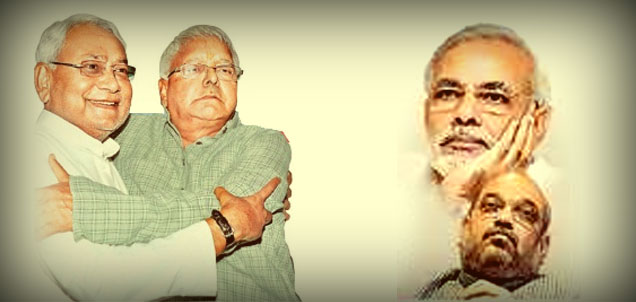
  • Why Nitish-Laloo won the Battle for Bihar?


    By Tushar Panchal


    Ab ki baar, haath se gaya Bihar! 


    There are many oracles in our industry, who could give you amazing insights into why JDU+ winning and NDA losing the Bihar election with all types of facts, figures and information that common people such as you and me are not aware of. As far as I am concerned, the formula of winning election is as simple as a very seasoned political party founder of Maharashtra once said: “In elections, opposition never wins, ruling party always loses.” There’s a very profound message in this simple statement.


    In my opinion, which is largely based on my close interaction with political leaders across the spectrum and interacting with people (or should I say voters) across the length and breadth of our wonderful country, the most important aspect of any communication campaign for election revolves around the humbleness and your ability to connect with the people on ground. All media blitzkrieg, larger than life hoardings, massive rallies are no substitute for a gentle reminder that I am one amongst you and I have always worked for you and will continue to work for you.


    As a student of human psychology, I have always been intrigued by society’s willingness to support the underdog, believe in someone, who is closer home, wears clothes just like you do, eat the same meal as you do, wronged by someone who is powerful and mighty. We have always loved David vs. Goliath stories. Amitabh is one of the greatest superstar, Arvind Kejriwal is Delhi Chief Minister and Narendra Modi is our Prime Minister today… all thanks to this very human nature of connecting with someone, who is vulnerable and here Brand Nitish has taken that positioning in the minds of the people of Bihar.


    Was there a flaw in the communication strategy which the losing side didn’t read?


    Nitish had learned his lessons early on (as soon as he tasted defeat in the General Elections) and realised that the elections cannot be won by just trumpeting the bugle of development, especially when there’s a formidable competition from BJP with their impressive  track record of development in the states, where they were/are in power. Nitish learnt this quick and developed his own concoction, which didn’t just have a heady dose of development, but was spiked with societal insecurities and Bihari pride.


    On the other hand, the NDA didn’t have anything special to offer. It couldn’t decide on who the Chief Minister candidate could be, it couldn’t decide whether bringing in Holy Cow in the campaign mix would help or bringing in a cracker of an idea about celebrations in Pakistan would help. Rising prices, poor handling of sensitive issues such as OROP added to the misery of the BJP. Shifting loyalties of campaign managers who worked for BJP during general elections was probably the last straw that broke the camel’s back.


    The NDA bosses got the taste of their own medicine – similar messages and familiar actions, which they have used successfully in the past to win elections, came back to haunt them to serve the defeat they anticipated (and even expected) as soon as the campaign started.


    Remember what we communicators always say, “First the message, second the messenger and last the medium.”  NDA lost on all three. And we must remember what great Abraham Lincoln has said and I have taken a creative liberty to modify to suit what we have witnessed today: You can fool all the voters some of the time, and some of the voters all the time, but you cannot fool all the voters all the time.


    Over to Assam now!


    Tushar Panchal, Senior Vice President, Advocacy and Strategic Communications at Adfactors PR, has seen politics and political communications from close quarters, having worked behind the scenes for shaping many successful communication campaigns for political parties, political leaders, heads of state governments and governments. The views here are his own.


  • By Invitation: Anant Rangaswami on Scamadgate-2

    MxMIndia invited Anant Rangaswami, editor, Storyboard (the CNBC-TV18 show) and senior editor, Firstpost to analyse the Leo Burnett-Tata Salt Lite radio spots controversy


    By Anant Rangaswami


    In an embarrassing development, Leo Burnett withdrew two award-winning Tata Salt Lite radio spots from the Abby Awards on instructions from the client.


    Leo Burnett’s Arvind Sharma confirmed the decision to withdraw in a letter to ShashiSinha, chairman of the Awards Governing Council


    The letter reads as follows:


    Dear Shashi


    I know that there was some debate at the AGC about two Tata Salt Lite radio spots submitted by us. I recused myself from this debate and the AGC decided to award the spots. Today a website alluded to this debate with unnecessary insinuations.  We do not want any unwarranted insinuations about one of our prestigious clients and brands to continue. We request AGC to treat these two spots as withdrawn from our side


    Thanking you

    Arvind Sharma

    Chairman & CEO India Subcontinent

    Tata Chemicals made the following statement in explanation.


    “It is unfortunate that our agency has been under the cloud of controversy regarding their recent Abby’s awards based on work done on our brand. The entire award submission process is one initiated and entirely managed by the agency; our role as a client was limited to approval of the creative. As a client, we were not aware of all the other technical requirements and subsequent process of submission criteria etc.  As soon as the inconsistencies were brought to our attention, and upon further enquiry, we concluded that it would be appropriate for the agency to return the award to the organizers.  We regret this incident which only strengthens our resolve for and commitment to strict adherence to standards.”


    The Tata statement is consistent with the values that brand Tata represents and upholds. After all, the overall Tata brand was ranked, in March 2013, as the world’s 39th most valuable brand and had a combined brand valuation of USD 18.23 billion (http://www.financialexpress.com/news/tcs-in-5bn-brand-value-club-tata-group/1082935).


    The crux of the situation, put simply, is this: Tata Chemicals was not aware that they were party to scam advertising.


    Arvind Sharma protests too much when he says, “Today a website alluded to this debate with unnecessary insinuations.  We do not want any unwarranted insinuations.”


    The allusion to the debate (in MxMIndia) was necessary and the insinuations were completely warranted.


    At Goafest, when the spots in question were debated, it was because the auditors found them to be not quite kosher, which resulted in their being disqualified because the client confirmation that accompanied the entries said that the campaign was created only for entry to awards. Upon rejection, Leo Burnett convinced the client to send a second letter (one which conformed to the needs of an award entry) which sparked the debate. When the “AGC decided to award the spots”, it was by no way a unanimous decision; it was a divided house with many feeling that the entries should be thrown out.


    The incident is similar to the Ford Figo ad, where the client did not quite understand the way advertising awards function and the implications of scam ads.  The Ford Figo saga resulted in the resignation of JWT’s creative head Bobby Pawar and others (http://www.firstpost.com/business/senior-jwt-executive-resigns-over-controversial-ford-ad-676825.html).


    The Leo Burnett climb-down coming immediately in the wake of the Ford Figo ads will end up doing yeoman service to those in the anti-scam advertising camp. Clients like Tata Chemicals will now be aware of the significance and implication of advertising awards shows and of scams – and will think many times before they clear dodgy campaigns and ads.


    The Tata Salt ads are by no means the only scam ads to have entered and won at the Abby’s this year – but Leo Burnett, in this instance, has been outed.


    By Arrangement with Firstpost.com where this first appeared (link: http://www.firstpost.com/living/why-leo-burnett-withdrew-suspect-ads-for-tata-salt-from-awards-691368.html).


  • Young Track by Samyak Chakrabarty | Causes that Young India is fighting for

    What’s a 23-year-old writing a column on a site where the average age of columnists is… ? Ok, ok, we won’t reveal that number, but like it or not the youth constitute a majority of India’s population. Since the last few years, young Samyak Chakrabarty has been in and around media events and offices with his vision of how the youth can be targeted.

     

    In this period, he has organized a few conferences, participated in several of them in India and abroad, and works as Chief Youth Marketer with the DDB Mudra group. He’s organized a TedX youth conference in Mumbai, was invited to meet Hillary Clinton when she visited India and has co-authored a book ‘Generation Einstein 3.0 – India version’.


    Samyak’s column appears on Wednesdays and as the title suggests, it tracks the young – specifically keeping in mind the advertising, media and marketing fraternity – Ed


    Today’s urban youngsters are very socially conscious and aware. They do not want to live under the fear of natural disasters or any form of threat to their existence and ambition. Hence we see a large number of participants in protests, Facebook activism etc. Here are four causes that metro youth are most concerned about and taking the initiative to address:


    Freedom to enjoy: One won’t see many organizations taking this one up (as yet!), but as our system and its agents (police, municipal corporation, political parties) get more primitive in behaviour, a mass urban youth uprising won’t be far away. Things like arresting people for Facebook posts or using archaic laws to raid bars anger the new generation equally, as much as those below. Parallel to other advancements in the world, the definition of ‘a good life’ has evolved for those born post-1988, and these kids will do anything to ensure they have it!


    Education: Initatives like Akanksha, Raindancer (part of the Swades Foundation) and Teach for India demonstrate how young people’s energy and skills can be utilized for providing education to the underprivileged. Students from ‘good schools and colleges’ have begun to realize that one of the key solutions to resolving a number of India’s problem is to ensure that people from all sections of society must receive basic learning and training. Hence one will observe a number of youngsters even informally teaching kids of their home staff or those in the neighbourhood.


    Environment: Compared to a Japan or USA, India has been well shielded from major natural disasters. Through new media and easily available knowledge resources, youngsters in India are well aware of the consequences of not conserving nature. Therefore one will see a number of students starting projects like Batti Bandh, Indian Youth Climate network, etc, to create awareness and make a concerted effort to protect our environment.


    Corruption: I was not surprised to see Anna’s Lokpal movement attracting so many youngsters, including many from relatively affluent backgrounds. It begins when a kid with deeper pockets and/or powerful connections takes away the precious seat during admissions from a more deserving candidate … and makes your rage stronger when greedy enablers (of what work you need done – government offices, recruitment, hospitals etc) haunt you at every step. Youngsters find it necessary to take stringent action about this cause – in fact, when it comes to everyday life, more than anything!


  • Shishir Joshi: Journalism needs PR, desperately

    By Shishir Joshi


    “You guys have changed the way we watch news,” I remember an elderly businessman’s rather appreciative remark, when I had told him I work for a news network. This was a little over fifteen years ago. What he was referring to was his experience as a viewer of the earliest versions of the English Star News (then produced by NDTV) as opposed to years and years of watching state-owned Doordarshan.


    The world has come full circle. “You guys have changed the way we watch news,” is what a lot of people have begun saying to me, once again. However, this time, the appreciation of the previous decade has been replaced by a look otherwise reserved for skunks. Why have we become the favourite punching bags? How fair is the criticism? Are we, media or journalists, being singled out? Truth be told, journalism has invaded our lives to an extent second only to cell phones. And while one can debate on the boons and banes of a cell phone in our life, increasingly, people are finding nothing but faults in the journalism that they see or read. While there can be many a reason for journalism reaching such lows, there surely has been one defining image and line which has made us the butt of many a joke, and ridicule. And that is of a young, always-in-doubt-but-never-wrong journalist, clutching a ‘boom’ mike and seeking an answer for the priceless “aapko kaisa lag raha hai” question. This one line has been the unifying link between the umpteen reportages on rapes, molestations, thefts, murders, victories, losses, triumphs and earthquakes that we have seen on news television through interviews of people, common or uncommon. But the problem is larger.


    Increasingly, media practices and media men have become a subject of greater scrutiny. And for a profession which had been regarded so highly, gossip about A, B or She journalist’s fall is consumed with great sadistic pleasure. And to top it, there hasn’t been one big story in recent times where the credibility of some or the other mighty hasn’t been questioned. Be it Aroon Purie and his jet-lagged editorial, portions of which were picked up from Slate.com, or the ‘Radiagate’ tapes where the mightiest in television seemed to be breaking bread with bed-switchers, or down south, where the Hindu’s honcho N Ram conveniently edited colleague Chitra Subramaniam’s name from the Bofors’ expose’ credit lines, we seem to have been there and done that. It has been summed up scathingly by BV Venkat Rao in http://www.firstpost.com/india/why-the-fall-of-xerox-zakaria-is-unthinkable-in-indian-media-430088.html.


    The list seems unending. Every state seems to have a case too many of such violations. If Guwahati saw journalists accused of provoking molesters for a video story, Mumbai saw the arrest of a journalist on charges of conspiring to eliminate a former colleague. The latest is from Karnataka where journalists have been arrested as part of an ISI plot. The book threatens to get only thicker. There was a time when we had politicians, parliamentarians, businessmen, gangsters, extortionists, showmen and lobbyists, and social workers. Categories of businesses, vocations and professions. And then you had journalists, the ‘clean’ guys. Today, that line appears tampered with. It is either people from the ‘other’ categories doubling as journalists (and media owners) or worse, journalists wearing multiple hats. But this is not about where we have gone wrong. Or why.Or the ‘sensational’ and ‘breaking news’ which have become eyesores. It is about the numerous stories, the game changers, which miss our attention. For every 26/11 reportage where we have been accused of crossing the ethical line, there has been a December 3, when lakhs converged at the Gateway of India to express anger against the political spineless, resulting in ministers losing their jobs.


    For every free housing scheme that journalists have grabbed from Chief Ministers through the so called “press quota”, there has been the unearthing of the Adarsh scam, the CWG or the 2G scam. And for every Radiagate which saw journalists cross an ethical line, there has been a Coalgate expose. Relentless. Unending. Cases of exemplary journalism abound in non-urban, non-English media too. What I have pointed out are less than a handful of the hundreds of fabulous stories and efforts which journalists are working on, day in and out. For every Rakhi Sawant who gets some airtime on a news network, there are countless unsung heroes who are encouraged to become citizen journalists too, thanks to inspiring journalism. For every saanp-bicchoo story which makes it to some crime show of a news channel, there is also the story of a braveheart hospital attendant who saved lives in operation theatres when trained medical help was not within reach. For every case of public humiliation or molestation that gets played up for alleged TRP gains, there are stories of faces-in-the-crowd standing up against a road-rage bully. The 48-hour rescue operation of little Prince from a borewell in north India is now an oft repeated case study of the levels to which news networks have stooped for TRPs. But, was it only TV channels which gained or did the village also get transformed thanks to the media and political attention? Yes the latter did take place. But nobody seems to be talking about it. Or is it that people are no longer watching?


    Yes, journalism is indeed in need of serious review. Internally. And externally too. External autopsies have been done time and again. In these challenging times, under the guise of upholding free speech and democracy, every Narendra, Raj or Abu has tried surgical procedures to silence the media. For masses, it is vicarious pleasure over a cuppa chai. There is no doubt that for a vibrant democracy to thrive, it can’t be a more welcome change. Having said that, what journalism now needs is a desperate makeover. If to woo a Marathi manoos, an Uddhav can praise an estranged Raj’s political stunt, surely journalism can do with some PR.


    Networks need to play up some game-changer stories that talk of good journalism. Newspapers and social media could follow suit. Prime time can also have some promotions of non-‘sensational’ but ‘real ‘stories. People, viewers, on the other hand need to get out of their drawing-room gossip mode and start writing in to networks on what they need more, rather than stuff themselves with pap. A bit of PR on image building and reputation management could do wonders to a sagging morale. Don’t get me wrong. We aren’t talking of hiring a PR agency here. But well, in the world of paid and private treaty journalism, a bit of philanthropy from journalism’s first cousin, PR, at least in spirit, can work wonders. Applications are invited. In confidence. Beep beep, pings the inbox. Applications have already begun pouring in. Uh oh. …Anybody other than Nira Radia please…?


    For those away from ground reality, journalism and PR have always shared a love-hate relationship. Journalists are accused of being egoistic, badly behaved (on the phone) and always ones to take a short cut. PR people on the other hand are seen to be clueless at their jobs, too busy ‘selling’ a story rather than defining it on merit, and flaky. Can the twain, then, meet?


    Shishir Joshi is the co-founder of Journalism Mentor, and till recently was Group Editorial Director of the Mid-Day group of publications.