Tag: Britannia

  • Regional brands attempt to carve out pan-India presence

    By Kala Vijayraghavan


    In the 1990s, a north-based biscuits company, Bakemans Industries, gave industry leaders Britannia and Parle Products sleepless nights with its aggressively-priced offerings in the Marie and Glucose segments. The regional brand with an enviable 13% share, most of it coming out of Uttar Pradesh, was going places – until it decided to go national.


    An attempt to carve out a pan-India presence ended in disaster with it plunging into a sea of red. To wipe out its losses, Bakemans raised prices on its home turf, in Uttar Pradesh. That move proved to be the proverbial final nail in the coffin; Bakemans not only failed to become a national player, it lost pole position in the market in which it once ruled the roost. The company was put up for sale, but even the acquisition by a Sri Lankan biscuit player ended calamitously. The Bakemans debacle serves as a grim reminder for regional brands seeking to go national.


    “Their ability to grow beyond their home turf is typically stymied not just by capital but also by a difficulty in building the right kind of organization to create national strategies and more sophisticated brand launch and promotion models that can be sustained,” explains Justin Sargent, managing director, Nielsen India.


    Such apparent dangers are not deterring a clutch of regional powerhouses like Ghari detergents in the North, Wagh Bakri tea and Balaji Wafers in the West, SAJ Food Products (which owns Bisk Farm) in the East and Cholayil (which owns brands like Medimix and Cuticura) in the South from looking beyond their backyards.


    Consider Wagh Bakri, which rules the roost in Gujarat. Over the past couple of years, the company has forayed into Mumbai and New Delhi with its tea lounges. Says Parag Desai, executive director at Wagh Bakri: “Our strategy is to completely swamp every district in one state in distribution and marketing before moving into another.”


    Darshan Patel, a co-founder of Paras Pharma who broke away from his elder brother in 2006 to start up the Vini group four years later, says going national is not an option but a necessity. “If one doesn’t have the resources, build the resources but go national. It is all about taking risks because regional brands cannot grow beyond a point.” However, he does add a rider. “The mantra has to be: differentiate or die,” says Mr Patel who has launched brands like Whitetone face powder, Jinjola talcum power, 7X itch cream and Quco hair perfume.


    The New Delhi-headquartered personal care firm Vi-John is another regional player that is putting up national outposts. Says CEO Vimal Pande: “Our field force in the South and the East is now as strong as it is in the North. Our presence was weaker in Maharashtra and we are in the process of strengthening it.”


    Jyothy Laboratories is a great example of how a single-product (Ujjala liquid fabric whitener) regional marketer went on not just to command a national presence but to acquire a multinational rival – Henkel India, the Indian arm of the German laundry & home care corporation. Post-Henkel, Jyothy today is a multi-brand consumer products company with a pan-India, rural and urban presence.


    Ullas Kamath, joint managing director of Jyothi Laboratories, has a few tips for brands seeking to go national. One, go national only if you have a differentiated product; and two, only if the regional brand has operating margins of at least 15%. He advocates a ‘big bang theory when going national.’ “Trial and error cannot work. You cannot sit in Kanpur and understand Karnataka or Kerala,” he adds.


    There are those like the Rajkot-headquartered Balaji Wafers that prefer caution to extravagant expansion. Balaji has relied largely on word-of-mouth publicity to capture consumer mind space over the past two decades. Managing director Chandu Virani says, “I do not see the need to be overtly ambitious. We have financial investors chasing us all the time but we do not have the appetite for a grand national plan. It will happen very gradually,” he explains.


    Also being cautious is the 500 crore SAJ Food Products. The company, which dominates eastern India with biscuit brand Bisk Farm, is now venturing into other markets, albeit selectively. Says managing director Vijay Kumar Singh: “Each state especially in foods has its own nuances and it is pointless to get into markets where your brand cannot break the clutter and you land up being a me-too.” Brand consultants say entrepreneurs like Messrs Virani and Singh have good reason to play it safe.


    “It can be a vicious circle of dreaming big without the resources. It makes good business sense to grow state-wise and each state in India is the size of France. So why go on this big expensive ego trip to go national,” asks Sunil Alagh, chairman, SKA Advisors. Alpana Parida, president, DMA Yellow Works, a brand consultancy, says there are not too many regional brands that have a differentiator other than price.


    Damodar Mall, foods director at Future Group, says, “Unless one has the right product, adequate production facilities and a supply chain to back a national venture, national food launches can fail miserably.”


    Source:The Economic Times
    Copyright © 2012, Bennett, Coleman & Co. Ltd. All Rights Reserved
     

  • FMCGs brace for a weak monsoon

    By Ratna Bhushan & Sagar Malviya


    Consumer goods companies are busy firming up contingency plans to stem any decline in volume sales in case a deficit in monsoon rainfall hit crop yields, escalate food prices and impact consumer spend.


    Companies such as Dabur and Parle Products said they will delay price increases, emphasise on low-priced packs of Rs2, 5 and 10, explore new value price points and step up promotions to prevent possible downtrading, or consumers switching to cheaper products, in case of a crisis.


    “If there’s a monsoon deficit, we would obviously look at protecting volumes,” said Sunil Duggal, CEO of Dabur, which makes Vatika shampoo and Babool toothpaste.


    “Contingency plans could include a combination of things like putting off price increases, accelerating focus on smaller packs and allocating more spends on consumer promotions, depending on where the deficit is,” he added.


    BK Rao, general manager at top biscuits maker Parle Products said the maker of Parle-G, Monaco and Hide & Seek biscuits will focus on smaller price points if the situation is bad.


    The monsoon has revived significantly in the past week to reduce total deficit in the country so far to 22 per cent from 31 per cent and accelerated crop planting. But crop yields may still be lower as rainfall has been uneven, with some regions, including parts of Karnataka and Maharashtra, remaining practically dry for three weeks. Economists warn that food prices may rise sharply if rainfall weakens again.


    FMCG companies have been bucking the overall slowdown in the economy and posting an average 15 per cent growth, but a weak monsoon could change it.


    “A weak monsoon will naturally reflect on costs and we will have to work around that. The industry will feel the impact around September-October,” said Chitranjan Dar, divisional chief executive of tobacco-to-chips maker ITC Foods.


    While impact of inflation on the premium urban rich is not very significant, mid-rung and rural demand is strongly linked to the monsoons. Thus, top FMCG firm Hindustan Unilever, Dabur and biscuit maker Britannia, which have large rural presence, could be hurt more than Nestle and GlaxoSmithKline Consumer, which have an urban focus for their products, say experts.


    Analysts say consumer goods companies tend to push ‘magic price points’ of Rs2, 3, 5 and 10 in an inflationary scenario to minimise any negative impact on discretionary spends. Such low-unit packs account for over 25-30 per cent sales of makers of shampoos, hair dyes, biscuits and snack foods.


    Also, with local competition always posing a threat, established players would have to step up volume discounts and consumer promotions in a weak monsoon scenario. A significant 70 per cent of low unit packs are sold through kirana shops (mom and pop stores).


    “Small SKUs and distribution expansion may save the day. Downtrading too would be arrested at the small-pack level,” Shirish Pardeshi, executive director and co-head, research, at financial services firm Anand Rathi Securities, wrote in an investor note two weeks back. “Rural expansion of distribution (for example, HUL’s Project Shakti and Emami’s Swadesh initiatives – both aimed at accelerating expansion in rural markets) would help arrest drop in consumption,” the note said.


    Some analysts, however, believe the impact of a weak monsoon will be limited on rural consumption because dependence on agricultural income has been declining. “Our discussions with rural trade and consumers have always highlighted that one bad monsoon does not result in consumption declining. Instead, it leads to trade credit terms becoming more onerous in rural India,” Ambit Capital’s Anand Mour wrote in a report.


    Some companies such as Marico, maker of Saffola edible oil, say they would wait for some more time before start worrying about monsoon. “The June-July period is too early to take any decision. We will have to wait for August to check the monsoon trend and get a clearer picture,” said Marico CEO Saugata Gupta.


    Source: The Economic Times

    Copyright © 2012, Bennett, Coleman & Co. Ltd. All Rights Reserved


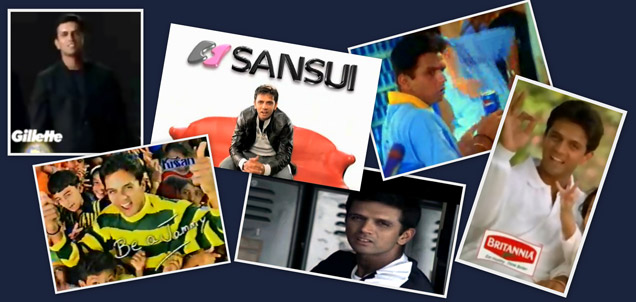
  • Celebrating Rahul Dravid via his TVCs


    By Johnson Napier


    He may have bid adieu to all forms of international cricket but it is impossible to erase the indelible impression that “Jammy” has left on the minds and hearts of his many followers and well-wishers. Having delivered with the bat consistently on the field for team India, Rahul Dravid also managed to contribute in pushing the awareness and popularity of brands that nominated him as their ambassador. Not that his brand endorsement journey will take a downturn now that he has called it a day – in fact advertisers may well flock to him even more as The Wall never crumbles even under dire circumstances – but India’s most dependable cricketer does demand a befitting advertorial tribute as we survey his endorsement journey that has spanned over 15 years. (pls also check: essay by R Sridhar + the Amul ads on Rahul Dravid)


    We dig up noteworthy endorsement commercials that see Rahul “The Wall” Dravid doing what he does best: assuring the authenticity, trust and longevity of the brand – attributes that best define the indomitable cricketer who has championed his country to umpteen unassailable victories.


    Kissan Jam

    Perhaps the only commercial that attempted to bring out the funny side to an otherwise very serious persona. It was from here that Dravid was to be famously nicknamed “Jammy” by his peers and fans alike.

    [youtube width=”400″ height=”200″]http://www.youtube.com/watch?v=J-dhgXJlCaY[/youtube]
    Nippo Batteries

    Another attempt at getting Dravid to do what he doesn’t wish to – wooing the gals into posing willingly as he shoots away with his camera. Don’t miss the attention that he draws from his female legion as he advocates the USP of the battery in question.

    [youtube width=”400″ height=”200″]http://www.youtube.com/watch?v=m6yKsFewK-E[/youtube]
    Pepsi with Shahrukh Khan and Team India

    This ad may all but belong to Sachin Tendulkar and King Khan, but Dravid’s presence made for quintessential viewing as he donned Team India’s favourite blue jersey.

    [youtube width=”400″ height=”200″]http://www.youtube.com/watch?v=wGsOgjAQuY8[/youtube]
    Britannia

    Trust ‘The Wall’ to play family guru and guide as he endorses the benefits of this product for FMCG major Britannia.

    [youtube width=”400″ height=”200″]http://www.youtube.com/watch?v=S3zS0WJub6M[/youtube]
    Britannia Milk

    Forget children, even teens and adults would have relished taking a sip of this brand of milk that Dravid so cooingly advocates – simple yet effective, character traits that define Mr Dependable to a tee.

    [youtube width=”400″ height=”200″]http://www.youtube.com/watch?v=0FD5viMQTxI[/youtube]
    Hutch

    even this telephone network operator couldn’t resist the rustic charm of The Wall as they used him as bait to woo the viewers to watch him play at the biggest tournament surrounding cricket – World Cup. But wait, how come the geek in the frame doesn’t recognise one of cricket’s most popular faces on planet earth? Wasn’t he off to watch a cricket match after all?

    [youtube width=”400″ height=”200″]http://www.youtube.com/watch?v=JXjcR26roFo[/youtube]
    Anchor electrical

    Another classic gem that shows The Wall playing motivator and mentor with elan. While his juniors are busy putting his plan into action, don’t miss the smiles that the team manages to bring on the faces of the children that are fraught with fear.

    [youtube width=”400″ height=”200″]http://www.youtube.com/watch?v=cRwIqudwOJU[/youtube]
    Max New York Life

    A bevy of aunties are seen making a headrush towards Mr Popular even as he struggles to hide his identity. No age is too less or more for his legion of fans – as is the case out here where he is hounded by 30-plus housewives.

    [youtube width=”400″ height=”200″]http://www.youtube.com/watch?v=NS6JO2z-aUQ[/youtube]
    Gillette Turbo

    Imagine being paired alongside a world sporting greats. Only a Dravid would’ve brought conviction to the role that needed him to match up to icons such as Tiger Woods and Roger Federer. Indeed, world’s envy, India’s pride!

    [youtube width=”400″ height=”200″]http://www.youtube.com/watch?v=hnmiEld-cFU[/youtube]
    Sansui

    Character traits are being compared between Mr Dependable and electronics brand Sansui. Turned out to be a perfect matchmaking exercise for the brand as they looked up to Dravid to give out the message of being a brand that is as worthy and reliable as the cricketer.

    [youtube width=”400″ height=”200″]http://www.youtube.com/watch?v=O6pfGwYbgNo[/youtube]
    Castrol

    Another instance that saw the man delivering the message with just a few words.

    [youtube width=”400″ height=”200″]http://www.youtube.com/watch?v=ughlUi8xvSs[/youtube]
    Bank of Baroda

    This was a phase when Bank of Baroda had announced a nationwide makeover and enhancement of services – who else to belt out superlatives than Mr Dependable himself? Notice the family man in him take precedence over the meek endorser.

    [youtube width=”400″ height=”200″]http://www.youtube.com/watch?v=wTaAQ3XA2mo[/youtube]
    Reebok

    This association dates back to more than 14 years but do not miss his passion and dedication towards the game – and also the brand objective, as he convinces us why his commitment is still as unmatched and endearing as his peers’.

    [youtube width=”400″ height=”200″]http://www.youtube.com/watch?v=V6yI3-8jVX8[/youtube]
    HDFC Life

    Putting team ahead of oneself – as was the prerequisite of the insurance player in the frame. One of the last endorsements involving Dravid and probably the one that will go on for a long time as he is committed to still play for the IPL. One can never tire of seeing the man deliver his rustic punches – a rare phenomenon in advertising today.

    [youtube width=”400″ height=”200″]http://www.youtube.com/watch?v=jgGFoMsg_zc[/youtube]