Tag: Brian Whipple

  • 7 ideas that will shape nextgen of experience


    Facing an explosion of digital clutter resulting from two decades of rapid technology growth and innovation, people and organizations are rethinking what they really want, says a new report by Accenture. A fundamental re-examination of what people want and value is ushering in a new design ethos that puts human value back at the center of innovation. Accenture Interactive’s annual Fjord Trends 2019, presents what’s ahead for the future of business, technology and design.


    According to the report, years of organisational investment in innovation have left customers feeling inundated and overwhelmed, straining the demands on our time and attention. Whereas once we craved the novelty, excitement and instant gratification, we now crave more quiet and meaning in a noisy world. People and organizations are doing some soul-searching about what they really value, rejecting products and services that don’t meet their needs – in effect, changing the nature of our relationships with technology and brands.


    “Digital is facing a big spring cleaning: a time when we decide whether something still has value and relevance to our lives,” said Mark Curtis, Fjord’s co-founder and Chief Client Officer, adding: “Digital is now so widely adopted that its novelty has worn off. In their attempt to declutter, people are being more selective about which products and services they incorporate into their daily lives, choosing to disconnect, unsubscribe or opt-out if the value exchange is not mutual. Never before has the responsibility of design been more important.”


    This mindset shift has major implications – and creates massive opportunities — for organizations and for customer experience, says the report. It’s time to take stock and rethink products, services, and experiences that people actually want and value.


    “Winners in 2019 will be those organizations that provide a sense of value and relevance not only to individuals, but also to the world,” said Brian Whipple, CEO of Accenture Interactive. “Value creation will not come from simply growing bigger, but by being better. Consistent with our mission to create, build and run the best customer experiences for our clients, we believe this year’s trends support our guiding principle that the best experiences are those that make people’s lives better, more productive, and more meaningful.”


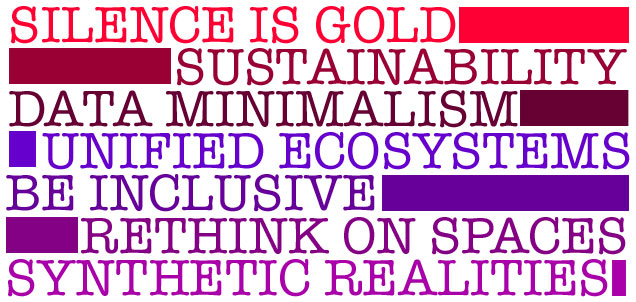
    Fjord Trends 2019 examines seven trends expected to shape the next generation of experience and offers actionable advice for organizations to prepare for the opportunities ahead:


    1. Silence is Gold:Feeling overwhelmed has become a health issue. By embracing mindful design, brands must find ways to make themselves heard by consumers who crave quiet in a noisy world.

    2. The Last Straw?: Enough talk. People expect products and services to have built-in sustainability, or they’ll reject those that don’t.

    3. Data Minimalism: People and organizations disagree on the value of personal data. Is transparency the key to bridging the gap?

    4. Ahead of the Curb:From electric scooters to drones, urban mobility has turned cities into free-for-alls. It’s time to combat the clutter with unified ecosystems that meet real-time needs.

    5. The Inclusivity Paradox: 2018 was a wake-up call to listen to a variety of voices. But how do we design for all without inadvertently excluding others? Stop thinking of people as types and start adopting a mindset mentality.

    6. Space Odyssey: Work and retail spaces need a digital makeover. It’s time to rethink our approaches and tools for designing spaces.

    7. Synthetic Realities:We live in a new world in which reality is crafted and synthetic. With face-swapping and voice simulation creating more believable synthetic realities, companies must work out how to capitalize on it — and manage risk.


    “The opportunities for meaningful and mindful design to revolutionize a number of areas are greater now than we’ve seen in years,” Curtis said. “We’re on the cusp of a creative revolution: the opportunity to rethink our products and services in order to take care of the world we live in, as well as the people in it.”


    Fjord Trends 2019 draws upon the collective thinking of Fjord’s 1,000+ designers and developers in 28 studios around the world. The annual report is based on first-hand observations, evidenced-based research and client work. To read the report, visit: trends.fjordnet.com and follow the conversation on Twitter with #FjordTrends.

  • Return of The Sorrell


    By Prabhakar Mundkur

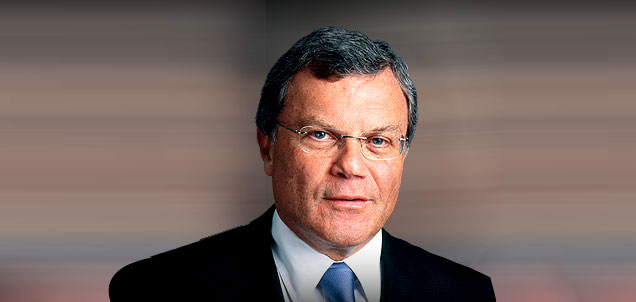
     If you thought that Martin Sorrell’s exit from the WPP group was the end of a great career you were wrong. Sorrell now 73, who stepped down from WPP a few months ago, is making a comeback with a new advertising (and marketing services) venture.


    With his experience of taking over an unknown firm called WPP which was largely a shell company 33 years ago, it was natural for him to try his hand again at a similar experiment.


    Sorrell now is taking charge of another shell company – Derriston Capital – which he intends to turn into an advertising venture. Confirmation of the Derriston deal was confirmed first by Sky News.  Derriston as a company has been on the New York Stock Exchange since 2016.


    In this first interview with Anant Rangaswami on CNBC last night at Zee Melt, Sir Martin spoke on a number of issues with his usual eloquence. For those branding experts who are wondering about the significance of S4, it stands for four generations of Sorrells in the UK. (His grandparents came to the UK from Eastern Europe in 1899.) He quoted Brian Whipple the CEO  of Accenture Interactive while speaking about how competition from consulting might affect the advertising agency business.  Quoting  an interview that Whipple gave he said: “the consulting companies don’t compete with the agencies head-on.  They go above the agencies to the CEOs and CFOs, the CMOs and the CIOs and CTOs. And they say to them you are going through significant change, they might describe it as a digital disruption. You are spending a lot of money. Let’s look at it as one and let’s see how we can improve your productivity, improve your technological response, digitise your company, transform your company and at the same time spend less money. And by the way pay us on the basis of what we save. Which is a very alluring concept”.


    Whipple has led Accenture Interactive’s disruption of the traditional agency landscape by creating a new service model.  Whipple is known to have said “[Holding companies] are changing, but the pace of change is woefully slow. And it’s not because of the intent. It’s because of the structure and the culture.”  One couldn’t help feeling that Sir Martin is welcoming the fact that by starting on a clean slate he might be able to do things differently with S4 than what he could do with WPP.


    As a new way of doing business Sorrell said in the interview that S4 would not only like to sharpen its tactical response but also develop its strategic response at the higher levels of the company.  He reiterated the need to be ready for change, whether cyclical or strategic.


    But what shape might Sorrells new venture take?  Given his penchant as a ‘math man’ and his various criticisms of the ‘mad man’ era of advertising he is likely to be more interested in the world of data and digital.  It is quite likely that Sorrell’s new venture might be devoid of the traditional advertising agency.  In any case revenues of all his advertising agencies put together in WPP were much smaller than the media company or the research company.  Which goes to show that he perhaps thought that advertising was really an old-world phenomenon.  Sorrell is putting in his own personal investment of £40 million into the new venture.  Institutional investors include Lombard Odier, Miton, RIT Capital Partners, Schroders and Toscafund would add a further £11 million.


    That of course does not mean that the new venture will be devoid of creativity in other forms.  Sorrell always believed in creativity and the power of ideas although he is often accused of marginalising creativity.  Sorrell always said that the definition of creativity needs to change because he said “we are not in the advertising business anymore”.  Sorrell in the past has also said “75 per cent of what we [WPP] do now, Don Draper and maybe even Sir John Hegarty wouldn’t recognise.”


    So what might we expect from Sorrell’s new venture is perhaps a smaller WPP minus traditional advertising and the traditional way of doing business by holding companies.  But like WPP it would grow through acquisition.


    To go back to Whipple he is known to have said that for agencies to survive they must leave the founder’s culture behind.  In the case of Sorrel it might well the opposite.  A case of the founder leaving his agency’s culture behind.


    Prabhakar Mundkur, better known as Prabsy, is a veteran advertising agency professional, having led agencies in India and globally. And if he’s not thinking brands and strategies, he’s into music, cycling and writing. A prolific writer, he was LinkedIn’s most influential voice in 2016. He also writes ‘Ad Buzz’, a weekly column on MxMIndia.


  • Accenture Interactive named largest digital network by Advertising Age

    By A Correspondent


    So which is the largest digital advertising network in the world? Advertising Age magazine has named Accenture Interactive as that in its Agency Report 2018. This is the third consecutive year in which Accenture Interactive was ranked the largest digital network worldwide. The analysis is based on an evaluation of more than 600 agencies, networks and companies.


    Notes a communique: Accenture Interactive reported the highest worldwide revenue of any digital network, at $6.5 billion for Accenture’s fiscal year 2017 (ended August 31, 2017), reflecting year-over-year growth of 35 per cent.


    Said Brian Whipple, global head of Accenture Interactive: “Brands today are built by a series of interconnected experiences consumers have with a company across multiple, increasingly digital, channels. Our model is purpose-built on assembling the right mix of digital and business transformation skills to deliver the best customer experiences on the planet. I’m extremely grateful to our clients and team who deserve all the credit for this success.”