
Tag: Brand Matters

  • Alpana Parida: Extinction of Restaurants – A Looming Reality

    By AlpanaParida


    There are at least sux locations I have been to in Mumbai – in recent times – that have seen a new restaurant replace an old one. The same is true, I am told, across the globe.


    As people, we are changing. We don’t read a book consistently (if we read at all anymore) – we start several at the same time, we open multiple tabs across multiple screens, we become different people – as we have multiple usernames and handles, we like to experiment and get new experiences – we don’t travel to the same place again and seek newness each time – ticking of a list, we have fragmented attention spans – doing many different things peripherally rather than one in depth, we are showing behaviours that do not require commitment, rather that exemplify moving on.


    The rent v/s buy argument is increasingly gaining ground. More and more people are using mobile apps for transportation, rather than look at ownership – through models such as Uber, Ola on the one hand or the shared drive models of Zip cars on the other.


    We seek new experiences – and want to eat a different cuisine. We rarely go to the same restaurants – we seek new experiences each time. We don’t seek the comfort of familiarity – rather we seek the titillation of variety.


    Across life, we are no longer loyal consumers. The most loyal consumer in the world used to be the one for Colgate Dental Cream. Today, Colgate has 11 variants, and the consumer flirts with a basket of brands and variants. A wonderful BCG study tracked consumer behaviour at the shelf and found over 65% of consumers make decisions at the shelf.


    On the flipside, there was a never a time better than now for introducing innovations. Startups are emerging every day with a new concept or offering across products and services. Strangely, the older and established companies, who are better poised for innovations of product or format, are making tweaks in their portfolio by largely thinking of new variants at best. This is an opportunity lost and leadership at risk.


    Every time I see a new restaurant opening – I wonder why the promoters are not waking up to this new reality – and think new models. Perhaps one like a Multiplex – where the kitchen is the same – but new chefs come and go. Or QSR formats where the design builds in new skins and layouts to create visually different experiences and a constantly changing menu.


    Consumers are changing – and restaurants – to be profitable, must change too. All the time.


  • Alpana Parida: Why Sania Lost…

    By Alpana Parida


    When the lady commentator said of Sania Mirza during the Australian Open Mixed Doubles Finals that Indian players tend to be strong with their hands but not very dexterous with their feet, I had to bite back the typically defensive Indian anger and reaction to acknowledge the truth of her statement. From lazy fielders to slow on their feet players on courts, Indians are not as dexterous with their feet. Cricket is replete with stories of great batsmen who would hit big to avoid running between wickets. The newer generation is running and fielding better – and whenever they do, we recognise this as unusual behaviour that needs to be lauded as such.


    Our cultural mindset does not allow us to celebrate physical exertion of any kind, across society and demographics. Indians use a record number of wheelchairs (one mortifying flight from Mumbai on Emirates had a total of 62 wheelchair-bound passengers!), The Brahmins were the high caste of thinkers and the doers were lower down the order of castes. That has permeated our collective consciousness so deeply that I recently watched a strapping young man flying business class, using airline staff to carry his suitcase while he walked up the stairs in uncreased linen. Never mind that the porter was older and emaciated. And never mind that his bulging pectorals made evident his decision to be not one of inability but of iniquity.


    As I write this column, Roger Federer has just won the Australian Open, defeating an evenly matched Rafael Nadal. Winning is a lot of hard work. It cannot be simply a preference of clever shots and a strong backhand. Without picking and choosing what kind of work you will or will not do, doing whatever it takes to get there has to be a mindset. It is not just the training or the nutrition or the winning spirit or lack of. We simply do not have the mindset where hard work, particularly physical work, is seen as being necessary. I meet young people who say they are only interested in strategy. They have no interest in rolling up their sleeves and actually execute strategy as well as ensure intelligence in the execution. The checking of copy, the ensuring of accuracy and timeliness in delivery, and heaven forbid – the raising of an invoice and chasing up a payment that pays for our salaries and rent– are seen as the worst kind of jobs.Somewhere in that picking and choosing of work (“at this stage in my career, this is not the kind of work I should be doing”), we miss the whole. We compartmentalise and miss larger goals. We miss the opportunity to understand how things work. And why things fail. And what creates success and impact.


    I remember travelling to Bengaluru on work with a much younger colleague. We had gone for a day – and next morning, I was down with my overnighter checking out, with no signs of my young colleague half my age. When I finally called him – he explained that he was waiting for a porter to fetch his overnight handbag, and that was delaying him. It simply did not occur to him that he could bring it down himself.


    All our work comes attached with judgmental values and defines who’s who. Men can’t do laundry and cooks won’t clean the house, executives will not pack boxes with samples and while writing this paragraph -  our driver – sulking to be asked to clean the car interiors, objected to the cleaning cloth being given to him. It was not the yellow cloth that made the cleaning respectable. It was not his job anyways.


    The gap in India, between thinking and doing is wider than most other countries I have seen. I remember seeing a sign at a Social Security Office in Westchester, New York recognizing a clerk who found a way to reduce the length of a line. It is only when you bring intelligence to work that you can bring improvements and eventually impact outcomes.  For a country that has such a large intelligentsia, we have distinctly unintelligent processes for the most part. That is because, whoever thinks of a process, never engages enough on actually implementing it, and thus there are no process improvements. It is what it is. And we live with the sub-optimal, stupid and inefficient in most part.


    Hopefully, the startup generation will do things differently and bring more intelligence to our everyday and to our everything.


  • Alpana Parida: New Year Wishes – A Whatsapp Flood

    By Alpana Parida


    From midnight onwards, a spate of Whatsapp and sms messages flooded my inbox. All were messages wishing me a Happy New Year. The Whatsapp ones had images or videos attached and were full of cute or funny ways of saying Happy 2017, the sms messages were simpler in their wishes.


    The problem was, that except for three, none of the remaining 244 was meant for me. They were greetings addressed to no one in particular and blasted to all on the sender’s address book. I had messages from family, colleagues, friends, the Siemens repair man, the guy who put up the net in our balconies, a mother from my daughter’s car pool – from four years ago, my vegetable delivery guy, a person I briefly met at an event and did nothing more to stay in touch than add his number to my contacts as well as many other known and unknown numbers I had not bothered to store on my phone.


    I was unsure as to the etiquette about how to respond to these wishes of good cheer. Was I supposed to thank the senders for blasting these and for putting me on a long and meaningless list of people they wished?  Or was I supposed to broadcast to my own address book and hope that some would find their mark? This struggling with the appropriate response is nothing new – as I get these at every conceivable holiday. I get Diwali greetings, Holi wishes and even requests for forgiveness from Jain friends on Samvatsari.


    We used to send out cards before. Even though they were uniform in their wishes, the act of compiling a mailing list of people you wanted to wish, writing out each name by hand, addressing and mailing the envelopes personified the greeting. It was from me to a specific person – who I had thought of and wanted to wish. The mass greetings of today are not to any specific person. They are rather like a message in a bottle, where the receiver of the message is irrelevant – only the message is.


    Our online presence, which is non-material and virtual, is not a lightness of being even while being non-physical. Rather, we are defined by the weight of our digital persona and how many likes, how many greetings, how many followers we have, add to the persona. The personalisation of a greeting is immaterial; the volume of greetings is what matters. If only in single or low double digits, we should have self-esteem issues and the greater the number, more satisfying it is.


    These wishes are like confetti, individually meaningless – but collectively celebratory. We participate in these rituals to keep the ‘chain mail’ syndrome alive. Only if everyone does his or her bit, will the entire system survive. Thus, everyone sends out large number of messages – to await their own confetti of messages.


    The only problem?  The three ‘real’ and personal messages got lost in this avalanche of good cheer and I got to each of them almost 12-18 hours after they were sent. But those three messages meant so much more because the senders not only mentioned my name, but also a personal fact that authenticated their sincerity many times over. In this age of mass confetti – there is an opportunity to create a simple personalised message that can today, become remarkable and memorable – and help the sender stand out by creating a personal brand.


  • Alpana Parida: Christmas: The Festival of Opportunity

    By Alpana Parida


    Suddenly, TV, print and outdoor media is full of Christmas cheer in India. Families wearing Santa hats, visuals of snow flakes, candy canes and mistletoe motifs are ubiquitous – particularly in malls; and Christmas deals invite the Indian consumer to buy.


    Christmas has long been celebrated in India – via the British and the small Christian population, it became a tradition in elitist India. The celebration was typically a Christmas Eve dance night and special dinner in clubs and hotels in India. It has grown since and has captured the fancy of many Indians particularly in malls across India.  Kids are growing up seeing Santa’s and singing Rudolph the Red-Nosed Reindeer, and offices are holding Secret Santa gift swapping.


    But like all adopted behaviours, this is a superficial adoption of some rituals. The festival has no real significance for Indians (non-Christian that is). In the US, the spirit of Christmas that stands for the spreading of goodwill and cheer has been reinterpreted commercially to create a massive gifting tradition – a tradition that has become an economic engine for the economy. Christmas sales account for almost 20% of total retail sales and marketers and retailers have made the most of this gifting tradition through a well-defined set of rituals.


    Decoding Christmas we can see the encoded rituals of the festival. Catchy Christmas carols play in every store and street corner. The stores are warm and cozy havens in the cold and dark winter months; with the smell of pine and cinnamon, adorned in colour coded Christmas festivities. They become places of celebration the very act of shopping is an important ritual of the festival. Christmas has distinctive colours, sounds, smells and tastes. There is a strong sensorial cohesion in how it is branded across the world.


    The spirit of Christmas is encapsulated in phrases such as “spreading goodwill and cheer” or it” being the season to be jolly “. These are all uplifting manifestations of Christmas. The Christmas tree, the chimney and stockings and the plate of cookies and a glass of milk for the weary Santa are myths and rituals perpetuated by conspiring parents and happy kids.  The many motifs of Christmas such as the mistletoe, the snowflakes, the tree, the candy canes and the stars – result in a clear delineation of the codes and rituals of Christmas. Hollywood complies, with at least one Christmas film every year, keeping the codes of Christmas alive continually across generations.


    Apart from the design codes of Christmas that create a wealth of Christmas specific merchandise, the gifting ritual creates a huge market as well. The idea of gifting at Christmas is strengthened in popular culture – cinema and TV, and supported by retailers through a host of initiatives. The art of gifting is cracked to a science.Christmas works as an enormous economic engine and the already existing tradition of spreading goodwill was tapped to create the gifting tradition with Hollywood and popular culture abetting the same idea.


    In India, no such belief exists. Christmas is simply a foreign festival with distinct visual motifs. If at all the Indian consumer is buying during Christmas, it is not because they are emulating the gifting tradition – but because they are making the most of sales and discounts. (Secret Santa is an emerging ritual – but typically the gifts are under Rs. 200 in most offices). Christmas celebrations in India are non-contextual and can never become the economic engine they are in the US or elsewhere in the world.


    Similarly, Halloween and Black Friday are becoming sale days. There is no meaning imbued in them – they are simply western imports and the only impetus to buy is a deal. It is only when the festival has a cultural context and the meaning behind the festival is reinterpreted with a modern consumption ritual can it shape new behaviours.


    There are many cultural triggers that can be unlocked to create a market force. A good example of this, in recent times, is  Akshay Trittiya – a day celebrated in a handful of states as an auspicious day to start new things such that it that heralds luck. Gold buying was a small Akshay Trittiya traditionin a few parts of these communities,in a few states. The World Gold Council and some jewelers made this festival pan Indian, by simply tapping into this latent belief about the auspiciousness of the day and how good luck is best found upon buying gold on this day. In less than a decade, this day has become the second highest day for gold sales. This has happened as a pre-existing belief has been layered with a shopping ritual that is in sync with the tradition.


    Christmas, Halloween and Thanksgiving have no pre-existing belief in India, and thus remain just a superficial set of visual motifs that have no real significance to be able to create new behaviours.


    If Indian marketers and retailers tapped into existing beliefs and created new rituals of shopping around those, they will see the Akshay Trittiya phenomenon recur time and again. For example, Karva Chauth – the north Indian festival when married women fast for their husbands has been romanticised by Bollywood and evangelised it to other communities and even to unmarried women. This could be the ultimate Indian Valentine’s day and gifting to the significant other could become a new tradition rapidly.


    Days like Dassera or Vishwakarma Pooja has Indians worshipping their vehicles/ tools. Appliance / vehicle shopping on that day could be a natural corollary. Holi, the harbinger of spring could become the biggest fashion day and Navaratri/Durga Puja could become the equivalent of Mother’s Day – with gifting to women becoming a tradition.


    Each festival can become a brand – but for this to happen, the story behind the festival and creation of a tradition and its rituals must be related. It must have its own myths and visual motifs – rather like the ones for Halloween, Christmas and Valentine’s Day.


    Only when India creates its own calendar of traditional festivals reimagined for a modern India, will these become true economic engines.


    Till then, Merry Christmas.
     

  • The Science of Design


    By Alpana Parida


    Our non-verbal minds, which are our older brain – as opposed to the evolutionarily later emerging neo-frontal cortex is responsible for decision-making. While the frontal lobes can analyse spreadsheets and quantitative data, the non-verbal limbic brain handles the inference of that data to create trust, affinity and preference.


    For design to work, it needs to understand the workings of the non-verbal brain. This brain interprets by association. So whatever the conscious brain sees is interpreted by delving into its subconscious and unconscious selves. In the subconscious resides the metaphor defined through a cultural context. For example, a lady wearing red in the East and West mean different things. In the East, red signifies auspiciousness and abundance; in the West, it stands for danger. Thus the woman in red could be interpreted as the wife or the mistress – depending on who is seeing her.


    Design identifies the associations that a brain makes and creates solutions that can then shape perception. Because this is not a visible process to the conscious mind, a lot of us see it as fluff. I come across a lot of people who evaluate design using their linear linguistic brain who evaluate design literally. A chemical company needs to show the molecular structure in the logo. Or a dairy needs to have the name Gokul and show a Bal Krishna.


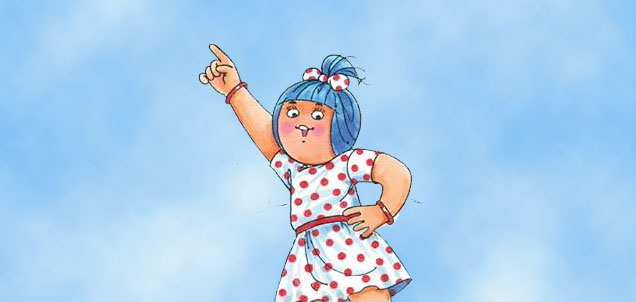
    Our conscious brains see things – and if it can directly understand the non-verbal communication, it does not go deeper. On the other hand, if it needs to interpret the Amul girl – the naughty child who loves butter – and subconsciously sees Bal Krishna, the brand goes deeper into the brain.


    Thus, literal design builds brands in the conscious mind and metaphoric design builds brands in the deeper sub-conscious mind. It takes a lot more effort, time and resources to make a brand in the superficial mind stick, the deeper it penetrates – the deeper it sticks and becomes harder to dislodge.


    Design and designers often appear to be illogical and intuitive, and thus not scientific; but the shaping of perception would not and could not occur if such a science did not exist. How we walk changes depending on the environment we are in. Observe people entering the lobby of an opulent 5-star hotel. They stand taller and walk more erect than they would in a crowded railway station. Design can shape behaviour – but only if it touches the place from where our behavior emanates and thus reaches the deeper subconscious mind where cultural metaphors reside or the deeper unconscious mind where ourbelief system resides.


    For the non-verbal mind users, this process directly occurs in the sub-conscious mind and there is no need to engage the neo-frontal cortex to argue and reason. They can evoke a specific feeling – which directly reaches the deeper self which no amount of listing of features on packaging can rival. The minimalist Apple packaging and the feature packed Microsoft bullet points on packaging work differently. One reaches deeper and evokes a feeling of affinity and desire, the other remains functional but not joyful.


    Recent successes in our eco-system are metaphoric brands such as Pepperfry and Paperboat that needed to do a lot less than others in their category to establish themselves. The literal brain sees a clear co-relation between input and output. Thus, if you want effective design, you need to ask consumers if they like it or not. Research it to death, create an iterative set of additions that keep detracting from the simplicity of design and eventually not end up working well enough.


    A dear friend and a senior professor of marketing at Stern, NYU recommended a novel research idea for packaging design. Rather than ask consumers what they like or don’t like (we are asking them to interpret their deeper limbic brain reactions in words – and then basing our solutions on that) she recommended we put the same product in different packs to be researched. We then ask consumers which product was better, tastier, and moreeffective? This would help us isolate the impact of packaging, as the product is the same.


    To create competitive brands locally and globally – we need to penetrate our consumers’ brains and reach their hearts. Design will go a long way in doing that without requiring high decibel and wasteful advertising. As a nation, we do not value design as a business driver. Hopefully, a newer generation of entrepreneurs will change that.


  • Alpana Parida: Whiskey, Tea & Classical Music

    By Alpana Parida


    Last night I attended a concert by Anoushka Shankar.  It was fitting that the daughter of the “gentleman who played through the rain…and just kept playing” at Woodstock should be reinventing the Sitar in a contemporary context. Rather like Shakti before it – this was an ensemble of artistes  – a bassist from London, an Austrian percussionist playing on what looked  suspiciously like a set of post modern ‘ghatams’and a Delhi-based Shehnai player accompanying Anoushka.; much like the band Shakti.


    The lights and audience response made the experience more like a rock concert, and I noticed that the regulars of Shanmukhananda Hall – the grey-haired stalwarts and purists of classical music were crowded out by a younger, hipper audience. She had reinvented the classical sitar and made it more relevant today.


    Certain categories are older and facing extinction. Whiskey, an older person’s drink, has semiotic markers that signify royalty. From the blue label, to the age, to the idea of having it neat (there are no Whiskey cocktails) or the Single Malt – the unsullied, pristine, clear genealogy of the category is pegged on the blue blooded value and celebrated by the category – pardon me for the pun – royally. Royalty, however, is an irrelevant value/ aspiration today. The richest people in the world are frequently mongrels, coming from the wrong side of the tracks, having made money in this generation or the previous. Vodka, on the other hand, can be had neat – as shots, or disguised in a cocktail of any colour or flavor, has no rule of the glass or any rituals of drinking and reflects the values of today and the aspirations of the emerging rich. That anything is possible and there are no rules.


    For whiskey to be relevant again, it needs to be pegged on a newer belief that,while still evoking the singularity of whiskey, pegs it on a relevant value for the youth today. For example, whiskey could now stand for values such as the single-mindedness of Steve Jobs. If the category celebrated this tunnel vision and the focus to convert any dream into reality – it would be much more true and relevant to the category.


    Similarly tea, sarees and classical music are some other examples of categories that have lost their relevance and are perceived as old. Classical Music is not explained (my generation saw LecDems that demystified classical music in our colleges), is only rewarding in the long format and is visually boring. This is the generation that grew up on MTV and Channel V.


    You no longer only hear music – you see it too. Classical music needs to become accessible, through apps, ringtones and more – but also by identifying the relevance in today’s life. Earlier, leisure was about winding down. Music was relaxing. Today, youth is interested in winding up. Red Bull gives you more hyper alert time. The YOLO generation seeks experiences and is looking to squeeze more out of every moment of life. The drinking rituals are no longer the civilized 1-3 drinks drawn out over an evening. They are binge drinking activities that cram 4-7 drinks over 2 hours or less. No one is willing to wait. So Classical Music needs to reexamine the underlying structure of performances and create greater interactivity.


    Tea is the boring drink at home. It is the ‘dal chawal’ of hot beverages. It is not as exciting as coffee over which anything can happen. It does not have the overt and aggressive presence felt through an assertive aroma nor does it have the international provenance that accompanies exotic coffee. Tea is homegrown, local and ubiquitous. How does the category reinvent?


    Unless repositioned, tea runs the danger of becoming irrelevant in today’s lives and at best become a habit. Habit has no reason for being. Habits change – rapidly in today’s environment where everyone is seeking the NEW. New products, new experiences, new brands. Newer habits will eventually emerge, but for now; this is the age of experimentation. Tea needs new reasons, new rituals and new experiences. And a ‘cold tea latte’ is not it. This has been a spectacular failure wherever it has launched as it is neither relevant nor credible.


    Older categories and brands must rejuvenate by becoming relevant. Else they will atrophy and die. Amitabh Bacchchan has rejuvenated time and again – as Sexy Sam or the KBC host, as a khadus old man – seen through the lens of younger eyes or as the continual blogger putting forth his point of view directly to his fans.


    While purists fume, Kanjeevarams in pastel shades studded with Swarowski crystals reinvent tradition. Rejuvenation is not just a new face. It is a credible and relevant new face. It is about pegging the brand on a new belief or value of the times.


  • Brand Matters by Alpana Parida: Do celeb endorsements work for brands?

    By Alpana Parida


    With the controversial Pierce Brosnan ads, the ubiquitous Deepika Padukone, Amitabh Bachchan and Ranvir Singh, the three Khans, the top male and female actors, the cricketers, the rare winners ofother sports, celebrity endorsements have always been big in India. From underwear to cement, cars to pan masala – no category seems to be without such an endorser.


    Brands spend upwards of at least Rs 10-15cr on such ads: fees to celebrities, production costs of ads and media costs together add up to spends frequently as high as Rs 30-40 cr.


    So does this work?

    Some celebrity endorsers are notoriously promiscuous. They advertise for so many categories, some even jump brands when their contract expires so the same celebrity is now with a different cola or brand of jewellery; that while viewers/ consumers often remember the celebrity and the ad – the brand, very often, has little association. The way celebrity endorsements are supposed to work is by inserting the association of the celebrity with the brand, in our memory system. Associations are how we remember things. And yet, if the association is without relevance or is not unique and is repeated in other contexts as well – it no longer becomes memorable. The chances of the brain remembering this are very low.


    The advertising industry still uses scores for ad recall. Top of mind ads are considered to be effective. Unfortunately, the narratives of ads are getting more and more interesting as budding / arrived film makers try this oeuvre to hone their skills – while they are getting further and further from the brands themselves. An interesting memorable ad is not the same as an effective ad – if the narrative or the celebrity does not resonate the brand values, essence or personality, there is little impact on a brand’s salience.


    Shah Rukh Khan claiming to be a Big Basket shopper or buying/ choosing Nerolac paints is ludicrous. Farhan Akhtar endorsing two wellness brands – Nutrilite and Nutrichoice is confusing (what were they thinking??). Amitabh Bachchan rapping, dancing and appearing as puppets is memorable, creative – but  heis the face of so many brands that TataSky is appearing at the end of the long ad loses out as a brand. Seeing Deepika Padukone connecting with her father for Tanishq, questioning the colour of her jeans for Asian Pains, dropping by on Renuka Shahane to share Coke; all the while being brand ambassador to Axis Bank, Kellogg’s, Garnier, Vogue, Tissot, Van Heusen, Lifestyle Melange, Parachute, HP, Nescafe, Lux, and more confuses us as to which brand is she endorsing now.


    The narrative that engages mores, is more relevant  for the category and is truly reflective of the brand’s values is the one that wins – in this case Tanishq – but the association of the brand is still an uphill battle with so much else attaching to  DeepikaPadukone. Celebrities come swathed with associations already – from their own body of work and success, their relationships and significant others, their awards and accolades,  their other activities such as TV presence, their page 3 appearances and more – that for a brand to try and attach itself to a celebrity particularly at the top of his/ her game is really really hard.


    When does it work?

    It works when it is unique such as James Bond eating Pan Masala. While it is ludicruous to imagine Pierce Brosnan popping small spoonsfull of Pan Masala in his mouth – the audacity of the brand, the sheer fantasy of James Bond, and the need of the category to reach a younger audience has made this a brilliant move. Whether the brand misled him on the contract or that he was a naïve believer who in face of much money, did not ask enough questions is a moot point. Micromax with Hugh Jackman and Pan Bahar with Pierce Brosnan did a lot to elevate the brand’s image. It also helps that international celebrities are not going to be used and overused across categories in India.


    ‘Kya Idea sirji’ worked because Abhishek Bachchan was not associated with any other brand. His relative lack of success workedas he was not an overused face.  He became the face of Idea and the fact that he was seen as being great – even though not at the top, helped the brand. The thing is, the strong association of good, but not a winner dogs the brand still as it has always remained a third to Vodafone and Airtel.


    Brands can do so much more than riding on celebrities – not just through advertising, but also by leveraging many other brand touchpoints to orchestrate a strong brand experience to create a memorable, distinctive and preferred brand. For far less than the cost of a celebrity ad campaign, experience-based brand creation  can shape preferences and create market impact. It is time we gave celebrities a break!


    Alpana Parida is Managing Director, DY Works. A graduate from IIM Ahmedabad and St Stephen’s College, Delhi, she has spent over 30 years across various marketing functions in the United States and India. As part of the steering team at DY Works, she espouses the use semiotics to both decode consumer and category and encode the solutions in design. Brand Matters is a fortnightly column by Alpana Parida for MxMIndia. The views expressed here are not necessarily those of her organisation.