
Tag: Bodhisatwa Dasgupta

  • Happy mcgarrybowen launches its Delhi-Gurgaon operations

    By A Correspondent


    Happy mcgarrybowen, the creative agency from Dentsu Aegis Network, has expanded its footprint into the Delhi-Gurgaon region in an attempt to serve its existing clients better and to partner with more clients in the future.


    The Gurgaon-based operation will have Jay Gala and Bodhisatwa Dasgupta in leadership roles. Gala, who comes armed with over ten years of experience with Creativeland Asia and production thereafter, will be handling the agency’s business operations. Dasgupta, who has previously worked with JWT, Wieden+Kennedy (W&K) and Ogilvy, will be leading the creative efforts for Happy mcgarry bowen.


    “I am super excited to be a part of the Happy mcgarrybowen family. It has created exceptional work in the last decade. I look forward to partnering with the very talented team to deliver the agency’s vision and invigorate growth. I can’t wait to roll up my sleeves, get into the thick of things and get ready for Happy times ahead,” said Gala.


    Added Dasgupta: “There’s something about the word ‘Happy’. Something bright, friendly, cheerful, ridiculous, sunshiny. Here is an agency that at the heart of it, wants to create happy ideas. Joining Happy was a no-brainer. I’m excited and scared. Excited to create a unique kind of work, for a unique set of clients. And scared that I may have bitten off more than I can chew. Thankfully, there’s the infectious energy of the entire agency to get me by.”


    Said Ashish Bhasin, Chairman and CEO – South Asia, Dentu Aegis Network: “Happy mcgarrybowen has been expanding rapidly and it is brilliant to see them enter the Delhi NCR market, which today has some of the largest clients. And what an entry! A big bang entry with the Suzuki two wheelers win and several more in the pipeline. I think this is a great step in Happy mcgarrybowen’s success path and in many ways, will transform the Delhi creative agency scenario as there are relatively few future-looking, new age creative agencies in that market.”


  • Goafest Young Abby winners donate award monies to NGO

    By A Correspondent


    The winners of Goafest 2016 Young Abby Awards – Bodhisatwa Dasgupta & Nitesh Sah – have asked the Abby Awards Governing Council to cancel their trip to the Cannes Advertising Festival that they won and donate the money to an NGO that woks in elimination of gender violence.


    Bodhisatwa and Nitesh, both currently employed at JWT, had won the coveted Gold medal of the newly launched Young Abby Awards at the recently concluded Goafest 2016. The duo had won the metals and much accolade for their campaign against gender violence and were scheduled to undertake a fully funded trip to the Cannes Advertising Festival in mid-June this year.


    Honoring the request of the inspiring young achievers, The Abby Awards Governing Council has decided to contribute a sum of Rs 8 lakh (the monetary equivalent of the trip cost) to reputed NGOs doing significant work in the field of gender violence and sensitisation.


    Talking about their intent behind this noble initiative the young guns Bodhisatwa Dasgupta and Nitesh Sah said: “It all started with the brief, really. The task was to do an ad campaign that lessened the number of incidents of gender violence in India. Now I have huge respect for advertising. Advertising can do many great things. But lessen the incidents of gender violence on-ground – Not so much to the last mile. We knew what we had to do. We though if you’re really serious about gender violence, don’t send us to Cannes (as was promised to the winners).  Instead, donate the money you would spend on a lavish trip to an NGO that works closely with rehabilitating victims. We’re glad our entry won and happier still that the Goafest team agreed to donate the money, as was humbly requested” .


    Speaking about the encouraging move by the duo, Nakul Chopra – Chairman of Goafest Organizing Committee said “Such thoughtful steps by the young showcase their greatness and acts as a great motivation for all around. It is uplifting and humbling to see the two super achievers from the advertising fraternity take such an inspiring stance. We are happy to able to contribute in their cause and hope that more and more youngsters continue to be moved and inspired by their contribution.”


    Added Ramesh Narayan – Chairman of the Awards Governing Council of Goafest 2016 said “The advertising fraternity prides in its power and potential to be agents of change in society.  These two young guns Bodhi and Nitesh and their highly honorable initiative is an inspiration for all of us to walk the talk. I have always been honored to be a part of this industry but today I’m honored that I work among such talented and compassionate individuals.”


    The winning campaigns by Bodhisatwa Dasgupta and Nitesh Sah – Question, Kidding, Old Fashioned is centered around the evils of gender violence and the need to eliminate it.  The duo endeavored to make a real difference with their campaign and their move towards giving up their winning prize trip is another step towards bringing change and awareness on the issue of gender violence in India.


  • Longhand 2.0 winners announced

    By Ananya Saha


    Click to enlarge

    It is a free, open to all, ad contest that tests your ability to write long copy. Conceived by Bodhisatwa Dasgupta, Associate Creative Director, Grey Worldwide, the Longhand 2.0 culminated recently and the winners were announced yesterday. (Read more about Longhand 2.0 here: http://www.mxmindia.com/2013/01/longhand -2-0-getting-better-and-longer/)


    While Longhand 2.0 did not receive as many entries as last year, according to Mr Dasgupta, the submissions were better and more refined. He said, “We got about 430 entries or so. Last year we got 500. But this time we got entries from US, Canada, UAE Singapore, London etc.” The entries were subjected to critical eyes of who’s who of advertising industry including client judges such as Rahul Kansal, Executive President, BCCL and Mohit Hira from JWT. Apart from the client judges, there were known names such as Prasoon Joshi, Executive Chairman & CEO of McCann Erickson Worldgroup India; Agnello Dias who co-founded Taproot and David Shanks - a copy-based Creative Director who runs his own one-man company called Clear Brand Essence from London; and guest judges Ed McCabe, co-founded Scali, McCabe, Sloves and advertising legend Tony Brignull. “Why I chose different jury this time was because I wanted a higher standard of entries, which came through too. So while the entries were lesser this time, the kind of entries that came in was far better and professional,” claimed Mr Dasgupta.


    Q&A with David Shanks, Jury, Longhand 2.0

    When you were asked to judge Longhand 2.0, what was your initial reaction?

    Well, delighted obviously. I’m a copywriter so I have to believe that good storytelling is central to what we do. I was also curious to what we would get.


    Judging the copy: was it a tedious or a good sign of people getting interested in writing long copy?

    It’s not tedious at all and I think you have to give credit to every writer who is going to take the time to put his thoughts down about a zoo or a bunch of flowers. I think Indian writers are inherently interested in long copy, perhaps more than other countries. But they need to absorb more.


    Would you agree that writing long copy, and good long copy, is a dying art?

    Well it seems to be, but it could be that as we become more immersed in technology long copy might actually re-invent itself in a whole new way. See my thoughts about that below. I hope so because I am more interested in preserving the ability of people to write and hold a thought.


    If you have to revive the interest of creative people and clients in long copy, what would you say to them?

    Our business needs intelligent people who can distil complex messages down to simple thoughts, delivered in a manner that is both engaging and entertaining. Those creative people who wish to impress on clients their ability to think and deliver ideas must be able to express their thoughts in a way than demands to be heard.


    Writing a long-copy ad (and art directing it) is a good way of showing you can combine intelligence, discipline and creativity for any length of time.


    Your words of advice for the winners and the participants?

    I feel too many Indian writers wrote their ads with little direction or inspiration from how the best writers in the world would have tackled the same briefs. So they came across as ads written in isolation.


    In all honesty, many needed a lot more work. This may sound silly, but too many writers simply do not understand the importance of art direction and typography in a good long-copy ad. I killed most of the entries purely because of these distractions.


    On the writing side, too many writers still think it’s an exercise in wordplay. It’s about an interesting thought, delivered through an ad that talks to you, with enough wit or notions in there that makes you think. And yes, it must be easy to read. I felt that maybe 10 ads delivered this, no more.


    What are your views on the work in India in terms of Longhand copy?

    India has some excellent writers and art directors, but I fear they may be few and far between. I feel that writers really must start getting the D&AD books out and start copying the copy of the best writers. I think Indian writers need to open their minds a bit more about how to get there in a different way. I felt many of the ads were written in isolation rather than “How would Indra Sinha or Neil French have tackled this brief?”


    Where do you see the future of long copy in India?

    We may as well ask that question about anywhere in the world. I generally think keeping long copy alive is good because it preserves and encourages the ability for people to hold a thought for more than 140 characters. As business people and storytellers we must be comfortable with words. But long copy needs to find its place again. Perhaps as we become more deeply immersed in technology, we might find that long copy resurfaces in a completely different way. Through an ad that talks to you, for example. I hope so.


    This time’s gold winner is Lyle Shemer from JWT, New York – an entry that Neil French and David Shanks gave Gold to. And it won. However, no Silver has been awarded this year. “We had initially given out a Silver. I spoke to Neil and we decided not to award silver to that entry because there were lots of errors in that ad. So we decided not to give it silver but gave it a bronze.” (Winners Showcase here: http://longhandawards.com/winners/). Last year the winners received ‘Sorry for The Lobsters’, a book written and signed by Neil French. This time around, the winners will have to wait for the surprise!


    Mr Dasgupta aspires to get sponsorship for Longhand 3.0. What can we say? Some things only get better with age!


    Q&A with Edward McCabe, Guest Judge, Longhand 2.0

    Were you aware of the Longhand contest?

    I really didn’t know anything about it and had never heard of it but since long copy (in fact ANY) copy in advertising is becoming more and more rare.


    As a judge, did the process become tedious?

    It wasn’t tedious because I only had to look at the seven entries left after the regular judges had done their work.


    Would you agree that writing long copy, and good long copy, is a dying art?

    Absolutely agree.


    How can one revive the interest of clients in long copy?

    Saying won’t do much. It’s doing that counts. And then getting good results.


    What would you say to young creatives interested in long copy?

    If it’s long it had better be VERY interesting and rewarding to read.


    Your personal favourite from the winners.

    I thought the best of these BY FAR was the “Rape Joke” ad.


  • Is it right to damn the Copycats?

    By Johnson Napier and Ananya Saha


    Intellectual theft in the advertising industry is not a new phenomenon. The Creative Abby this year brought back focus on the topic, but plagiarism had never gone away. However, it has become easier to identify a stolen creative now, than it was earlier. We spoke to a cross-section creative people for a perspective.


    Abhijit Awasthi, National Creative Director, Ogilvy & Mather

    The way we look at plagiarism is that if there is an awards show and if there is a contentious piece of work that is brought to light by somebody, then I wouldn’t want to award that work. But I wouldn’t go as far as to say that so and so ad has been plagiarized or copied – I wouldn’t make that allegation, as I would like to give the benefit of the doubt to whoever has created it. We are in the business because we like coming up with and creating ideas. We live in an age where we are exposed to most ideas especially on the internet, so sometimes something that you like subconsciously in the back of your mind just comes out without you realizing it. So I would treat it as an unfortunate incident and carry on with my work. A lot of such allegations come to the fore when you see print or outdoor advertising where it is the question of some visual or wordplay or illustration technique, which is not really worth mentioning. Like I keep giving examples of chemical processes which are 8- or 10-stage in process, and when it comes to filing a patent one realises that it has already happened before. So you come to terms with it as being unfortunate and you move on.

    The thing is that there are thousands of different creative ideas that are churned out in different parts of the world and it’s impossible to keep track. Also one cannot keep a repository of every ad that is created and keep tabs on it. So there are discussions that are held on the similarity of ideas and also on an idea which has been seen before but which has been polished and presented in a better form. They end being given the benefit of the doubt and appreciated by the jury.

     

    Bodhisatwa Dasgupta, Associate Creative Director, Grey Group India

    It’s a tricky thing, this plagiarism business. Especially when it comes to something creative. Because here’s the thing – say you make a hundred kids sit in a room and arm them with crayons and paper. Then, you tell them to draw (let’s say) a picnic. Or love. You’ll find out of 100 people, at least 30 of them have drawn a similar picture. Is that plagiarism?


    Bring it closer home to advertising. The web is filled with instances where something that has won big time this year was done some three years ago. Different agency, same execution. Of course, you could say that the present agency just poured over annuals and blindly copied each ad, and executed it slightly differently. Or, you could say (and incidentally this is what I think) that creative people think alike. They take similar leaps, think of similar insights, draw and write similar things. So most of the time, while the pictures may be the same, it’s the crayons that are different.

    As a mentor to an army of bright kids, I’ve vehemently discouraged them from poring over award annuals. Because here’s what happens – they think of an idea, then they flip through the annuals, only to see their idea in the flesh, beautifully executed. It’s a demoralizing thing. So my advice to them is, forget what’s been done. Think, think and think some more. Scribble out your ideas. It doesn’t matter if it’s been done before. What’s important is that you thought of something that was worthy enough, a few years previously, to win a Pencil. And that’s bloody good, for an intern/ trainee.

    Having said that, I know of people who’ve blindly copied another’s folio to get a job. That’s quite shitty. Of course, the thing with shit is that sooner or later, it’s sniffed out and dealt with.”
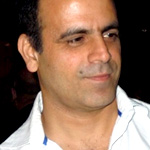
     

    Ashish Khazanchi, NCD, Publicis Ambience

    We keep hearing of instances of plagiarism in advertising now and then. In the current scenario it has gone to the extent of being a witch-hunt where people are seeing things that don’t exist. What happens is that there are thousands of creative people from around the world who work on a similar kind of brief and it is possible that the out of the hundred different ads, expressions from a few ads will have some similarities. But there are some ads that are too apparent and imitations of earlier produced works.


    In most ads today, the visual referencing could be similar – like television ads could be inspired from some big film, but more often than not people are not so stupid that they will enter an ad in an award which has been copied from elsewhere. There could be some odd cases where ads could be termed as plagiarized ads and the only way they could be booted out is if the jury is selected with a lot of caution. After all jurymen are people who have travelled a lot and have been around to ad festivals and they know a lot of stuff that is happening in the industry. So, the tighter the jury, the better it is for the industry. You have to get people who know the category that they are going to be judging.

    I do not agree that plagiarism does not happen in the West or even South East Asia. It happens there too but the big thing is that the western world is moving more towards the digital world. Which means the work they are treading on is all known. For them, the way a Press or TV ad was done is not as relevant any more. They are looking at integrated communications across mediums, which means more accountability for the work that’s been done. So there is not much scope for plagiarism in new-age mediums.”

     

    Philip Thomas, CEO of Cannes Lions Festivals

    “We have clear and unambiguous rules against scam work across all our festivals and it is a matter of record that we can and will remove awards from agencies who have won using scam work.
     

  • Longhand 2.0: Getting better, and longer

    By Ananya Saha


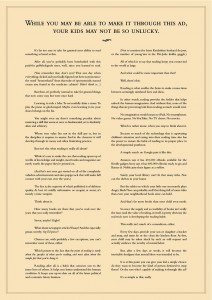
    When short and crisp are the buzzwords, when Twitter creates buzz with 140 characters, not many seem enthused to write long copy. Especially long ad copy. Even when required. Thus was born Longhand. The Longhand competition was a much cherished advertising affair last year. For the uninitiated, the competition, brainchild of Bodhisatwa Dasgupta, Associate Creative Director, Grey Worldwide, celebrates the love for long copy ads. The participants write long copy on 4-5 briefs. A few deadline extensions and many entries later, well-known names from advertising industry judge the copies. Names such as Indra Sinha, Neil French, Swapan Seth, Emmanuel Upputuru, Satbir Singh, Ashish Chakravarty, and Nima DT Namchu judged last year’s competition and Sir Martin Sorrell endorsed the initiative.


    Differentiating this year’s competition from the last year, Mr Dasgupta said, “The first year only had judges from the creative field. This year, we have two judges representing the clients’ side as well, Rahul Kansal, Executive President, BCCL and Mohit Hira from JWT who is Sr VP and Regional Business Director – Airtel. The client judges have a role to play too in the resurrection of long copy ads.” Apart from the client judges, there will be known names such as Prasoon Joshi, Executive Chairman & CEO of McCann Erickson Worldgroup India; Agnello Dias who co-founded Taproot and David Shanks – a copy-based Creative Director who runs his own one-man company called Clear Brand Essence from London.


    Neil French, former WPP Worldwide Creative Director and founder of World Press Awards, and Luke Sullivan who is now chair of the advertising department at the Savannah College of Art and Design, will act as the Jury Presidents. Guest Judges Ed McCabe, Tony Brignull will give conclusive comments on 10-15 shortlisted entries. For the record, at the D&AD 50th anniversary, advertising legend Tony Brignull was accredited Most Awarded Copywrite with three Black Pencils and 17 Yellow Pencils over 35 years. He currently works freelance. Mr. McCabe is the youngest copywriter to be a part of the One Club Creative Hall of Fame, featuring the likes of David Ogilvy and Leo Burnett. He also co-founded Scali, McCabe, Sloves.


    Getting the big guns of advertising to be judges at Longhand must have been a tough job. “Not actually,” said Mr Dasgupta, adding, “You know, big people have big hearts.” Well, the big-hearted judges won’t be soft on the entries though. While last year winners received ‘Sorry for the Lobsters’, a book written by Neil French signed by the Worldwide Chief Creative Officer of O&M and Chairman of its Worldwide Creative Council, Tham Khai Meng, Mr Dasgupta prefers to keep 2.0 awards under wraps for now.


    The 2.0 version has a new website (www.longhandawards.com), even as it gains momentum solely through the Facebook page (www.facebook.com/Longhand2 and the Mr Dasgupta-led long copy ad reservoir: www.facebook.com/putheadlinehere). This year, apart from Mr Dasgupta, is his art partner Dushyant Chopra. Mr Chopra is the man behind the logo and all the communication that’s released and Kolkata-based Adhiraj Mukherji designed and developed the Longhand 2.0 website. Much like last time, all judging will be done online, with no jury-meets to discuss the shortlists.


    The free-to-enter contest opened on January 15 and the deadline has already been extended to March 15 from the earlier March 1, given the huge interest it is generating in the ad industry. The international participation is also expected to rise, given the page views from UK, US, Singapore, Portugal and Netherlands, among many others, concluded Mr Dasgupta.