Tag: Bobby Sista

  • RIP, Bobby Sista. Advertising Hot Shot. Champion of Gender Sensitivity

    RIP, Bobby Sista. Advertising Hot Shot. Champion of Gender Sensitivity

    Those who have met him only in the last decade or so have only seen a soft-spoken senior in his trademark white. But everytime he would speak, it was evident that here was someone who has been there and doing it. And how!


    We are referring to Shambhu Venkatrao Sista, better known to his friends as Bobby, who passed away in Mumbai, peacefully, on Saturday, July 27. He was 93, and leaves behind his family and a large number of admirers.


    In his passing, the Indian marketing services fraternity has lost one its most revered pioneers with. A visionary leader who helped shape the landscape of Indian advertising over several decades, Sista leaves behind a rich legacy of creative excellence, brand-building and social impact.


    Born into an advertising family, Sista took over the reins of Sista’s Advertising, founded by his father in 1934, and transformed it into one of India’s most respected creative shops. Under his leadership from 1970 to 1998, Sista’s rose from 27th position to become Top 10 agency, competing with multinational giants through its focus on breakthrough creativity and strategic brand-building.


    Sista’s early career provided him with a multifaceted understanding of the marketing and communication landscape. After an apprenticeship at Sista’s under his father, he gained international exposure by attending an advertising conference in London as a youth delegate in 1951. He stayed on in London for two years to study advertising and work at an agency, experiences that shaped his approach when he returned to join Sista’s as an account executive.


    One of Sista’s earliest and most successful campaigns was for Tinopal (later Ranipal), an optical whitener that he helped launch and build into a market leader with 90% share within three years. The campaign was praised by famed scientist Dr Vikram Sarabhai and even caught the attention of Hindustan Lever’s chairman for its distribution reach. This early success highlighted Sista’s strategic acumen in leveraging advertising to drive distribution and market dominance.


    After a stint as marketing manager at Tinopal’s parent company and as India’s first marketing manager for Reader’s Digest, Sista returned to take over as Managing Director of Sista’s Advertising in 1970. Over the next three decades, he built the agency into a creative powerhouse, personally nurturing talent like creative director Jean Durante and fostering a culture that prioritised creative excellence above all else.


    Under Sista’s leadership, the agency created iconic campaigns for brands like Nycil, S Kumar’s, VIP Luggage, HMT Watches, and Hot Shot cameras. The “bramble back” campaign for Nycil helped it overtake Johnson & Johnson to gain 70% marketshare within a year. For VIP Luggage, Sista’s not only made it the #1 brand but grew the entire molded luggage market by 300%. The Hot Shot camera campaign featuring the audio mnemonic “Just aim and khatak” broke records for awards won (the khatak bit was courtesy Prahlad Kakkar).


    Sista was a pioneer in many aspects of advertising and marketing in India. His agency created Mumbai’s first three-dimensional lighted hoarding, organised one of the earliest fashion shows on a swimming pool, and executed ambitious on-location shoots and sets that pushed the boundaries of production at the time. He also instituted the Annual Advertising Arts Ball as Secretary of the Advertising Club Bombay, which became a marquee event in the industry calendar.


    Beyond his advertising career, Sista was deeply committed to social causes. After selling Sista’s Advertising to Saatchi & Saatchi in 1998, he focused his energies on social communication and development sector work. He founded Population First in 2002 to address population issues from a gender and social development perspective. The organisation’s Amchi project brought development to 100 villages in Maharashtra through community empowerment, while the Laadli campaign and Media Awards worked to change perceptions and portrayals of women in media and advertising. In Dr A L Sharda, he found an able leader, who could take his mission many steps forward.


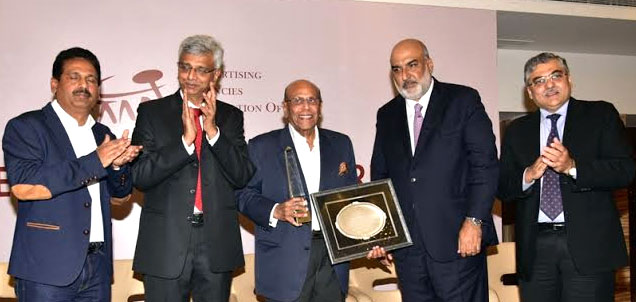
    Sista’s contributions to advertising and social causes earned him numerous accolades, including the Lifetime Achievement Award from the Advertising Agencies Association of India. In his acceptance speech for this honour, Sista’s humility, wisdom and passion for positive change shone through. He credited much of his success to luck and to the talented people he worked with, while also pushing the industry to institutionalise gender sensitivity in advertising through a dedicated award category.


    He was also a very active member of the complaints committee of the Advertising Standards Council of India.


    Bobby Sista will be remembered as more than just an advertising veteran. He was a visionary who understood the power of communication to build brands and change society. His legacy lives on not just in the iconic campaigns he created, but in the institutions he built, the talent he nurtured, and the causes he championed. In fact, if the Indian media – especially advertising – is a lot more gender sensitive than it was, say, a decade back it is thanks essentially to the wonderful institution that he set up under the aegis of Population First and Laadli.


    In his acceptance speech at the 3As of I award, he said: “I did not have an MBA Degree. I had neither training nor experience of running an agency. Common Sense was my only qualification and personality and people skills my assets. I was lucky with the team I was able to build up and the roster of clients we had acquired as we went along.” And this is what he said on the transition from Sista’s to the social sector: “the period 1970 to 1998 when I headed Sista’s was a happy period. Of course, there were worries- financial and otherwise, frustrations, many mistakes I made, but on the whole it provided a lot of satisfaction and sense of achievement. In 1998 I sold the advertising business to Saatchi & Saatchi. We had a staff strength of 370 between the Head Office and four branches. I quit because my heart was into social communications and I wanted to explore the opportunities in the development sector.”


    As Indian advertising continues to evolve in the digital age, Sista’s principles of creative excellence, strategic thinking, and social responsibility remain as relevant as ever.


    The passing of S V “Bobby” Sista marks the end of an era in Indian advertising. Yet, his impact on the industry and society at large ensures that his influence will continue to be felt for generations to come. He will be deeply missed, but warmly remembered as a pioneer, mentor, and changemaker who helped shape the soul of Indian advertising.

  • Commonsense was my only qualification: Bobby Sista


    By Dyanne Coelho


    “Let’s drink to Bobby, the only brother in town who’s a Sista.” One can always trust long-time adman Gerson da Cunha, to come up with a memorable line like this one. But it was particularly apt since it was delivered at an event where SV Sista – better known as Bobby – was conferred the Advertising Agencies Association of India (AAAI) Lifetime Achievement Award 2015 for his contribution to the advertising industry. “I am greatly honoured to receive this prestigious award, and am privileged to receive it in the presence of such a distinguished audience,” Sista said, even as a 40-strong contingent of his colleagues and mentees took up the chant of “love you boss, love you boss, love you boss”.


    The Citation

    The Advertising Agencies Association of India

    takes pleasure in presenting the AAAI Lifetime Achievement Award 2015 to

    S. V. Sista

    For leading an agency that created some of the most remembered campaigns of its time.

    For his stellar contribution to the growth and development of various Industry bodies in India.

    For his professional integrity and devotion to ethical business practices in advertising.

    For his commitment to give back to society in so many different ways right through the last two decades.

    For being a selfless beacon for all of us in the advertising industry.

    He is truly deserving of the high commendation which this award bestows on him. 


    The AAAI Lifetime Achievement Award is usually conferred on advertising industry veterans, and Sista certainly is one. Well-known for his professional integrity, devotion to ethical business practices and his contribution to a number of industry bodies in India, Sista has had a lot of milestones in his career. “To have over 40 of my colleagues present here, from Chennai and Bengaluru, and Ravi Prasad, who has flown in from Dubai this morning especially for this — obviously I have a guardian angel watching over me,” Sista said, in a clearly grateful and heartfelt message.


    Bobby joined the world of advertising and marketing shortly after he finished college, joining the eponymous agency run by his father. As an apprentice at Sista’s, he followed a different track, when he was involved in the marketing of a magazine, Reader’s Digest, in 1965. Five years later, he became Managing Director at Sista’s. “From the time I took over, I was clear in my mind that Sista’s would be known for, and compete on, the quality of our creative output,” Sista said, reminiscing about the early days of the agency that is known for creating some of the most iconic ad campaigns. “I did not have an MBA degree. I had neither training nor experience of running an agency. Common sense was my only qualification, and personality and people skills, my assets.”


    Feted for his campaigns to bridge the gender divide in the country and his attempts to change the way India perceives women, Sista had a request to make to the advertising industry at large. “I wish to make one request to the Who’s Who of advertising and marketing leaders gathered here– please institute an Abby for gender sensitivity in advertising,” he said. “It has to be an industry award. While I understand that gender sensitivity should be an integral part of any good communication, including advertising, rewarding those who are using their creative space to redefine gender roles and stereotypes would, in the long run, institutionalise it as a core value of the industry. Is that not what we want – an India where men and women have equal opportunities and rights, and share a space that is free of discrimination and violence?”


    Ravi Prasad, a colleague at Sista’s, had nothing but praise for his former employer whom he lovingly addressed as ‘Boss’. “Sista’s has an alumni association and we meet every year,” he said. “The sense of belonging that Bobby created in the company, has become a necessity for us all. That’s why even 20 years after the company stopped existing, every former member of Sista’s still has a bond with every other individual who also worked in the company.”


    “Mr Sista’s willingness to reason and understand an alternate perspective or change his stance for a cause, along with his [general] support and commitment, has been remarkable,” Dr. A L Sharada, who joined the NGO Population First, as CEO in 2003, said.


    The event, held in Mumbai on Friday, brought together several stalwarts of the advertising industry,


    Full text of Acceptance Speech by S V Sista


    Friends,


    I am greatly honoured to receive this prestigious award and am privileged to receive it in the presence of such a distinguished audience.


    All of you know it all, have done it all. There is nothing that I have done which you are not already deeply immersed into – neither the learning nor the experiences. I left advertising more than 15 years ago. You are still very much a part of today’s scenario and are aware of what the future looks like.


    So I crave your indulgence, I will confine myself to my personal experiences and hope I don’t bore you too much.


    At the outset, let me say that I have been very lucky, both in my personal life and my professional career. I was very lucky to have wonderful parents, lucky to have doting siblings and above all extremely lucky with a fantastic wife but for whom I would not have been able to accomplish a lot of what I have done and she presented me with two lovely children, a son and a daughter. I am also lucky to have a large number of friends and acquaintances and no enemies – rather no one who had a reason to dislike me. And am I singularly blessed or what? To have over 40 of my ex-sista’s colleagues present here- they have come from Chennai, Bangalore, and Ravi Prasad has specially flown in from Dubai this morning and is returning tomorrow. Obviously there has been a Guardian Angel watching over me.


    I have happy memories of my school and college days. And on the whole, my professional career has been happy and satisfying. I was lucky to have the opportunity of working in four different areas and levels of Advertising and Marketing viz As an apprentice in Sista’s under my father straight after college, Marketing of a consumer product – Tinopal which I launched while in Sista’s, Marketing of a magazine – Reader’s Digest. And finally, taking over Sista’s as Managing Director in 1970.


    In 1951 I had the good fortune of going to London to attend an International Advertising Conference as a Youth Delegate. And to stay on for two years to do a course in Advertising and work in an Advertising Agency. Soon after returning from London, I joined Sista’s as an Account Executive and was looking forward eagerly to applying to my job, the knowledge and experience gained in London. While I handled many clients covering consumer products and services, the account that gave me most pleasure and satisfaction was a product (an optical whitener) called TINOPAL (later became Ranipal). I was lucky enough to launch Tinopal. I was even luckier with the client, (a dream client) who gave me complete freedom to write my own creative brief, for the choice of media and determining the budget. For a budget of Rs13 lakhs (a big sum in those days) I was able to virtually saturate the media in all the main languages. The most notable feature of this account was that advertising drove distribution and not the other way round. Suhrid-Geigy, the client was mainly a Dyestuffs and Chemicals company and TINOPAL was a single consumer product. Their distributors had no experience of consumer product marketing. The demand created by the advertising forced them to appoint stockists who in turn serviced the retailers. Before the launch of Tinopal, there were a couple of brands – Amarwhite and a Sandoz product, called Sandowhite. Within 3 years Tinopal had 90%  market share. The client was so happy that they offered me a job as Marketing Manager – again – for a single product. Dr. Vikram Sarabhai took a keen interest in the marketing of Tinopal. It gave me the opportunity of going on a Bharat Darshan for three months.


    I would like to mention two proud moments – one while still in Sista’s and one during my five year stint with Suhrid-Geigy. A very talented artist in Sista’s had created a series of ads for a Textile Journal. The  Chairman of Geigy in Switzerland wrote to Mr. Uebersax, my boss at Suhrid-Geigy that these were the best advertisements for Tinopal of all the countries Tinopal operated in.


    The other was Dr. Vikram Sarabhai telling me that Mr. Prakash Tandon, then Chairman of Hindustan Lever praising our distribution. He couldn’t understand how Tinopal (by then it was marketed in 1 gm sachets) was available at every panwala where even Hindustan Lever products could not be found. This was because, as I said earlier, the advertising drove distribution.


    The six and half years I spent in Sista’s  before joining Suhrid-Geigy, were quite eventful and brought to the fore my enthusiasm and skills in organizing extra-curricular activities in my personal life and professional career.


    The Advertising Club, Bombay (then known as the Advertising Luncheon Club) was launched in August 1954. I along with Mr Soli Talyarkhan was one of the Founders and served as Honorary Secretary for four years. Distinguished people from all walks of life accepted our invitation to speak at the monthly Lunch meetings. During these four years, it was my good fortune to meet several CEO’S and senior people in advertising agencies and corporates. These contacts stood me in good stead throughout my career. We also instituted the Annual Advertising Arts Ball. This became the most looked forward to event in the Advertising Calendar.


    In March 1965, I joined Reader’s Digest as the First Marketing Manager for India. Spent two months in the London Office being inducted into the nuances and intricacies of Direct Marketing of a Magazine.


    It was quite fascinating. As you all know, unlike conventional advertising this medium gets the results of its mailing within a few days and you know whether a campaign has succeeded or failed.


    The following year I again spent two months in the London Office. My visit was timed to enable me to attend their Annual Review. It was a five day affair and was held in a Sea Side Resort, TORQUAY. This was another exhilarating experience for me. I felt I was listening to a high level discussion on the Art of Writing and the Science of persuasive and effective communication.


    The Head of International Marketing was Tom Schreckar. Reader’s Digest, India was under his jurisdiction. He visited quite regularly and I learnt a lot from him. He and my boss, Param seemed to be quite pleased with my performance and I was told that I was being groomed to be number two to my boss in India. However, fate decided otherwise- the position of MD of Sista’s fell vacant in early 1970. I had to choose between  remaining in the Digest to eventually become number one in India or taking over Sista’s immediately as MD.I had no hesitation in getting back to my first love-Advertising and that too the challenge of re-building  an agency  that had dropped to number 27. Within three years I took it to number 10.


    Here again I was very lucky. My wife Sheila and Jean Durante had both left Chaitra. Sheila joined me as Director of Finance and she persuaded Jean to come on board. During Jean’s tenure in Sista’s she was easily one of the top creative Directors in the country. From the time I took over in 1970, 1 was clear in my mind that Sista’s would be known for and compete on the quality of our creative output.  All the executives knew that creative would not be over ruled by the executives or even by the client.


    I did not have an MBA Degree. I had neither training nor experience of running an agency. Common Sense was my only qualification and personality and people skills my assets. I was lucky with the team I was able to build up and the roster of clients we had acquired as we went along. We had four branches- Bangalore, Delhi, Madras and Calcutta. I was lucky with my branch Managers who were all competent, committed and successful. As a small agency we were competing with JWT, Bensons (now O&M)  Lintas and other larger agencies. Where we scored was in the consistent quality of our creative output. We built many brands –NYCIL, Lakshmi Vishnu 100%, Terene  Sarees ,S Kumars, VIP Luggage, HMT Watches, Aristocrat Luggage, HOT SHOT and many more. Nycil was handled by many agencies before the client came to us – some very weird work was done prior to their coming to us. We came up with just one ad – one idea – a woman with a bare back on which we put a bramble. This became such a powerful mnemonic that the client used this one picture on every piece of communication and merchandising. It eventually ended up on the pack. Johnson & Johnson were the market leaders with 70% market share. Within one year of our “bramble back” the market share was reversed with Nycil reaching a market share of 70%.


    S.Kumars (distributors of Laxmi Vishnu products) was another brand we built up without the use of conventional advertising, but entirely through very innovative radio programmes and fashion shows in over 40 cities. The logistics involved in organizing these road shows were extremely tight, complicated and physically very tiring for the models and all the rest of us.


    For VIP luggage, we not only made them No.1 brand in 3 years but also increased the size of the moulded luggage market by more than 300%. We ran a press campaign featuring foreign personalities from different countries extolling the virtues of VIP luggage. The campaign became a hit and was praised even by our peers in the profession. It went against the conventional short copy rule. It was entirely based on long text bringing out the features of VIP luggage, but laced with humour. One of the films had a Spanish lady dancing on a VIP suitcase.


    We lost the VIP account and immediately gained the ARISTOCRAT luggage account. We produced a Magnum Opus of a film shot entirely in a palace in Jaipur which featured the first suitcase on wheels and highlighted this feature through different fun situations. Here again, within 3 years Aristocrat caught up with VIP (in market share).


    Hot Shot, of course, gave us the scope for some very high profile advertising. The central theme Jean decided was – “There is now a smile behind the camera”. Prahlad Kakkar came up with the line “Just aim and Khatak” instead of “aim and shoot”. To my knowledge this was the first time an audio mnemonic was created. The campaign featured people who were earlier afraid of taking photographs and they were shown enjoying the ease of wielding a camera. One of the ads featured a typical middle class Maharashtrian woman with the camera and saying “Agdi Simple”. Please allow me to take a few minutes of your time to tell you what impact our campaign had on the sales of HOT SHOT cameras- we had planned the campaign in two phases- the first in April & May to take advantage of the holiday season. The second phase was after the monsoons, to take advantage of the festive season- Dussera, Diwali, X-mas. During the first phase itself they sold all the cameras they had planned to produce for both the phases. Thanks to the break in the monsoons, the client was able to quickly step up production.


    For the size of agency we were, we collected quite a few Awards. Hot Shot broke all records for the number of awards won, and that too over two years. Sista’s had many firsts to their credit. We were the first agency in Bombay to create a three dimensional, lighted hoarding (the Chowpatty Bridge), the first, to the best of my knowledge, to organise a fashion show on a Swimming Pool, arguably the first to have the courage to launch Lakshmi Vishnu 100% Terene Sarees with four large ads on consecutive days featuring Persis Khambatta. I did not know then that Brendan Pereira had created a campaign for Laxmi Vishnu Sarees featuring Persis Khambatta. We were the first to create a complete office set outside NCPA-with all the necessary furniture for a Hyderabad Client, Regency Ceramics. They made ceramic tiles. I am still using two chairs from the set. Also a bedroom set by the sea and one more. Each set, cost Rs One Lakh – a huge sum in those days.


    Again the period 1970 to 1998 when I headed Sista’s was a happy period. Of course, there were worries- financial and otherwise, frustrations, many mistakes I made, but on the whole it provided a lot of satisfaction and sense of achievement. In 1998 I sold the advertising business to Saatchi & Saatchi. We had a staff strength of 370 between the Head Office and four branches. I quit because my heart was into social communications and I wanted to explore the opportunities in the development sector.


    Prior to this I had setup a PR Division and tied up with a global consortium of PR Consultants named WORLDCOM PR. I named the division, Sista’s –Worldcom. They had a wonderful program called World Young Business Achiever. I ran the India Young Business Achiever Programme for seven years. The IYBA went abroad to compete with Achievers from nearly twenty countries.  Three criteria had to be fulfilled- he or she had to be a first generation entrepreneur (as opposed to a family business), under the age 40 and a track record of three years in business. In the seventh year, our candidate, Manoj Tirodkar, won the finals.


    I particularly took up this programme because I always held a strong belief that India was a country of Entrepreneurs in all fields of activity- from Farming to Manufacturing to Business. It is thanks to our Entrepreneural spirit and talent that India became the 10th Largest Industrialized Country in just twenty years since Independence.


    Although the IYBA programme was doing well, I was still not happy as I had not yet got into Social Communication. I explored a gamut of issues and finally zeroed in on “Population”. That is how Population First came to be registered as a Trust in March 2002. I felt enough importance was not being given to it and my heart was set on doing what little I could. It was launched at a very high profile and largely attended Press Conference. Mr. Keshub Mahindra, Mr Ratan Tata, Mr Jamshed Irani, Mrs Rajashri Birla, Shekhar Gupta were present. These and other distinguished Business Leaders later formed our Board of Trustees.


    Here again I am very lucky to have such a distinguished Board of Trustees. It reads like the who’s who of Indian business and Academia Dr. M S Swaminathan an internationally reputed scientist is one of our trustees. Another great piece of luck was to have found Dr. A L Sharada in 2003 and have her join Population First as CEO.  It was thanks to Sharada that our activities gathered momentum. It was Sharada who conceived of and implemented the activities and programmes. It is entirely thanks to her commitment, expertise and dedication that Population First has reached where we are at.


    One of the questions that Dr.Sharada asked me when she joined was if Population is an issue of numbers or quality of life. And why the numbers are bad, is it because of lack of awareness or because of mindsets which deny women their rights. I was shocked to know that 95 percent of people are aware of contraception but they are not able to use them because of gender inequalities and gender-based violence. The low social development indices – 500+ women out of 1lac pregnant women were dying in India at the turn of the millennium as compared to less than 5 women in the developed world and the shocking data of the falling sex ratio which was highlighted by the 2001 census was a strong indicator of the bias against the girl child. These redefined the objectives of Population First as addressing health and population issues from a gender and social development perspective. And our two projects were designed to take that objective forward.


    Our AMCHI project brings in social and economic development to 100 villages in Shahapur block, Thane District through people’s participation, strengthening of local institutions as well as service providers and empowerment of youth and women. The focus is on community empowerment and not on doling out charity. My heart swells when I hear the success stories from the field, of villages getting digital schools, water connections and what have you by challenging the corrupt system by fighting for their rights and fulfilling their obligations as responsible citizens. That was Gandhi’s dream of Swaraj which we are able to actualize in our villages. I know very few of you are aware of this project.


    The second Initiative is the Laadli campaign; the Laadli Media Awards are a part of it which you all are aware of. Let me tell you, it is not just an award event. With the motto of influencing the influencers to change the way India perceives and treats its women it is a year-long advocacy campaign. We are constantly in touch with the media and advertising fraternity at various levels, forging partnerships – one of our most fruitful partnerships was with IAA, developing gender guidelines and style guides for media and advertising, having consultations with media owners, senior editors, script writers and creative directors, media workshops for working and student journalists, media fellowships etc etc. We also have a major campaign in 30 colleges of Mumbai where we work with youth on gender issues through our Change Makers Clubs


    I am happy to see a shift in the media – print, electronic and films as well as in advertising, with more positive portrayals of women and the gender equations. Each time my team shows me a gender sensitive ad I feel we have contributed to it in some small measure somewhere. The fact that Dr. Sharada’s gender scoring of ads in Campaign being accepted by the ad fraternity shows the openness of the industry to new ideas and perspectives. I feel proud to be a part of such a vibrant and live industry.


    Before I bring my speech to an end, I wish to make one request to the who’s who of advertising and marketing leaders gathered here. Please institute an Abby for gender sensitivity in advertising. It has to be an Industry award. While I understand that gender sensitivity should be an integral part of any good communication including advertising, rewarding those who are using their creative space to redefine the gender roles and stereotypes would in the long run institutionalize it as a core value of the industry. Is that not what we want – An India where men and women have equal opportunities and rights and share a space that is free of discrimination and violence?


  • AAAI to present Lifetime Achievement Award to Bobby Sista

    By A Correspondent


    The Advertising Agencies Association of India announced that this year’s AAAI Lifetime Achievement Award will be given to Shambhu Venkatrao Sista popularly known as Bobby Sista. This Award is the highest honour to be given to an individual in India for his/her outstanding contribution to the Advertising Industry.


    Bobby Sista has been one of the stalwarts of Indian Advertising. Known for his professional integrity, he constantly fought to ensure ethical business practices in a fiercely competitive profession. In 1970, after brief stints in Suhrid-Geigy and Readers Digest, he took charge of Sista’s Private Ltd, an agency founded by his father, the late Venkatrao Sista, a pioneer of Indian Advertising and one of the first Indians to establish a full-fledged advertising agency, in 1934.


    Always committed to the growth of the Advertising profession and its image, Bobby Sista has held important offices in many industry bodies. He was Vice-President of the Advertising Agencies Association of India (AAAI) for two terms. During his association with AAAI, Bobby played an important role in liaising with the government on numerous industry matters. He was also the founding member of Advertising Club Bombay!


    After his innings in the advertising industry, Bobby has been associated with a variety of social causes like ActionAid (an U.K. based Charity and the parent organisation of Partners in Change) , Sukhi Pariwar – an integrated Health Services and Family Planning Programme working successfully in Pune district, Citizens Council for a Better Tomorrow (CCBT), Mumbai. He is an Executive Committee Member of the Council for Fair Business Practices (CFBP), Mumbai. He also helped to set up the first Jaipur Foot Centre outside Jaipur. This was under the aegis of the Anga Karunya Kendra in Bangalore of which he is the Founder-Trustee. Currently as an Executive Trustee of Population First, he is actively pursuing the task of enhancing communications component of Government programmes and mobilizing the communication industry and media to create a people’s movement for social development and gender sensitization through his ‘Laadli’ initiative.


    Making the announcement, Dr. Ambi M G Parameswaran, President, AAAI, stated that “Bobby Sista is an industry veteran whose agency did some truly pioneering work in the 70’s, 80’s and 90’s. It is admirable that even after leaving the advertising business he has tirelessly worked for numerous worthy causes for social development. He is an inspiration to all of us!”


    The AAAI Lifetime Achievement Award will be presented to Mr Sista on 31st July 2015 in Mumbai.


  • Arise, awake… and care for the girl child!


    By Fatema Rajkotwala


    Jaldi 5 with Dr A L Sharada: More ads must say: Yes, she can
     

    Population First has been at the forefront of the initiative on the way the girl child has been projected in the media. Dr A L Sharada, Director, Population First, spoke to MxMIndia on the girl child and the media and how we can prevent the celebration of the International Day of the Girl Child from being mere tokenism.


    01.  It’s good to see that the first ever International Day of the Girl Child is being celebrated. How do we prevent it from being mere tokenism?

    I welcome the UN, as a global body declaring October11, as the International Day of the Girl Child. This gives us an opportunity to take stock of the work that we have done so far, look further into what needs to be done and how we could take the issue at hand, forward. However the fear that it may turn out to be yet another gesture of tokenism is a valid one. The only way we can stop it from becoming yet another international day celebrated as a formality every year, is through concerted efforts to work on some of the major issues regarding the girl child.


    There are many issues concerning girls such as child marriages, low enrolment in schools and neglect of their health and nutrition needs. We need to advocate and lobby for more focused policies and programmes to improve the status of the girl child. We need to use the opportunity provided by the International Day of the Girl Child, every year to reflect upon achievements, fine tune our policies and redesign our programme, if required.


    Do you see that Population First’s efforts have had an impact on the media?


    I see lot of positivity and openness from the media towards these issues and a willingness to approach them differently. In the current media scenario, many of these issues are being addressed but more need attention. We, at Population First believe that we have to start a dialogue with all stakeholders, media being a primary stakeholder. We, as a nation have internalised, and have deeply ingrained patriarchal values to an extent that unless someone points it out, at times we are unaware of a possible patriarchal tone in our public communications. We need to initiate dialogues with all groups of society, so that together we can build a more gender-sensitive society.


    02, In your experience interacting with marketers and advertising agency professionals, do you think they are sincere in their attempts to appreciate the responsibility towards the girl child in a society like ours?

    Our experience with the advertising professionals has been very positive. We found them to be open-minded, willing to look at our standpoints and revise their current approach. From the time we began interacting with professionals in the advertising industry in 2008 up to today, we find a much greater presence of girls in advertising and many advertisements that are now projecting positive and non-stereotypical images of girls.


    03.  Do you think self-regulation bodies like ASCI, Advertising Club and AAAI should also take it upon themselves to promote the cause?

    Yes, definitely. It is important that activists working on gender issues and the regulatory bodies of media and advertising work together to ensure that the media does not project demeaning and negative images of girls. It is also imperative that  media does not consciously or otherwise, support or promote negative social attitudes and practices such as eve-teasing, commodification, objectification of women and violence.


    04.  What are your views on gender biases in today’s advertising?

    In 2008, during our analysis of advertisements showing girl children, we found that girls had a lesser presence and were often presented in a stereotypical fashion, for example mostly endorsing products that have been promoted by their mothers too. It was also observed that an ideal family is always shown as mother-father with one daughter and one son, or two sons. Rarely did we find ads showing two daughters. While a lot has changed in the last few years, in terms of projection of girls in advertisements, it is still rare to find an advertisement where two daughters are shown in a family setting. This, I believe, promotes the perception that a son is a must in the family. In a context where the country’s sex ratio is declining, this is a very disturbing trend.


    Television serials, television and print media content also further aggravate this image of women. What are your views here?


    Yes, it is true that the portrayal of women in print and electronic media is regressive and voyeuristic in flavour and we have to work on changing this. This is why we have instituted Laadli Media Awards for Gender Sensitivity. We have received 1500 entries this year and the quality of the content is improving. There is a lot of potential for change. The most pertinent example here is that of the popular show, Satyamev Jayate, which has suddenly got numerous issues into our drawing rooms. It shows the effect of one strong programme with a potent combination of Aamir Khan, an industry giant like Reliance and a media tool like Star TV. This shows that there is potential to bring social change. New media and its various options are also democratizing the way news now reaches out and has gained momentum with youth across the country as tools for creating public opinion. It is an exciting time to be, in terms of working with media on social issues


    05.  One view of marketers is that they need to sell to consumers, given the prevailing behavioural patterns, and that they are not in a position to correct these attitudes. How do we bring about a change in this view?

    I would like to highlight two ads here. For instance, an HDFC investment plan ad shows a father investing for his daughter’s education instead of a more common notion, such as saving for her marriage. This is a positive and refreshing approach to the product and in no way undermines the value of the product. The other ad I would like to mention is the Tata Nano ad where a small girl hugs the car, and the father gives her the car keys. This shows that the father is proud of his daughter. Giving visibility to girls in ads, is by itself crucial. We need to see more such instances where girls have to be shown in a capable light and in diverse concepts while selling a product. After all, communication is all about conveying the message effectively, is it not?

    (Interviewed by Fatema Rajkotwala)


    Last December, the United Nations declared that it would annually observe the International Day of the Girl Child, starting from October 11, 2012. Supported by the United Nations Population Fund (UNFPA), in partnership with Whisper, leading non-government social welfare organization Population First will celebrate the first International Day of the Girl Child today (October 11) at Mumbai’s Y B Chavan Centre (*see disclosure below).


    The first ever International Day of the Girl Child is marked to help prioritize girls’ rights as the salient issue in the coming decades. ‘Laadli‘ is Population First’s Girl Child campaign against sex selection and falling sex ratio. It focuses on creating a positive image of the Girl Child in society.


    Veteran adperson Bobby Sista is Executive Trustee, of Population First. Mr Sista spoke to MxMIndia about the positive response from the advertising world towards the issue, “The response from the advertising world has been encouraging. We, at Population First are absolutely delighted that at last a global body has recognised that the girl child is a special category that needs special, global attention. One of our primary focuses is to eradicate the horrible practice of pre-birth sex selection. I have been highlighting and propagating the economic value of the woman as a homemaker in our society and her contribution to the country’s GDP. A woman is at least four times better at being a manager, or doing any job today. Why always talk about the girl child in a suppressed context? What is it that a woman cannot do today, that a man can do?”


    Dr A L Sharada, Director, Population First spoke about the need for activists and media bodies to work together to bring about social change, “It is important that activists working on gender issues and the regulatory bodies of media and advertising work together to ensure that the media does not project demeaning and negative images of girls. There is a lot of potential for change. New media and its various options are also democratizing the way news now reaches out and has gained momentum with youth across the country as tools for creating public opinion. It is an exciting time to be, in terms of working with media on social issues.”


    Part of the multi-stage campaign, ‘Question Everything’ was a two-day workshop on Creative Thinking, Communication and Gender. Organized by ‘Laadli’ Changemakers Club of Population First, the workshop engaged students from Mass Media colleges across Mumbai, with an aim to involve the youth in a dialogue on gender issues, with a focus on enhancing the image of the girl child. Highly experienced advertising and media professionals such as Gautam Rakshit, Gopi Kukde, K V Sridhar (eka Pops), Dolly Thakore and Zoya Akhtar shared their expertise and guidance with students. The event will see the launch of 1MM, one-minute movies made by college students questioning gender inequality and injustice.


    Says Mr Sridhar, National Creative Director, Leo Burnett , “We have realised that at times, lack of knowledge and sensitivity tend to be the reason for negative content. But when you’re creating something, you have a white paper in front of you, you can create anything. We need to influence content creators first, then clients, then people themselves to come out of years of reinforced images of family planning. When you sensitise teens and youngsters, power to impact is higher. The new mantra for communication in the digital era is- Play, Buy and then Share. Young minds involved in making a one minute movie raise issues without fear to express and once you get involved, you think about it, play it with experience, then you buy into the philosophy, then you share it. Youth sharing via mass media tool such as Facebook or Twitter have a far reaching impact. This is a process that has been initiated. That is how social revolutions were made, religions and value were spread.”


    Part of the event’s agenda is to recognise young women achievers such as the female fire-fighters of the Mumbai Fire Brigade. The event will also felicitate celebrity parents and daughters who have made a mark for themselves in media, corporate and political circles.


    Population First has also introduced the Laadli Media Awards for Gender Sensitivity to encourage and recognise media content that has positive social messages for the girl child.


    Disclosure: MxMIndia has published for Population First a special volume on the First International Day of the Girl Child that will be released at an event in Mumbai this evening (October 11). Also, we strongly believe in the cause and feel that media and entertainment can play a key role in changing gender perceptions. – Ed.


  • Bobby Sista, Alyque Padamsee & Gerson da Cunha on Bal Mundkur

    While tributes keep pouring in for the ad legend and intrepid explorer who was ahead of his time, MXM asked his peers from the golden era to look back at the Bal Mundkur they knew.


    Gerson da Cunha, stage and film actor, social worker and author:

    Bal Mundkur was a man of immense energy; he was tireless. Once he decided to do something nothing would stop him. For instance, take the case of the book Ad Katha. There have been three previous attempts by the Indian advertising industry to write this book but every time it resulted in failure, because either the money could not be collected or nobody would be available to take on the writing task or both. But the key among the two was finding the money. Bal Mundkur then sat down and wrote off a series of letters to people asking them to donate money towards the cause. As soon as he collected the money it became a serious project and people began to join him. That’s what I mean: when he decided to do something he would go ahead and achieve it. The next important thing about the book was the drafting of the letter for the book. Otherwise you and I could also write to people and they would give a damn, but to Bal they responded. In fact many of them owed things to Bal – he had built a brand, he had given them a job, etc. So the book in a way represents the kind of person that he was.


    In fact we both met about a year ago in Goa and he told me about this book. He said to me, “Let’s do it.” I responded in the affirmative and thus began our quest. While I was in charge of the content, he was in charge of the money. While we were working on the book, I’ll never forget what he told me halfway through that project. He said, “You know Gerson, I have done many good things in my life but this by far is the best thing that I have done.” And he did it – he completed the job, and he left us.


    Also, there is something else about Bal Mundkur. There are people who, when they leave this life, take something irreplaceable away with them. For example Behram Contractor or BusyBee, as he was fondly known. When he died, he took away with him the bentwood Irani shops, the cuisines – that extraordinary part and spirit of Bombay, as it was known then, which no longer exists. He took it with him and went away. Or Mario Miranda, for example. He took with him a part of Goa and a part of Bombay – Colaba especially, and went off. What Bal has taken with him is a much more complex thing. Yes, it is an era of advertising that was professional, that was innocent… there was not the kind of cut-throat rivalry that was today. Even people competing for the same account were polite and would meet each other up for a drink in the evening. So that professionalism and innocence that existed in the advertising space then has gone with Bal Mundkur.


    He was also involved with a lot of public causes – for the crippled children, did his bit for cancer patients… in fact he he was the first to do a remarkable campaign around cancer. And there were many other causes that he supported. Not just advertising and marketing, he was involved in other facets of life like hosting seminars, promoting the industry to the outside world… he even got the Trinity College of Cambridge choir here.


    There was also a generous side to Bal Mundkur. He knew the value of money but what he did with that is what makes him even greater.


    Bal Mundkur has definitely left a void and he has taken a part of the world of advertising that we once knew.


    Bobby Sista, Founder and Executive Trustee, Population First:

    It’s not really easy to describe Bal Mundkur but he was certainly one of the most colourful and charismatic personalities in advertising. He was not your ordinary guy – he could be arrogant, he could be short-tempered, he could be very charming, he could be very helpful… all of these things, but certainly he was a very good adman.


    Bal Mundkur and I go back a long way. We were closely involved in mooting the idea for forming the Advertising Club of Bombay in the early days. We also discussed the idea of starting an agency together before he floated Ulka. We almost came close to an agreement and everything else was done but then there was a last-minute hitch and it didn’t work. A year or two after that he started Ulka. So while he became fully dedicated towards Ulka, I started working for a client. But we remained friends.


    He was very talented in what he did. Such was his stature that he could even walk into the cabin of an MD with full confidence and if certain things didn’t work out he wouldn’t hesitate in calling it off.


    I do know that he was highly respected by the advertising profession. He certainly brought in a new angle to how advertising could be created. He had that kind of leadership quality – making people think differently and come up with good work.


    One of his noteworthy works includes his effort around the book Ad Katha. I remember that when he conceptualised the idea, he came and spoke to me about it first. He wanted to form an advisory council to get help on this book. He was supposed to have named his book History of Indian Advertising. Bal had even written about 180 pages of the book by then. But then he got in touch with Gerson da Cunha and they went through 2-3 different changes before they renamed the book to Ad Katha. I am happy that he was able to complete the book and launch it at Ad Asia along with 1,500 people from the industry.


    Also, one of the things that you could say about Bal Mundkur and his extracurricular activities was that he was a great fund-raiser. He had the ability to collect funds for various causes, including for seminars around advertising, both in India and abroad.


    Alyque Padamsee, theatre personality and ad film-maker:

    Bal Mundkur was a pioneer who started his own Indian ad agency, even though all the ad agencies at the time were foreign-owned. He built Ulka Advertising into one of the big five agencies of the time. He was not only a superb account management honcho, but also an extremely creative genius. Bal Mundkur was known as a very frank and fearless adman, and pushed his ideas across with charm and force.


    Photograph: Shreta Arora/O Herald O