Tag: blogs

  • Young Track by Samyak Chakrabarty | Causes that Young India is fighting for

    What’s a 23-year-old writing a column on a site where the average age of columnists is… ? Ok, ok, we won’t reveal that number, but like it or not the youth constitute a majority of India’s population. Since the last few years, young Samyak Chakrabarty has been in and around media events and offices with his vision of how the youth can be targeted.


    In this period, he has organized a few conferences, participated in several of them in India and abroad, and works as Chief Youth Marketer with the DDB Mudra group. He’s organized a TedX youth conference in Mumbai, was invited to meet Hillary Clinton when she visited India and has co-authored a book ‘Generation Einstein 3.0 – India version’.


    Samyak’s column appears on Wednesdays and as the title suggests, it tracks the young – specifically keeping in mind the advertising, media and marketing fraternity – Ed


    Today’s urban youngsters are very socially conscious and aware. They do not want to live under the fear of natural disasters or any form of threat to their existence and ambition. Hence we see a large number of participants in protests, Facebook activism etc. Here are four causes that metro youth are most concerned about and taking the initiative to address:


    Freedom to enjoy: One won’t see many organizations taking this one up (as yet!), but as our system and its agents (police, municipal corporation, political parties) get more primitive in behaviour, a mass urban youth uprising won’t be far away. Things like arresting people for Facebook posts or using archaic laws to raid bars anger the new generation equally, as much as those below. Parallel to other advancements in the world, the definition of ‘a good life’ has evolved for those born post-1988, and these kids will do anything to ensure they have it!


    Education: Initatives like Akanksha, Raindancer (part of the Swades Foundation) and Teach for India demonstrate how young people’s energy and skills can be utilized for providing education to the underprivileged. Students from ‘good schools and colleges’ have begun to realize that one of the key solutions to resolving a number of India’s problem is to ensure that people from all sections of society must receive basic learning and training. Hence one will observe a number of youngsters even informally teaching kids of their home staff or those in the neighbourhood.


    Environment: Compared to a Japan or USA, India has been well shielded from major natural disasters. Through new media and easily available knowledge resources, youngsters in India are well aware of the consequences of not conserving nature. Therefore one will see a number of students starting projects like Batti Bandh, Indian Youth Climate network, etc, to create awareness and make a concerted effort to protect our environment.


    Corruption: I was not surprised to see Anna’s Lokpal movement attracting so many youngsters, including many from relatively affluent backgrounds. It begins when a kid with deeper pockets and/or powerful connections takes away the precious seat during admissions from a more deserving candidate … and makes your rage stronger when greedy enablers (of what work you need done – government offices, recruitment, hospitals etc) haunt you at every step. Youngsters find it necessary to take stringent action about this cause – in fact, when it comes to everyday life, more than anything!

     

  • The Anchor: 5 ways you can never get into a jam in the digital world

    By Saurabh Parmar


    1. Be a good listener:

    Digital is a two way communication medium, so before you start talking, start listening to what your customers are talking.


    2. Now understand:

    Get market research experts and your brand custodians to work on all this data and channel the insights to both your online and offline marketing.


    3. Get together:

    Don’t treat digital in a silo, integrate your touch points both in offline to digital banner campaigns, website, mobile, social media with each other. Integration is not just about giving links but really ‘getting together’ mediums to create a cohesive campaign.


    4. Be useful, fun or informative:

    It’s a crowded world out there with millions of brands and products talking. To connect with your customer make sure your message is either useful (What he is looking for), fun (what he will enjoy reading or sharing) or informative (makes him aware and interested)…just a higher media spend does not guarantee you more customers.


    5. Be real, say sorry:

    We all fu ** up, it’s better to admit it and rectify it rather than your customers creating a petition about you or criticizing you on blogs. Even in the virtual world genuineness is appreciated, especially if the response is prompt and correction faster.


    And the sureshot way…hire a better agency: Well the shortest and the easiest way of course is to hire a better agency


    Saurabh Parmar is Founder & CEO, Brandlogist


  • Reviewing the Reviews: Paan Singh Tomar

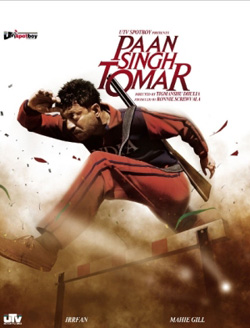
    Paan Singh Tomar

    Key Cast: Irrfan Khan, Mahie Gill, Vipin Sharma

    Written And Directed By: Tigmanshu Dhulia

    Produced By: Ronnie Screwvala


    Tigmanshu Dhulia’s Paan Singh Tomar is one of those films that challenges the collective might of critics – both professional and the word-of-mouth kind.


    The film has been winning raves, and except for skeptical trade journalists, everybody has showered the film with adjectives like “compelling” and “sublime.” The film is also a challenge for those who deride Bollywood cinema; if the so-called lovers of good cinema also don’t support a film like this, then they have no right to crib.


    Times of India’s Avijit Ghosh gives it a well-deserved (for once) 3.5 stars, though “enjoyable” is not the word one would uses to describe a somewhat grim biopic. “Sportsmen and outlaws inhabit two different universes. One shines amidst the bright lights of glory, the other haunts the ravines of notoriety. But in director Tigmanshu Dhulia’s biopic, Paan Singh Tomar, the two worlds collide. And the result is a rather exquisite blend of drama, humour and tragedy; altogether eminently enjoyable good cinema.”


    Anupama Chopra, talking over the reviews of Hindustan Times, gives it 3 stars but doesn’t seem too impressed. “Despite the rich raw material and quality performances, Paan Singh Tomar doesn’t soar. Stretches of the screenplay are sluggish and strangely inert. More critically, I never got a sense of what Tomar’s conversion from an army man to a murderer did to his psyche. Yes, he resorts to violence only because he is provoked but subsequently, he seems oddly at ease with his criminality. Director Tigmanshu Dhulia establishes a loving relationship between Tomar and his wife, Indra, played by Mahie Gill. But Indra and his two children largely disappear from his life when he becomes an outlaw and we never really see him ache for them.”


    Shubhra Gupta of the Indian Express gives it 4. “And what makes this film unforgettable is Irrfan who is, in one word, magnificent. He brings to life both the wordless strivings and joys of an athlete, and the despair of an outlaw, who has nowhere to go, but down. Of a man always, always on the run. Shubha Shetty-Saha of Mid-day liked it too. “Perhaps a tad longer and slower than it should ideally have been, but Paan Singh Tomar is unmissable. In this cricket-obsessed country, many talented men who excelled in other forms of sports have died lonely and penniless. This is Dhulia’s perfect tribute to them and perhaps a wake-up call for all of us. Now that our hockey team is going great guns, this couldn’t have come at a better time.”


    Aseem Chhabria writing on rediff.com is also impressed. “The settings, the language, the costumes, the supporting cast all appear authentic. Dhulia takes us on a journey inside a world that few of us know. My own knowledge of the Chambal ravines is by looking out of fast moving trains on journeys from Delhi to Gwalior, Madhya Pradesh. Seeing PST, we come out of the theater learning so much about the real India that exists far away from the unreal world of contrived plots, garish costumes, item numbers and other nonsense most of Bollywood films feed us week after week. Dhulia has one more agenda in making PST. He reminds us — as the statement at the end of the film makes it amply clear — that India has a sad track record when it comes to the treatment of its former athletes and who were real national heroes.”


    Sudhish Kamath of The Hindu is all praise for Irrfan Khan. “Biopics ride on the actors portraying the main character, and Irrfan Khan as Paan Singh Tomar makes up for what he lacks in muscle and shape required of an athlete, with rustic charm and sincerity. However, he does shine as the ageing runner and the man pushed against the wall.” Karan Bali of Upperstall.com writes, “Tigmanshu Dhulia’s rousing biopic on one of India’s greatest athletes, also an army man, who turned to the gun against an indifferent and callous system, finally settles down as an extremely watchable film let down by a relatively disappointing second half after a riveting enough first one. Yes, the yet another film falls to the interval syndrome again, which makes Paan Singh Tomar a good film that, however, falls a little short of being a great one.”


    Komal Nahata, looking at it from the trade point of view, gives it 1 and writes, “On the whole, Paan Singh Tomar does not have the commercial ingredients to score at the box-office. Had the second half been more weighty, it could have worked reasonably well but with the post-interval portion looking like a routine dacoit drama, that won’t be possible.” Now it’s over to the audience-will they stand by good cinema or let Bollywood potboilers insult their intelligence week after week?


  • Rahat Beri: New realities of public relations in India

    By Rahat Beri


    The Indian PR industry, though fragmented, is gradually growing and transforming. In India, the industry size is merely Rs 150-200 crore .What the Indian PR industry needs now is to move the communications business into the next stage of evolution, and that can only happen with awareness of the depth and scope of PR.


    In the last decade the market has evolved and also the coporate’s need for image building and leveraging strategy. Technology has started to transform the way public relations works today. Social media is redefining the PR tools, giving this huge opportunity to professionals to truly interact not just with press but public at large. In the Indian corporate sector, PR is well understood and accepted. More companies are investing in PR as social media is in sync with any communication in India and globally as well.


    With the emergence of blogs, user-generated content and other social media tools, there is a lot of debate about the digital space being the final frontier for brand communication. The face of PR is, of course, in digital. But, let us not forget that we are in a country which is still only beginning to explore the variedness and pluralism of traditional media. In fact India will be a great case study for blossoming PR since clients are amazingly enthusiastic about experimenting with new forms of communication, at the same time blending with traditional and alternative methods of communication.


    The new realities

    In addition to the modern organizational culture in India, it is evident that corporates understand the importance of managing both corporate reputation and brand image. Also increasingly stakeholders are more aware, educated and sophisticated about the choices they make. Social media specifically has enhanced the role of a PR agency. In a fast-evolving market-place, 2010 saw the continued expansion of digital and social media with companies and government agencies adopting new channels to communicate and engage with consumers, key influencers and all brand stakeholders.


    PR is becoming broader and strategic. PR professionals will need to develop a new hybrid set of marketing and communication skills, which will include the factors of management consulting, business intelligence, advocacy, reputation management, direct marketing and Internet strategy.


    PR is moving beyond media relations to digital communications, continuous flow of information, advocacy and image management. Digital will probably be the single biggest change in the business as it is new, innovative and dynamic, and gives quick results. Digital communication will ultimately change everything about business.


    PR industry is increasingly embracing new technologies, emerging trends, and the IT industry in a way that fosters honest communication and true relationship-building for both its clients and itself.


    PR is becoming more integral to the overall marketing communication of the company. It is getting integrated within the cultural profile of an organization, within the values embedded in the organization; and it is one of the strongest ways to ensure commitment and loyalty for the organization from various brand stakeholders.


    The rise of various forms of media has not only made the PR department more important in the overall marketing plans of a company but has also expanded the key responsibility areas for a PR agency.


    Given, PR companies gear up to undertake this new route to do business effectively. It is no surprise that public relations firms in India will be thriving provided they meet the following industry challenges.


    Challenges for the PR industry

    The high-growth PR industry is unfortunately caught in the classical trap of oversupply of clients and a shortage of good talent. One of the biggest challenges being faced is the lack of talent entering the industry – both in quality and the quantity.


    The PR business will need to develop a more consultative, brand custodian and strategic approach to meet the increasingly sophisticated challenges faced by its clients.


    PR professionals will need to unite around a measurement standard that emphasizes business results rather than media results.


    The state of PR pedagogy in India is yet to attain rigour and is theoretical. The industry needs to move cohesively towards a curriculum and talent that will be able to meet their needs.


    The PR industry will need to fend off competition from other disciplines that believe they have the skills to help companies communicate and engage with their stakeholders.

    The industry will need to recruit and retain top talent, persuading people that public relations is a worthwhile and rewarding career, a perception problem of the PR industry.

    If the Indian PR industry can meet these challenges, the potential for growth over the next decade is nothing but spectacular. There is immense opportunity to make PR a more important part of the communications arsenal using digital tools.


    Rahat Beri is COO – Percept Profile.


  • Rantings of a Federer fan: give us more sports coverage!

    By Ranjona Banerji


    I have to confess that my weekend was consumed by tennis – the last ATP tournament of the year before the finals in London, where of course only the top 8 men in the world compete. Roger Federer’s amazing run was my focus and Sunday night was a wonderful triumph as he defeated Jo-Wilfried Tsonga for his first title at the indoor tournament in Paris.

    Which led to Monday morning’s papers with great excitement. Yet, hardly to my surprise, the Mumbai edition of the Times of India was happy to reduce the news to a brief. Over the past few years, sports coverage in TOI has become rather pedestrian and predictable. It sticks to cricket and then willy-nilly fits in whatever other sport it thinks is the flavour of the week – again predictably, football and Formula 1. This is a far cry from the early 2000s when the TOI was lively and dynamic in its sports coverage. Even more strangely, in these jingoistic times, peppered with aman ki asha, the victory of the Indo-Pak tennis duo of Rohan Bopanna and Aisan ul-Haq Qureshi was also given short shrift.

    The Hindustan Times when it launched in Mumbai had an excellent sports section – good writing, mixed coverage, giving ample space to all the sports which people are interested in these days. Of course, they carried the Federer and Bopanna-Qureshi stories.

    Mid-Day has always had an excellent and comprehensive sports section and a good understanding of news.

    But my vote has to go to DNA’s Mumbai edition which had held firm against the falling standards in other sections of the paper by providing, for my money, the best sports mix in the country. Pictures are given importance as are stats and facts and there is an attempt to cover every sport. Hat’s off.

    I have to make it clear that I have worked for DNA, TOI and Mid-Day and enjoyed my time at all of them and have never worked at Hindustan Times.

    TV news channels are very fair to all sports in their sports bulletins. I might suggest to TOI that someone in their sports section might check exactly which events are shown by the sports channels to try and increase the scope of their coverage. Of course, then it might be all about golf and pro-wrestling!


    **


    The unfortunate death of former player and cricket writer extraordinaire Peter Roebuck was covered extensively in Indian papers and on TV. It took some time about his suicide and alleged sexual harassment/assault charges to emerge but the tributes certainly have poured in and continue to do so. Again, Mid-Day’s sports pages have a good package – a well-considered tribute by Clayton Morzello, details about his last moments and a gem of a Roebuck piece from the past.

    Ayaz Memon’s piece in Deccan Chronicle (and perhaps Asian Age as well?) on Roebuck is not just expectedly well-written but also insightful and moving.

    **


    The appalling attack on journalists by apparent henchmen of the sacked and perhaps disgraced Rajasthan minister Mahipal Maderna was covered by everyone. It should be noted by all such feudal Indians that this kind of behaviour will no longer be tolerated. Henchmen and goondas have to be either retrained to be acceptable bodyguards or vanish. Just like “public sentiment” is an unacceptable excuse for violence so is “love” for some invariably shady politician or fixer.

    **


    The imminent collapse of Kingfisher Airlines has taken up much air time and newsprint but perhaps no one has had as much fun as tweeters. It’s worth taking a trip there to check the jokes as well as the support!

  • Reviewing the Reviews: Sahib Biwi Aur Gangster

    By Deepa Gahlot

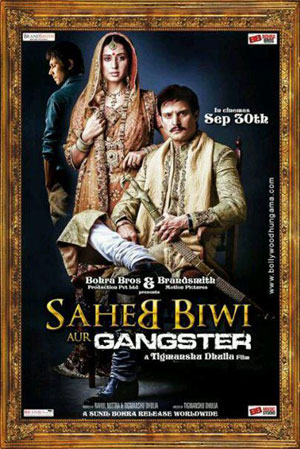
    Sahib Biwi Aur Gangster

    Key cast: Randeep Hooda, Jimmy Shergill, Mahie Gill

    Written and directed by: Tigmanshu Dhulia

    Produced by: Rahul Mittra and Tigmanshu Dhulia


    Force may have been the bigger Bollywood release this week, but the community of critics has been almost unanimous in its praise for Tigmanshu Dhulia’s Saheb Biwi Aur Gangster. This does not happen too often, that a dark horse races ahead. The film might actually end up doing well because of the mostly positive reviews and word of mouth. And when awards times come round, Randeep Hooda and Jimmy Shergill can have a bash at the trophies. The film got three stars and above—with just a couple of exceptions—and what can be justifiably defined as a rave.

    Shubha Shetty Saha gave it 3 and a half stars, but the review is worth 5. She writes, “Even before the movie begins, you get a good feeling about it. Fortunately, it lives up to that intuition. A crackling script, fantastic direction and amazing performances, this movie almost deserves to be called a classic.”

    Mayank Shekhar of The Hindustan Times gives it 3 and half stars, too, and writes, “It’s the page-turner script that steals the show. It’s packed with enough turns, intrigues and twists to hold your attention, keep you guessing. All of it bound by some sort of logic still. At least as much logic as you’d expect from a drama or thriller that doesn’t embarrass your basic intelligence. This doesn’t.”

    On rediff.com, Sheikh Ayaz also gives it 3 and a half stars and writes, “It’s fascinating to see how Dhulia doesn’t succumb to the idea of doing this as an expose film on the hypocrisy that breeds within royal mansions; neither does he develop the crime angle, a move that partially subverts this film’s obvious direction towards the crime genre. Instead, he plays it straight with single-minded focus on the development of his characters and the impact they would have on the plot.”

    Aniruddha Guha of DNA goes with 4 stars and says, “While his script is clearly the film’s USP, Dhulia as director does full justice to the written matter, extracting some superb performances, and making a technically polished film. Little embellishments, like the orchestra sound in a raunchy item number, add to the film’s charm.”

    Not surprisingly 4 stars also from Nikhat Kazmi of the Times of India, and this time the generous rating may even be justified. “The film may be a finely crafted drama, yet it unfolds with thriller pace, keeping you on the edge of the seat till the very end. Enjoy the experience of a revised and re-mixed story, well told. Tip Off: Don’t like run-of-the-mill stuff? Will surely like this… it’s different.”

    Anuj Kumar of The Hindu is a little less effusive. “A master at creating moments, Dhulia’s writing is dipped in wit and the repartees are laced with subtle comments on the changing times and human behaviour… A royal treat where the desserts are a bit disappointing.”

    Going against the tide is IBNLive’s Rajeev Masand with his 2 and a half stars and faint criticism. “The film opens intriguingly and maintains an even pace, but it’s betrayed ultimately by a confused script that hobbles around in all directions, never quite finding its rhythm. Dhulia knows the milieu, so the film has an earthiness that is attractive, and much of the dialogue is clever. Yet, key dramatic scenarios are handled amateurishly… Sahib Biwi Aur Gangster is ambitious in its idea, and the dynamics of the relationships between its central characters are nicely handled. But Dhulia slips up in the tiny details.”

    Shubhra Gupta of The Indian Express gives it 2 stars and slams it. “But for all its frills, some of them nicely executed and attention-grabbing, Sahib Biwi Aur Gangster never quite rises above its familiar plot points, and ultimately stodgy storytelling. I’ve lost count of the times I’ve seen greedy politicians handing out contracts to greedy contractors bypassing worthy candidates, and the obscenity-laden skirmishes between the warring parties: even the smirks and the gaalis are now standard procedure. The decrepit palace, the decadent ex-royal (Shergill), the dissatisfied wife (Gill), the needy mistress (Narayan) and the faithful retainer, all have had variants before: the actors are skilled only to the level of filling in their characters, but not creating any truly memorable moments.”

  • Anil Thakraney’s Hard Knocks: Are newspaper owners in sleep mode?

    The latest IRS figures are in. And as usual, newspaper edits get busy boasting about rise in readership. Or, they’ll work out ingenious ways to interpret the findings, to keep their board of directors and advertisers in good cheer. By the way, I often wonder if everyone’s readership is healthy, who’s taking the fall? Anyway, that’s not the point of my article. And neither do I wish to discuss IRS’s methodology.


    What I want to say is this: Newspaper proprietors in India should be thrilled even if there is no growth for their brands. India is that unique nation where dailies continue to thrive even as they struggle to survive in the rest of the world. And that’s purely because, as Indian Express chief Shekhar Gupta said to me in an interview for GQ mag, and I quote: “India has more space for media than most societies. People read multiple newspapers. We may see a shakeout, but not in the near future. Simply because of the demographics. India is adding nearly three crore literate people to the market every year. That’s the size of a large European country.”


    Shekhar is right. India’s large population base and rise in education will sustain newspapers for a pretty long time. But the proprietors will do well not to get complacent and sit on their laurels. Because the global trends will sooner or later catch up with India. Soon the tech revolution will hit India hard, and many newspaper brands will be compelled to shut shop.


    And innovations and out-of-the-box thinking must start NOW before it’s too late. Sadly, I haven’t seen any signs of that so far. Almost every single news that gets ‘broken’ on the covers of our dailies, I have already been made aware of the previous night by TV and/or Twitter.


    So people, do gloat if you wish on the IRS figures. But also do take care to smell the coffee.


    ***


    PS: I badly wanted to stay inside the Bigg Boss house this time. But couldn’t think of anyone to kill, rape, molest, abuse or cheat. So I didn’t qualify. The loss is all mine.

  • Anil Thakraney’s Debrief: Dulux lacks colour

    Dulux has come out with a bad copy of the Asian Paints idea. While I understand the desperate need for a lifestyle approach to paints advertising, since the functional route won’t work in this category, there is a crying need for originality in this category. Because that’s the only way to induce brand connect for paints.


    Dulux’s new commercial says ‘Apna Rang Chhalakne Do’. It features actors Shahid Kapur and Boman Irani. Irani is finicky about the red colour he wants, and is seen giving hell to his painter on the exact shade. Suddenly, Kapur waltzes into his house, with Irani’s daughter in his arms, wearing what is called a ‘Rascal red’ tee. This follows a sequence of some very trite banter between the characters, till we are told Kapur is a doctor! Wow, we are impressed!


    Not only does the ad immediately remind you of the Asian Paints ‘Mera wala blue’ campaign, the execution is so dull, boring and well, colourless, it puts you off despite the presence of movie actors. The conversation is forced, the humour contrived. In short, the commercial is a dud any which way you look at it.


    The least Dulux ought to have done was to come up with a more interesting tribute to Asian Paints.


    Rating: (On a scale of 1 to 5): A BIG ZERO. In Rascal red.


    Anil Thakraney’s ad review column DeBrief will appear twice a week – Tuesdays and Thursdays.