Tag: Blind

  • Shruti Pushkarna: Invisible Disabilities: Missing from any Discourse on Disability

    Shruti PushkarnaBy Shruti Pushkarna


    Lately, I have found myself unwinding to reruns of old favourite TV shows (now easily available on OTT platforms). The extensive amount of work unleashed by the pandemic, both on the professional as well as home front, leaves me utterly exhausted. So I treat myself to a nightcap in the form of yesteryear soap operas.


    An episode of Boston Legal, (an American legal drama series which first aired in 2004) resonated with my current stance on challenging stereotypes and perceptions, specific to disability.
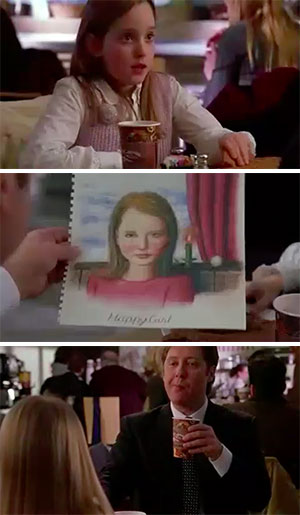
     

    Screengrabs from Boston Legal, Season 2, Episode 15 where the protagonist makes a case for a little girl who cannot smile after a car accident damaged her nerve

    In this particular episode from Season 2, the protagonist Alan Shore (James Spader) makes a case for a little girl who cannot smile after a nerve damage from a car accident. As she is mercilessly teased at the public school, Marrisa’s mother pulls her out, and decides to give her daughter a fresh start at a private institute.  Except the girl’s brilliance in academics and co-curricular activities is not enough to secure admission at a top-tier school. She is denied admission because she didn’t ‘smile’ at the Admissions Director.


    Like Marrisa, several people with invisible disabilities face rejection by family, friends, peers and society at large. Only because they seem incongruous with our limited definition of ‘normal’. In fact, they are worse off than the disabled people in wheelchairs, people with white canes or hearing aids, because their condition isn’t ‘obviously’ seen or recognised.


    Invisible disabilities are not immediately apparent but they are debilitating in their own ways. These include chronic illnesses like sleep disorders, diabetes, renal failure, autoimmune disorders, food allergies or gastro-intestinal disorders, epilepsy, haemophilia, developmental and learning impairments, fibromyalgia, psychiatric illnesses and so on.


    Although appearances may not indicate anything, people with invisible conditions live with symptoms such as continuous pain, fatigue, dizziness, loss of bladder control, brain fog, sudden vision disturbance, speech issues et cetera.


    The World Health Organisation estimates that globally almost a billion people live with some form of disability. And a United States report suggests that 74 per cent of persons with disabilities don’t use a wheelchair or any aid that makes their impairment visible. Both the United Nation Convention on the Rights of Persons with Disability (UNCRPD) and the Rights to Persons with Disabilities Act (RPWD) 2016 of India clarify that disability includes people with mental illness, epilepsy, intellectual impairment and other disabilities which may not be evident to a casual observer. And yet, they face discrimination.


    In a country like India, where disability is anyway stigmatised, persons with invisible conditions (are bound to) face various challenges while traveling, shopping, making hospital visits, in places of entertainment and interacting with people in general.


    To cite real life cases, two people suffering from Multiple Sclerosis and Sjogren’s syndrome respectively, had to compromise their career choices because the effects of their conditions hampered their professional output. Sjogren’s syndrome is an autoimmune disease in which your immune system attacks your own body parts. Symptoms like dry mouth and dry eyes make it hard to continue in a regular job. Rheumatoid Arthritis (RA) is another example of a chronic inflammatory disorder which leads to bone erosion and joint deformity. RA also attacks internal organs and its fatigue symptoms are more than just feeling tired.


    Now many persons with invisible disabilities learn to cope using medication, pain management or physical therapy, depending on their ailment. But the fact that their disabilities are judged or reduced or even entirely overlooked, causes them further mental and physical problems.


    It’s imperative that the media creates awareness about such conditions so our society becomes sensitive and empathetic towards this section of the population. Schools and offices should be expected to train teachers and staff as well as introduce policies to make reasonable accommodation for persons with invisible disabilities.


    Inclusion can happen when (physical and attitudinal) barriers are overcome. Anyone who wears eye glasses or contact lenses is not considered ‘disabled’ today. Of course that wasn’t true before spectacles were invented in the 13th century. Simple solutions can change the way we perceive people’s limitations.


    It’s about time we think solutions rather than imposing our expectations on people who struggle for most part of their lives trying to ‘fit in’. Acceptance cannot be conditional to a constricted imagination.


    The little girl in Boston Legal was inspired by René François Ghislain Magritte, a Belgian artist who was well-known for his work with surrealism and thought-provoking images. He often depicted ordinary objects like clouds, pipes, bowler hats in an unusual context and mislabelled them, to challenge observers’ preconditioned perceptions of reality. Marrisa defies the common idea of happiness denoted by a smile by drawing a self-portrait and writing ‘Happy Girl’ under it.


    Shruti Pushkarna is a former journalist (part of the founding team of MxMIndia) who has moved full-time to the social sector. She heads operations at the New Delhi-based Score Foundation where she works as Director-Programmes & Communications. Shruti writes for MxMIndia every other Thursday. Her views here are personal. She can be reached via Twitter at @shrutipushkarna



  • Shruti Pushkarna: What’s with the shallow news coverage on disability?

    Shruti PushkarnaBy Shruti Pushkarna


    Last week, two headlines on the digital platforms of leading dailies caught my attention. One read, “Two blind HSC students find writers at the 11th hour”. And the second stated, “HSC exams: Finding writers a real test for some”.


    Both these news stories highlight one of the most commonly faced problems by any blind student in India. Given their vision impairment, these students are dependent on ‘scribes’ to write their exams.


    But before I get into talking about the myriad challenges of finding and dealing with scribes, let’s look at the recent news coverage.


    While I was happy that the issue appeared on mainstream media, I was disappointed at the reportage. The stories lacked any indepth understanding of the issue. For an average reader who is absolutely unfamiliar with the issue, the news item merely touched upon how two visually impaired students in different parts of Mumbai were hassled hours before their examination. Though that’s a start for interest generation, the story ends with no detail or perspective on the matter.


    Result being, most readers wouldn’t have registered it. Those who did probably went away without processing the gravity of the problem facing blind students.


    So what exactly is the scribe problem faced by the blind community?


    A majority of visually impaired students in this country who appear for school, college or any competitive exams, rely on writers to volunteer for assistance or hope that the institutions/ authorities would arrange scribes for them.


    In the absence of either scenario working out, a lot of them end up paying for scribes, almost like buying themselves a chance to move upward in the educational or employment hierarchy.


    In fact there are agents and institutions that offer a variety of writers at different prices, depending on subject expertise. Like the millions of scams festering in the country, scribes (or the scribe mafia as I prefer to call them) are eroding the visually impaired students of their ability to learn or become independent.


    And what are the academic or the government authorities doing about it? Zilch. Absolutely nothing.


    The education bodies at both national and state level are expected to comply with the central government issued guidelines for visually impaired students to avail scribe facility for assistance, but the ground reality is far from it.


    Often state boards and examination authorities issue their own rules days before the exam, paying no heed to the policy set in place by the Ministry of Social Justice and Empowerment.


    The Rights of Persons with Disabilities Act 2016 mandates for ‘reasonable accommodation’, “to make suitable modifications in the curriculum and examination system to meet the needs of students with disabilities such as extra time for completion of examination paper, facility of scribe or amanuensis, exemption from second and third language courses”.


    Last year, a job aspirant in Barabanki, Uttar Pradesh lost out on the opportunity of employment because the examiner denied entry to his scribe just minutes before the exam. He had to wait a whole year to apply again. This is just one of the million accounts where students fail to appear or score less in their tests given the shoddy implementation of the law.


    The scribe problem isn’t new. It persists through the year, for various exams across all states in the country. And yet majority of the Indian population hasn’t a clue about it. It’s a whole different matter that today enough technology aids are available to make visually impaired students self-reliant when it comes to writing their exams. But that’s for another day, another column.


    How come the mainstream media hardly reports the issue in its entirety? Why doesn’t the media question the implementing agencies? Is it because persons with disabilities are not the ‘sensational’ vulnerable group that will garner eyeballs? Especially when it’s far easier to rake up a storm over some fake news floating around on social media.


    Shruti Pushkarna is a former journalist (part of the founding team of MxMIndia) who has now moved full-time to the social sector. She heads operations of the New Delhi-based Score Foundation where she works as Director-Programmes & Communications. She writes for MxMIndia every other Thursday. Her views here are personal. She can be reached via Twitter at @shrutipushkarna


  • Time to welcome Diversity in Radio?


    By Shruti Pushkarna


    Shruti PushkarnaAs you read this, commercial and state-owned radio stations all across the world are celebrating this day on air. Yes, it’s World Radio Day today.


    Surely a medium that has managed to stay relevant for over 120 years (since the first radio device was invented by Guglielmo Marconi in 1899) calls for celebration.


    With new technology and increasing penetration, the content development business is more dynamic than ever. Radio too has been experimenting with various avatars when it comes to programming models or expansion on digital platforms.


    But what hasn’t changed is its devoted listenership, which cuts across culture, age, ethnicity, gender, religion, economics and so on. I start my day with tuning in to my favourite station every morning as I drive to work. You can hear the radio blaring in the local chaiwallah’s shop (no reference to our dear PM here!). Cab drivers, hawkers, housewives, college students, senior citizens, all take in their daily diet of radio content.


    Another ardent group of listeners are millions of visually impaired citizens living in different nooks of our country. Did you know that 20% of the global blind population resides in India? That’s around 63 million people according to the World Health Organisation.


    And this large section of the population depends on radio for not just entertainment but information. Like several persons with disabilities, blind people are often treated as a burden by their families. Confined in the four walls of their homes, they remain isolated from the society. Deprived of education, they have little or no access to information.


    They find a friend in the RJ, solace in music and in that moment, the impairment ceases to be.  As part of my work, in an interaction with a parent, I learned that his 14-year-old blind boy who was absolutely tucked away from the outside world had no skills of communication or the ability to carry out any activities of daily living. But he could sing and dance because he listened to radio for most part of the day.


    In this cricket-loving nation, sighted fans may have moved on to mobile devices for live video streaming, but a visually impaired fan still tunes in to the good old radio commentary.


    Radio fascinates visually impaired people, because they can easily relate to it. There is no discrimination there, in terms of lack of access.


    The question is: are radio producers aware of this audience and their needs? Are they devising any content that is targeted towards the average visually impaired listener? There are a lot of social campaigns various stations undertake. They align with a cause, person or an organisation and garner support through their wide reach.


    I feel radio can contribute a great deal by initiating a campaign to sensitise people about the challenges faced by visually impaired people. Or let’s say how to offer help to a blind person you may encounter on a street, on the metro, in a bus or at an airport.


    Radio also has the potential to offer employment to blind people. India’s first visually impaired radio jockey K Srikanth started off his career with All India Radio and later worked with the BBC. There are private and non-profit institutions that offer courses in storytelling and radio jockeying. Among the section of blind people that has access to mainstream education and technology, there are many students who opt for media courses.


    Not long ago, I’d engaged with a graduate in mass communication from Bengaluru who wanted to become an RJ. He found no luck because he was blind. This young boy was well verse with technology, had acquired all skills of scripting, editing etc. He needed professional training like all newbies do, that’s all.


    This year the theme of World Radio Day is ‘Radio and Diversity’.  Perhaps a cue for the radio industry to promote inclusion and educate the society about ‘diverse’ needs of people who are just as equal citizens of India as you and I.


    Shruti Pushkarna is a former journalist (part of the founding team of MxMIndia) who has now moved full-time to the social sector. She heads operations of the New Delhi-based Score Foundation where she works as Director-Programmes & Communications. She writes for MxMIndia every other Thursday. Her views here are personal. She can be reached via Twitter at @shrutipushkarna

  • Shruti Pushkarna: Accepting change in an ever-changing world

    By Shruti Pushkarna


    When I was studying journalism, we were made to read three to four newspapers everyday as part of acquiring editorial skills. As a young girl in my early twenties, I would go from one class to another, catching up on the printed word in between breaks. It was almost romantic, the idea of print that is. One aspired to have a ‘byline’ in the reputed dailies.


    But by the time I graduated, a lot had changed. The fascination with print was slowly replaced with 24×7 television news. Not that TV news didn’t exist earlier, but right at the time when I was applying for jobs, several new players entered the market.


    A large part of my initial career was spent in television newsrooms. And then some years later, another shift happened, with digital journalism as the latest entrant in news media.


    The reason I’m laying all this background is actually to highlight the most important thing that was occurring through these years. The values were changing. Values we attached to reporting, production, editing, scripting, everything rapidly transitioning given the advancing technology. Every medium had its pros and cons and content was being tailored to make the most of new platforms.


    Another notable thing happened. Amidst all this change, technology opened up the ‘elite journalism club’ to an average inquisitive mind. Barring the self-aggrandising old school journalist in me (who by the way scoffs at the new generation, like most old gens do), I find myself pleasantly surprised by the mechanisms and devices being used to put out newsworthy content for mass consumption.


    That is the power and nature of technology. It creates a level-playing field. The old versus new kind of debate takes place in every domain. When I transitioned from mainstream media to the development sector, my work in the domain of visual impairment brought many such examples to light.


    People working to rehabilitate persons with blindness are obsessed with the braille script. And that’s the common societal understanding as well. Anyone who is blind needs a braille script. Not true.


    Let me bust a few myths here.


    Every blind person does not know how to read and write using the braille script.


    There are people who acquire blindness at a later age and never get acquainted with braille.


    Braille embossing is time consuming and an expensive effort.


    Writing in braille takes much longer than keying the same content into a computer.


    Braille is useful to interact with fellow visually impaired people who can interpret it. In a mainstream classroom or a work scenario, it is limiting and distances blind people from their sighted counterparts.


    So what is this obsession with braille? It’s the same sense of denial that new technology cannot throw open newer options that may undercut the skills possessed by existing braille users.


    Visually impaired people can easily co-exist in an inclusive environment, given the vast variety of technological aids available today.


    Blind people can use screen reading software that reads out everything displayed on a computer screen or a mobile phone to interact with the device. They can type, browse, read, do almost everything with ease just like you and me.


    So in schools/ colleges, students with vision impairment can submit their assignments in a digital format (anyway most private schools are insistent on the use of technology these days). The government has laid down clear guidelines for reasonable accommodation in case a blind student wants to write exams using computers.


    This also opens up a whole new range of professions for persons with vision impairment. Let’s take the media industry for starters. Not long ago, I’d engaged with a graduate in mass communication from Bengaluru who was applying for a job in radio. There are journalists working in national media who happen to be visually impaired. Disability activists are efficiently using social media to advocate for their rights. Leaving out the very ‘visual’ jobs, many desk roles in the industry can be opened up to blind people simply by adopting technological solutions.


    Braille is ‘exclusive’ in the way it isolates visually impaired people to one medium of communication. Technology however is ‘inclusive’ as it makes the existing platforms of communication accessible to anyone with an impairment.


    It’s time to drop our fixation with a script that was invented in 1821, two centuries ago! No doubt it was a brilliant discovery to serve the needs of people back then, but let’s face it, equally exciting innovations are happening in this day and age. It’s time we embrace technology for its ability to enable access for all users irrespective of their limitations.


    Shruti Pushkarna is a former journalist (part of the founding team of MxMIndia) who has now moved full-time to the social sector. She heads operations of the New Delhi-based Score Foundation where she works as Director-Programmes & Communications. She writes for MxMIndia every other Thursday. Her views here are personal. She can be reached via Twitter at @shrutipushkarna