
Tag: Bhuvi Gupta

  • Why Humans are Obsessed with Sports & Why Marketers Maximise it


    By Bhuvi Gupta


    Bhuvi GuptaWell aware that I belong to the minority I have always been surprised by the widespread obsession around sports. Why do so many of us care about wins and losses, have heated debates around teams and players, stay up at odd hours (to catch up on international matches) for something that ultimately has no impact on our lives?


    Last week, I went down the rabbit hole to find out how science explains it. Turns out scientists are mystified too, But they’ve been working on it, and this ASAP Science video shares some logic, which adds up. Apparently, watching the team you support, win, leads to a spike in both testosterone and dopamine levels. Testosterone helps spike brainpower, awareness and muscle growth and Dopamine activates the pleasure centers in the brain, helping increasing memory and learning. Hence, we are biologically wired to watch Sports.


    These biological hormonal spikes are not limited to Sport but even to Politics. This explains the mystifying skyhigh TRPs during exit polls and 24/7 on counting day, even for state elections too far from your location to have any impact on your life.


    Marketers know that this works and that possibilities are endless. With the ubiquity of the mobile phone there are now a plethora of options for advertising across budgets. With easy access to content, India is also moving beyond cricket for advertising, product placement and brand ambassadors.


    Generating mass awareness at mega sporting events

    From a marketing POV, sports advertising works best for the ‘generating awareness’ peg of the marketing funnel. Every year, records are broken for advertising revenues earned during IPL in India, the Super Bowl in the US and other tournaments across the world. IPL and Super Bowl ads are recognised sub-genres. And marketers can use the various platforms available. These include in-stadium advertising, advertising on TV, and digital, second screen advertising, social media advertising and digital content platforms for post-match analyses. There is a well-oiled ecosystem that works to maximise eyeballs and using it well, while no cakewalk reaps dividends.


    Work + Play for B2B

    B2B companies have been using international sporting tournaments to create awareness at both B2B and B2C levels while building new business opportunities. Case in point, Indian IT companies in the last decade. In 2015, HCL officially partnered with Manchester United to innovate a unified fan experience. This partnership used technology to transform both the real-time stadium customer experience as well as the digital user experience. A ‘physical’ UnitedXperience Lab was also set up at Old Trafford Stadium.
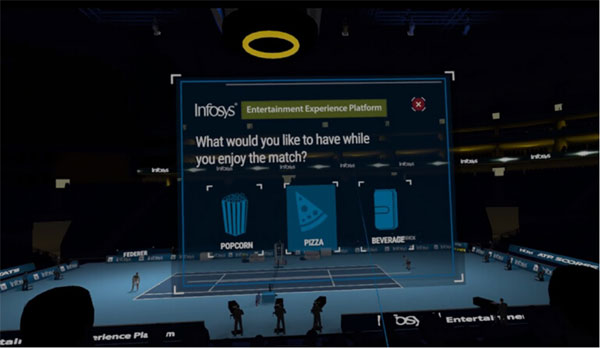


    In the same year, Infosys also executed a similar partnership with the Association of Tennis Professionals (ATP), the governing body of the men’s professional tennis circuits. They have been instrumental in supporting ATP’s development of key digital assets and infrastructure, including ATP PlayerZone, ATP Stats Leaderboards, ATP Second Screen, and the ATP app.


    Such partnerships help showcase the company’s skills while getting them eyeballs globally.


    Brand Ambassadorships

    The oldest trick in the book, but still so effective are vanilla brand ambassadors. The medal and match winners are role models for ordinary citizens. Their tough journeys to the pinnacle of sporting success occupy reams of media coverage and remembered. All players have clearly defined value systems and choosing an ambassador whose values align with the brand can work wonders to generate awareness and credibility. I like the way Indian brands are now gravitating towards Olympians, Badminton, Boxing and Weightlifting stars and looking forward to the advertising that Tokyo 2020 winners will bring in the wake of their wins. An international favourite is the world’s largest pasta company, Barilla’s long-term association with tennis legend, Roger Federer.  The brand releases one campaign about every one-and-a-half years that highlight quality, simplicity, and excellence which are values synonymous with Federer.
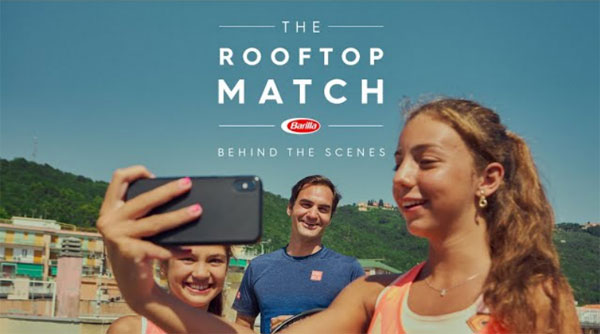
     

    Watch the 2020 Covid-19 campaign ‘The Rooftop Match’


    Sports are the best of reality TV and give all the thrills except those voyeuristic. The viewer gets unedited and unscripted emotion, drama and discord, fun and all the dopamine hits described before. There are underdogs and alphas, strategizing and wild cards and even fixing. Marketers need to expand their budgets beyond cricket in the long term and not just in the wake of wins. The urge to watch is biological and there is so much that can be done!
     

  • Bhuvi Gupta: How Marketers can both make money and save money via behavioural targeting

    Bhuvi GuptaBy Bhuvi Gupta


    It’s often said half of the monies spent on advertising are wasted, you just don’t know which half. Before the advent of digital advertising this was true. I ‘d say that the vast majority of advertising was a waste and only a fraction reached the right audience, because marketers relied on high-budget, high frequency ATL campaigns to get mass visibility. This was because while behavioural targeting made sense in principle, it was near impossible to execute and marketers had no choice other than relying on demographics to reach potential customers. Hence, attributing marketing spends to customer acquisition always ended up being vague and immeasurable.


    While demographics like age, gender, financial status are a precursor to behaviour, they are not a determining factor. Statements like ‘she doesn’t act her age’, ‘spendthrifts’, being mannish, ‘spinsterhood’ et al while used derogatorily have always been common and defined a larger part of the population than we‘d like to believe. Therefore, depending solely on demographics means losing customers, which may not even feature in the target audience. With gender fluidity, freedom and credit cards gaining acceptance, demographics have lost relevance even more as people can afford to now fit into which ever buckets they like.


    With digital advertising demographic targeting should hence be used only as a filter. There is a wealth of information that digital advertising platforms like Facebook (via Custom and LookAlike Audiences) and Google (via Tag Manager) allow you to access that can help marketers to target consumers in more nuanced ways through their behaviour, personal interests and hobbies and life stage.


    In 2019, P&G changed its targeting strategy from demographic based to a psychographic based. They called it ‘smart audiences’ and described it as “reinventing brand building from wasteful mass marketing to mass one-to-one brand building fuelled by data and technology. Based on a 1 billion strong customer database they defined up to 350 + new narrowly targeted audiences focused on the intersections of behaviours, mindsets and P&G products minus typical demographic information. Examples of these newly targeted audiences included ‘first-time moms’, ‘first-time washing machine owners’ etc. The move helped them cut $350 million from their advertising budget while increasing sales.


    The caveat here is that a company the size of P&G has a wealth of first-party data that it can leverage to great effect. However, for smaller companies, this is just not possible. A similar way to reach audiences is to leverage third party cookies or lookalike” or “actalike” audiences offered by large advertising platforms (like Google, Facebook, Snapchat, and Pinterest).


    Cookies to avoid the cookie-cutter approach

    Bad puns aside, Cookies are trackers that are placed on a user’s computer by a website or application. These trackers collect data that is used to provide the user with a more relevant web-surfing experience. Cookies also store user settings, login information, and other useful information. There are two main types of Internet cookies: first-party cookies (like used by P&G) and third-party cookies.


    First-party cookies are stored by the website and third-party cookies are created by domains other than the one currently being viewed. First-party cookies make a user’s experience on the website more streamlined, while third-party cookies streamline user experience across the Internet by serving relevant ads on other websites.


    Third-party cookies can be used to personalize user experience across the Internet. For smaller companies that do not have access to first-party data, they must be used for retargeting and advertising.


    Hence, focusing on behaviour and life-stage that are now disassociated from demographics like gender, income, location, age is key to measuring the Return on Investment for marketing. As technology evolves using tools like Artificial Intelligence and automation, personalisation to improve customer experience will become crucial. Behavioural targeting will be key to unlock the future. The sooner marketers jump on the bandwagon, the better it is for them and the customer.

  • How Meme Marketing has become a Must-have Arsenal for the Modern-day Marketer


    By Bhuvi Gupta


    Bhuvi GuptaDifferent reports peg India’s social media user base anywhere between 350–400 million users. That is roughly the population of the United States. The millennial and Gen-Z generations that form a bulk of this number talk in a universal language of emojis and memes. Memes have penetrated our style of communication indelibly.


    A subset of moment marketing – Memevertising – is not just having a moment but is here to stay. Like emojis, the language of memes is universal. Memes work because they take universally relatable scenarios coupled with a striking expression on the faces of the meme star(s). This creative hence can lend itself to multiple and different interpretations and hence spreads.


    The word meme has its origins in the Greek word mimetic, which means to imitate. As per Wikipedia, a meme is formally defined as “a unit for carrying cultural ideas, symbols, or practices, that can be transmitted from one mind to another through writing, speech, gestures, rituals, or other imitable phenomena with a mimicked theme. Considering the increase in time spent online due to the pandemic, and difficulty in communicating via non-verbal signals, now more than ever before memes should be an essential part of a marketers toolkit.


    In today’s hyper-connected world where all brands aspire to go ‘viral’ at all times meme marketing or memevertising is a great way to actually accomplish the goal.


    Don’t be blatant, be subtle:

    Memes have a unique structure in which they put a humorous or relatable twist in a piece of communication that is essentially derivative. However, the best memes do not reference brands via their name but the more intangible elements such as the personality, positioning and values. Like moment marketing, memes capitalise on contemporary situations such as sporting tournaments like IPL, Wimbledon, politics, trending TV shows and movies etc. Hence, most memes have a shelf life so timing becomes key.


    Doing it right:

    Today, brands have elaborate content calendars where in they play to every celebrated stereotype and day just to ride on the trend. A lot of this effort often gets lost because the messaging is generic, it doesn’t fit the target audience, and there is a glut of content.  While leveraging memes, this risk is heightened, as memes by their nature are light-hearted. So treading with caution is essential to avoid a misfire.


    The caveat is of course that even when consciously trying to ride on trends, brands must understand their brand, target audience, consumer behaviour profiles so that relevant people discover the generated virality.


    Agility & Responsiveness: 

    Brands need to be agile and responsive to create and sustain brand value today. This is true of managing their reputation online, assessing dynamic consumer behaviors and moment marketing. Most of this, brands are already doing. Memevertising is but an extension of that.  To capitalise on the day that social media posting has to create a few different expression and globally known stars.


    Spreading the message:

    In terms of the marketing funnel memevertising fits into  ‘awareness’ stage. By capitalising on trends, brands have an opportunity to get discovered by an audience that may not have been exposed to the brand before.


    Hence, if brands nail their memevertising they must ensure there is an effort to distribute their messaging. This can be done by animating memes into GIFs and sharing them on GIPHY, and Google-owned Tenor. These platforms allow brands to have brand channels and are integrated with social media platforms like Instagram, WhatsApp and Facebook etc.


    Netflix, Drake & Irrfan Khan – The meme:

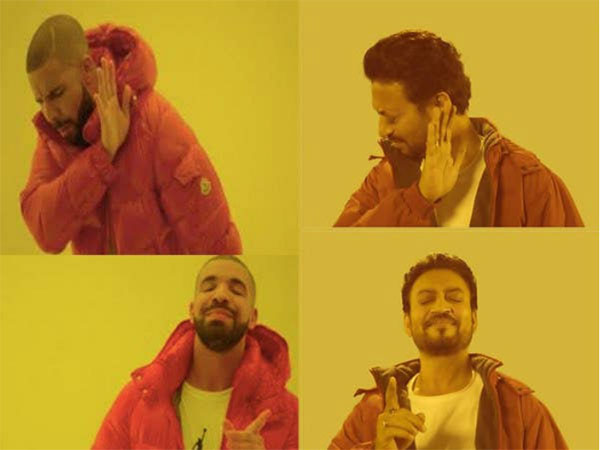
    More than his music, Drake would be remembered for how he has used memes to create his indelible brand across the world. Whether or not one has heard his music the world has definitely seen and mostly forwarded one of the renditions of his ‘Hotline Bling’ meme. A designed strategy, which has helped him gain worldwide, fame and has a million lessons for marketers.

    Irrfan Khan also famously replicated this meme while marketing the film ‘Hindi Medium‘ with AIB in 2017. Khan replicated the Top 6 trending meme formats at the time. The irony of course is that all six original memes are as popular today as they were four years ago.


    Netflix is another master at memevertising. A glance at their social media timeline is a lesson for budding memevertisers, because they are witty, on trend, never blatant about their brand name.


    In conclusion, memes and gifs are here to stay and to brand must use them in their digital marketing calendars.


  • Brand Purpose & Credibility: Key to survival for Brands


    By Bhuvi Gupta


    Bhuvi GuptaThe last few weeks have had us all heaving a huge sigh of relief. The hold that the Covid-19 Delta variant had taken over our lives seems to have abated for the time being. We are all now in between where we have a longing to return to business as usual (usual being the new normal) at least for the short term but are scared about when the Third Wave will rear its ugly head.


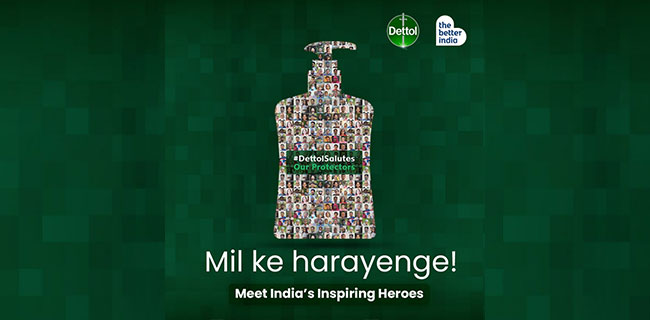
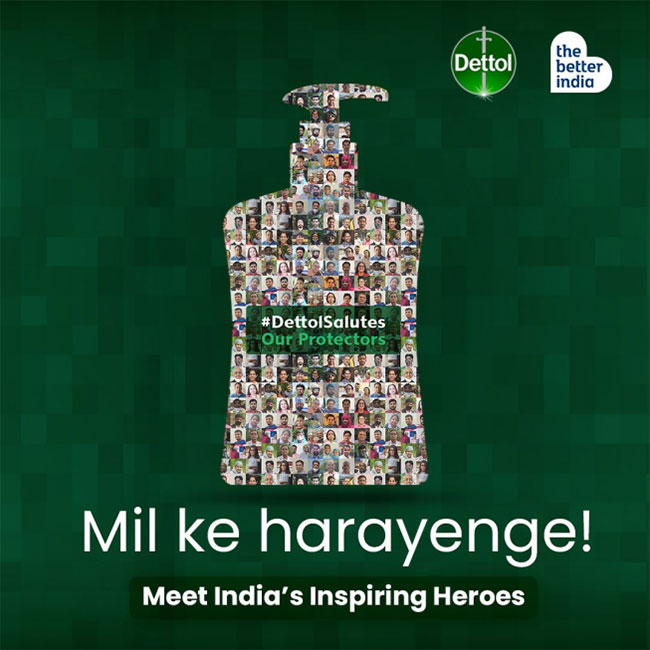
    The storm of the last month made us all grateful for the positive power of the social media. And Dettol captures this sense of gratitude perfectly in its timely Covid warriors campaign which has just been launched. It hits the ball out of the park for multiple reasons – the timing, the ‘grateful’ mood of the nation, how it captures brand’s promise of protection and safety, and its high virality quotient.


    We all depended on Covid warriors the past few months – these are people who managed to save lives by foraging for medicines, ventilators and beds by using social media and extending their networks. It is influencer marketing campaign but in a respectful way because atypical ‘influencers’ are being used. By using influencers, Dettol gets the benefit of their reach and engagement thereby ensuring virality. The campaign replaces its branding on the package to celebrate these unsung heroes. Packaging has long been an under-leveraged branding vehicle. The campaign is hence a win all the way and is bound to pick up many a pencil, elephant and metal.


    Dove and  ‘Hair Love’


    I have talked about how with the information overload that the internet and specifically social media has decreased mental bandwidth for retaining advertising in many of my pieces.  Long-form marketing, content marketing, product placements that add credibility to the product narrative hence become more important to kindle a desire to purchase. Internationally, Dove and Nike are both investing in being true to their brand purpose.


    It has always fascinated me that the 2020 Oscar-winning short film, Hair Love was funded via a Kickstarter campaign and that a major participant in the Kickstarter was Unilever-owned Dove. Despite funding the short film, Dove did not try an overt product placement but kept its participation covert.  Just as other entities that contributed to the Kickstarter, Dove only appears in the ending credits. Because the messaging was true to the brand narrative, it helped market the film by arranging for community screenings, and reaching out to tastemakers and media.  This did not help them to sell products but it did help them to cement their perception as a brand which was genuine.


    Nike – Breaking2

    A similar case is of Nike. Nike has set the bar for sports marketing in the last few decades and they are constantly raising it to ensure they maintain a high share of voice.  In 2014, Nike set out to do what was impossible at the time – a project to break the two-hour marathon barrier. The documentary Breaking2 captured the entire three-year journey that culminated in an unsuccessful attempt in May 2017. While the star marathoner, Eliud Kipchoge missed the 2 hour mark by a mere 26 seconds in 2017, he achieved the feat in 2019.


    The project leveraged science and research to create an optimum environment which enabled the carefully chosen athletes a shot at breaking the record. The environment comprised of the perfect shoe, the best possible time of year, the track, a mechanism to manage headwinds (which affect speed) and many other miniscule parameters.


    While the project executed over a three-year period was directly linked to Nike’s products, it was the larger objective of relentless effort to enhance performance to test the limits of human endurance and capability, which made it closer to brand purpose than marketing communication.


    It was hence a perfect balance – communication that served a larger purpose while also enabling the company to sell shoes.


    Brand purpose is key in 2021. Customers want brands to embody an inspiring ethos, have a strong point of view and take actions to spread their purpose rather than communicate only to sell products.


    In a crowded market, the only way a brand can stand out today is to add credibility in communication.  Marketing is inherently transactional in nature, but communication which leads with brand purpose is key to move customers down the funnel and make them return, especially for products which are easily replaceable.

  • Bhuvi Gupta: Consolidation, the content economy & the consumer

    Bhuvi GuptaBy Bhuvi Gupta


    How many times have you watched Leo the Lion roar on a screen to herald the beginning of an enjoyable few hours? Confused? I am talking about the MGM mascot.  Last week when the news of Amazon acquiring MGM Studios came, my thoughts immediately went to Leo and his survival in the ‘prime’ jungle.


    The content jungle has truly become cutthroat and for survival of the fittest. Two years ago Disney acquired 21st Century Fox. The world over major players in Media and Entertainment are consolidating. This comes at a time when smartphones have enabled media consumption to skyrocket, platforms have solved for distribution and smartphones have enabled both easy creation and consumption. As a result, there is no dearth of content to consume. Becoming a content creator has become one of the most desirable jobs.


    As this ‘creator economy’ flourishes, legacy players are consolidating. This is a survival tactic, because unless there are consolidation and strong economies of scale these behemoth legacy players would find it near impossible to survive in the long term. How does this affect the consumer? Does the consumer benefit or not. Let us examine the pros and cons of this oligopolistic market.


    PRO – Customer is King – Infinite Choice

    In a typical oligopolistic market, there can be a lack of innovation as customers have a limited set of options to choose from. However, due to the pressure of the creator economy and the glut of consumer choice the major players know that unless they invest in creating new content, expanding the language markets they serve and have to be on their toes to only survive (forget thrive).  Hence, enabled by their deep pockets they have high-risk appetites that raise the bar for the entire market. The ultimate winner is the customer because of the variety of content, he or she has something to consume.


    Therefore, the creator economy is ensuring that downsides of oligopolies, i.e.

    barriers to entry and a lack of choice are both non-issues.


    CON – Market Dynamics

    When fewer players exist there are two major possibilities – first, prices may become as competitive as can, in a bid to gain market share or alternatively players may collude and prices are artificially hiked to benefit all players instead. The creator economy keeps the market in check because both options are bad for the economy. However, these companies have deep pockets, and they can take advantage of these deep pockets to manipulate customers via advertising to create an illusion of competitiveness in the future.


    CON – Manipulation by Big Media

    The disadvantage of an oligopolistic structure in media and especially news media is that propaganda can become common. Whether done blatantly by some and subtly by others, big media players often employ tactics to control perception and when only a few companies control the landscape they control the narrative. This is very dangerous as across the world we are seeing inciting riots and civil unrest. To a perceptive user these manufactured biases are apparent, but how many users are perceptive?  An oligopolistic news media structure can be detrimental to a country.


    To end, it is only 30 years that we in India went from being a monopolistic  (video) market with the state-owned Doordarshan to a pluralistic market crowded with media sources. Today, digital platforms are creating another kind of monopoly where 24/7 tracking, algorithms and resultant recommendation engines typecast people so they end up developing deep biases. While newer platforms break this dangerous cycle, by means of acquisitions this may be overcome. The US government has filed an antitrust lawsuit against Facebook, as it owns both WhatsApp & Instagram, and they claim it has monopolistic advantage.


    It will be only a matter of time that it is forced to break up to ensure a free and fair market, but I strongly think that will be for the greater good.


  • To Copy or Not to Copy. That’s the Question


    By Bhuvi Gupta


    Bhuvi GuptaHave you ever used any of the short video apps that sprung up after the ban on Tik Tok?


    At first look, you couldn’t differentiate between the apps. They have similar if not outright identical user interfaces. The differences only start peeping in when the ‘satisfaction’ achieved after some scrolling doesn’t quite match up to what was achieved with TikTok due to their much-praised algorithm.


    While the apps did receive some flak for not investing into development, innovation, and design despite having the resources to, the logic, which I believed trumped, was user familiarity that accelerated migration.


    TakaTak is designed to be mistook for TikTok


    Feature Replication has become a common practice for digital products. Snapchat’s success with stories was very quickly replicated across all platforms as was TikTok’s short videos. Substack and Clubhouse are the the latest digital groundbreakers whose formats are being replicated by tech giants or already have been launched (Twitter’s Spaces)


    So should brands copy? Or innovate? I think the right answer is to copy, but  innovatively like Apple. Apple has never launched a product category. What it has done and brilliantly, is to innovate on user experience and design on what already existed. This is true for its vast product line, be it the personal computer, the iPod or even their latest success, Airpods.  This is the holy grail of imitation.


    Why Copy? The answer is Network Effects


    All social media networks have largely been governed by Metcalfe’s Law, which states that the value of a network is 2x that of the total users using it. Metcalfe’s Law governed the success of the telephones and explains the dominance and success of all digital social networks today. By replicating popular features into their pre-existing interfaces, digital networks try to make best use of their critical mass, which helps to stem migration to other platforms.  Also, great for creators which to take advantage of monetization and different audiences often come to the legacy imitator social network.


    The Art of Imitation


    Beware though; blind replication without paying attention to brand and objective will lead to deterioration and debacle. Something, which is happening with LinkedIn. LinkedIn has tried replicating Facebook’s newsfeed and Snapchat’s Stories but both have been done without much thought and adequate content moderation filters. As a result, LinkedIn has moved away from its primary objective of a robust professional network to somehow straddle a reality that is now part social. Stories on LinkedIn are another such misfire. Stories, which by their format, are fun and frivolous, do not fit with the brand ethos of a professional network that LinkedIn is.


    This is in contrast to Instagram, which copied Stories from Snap but modified them to suit their audience rather than replicate all features of Snap. As a result, Stories has now become a useful addition to Instagram, and more successful than the original.


    Apple, which understands its brand positioning and accordingly creates products in pre-existing categories, is also able to get away with charging a sizeable premium for copycat products.


    Copying today is essential for survival for social media networks. One is already seeing the mass migration of people from Facebook to other social networks. If it was not for products such as Groups and Messenger, the platform would have been long dead. Hence, all the Snapchat-inspired features and now a Substack copycat product have ensured that Facebook has not gone the Orkut way.  Hence, it is safe to say that the copycats in the digital world are here to stay. They will live long but prosper only if they copy smart!


  • Are brands using Inclusive Marketing just for virality?


    By Bhuvi Gupta


    Bhuvi GuptaThe Bhima Jewelers ad. The Kalyan Jewelers ad starring Katrina Kaif and Amitabh Bachhan. The Myntra Anouk ad from 2015. Geeli Puchhi, from the Ajeeb Daastaans anthology released on Netflix.


    What do these all have in common?


    Other than the six-year-old Myntra ad, they all released last week and focus on inclusion and diversity as their central themes. Some sparked conversation and high appreciation, the Kalyan Jewelers ad, which touched upon inter-cultural marriage (though very lightly) focused more on the stars rather than the story was a lost opportunity. I wonder whether the inter-cultural theme was touched upon lightly to avoid a furor similar to the one caused by the withdrawn Tanishq ad


    In the last few years, Inclusive Marketing has become quite common (and hallelujah for that). Unilever’s Dove really started the trend with the Real Beauty Ad campaign in 2004, but for long, Dove was the lone ranger with other major brands peddling narratives focused on the rich and beautiful. This despite the fact that their target audience was not always rich but aspiration rather than acceptance was the calling card. In the last few years, facilitated by the interwebs that the masses have gained exposure to, progressive ideas and conversations around inclusiveness have become mainstream. This has helped to both start and sustain many a cultural revolution while also becoming a part of many brand narratives.


    Inclusive Marketing will continue to catch on as more people become conscious of their biases, and are willing to pay a premium to overcome past prejudices. Brands will play to the gallery, because it is good for business however, in the race for the revenue is where many narratives fumble.


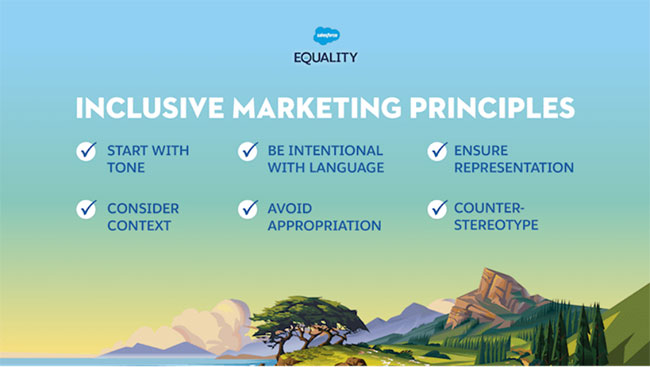
    Inclusive marketing as defined by Salesforce is the creation of content that truly reflects the diverse communities that they serve. This means, they make a concerted effort in elevating diverse voices and role models, decreasing cultural bias, and leading positive social change through thoughtful and respectful content.

    Their six principles of inclusiveness in communication cover the gamut of what inclusive marketing should cover


    Inclusive marketing principles as defined by Salesforce

    Start with Tone, & Be Intentional with Language

    Both tone and language form a crucial part of inclusive communication. While language most brands are cognizant of ensuring that the tone is respectful is as important.


    Avoid Appropriation


    Many pieces of communication made on marginalised communities miss nuance as there is only so much that research can do. Hence, ensuring that the narrative is written or whetted by people from the community is key to an authentic narrative.


    Ensure Representation

    Marginalised communities anyways have limited opportunity; hence the cast should be as close ethnically to the character as possible. A good example from cinema is the stories told by Dalit film -aker Neeraj Ghaywan who made Masaan and recently the most acclaimed short of the Netflix anthology Ajeeb Daastaans, Geeli Puchhi. Being from the community, Ghaywan’s stories have authenticity about caste and privilege unlike other narratives, because he understands the depth of the issue.


    Consider Context & Counter Stereotype

    The truth is that brands are putting forward messages about inclusion and acceptance because the audience relates. Advertising has relied on clichés and stereotypes for far too long and evolving audiences are finally allowing brands to showcase storylines, which break the glass ceiling. Brands should embrace this and stop showing a fat woman as the sidekick friend or a male boss with women subordinates. This gem from Heineken, which truly speaks to not let perception drive functioning, elucidates this point well.


    Inclusivity can help brands connect on a deeper, more meaningful level with their audiences — which can be a major asset to marketing campaigns.


    In a country like India where the landscape, language culture changes every 100 kilometers, inclusivity and acceptance become all the more important because even the most privileged Indians feel marginalised in multiple ways – the colour of their skin, height, weight, hometown, knowledge of English and umpteen others.


    I can’t tell you the joy I feel when I land up on a ecommerce website only to see models with real proportions (and I am not even plus-sized)


    However, it is imperative that inclusive marketing is not used as a crutch to prop up marketing communication, because audiences are smart. As Salesforce’s principles entail being inclusive without being representative is commercial, and audiences see through the charade, which end up being counter-productive.


    Beyond just a focus on bottom-line and hopes for virality, companies should ensure they are inclusive inside the company by applying these principles to HR and recruitment policies, and in their day to day functioning.


  • Cult of the Influencer CEO


    By  Bhuvi Gupta

    Bhuvi GuptaElon Musk. Anand Mahindra. Manu Kumar Jain. Anuj Sharma. Thomas Edison. Richard Branson. Steve Jobs.


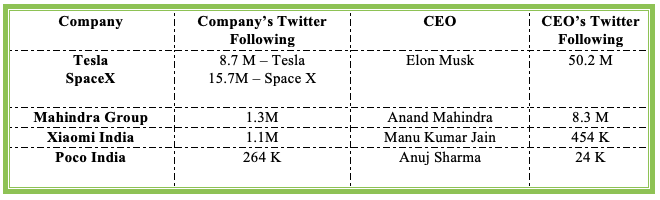
    What do all the above have in common? Well, a lot. They are all CEOs of companies, which have impacted the world via their products either technologically or pricewise. But what they also have in common is a strong personal brand, which was bigger than the company they led, and which helped that company more than a brand ambassador might have. If Edison, Jobs and Branson are anything to go by, what is noteworthy is that while digital has made it easier, carefully crafting and curating personal brands can have immeasurable impact on the company irrespective of how they have being built.


    CEOs who have leveraged their personal brand to great effect to help the company have follower counts which compete with their company’s


    The cult of the CEO has always existed. Digital access has made it easier to leverage it even as curating a personal brand remains as difficult. But with the sheer din of marketing messaging and competition for quality talent, companies are missing out if they don’t leverage their CEOs.


    Firstly, because it is such a great source of gathering information from customers, and (junior) employees who communicate actual issues, which often a times get lost in Chinese whispers while going from middle to senior management.


    Secondly, an active and engaged CEO as the face of the brand helps in building trust and credibility over and above celebrity brand endorsers who are endorsing multiple brands and on-hire for the highest bidder. Hence, while celebrities may help build brand awareness, they won’t contribute as much to help target consumers travel down the marketing funnel.


    Thirdly, a responsive CEO makes the company and brand approachable. All consumers want to feel heard and a CEO who is willing to listen to feedback, compliments and complaints makes the audience all the more invested in the product and brand.


    Anand Mahindra explains how much his followers on Twitter have helped him connect to both employees and consumers thereby enabling him to become a Big Brother of sorts to reward good behaviour and correct wrongdoings.


    When the CEO gets feedback so freely it also reduces the need for traditional market research where extrapolated data and inaccurately curated focus groups can often result in wrong takeaways. Hence, a CEO who can remain connected to his audience can greatly help the company’s overall strategy and speed of execution.


    Lastly, an engaged CEO acts as a great tool to build the employer brand. Having a strong personal brand (also crucial to help gain followers in the first place) will help showcase a company’s values and help attract talent which resonates much more than that ‘Great Places to Work’ Badge.


    Using your employees as influencers – Employee Advocacy Programmes


    While all the above reasons have high impact coming from the CEO, in 2021, with a socially connected population all employees have a sphere of influence that collectively can help a company via Employee Advocacy programs.


    Creating a strong brand for a CEO requires the creation of a personal brand backed by a robust content calendar, ORM (Online Reputation Management), PR and public appearances.


    Employees, if guided and empowered with similar tools and content, can become brand evangelists on social media, while also getting positioned as subject matter experts and create stronger personal brands.


    A well-implemented employee advocacy programme raises brand awareness, improves customer satisfaction, saves money in marketing spending, and, ultimately, grows business in much the same way as an Influencer CEO albeit at a micro level.


    It is very interesting to see the power that influence has on consumption. Whether coming from CEOs, celebrities, or content creators, social media in 2021 has made business & marketing come a full circle with influencers  launching their own brands and CEOs are becoming influencers.

  • Legacy Media Must Leap Ahead


    By Bhuvi Gupta


    Bhuvi Gupta

    The media industry the world over is in a state of flux. The internet has made us all both publishers and reviewers and the odd part of that is that it has made the world both biased and unbiased in equal measure. It has never been easier to publish and publicise your opinion and it has never been easier to polarise either. But leaving propaganda aside, the fact that we all have access to multiple media in function and form means that media models are themselves obsolete. While the pandemic has accelerate the print medium’s deceleration, aural media has had a comeback with podcasts going mainstream. But noteworthy in this comeback is the role played by the individual creator.


    This comeback will define what media will come to represent as a whole across the world.  Individual creators will define media because:


    Traditional Media Measurement is Broken

    In India, media as a whole has been slowly losing its credibility. In the earlier part of the last decade both, which I consider a load shed decade for media measurement, both IRS and TAM/BARC overhauled their entire systems to keep up with the times and both ended up getting boycotted or sued – IRS in 2013, and the TAM by NDTV  in 2012, which eventually  resulted in the formation of BARC (LINK – https://timesofindia.indiatimes.com/business/india-business/ndtv-sues-nielsen-for-fraud-negligence/articleshow/15302393.cms). The latest alleged BARC TRP-manipulatiom investigation highlights the flaws of a system based on extrapolation of a relatively small sample data set, especially in a country the size of India.   This is not to point fingers at a case currently sub-judice but to make a case for system which is not so advertising-dependent, that such misdeeds become commonplace. (https://economictimes.indiatimes.com/industry/media/entertainment/media/indian-newspaper-society-rejects-irs-2013-findings/articleshow/29871308.cms?from=mdr)


    Monetisation Models are Fragmented

    The media’s monetisation in itself has gone through many changes.  Once almost entirely run on ads (and later on advertorials as well), media houses realised that their strength lay in the deep networks and complementary relationships they had built with the elite and powerful, which was monetised via events. Then came the digital era when media houses put all their content on the web only for brand visibility with advertising as an afterthought (hence, letting the Google-Facebook duopoly control digital advertising which is now coming to bite them) and now finally the era of subscriptions and donations because survival for media companies has become harder.  What will work going forward is a system based on subscriptions with a content aggregator probably charging the consumer on the basis of the quantity of content consumed


    Media Biases are Clearer than Ever

    While I believe that all individuals have deep-seated biases which are hard to displace even when they try their best, media today seems to align strongly to either the Right or Left. This can become inexcusable when defending a political party in the face of visible wrongdoing.  Once biases become visible by the viewer, especially on major mainstream media, viewers/readers start deserting them.


    For entertainment, a lot of TV content seems to be scripted for audiences in the 90s – the quality of script, actors and direction especially when compared to international content easily accessible on OTT platforms. That has had an impact on TV viewership.


    So, Is there a Way Ahead for Legacy Media?

    Yes, of course, there is. I feel as platforms like Substack and the OTTs move towards the maturation phase in their product lifecycle, there will be further fragmentation in media consumption and clear market leaders will cease to exist. While consumers who are early adopters might have already given up their legacy media subscriptions in favour of Substack, The Ken et al, the majority of the market is yet to catch up. It is here that traditional media outlets must evolve to remain relevant enough.  They have the advantage of knowing what the audience wants, and robust role models like New York Times (NYT) which in November 2020 generated more digital revenue than print with 7 million digital subscriptions. There’s also pay-as-you like journalism which has been implemented in part by Newslaundry.


    Early signs of traditional media evolving are there. Today, most traditional media outlets whether Print, TV or Radio have robust video and print teams and soon-to-be-announced podcast teams as well.


    But as they all put their fingers in more and more pies, I hope they don’t lose the entire plot by spreading themselves thin too soon.


    Bhuvi Gupta is a marketer with over 10 years across industries, of which the last six have been in Media & Entertainment. She has been a part of many launch marketing campaigns – specifically at the Times of India group, Republic TV and the latest in marketing a Bollywood film. She will write on A&M (mostly marketing, but often on advertising too) every other Tuesday. Her views here are personal. She tweets at @bhuvigupta3


  • Brands, don’t let FOMO drive your social media strategy


    By Bhuvi Gupta


    Bhuvi GuptaUnless you have been living under a rock the past month the words ‘Pawri ho rahi hai’ would definitely ring a bell. Chances are that you did not see the original video from Pakistani content creator, Dananeer Mobeen, (link: https://www.instagram.com/p/CK9JmaXBEtc/) but the maelstrom of content around the phrase would have made you curious enough to Google it or go back to the original post and figure it out. (If not, I congratulate you; you are definitely more evolved than the rest of us.)


    Just like social media has created stars of people who are famous for being famous, content today trends for the sake of trending. The world of marketing and communications has changed in unimaginable ways post the digital revolution, but the real challenge is that the medium’s pace of evolution – by the time marketers learn about a particular digital best practice and start to apply it, it or facets of it are no longer relevant.


    So what do marketers do and what should they not do?


    Don’t become a victim of social media FOMO

    There was a time in the early 2010s, when Facebook advertising was still very new and the platform gave brands high organic reach. Hence, posting quality content regularly and often a few times a day helped brands build big communities and generate high awareness and drive sales.


    Those days are long gone but best practices of those times, which are bad practices today, still remain.


    The content calendar dilemma

    Google ‘number of posts brands should post per week on social media’ and you will get millions of responses, most of which is bad advice because it is dated. Unless you are a Fortune 500 company investing precious financial and human resources in ensuring that your brand posts content relevant to every single festival, special days (a construct of the greeting cards industry) and remain on your toes to play fastest finger first on any ‘trend’ is a waste of time.


    Brands have a positioning and clearly identified target audience – all trends, all festivals, all ‘days’ need not be celebrated. Case in point all brands made ‘Pawri ho rahi hai’ content, but even if it got engagement unless it helps strengthen your community, what’s the point?


    Trends often get created today because platforms are designed to make people scroll infinitely. As a result, content often trends not because of its quality but because of FOMO displayed by all and sundry on the platform to be seen as relevant. Thereby creating a vicious circle of creating content around a ‘trend’, which helps it ‘trend’ even more.


    Platforms today, unlike in the days of (their) yore, are limiting reach and engagement for organic content on basis of unknown defined parameters. Hence, even when posting trending content it gets little reach unless boosted.  Hence, forced content creation to reach an irrelevant target audience gets a brand no benefit and it must stop.

    WHICH PLATFORM WORKS FOR WHICH TARGET AUDIENCE?
    Platform Target Audience
    Facebook Millenials, Gen Y
    Instagram Gen Z, Millenials
    YouTube All users
    Twitter News enthusiasts
    LinkedIn Professionals
    Pinterest Women, Craft enthusiasts, Fashion enthusiasts


    The platform dilemma

    Brands do not need to be on all social media platforms. Every mainstream social media platform has a specific niche audience. To enable presence across all platforms, most brands end up reposting the same content on all platforms. While this can work for some posts, it defeats the very objective of being on different platforms.

    Ideally, brands should look at their website’s Google Analytics to assess where their traffic comes from and/or alternatively which platform gets the maximum engagement to identify priority platforms. Once identified, they must devise a social media strategy specific to the platform. The strategy should include three key parts – the content, regularly analyzing metrics to revise strategy as and when needed, and responsiveness on comments on posts.

    Social media bears dividends when a brand creates a well-engaged, loyal community. Hence, brands should utilise their limited financial and human resources to build an engaged community that can yield dividends rather than spreading themselves thin across all platforms without achieving anything.


    When used strategically with proper planning and thought, Facebook, Instagram and Twitter can be used to pinpoint-target very specific audiences at scale. They can be used to distribute valuable content that resonates with those audiences to create awareness, improve brand perception, and generate a predisposition to purchase and to encourage loyalty.


    As per the ‘Digital in India’ report by the Internet & Mobile Association of India (IAMAI), as of November 2019, there were 504 million active Internet users with 10% more rural users than those in urban areas. As hitherto unconnected users access the interwebs the most effective way of reaching them would be the Internet. It is a goose that can lay golden eggs, but brands can benefit only if they don’t get greedy by being everywhere!


  • Influencing the Influencers, finally


    By Bhuvi Gupta


    Bhuvi GuptaI have long held a strong belief in the power of Influencer marketing (as regular readers of this column would vouch). Digitisation and connectivity has changed marketing forever and Influencer marketing is the sweet love child of this new media – it’s part Celebrity advertising (influencers with large followings become celebrities), word-of-mouth (influencers are relatable, hence their recommendations seem to come from a friend), branded content (product placements and content marketing) and pure play advertising.


    Influencer marketing is here to stay and which is why I was enthused to hear that the (Draft) ASCI Guidelines for Influencer marketing, which have been in process since 2019 have been released.


    The guidelines are available for all stakeholders, including industry, digital influencers and consumers for feedback till March 8, 2021. Based on the feedback, the final guidelines will be issued by March 31 and will be applicable to all promotional posts published on or after April 15, 2021.


    Manisha Kapoor
    Manisha Kapoor

    I joined a freewheeling chat that Manisha Kapoor, Secretary General, Advertising Standards Council of India (ASCI) had with the MxMIndia editor and it helped me understand the thought process behind drafting the guidelines. Sharing an overview of my thoughts and a few points of feedback which can get incorporated before the guidelines are finalised. The highlights of our conversation and my thoughts ar:


    Who will take the fall?


    One of our major points of discussion was around the roles of the platform and agencies which form crucial parts of the current ecosystem. In the current draft regulations, the onus of the responsibility lies only on the influencer and the brand. ASCI has already onboarded a few major platforms on their board and hopes to also partner with other major platforms and agencies to disseminate the guidelines.

    From a managerial perspective, this is perfect. However, digital platforms unlike traditional platforms like TV and Print run on algorithms with low human intervention. This means that content gets served a multitude of times to people dependent on the influencer’s engagement, followers and other weighted parameters (parameters which are only known by the platform and are tweaked constantly basis multiple feedback loops). Hence, beyond the influencer and the brand, the platforms also ideally should be held responsible because they control the spread of the message.


    The Influencer Agency


    Influencer agencies are the newest agency type to hit the agency marketplace. As influencers mostly wear multiple hats like scriptwriter, actor, director, editor and costume designer, the influencer agency is part-celebrity management and part-media agency.


    The role of these agencies is primarily to be responsible for deals they broker for influencers and to help brands partner with relevant influencers for their campaigns and to ensure speed in execution and content quality. ASCI will be using these agencies as a means to reach and educate influencers. Agencies typically work on commissions and will charge a percentage from the brand and from the influencer as well. However, by putting all the responsibility of the due diligence on the influencer, the role of the influencer agency is severely limited to being only a vanilla middleman. Whether or not it becomes a part of ASCI’s official guidelines, for survival, agencies must provide these services to influencers.


    The Question of the Disclosures


    One of the best directives of the guidelines was the prohibition of filters in case they emphasise the claim the brand is making.  [Filters should not be applied to social media advertisements if they exaggerate the effect of the claim that the brand is making – like makes hair shinier, teeth whiter etc.] It is no secret that using the augmented reality and editing features (available easily on smartphones today) can dramatically alter your features. For influencers whose sphere of influence and impact is contingent on their credibility and trustworthiness, using augmented reality for a before/ after to promote a product to a trusting audience is more unfair than a photoshopped celebrity in an ad, because the audience trusts the influencer is real and just like them. This is hence a step in the right direction to minimise the pressures of fake imagery on consumers. Beyond filters, a declaration about whether images have been edited should also be added to this directive to ensure transparency


    Damage control, Punitive Measures & their Efficacy


    Manisha Kapoor mentioned that while ASCI is a self-regulatory body and doesn’t have the authority to take punitive action, the compliance rates with ASCI decisions have always been over 90% and they expect the same compliance for these influencer guidelines. In terms of any wrongdoing, or misleading advertising, they expect influencers to carry corrigendum announcing the error while taking down the content.


    While mistakes will happen, because influencer content on social media gets reposted and reshared there will have to be some social media platform involvement to ensure takedown of the misleading content and the review cycle may need to be speedier as ASCI’s review of misleading advertisements follows a schedule.


    __


    One of the biggest positive takeaways of our conversation with the ASCI Secretary General was that the entire industry has welcomed this step because the influencer ecosystem has been disorganised and self-regulated till now. With clear guidelines to follow in place, both brands and influencers now have a reference to ensure that they are responsible in their messaging.


    ASCI also recognises this is just the first step in creating a regulatory framework for a digital marketplace that is evolving at breakneck speed and the framework will adapt as the ecosystem evolves.


    This was a much-needed and long-awaited framework for the industry and I am excited about the creation of a more transparent digital ecosystem.


    While stakeholders are very enthusiastic about the self-regulatory mechanism falling in place, a lot rests on them to make a success of the guidelines when they come into force on April 15.


  • In a world full of influencers, are celeb-endorsements worth it?


    By Bhuvi Gupta


    Bhuvi GuptaIt was 2015, Diwali had just passed and Snapdeal was one of the three big e-commerce players in India with Bollywood icon Aamir Khan as its brand ambassador. A personal comment by Khan at the Ramnath Goenka Awards event launched the first boycott trend online for Khan-endorsed Snapdeal, whose Play Store ratings plummeted, orders got returned. Despite the official statement released disassociating itself from both the brand ambassador and his views, the damage had been done. Aamir Khan was soon fired from his role as brand ambassador.


    Khan has since learnt his lesson and kept his personal opinions to himself, a dictum closely followed by the other two Khans as well (controversy’s favourite child, Saif Ali Khan not included!). But it was definitely the first time I thought about the wastefulness of celebrity endorsements, a point of view that has only since strengthened.


    Why do brands turn to celebrities?


    The simplest reason for using celebrity endorsers is for the awareness they help generate.  For most mass market brands in crowded marketplaces and high advertising budgets, a celebrity endorser is an easy and sureshot way of getting recall. The Duff& Phelps Celebrity Brand Valuation report which came out last week, showcases the same – despite the decrease in advertising budgets, the brand valuation of the Top 20 celebrities has remained more or less consistent at USD 1 billion. To get the most bang for your buck, a brand is only limited to signing these top 20 celebrities who are neither cheap nor easily available.


    Going any farther down the totem pole, especially when budgets have to be devoted to ensure a purchase decision is made is just not worth it.


    Consumers are also well aware that celebrities do not have any brand loyalty and are not really endorsing the product. This is evident when celebs routinely jump to competitor brands and claim innocence when the brand is found not to meet safety standards.


    Circling back to my initial thought, in 2021, brands no longer need to be dependent on celebrities to drive awareness. A much better option is effective influencer marketing.


    Why Influencer Marketing?


    The biggest differential that influencer marketing has with respect to celebrity-focused advertising is that (the right) influencers are believable, trustworthy and authentic.  An influencer post will typically have much higher quality with longer captions and explanations, and engagement by them in the comments section.


    Hence, when an influencer creates content recommending a product it doesn’t feel like an advertisement but like a close friend sharing a secret about something he or she liked. Hence, a brand endorsement from them really means something and can drive sales conversions.


    Secondly, most influencers have a specific niche and loyal audiences.  Therefore, even though their audience is a lot narrower, it is more focused than a typical celebrity’s audience.


    Thirdly, the influencer marketing industry in India has matured. Influencers are no longer hired purely on the basis of their follower count but also include parameters like average engagement rates and their demographic profile. Hence choosing influencers whether to target a specific geography or a specific interest is easier.


    Fourthly, influencer marketing is accessible. Unlike celebrity endorsements which can only be afforded by brands with deep pockets, a successful influencer campaign can cost as low as a few lakh, if one chooses to use nano-influencers (follower counts of less than 20,000) in their campaign.


    Fifthly, with the influencer marketing industry maturing, Advertising Standards Council of India (ASCI), announced plans to roll out new norms for social media influencers to promote products on the Internet. (Link – https://www.news18.com/news/tech/guidelines-for-influencers-are-incoming-a-few-folks-and-brands-must-be-very-worried-2350469.html) While the guidelines are awaited, once in place, either celebrity endorsement campaigns will reduce drastically or become a lot more cost-effective.


    In conclusion, testimonials and endorsements have been a mainstay in marketing for many years. Influencers combine the best of the word-of-mouth recommendation with the reach of a celebrity to help brands cover the distance between awareness to action in the marketing life cycle. With the influencer industry maturing, brands must move budgets from celebrities to influencers to get the most bang for their buck.