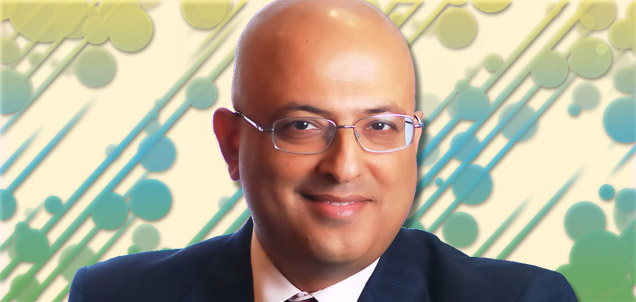
Tag: Bhaskar Das

  • Bhaskar Das set to quit Zee


    By A Correspondent

    Veteran mediaperson Dr Bhaskar Das is reportedly moving out from the Zee group with effect from end-October 2017.Das joined the Zee group to helm Zee Media Corporation Limited and is currently President and Chief Growth and Innovation Officer of Zee Unimedia.

    Although both Das and Zee PR were not available for a confirmation, reasonably reliable sources close to both the Zee group and Das have confirmed that Das is moving on after his five-year contract is due to expire next month.

    Das exited Bennett, Coleman and Company Ltd (BCCL) in end-september 2012 after having worked for 32 years with the organisation. He joined BCCL as a management trainee in 1980 and worked his way up to be President from 2005. For a short while he also took on the additional responsibility of working with BCCL Managing Director Vineet Jain’s office.

    Active in the advertising industry associations, Das has been President of the Advertising Club for four years and is currently an officebearer with the Ad Club and the IAA India Chapter. He is part of the Governing Council of MICA, Ahmedabad and is one of the few seniors in the marketing services domain with a PhD in marketing from Pune University. He is reportedly working on his second PhD in marketing.

  • IAA discussion on whether opinion polls and media reports influence voters?

    By A Correspondent


    The International Advertising Association (IAA) India Chapter conducted a panel discussion on the topic ‘Do Opinion Polls and Media Reports Influence Voters?’  last Thursday (April 10) at the Nehru Centre, Mumbai.


    Former petroleum minister and senior BJP leader Ram Naik, veteran editor and political analyst Kumar Ketkar, Congress spokesperson Sanjay Jha and Shiv Sena spokesperson Prem Shukla participated in the discussion that was moderated by Anand Rathi, Chairman, Anand Rathi Securities.


    Prem Shukla started the discussion by saying, “Media has ably helped in foreseeing the future in this democratic country and now it is in the position to tear any political parties’ manifesto into pieces unlike earlier times where they would just comment and move on.” He further added that the media does help people in forming an opinion about any party but the party gets accepted only after it proves its capabilities. Media, being the Fourth Estate, has a very important role to play in a democracy and especially at these times when the Lok Sabha Elections are being held, Mr Shukla said.


    However, Sanjay Jha, was very disappointed with the Indian electronic media and said: “I want to say that the media has failed India as every day people feel that they are heading towards darkness after watching all the 9 pm news shows. This is because of the fact that nobody talks about the development in the country. Of course, there’s corruption, inequality but you can’t overlook the growth and the change in the country.”


    Said Ram Naik: “There are different types of media and various information being hammered on the voters. Media can only provide information but it can’t direct thoughts. Earlier it used to happen through newspapers, but now it doesn’t.”


    According to Kumar Ketkar, the role of media is “to inform, entertain, educate, lead and to mislead”. “While entertaining, they create issues which are absolutely not relevant. What Raj Thackeray says about Uddhav Thackeray has no national relevance in the Lok Sabha elections.” However, Mr Ketkar asserted that the media cannot be ignored. “Even if they are misleading, they should be allowed to mislead in the democracy and you should challenge them.”


    Raising a question mark on opinion polls, Mr Jha said: “I had raised a question when the sting operations were carried on these agencies who conduct opinion polls. Why don’t channels take responsibility? I think they should as at the end, a commoner trusts a channel.”


    Earlier, Srinivasan Swamy, President IAA India Chapter & Vice President, Development Asia Pacific region of IAA welcomed the panellists and the moderator and explained how events like these are keeping in line with the IAA’s objective of discussing and deliberating on issues currently being debated by the industry and the public at large.


    According to Dr Bhaskar Das, Group CEO, Zee Media Corp Limited and Chair of the event: “A panel discussion can only serve its objectives if you invite the right people and we took care to get an excellent mix of voices.”


  • DNA to launch Delhi edition on May 13


    By A Correspondent


    The six-edition Daily News & Analysis (DNA) is set to launch an edition in Delhi on Monday, May 13.


    May 13 is also Akshay Trittiya, a day normally considered auspicious for starting new projects or buying gold, automobiles or property. The editorial team at DNA is in place with Saikat Datta as Resident Editor. An aggressive marketing plan is scheduled give the newspaper prominence in a market dominated by Hindustan Times and The Times of India.


    In the last quarter, under the leadership of Dr Bhaskar Das, group CEO, News Cluster, DNA has gone in for a new look – in the paper as well as in the team bringing it out and running the company. The subscription offer has been withdrawn and the emphasis is on profitability without compromising on editorial quality.


    DNA is now owned and managed by the Zee group. With the Delhi launch, the newspaper will have editions in seven centres. Currently, while Mumbai, Bengaluru and Pune are managed by DNA, the Ahmedabad, Jaipur and Indore editions have been franchised to the Dainik Bhaskar group, which co-owned the paper until a few years back. The Delhi edition will be managed by the Zee-owned DNA.


  • The Importance of Being Vikram Sakhuja


    By Johnson Napier

    With inputs from Ananya Saha


    It may be the calling of a lifetime but as Vikram Sakhuja gets ready to shoulder new responsibilities as Global CEO of Maxus, he leaves behind a legacy at Group M that’s not going to be easy to match. Apart from influencing the team and colleagues to take on bigger challenges at the workplace, Mr Sakhuja has ensured that that the four media agencies under Group M umbrella continue to dish out excellence in whatever manner possible. The results are for all to see as the Group collectively has soared to great heights over the past few years and has become a hot favourite with several clients as well.


    On the eve of a farewell the team at Group M is hosting for him, MxMIndia spoke to a few industry captains who have worked or interacted closely with Mr Sakhuja maverick to gather their perspective on his contribution to Group M and towards the industry.


    CLIENT:

    Ajay Kakar, Chief Marketing Officer, Aditya Birla Group – Financial Services

    What does one say about Vikram? He is an omnipresent shadow. And what i mean by omnipresent is that he is there all the time but in his perfect humility and understated personality. He is not overpowering or overbearing but always there wherever you need him, wherever you need him. So as a client, i can say he is an omnipresent shadow, a very reassuring person to have to have access to and he will be there.


    As an industryperson, he is a very rounded person because he has the rare experience of agency, client and media. He is not a theoretical preacher but he has been on all sides and knows the practical side of clients and clients’ business. It gives him an unparalleled edge. The biggest thing i have noticed about him that he has managed to create culture at Group M, which reflects his personality of understated people who just do their best. Typically, advertising is about talking about your own self and talking about your own work. Here, his personality is of being understated and letting his work speak for himself and he has managed to permeate that culture across all Group M companies. Today, if you look at the Group M leadership belt, you find the same welcome personality across the agencies and people.


    What he has achieved is unparalleled  Look at the way Group M agencies are ruling not on size but on recognition also. On one end it is Mindshare and at the other, it is Maxus. Whichever horse won the race, it was Group M or Vikram.


    COMPETITION:

    Sam Balsara, Chairman & Managing Director, Madison World

    I’ve known Vikram Sakhuja for quite some time now first as a client at P&G and Coca Cola and then at Star India and later Group M. I see Vikram as a true-blue professional with high professional integrity and commitment to do a good, objective and honest job at hand. Also, he has performed well as a leader at Group M and his promotion is richly deserved. His promotion in fact is a cause of pride for all of us in the media industry and also India Inc. because he is an outstanding example of someone from within our industry who has been chosen to be a global head and that too operate out of India.


    Ambika Srivastava, Chairperson, VivaKi Exchange India

    I’ve known Vikram Sakhuja since his brand management days when he was with Coca Cola. He was very sharp and clear and was always able to ask the right questions. It’s a fundamental want but some people do not ask the right questions especially at forums. What I’ve noticed with Vikram is that he is always focused and asks the right questions. That is what enables him to articulate and address issues in the right manner.


    As for his stint at Group M, I personally feel that he has done a great job especially during the last 2-3 years when the economy was going through a tough phase. His appointment as global CEO of Maxus is indeed an achievement; he would be a great role model for the younger generation. I am indeed pleased that Indian talent has been recognised; it was indeed waiting to happen.


    MEDIA HOUSE:

    Bhaskar Das, Group CEO, Zee News (cluster)

    From what I’ve seen of Vikram Sakhuja, he is truly an inspirational leader as he is known to lead by example whether on the intellectual or managerial front. Of the many qualities that he possesses the one I think he is good at is keeping his eye on the future and seeking out cutting-edge development in the business and media space. He has a good understanding of business theories and the way it needs to undergo constant evolution for its own betterment. Our industry is such that it is undergoing continuous evolution due to acceleration in technological development and global practices. For a media buying house to be successful needs to have a good thought leadership in place and that is what Vikram Sakhuja has excelled in abundantly.


    During his stint, I think Group M has achieved greater heights and much of that has been possible due to his dynamic thought leadership skills. He has even created leaders out of his organisation in the time that he was at Group M. It is a matter of pride that an Indian has managed to get a global mandate, which signifies the importance being paid to Indian talent and also India being the epicentre of intellectual and managerial ability.


    (Dr Bhaskar Das was until recently President, Bennett Coleman and Company Ltd)


    COLLEAGUE:

    Ajit Varghese, Managing Director South Asia – Maxus and Motivator

    Vikram has been a client, a boss and great leader for me in the last decade. His biggest strength is depth of knowledge, ability to dig deep into issues and ability to focus on issue in hand than the people involved. To me his biggest contribution to GroupM is his ability to choreograph the strengths of 15-17 units heads and not letting competition have anything easy.


  • Bhaskar Das takes charge of DNA as CEO KU Rao to moves to corporate role @ Zee

    By A Correspondent


    Bhaskar Das

    After serving as CEO of the six-edition Daily News and Analysis (DNA) for six years, K U Rao is moving to the Zee group in a senior corporate role. It is not known if and when his position will be replaced, but Dr Bhaskar Das, who joined Zee recently as Group CEO, will be in charge of the newspaper.


    Mr Rao, who joined DNA from Shell, helped consolidate the paper and weather slowdown storms, ensured a smooth transition from the paper’s management by the Dainik Bhaskar group to Zee in 2008. His move was disclosed internally last week.


    Zee is learnt to be launching an English news channel and recently appointed Dr Das from The Times of India group with a specific task of consolidating its news offerings. The Zee group is reportedly in advanced level discussions with Amar Ujala to pick up a significant stake. There could be other acquisitions in the offing.


    Although Zee News pioneered independent news bulletins on television and the company has had a reasonable financial statement, it has not fared too well in ratings in recent years.


  • Bhaskar Das retires from BCCL

    Bhaskar Das

    By Ananya Saha


    Bhaskar Das retires from BCCL on September 28, after having been with the company for the last 32 years. Mr Das had joined the company as a Management Trainee in 1980 and worked in Kolkata and Ahmedabad branches as its Head. He took the responsibility of ET’s Brand Director as well as Director Response for the West.


    He took over as Head of Response in 2005 at BCCL.


    In an official letter announcing the retirement of Mr Das, Ravi Dhariwal, CEO, BCCL, noted, “There were many reasons and qualities why Dr.Das rose to be the President, Response as well as a Member of the Board of BCCL during his illustrious career.


    First and foremost, his performance was outstanding. During his tenure as Response head, company’s turnover more than doubled, excess of 16% revenue growth. During his stewardship, Brand ET rose to its dominant position, and, we launched a very successful newspaper, Mumbai Mirror in record time.”


    At the time of filing this report, his next destination was not ascertained, though there are rumours that he may be associated with a leading Mumbai-based media group.


    In an interview to MxMIndia in August 2012, Mr Das had mentioned, ” I think that’s why my sales track record in the company for 32 years continuously has been flawless.” (http://www.mxmindia.com/2012/08/my-first-sale-im-not-a-conventional-salesman-i-am-a-storyteller-bhaskar-das/)


    Mr Dhariwal further mentions three reasons behind Mr Das’s performance, “He built and led a very competent and, passionate Response team; he exuded energy, youthfulness and was constantly selling, thriving more in new challenges; and he kept himself, his mind and body, modern and current.” On a lighter note, he added, “We all knew what the latest fashion and trend was by looking at Bhaskar, or, by hearing him!”


    About his profession, Mr Das had said in the interview, “I feel sales job is the best because it has great learning about human psychology, sociology, about economics of operation. I have worked in one company but I have learnt from so many industries when I go, inquire, understand and empathize with the client. My learning in the industry is amazing, it creates tremendous sense of resilience. Every time someone says no, it strengthened my intention to succeed.”


  • MY FIRST Sale: I’m not a conventional salesman. I am a storyteller: Bhaskar Das

    [youtube width=”400″ height=”225″]http://www.youtube.com/watch?v=OiplNQeXtgw[/youtube]
    If you are having trouble in viewing this video, see link

    As part of our Thursday series of getting personal with industry folk, we look at getting the big guns in the fraternity to reminisce their first sale, copy, creative, news report, article, news show etc etc. We thought it appropriate to quiz the master salesman Dr Bhaskar Das. He’s been at it for 33 years with The Times of India group. MY FIRST… will appear on the second Thursday of every month…


    You are essentially a salesperson, do you remember your first sale?

    I first sold to Bennett, Coleman… they recruited me. You are first a product or brand yourself and you get selected. I think that was the first selling I did. I had a two-year management training course but they stopped training after nine months saying you don’t require training. And then I was given the charge of developing classifieds in The Times of India Ahmedabad edition in 1981. TOI Ahmedabad was launched in the 1970s and they were not doing very well. And classified development is very important, so I was given the charge.


    My first sale, I still remember, I went to Vatva Industrial Estate and got a 30 rupees ad. At that time Rs 30 were valuable. But fundamentally when I say I am a salesman, I love selling but I am not a conventional salesman. I am a storyteller. I don’t just offer solution, I create insights for the client and create a story around access points and not selling of space. I think that’s why my sales track record in the company for 32 years continuously has been flawless.


    And did you have to spin any yarns to sell stories?

    No, I think for selling stories you have to do your homework and empathy is very important. That why should my advertiser buy? I have never focused on only supplies side, I’ve focused on demand side as well. I used to also research on reader reaction, on the demand side, and I used to marry both of them in storytelling. Obviously over the years, storytelling ability improved.


    Any sale you are particularly proud of?

    There are a lot of them. When I became Western Director, when I was responsible for Ahmedabad and Kolkata, I always used to go to clients who would say no. I had a fetish that when they say no, I would turn it into a yes. Apart from leading by example, I always believe my knowledge should start where my colleague’s ignorance begins. And then it gives a different kind of kick of my storytelling ability.


    Is ad sales a thankless job…

    I never believed so. For me no job is a dirty job, I think it depends on the person. I feel sales job is the best because it has great learning about human psychology, sociology, about economics of operation. I have worked in one company but I have learnt from so many industries when I go, inquire, understand and empathize with the client. My learning in the industry is amazing, it creates tremendous sense of resilience. Every time someone says no, it strengthened my intention to succeed.


  • INMA 2012: Managing complexity in South Asia

    By Shruti Pushkarna


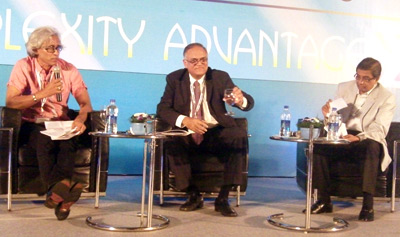
    Keeping in line with the theme of the 6th annual INMA South Asia conference, ‘Complexity Advantage’, one of the sessions focused on the complex media markets inSouth Asia.


    Titled, ‘Managing Complexity In South Asian Markets: A Sri Lanka, Pakistan and Bangladesh Experience’, the session was moderated by Mr Bhaskar Das, President & Principal Secretary to MD, The Times of India Group. Representing Bangladesh and Pakistan respectively, were panelists, Matiur Rahman, Editor & Publisher, The Daily Prothom Alo, Bangladesh and Mr Javed Jabbar, Chairman & Chief Executive, JJ Media (Pvt.) Ltd and former Federal Minister,Pakistan.


    Mr Rahman started the discussion by sharing the complexities and challenges facing media market in Bangladesh: “Media industry can best thrive in a democracy but democracy in Bangladesh in only 22 years old. The dominant political parties are poles apart and can’t even come to a consensus on major national issues. People in the media are threatened, tortured and even murdered. Political interference is a huge challenge and yet there are some resilient media houses playing an important role.”


    He added that another challenge is to keep the press free from its owners because many media houses are now being owned by corrupt business owners. Speaking of evolving technology, Mr Rahman said: “Earlier our competitors were only newspapers, but now all electronic media are competing with us. With mobile and digital growing at a fast pace, product offerings have to be modified to suit the needs of both consumers and advertisers.”


    Speaking of complexities and challenges facing the Pakistan market, Mr Jabbar said that both India and Pakistan, two nations who have the single most complex bilateral relations, suffer from a lack of awareness about each other. He said: “Countries are societies and nations before they are markets. News media have played a pivotal role in determining a lack of awareness among these two nations. All media are inherently subjective, selective and suppressive.” Furthermore, he said that the question in Pakistani people’s minds today is whether media content eventually makes a difference in governance or violence. Does media content really change things?


    As for advertisers, he said: “They are aggressive intruders voracious for media space. Editors and proprietors of newspapers are willing to debase to any level and they are even allowing advertisers to sponsor verses of the Holy Quran. In Pakistan, advertisers in collusion with news media have encroached on space that belongs purely to news content. But at the same time, advertisers are beginning to invest in research which was long overdue.”


    Talking of technology and the onset of digital, Mr Jabbar said: “New technology is ubiquitous and pervasive. Media landscape in Pakistan is thriving, especially in terms of IT connectivity and television channels. However changes that are taking place in India in terms of mobile and devices are not as rapid in Pakistan. Innovations are not taking place at a desirable pace.”


    Mr Jabbar concluded by stating a common challenge facing all three nations, India, Bangladesh and Pakistan, with respect to media ownership. He said, “Ownership of media should be redistributed through publicly listed companies on the stock exchange so that profit doesn’t become greed.”


  • Complexity presents opportunity @INMA 2012


    By A Correspondent


    The sixth edition of International Newsmedia Marketing Association (INMA) South Asia Conference opened to a packed house on August 6 in New Delhi. The theme ‘Complexity Advantage’ was not only explored, but dissected and deconstructed. The sessions at the event saw discussion on various topics ranging from the need of newspaper companies to become multimedia organisations to the future of news, and if cost deflation is an achievable matrix.


    Mr Sanjay Gupta, President INMA South Asia and CEO & Editor, Jagran Prakashan Ltd welcomed the delegates and Mr Ravi Dhariwal, President INMA Worldwide & CEO, The Times of India Group, gave the inaugural address. Talking about the volatile Indian newspaper landscape, Mr Dhariwal outlined five key points: “There is great optimism even when things have not been going great economically. There is a very big opportunity in tier II and III cities, which every newspaper is witnessing. On the back of multimedia and strong publishing business, companies have been witnessing double digit growth. However, the newspaper business is being treated as ‘one shot fits all’. Going forward, this strategy will have to change as the consumer needs customisation according to their needs and interests.”


    He went on to say that publishing, as a business, has a bigger purpose of being at the forefront of change, and gave the example of TOI’s ‘Lead India’ and ‘Teach India’ campaigns.


    Ravi Dhariwal
    [youtube width=”400″ height=”225″]http://www.youtube.com/watch?v=qdAI1R8UBTw[/youtube]

    His also commented on how advertisers are struggling with value: “We need to deliver and innovate to deliver extra value to the advertiser. My fourth point would be that the competitors need to join hands and collaborate to give better value to the readers and advertisers. If we do not do that now, we might bleed like the newspaper industry bled in the West.” He concluded by saying that fleeting FMCG advertisers who prefer TV as a valuable medium to advertise: “Should be given single rate from all newspapers.”


    Mr Bhaskar Das, President & Principal Secretary to MD, The Times of India Group, who acted as a sutradhaar at INMA noted: “The newspaper business is rapidly changing. There is no equilibrium, only punctuations. The businesses today are caught in ‘complexity science’- any business can and will survive if they adapt to the changing environment.”


    Mr Nandan M Nilekani, Chairman, UIAI, Planning Commission, Govt of India raised important points about how newspaper industry should integrate its print version with digital format to reach out to the larger, younger audience: “The advancement of computing technology is bringing dramatic changes in how media is being consumed. It is important to understand the interplay of demographics, cloud computing, content, mobility, and access to technology, to create a business model that integrates the disruptive advertising and subscription models.” He summed his theory as: “Get ready for online mobile-aware resident.”


    Earl J Wilkinson
    [youtube width=”400″ height=”225″]http://www.youtube.com/watch?v=sKl9f2Yjxyg[/youtube]

    Highlighting the fact that advertisers want quality reach, target richness, engagement, purchase intention, and actionable audiences from the newspaper media, Mr Earl J Wilkinson, Executive Director & CEO, INMA spoke on ‘The new growth path and how to get there’. Talking about the learning and examples from the US and UK markets, he said that Indian newspaper industry is at crossroads because of: growth beyond demographic changes; the struggle being less about circulation but more about readership; delivering value to advertisers even as multimedia and digital pose challenge.


    Mr Wilkinson said: “The integration of content across platforms is bound to happen. And this is not true for content only, but also for the readers and advertisers. The problem of complexity does arise across platforms, but herein lies the opportunity. As the integration becomes a norm, the organisation models of newspaper companies will also change. The companies need to ‘aggregate’ and ‘atomize’.”


    The new model, according to him, would focus more on competence and value that it gives than the product itself. He further said that most news would be consumed via mobile by 2015. “Mobileand social media would result in exponential engagement. We, as newspaper industry, need to be more relevant to the nebulous pursuit of quality. Going forward, the multimedia organisations need to manage print for profit, and digital for growth,” Wilkinson concluded.


    The session on ‘Future of News’ brought interesting perspectives as the panel discussed if the attractiveness of news can be synchronised with commerce and content. ‘Winning the ad growth challenge’ saw industry veterans talking about factors that impact ad revenues.


    The highlight of the day was the interesting session with young college students on ‘Walking through the mind of the post-90 born: ‘Creating a newspaper I would like to read”. The session gave interesting insights to the delegates about how newspaper is not a necessarily a chore for the 19-21-year-olds. They consume news on-the-go, and read newspaper “when they have nothing else to do.” Moreover, the young panel highlighted that they preferred going through trending articles and video links, showing how digital was their preferred medium of news consumption.


    ‘Battle of  Bulge: Is cost deflation a utopian expectation?’ was moderated by Mr Mohit Jain, Executive President, Supply Chain, BCCL. He pointed out the three challenges of newspaper business when it cones to cutting costs, “Globalisation of cost structure, supply chain issues, and volatility of newsprint.” The session spoke on how new business models of publishing and printing newsprint are managing the currency, size and quality; how newspaper companies need to unlock internal manpower potential across board; and effective supplier partnerships.


    Mr Ashish Pherwani, Partner-Advisory Services, E&Y noted that newspaper organisations should pool-in their back-end resources, such as printing facility, to cut costs. Mr Pawan Agarwal, Non Executive Director Bhaskar Group echoed Mr Pherwani’s thoughts, and added, “We have created a common infrastructure for two or more of our editions. This helps in capping my Opex and Capex.” Mr Piyush Gupta, Group CFO, HT Media agreed: “Co-sharing is already happening in aviation department. If it can happen there, it can happen here as well.”


    Mr Pherwani added: “Every newspaper industry goes through three stages: chopping off wastage; optimisation, and partnering with vendors. Currently, the Indian newspaper industry is going through the third cycle. It is imperative that we build a right product at right price by creating a win-win relationship with vendors.”


    The panel also highlighted the fact that harnessing inner potential is important for any and all newspaper organisations to achieve its top-line growth. The panel also noted that what is core to a business and what can be co-shared: this will emerge as a real game changer for a newspaper organisation.


    Giving a different perspective to the newspaper session was the speaker Mr Santrupt Misra, CEO, Carbon Black Business and Group HR Director, Aditya Birla Management Corp who spoke on ‘Managing cultural asymmetry in a multi-media organisation’.


  • Exclusive: BCCL President Bhaskar Das is now also Principal Secretary to MD

    By A Correspondent

    It was Holi. And time for colour and loads of cheer.  In media-land, we received this missive via our BBM: Bhaskar Das, the man who brought to The Times of India group most of its monies (as head of response), and the man who’s captained many industry associations and is known for his very interesting and intellectual questions at media industry conferences, will now be President and Principal Secretary to the Managing Director at Bennett Coleman & Co Ltd (BCCL). MD = Vineet Jain.


    In a signed office advisory, Mr Jain recognises Dr Das’s contribution to the company. “Bhaskar Das has always excelled in every responsibility entrusted to him – be that of leading Response function to newer heights, brand management, profit centre head or special projects in the area of Wellness, Times Foundation among others.” And he mentions that the new role “has the potential of becoming a gamechanger for the Group”.


    So what does this gamechanging role mean?


    In addition to the responsibilities he has been entrusted with at ‘Brand Capital’ (eka Private Treaties), Dr Das will now look after the following:


    * Exploring new revenue opportunities across the group’s media initiatives

    * Evolving a collaborative sales approach across various group properties

    * charting out a future roadmap for Optimal Media Solutions (that is, Medianet)

    * Facilitating a shared understanding an aligning all functions and group cos. to shareholder philosophies and objectives


    The end-objective is to “capitalize on the wealth of knowledge and expertise and to leverage the same across the Group”.  Given this, Mr Arunabh Das Sharma, Executive President – Response will report to Mr Ravi Dhariwal.


    See also: MxMIndia interview with Dr Bhaskar Das


  • I don’t read rival newspapers: Bhaskar Das


    By Anil Thakraney


    I have met Bhaskar Das on and off. (I once even secretly freelanced for him in my advertising days.) During my stint with Mumbai Mirror, I got to know him a little better. He has always come across as a cool, calculating and sharp business manager… but someone who’s smart enough not to build his own image over that of his company. In a long conversation inside his plush corner office (previously occupied by Pradeep Guha), Bennett Coleman’s president answers searching questions on his long career with the Times, the group’s ideologies and sometimes controversial practices.


    The one new thing I discovered about Bhaskar during this discussion is that he’s a deeply spiritual person, and often, as he himself said to me, uses learnings from The Gita to ‘sanitise’ his various marketing strategies. Wonder what Lord Krishna would have to say on Media Net.


    But I must say the man who heads the nation’s largest newspaper house retained his composure even when facing tough queries. Spirituality at work, I suppose.


    Boss, when do you retire? You are 58.

    See, retirement has two different connotations. For me, it’s ‘Retyrement’. Like re-treading tyres. And that means adding new capabilities. Coming specifically to Bennett, I have a flexible retirement plan. As per the company’s desire, I should stay as long as I am mentally, physically and intellectually fit. But I must add that I live by the day. So I am only bothered about the now.


    You’ve been with the company for 32 years. Never got bored of the same place?

    Boredom only happens when you don’t love your job. I have continuously rediscovered and redefined my space, so the journey has always been very exploratory. I don’t know whether the excitement would have been there if I had worked in a bank or in some other financial company. Newspaper is a 360 day product. Because of my personal liking for content, I have always been involved in it in some form or the other. Honestly, for me, 32 years feels like 32 days.


    The flip side is some people would say Bhaskar is risk averse.

    It’s not the question of being risk averse. By that logic if you continue in a marriage you are risk averse! I don’t believe in changing jobs for the heck of it. People use it as a spring board for becoming financially more solvent, and that has never occurred to me. For me, a job is a gateway to learning and it’s not for pay slips. Also, even if I have worked in the same company, I have done multiple roles in multiple markets. Our shareholders have always been great teachers. So, I have updated myself continuously, and I can challenge anyone in terms of my cognitive bandwidth on various industries.


    Your biggest achievement in all these years?

    I am proud of having been a part of the company when it re-invented itself. The process started post-1985, when our Vice Chairman took over the reigns of the company and subsequently the Managing Director. And finally, in the last six years, I have been able to drive the ambitions of the company to such great lengths, that today the company is the biggest media house in terms of both, turnover and profitability.


    Bhaskar, the real challenge lies in turning around failed, small brands. Anyone can build on success.

    That’s the classical model. For me, taking a giant brand and making it bigger and taking it to a different level also requires equal guts. And even for a loss making brand, we have done that. Mumbai Mirror, when we started, was making losses.


    Today it is a Rs200 crore brand. This has become possible over a period of six years. And I have to add that I have taken many risks, in terms of launching new brands and making them successful. A number of big groups have also folded up, they screwed up. Success is its biggest enemy. When you are No 1, there’s only place for one person. To stay there requires more energy than reaching there.


    How many years do you give newspapers to survive in India?

    I am very optimistic about news per se. Today, we are leveraging the core and also investing in the embryonic and the emerging media, in terms of a news channel, websites, and so on. We are seeing ourselves as a complementary option as opposed to a substitutive option. Point is, TOI of 1830 and TOI of 1990 and TOI of 2020 will be a very different paper. We are constantly re-inventing to develop the complementary utility of the brand. We have become very futuristic, we are creating more and more niches. As for the newspaper itself, it is a matter of conjecture. I think in the Indian context, there’s a peculiarity, which is that English language is a big deal. Let me explain. To think of India as one nation is a mistake. There is a developing India, there is a developed India and there is an under-developed India. The developed India’s behaviour is more or less like the West, so there might be some erosion of the newspaper in this segment as they shift to Iphones and Ipads. But for the other two Indias, newspapers will continue to prosper for some time. For them, English is a gateway to career and growth.


    Coming back to your question, I am not an astrologer, but I do agree with the gentleman who said that in 2040, the last copy of a newspaper will get printed.

    Having said that, I do not suffer from format myopia, because that would kill a corporation. I think of news as a genre, not as a format.


    There’s been some buzz of an IPO from your group. True?

    This can always be on the agenda of any corporation, including ours. But as of now, nothing has been decided. I am not saying it will never happen, but not in the near future.


    Do you admit that competition has been good for the TOI as a newspaper? Pre HT and DNA, the TOI in Mumbai had lost its edit focus. Now, the news coverage is remarkably superior.

    I have always believed competition is good. Obviously, one has to respond, not react. If, while responding, the quality of the product improves, then that’s damn good. But it’s a part of the re-invention process. In Calcutta, we are the dominant force now. Or for that matter in Bangalore and Delhi, where we became the competition. But not all market leaders have responded positively. We are a dynamic group; it’s in our genetic core to re-invent.


    What are the innovations Bhaskar Das has masterminded in the last five years?

    I have not, it’s all a team effort. ‘I’ as a word does not exist in my dictionary. In our group we all work as a team. No individual is bigger than the team.


    Private treaties, for which your group has been both, admired and dissed… it hasn’t eventually paid off, right?

    It’s thriving; it’s a part of our deep strategy. We didn’t want to make money on these.


    Whoa, the whole idea is to do a space and equity barter for revenue. And to encash on the acquired equity.

    If we wanted to encash on the equity we would have gone to the stock market. Our strategic intent has not been understood, and we want it to remain not understood. It’s a demand-side innovation, and nothing else. Private treaties are now called Brand Capital out here, we have re-invented it and it’s doing extremely well.


    Is Pradeep Guha your mentor?

    I have had many mentors in my life, and he is one of them. He has been a great teacher for me.


    Some years ago, in this very room, Guha said to me that for the group, the target audience is the advertiser. Do you agree with this ideology?

    This kind of question cannot be answered with ‘one size fits all’ sort of a thing.

    We have two customers: Readers and advertisers. Agreed, that our business model is so skewed that we are dependent on advertisers, but we have never forgotten that the reader is the franchise that leads to advertising revenue. The point is to get ad relevant audience… which means people who are culturally and financially solvent enough to engage with the advertisers. But for getting that also you need interesting content. So it’s both, Lakshmi and Saraswati.


    In 2004, you were about to buy Mid Day. What went wrong?

    Nothing went wrong. We wanted to buy and even Mid Day wanted to sell, but in any such deal both the partners have to have a buy-in on terms and conditions. That didn’t happen.


    Regret losing out on Mid Day?

    Now that Mirror has come, Mid Day is not required.


    It’s generally believed Reponse calls all the shots in your group. True?

    There’s no truth in this. I worked in Response for 30 years, and I have never seen any semblance of power. Only thing is, because of the business model, which is that advertising gives us 90 percent of our revenues, it’s perceived to be the most powerful. Every division plays its part. We have no say in the content. If that had been the case, the TOI wouldn’t face the maximum ban from clients (amongst newspapers). We have the Chinese wall, though we do Brand Capital. The editorial is completely independent.


    Cross your heart and tell me. You have never gone to one of your editors to ask him or her to plug an advertiser?

    I have never done it.


    That’s very hard to believe.

    Trust me. I cross my heart. When clients approach us, we ask them to approach the editorial director. Because it will never work if it goes through us.


    Funny that happens in a media company that runs Media Net.

    That’s because people haven’t understood Media Net. Others do it secretly, we are very clear we do it only for the entertainment publications, and with clearly defined protocols. Others do it as legitimate coverage.


    Truth is, Media Net sowed the seeds of paid journalism in this country.

    I don’t think so. There have been enough examples in the past, where, for financial and public issue ads, journalists always got a bad name. I would say it is much more transparent and protocolised out here.


    Are you proud of MediaNet?

    (Slight hesitation.) See, it’s not the question of being proud of it. Life is not black and white. It’s a part of the strategic process we have done. I feel what used to happen previously was more unethical, where, if you knew a journalist, you could get a plug. And we have openly announced these are promotional supplements.


    You’ve kept a very low profile. Looks like you don’t want to repeat Guha’s mistake.

    (Smiles widely) No individual can be like another person. I can’t be what I am not. I don’t think Mr Guha was high-profile; the job is such that you get noticed. Now, maybe there’s nothing noticeable in me! I always say that ultimately it’s the corporation that gives you the halo. And I have no personal halo.


    I think you have decided to be clever about it.

    That’s your conclusion. I did exactly what I believed in. That my work is to serve the company, which I do.


    An Indian editor you admire. Someone not from your group.

    Unfortunately, I can’t comment because I have not worked with them. Also, I don’t read competitive products.


    You don’t read rival newspapers?

    I don’t.


    Don’t you want to know what the competition is doing?

    For that my MIS reports are there. My brand team is keeping an eye on the competition, I don’t have to do it. I don’t have the time to read everything, it’s better to read a few publications in-depth.


    Vir Sanghvi said to me that even if it was the last job in the world, he would still not work at the TOI.

    It’s a democratic country, we respect individual opinion. These things don’t affect me at all. I am a spiritual person.


    When did you become spiritual?

    I have always been spiritual, it’s a journey. We are all expressions of god. And so you must love everyone and not be judgmental of others. When you are spiritual, you love everyone.


    I think the Jain family’s spiritual beliefs have rubbed off on you.

    It would have happened anyway, even if I had worked in any other corporation.


    Photograph: Fotocorp


  • INMA 2011: Readership, Rate Cards & a small newspaper’s success

    By Tuhina Anand


    On Day 1 of INMA-5th South Asia Annual Conference, there was a CEO Roundtable which saw discussion on the topic: ‘Have we reached an end to readership growth?’ The session was moderated by Bhaskar Das, President, The Times of India Group and on the panel were Sanjay Gupta, Director, CEO and Editor, Jagran Prakashan Ltd, KN Tilak Kumar, Joint Managing Directorand Editor, Deccan Herald, Shahrukh Hasan, Group Managing Director, Jang Group Pakistan and Tariq Ansari, MD, Mid-Day Multimedia Ltd.


    Mr Das started the session by saying that it’s a known fact that the newspaper business is undergoing challenging times and one of them is about finding a balance between a content that caters to a diverse age group at many Indian homes and remaining relevant. He also remarked that if one is bothered about physical readership when a consumer is accessing media through various touch points, shouldn’t virtual readership also be considered? He also questioned the merit of measurement vis -a-vis frequency and periodicity.


    Mr Ansari said, “The truth is that the readership of urban English newspaper has reached a plateau and the growth in terms of numbers in SEC C and D but the question is if that category is also the one which advertisers would be interested in and then the answer becomes doubtful.”


    The session also looked at growing readership in a new market with an old product as well as raised question on the need to show yoy growth of readership where in actuality it should be yoy growth of advertiser?


    In all this grim scenario, Titak Kumar of DH brought the example of Karnataka language daily which has been seeing growth since both income and literacy levels have gone up.


    Another staggering point that gives players to think about is the pricing of a newspaper. While in India, the you can get a newspaper even at Rs 1.50, Shahrukh Hasan from Jang Group pointed that in Pakistan the paper would cost anywhere between Rs 15-23 and yet not cover its production cost.


    The idea that emerged was to innovate and seize the opportunity in the industry today. Also if multiple touch points is the new reality how does one update, upgrade and monetize from these various platforms.


    In another session, the panel discussed, ‘The Advertising Challenge: Space Selling in the Age of Multiple Platforms and Vanishing Rate Card’. On the panel were, Ambika Srivastava, Chairperson, ZenithOptimedia and Vivaki Exchange, Bijou Kurien, President and Chief Executive, Lifestyle, Reliance Retail, Jayen Mehta, GM, Marketing, Gujarat, Co-Operative Milk Marketing Federation, Rohit Gupta, President, Sony Entertainment Television, Bhaskar Das, President, The Times of India Group and Aritra Sarkar, VP, Strategy, ABP Pvt Ltd.


    The panel discussed if the rates cards have a value and Ms Srivastava endorsed this view along with Bhaskar Das though he differed that the rate card can be in different format and packaged differently to create a value proposition. Mr Gupta however giving the TV industry side of the story was of the opinion that in his industry rate cards doesn’t apply as the window of opportunity is less in television and rates vary from deal to deal and client to client.


    There was another session on ‘Good Editorial Content and Credibility are Good Business Also’  where Harisvansh, Chief Editor, Prabhat Khabar took the audience on the journey of success of the newspaper which is through doing hard hitting, pro people stories that have brought transformation in the lives of a common man. For them its trust and credibility that has paid off and just like Indian Captain MSD who is also from Ranchi like Prabhat Khabar both have emerged victorious by being dependable.