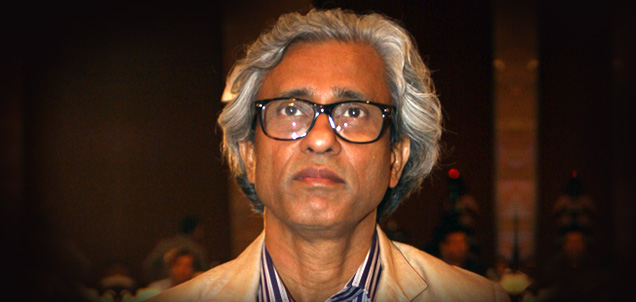
Tag: Bhaskar Das

  • Das ka Dum with Dr Bhaskar Das I Amidst all the gloom of the Mumbai Mirror daily shutting, there’s news of Saurabh Varma’s Wondrlab acquiring What’s Your Problem? Obviously, there’s some money in the market. Comments?

    BhaskarInteresting acquisition by Saurabh Varma. So we thought we’d ask a question. Without further ado, here’s Dr Bhaskar Das in the Dec 10 edition of Das ka Dum…


    If you wish to access the archives, please go to the Das Ka Dum tab on the website’s top navigation bar.


    Q. Amidst all the gloom of the Mumbai Mirror daily shutting, there’s news of Saurabh Varma’s Wondrlab acquiring What’s Your Problem? Obviously, there’s some money in the market. Your comments?


    A. I am not very clear about the linkage of two discrete incidents except availability of resources are relevant for all economic activities. So let’s confine my response to the new acquisition of Wondrlab. There are two key routes to a growth strategy of an organisation: DIY or acquisition. In today’s day and age, growth hackers quite often opt for the second route as it reduces the gestation period of skill build-up and expanding partner servicing ability.

    For growth hackers the only resource constraint is lack of imagination. But by the very nature of this kind of organisation, strategic vision guides deployment of resources. Cost optimisation is usually not a starting point for strategic leap.

    Knowing Mr Varma’s passion and vision for cutting-edge capabilities to differentiate in the marketplace, such blitzscaling appears logical to me.


  • Das ka Dum with Dr Bhaskar Das I We’ve heard of brands and the loyalty around them. Why is it that politicians, bureaucrats and even journalists are not trusted much?

    BhaskarSo we thought it was a weak question, but the answer props it up. As our Wizard with Words always does. Without further Dr Bhaskar Das in the Dec 9 edition of Das ka Dum…


    If you wish to access the archives, please go to the Das Ka Dum tab on the website’s top navigation bar.


    Q. We’ve heard of brands and the loyalty around them. Why is it that politicians, bureaucrats and even journalists are not trusted much?


    A. It’s a business axiom that when there is surfeit of choice, building and sustaining brand loyalty would always be a challenge. Secondly, trust can’t be demanded. It has to be earned. Now whether it’s brand or political class, loyalty becomes a function of an individual’s personal narrative and experience. A generalised statement about any specific class of profession and painting everyone with the same brush would be a gross misrepresentation of reality. For every alleged lack of trust of any professional class, there are equal and more evidence to the contrary. So you needn’t sound so dystopian.


  • Das ka Dum with Dr Bhaskar Das I The all-important Q3 of 2020 will get over soon. Having seen over many decades of the festive quarter in the media, how would you say was this year vis-a-vis the various others from the past?

    BhaskarAfter a blockbuster special of Das ka Dum yesterday (Dec 7), we’re back to our Q&A. Let’s hear it from Dr Bhaskar Das in the Dec 8 edition of Das ka Dum…


    If you wish to access the archives, please go to the Das Ka Dum tab on the website’s top navigation bar.


    Q. The all-important Q3 of 2020 will get over soon. Having seen over many decades of the festive quarter in the media, how would you say was this year vis-a-vis the various others from the past?


    A. This is an unprecedented time for every business sector. So, any comparison with a period in the past would not be a fair comparison. What we are witnessing now is non-linear and pattern-interrupted ecosystem where extrapolation of past trend is a sure recipe for failure. This year surviving is more critical and get ready for thriving through a reimagined future.


  • Dr Bhaskar Das: Every Strategy has an Expiry Date


    By A Correspondent


     In early 2005, when it was clear to the big bosses at the Old Lady of Boribunder that Hindustan Times and DNA were set to launch in Mumbai, there was much concern about the future of the Empire. While HT may still be this North India superpower, the paper had turned stylish and had some great writers and people at the helm.


    The bigger worry was DNA, short for Daily News & Analysis. It was being set up in a jv of the Dainik Bhaskar group and Zee. Bhaskar had essayed huge success in Gujarat with Divya Bhaskar and the Zee TV group chairman Subhash Chandra is a tough fighter and was keen on extending his domination to print. Plus there was Pradeep Guha, the former Times of India bossman who knew it all. And had a point to prove. When Guha moved to Zee, there was much talk of his trust lieutenant and second-in-command Dr Bhaskar Das also moving with him. But his bosses – Samir and Vineet Jain – held him back.


    Das suggested the flanking strategy to the Jains, and get the newbies battle it out with Mirror first. The gambit worked, and Mirror in Mumbai was a profitable venture in three-odd years. The circulation was large thanks to the fact it went free with The Times of India. The going was good, business-wise and editorially, though it had achieved its purpose.


    The Agarwals sold their stake in DNA to Chandra at Zee, and the paper finally folded up a year-odd back. HT could weather the onslaught, but it was a never a close #2 in Mumbai amongst broadsheets. Mid-Day, which was once #2 in Mumbai, suffered through the fight among the big ones.


    Post the announcement of The Times of India group on Saturday to close Mumbai Mirror as a daily, we asked Dr Bhaskar Das (BD) a few questions as part of the Das ka Dum series. We couldn’t help not asking him many questions on the development as part of the questions for the week. He was after all the boss of the project. We then thought it would be good to carry the entire Q&A together, and add a couple of more questions.


    Even if state this ourselves, we think it makes for a great interview, and he’s been reasonably candid. There’s a wee bit written between the lines, but then that’s BD for you. Enjoy.


    If the Print Media were to look at itself in the Mirror, what would it see? A self that’s Deflated, Defeated and Dead?


    None of them, according to me. Naysayers or doomsday predictors might agree with your observation. I am not oblivious to the emotional aspect of the reflection in the mirror. But in business, as in life, recalibration of the forward journey is a constant imperative. Learnings happen when one cleans up the mirror first before cleaning one’s face only. A deep introspection followed by a resilient approach would engender a realisation that death is the beginning of life and life is the beginning of death. Accordingly, new roadmap would emerge.


    Your sentiments on the closure of Mumbai Mirror, the daily, since you headed the team and started it all. In fact I am told you thought of the idea…


    What sentiments? � The company started a project. I was an incidental steward. When one is (in this case me) lovingly detached, launch or closure is part of a continuum, as in life. The pragmatism of business and its strategy compels an organisation to take a decision which might have to be revoked in future when the landscape changes. For business process continuity and for conservation of finite resources, an organisation has to choose an alternative from amongst multiple choices in an altered landscape.  After all, any  strategy is ultimately  a cascade of choices. Hence emotion has no legitimate space in such a decision-making. An engrossed passion helps a rational decision get wings. For the concerned daily, the dominant sentiment at that relevant time was perhaps like that. Hence an individual sentiment doesn’t matter.


    Does the closure of the Mumbai Mirror as a daily augur sad times for the newspaper industry. After all this is an offering from the #1 newspaper group in the country/ continent/ world, and operates in Mumbai, one of the most important advertising markets on land?


    As if this is the first time a publication has been shut. Every strategy has an expiry date. The publication had served a strategic purpose perhaps at that relevant time. Changing times need new strategy to navigate the operating environment. So I can presume the group has enough in its arsenal to leverage in the most important advertising market of India. From the outside it might look as a dystopian development. But it can be a precursor to a ‘manthan’ too. Who knows? As an incorrigible optimist , I think so.


    Our heart goes out to the employees engaged by newspapers, esp those who aren’t shared resources. With jobs not easily available what would you recommend to people who are set to be displaced?


    I can empathise with this question. I really have no answer to this. Sometimes silence is important to respect emotions. I can only pray for their well-being. The employees created a fantastic brand. They will do well anywhere. I am convinced.


    There are sentiments that BCCL should have absorbed the losses and grow the brand. Your thoughts.


    Theoretically, everything is possible. But how do I simulate a probabilistic answer without having any access to the compulsions that led to this decision? The only point that I can make is that the print sector itself is under dual threat  of format obsolescence and Covid-led tepid business headwind, and hence, even a supposedly deep-pocketed organisation  may not have the luxury of  taking  decisions that are unrelated to the basic tenets of commercial viability.


    As an academic in marketing, would you say that the existence or longevity of a product or service that’s set up essentially to combat competition is always in suspect?


    Not necessarily. INS Vikrant was also useful once upon a time. Then it got replaced by a more state-of-the-art aircraft carrier. Besides, strategic imperatives change. A market-facing organisation has to continuously readjust its gear depending on the terrain change and organisational priorities. Hence any deterministic prediction on this matter is as reliable as any decision that is predicated dominantly on convenient sampling.


    Do your responses really reflect your true emotions? Or are you just being politically correct?


    Political and correctness are oxymoronish terms, to my mind. I am neither political nor  claiming to be correct in my answers. May be my answers are not fitting into an expected paradigm of response. Then you should first decide if you want a rational answer or an emotional one. I am sure you would prefer the former.
  • Das ka Dum with Dr Bhaskar Das I We know of the loyalty around brands. Why is it that pollticians, bureaucrats and even journalists are not much trusted?

    Bhaskar DasIt’s not a typical Friday question. But then it’s not a typical Friday either. There are just 27 days left in the year and it’s the 49th Friday of the year. Presenting the Dec 4 edition of Das ka Dum…


    If you wish to access the archives, please go to the Das Ka Dum tab on the website’s top navigation bar.


    Q. We know of the loyalty around brands. Why is it that pollticians, bureaucrats and even journalists are not much trusted?


    A. It’s a business axiom that when there is surfeit of choice, building and sustaining brand loyalty would always be a challenge. Secondly, trust can’t be demanded. It has to be earned. Now whether its brand or political class, loyalty becomes a function of individual’s personal narrative and experience. So a generalised statement about any specific class of profession and painting everyone with the same brush would be a gross misrepresentation of reality. For every alleged lack of trust of any professional class, there is equal and more evidence to the contrary. So you needn’t sound so dystopian.


  • Das ka Dum with Dr Bhaskar Das I Further on the question of TOI’s page count slipping, do you think we celebrated way too early. Given that the ‘achche din’ for media spends aren’t really back?

    Bhaskar DasWe thought it was a simple question. But the response by our Wizard with Words takes the response (and hence our question) to a different level. This is the second of the two questions we asked Dr Bhaskar Das post the reduction in number of pages of The Times of India. Presenting the Dec 3 edition of Das ka Dum…


    If you wish to access the archives, please go to the Das Ka Dum tab on the website’s top navigation bar.


    Q. Further on the question of TOI’s page count slipping, do you think we celebrated way too early. Given that the ‘achche din’ for media spends aren’t really back?


    A. You are looking for a predictable pattern of celebration where sustained growth can only spell success. But the present business landscape is decidedly non-linear, where thinking about the future is an essential component of taking action in the present. Achche din is not a static date or time. There is no early celebration. It’s an ambidextrous exercise of balancing exploitation of existing competencies and exploration of new ones. When one does that effectively, good days won’t be far behind. Corporate Patience, Dynamic Leadership and Strategic Foresight can make all the difference.


  • Das ka Dum with Dr Bhaskar Das I The Times of India boasted of bumper editions pre-Diwali and then the number of pages and ads fell. If you noticed, no such comment on editorial space. Guess that’s how much editorial is respected in India today. Your views?

    Bhaskar DasHere’s the first of the two questions we asked Dr Bhaskar Das post the reduction in number of pages of The Times of India. Presenting the Dec 2 edition of Das ka Dum…


    If you wish to access the archives, please go to the Das Ka Dum tab on the website’s top navigation bar.


    Q. The Times of India boasted of bumper editions pre-Diwali and then immediately thereafter the number of pages and ads fell. If you noticed, no such comment on editorial space. Guess that’s how much editorial is respected in India today. Your views?


    A. In general, the number of minimum edit columns remain unchanged. With higher advt flow the page level goes up. So when the page level gets rationalised due to volatility in the advertising market, the reader gets neither shortchanged, nor does it reflect any dwindling respect for editorial.  So, page levels can never corroborate your dedication, as explained above.


  • Das ka Dum with Dr Bhaskar Das I There is much rush for the Covid-19 vaccine. This is quite like we see in the media. Rushing through things without being a 100% sure of the efficacy. Comments?

    Bhaskar DasSerious issue. Naughty question. And an interesting answer. But that’s what one expects from Dr Bhaskar Das. Please do read his response in the Dec 1 edition of Das ka Dum…


    If you wish to access the archives, please go to the Das Ka Dum tab on the website’s top navigation bar.


    Q. There is much rush for the Covid-19 vaccine. This is quite like we see in the media. Rushing through things without being a 100% sure of the efficacy. Comments?


    A. I don’t think the two situations are comparable. Development of any vaccine is an arduous process with clinical trials. They depend on rigorous research. Media is about braking stories and keep people abreast of the developments. They do research but they need not go through multiple iterations and trials. If that would have been the case, no news organisation would survive. It doesn’t mean that robustness of research is missing in news organisations. But it’s of a different kind.


  • Das ka Dum with Dr Bhaskar Das I Do you see the proliferation of OTT platforms will actually impact the genre?

    Bhaskar DasOTT OTT OTT OTT OTT OTT OTT. OTT here, OTT there. OTT is everywhere. Presenting Dr Bhaskar Das in the November 30 edition of Das ka Dum. Read on…


    If you wish to access the archives, please go to the Das Ka Dum tab on the website’s top navigation bar.


    Q. Do you see the proliferation of OTT platforms will actually impact the genre?


    A. It’s too early to predict, I think. The sector is evolving. In fact, during the lockdown, the genre got an increased fillip and the consumption of OTT content has gone up. Has it been translated into higher monetization — subscription or advertising — would be a matter of conjecture. Instinctively I feel that increased consumption has shored up both the top and bottomline of the OTT companies. There are talks of regulating the content by regulatory bodies. So the protocols of operation of the category are still evolving. For the expansion of genre, content, pricing and servicing would be critical. When viewers have plethora of alternatives, they are the king. One has to decode the intent and invest. It’s more art than science.


  • Das ka Dum with Dr Bhaskar Das I A significant part of your life has been pre-Google. Are you better off now than you were then. For, you earned most of your stripes pre-Google

    Bhaskar DasLong question, long answer. But it’s the weekend. So will do. Here’s Dr Bhaskar Das in the November 27 edition of Das ka Dum. Read on…


    If you wish to access the archives, please go to the Das Ka Dum tab on the website’s top navigation bar.


    Q. A significant part of your life has been pre-Google. How did you live life then? As in how did you get information on stuff then? Are you better off now than you were then. For, you earned most of your stripes pre-Google.


    A. Pre-Google or post-Google has one common element: people are still thronging temples. So even Google can’t answer all questions. That’s why temple visits haven’t come down. But jokes apart, there is no denying the fact that Google has made life easier to navigate, literally and metaphorically. Search was effort-intensive in pre-Google days. Now it seems to be easier. But other challenges have cropped up. So a pre- and post-Google comparison of life won’t be an a fair exercise. Each period has its pros and cons. If I start to narrate that now it would be like a tale of two cities, oops, two periods.


  • Das ka Dum with Dr Bhaskar Das I Why do you think so many folks from the FMCG sector switch to A&M&E. Star/ glamour/ power-struck or does the sector really give an ‘asli’ high?

    Bhaskar DasToday’s question couldn’t have got a short answer from Dr Bhaskar Das. Check it out for yourself in the November 26 edition of Das ka Dum. Read on…


    If you wish to access the archives, please go to the Das Ka Dum tab on the website’s top navigation bar.


    Q. Why do you think so many folks from the FMCG sector switch to A&M&E. Star/ glamour/ power-struck or does the sector really give an ‘asli’ high?


    A. There might be  some dearth of talent in M&E segment. So alternative sources of talent are often tried. Besides, for cross-pollination of ideas, inter-category talent is also scouted by many leading organisations in the M&E space.  I am not sure if any prospective candidate  would shift to M&E segment for an ‘asli’ high. ‘Asli’ high comes from real achievements and that can never be guaranteed by any sector in advance before joining media.


  • Das ka Dum with Dr Bhaskar Das I Every time a person quits, there are questions asked on what really happened. Was the person asked to go or has s/he quit for greener pastures. What according to you is the right strategy for a senior exec in this predicament?

    Bhaskar DasLong question. Short answer. Here’s Dr Bhaskar Das in the November 25 edition of Das ka Dum. Read on…


    If you wish to access the archives, please go to the Das Ka Dum tab on the website’s top navigation bar.


    Q. Every time a person quits in A&M, there are questions asked on what really happened. Was the person asked to go or has s/he quit for greener pastures. What according to you is the right strategy for a senior exec in this predicament?


    A. Just IGNORE it. As a senior person, one needs to be stoic, as gossip has wings which , more often than not, may not be in sync with reality.