For 38 years, Goutam Rakshit ran Advertising Avenues before turning a full-time consultant and strategic advisor to SMEs, start-ups and all those daring to be different. Advertising Avenues was one of the hottest agencies in India and was indeed the envy of every asperson from when it started its journey in 1982. After an MBA from Jamnalal Bajaj Institute in Mumbai, Rakshit joined Cadbury’s (now Mondelez) and then moved on to Clarion before starting Advertising Avenues in 1982. The rest as they say is history. His role with industry associations is well-known and he ensured Indian advertising was recognised the world over. Rakshit breathed his last in Mumbai. He was 71. A prayer meeting will be held post the National Lockdown.
Goutam Rakshit, advertising leader and doyen no more
By Ramesh Narayan
To say that Goutam Rakshit was a multi-faceted person is far from a cliche.
As an advertising professional he was one of the finest minds this industry had.
After early stints in Cadbury’s (where he mentored young men like Sam Balsara), to Clarion, to founding an independent advertising agency, Advertising Avenues, Goutam was one of the most sought-after professionals of his time.
Avenues, as it was called, was run by Goutam, Ashok (the wordsmith) Roy and Gopi (the art genius) Kukde.
And the three created advertising history. Of course the best known campaign was ‘Neighbour’s Envy, Owner’s Pride’ for Onida TV’s where he literally broke all accepted norms, used a negative emotion like envy, a brilliant caricature of the Devil and smashed a TV screen (no bad luck) to propel the relatively unknown Onida brand to the status of a leader. And his Agency to the top of the Abby Awards charts.
But it wasn’t just Onida that broke away from the norm VIP Frenchie had this well-built man dressed in nothing but his underwear rescuing a young lady on a high street, while a headline boldly said “If you think this is stretching things too far… You should see the product”.
UFO jeans showed a label lit up by the flame of a lighter that showed a headline “Statutory Warning. Not having this label on your jeans could be injurious to your ego”.
The magic of Gopi and Ashok, held together by the glue that Goutam was, showed itself in the launch of TNT Skypak in a fabulous comic-caricature series.
I could go on. From Feelings women’s innerwear to Akai Bush from Today contraceptives to Skybags and Royal Toothbrush, Advertising Avenues lorded it over the advertising scene in the late eighties and the nineties.
And there was Goutam Rakshit, the industryperson. Three times President of the AAAI, President of the ABC and ASCI. His relationships with the media bosses was legendary. He didn’t need AAAI and INS to help recover his dues in one famous case. Pradeep Guha and N Murali were sufficient. And then the President of the Asian Federation of Advertising Associations (AFAA) when the historic AdAsia was held in Jaipur. He was also a three-times Chairman of the Judging Committee of the Abby Awards when it was the property of the Advertising Club.
But all this wouldn’t do justice to Goutam, the man. Affable, witty, mischievous but never malicious, very wise, a great friend and a wonderful human being.
I was privileged to write the Citation when he was honoured with the Lifetime Achievement Award by the Advertising Agencies Association of India. It breaks my heart to write this tribute to my friend.
Goodbye, Amader Chairman!
By Bharat Kapadia
It was around 7.30pm on March 6, 2020. Goutam opened the door and welcomed me with his signature smile and warmth at his Jeevan Asha building apartment on Peddar Road. He hugged me and congratulated me for completing my first full marathon and told his grandson proudly: ‘Uncle can make you run 42kms…’. As always, he would put others before him.
He was in good mood to talk about the consultancy he had started and went into a flashback saying: “I was doing quite well at Cadbury’s but was always wanted to be on my own as routine was getting quite boring. I went to Subroto Sen and revealed my desire to start something independently. He had started Clarion Advertising agency along with stalwarts like Tara Sinha, film director Satyajit Ray and S N Banerji after the British agency D J Keymer shut shop.”
“He told me to join and I entered the ad agency business,” Goutam said, adding:
“Although intially I was hesitant and told him that I know nothing about ad agency business. And then Subroto smiled and said: ‘You have been on the other side of the table and you will do well this site too!’ Every few months, I would go to Subroto and tell him that I was feeling the same stagnancy as I had felt in Cadbury’s, he would ask me to hang on for a while.”
Goutam was in a mood to reminisce. “I learnt a lot from him and colleagues about the Indian ethos and how ad strategies would work for different products in changing Indian market. Years later, I ventured on my own and launched Advertising Avenues along with Ashok Roy.”
He then spoke about the legendary Onida campaign which broke all rules and also the records of achievements. “Do you know, Mr Mirchandani of Onida was very reluctant about the devil concept? But after we convinced him there was no looking back.”
He narrated his journey and we were almost lost in some of splendid stories till his wife came and politely asked: “What will you have?’’..
We spoke for hours and he said next time we meet, I’ll introduce you to my clients..
Besides his iconic campaigns and successful ad agency business he also represented ad fraternity in many avtaars. He was the first Indian Chaiman of AFAA (Asian Federation of Advertising Associations) and ever since we used to fondly address him as ‘Amader Chairman!’ (or Our Chairman, in Bangla).
This early morning when I hear he is no more, I couldn’t believe the news. Goutam, in this lockdown, no one is supposed to leave the house and you left Jeevan Asha to go to another world? Not done!
Veteran media professional Bharat Kapadia has joined the Board of BrandAd Emedia Solutions Pvt Ltd, promoters of Dollartune. Dollartune is an opt-in Android-based application offering brand communication delivery on a pay per delivery model.
Kapadia has held senior level positions with various media houses like Lokmat, Jagran 18, Divya Bhaskar group, and Chitralekha. He is also the founder of ideas@bharatkapadia.com. He has also been Chairman of Advertising Standards Council (ASCI), Chairman of Media Research Users’ Council (MRUC), and Chairman of the Mumbai Regional Committee of the Indian Newspaper Society (INS).
According to RohitKanabar, Promoter and Director, Dollartune, it was a seminar delivered by Kapadia on innovations that seeded the thought of Dollartune. Added Raja Gupta CEO, BrandAd Emedia Solutions: “Having emerged as an innovative platform for advertisers to engage with customers, our objective facilitates the targeting of a more precise audience based on accurate demographics. We are indeed fortunate and would seek the expertise of Bharat Kapadia in propelling our growth.â€
He was just 73. And had a heart attack as he descended at Ahmedabad airport on work yesterday (Wednesday, April 12).Ramesh Chandra Agarwal, who co-founded the Dainik Bhaskar group with his father, was a mediaperson who believed in his dreams. Not content to be leader in Madhya Pradesh, he launched his newspaper in Rajasthan, fought Rajasthan Patrika fiercely and later entered Gujarat and eventually Mumbai in the English market.
Now a diversified group – with interests in real estate, power and education, Agarwal was a firm believer in being hands-on in everything he did. Something he instilled in his sons – Sudhir, Girish and Pawan. So, for instance, when he launched Divya Bhaskar in Gujarat, he ensured the leadership team not only understands the state and the aspirations of the people there, but also learn the language and its nuances.
Although the group entered cable television in a limited way, he chose to stay away from television broadcast. Though his group’s forays in radio and digital have grown in a big way.
That Dainik Bhaskar is not just India’s but one of the world’s largest and most successful newspaper-led media groups speaks a lot for Ramesh Chandra Agarwal’s vision and all that he stood for.
While we will all remember him for being one of India’s most successful media barons, there are many who remember him for his journalism. At the time of the Bhopal gas tragedy, his newspapers were the first to expose the mismanagement and the sufferings of the people. Even later, while he was close to many governments, he also ensured that his papers were perceived to be fiercely independent.
Many in the ad and media fraternity may not be familiar with Ramesh Chandra Agarwal, but the fact that he was the chief promoter of one of India’s largest media-led conglomerates is testimony to his influence and contribution to the world of media.
While his passing is a huge loss for the closely knit Agarwal family, it is a great loss for the country of a pragmatic and successful media owner.
Our condolences to the Bhaskar family. And may we all help realise Ramesh Chandra Agarwal’s dream of a powerful media.
 – Pradyuman Maheshwari Editor-in-Chief, Founder and CEO, MxMIndia
Presenting tributes to Ramesh Chandra Agarwal by Bharat Kapadia and Sanjeev Kotnala
Tribute by Sanjeev Kotnala: The Man who Accelerated Dainik Bhaskar ride with Escape Velocity
By Sanjeev Kotnala
Ramesh Chandra Agarwal, the patriarch of the successful Dainik Bhaskar Group, left us yesterday. It is a great loss to Indian journalism and media as a whole. As news of his sudden demise spread amongst friends and former colleagues, it brought back some fond memories and reflections on him.I worked with Dainik Bhaskar for 10 years (2004-2014) and in that period, I had a few opportunities to interact with Rameshji. Each short interaction was a masterclass in smart thinking, a rich experience that led to new learning. I bow my head in respect to him.
Rameshji was a simple man with a sharp analytical business mind. He had an uncanny ability to go through the whole slide deck, flipping through the pages and catch a discrepancy in data. He was of the school where raw data and direct experience and impression counted more than any external inputs. While on one hand, he raised the most pragmatic practical questions and on the other, he refused to accept the impossible as an answer.
He believed in the belief of ‘ULTA SOCH’ (think inversely) and ‘WHY NOT’ and also felt that it’s vital to find the barrier that is stopping you and then break it down, which the industry called the Bhaskar Way … that came from him.
When you see a large vision and decide to build on it, many friendly and not-so friendly relationships are created. In the early 1980s, he seeded the vision of expanding the footprint rather than living in the glory of being the #1 newspaper of Madhya Pradesh.
Amply supported by a collective force of divergent expertise of his sons, Sudhir, Girish and Pawan, he pushed the boundaries and found ways to realise the dream.
Knowing Rameshji’s constant devotion to think and plan, I am sure there will be some unfulfilled dreams that his sons and the group will look forward to realising them as planned. The concept of sooner or later was never a part of his vocabulary. He just wished a date on a project and then went about ensuring the successful completion. He knew when and where the right triggers and levers had to be pushed for the project to get the escape velocity or to get to the orbit.
He harboured no political ambition. He dedicated his life to the group and ensured there was no political alignment that placed constraints on the newspaper delivering on ts promise. He wanted to be in control – and not controlled by the external forces. You naturally respect a person for such passionate dedication to a cause.
There is a story I must share. I am not sure how much of it is true; but it represents Rameshji in many ways. I have heard different versions but here is what I know.
It was in the early 80s when he called his sons to check if they were happy being the #1 in MP or they had the dream of being India’s largest. The young sons wanted more success and dreamt big too. Rameshji then told them that success would not come easy. It will mean fighting against all odds. Nevertheless, if they were sure and ready to work relentlessly and dedicate themselves to the dream, success will be theirs. This is when he is supposed to have said you have to think differently and may need to make social sacrifices because to go to heaven, you should be willing to die. Something that is ingrained as a work culture in Bhaskar.
Ever-smiling and looking for ways to expand, to grow and consolidate at the same time, he was always willing to converse and spend time over a thought that smelled of any new opportunity. He was a perfect optimist who believed in his own capabilities to realize the dreams.
Sanjeev Kotnala, Contributing Editor, MxMIndia, is a senior media industry strategist and consultant. He is also an accomplished trainer. He writes for MxMIndia every Wednesday.
When the whole world was predicting doom for the newspaper industry, here was a man who saw a boom and saw to it that his vision comes true.
Rameshji, as he was known, came across as a simple, ever smiling, unpretentious newspaper publisher but once you started talking to him you could see an entrepreneur, a visionary and a go-getter media believer.
What set him apart from the other media owners is that he believed in creating a market rather than worrying about how much share one can get from the existing players. His vision, ably supported for fine execution by his sons Sudhir and Girish (joined later by Pawan), was to enter a new market as a leader. “#1 from Day 1” was his goal and would leave no stone unturned. Door-to-door survey supported by huge outdoor campaign in a target city of a new launch was a very unique idea which actually did pre-selling in the guise of a survey.
In  half a century post-independence there was hardly any case where an established #1 newspaper was overtaken by any other competitor. Eenadu, probably became the first major newspaper to do so. Limitations of printing technology and physical distribution made it difficult for publishers to think beyond their established territory.
Although Ramesh Agarwal was not very tech savvy but he knew how to deploy the changing technology and create an impactful entry into a new market. He created modern printing presses, gathered a team and aggressively went to become a market leader in almost everywhere he entered.
What surprised many is after MP and Rajasthan, he set eyes on Gujarat. It was an unknown territory and a language for him and other Bhaskarites.
Gujarat was a lucrative market which had been suffering from biased reporting, very poor production values and poor working conditions for the journalists and the management staff.
With Divya Bhaskar launch, things changed dramatically. I had first hand experience to interact with him when I joined as the Executive Director. He would carefully listen to you and would give you full freedom to implement any idea if he saw confidence and conviction in you.
He was a workoholic and would not take a no for an answer if he was convicted about his plans. He would not spare anyone, including his own sons if things were not moving according to the plan and targets set. He can be credited to create an unprecedented growth in the Print industry and make India as the only growth market when the world showed a continuous decline in circulation and readership.
Ramesh Agarwal has left a ray of hope to believe in oneself and work relentlessly to achieve what others think as impossible. He has given this mantra to us: Vision + Aggression + Hardwork = Success
Bharat Kapadia is a veteran mediaperson and a former publisher. He had known Ramesh Agarwal before the joined the Bhaskar group as Executive Director and Publisher.Â
See Also:
DB Post: Some images
http://epaper.dbpost.com/bhopal/12/13042017/3/
Business Standard: A booklover who created a media empire
“I ran just once in my college when I saw a wild elephant,” says Ravi Rao, Leader, South Asia -Mindshare, “After that it’s going to be the Standard Chartered Mumbai Marathon that I will be running for!”
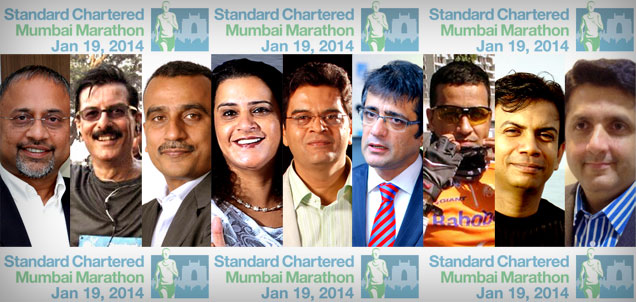
Members of the advertising, media and marketing community are regulars at marathons held in various cities across the country. Especially the Standard Chartered Mumbai Marathon which sees them enter in reasonably large numbers. Sunday, January 19 promises to see an encore. Mr Rao may be debuting this time, but there are several others who’ve been running for some years now. For Sudhanshu Vats, Group CEO, Viacom 18, running has been a passion and he re-discovered it some 10 years back. Last year, Mr Vats did the full run in three hours, 59 minutes. Breaking his own record is not on the agenda but having a good run tops the list! “I think it is a great addiction and I am addicted to it. I would invite others to get addicted to it as well,” beams Mr Vats.
It’s interesting to see many top captains for whom stress at work is never really a bother getting the heebie-jeebies. Well, almost. Says Times Television Network MD and CEO Sunil Lulla who is also a debutant: “I am completely stressed out right now and getting a lot of anxiety. I have no other expectations and want to have a good run, start well and finish well.”
For many, running the Marathon is not just about fitness, but there’s a good cause as well. S Yesudas, Managing Director, Indian Subcontinent, Vizeum has been offering support and commitment to two causes that are close to his heart. “An old age home and orphanage at Malad, Swagat Ashram Charitable Trust in Mumbai and the other is a tribal school, Vidya Vanam at Coimbatore. The person who manages Swagat Ashram, Brother Stanley stays in the same shelter with his family. His children grew up with the orphans, eating the same food. These are men of God and they need support from other God-believers.”
The training for the marathon begins way before the actual date and that really tests one’s power to achieve what is often the impossible. And there are some who believe it actually helps easing work stress. “The aim is to keep yourself fit, keep enjoying the run for a longer period of time. Once you do a long run during the weekend, it sets you right,” says Amin Lakhani, Leader – South Asia, Mindshare Fulcrum.
“The marathon is a lot about challenging your mind over your body. The fact is that you will be running a long distance but how you keep yourself mentally focussed on the objective? You become more focussed in your personal and professional lives. It gives you an adrenaline rush when you reach that finish line,”reasons Simran Hoon, National Sales Head, Colors.
There are many who participate not for the run, but the fun element. Paritosh Joshi, Principal, Provocateur Advisory admits that he is not a runner but loves to participate to soak in the atmosphere around him. “There are people who come on the streets to run and then there are those who are present just to encourage the runners. The spirit and the energy is what I like to soak in. In fact, I click pictures & tweet them. That’s how I enjoy it.” And not surprisingly, this is Paritosh Joshi’s ninthth consecutive “fun year” at the Marathon.
Sanjay Tripathy, Senior Executive Vice President – Head Marketing, Products & Direct Channels at HDFC Life has another motivational reason to get up and run, “It is a competition with yourself rather than with anyone else. I think it is only the Mumbai Marathon that gives you a chance to run on the Sea Link and that should motivate you. Run just to feel how beautiful Mumbai looks in the morning!”
If this hasn’t motivate you enough, then this should: veteran mediaperson Bharat Kapadia started running when he was 54 and still continues to do so in his 61st year. In fact, he accepts that if he can run, anybody can. So get hold of those sports shoes and run to experience the spirit of Mumbai this Sunday. Or simply do the run around your building, the road, the promenade or a jog track near you. And get set for 2015 edition of the Marathon.
It’s not unusual that national dailies (or dailies which have a large footprint in the country) have tried to make a mark in markets where there have been strong, well-entrenched regional players. The Times of India, for instance, set up successfully in Bengaluru many years back, but found the story different with Deccan Chronicle in Hyderabad. In Chennai and Kolkata earlier, it did not outwit competition entirely, but was successful in shaking up the market.
Earlier this month, the TOI group enterted the Bengali newspaper market, taking on the Ananda Bazar Patrika group in possibly the country’s most culturally aware market.
But it is not about one newspaper group spreading its tentacles and the issue we are looking in MxM Mondays today is: Do regional newspapers have it in them to face the competition and clout of national newspapers. We spoke to a cross-section of industrypersons on the issue:
(in alphabetical order of their last names)
?
Anwesh Bose, Senior Vice President, DDB MudraMax Media
Anwesh Bose
The Times of India’s success in Bangalore has a lot to do with Bangalore evolving from a sleepy and quiet retirement paradise to a bulging at the seams metropolis. With Bangalore becoming a metropolis, the swell of urban to urban migration came prominently from Delhi and Mumbai wherein Times of India was already an established brand. The resident Bangalorean is still not satisfied without his Deccan Herald and coffee. Barring this example Times of India has not been able to create a significant dent among any other regional market. The trend of emergence of regional parties (Didi, Amma, Behenji, Nitish ji, Karuna ji, Mulayam ji, Patnaik ji, Abdulla ji, etc) who are calling the shots in the country also mirror the fact that not only are regional entities more relevant than they ever were but are here to stay & dominate. India as a country was, is & will remain to be culturally diverse and local will always be more prevalent than national. To conclude, Vijay Vani is already on its way to unseat the position of Vijay Karnataka… keep watching!
Mitrajit Bhattacharya, President-Publisher, Chitralekha Group
Mitrajit Bhattacharya
I think we should not look at it from the individual brand point of view.
It is actually more from the portfolio point of view from the groups, for example, the English traditional groups like the TOI are expanding into regional markets. Similarly, regional biggies are launching in English. ABP group has launched magazines and got licences for magazines like Fortune. The larger groups are getting larger, and are consolidating by having as many products to cover all the gaps in their portfolio. It is not as simple as saying that the regional biggies are outdoing the English biggies or the English biggies are outdoing the regional biggies.
If you really look at the percentage of advertising which the English media garners vis-Ã -vis their readership, it’s totally lopsided compared to the regional media players. Now the thing is that even if the regional player has much larger readership, they still get much lesser advertising. This was the traditional format. It also happened in television. This format is changing and regional players with their smart marketing moves in the last five years have started garnering a lot more advertising than they used to get probably 5-10 years ago. That shift is happening and that shift will sharpen.
Now there is another point. It is also happening because the tier 2 and tier 3 towns are becoming more and more critical in the marketing mix of most organisations. So when tier 2 and 3 cities become more important the regional players’ share of advertising is bound to go up.
Manajit Ghoshal, MD & CEO, Midday Infomedia Ltd.
Manajit Ghoshal
I am a firm believer in the saying ‘Change is the only constant’. As much as some of our predecessors in the media would like us to believe that brand loyalty is sacrosanct (especially in newsprint reading habits), I beg to differ. Yes, newspaper reading is a habit-forming phenomenon, but like all other things, this is changing and it’s changing at an accelerating pace.
The English print readers are migrating to digital. The newly educated in vernacular languages are adding to the regional language print readership, but these readers are going to be increasingly brand neutral. The regional newspapers have an increasingly older readership profile and these newspapers need to reinvent themselves if they are to appeal to the regional youth as they once appealed to their forefathers.
Having said that, the national newspapers will have to spend huge sums of capital to break the iron grip that some of the regional newspapers have over their markets. The financial resources and the timelines required to do this is naturally an entry barrier and will give some breathing space to the regional newspapers to catch up, but not for long.
The national newspapers have clearly realized that they cannot have ‘one size fits all’ type of content and are playing this round smartly by having increasingly localized content and are challenging the hyper-local content strategy of regional newspapers by playing their own game and beating the regional newspapers through bigger and better resources.
It is up to the regional newspapers to invest in their brands and protect their turf, but the consolidation game has already started in right earnest and it might already be too late for them.
Bharat Kapadia, Chairman, Whatuwant Solutions, and Founder at ideas@bharatkapadia.com
Bharat Kapadia
We do not have any real national newspaper in India. One shouldn’t confuse regional languages with regional papers. Among English language papers, TOI has done very well but it is 5-6 editions that are significant, and it just barely features in the top 10 read newspapers. TOI had started a Gujarati newspaper which they closed down. Their Maharashtra edition is growing well now. In Western countries, for example in the USA , Wall Street Journal will have a national presence but everywhere else it will be NY Times, LA Times Chicago Tribune and so on. There was no national newspaper till the time USA Today was launched!
Speaking of the advertising trend, about 10 years ago, 70-80 percent of advertising went to English newspapers even when English newspapers had limited editions and readership. Today, this percentage stands has come down at less than 60 percent for English newspapers. Surprisingly DAVP also gives importance to English newspapers which as per their policy have to get 30 percent ads and at a premium. Hindi gets 35 percent and all the regional newspapers put together get 35 percent of their advertisements, which is ridiculous.
However, the growth of tier II and III cities, and lower penetration of English (less than 5 percent) will result in advertising buck to follow the regional newspapers. Literacy levels are also rising. When the person gets literate, the chances are it will be in his/her own regional language. Hence, you see, unlike anywhere else in the world, regional newspapers are growing in India when it comes to readership and circulation.
For me, it is definitely in favour of regional media for some time at least.
Basant Rathore, Vice President-Strategy, Brand and BD, Jagran Prakashan Ltd
Basant Rathore
To my mind, there is no one national newspaper in India. There are papers that are available in various languages addressing individual markets and audience segments within each individual market.
If we were to structure the print market, there are there are the South states, Gujarat, Maharashtra, Punjab, West Bengal, Orissa, Assam and North East. Then we have the Hindi belt comprising UP, UT, Bihar, Jharkhand, MP, Chhattisgarh, Punjab, Haryana, J&K, HP, Delhi, Rajasthan – this is by far the largest geographical belt, and the Hindi papers have the highest readership in India. Five of the Top 10 papers of India are in Hindi. The reach of any Hindi daily is 3.4 X of the next language – and this No 2 language is not English. Marathi and Malayalam dailies have a higher reach than English. So therefore, this entire segmentation of newspapers into National and Regional dailies has no basis.
Over the last few years, there has been a significant amount of marketing attention shifting to the tier 2 and tier 3 markets. As benefits of development percolate down the tiers, interest in different geographies is increasing. Marketers want to reach out to a wider market and media that reach these markets are the natural choices. Therefore, these markets will have competition across sectors.
Having said that, each newspaper has its own strengths, on the basis of which it competes. Today there are brand leaders in different languages and different geographies – all of them have a connect with their readers and their marketing strategies are something that are customized based on the individual market conditions. So when a brand which operates in a particular geography launches the brand in another market, to my mind, there is a level competitive playing field for all. Each brand would leverage its existing strength, and the reader chooses to buy the brand or brands he/she wants. So when a so-called “national newspaper” launches in a “regional stronghold” of another daily, it’s competition as usual. Eventually, the brand that strikes a better local cultural connect will win and just credentials alone aren’t enough to guarantee success.
Anita Nayyar, CEO, Havas Media, India & South Asia
Anita Nayyar
The answer is: Yes and No, It depends (on the approach and method). Newspapers as a medium form a relationship and habit patterns with readers. Also here you don’t have a new one dropping in every day as it does in your inbox, so you open it once in a way.
Culturally, India is diverse and its languages without the dialects are vast; 438 as per the Economist. IRS has consistently shown how the top five publications and dailies are not English. Tier 2 and 3 cities are new ports even for luxury brands with their old wealth and new-age entrepreneurs.
Today marketing is getting more footprint-mandated and more segmented as brands are launching many sub-brands catering to these segments to increase revenue and market share. Print traditionally is sustained by this advertising. This is a climate all publications are very aware of. Growth is coming from regional markets, making the national biggies focus on these and in the process expand their footprint. Smaller towns are becoming welcome targets for brands and their consumption is leading to market expansions which are a welcoming sign for publications to reach and target.
Hindustan Times (HT) when only in Delhi did not have the geographical reach and lost in advertising economies of scale to Times of India (TOI). Even the south-based Hindu has focused on increasing its Delhi readership as essential to command ad-rates and advertiser perception. So many major publications will use the strategy to go across and cross region; but readership will belong to those who are able forge either a relevant position or sufficient connect with the customer.
TOI in Bangalore focused on the incoming new audience at the time of the IT boom, its inherent position of youthful and buzzing rendering a profitable mix with the upcoming economic and cultural mindset. The south, however, becomes complicated with its languages and dialects. In Hyderabad, TOI has not been able to penetrate the landscape to reach number 1 while local publications, even new ones launched like Sakshi, are doing well. Even the regional biggies have multiple editions to penetrate the cities, not such an easy infrastructure to follow.
Anand Business Patrika’s Kolkata-based Telegraph has used a regional strategy in its expansion focusing on the east so it has established many roots to be severed before it is de-throned. Ei Samay in Kolkota has definitely made an impact with the shift of some of the editorial team, launch at 79 pages and TOI bundled add on packaging of Rs.150-Rs.200 making it most lucrative. But ABP too has responded in a way it has not done before, by dropping rates and being open to deals even in an approaching festive season when ad sales, down this year are expected to pick up.
Yes, Hindu is the Mount Road Maha Vishnu, but TOI is the old lady of Bori Bunder and she did ‘awaken’ the Lord to an aggressive ‘Good Morning Chennai’; but also, she learnt, has muscle and a flexible attitude. The recent Kerala TOI launch with elephants was theatrical but then TOI does know how to get heard. It also knows how to get inventive, readers can save Rs 50 per month by subscribing to TOI and Mathrubhumi, packaging English and Malyalam, a good idea for a family speaking both. Also the old lady attracts innovation – the aromatic coffee newspaper with ‘Bru’ and ‘Hide & Seek’ or the newspapers with a voice by Volkswagen.
Hence my answer, ‘Yes and No, It depends’. Either way neither national dailies nor regional biggies can afford to get complacent but will have to be aggressive, proactive and inventive to protect their territories or make the break-through, and it will be over time.
Relevance is a very important factor here. Talk to me in my language and you become more relevant. Be present in my environment and you have more retention, customise to my needs and you find a place in my life and get a share of my wallet. This is what brands need to do irrespective of whether it is a publication or any other product category.
PN Vasanti, Director, CMS India
PN Vasanti
I do not see the difference between regional and national biggies. There is no difference when it comes to tactics, strategies, and manoeuvring. It is only that regional newspapers have local advantage, which national newspapers miss. We are in competition era and in media space for next generation everybody will try to establish themselves. And survival of the fittest is going to matter. Everybody, hence, will try to launch as many products to see where they can survive and fit, and where they cannot.
There will be competition. But where there is enough market potential, one will have to enter otherwise one would not be able to survive.
The International Newsmedia Marketing Association (INMA) is set to host its sixth Annual South Asia Conference on August 7-8 in New Delhi under the theme ‘Complexity Advantage’. In today’s scenario of accelerated change and complexity, strategic competitive advantage is created by the combination of strategy, culture, systems, brands, products, services and by the people that operate throughout the organization.
The INMA South Asia Conference aims to address some of these tectonic shifts that are creating the complexities in our business, so as to stimulate the industry towards evolving a roadmap to convert the various existential challenges into opportunities. As such, the theme of this conference is aptly titled ‘Complexity Advantage’.
Sanjay Gupta
Mr Sanjay Gupta, who was elected as the President INMA South Asia 2011, and is the Director, CEO and Editor of Jagran Prakashan Ltd said: “This year’s theme would discuss driving readership and circulation. My expectation from the conference is that the industry people from South Asian countries can get their act together when it comes to talking about how to tackle various issues, including digital revenue models.”
Mr Bharat Kapadia, INMA Board Director, and Chairman of Whatuwant Solutions, said, “Even though India is better off when it comes to print market, the last quarter can only be described as tough. The two-day seminar will get the industry to come together and talk about the challenges and work towards a better future.” He added that the complexities of businesses in driving revenues and circulation will be the focus of the conference.
Bharat Kapadia
INMA aims to bring together top newspapers from South Asia into a two-day, fast-paced tour de force of ideas and innovations to grow newspaper advertising, circulation and brand across titles and across consumer platforms. Over 35 speakers, several partners, press and over 180 delegates from 25 newspapers and another 20 companies across India, Pakistan, Bangladesh and Europe will be attending this conference.
INMA is the only industry association that is able to pull together South Asia’s top publishers and specifically executives charged with growing advertising, circulation and brand. There will be excellent opportunities to network and share the “INMA conversation” among this exclusive fraternity of the world’s most innovative newspaper executives. INMA is the world’s leading provider of global best practices and marketing ideas. It provides its members thought leadership and practical ideas to grow audience, advertising, brand and profit. Currently, INMA has over 5,000 members in over 82 countries worldwide, which include several members from Indian and now Bangladesh and Pakistan newspapers.
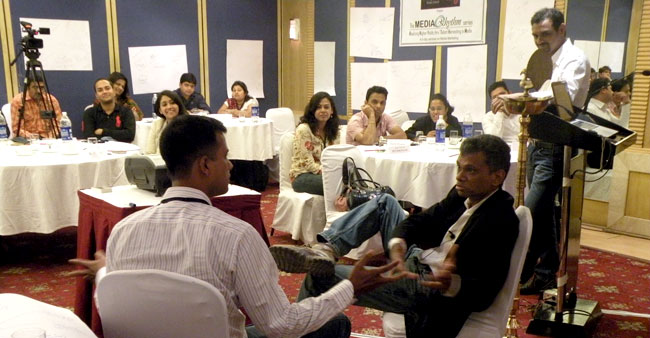
Stratagem Media Pvt. Ltd, an independent media services company, held its fourth training program called ‘ReveNEW Concepts – The Media Rhythm series and Ideas’ on July 21 in Mumbai. The workshop saw participants from The Times of India, The Hindu, Malayala Manorama, Eenadu, Amar Ujala, MY FM and other media companies.
Among the speakers were Mr Sundeep Nagpal, Founder Director at Stratagem Media Pvt. Ltd; Mr Suresh Balakrishna, CEO, Brand Programming Network; Mr Bharat Kapadia, Chairman, Whatuwant Solutions and Mr Madan Sanglikar, a digital media expert and CEO, AD2C.
About bending backwards with ease:
Mr Nagpal, the first speaker of the day, delved on ‘Bending back with ease’ wherein he asked the participants to first know what they are selling. He said that instead of selling many things at one time, there has to be some clarity and certainty of what is being sold and only then the expectations of the clients can be met. Mr Nagpal also spoke about the importance of reminding the consumers about the brand even after awareness is created: “A consumer needs to see the ad frequently. Time and again we have been able to convince clients that in a crowded market, playing one advertisement is not enough. Therefore a reminder is very important.”
He also said that even though there is awareness, reminder and high impact, the brand may not sell as the problem could be because the competition is making more noise. “At times when everything is good, there is no recall because competition is making more noise. Response measurement is very tricky and must be done in a scientific way. Low response could be because of the lack of good features, price and distribution issues,” he said.
Mr Nagpal also pointed out that it is very important to know the client’s business or product: “If you are managing client expectations, you must also know the client’s needs. When you do consultative selling, you can reduce the discount selling.”
He also spoke about the two ways a brand can grow. First, get new consumers and second get the same old consumers to consume the brand more frequently. Some other ‘home truths’ Mr Nagpal shared were: remove discount, adopt differential and value based pricing.
He said it is important to know the competition as is important to calculate, permute and innovate and that you can always refuse a business instead of selling lower than what you deserve.
Customising media usage for brand communication:
Mr Suresh Balakrishna kick-started his session by playing a one minute trailer of the film ‘Rocket Singh, Salesman of the Year’ as an example of how one should and can sell his brand to the consumer. He spoke about going beyond media objectives and looking at communication objectives, quickly pointing out that the media objective is only a channel; the client however wants a communication objective. “You need to create a connect between communication objective and media solution. It is important to understand the communication objective of the client, his needs and aspirations as well. You must, therefore, involve your clients and listen more to what your client wants.”
Mr Balakrishan presented three case studies – Union Bank of India, Vodafone, and Cadbury Dairy Milk Shubh Arambh. He split the participants in different groups and asked them to do various exercises on the case studies presented. He gave the participants various challenges and asked them to come up with solutions to those challenges: how they would have connected with the consumers; how they would have amplified a particular campaign in the media or solved a certain problem in a different way.
On Motivation and Innovision:
Mr Bharat Kapadia spoke about the importance of motivation in an individual and the need for ‘innovision’- a combination of innovation and vision. “Everyone cannot have wrong card, what is important is how you play your cards. Unless ‘You’ believe that nothing is impossible, nobody will be able to help you out. Whenever you are given a tough task, don’t see it as impossible, but instead attempt it to raise the bar for yourself.”
On the need for innovation, Mr Kapadia stated that even innovation needs to have a vision. He said that one needs to innovate, to not only stay ahead of the competition, but also to create a new experience or even to solve a problem which at first looked quite challenging.
Mr Kapadia shared four crucial points for innovation: Uniqueness, Impact, Achieving the goal and Sustainability. He was quick to state that ideas and creations are nobody’s monopoly as each one is capable of generating ideas. Therefore, one needs to start thinking without any baggage.
He also stressed that an idea needs nurturing, which could be achieved with the help of family, friends and colleagues. He asked the participants to mentor the ideas of their juniors, so that they would come up with better ideas. But he was also quick to stress that the real test lies in the execution of the idea. One must always think of the end objective of their idea, and the hurdles they might have to cross.
Mr Kapadia also warned the participants about the dangers of an idea: “Be careful that your idea is not gimmicky and irrelevant, the idea must fit into the objective of the brand. A good idea becomes a great idea if it is implemented well.”
He also told the participants not to be afraid of mistakes and failures, but to learn from them. Mr Kapadia shared his experience about how he managed to successfully execute the Bru Coffee aroma campaign on The Hindu and the challenges he have to overcome to execute the campaign successfully.
Mr Kapadia also gave participants some practical or exercise work during his session. He asked them to come up with an innovation for any media vehicle for any brand, whether existing one or a fictitious one. He asked them to exploit the strength of that medium. The teams were split into five groups.
While concluding his session, Mr Kapadia reiterated that an idea is no one’s monopoly. It must however be relevant, feasible and beneficial to the client. He concluded: “There is no dearth of money in the market because it is all about a good idea. If you come up with a good idea, then the client will also shell out the money required for that idea. A good idea can even bring new advertisers.”
Teleporting to 2015:
Mr Madan Sanglikar shared nine concepts on digital, emphasising the growth of digital and the implication of that growth to other medium and the brands. He spoke about the future of print, television, gaming, mobile, social media, e-commerce, data visualization and eco-system transition, pointing out the need to think digital, that innovations are also happening on digital, and the fact that digital media is the fastest growing medium in the country.
He said that the growth of digital will see more advertising categories increasing their spends on digital. He also said that digital will reduce the urban- rural gap. On the future of print media: “Print will be the biggest beneficial from the digital growth among the media categories. Dailies and magazines will get a new lease of life and static and AV (Audio Visual) formats of content and ads will co-exist.”
On the future of television, Mr Sanglikar said that television experience will get better, a lot of which will be gesture controlled. Online video format will merge with television; it will create an explosion of online and on-demand videos.
Talking about the gaming market, he stated that it is expected to grow to Rs3,100 crore by 2015 and there is a shift of gaming from bedroom to living room, wherein it becomes a family entertainment medium.
Mr Sanglikar gave the example of a bakery in London who used Twitter to attract customers to his bakery as an example of how social media can be used for enhancing the business. He said that very soon there will be no emails as corporate social network will see huge growth.
On the e-commerce front, Mr Sanglikar stated: “E-commerce market is also growing tremendously. Online shopping is getting more interactive with more pay options available and newer shopping categories soon catching up.”
Mr Sanglikar also explained the difference between paid media, owned media and earned media and how today we are witnessing owned media and earned media share growing. He concluded: “Digital is like another medium and not imbibing the medium will not work. If you are not thinking about digital, your companies are certainly thinking about it.”
What the participants say:
At the sidelines of Media Rhythm 4, MxMIndia spoke to some of the participants for their views on the daylong event. According to Mr Subin Thomas from MY FM: “It was very interesting and fun too. Mr Suresh Balakrishna’s session was especially very good. There has been lot of learning, especially about innovation and communication objective.
Ms Zeenat from Eenadu said: “The workshop was definitely helpful for us as it helps us with new ideas. After being in the industry for a long time, you tend to get a rigid mindset but, when we attend such forums where so many different issues are discussed, it refreshes our thoughts and allows us to think differently. The session on digital will probably help us in our work in digital.”
A Times of India participant said: “It was a good way of looking at certain things and even on media selling. All in all it was a good and interactive sessions. There have been some good learning and takeaways too. I would also be taking some of the takeaways from these sessions to my clients.”
Mr Soham Khimani from Malayala Manorama said: “The sessions were really wonderful and the speakers too were good. There was lot of creativity in the session which is very important in media sales today.”
Stratagem Media Pvt. Ltd, led by Mr. Sundeep Nagpal, began as a media planning hub for medium-sized ad agencies in the early 90s and somewhere along the middle of the last decade, it morphed into a media services company.
The ‘Media RHYTHM’ series is a recent initiative by the company to enable participants channelize the thought processes that govern modern day practices in media selling.
The initiative engages experts from the industry who jointly conceive and design such programs over hours of discussion to make them as relevant as possible. RHYTHM is an acronym for Realizing Higher Yields thru’ Talent Harvesting in Media. At another level, the programme also serves to orient the thought process in a particular direction and thereby condition the mind.
Mr. Nagpal believes that such open programs are useful for companies which wish to develop talent and knowledge base of select personnel in their sales departments.
The forthcoming program, to be held on July 21, has been conceived as a single-day workshop titled “ReveNEW Concepts and Ideas”. The modules will focus on concepts that are integral to the media business – media evaluation & utilitarian concepts, as well as the subjective aspects that can be used effectively by sellers.
Facilitators like Madan Sanglikar will administer a module on the applicability of new media for new brand and how media houses can build on it. Bharat Kapadia will stimulate participating sellers to think creatively by involving them with certain exercises.
Suresh Balakrishna will engage participating sellers on how to translate the basic tenets of a brand communication into a media-led solution.
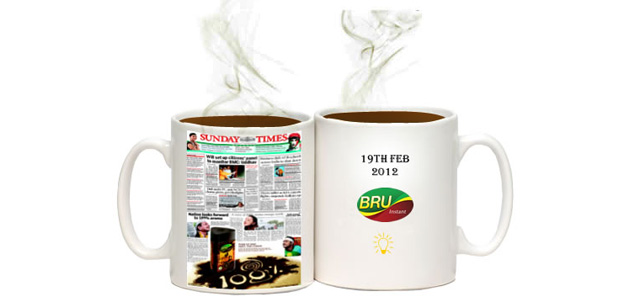
The readers of The Sunday Times of India of February 19 woke up to a special surprise as they were served coffee with their newspapers. Well, not literally. The Mumbai, New Delhi and Bengaluru editions had a unique dimension – they broke the olfactory barrier. Each copy filled the air with the rich aroma of coffee, spreading the message for Hindustan Unilever’s flagship coffee product, Bru Gold. Veteran mediaperson Bharat Kapadia’s firm, ideas@bharatkapadia.com, unveiled its first big idea for its clients Hindustan Unilever and The Times of India group.
“The objective was to drive home the richness of fine coffee and I knew that we could conquer this final frontier in a newspaper,” Mr Kapadia said. “The aroma of food products can create a sense of craving and can be very effective way to lead the reader to consume it.”
In a world where it’s critical to stand out in a crowd, an idea when executed effectively can be a winner and this can be a unique consumer experience with every new fragrance. Mr Kapadia should know. Having spearheaded several ideas with the publications he has led over the years, ideas@bharatkapadia.com is a specialized ideas consulting firm in media and marketing. The fragrant newspaper concept has been tried out earlier editorially by Dainik Bhaskar and possibly some others too, but it’s the first time by a national advertiser across multiple editions.
What experts feel on innovation
The Times of India has been in the forefront with innovations. It’s been said and discussed in various forums that the only way the print industry can maintain its vitality is by constantly innovating and thereby evolving. That innovation is a driving factor for success is a no-brainer, yet is our print industry doing enough to innovate and create more value for the advertisers? Earlier, MxM India got in touch with leading advertising practitioners to know more about current trends and innovations that are happening in the industry.
Pratap Bose
When asked if the print industry is innovating enough of late, Pratap Bose, COO, Mudra Group said, “When it comes to print, there is very little innovation that you see. Whatever innovation you see, once it is done it is repeated time and time over again. Various forms of jackets – half, straight, up, down … Nothing fresh is coming out in print these days. The one category that continues to be beaten down is print. Barring one or two innovations from The Times of India group, which are of course very good, there is not much in terms of innovations that is happening.”
When asked to compare print with other media, Mr Bose said, “Well, I consider all media as media, whether it is above the line or below the line. But essentially what you are seeing in the innovation space is largely happening in digital, out of home and promotions. To an extent video as well, if you want to include mainline media. Cinema is again, very few… So really, good innovation is not happening on either print or TV.”
An issue of deliberation also is that whatever little innovation that we see in the market, is it happening in all print forms, across all linguistic barriers alike? Are print innovations happening in both English and language publications alike, or is the innovation limited to top English publications… only those who get top-end advertising moolah?
Answering the question, Nandini Dias, COO, Lodestar UM said, “Print innovations often needs the publishing house to be able to carry out the difference. The leading publishing houses like the Bennett Coleman or HT Media manage to pull off innovations easily. For example the Cannes Gold that we won for Garnier this year was aided by The Times of India. The Times of India managed to print the day’s issue on recycled paper; for people who understand printing, they will appreciate the sheer thickness of the paper, the kind of paper needed the production team to alter their normal process , experiment and get it right before the 100% recycled paper issue got printed. So innovation happens with publications with a modern sophisticated printing and production unit. It has nothing to do with the language of the publication.”
Divya Radhakrishnan
Divya Radhakrishnan, Manging director – Helios Media Pvt Ltd, said, “There are lots of innovations happening in vernacular press as well. In fact groups like Dainik Jagran, Dainik Bhaskar have pioneered many an innovative concepts. The extent of innovation blends into ground activation and other media owned by the same group. A good example of that is Jagran activations.
But while we talk about all the advertising riches innovation can drive, we cannot help but talk about the content aspect too. Often, innovations in print are condoned because they hamper its readability. Some innovations distracts an diverts the attention of a reader, thereby hampering with the content. However, Ms Dias said that it is not always so. Such a case only happens when an innovation makes reading content difficult. “For example the half gate fold is often disliked by a lot of readers as it makes holding the paper difficult or sometimes fonts in a colour, which make reading tough. Other than that innovations are done to enhance the product values and to bring it alive to the readers.”
Yet, innovation remains a key factor for the print players for sustenance in the long run. Moreover, the ability to carry off good and meaningful innovation certainly brings more to the table and helps grab the advertisers’ attention.”
Ms Radhakrishnan said, “Innovations for the sake of innovation is a no-go. The key objective for the innovation is to stand out of clutter and deliver the message appropriately. Given the time-spent on print media being on the decline, it’s very important that the message is delivered in a single-shot and therefore needs to be placed innovatively to grab reader attention. Another often repeated mistake is repeating the same idea often which by definition kills the concept of innovation. For example, jackets.”
Nandini Dias
Speaking on how important it is for print publications to innovate to be successful, Ms Dias said “It’s important to be able to carry out innovative options. As advertisers often come up with solutions which do not conform, publications which can help communicate their ‘hat ke’ thoughts will benefit.”
As Steve Jobs once said, “Innovation distinguishes between a leader and a follower.” For print players, it is imperative to constantly dream up winning ideas. So, we are likely to see more ‘hat ke’ and out-of-the-box innovations like the one created for Hindustan Unilever.
Every time Bharat Kapadia talks of his training for the marathon, there’s a sense of hopelessness in me on how a man of his stature (and he is indeed a man of several parts) and at his young age is so passionate about running the marathon (or the half-marathon, as he corrects) and here I can barely run a few hundred yards. Yesterday, I asked him about the time he took at the 2012 edition of the Standard Chartered Mumbai Marathon, and he said it was 2.19 hours. That’s commendable. And guess what did he do after the marathon effort? No, not soak himself in beer or go in for a foot reflex. He got into his music class, perhaps planning the recording of his next single.
Bharatbhai is not the only mediaperson in the act. I was quite impressed that Paritosh Joshi was tweeting away as he was running yesterday. On behalf of the MxMIndia team and I guess the entire fraternity and from myself, to all those who took to the roads yesterday, a hundred thousand salaams!
My colleague and deputy editor Tuhina Anand spoke to Bharat Kapadia asking him for tips on running the marathon. Here goes:
By Bharat Kapadia
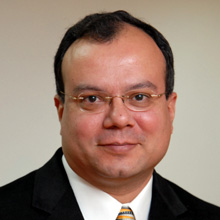
#1 Mindset: While getting ready for a marathon, 75 per cent of the preparation has to do with the mindset. The mind will play games and you might think that running is not your cup of tea. But if you resolve to run and decide to complete the marathon, then there is no looking back. At 59, I can run the half marathon (21 km) but when I started, I could not even run for 500 meters, so it is all to do with the mindset.
#2 Fitness: Once your mind is made up, then fitness comes into play. You need to look at a diet that will give you power and endurance. Protein and carbohydrates are a must in a diet when you are running long distance. You have to also ensure that your body remains hydrated as there is a strong possibility of dehydration due to loss of water and salt while running. Practise consuming at least three litres of water.
#3 Training: Â For first-timers, I would advise getting professional training, as it will help you in understanding how to run long distance as well as build endurance. Running a marathon is not just about getting up one day and saying that you will participate. A lot goes into it and the warm up and stretching sessions are as important as the actual running. This is where professional help comes in handy.
#4 Routine: One has to adhere to a routine while preparing for the big day. Practice is a must, hence you have to dedicate some time in your busy schedule to get ready for the marathon.
#5 Register on time: The registration for marathon begins much in advance and if you miss that, you will miss the opportunity to run. In that case all the practice will be for naught; hence keeping an eye for the registration date is a must.
Veteran mediaperson Bharat Kapadia is chairman of Whatuwant Solutions.
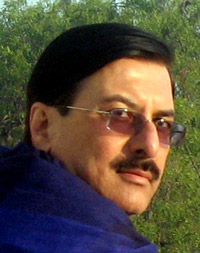
#1 The theme and agenda of the INMA conference has always been useful to the print industry. Unlike other conferences where there is lot of gyaan and conference is reduced to either networking or picnicking, INMA’s focus is the industry. I am not running down anyone but the interest of the newspaper industry is really met at INMA, and therefore every publisher should attend.
#2 There are about 30 speakers who will share their views over a period of two days. These people are experts in their field and present different aspects of publishing. So it’s not restricted to just one aspect of advertising or revenue but circulation, readership and other aspects are also discussed. At some conferences, the agenda is only one-dimensional but that is not the case here.
#3 Newspapers themselves have treated various functions within their organization as compartments and not departments. There is little communication happening across functions but the way ahead is to change this way of working. This conference can give that kind of perspective and help people in the industry to practice collaboration within their organization and take advantage.
#4 At INMA, subjects are not just discussed but opportunity is given to clarify and understand what is being said. It’s fairly interactive.
#5 The conference is a good opportunity to network and the food is excellent. So why miss it!?
Bharat Kapadia is the Chairman of Whatuwant Solutions.

 For 38 years, Goutam Rakshit ran Advertising Avenues before turning a full-time consultant and strategic advisor to SMEs, start-ups and all those daring to be different. Advertising Avenues was one of the hottest agencies in India and was indeed the envy of every asperson from when it started its journey in 1982. After an MBA from Jamnalal Bajaj Institute in Mumbai, Rakshit joined Cadbury’s (now Mondelez) and then moved on to Clarion before starting Advertising Avenues in 1982. The rest as they say is history. His role with industry associations is well-known and he ensured Indian advertising was recognised the world over. Rakshit breathed his last in Mumbai. He was 71. A prayer meeting will be held post the National Lockdown.
 By Bharat Kapadia

 By Sanjeev Kotnala








 #1 Mindset: While getting ready for a marathon, 75 per cent of the preparation has to do with the mindset. The mind will play games and you might think that running is not your cup of tea. But if you resolve to run and decide to complete the marathon, then there is no looking back. At 59, I can run the half marathon (21 km) but when I started, I could not even run for 500 meters, so it is all to do with the mindset.
 #1 The theme and agenda of the INMA conference has always been useful to the print industry. Unlike other conferences where there is lot of gyaan and conference is reduced to either networking or picnicking, INMA’s focus is the industry. I am not running down anyone but the interest of the newspaper industry is really met at INMA, and therefore every publisher should attend.