Tag: BBC World News

  • BBC World News announces fifth Football Connect Tournament

    By A Correspondent


    BBC World News Football Connect will bring together more than 300 associates from media agencies and brands to play five-a-side matches and compete for the trophy.


    Said Vishal Bhatnagar, Sales Director, South Asia, at BBC Global News: “We can’t wait to dig out our football boots and get back on the pitch for BBC World News Football Connect 2019. This initiative has gone from strength to strength since it was first launched five years ago, and we remain as committed as ever to engaging the Mumbai media community and showcasing our excellent sports coverage and other offerings across BBC World News, BBC.com, mobile app and other platforms. We know that there is a huge potential market in India, with BBC News now available in nine languages across the country, we are delighted to see growth as we are reaching new audiences,”


  • BBC study reveals value of trust for Indian audiences and brands

    By A Correspondent


    BBC World News and BBC.com have published a study of APAC news consumers on the value of trusted news sources in the fake news era.


    In an ever-changing and connected world, news stories are affecting audiences’ lives like never before. With regional events having a greater impact globally, audiences turn to news sources in order to gain clarity and insight on global stories.  The new BBC study, titled ‘The Value of News – and the Importance of Trust’, revealed that 85 per cent of Indian news consumers say that international news is more important now than ever before – the highest across the countries surveyed.  However, 83per cent are concerned about fake newsand 72per cent find it hard to distinguish between real and fake news. 83per cent of respondents say they are more inclined to refer to well-known and established news brands because of fake news.


    The BBC study revealed new insights into the value of trust for brands advertising on media outlets.  Traditional news publishers are the most trusted type of digital platform and the trust level for brands associated with these outlets is more than 40per cent higher than digital native news websites. In India, 69per cent say they would trust an advertiser more and almost three quarters (73per cent) say their brand consideration would increase if it is advertised on a trusted news channel or website. In addition, they are more inclined to read sponsored content on these sites (78per cent agree). Conversely, more than seven out of ten people (71per cent) say that being associated with an untrusted media outlet would negatively affect their perception of a brand.


    TV is still the most popular platform for Indians who want to stay up-to-date with international news, with 93per cent saying they use it, followed by social media (80per cent), newspapers (62per cent), news apps (54per cent), websites (45per cent) and news aggregators (44per cent). The study shows that news consumers both in India and across the wider APAC region consider BBC World News to be the most trusted international news channel.


    According to The Global Web Index, consumers’ use of digital news/social feeds complements, rather than cannibalises, news consumption on pay TV. Across APAC, online news consumers are four times as likely to watch international news** channels as those who don’t consume news online and 94per cent of Indian mobile phone users share international news stories on messaging platforms – again the most of any country surveyed.


    Said Jim Egan, CEO for BBC Global News Ltd:“These results reveal the full extent to which India is feeling the effects of the fake news phenomenon.  Trust is becoming increasingly important as people seek out information they can rely on and the BBC’s traditional values of accuracy and impartiality have never been more relevant to both audiences and brands who can benefit from being aligned with them.”


  • Media agencies battle it out at the BBC World News Football Connect 2015

    By A Correspondent


    Mumbai’s leading media agencies were involved in a pitch with a difference last week as they took part in the BBC World News Football Connect 2015 tournament.


    The 2nd annual 5-A-side competition took place at Mumbai’s Cooperage Football ground and saw 18 leading media agencies battle it out. More than 250 guests attended the event with agency heads, senior planners and CEOs present.


    The tournament kicked off with a round robin format. Six teams then qualified for the super six stage from which the top two teams from each group made it to the finals. The final was contested by OMD-PHD ‘Chargers’ and Lodestar ‘Tigers’ with the Chargers winning the hard-fought final 2-1. There was also a ‘Reach The Target with BBC Sport’ Cross Bar Challenge with all 18 teams nominating a player to represent the team. The tournaments winners were:


    • Best Goal keeper – Ritwik Yadav – Lodestar ‘Tigers’
    • Top goal scorer – Selig Baptista – Madhouse ‘Sonics’
    • Player of the tournament- Selig Baptista – Madhouse ‘Sonics’
    • Winners of the crossbar challenge: Harshil Shinde – Mindshare ‘Ninjas’ and Kieran Baptista – DDB Mudra ‘Knights’
    • Runner up team – Lodestar ‘Tigers’
    • Winner of the BBC World News Football Connect 2015 – OMD-PHD ‘Chargers’


    Vishal Bhatnagar, Sales Director Asia – BBC Advertising said “We are overwhelmed with the response. All the teams played with a lot of spirit and determination and they demonstrated some very high quality football. BBC World News Football Connect offers us a great platform to share with our associates our brand values and share and showcase our various offerings across World News, .com, mobile app and other platforms.”


    The main action on the football field was complemented with a unique VIP fan zone where guests had the chance to engage with the brand in an innovative experiential marketing campaign the BBC World News ‘Be Everywhere’ oculus experience. Using the latest in virtual reality technology, BBC Global News Ltd recently launched a dramatic new interactive trade campaign to showcase how it delivers personal, portable and on-demand news for the digital age. The 360 experience gave guests a behind the scene experience with Babita Sharma as she showcased the leading news brand’s digital products and the advertiser benefits, highlighting the BBC’s international news services’ position as a leader in digital innovation.


  • BBC maps changing attitudes in international affairs via new study

    By A Correspondent


    BBC World News announced the findings of a new global survey* into changing attitudes towards international affairs. The study showed that in India, 84 per cent of people are more concerned about world events now than they have ever been before. The figure was the highest of all countries surveyed and well above the global average of 69 per cent.


    On average, in the countries polled, the main areas of concern were news stories about terrorism (70 per cent), war/conflict (59 per cent), health (55 per cent) and the environment (52 per cent). Terrorism was the main concern in five of the eight countries, including India, where 71 per cent of people surveyed saying it is something they are concerned about.  People from India were more likely than any of the other nations polled to be concerned about the environment (62 per cent). Health (63 per cent), corruption (60 per cent) and human rights (52 per cent) also scored strongly in the country. Only 1 per cent of respondents in India said they were not concerned about any global news stories.


    Globally, the study suggests that global news plays an important role in making people feel informed about what’s going on in the world (68 per cent) and understanding it (62 per cent). It shows that Indians feel particularly strongly about the importance of global news, with figures considerably higher than the global average – 73 and 70 per cent respectively.


    Globalisation is driving interest and behavioural change, with more than half of those surveyed globally saying that they pay more attention to global news (55 per cent) and that they discuss international news with friends and family as a result of seeing global news stories (58 per cent). Again, India polled higher with 69 per cent saying they had spoken to friends and family about a global news story, considerably higher than the all market average.


    Across all markets, around a third of people (36 per cent) use global news coverage to make decisions about how to protect their family but, in India, this rose to more than half (58 per cent), which was more than any other country surveyed. Globally, around a quarter (28 per cent) find it useful for making financial choices but almost half (46 per cent) of Indians use it for this purpose.


    Jim Egan, CEO of BBC Global News Ltd, which owns BBC World News and BBC.com/news, said, “These results show the increasing impact and relevance of news events to people across the world.  At a time when many news providers are cutting their international coverage and opinion and propaganda are being touted as fact, audiences want to cut through the noise in search of information they can use to inform their understanding and decisions.  As the world becomes increasingly interconnected, access to accurate, impartial news, whether on TV, radio, online or social media, is more important than ever.”


    Recent figures** show that figures for the BBC’s international news services have grown across all three of its platforms – TV, radio and online have grown over the past year. BBC Global News Ltd’s audience has grown to 105 million with BBC World News TV’s up by 12 per cent, and bbc.com/news growing by 16 per cent.  For the first time, television (148m) overtook radio (133m) as the most popular platform for BBC international news. The BBC World Service’s audience has increased by 10 per cent and now stands at 210m, with the biggest boost coming from new World Service TV news bulletins in languages other than English.


    (*Source: All figures, unless otherwise stated, are from YouGov Plc.


    Study conducted by YouGov on behalf of BBC World News between 13th and 25th March 2015. Respondents were nationally representative, online or urban samples from USA, Germany, Japan, South Africa, Australia, Hong Kong, Singapore and India.  Total sample size was 7,691 adults.


    Total sample size in India was 1005 adults. The survey was carried out online. The figures have been weighted and are representative of the urban population of adults in India (aged 18+).


    **Source: The BBC Global Audience Measure)

     

  • Twitter appoints Taranjeet Singh as Biz Head for India

    By A Correspondent


    Taranjeet Singh

    Twitter has appointed Taranjeet Singh as Head of Sales for its India operations and will be based in its Gurgaon office. Taranjeet’s main responsibilities will be to increase the commercial opportunities for Twitter in India and to work closely with brands and agencies to maximise the value of real-time marketing on the world’s largest platform for live, public conversations.


    Commenting on the appointment, Parminder Singh, Twitter’s Managing Director for Southeast Asia, India and Middle East and North Africa, said, “India is a very important market for us – we’ve seen strong usage of our platform across the board last year and now is a great time to increase our local sales presence by bringing in Taranjeet as our country business head. We’ve seen growing momentum from brands and agencies to use Twitter to connect with their audiences in real-time for major events as well as everyday moments in India. Taranjeet will lead our partnership with brands for maximize their creativity and deepening their customer engagement on our platform to take our sales business to the next level in India.”


    Taranjeet has more than 19 years of sales and business development experience and a comprehensive understanding of the media industry. In his last assignment as the Sales Director, South Asia for BBC Advertising, he was responsible for revenue and business strategy for BBC World News and the website www.bbc.com. Prior to joining the BBC, Taranjeet held various positions at Outlook Publishing Pvt. Ltd., including heading advertising sales and business development in Northern India.


  • BBC study reveals impact of mobile ads on affluent consumers

    By A Correspondent


    BBC World News and BBC.com/news have released the results of a global study examining the usage of mobile devices by consumers around the world. The study was conducted by Millward Brown.


    The study surveyed 6,000 smartphone owners in Australia, Germany, Sweden, India, Hong Kong and the US and compared the habits of affluent consumers – the highest 20% income earners in each country – to those of the general population.


    The results reveal the increasing importance of smartphones to affluent consumers and demonstrate the extent to which mobile devices are integrated into their personal and, crucially, their business lives, as improved technology enables greater engagement with content. The study also provides clear evidence that affluent consumers are significantly more receptive to mobile advertising than the general population.


    Key findings include:

    • 51% of affluent consumers use their mobile phone for business, compared to 40% of the general population


    • 39% of affluent consumers access the internet via their mobile devices at least once an hour, which is 18% higher than the general population


    • Affluent consumers are 18% more likely to share their location to get relevant services than the general population


    • Affluent consumers are more likely to prefer mobile devices to desktop for news-related content than the general population.  The contrast is particularly notable for current affairs or breaking news, where the figure is 15% higher for affluent consumers than the general population, and business/finance news, where it is 28% higher


    • News apps are the most commonly used mobile phone apps for affluent consumers, whilst social network apps are favoured by the general population


    • A third of affluent consumers agree that, if a brand wants to be modern and dynamic, it needs to be on mobile – 15% higher than the general population


    • Mobile advertising is twice as effective as the already proven advertising medium desktop in driving key brand metrics such as awareness, favourability and purchase intent amongst the total population. This figure rises to four times as effective for affluent consumers


    • High income earners are as positive towards advertising on mobile (19%) as desktop (18%). The percentage who are happy to see ads on mobile websites rises to 41% for sites where the content is free.


    India

    • 55% of affluent Indian consumers access the internet hourly in India on mobile devices vs. 39% of total affluent consumers


    • Affluent Indian consumers are far more likely to use their phone for business (79%) vs. 51% for total affluent consumers


    • Over half of affluent consumers in India agree that their smartphone is the primary tool for organising their personal life


    • 58% of affluent consumers in India agree that an increasing amount of their work is being accomplished on their mobile device (compared to 35% all affluent consumers)


    • 56% of affluent consumers in India prefer to use their mobile device to access news, rather than using a desktop (30% for all affluent consumers)


    • 52% of affluent consumers in India are more likely to share stories on mobile rather than desktop (compared 31% for all affluent consumers).


    • 56% of affluent Indian consumers agreed that to be seen as modern and dynamic a brand needs to be on mobile (compared to 30% all affluent consumers).


    The survey emphasises the growing trend for news consumption on mobile platforms and reflects the results of the BBC’s 2012 study of news consumption -http://www.bbc.co.uk/mediacentre/worldnews/news-consumption.html- in which 59% of affluent consumers expected to consume more news on their phones over the next five years.


    When asked which single device they prefer to use for news, the number of affluent consumers who name the mobile phone has risen by 15% since 2012 and tablet is up by 9%. In contrast, the amount of people who say they prefer desktop has decreased by 17%.


    Additionally, 2012’s survey found that news consumption on mobiles was mainly restricted to scanning news headlines. In comparison, 34% of new handset users (new/latest handsets are defined as those released since September 2012) surveyed in the new study say they now dive deeper when consuming news and are likely to read additional articles connected the original piece. This is 42% higher than for those using older handsets. Owners of the latest handsets are also 10% more likely than the general population to watch news video or stream content on their mobile phones.


    Jim Egan, CEO of BBC Global News Ltd said: “The rapidly growing importance of mobile to our global audiences is one of the big themes for our industry and we are constantly working to create the best mobile browsing experience, be that with the introduction of our international BBC News and Sports apps, or on-going responsive design innovations. This new research reveals significant change in mobile consumption – people are delving deeper into stories on their mobiles, consuming more video and, significantly, growing accustomed to advertising on their mobiles. This large study provides compelling evidence that mobile advertising works with affluent mobile consumers in particular and that has big implications for publishers and advertisers alike.”


  • ‘Live the Story’ with BBC’s new brand campaign

    By A Correspondent
    The BBC has announced that BBC World News and BBC.com will launch ‘Live the Story,’ a new brand positioning and major global marketing campaign. The activity will include television, press, online, radio, Out of Home and experiential media. The campaign will span consumer and trade media with particular focus on Germany, Singapore, Hong Kong and additional activity across other European markets and the US.


    Chris Davies, Sales and Marketing Director, BBC Global News Ltd said: “Our correspondents and presenters live through the most amazing, terrifying, and sometimes life-changing moments so that they can bring these experiences directly to our audiences. Who better then to be the focus of both our brand campaign and of our marketing efforts. Our journalists often put themselves in danger to tell us the real story and as they live the story, so do we”.


    The campaign creative includes television ads featuring BBC correspondents narrating a news story, telling the audience what it feels like to experience a particular news story, giving insight that only a BBC journalist can share. Focus on Africa presenter Komla Dumor tells of the pride surrounding African football and chief international correspondent Lyse Doucet talks about the immediate aftermath of a car bomb. US correspondent Laura Trevelyan describes nature’s force during hurricanes and science editor David Shukman speaks of the majesty of a shuttle launch after experiencing it up close. There is also a substantial digital element to the campaign that follows the lead of the television creative and offers users an added layer of interactivity. In addition there will also be interactive press ads, digital out of home ads and experiential activity.


    In January, BBC World News had re-launched from Broadcasting House in central London, with new studios, new programmes and a refreshed line-up of presenters including Jon Sopel and Yalda Hakim alongside BBC World News on air personalities such as Komla Dumor, Mishal Husain, Lyse Doucet and Stephen Sackur.


  • BBC Global News appoints Preet Dhupar as COO, India

    By A Correspondent


    The BBC has announced the appointment of Preet Dhupar as Chief Operating Officer for the Indian operations of BBC Global News Ltd, the company which comprises the BBC’s commercial news operations, BBC World News and BBC.com/news.


    The role was created in India in order to ensure an integrated and consistent focus on its English language news interests during a period of rapid change and growth in the Indian media sector. In addition to her existing remit Ms Dhupar will take responsibility for determining the BBC’s commercial priorities and targets for news across India and for monitoring performance against them in terms of advertising revenues, content distribution and overall audience growth.


    Jim Egan, COO of BBC Global News Ltd, said “This appointment comes at a crucial time for BBC Global News Limited in India as we build on recent successes and seek to expand onto new and evolving platforms. Preet will bring increased focus to the market, helping to support our ambition of bringing world class international journalism to dynamic and sophisticated Indian audiences.”


    A chartered accountant by qualification, Ms Dhupar joined the BBC in 2000 and was instrumental in setting up operations in India. Most recently the Director of Finance and Operations for BBC Global News Ltd and BBC Worldwide in India, she has been responsible for providing operational leadership and management of the BBC’s commercial businesses in India and Singapore. While supporting growth opportunities in the market, her core role has been to provide financial, commercial and regulatory expertise to the business. Prior to this, she was part of the BBC’s global finance team based in London.


    Before joining the BBC she worked with Becton Dickinson India in a strategy and financial planning role as part of the team that established the company’s business in India. She has also worked for Caltex and KPMG in India.


  • BBC World News launches new studios, programming, presenters

    By A Correspondent


    Fresh from announcing new distribution deals in the US and Burma, the BBC’s international television news channel, BBC World News, is unveiling a dramatic new look next week when it re-launches from new studios in central London. The channel will feature a refreshed line-up of programmes and presenters, and will be investing heavily in additional newsgathering capacity around the world.
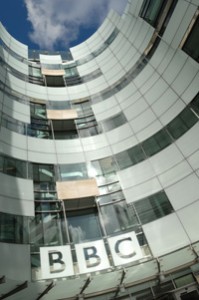
     

    From midnight GMT on January 14, the channel will broadcast from new state-of-the-art high-definition studios in the BBC’s new London headquarters, the redeveloped Broadcasting House. BBC World News is the first English language channel to go live from the new building.


    BBC World News journalists will be at the heart of ‘the world’s newsroom’ where the BBC’s UK and international journalism teams have come together to provide output across digital, radio and television and 27 different languages, reaching an audience of 239 million people around the world each week. Eventually, 6,000 people – more than a quarter of all BBC staff – will be based in Broadcasting House, one of the world’s largest broadcast complexes.


    The channel will also debut new on-air talent including Yalda Hakim, one of Australia’s brightest international journalists, who has joined the channel as a current affairs correspondent and presenter for a new weekly current affairs programme. BBC World News has also announced that long-time BBC News presenter and reporter Jon Sopel is joining the channel to present Global with Jon Sopel, a new weekday international news programme.


    Richard Porter, Controller of English for BBC Global News, said, “BBC World News is kicking off the new year with an entirely new look and feel. From virtual reality capability to full HD production, new presenters and a programming line-up that goes from strength to strength, BBC World News audiences will have access to not only the best, most dynamic journalism in the world, but also the latest technology to enhance storytelling and bring viewers inside the stories that shape our world.”


  • Bad news for Bachcha party: CBeebies to shut by Nov-end. So will BBC Entertainment

    By A Correspondent


    Parents of tiny tots whose kids won’t eat a morsel without Teletubbies for company may now have some trouble on hand.

     

    By end-November, CBeebies will go off air as will BBC Entertainment. Hey, didn’t we all hear just earlier this week that the channel was to air a special Top Gear show on 50 years of James Bond cars? Yes, we did. But that’s the way it is.


    On Thursday, BBC Worldwide confirmed the closure of two of its branded entertainment channels in India. BBC Entertainment and CBeebies are to be withdrawn and will no longer be available beyond the end of November 2012.  BBC World News, however, will remain available in India and continue to grow its distribution in the market.

     

    Said Mark Whitehead, Senior Vice President and General Manager, BBC Worldwide Channels Asia: “The decision to withdraw BBC Entertainment and CBeebies has not been an easy one.  India is a dynamic and fast growing media market but remains uniquely challenging for pay TV channels.  Specifically, delays in digitization and the need for channel operators to pay cable platforms for carriage makes the economics of running channels very challenging at this time.”


    Hey, Mr Whitehead Sir, digitization took off in right earnest in Mumbai, Delhi and Kolkata yesterday. 100% of Delhi is digitized, in Mumbai it is 118% whereas in Kolkata it is 85% and in Chennai it stands at 63%… and all of this information is not MxMIndia, Saar, but from the Ministry of Information and Broadcasting. So now why this Kolaveri?


    Despite this, a statement says, BBC Worldwide remains committed to India, where BBC World News – the BBC’s international news and current affairs television channel – will be available across the market, along with the bbc.com and bbchindi.com websites, BBC Hindi radio and Global India, a new primetime programme produced by BBC Hindi TV which will launch on five ETV channels later this week. Interestingly, the communiqués announcing Global India reached us a few hours before the BBC Entertainment and CBeebies closure was announced.


    In addition, BBC Worldwide operates a TV production business, a content syndication business and Lonely Planet in India. The company is also evaluating the potential for a number of digital initiatives which have been successfully developed in other markets. BBC programmes will also continue to be available on other channels in India, both terrestrial and cable, as well as digitally on a YouTube channel.


  • Jaldi 5 with Mishal Husain: Need for care on using ‘breaking news’ tag

    Mishal Husain

    In Mumbai recently where she interacted with an invited audience as also students of St Xavier’s College, Mishal Husain, a well-known BBC World News presenter and journalist, spoke about her journey to five countries last year to work on a documentary called ‘The Arab Spring – How Facebook Changed the World’.


    Here she took MxMIndia’s questions on whether being from the subcontinent helped her get plum assignments in the recent past and how to ensure that viewers don’t get put off by the hype of ‘breaking news’.


    1 We in the subcontinent take much pride in the fact that one of ‘ours’ is on the BBC World News. Is it really a big deal for a South Asian to be a leading presenter on the BBC?

    It always means a great deal to me if people who share my background take pride in what I do. I think the BBC has been conscious over the years of the need to broaden the range of faces and voices on air and that diversity of background has made a difference to the quality and depth of the programmes.


    2 Do you sometimes think that the fact you hail from South Asia has somewhere worked to your advantage in your career… for instance post-Osama’s killing in Ab’abad? Or is this an unfair question?

    The considerations are often very practical in a fast moving scenario such as a breaking story. For instance I think the first time I was ever deployed as a producer on international breaking news was when Pervez Musharraf seized power in the coup in Pakistan in 1999. I was very junior at the time, but language skills and the fact that I already had a valid visa for Pakistan were crucial in getting me sent on location.


    3 The Breaking News that you see on the BBC is dramatically different from what you see here in India. When there’s so much happening around you, how do you hold back and not label everything as ‘Breaking News’?

    We do have to be careful in how we use that tag. If you called every bit of news dropping onto the wires as ‘breaking’ then you would lose the trust of your viewers in making a judgement on the relative weight of stories. I try to vary the wording eg ‘news just coming into us’ or ‘story we have been following’ or ‘an update on a story we’re following’. Our audiences are smart, they can easily spot any hype.


    4 Your comments on the news channels in India? And Pakistan?

    As a journalist it’s great to see so many flourishing news sources out there and so much choice for viewers. Of course that doesn’t automatically mean everything reaches the same standard of quality. The challenge is to be engaging as well as credible, and I believe investing in trustworthy journalism pays off in establishing a quality brand in the long term.


    5 If you were not a star anchor at the BBC, what would you be?

    I like to think I would still be working with words in one way or another, perhaps long form journalism or even having some fun at the glossy end of the magazine spectrum. Apart from that I have always loved textiles and particular those from South Asia. I love the idea of taking traditional textiles e.g kilims and using them to re upholster chairs or stools, or using embroideries in new ways as home furnishings.


    A subcontinent personality you would like to interview?


    Amitabh Bachchan would be great – he has such an enduring appeal. Also Aamir Khan on how he combines art and activism.


  • CNN & BBC top intnl channel viewership

    By A Correspondent

    Findings from both the latest Pan-Asia Pacific Cross-Media survey (PAX) and Europe’s Media and Marketing Survey (EMS) reveal that CNN International reaches more viewers globally than any other international news channel. The PAX survey reveals that no international English news channel reaches more Indian viewers on a monthly basis than CNN International. In India, CNN International is more of a daily habit than BBC World News among business decision makers and top management.


    Tony Maddox, Executive Vice President of CNN International, said: “What we are seeing is that there continues to be a strong appetite for global news, and that people throughout the world are turning to CNN for that news – and in great numbers. Add in our commitment to global business news and our excellent sports and cultural programming and there is a clear, compelling proposition for viewers.”


    In addition to CNN International’s leading on-air positioning, the PAX survey shows that CNN International’s leadership also extends to its digital platforms.


    The PAX survey also shows that in India, BBC World News is the top international English news channel and the news destination of both the young and upwardly mobile mid-level corporate managers. BBC World News was also shown to be the most watched international news channel for mid-level income earners, women, tech enthusiasts and those under the age of 30. The channel is also the most watched news channel amongst key audiences such as potential car buyers, international travellers and consumer durable owners.


    Colin Lawrence, Commercial Director BBC World News said: “BBC World News and BBC.com are strongly demonstrating impact to Indian audiences-not only top management but also those with their careers on the rise. Our platforms deliver a targeted route to these discerning viewers and it’s more and more clear that our style of impartial international news and business coverage is increasingly relevant to viewers and advertisers across the country.”


    The Ipsos PAX study surveys international and local media consumption and product consumption among affluent adults and business professionals in the Indian cities of Mumbai, Delhi and Bangalore. The latest survey covers Q1 2011 to Q4 2011.


    EMS 2012 examines the media and product consumption habits of affluent Europeans. The latest research was carried out across the full year of 2011. 49 million qualifying adults aged 21 and over, across 21 markets, comprise the EMS universe.