Tag: Bates

  • Butt Out, says Jealous 21 in new campaign

    By A Correspondent


    Jealous 21, the fashion brand for young women has unveiled a 360 degree campaign that includes TVCs, print, digital and outdoor work.


    The TVC shows a woman putting on her Jealous 21 jeans while talking about how she isn’t concerned with society’s opinion of her. She’s smart, independent, with her own style. Brilliantly positioned to reflect the attitude of women like her, while describing an amazing collection of jeans, the TVC also makes it a point to tell narrow-minded boyfriends, insecure ex-boyfriends, overprotective parents, judgmental neighbors, pretty much the whole world actually, to watch out. The print and online campaigns follow along on the same lines.


    Commenting on the new communication campaign, Shibani Mishra, CMO, Indus League said, “We believe that the new woman is independent and self governing. The brand, in line with the attitude of the current generation, talks about how clothes reflect an individual’s persona.”


    Speaking about the new communication campaign, VS Srikanth, CEO, Bates CHI & Partners said, “The television commercial was crafted around the attitude of the brand that matched the attitude of today’s young women, who are independent and carefree and can take a stand for themselves in the society. It is a nod too to the change in the fit story—going from denim wear that complements a woman’s shape to one that accentuates it. I’m confident that this campaign will strengthen the brand’s image as one that caters to women who are fiercely independent and unapologetic about it.”


    Jealous 21 is available at exclusive brand stores, large format retail stores like Central, Pantaloons and Reliance Trends.


  • DDB Mudra, Leo Burnett within touching distance of each other on metals tally

    By A Correspondent [updated]


    With 11 out of 15 categories already finding their fate at the grand creative stage of excellence-Cannes,India’s performance at this juncture doesn’t paint an impressive picture. Out of a total 84 shortlists that India has managed to garner against its name across the 11 categories announced till date, only 12 have managed to find their way into the winners tally. A recap of India’s performance thus far shows the country having two Golds, three Silvers and 10 Bronzes in its kitty.


    On day 4, India managed to pick up 1 Gold, 1 Silver and 5 bronzes. The Gold was bagged by DDB Mudra Group for its entry ‘The Hinglish Project’ in Design Lions category. It also won a bronze for the same entry. The other Gold for India was bagged by McCann Worldgroup for its client ‘Western Union’ in the Outdoor Lions category. As for the Silvers, it is Leo Burnett that is leading the way with 2 Silvers including one in Press Lions for its client Bajaj Electricals and the other for Doorstep School in the Media Lions category.


    Leading the list among the agencies is DDB Mudra with 32 points (including 22 points from shortlists). At the second place is Leo Burnett with 30 points against its name. If not for the points accumulated from shortlisted entries, Leo Burnett would’ve been placed at the top spot. Coming in third is Ogilvy India that has a total of 19 points against its name, including 3 Bronzes that it has bagged so far. It is a close call between the fourth and the fifth spots with BBDO India sitting at 14 and McCann WorldGroup sitting at 13. Cheil Worldwide is next with 8 points including 1 Silver that it won for Samsung. Brand David is next with 4 points followed by Publicis and Bates at 2 each. The remaining ten agencies are placed at the same spot (tenth) having bagged a point each for their respective shortlists.


    With four more categories to go, including Film Lions, Film Craft Lions, Branded Content & Entertainment and Titanium & Integrated Lions, the table is still wide open. Whether a new contender will emerge at the top and whether India will compare this year’s metals tally to that of the past will be known in a couple of days. Note this does include the shortlists announced today.


    Agency Titanium Grand Prix Grand Prix, Titanium Gold Silver Bronze Shortlist Total
    Points 12 10 7 5 3 1
    DDB Mudra 1 0 1 22 32
    Leo Burnett 0 2 1 17 30
    Ogilvy India 0 0 3 10 19
    BBDO India 0 0 2 8 14
    McCann Worldgroup 1 0 0 6 13
    Cheil Worldwide 0 1 0 3 8
    Brand David 4 4
    Taproot India 3* 3*
    Bates India 2 2
    Publicis Communications 2 2
    BBH India 1*+1 1*+1
    JWT Mumbai 1 1
    Creativeland Asia India 1 1
    TBWA\ India 1 1
    M&C SAATCHI 1 1
    OMD India 1 1
    Mindshare 1 1
    Draftfcb + Ulka 1 1
    Grey Worldwide 1 1
    PERCEPT/H 1 1
    Bacardi India 1* 1*


    * Winners to be announced on Saturday late evening @ Cannes


  • Tata Sky gears up for digitization with new ads

    By A Correspondent


    “Drop cable, upgrade to Tata Sky,” reads the latest ad of the direct-to-home (DTH) service provider, as the cut-throat rivalry between DTH players and cable operators intensifies in the countdown to the first phase of compulsory digitisation in the top four metros by June 30.


    “Your TV will continue to run on your inverter even during a power cut…isn’t this a reason enough to choose Tata Sky over cable,” said another advertisement, as the DTH major unleashes its third phase of print and out-of-home (OOH) ad blitzkrieg to lure millions of cable users in the top four cities to its services.


    Vikram Mehra, Chief Marketing Officer of Tata Sky, said the campaign is directed at educating consumers so that they can make an informed choice. “Our latest print campaign tells subscribers to do their homework before they buy a set-top box (STB) so that they chose Tata Sky and not just some dabba (box),” said Mehra. It’s not targeting any cable operator, he added.


    With over 9 million subscribers, Tata Sky is the second-largest DTH service provider in the country, after Dish TV.


    Last December, Lok Sabha passed the Cable Television Networks (Regulation)

    Amendment Bill, 2011, which makes it compulsory for cable companies to convert their analogue system to digital in a phased manner from June 2012.


    Consequently, in the first phase of digitisation, India’s top four metros – Delhi, Mumbai, Chennai and Kolkata – will have to replace all analog television networks with digital transmission from July 1, 2012.


    This means that all cable subscribers would need to get digital STBs in order to ensure that their TVs don’t go blank. By March next year, as many as 38 cities across the country would be brought into the digital fold.


    While phase 1 has around 10 million TV homes in the four metros, over 90 million analogue cable TV homes are estimated to convert to digital by the end of fourth phase in December 2014.


    Stakes are indeed high for DTH players who have a ready, captive base of millions of analogue cable TV customers, who just need to install a digital set top box in their homes.


    “DTH is expected to grow at a healthy CAGR of 20 per cent for the next 5-7 years,” said Abhishek Chauhan, Senior Consultant, ICT Practice, Frost & Sullivan, South Asia & Middle East. DTH contribution would increase to more than 30 per cent to overall the pay TV market, reducing the cable providers’ contribution to less than 65 per cent, he says. While the number of DTH households in the country is set to go up from 37 million in 2011 to 86 million by 2016, digital cable would see its subscriber base jump from a mere 6 million to 75 million, according to a recent FICCI-KPMG report.


    The number of cable and satellite (C&S) households is estimated to reach approximately 176 million by 2016, of which paid C&S households is estimated at 168 million, representing 89 per cent of total TV households. In 2011,146 million households in India had television sets; 119 million of which used cable or satellite services, says the report.


    While Tata Sky has been relentless in its campaign against cable, Dish TV has a different strategy. “Direct attack on cable operators is a short-lived approach,” said Salil Kapoor, Chief Operating Officer, Dish TV. Differentiated offerings and emotional connect with users is a sustainable strategy, he added. Dish TV has, in fact, tied up with neighbourhood operators to push its own set-top boxes and install connections.


    Meanwhile, Tata Sky has been running a campaign to shed its premium image and spread awareness about the impending digitisation and the value-added services that it offers.


    Perceptions on pricing in multiple television households, vacation time charges, relocation charges and prices about offerings are some of the issues that ‘Poochne mein kya jaata hain’ campaign started to address since last September. Created by O&M, the commercials urge consumers to ask while underlining the range of offerings.


    “Poochne mein kya jaata hai campaign was our way of telling customers that it’s possible to get a world-class service at an affordable price,” said Mr Mehra of Tata Sky. The latest campaign in this series informs one about the affordability of DTH services.


    Sonu & Cookie (characters from the last campaign), try to find items which are cheaper than Tata Sky. But every time they bring one to the shop, the shopkeeper surprises them by informing them that Tata Sky’s package is even cheaper.


    ‘Get the quality of DTH at the price of cable,’ says a print commercial of Den Networks, one of the largest multi-system operators having presence in a number of states, just a few months back. And a subsequent radio ad raised the pitch by mocking at DTH players – ‘DTH stands for Don’t Try at Home.’


    Tata Sky was quick to come up with a tit-for-tat print advertisement – “World-class digital box or any other dabba. What will you choose?”


    “Den has been the first cable TV MSO in India to launch a nationwide brand campaign, created by Bates,” said a Den Networks spokesperson, adding that different players will experiment with different types of messages and campaigns to attract subscribers.


    Digital cable has some inherent advantages such as weather-proof services that are not interrupted by rain, service through the local cable operator who is known to the household for years and is just a phone call away, to address any technical or service queries, the spokesperson says.


    While such kinds of advertisements may be attention-grabbing tactics, they also help consumers in making a better choice, say advertising and brand experts.


    “These are attention-grabbing tactics as consumers are in the process of making up their minds,” said Jehil Thakkar, Head, Media and Entertainment, KPMG. While now there is an opportunity for DTH players to acquire analogue subscribers from cable, the latter would obviously try its best to keep users under its fold, he added.


    Most advertising that we see around are intra-category fights, driven on the shoulders of brands such as Pepsi vs Coke, Rin vs Surf, Bajaj vs Hero. However, it’s the category versus category fight, for example GSM Vs CDMA, which is the game changer, say brand experts.


    In a fight like this, end consumers stand to gain, said Prathap Suthan, Chief Creative Officer of Bang in the Middle, an independent ad agency. “And this is exactly what is expected when it gets into a category versus category fight.”


    Tata Sky is clearly and visibly a better constructed and sustained brand among DTH players, feels Suthan. “When you stand for a category, and you represent a category (just as Tata Sky has done), other brands will look small or will be made to look small.”


    The other DTH brands, it seems, have sort of abdicated the position of category leadership to Tata Sky, he added.


    Source: The Economic Times
    Copyright © 2012, Bennett, Coleman & Co. Ltd. All Rights Reserved
     

  • 6 Reasons why tonight’s the Big Night @ Goafest

    By A N Chorrea


    Yes, Balki doesn’t care an eff about it and the folks at Cag have serious issues about the innumerable fakes that come in as entries, but the Abby is the Abby is the Abby. So why’s it the Badi Raat?


    1. Because the Creative Abbys will be presented tonight


    2. Because even as some of the Creative Abbys were given away last night (and the Media Abbys too!), the meaty, glamourous ones are happening tonight.


    3. Because it will be interesting to see how many metals Agnello Dias nets tonight. Yesterday, wifey Nandini Dias’s Lodestar UM bagged several honours. Tonight could well be Aggie’s. Total domination by the Diases!


    4. Remember Bobby quit Mudra half-way, just as Sonal quit Bates half-way… It will be interesting to see the mix of emotions as their ex and current agencies walk away with honours (If it was a television event, I am sure the camera would focus on Bobby every time Mudra gets an award or on Colvyn when Aggie gets it for Pepsi… quite like they do in the film awards where you see Rekha’s expressions on Amitabh, Vivek Oberoi on Salman. Etc etc etc)


    5. It’s the last day of Goafest. May as well live it up!


    Click here to view all Goafest 2012 stories


  • Is all well at Bates?

    By Tuhina Anand


    It doesn’t require any insider to tell you this. Bates, ‘the changengage people’, has been going through too many changes and appears to have failed to engage its own people. Amidst the numerous rechristening from Bates Clarion, Bates Enterprise, Bates David Enterprise, Bates 141 to Bates Asia, the agency has seen losing many of its top talent especially in the last three years when the entire transition happened from Bates Enterprise to Bates David Enterprise and then to Bates 141.


    Bates Asia a,s it is known today, is part of the WPP network. The reason behind so many mergers that the agency has gone through was to create a large or mid-sized agency rather than having too many boutique-sized in the bouquet. However, among all these mergers, the agency has lost its focus says an insider who has been closely associated with the agency. He says that there are so many changes not just of top management but also of methods and philosophies hence leading to a lack of focus in the agency. He said, “The agency is not sticking to one story but has been moving ahead without any plan thus lacking any consistency.”


    Sometime in 2005, Bates India and Enterprise Nexus merged with Subhash Kamath was appointed as the CEO while Mohammed Khan, the founder of Enterprise Nexus took charge as the Executive Chairman. While the agency was still trying to adapt to these changes, another merger was announced. This was in 2007, when David, Ogilvy’s second agency that was headed by Josy Paul was merged with Bates Enterprise. Paul decided not to get into this new entity especially as David was his own baby probably not wanting to see his agency being sandwiched between Bates and Enterprise.


    However, Bates David Enterprise didn’t last long and in between one saw Bates acquiring Sercon which was essentially a BTL agency and the agency took on the new avatar of Bates 141. In all this, Subhash Kamath, the CEO moved out to BBH. During the period, there were many exits from the agency, including that of Alok Agrawal who was heading the Delhi branch, Ashok Vidyasagar, the Bangalore Branch head among others. Russell Barrett quit Bates where he was the ECD to join BBH. Not to forget, in the APAC region too there were movements, like in 2010, Edward Pank the MD of Bates 141 had quit. Jeffrey Yu, the Chairman of Bates141 quit and so did Digby Richards, the CEO of Bates 141 Asia Pacific. The reason for quitting of Yu was over ‘disagreement of the future direction of the agency network’. That’s when Tim Isaac, the current Chairman of Bates took over.


    There was management rejig in 2008 post Kamath’s exit with Sandeep Pathak being appointed the CEO, Manosh Mukherjee as the COO, Dheeraj Sinha, Chief Strategy Officer and amongst others significant being Sonal Dabral being appointed India Chairman and Regional Creative Director. Also Sagar Mahableshwarkar joined as the National Creative Director for Bates141 in 2010. So for a bit it seemed Bates141 had finally settled it at least with its top management in place. However, there was no buzz around the agency. The news of Colgate-Palmolive business being parked at Bates brought some cheer.


    It was only in October 2011, it was announced that Bates Asia will take its current avatar sans the 141 tag. However, with the recent development of Dabral moving out who had just started to be a visible representative of Bates Asia and then soon after news of Sandeep Pathak too quitting has led one to question if all is well at the agency? Senior people within the agency vouch that there is nothing wrong at the agency and its mere coincidence that two senior resources are moving out at the same time. But it is learnt that many at the agency also the senior management are already circulating their CVs and looking for greener pastures.


    But one does wonder whether all these mergers really did any good to the agency of paved way for this kind of instability. It definitely is a herculean task to merge two agencies what with staff, designation, accounts, office and different methodologies. And to think that Bates has been on this path since 2005 definitely gives a shaky image to the agency. Let’s just hope that Bates Asia has reached its final avatar and the agency will only grow from now as the worst has happened. However, as an aside, there is always the possibility of merging with big daddy Ogilvy!


  • We’ve bn inconsistent in r work: Sonal Dabral


    By Anil Thakraney


    Sonal Dabral’s career has been nothing short of fantastic. In the nineties he partnered Piyush Pandey and together they turned around the fortunes of O&M. He later flew to Malaysia and then Singapore, and did ditto with O&M’s offices there. A few years ago he took on another challenge: To recreate the magic at Bates, where he is Regional Creative Director, Asia Pacific & Chairman for their Indian operations. While he has been over-seeing India, Sonal physically moved here only a few months ago. And though a few cartons still remain to be unpacked, the man is very clear about the way forward for his agency.


    In a rare, frank and a very insightful interview, the 49-year-old reveals his ideologies, his plans for India and his opinions on the ad industry. We also take a trip down his memorable career journey.


    What struck me most is how clued in Sonal is about the key challenges that face brands in contemporary times. I don’t always find that in Indian ad agency leaders.


    Q: There’s a buzz about you joining Mudra.
    No truth in it at all. But I can understand why the rumours must have started. Balki is the face of Lowe, Prasoon is the face of McCann and Piyush, of course, is the face of O&M. So for somebody of stature to walk into a big agency like Mudra… that just leaves me.


    Q: But if they approached you, you would talk to them?
    I won’t be interested. Lots of things to be done out here at Bates.


    Q: What motivated you to shift to India after all these years?
    When I joined Bates about three years ago, the agenda as the regional creative head was to improve the creative health of the agency through the right kind of hiring, inspiration and hands-on involvement. Bates, historically, has had some big clients and pockets of excellence with sporadic good stuff coming out. But overall the network’s creative health has not been good. My additional role is that of Chairman, Bates India, and it was the duality of the role that attracted me to this job. Which is to get back in touch with India and yet have a bigger role than what I was doing at O&M Singapore. So my first job was to ensure that we had the right kind of creative leadership in every place. Once that got done in the last three years, we started looking at India as a very important market for us. And India is a place where I can make a visible difference because of my equity out here, because of all the years I have spent here. And that’s why I decided to locate here.


    Q: Cut to the past. Why did you leave India in the first place? You were Piyush’s blue-eyed boy at O&M. Doing phenomenally well in the agency.
    In the latter part of the nineties, Neil French had taken over as the regional creative director for Asia. On his first trip to India he saw some print work I had done for Cadbury Perk and he was pretty impressed. He cancelled a lunch meet with Ranjan Kapur and Piyush Pandey and took me out for lunch instead! (Smiles.) And he asked that I move to O&M Malaysia. The agency was going down, and they desperately needed a creative head to come and build the place.


    Q: Am sure Piyush must have been upset with your decision to move.
    Neil spoke to Piyush and Ranjan about this. And they called me for a morning cup of tea on a Sunday. They said Neil sees this as a good opportunity for me. They said they wouldn’t like me to go, but wouldn’t stand in the way either. I thought about it for a long time because I was heading O&M Bombay which was 50 percent of the agency’s business, we were riding high. Anyway, I did a recce trip to Malaysia, and the O&M office turned out to be a small one, though they gave me a red carpet welcome. I came back and thought I would never join such a small place. Then they started writing to me, saying they wanted me out there. You know Anil, I believe in destiny, I believe things happen for a reason. Also, the charm of the unknown has always enticed and fascinated me. The discomfort of going to a new place, that too to a place that has nothing to offer, appealed to me. The same thing happened when I left Lintas to join Ogilvy in 1991. Ogilvy was nothing at that time and the only remarkable thing they had done was the ‘Mile Sur’ film.


    Q: But then you eventually left Ogilvy and joined Bates.
    Again, for the same reasons. Helping a place to shape up has always excited me. Maybe it’s to do with a big creative ego, though otherwise I don’t have an ego at all.


    Q: The key difference between working in an international market and working in India…
    In India we work a lot on the individual, friendship level. It’s like if I know Thakraney really well, and he is the agency and I am Unilever, then Thakraney and Dabral will work together and create a campaign. Things happen on a very personal level here. In the international markets… and you can call it professionalism or stuck-up-ness… there are still a lot of procedures and processes that get followed. I prefer a combination of the two methods. We are a very chaotic, free-for-all nation and at times that free-for-all-ness helps creativity. But it also brings with it a sense of indiscipline. And this affects the execution of work, that’s where we fall flat. Obviously, in the last 12 years, I have learnt something that’s different from India. And I am trying to get some systems in place in the way we work out here at Bates.


    Q: When you first came to Bates India, the good and the bad things you noticed…
    (Thinks carefully.) Creatively we have not been consistent. There is potential but the realisation is not happening. We need to correct that so that our number of hits increases.


    Q: The significant changes you’ve made in the last few months.
    I want to make this an agency of people who are not just creative but are intelligent, aware and knowledgeable creative people. True creativity needs you to be curious. The curiosity bit I want to feed as much as possible. Last weekend I invited a film chief from the National Institute of Design to conduct a film appreciation workshop. And it had nothing to do with advertising. Sometime later we’ll have another kind of workshop. Basically, I want to tell people that advertising is the only profession where you don’t learn things from the inside, it will all come from the outside.


    Q: What do you look for when you hire creative people?
    Besides obviously the work, I look for a certain amount of authenticity. It might be difficult to get that in a meeting, but you do get a sense of it. It’s very important for any creative person to let his or her guard down.


    Q: As a client, why should I choose Bates?
    We are the ‘change’ agency. It’s about making strategies that are based on the shifts that are happening within the product category or within the target audiences. And based on the cultural shifts that are happening within the society. We call that positioning ‘Change Engage’. It means a changed thinking which leads to work that has a two-way communication with the consumers. For example, you saw what happened during the Anna Hazare movement. It was about the power of people coming together really fast and having an opinion about something. Or for example what happened with the Kolaveri video. It’s the power of tech that consumers now have. This means advertising has to change in the way we approach things. We need to make an impact on a consumer for him to start conversing or debating about our brands. The other thing is we are an Asia-only network, so we are still small when compared to a JWT or an Ogilvy. So there’s a certain amount of nimbleness and spontaneity that we have. Also, on a personal front, the wealth of experience I bring with my Indian and global experience.


    Q: Why hasn’t Bates really taken off in India?
    It’s to do with the fast changes that have taken place. It’s been only about four years since it has emerged as Bates. Before that all the mergers were taking place. First it was Enterprise, then came David. Also there have been personnel changes. Subhash Kamath left for BBH, I have come now, Sandeep Pathak has taken over as CEO. It’s been going through a churn. It’s only now that we have begun to feel settled.


    Q: What’s all this about Smashing Pumpkins and Cabbage Curry?
    Smashing Pumpkins is something I coined for our annual creative conference. We would smash pumpkins at the event. Bates’s earlier colour was pumpkin yellow. And I said we need to be doing smashing work, so that’s how it got coined. Cabbage Curry Fridays I had started in Malaysia and Singapore. Every Friday we would have a chat session or a presentation which had to do with the culture of curiosity I was talking about earlier. I want to tell people that if you don’t have a passion beyond advertising, then your mind will become like a cabbage. (Laughs.)


    Q: What’s happening on your movie script?
    There are a couple of ideas in my head. I have started working on it but it’s been going very slowly. I have a story in mind that’s solid and substantial. It will not be a time-pass flick.


    Q: I last met you in the late nineties when you were a young, happy creative director. I have a feeling you have become a tough guy since.
    I have changed over the years to an extent which is required to run a place. But otherwise I am not as tough as I should be. Laughter to me is the biggest asset an ad agency can have.


    Q: I think in India you’ll have to kick ass at times.
    I totally agree with you.


    Q: Would it be right to call Piyush Pandey your mentor?
    He is one of the people. There would be others too like Neil French.


    Q: Do you at times feel you should never have left India? Bates is a small player, and had you stuck on, you could have been the captain of a very large ship.
    Not at all. I am extremely happy and I feel very lucky. That I did go and work in Malaysia and Singapore. The exposure that gave me towards communications, advertising, work, etc, couldn’t have happened in India. Also when I was abroad there were offers to head a large organisation here, and those offers won’t run away anywhere. I totally believe in destiny, I wasn’t meant to be here for those 12 years.


    Q: One creative chief of a large Indian agency you most admire.
    (Thinks for a long time.) I like the way Aggie (Agnello Dias) and Padhi (Santosh Padhi) have gone about their work. The way they have approached business, the kind of work they are doing. Their small size has not held them back. In terms of the large agency Chairmen, is there anyone I envy or admire? Well, no, not really.

  • Gelusil mandates for ideas@work

    By Shubhangi Mehta

    Ideas@work will be working as the creative agency for Pfizer’s Gelusil Xtra Cool, the agency has confirmed the news to MxM India.

    The incumbent on the business was Bates. The media mandates for them are handled by Mediacom.

    The new campaign will break in this quarter. The focus will be on television and highly targeted btl activities. The account size could not be ascertained at the time of filing the report.

    Ideas@work is a Mumbai-based boutique agency. The agency is the brainchild of co-founders and creative directors Zarvan Patel and Prashant Godbole. They handle brands like Reid & Taylor, Red Bull, Big Rock etc.

    Around the world, the Gelusil brand has become renowned for relief from an anxious stomach. Introduced in the late 1930s as a liquid and initially sold in a blue-glass wide-mouthed bottle, through its 70 years it has not only become a staple of medicine cabinets, but it has become a word associated with relief.

    Gelusil was created by the pharmaceutical company first known as William R Warner & Co. (later Warner-Chilcott, then Warner-Lambert) and was formally filed as a trademark in 1939. Warner was a pioneering pharmaceutical company known for the innovation of coating pills with sugar. Gelusil’s early slogan was “the different antacid” because it was both an antacid and anti-gas.

  • Just Bates, now

    By Shubhangi Mehta

    WPP agency Bates 141 has dropped the ‘141’ from its name in its third rebranding employ. The agency is planning to adopt new attitude and corporate identity to underline its new agency model. With a new name and agency model, Bates now also has a new logo.

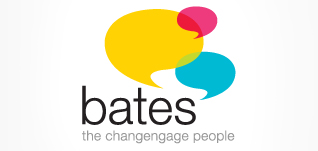
    The new logo features the Bates typeface in contemporary Helvetica and three speech balloons (in original Bates pumpkin, red and blue), replacing the former eye mnemonic.

    Bates has embarked on a new journey to become the changengage* people. Changengage* is the philosophy for the new Bates agency model.

    Changengage underscores a sea of change in the way the agency is structured to deliver better solutions to clients. It is a complete mindset and behavioural change.

    Dheeraj Sinha, Regional Planning Director, Bates, said, “All the previous rebrandings of Bates have happened due to acquisitions and mergers, Bates 141 was also a result of that. This time the rebranding is solely for the new prospective of a new world, the world is changing and so are we. Bates has not just been an advertising agency but we provide digital, rural marketing solutions as well, we will take this a step forward a continue our focus on new engagement-led strategy for the client where digital will definitely play a major role.”


    It may be recalled that the agency logo was refreshed in 2008 and represented Bates and 141 fully integrated as one company with one vision and an integration of their offering.


    The visual identity comprised repeating ‘eyes’ with one set facing the other direction, expressing Bates 141’s Change vision of ‘Change happens when you look at things differently.


    The name 141’s origins lie in the address of the division’s original London HQ, 141 Westbourne Terrace.


    Sonal Dabral, Regional Executive Creative Director and India Chairman, Bates, remarked, “In the new Bates we don’t think ATL and BTL, we think integrated and we believe all our ideas should lead to engagement for brands. We decided to drop 141 from the name Bates as 141 symbolizes our activation arm and therefore doesn’t find a place in our new agency model.The new logo has been designed by the Bates design team internally, mostly by the Kolkata and Mumbai teams. The added colours depict Bates as more vibrant, novel and youthful. The cluster of speech blurbs above the name is symbolic of vibrant conversations and debates we will aim to provoke through our work. The overlapping blurbs are also a subliminal reminder of tag clouds, the language of now and the future.”

    In terms of solutions, a large part of the agency’s revenue currently comes from engagement (eg, OOH, online, interactive, shopper marketing, activation, etc). Bates will continue to strengthen these pockets of expertise by enriching its talent mix with technologists, shopper marketing planners and designers to deliver more sparkling engagement solutions.
    It will also continue to bolster its cluster operating model (Greater China, India and Southeast Asia) which provide the means to leverage pockets of category and discipline expertise across markets/offices.
    Bates is a marketing communications network under the WPP Group.Located in 11 countries in Asia. They work with global and local brands including Accor, Café de Coral, Cheung Kong, Diageo, Disney, Fiat, Finnair, General Mills, HSBC, IDEA, Shanghai General Motors, Singapore Polytechnic, Unilever and Virgin Mobile.