Tag: Bata

  • Bata Shoes rolls out campaign for Pujo

    Bata has rolled out a new campaign to launch new Pujo Glam Collection featuring actors Neel Bhattacharya and Trina Saha.

    Speaking on the launch, Deepika Deepti, Head of Marketing, Bata India, said: “Bata’s journey in India began right here in the East and we have been a part of the region’s celebrations for generations. Our long-standing presence has given us unique insights into our customers’ desires for fashion-forward, high quality designs at affordable prices. We’re proud of our legacy and are excited to continue to democratize fashion with the latest Pujo Glam Collection. We believe that everyone deserves to feel like a celebrity and should have access to stylish offerings.”

  • Bata unveils TVC to promote its Sneaker Studios

    By Our Staff


    Bata India, unveiled its Sneaker Studio concept through a youthful campaign. With 300 sneaker styles from 9 brands to choose from, the campaign celebrates the free-spiritedness of the youth and urges them to live limitless.


    Conceptualized by Contract India, the campaign follows the journey of four friends traversing the path of spontaneous life, highlighting how Bata sneakers enable them to live this journey. The film starts with a snippet of Sneaker Studio where the friends are surprised by the range of sneakers available making them spoilt for choice. The film goes on to capture their adventures from jumping in a lake to skateboarding and dancing at a beach party with one constant companion – Bata Sneakers.


    Gunjan Shah, MD and CEO, Bata India Limited said: “Over the last few years, the youth has been increasingly gravitating towards sneakers for their style and comfort. For the Sneaker Studio campaign, we combined the youth’s love for sneakers with their passion for spontaneity and unbridled experiences. We now have over 300 stores with Sneaker Studio concept wherein we offer upto 300 sneaker styles from 9 brands under one roof, offering the largest variety of choices for all the impromptu adventures of the GenZ and Millennials.”


    Added Sagar Mahabaleshwar, Chief Creative Officer, Contract India: “Those spontaneous, careless, fun moments with your friends are meant to be cherished forever. It’s an age when you just want to have fun with your friends. The rush/spontaneity is all that matters to them. This is exactly what we’ve tried to capture in the Bata Sneakers Campaign. It captures the fun and spontaneity of the journey of four friends in a beautiful way. Friends who just grab their Bata Sneakers on the go and head for an adventurous journey to Goa for a concert. We see them cherishing every part of their journey – they drive, skate, party, and splash around in the water. And we also see the vast variety of Sneakers that Bata has to offer. The campaign encapsulates perfectly how Bata Sneakers give you the ease to go limitless and enjoy your journey to the fullest.”


  • Disha Patani is brand ambassador for Bata shoes

    By Our Staff


    Footwear major Bata India has announced the launch of a 360-degree campaign titled ‘It’s Got To Be Bata’, starring new brand ambassador Disha Patani. It is conceptualised by Contract Advertising.


    Commenting on the new TVC, Gunjan Shah, M.D. and CEO, Bata India Limited said: “Casualisation has become a big trend over the last couple of years. Consumers now seek styles that are versatile enough to take them through multiple occasions in a day. Multifunctional footwear, therefore, has become more relevant for women today and Bata is introducing footwear that merges active and leisurewear attributes. The 24×7 Casual Collection is curated keeping in mind the various roles that women play throughout the day for which they need versatile casual shoes to effortlessly move from one occasion to another. It features Bata, Bata Red Label, Bata Comfit and Naturalizer brands, with artisanal styled heels, wedges & trendy sneakers with hues of colors that can be matched with any occasion, anytime, anywhere. The new campaign features our new brand ambassador Disha Patani, and we hope to attract younger audiences who seek outdoors-inspired benefits, while still wanting a fashion-driven aesthetic that works well for the city life”


    Added Sagar Mahabaleshwarkar, Chief Creative Officer – Contract India: “Over the last few years, we have seen Bata transition to a fashion-forward brand with product lines that are in sync with the latest of trends – be it casuals or sneakers or formals. With this campaign, we had an interesting opportunity of taking the brand journey forward. From the journey that started with Surprisingly Bata campaign in 2018, it was time to take a more confident and bolder stance. Association with Disha has helped bringing about this transition, she personifies the attributes that we want Bata to represent today –  stylish, glam, young, more confident and bold. The campaign is beautifully supported by lyrics crafted by Amitabh Bhattacharya, one of India’s ace lyricist.”


  • The Obsession To Be Premium


    By Avik Chattopadhyay

     

    The other day I was chatting up with a Maruti Suzuki Nexa dealer. Post the expected lament on lack of footfalls and the still elusive operating profit, we got into discussing the basic Nexa model – the purpose, the promise and the delivery. After a lot of soul-searching and head scratching, he finally brought it down to the wooden flooring, fancy furniture and focused lighting as the “premium” experience being offered to a customer vis-à-vis one who walked into a Maruti Suzuki Arena!


    Sounds preposterous? Totally believable!

    Let’s just spend a few more words on this Nexa vis-à-vis Arena case. The two channels of the same Maruti Suzuki brand offer separate products to customers, hence ensuring a minimum level of footfalls in both. I cannot buy an Ignis from an Arena outlet, hence go to a Nexa. Similarly, I cannot pick up a WagonR at a Nexa, hence go to an Arena. It is not that I have a similar product portfolio in both, yet I choose a Nexa over an Arena as the entire customer promise and experience is what I associate with and aspire for.


    There are various ways I can be premium in being a Nexa channel partner.

    In my product pricing. But the Nexa offers the Baleno that is in the same price band as the Swift.

    In my product positioning by addressing a different customer psychographic. But, then, the Ciaz was moved from Arena to Nexa to allow more revenues to the latter.

    In my overall experience. But the service and ownership experience, as per customer feedback and dealer inputs, are the same in Nexa and Arena.


    So, I am fundamentally undifferentiated from my less privileged channel cousin and totally confused in what I am supposed to be in the first place. Yet, I boast that I am “premium”. Not a very sustainable business model, is it?


    Maruti Suzuki’s urge to go premium is not an oddity. It is another demonstration of the common malaise many Indian brands have – the obsession to be premium!


    From aviation to automobiles, food to furniture, healthcare to homes, brands and businesses make proud statements in press releases and communication that they are a premium brand or aim to go premium.


    It is as if being entry-level or mass-market is a protozoan life rid of all respect and pride. It is as if being affordable is an affront to business logic and purpose.


    In the three decades I have spent working for a living, I have come across a handful of seniors and bosses who have also expressed this desire to ‘elevate’ the brand into a premium one. Basically, making the customer pay more money for the same product or solution. And how will that happen? Magical marketing! Spend on symbols of an elevated status like brand ambassadors, sponsorships and imagery to package the same product in a new avatar!


    Does this not work? It does, for some time and for some people. But it is never sustainable as the brand is desperately trying to live on borrowed clothes and makeup.


    Have I been successful in any such attempt? Not once. Have tried a few times but failed miserably. But in the process, have learnt five important lessons which I wish to share.


    Premium vis-à-vis Expensive

    These are two separate concepts. A Harley-Davidson is expensive. It is not premium. It is expensive because the Americans can just not get efficient enough. But in its home market no one buys it for its premium-ness but for its distinct imagery and culture code.


    Mass vis-à-vis Premium

    A Bic ballpen is mass. And people love it because it is so. But a special edition Bic commemorating the Black Lives Matter movement will certainly sell at a premium. Similarly, a Maruti Suzuki Swift is mass. But a 15th anniversary limited edition Swift Sport will be premium. Hence, mass and premium are not mutually exclusive concepts… in reality.


    Premium vis-à-vis VFM

    These are not conflicting at all. In fact, the better a brand is able to demonstrate value-for-money [VFM] to its target customer, the better the premium it will attract. And not extract. I once met Mr R M Dhariwal, the owner of the Manikchand Group, who told me that he bought a Maybach for his daughter on her birthday as believed for the amount of money he wanted to spend, the Maybach offered him best value for money!


    The intangible value of a product or experience, over and above the physical value is what allows a brand to command a premium. And not just demand it.


    Premium vis-à-vis Profit

    These two are not necessary and sufficient conditions to co-exist. There are mass-market brands that make profits that many luxury brands would give both arms for. A premium offering need not make higher profits than an entry-level one. The focussed definition and delivery of its promise is what makes a brand charge a premium.


    Response vis-à-vis Objective

    This is the biggest lesson for me. Being “premium” is a desired consumer response and not a business goal or objective. It is an outcome and not the process. It is the end and not the means. This clarity of brand management happens only when the brand stays true to its intended purpose and promise.


    We experience brands like Bata, Amul, McDonald’s and Chevrolet not because they are positioned as “premium” but because they are true to their brand DNA and carry no pretensions. As customers, we give them their due premiums when we wait for the pack of Amul Taaza milk to arrive at the store, love to see the sparkle in the eyes of our children on getting them a Happy Meal, squeal the hell out of the tyres of a gleaming Corvette or splash about in muddy puddles in the Naughty Boy shoes. Each of these experiences is what truly makes a brand “premium”!



  • Reverse Snobbery Works & How!


    By Avik Chattopadhyay


    I have a friend in Paris, the tony, fancy part of Paris. He has a four-bedroom apartment in an ornate late 19th century building. Antique furniture, impressionist paintings, a pair of Mings and a Steinway among other collectibles. And he drives a Smart ForTwo! That’s a 2.6 metre two-seater car costing around Rs.5.0 lakhs that just about manages to hold him, his wife and a couple of shopping bags inside. “That’s all you own?” “Oui. That’s good enough. Easy to park. Easy to use. Easy on the environment. Easy on…” “Okay, okay, get the idea. Making a statement, aren’t you? You could afford an exotic Alfa Romeo but wish to make a certain statement with the Smart.” “Voila! You get it. I stay in the heart of Paris in my own apartment. And I use the Smart!”


    Reverse snobbery.

    That’s what it is. Plain and simple.

    Cocking a snook at the ‘wannabees’ who are desperate to flaunt their BMWs and LVs, paying their EMIs through their noses.

    This is the “rebel” brand. One that questions straight-jacketed conventions and the holy cows. One that challenges the age-old traditions as irrelevant and ostentatious.


    It works. It sure does work.

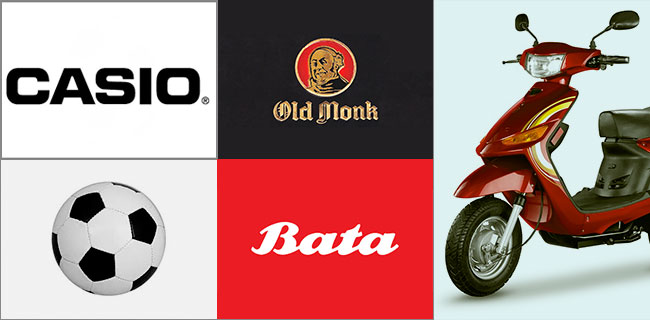
    And quite a few brands have built their raison d’etre on this very platform of standing up and smirking at the typical symbols of status and exclusivity. I have picked my favourite 5, apart from the Smart, that have proven beyond doubt that reverse snobbery is a viable and sustainable space to occupy, both as a philosophy and as a business proposition.


    Casio.

    Specifically the G-shock range that has truly transformed the digital plastic cased and strapped watch into a near icon! It goes off the shelves in no time in any part of the world, appealing across age groups. In any premium watch retailer you will see it displayed alongside far more “premium” brands like Tissot, Armani and cK. It is a rage amongst the gen-Z for its sheer larger than life physical manifestation and built in “cool” features that the premium brands do not offer. Swatch did play the same role very effectively till some time back but its absence from the smartwatch segment has seen it slip in the eyes of the beholder. Titan also missed a beat or two with Fastrack in taking it up the image ladder.


    Old Monk.

    Never could imagine a benign Benedictine padre to be a spirited confidante of millions of homes in India! And also travel across the world bringing both joy and solace to the Indian diaspora. My alma mater has something called OMAXI, the Old Monk Association of XLRI with a ‘chief’ ceremoniously elected and crowned every year! One really committed group I must admit. That glass bottle with the caramel brown liquid has given a beating to some of the biggest global spirits in terms of loyalty, advocacy and also relevance. When your customers release ads on your 60th anniversary you sure know the prayers are on your side!


    Football.

    Yes, the beautiful game came back with a bang with the English Premier League getting into our bloodstream through ESPN a decade and a half back. In a nation obsessed with cricket [still so] and sports like golf and Formula 1 catering to the “elite”, Sir Alex Ferguson came with a sledgehammer and rearranged the living room a wee bit. Football got a bigger footprint beyond its traditional following in Bengal, Kerala, Goa and Punjab. Rich kids went around chilling in Manchester United and Chelsea t-shirts. Then came the wave…La Liga, Bundesliga, Serie A, Champions League and more. It was cool to discuss Mourinho’s follies in the toniest of parties in Delhi and Mumbai. The game of the masses finally saw a fashionable following in the “class”.


    Bata.          

    The good old fuddy-duddy school shoe brand is back with a bang! After decades of meandering around directionless, they have finally hit the purple patch. Excellent product portfolio, much improved product quality and most importantly, a new customer base that sees it cool enough to wear and flaunt. The shopping experience has also been taken a few notches higher with a strong online push. The renewed self-confidence is demonstrated by the introduction of an entry-level fast-fashion brand like FootIn. The brand co-existing with the likes of Hush Puppies, Caterpillar, Scholl and Weinbrenner has actually paid off immensely for its own image makeover.


    The Scooter.

    Its no longer “sissy” to be seen moving around on a scooter anymore. You need not pass off yours as your sister’s before your friends or colleagues. The scooter is cool. Its more responsible. Its more flexible. Its more than a motorcycle. The relaunch of the Chetak by Bajaj tells you that the guys at Akurdi have realised their mistake of vacating this space to competition. The Honda Activa is the largest selling two-wheeler in India. It’s a scooter! The category today offers you a range to choose from based on your personality type – family man = Jupiter, fashionable = Fascino, speed freak = Ntorq, cruiser = Burgman and so on. The scooter looks as aspirational and adorable as any motorcycle. And the fact that it continues to cater to both men and women with consummate ease is what attracts the ‘metrosexual’ to it in droves.


    These are my top 5 picks of brands that thrive on reverse snobbery.

    Just wish the Tata Nano were also on this list.

    Had all the ingredients of being a global icon.

    Alas, that is one big lost opportunity…another story…another day…


  • Contract India wins global creative mandate for Bata

    By A Correspondent


    Following a multi-agency global pitch, Contract India has won the creative mandate for Bata brands globally. The new mandate will see Contract India become the global hub for strategic and creative duties for the European footwear major’s key geographies in LATAM, Europe, Asia and Africa with the support of its group companies within Wunderman Thompson, part of the WPP network that it belongs to.


    Speaking on their decision to award the global mandate to Contract, Isabelle Sakai, Bata Group Chief Marketing Officer, said: “Contract India is a key strategic and creative partner for the Bata India operating company. The ‘Surprisingly Bata’ campaign has helped shift consumers perception about the brand, driving footfall to our stores and increasing sales. We are glad to award Contract India the Global mandate to roll out the ‘Surprisingly Bata’ campaign across the Bata world, smartly adapting the campaign idea to capture the local nuances of consumers insights. We are looking forward to a great partnership beyond the boundaries of India.”


    Said Raji Ramaswamy, Chief Executive Officer at Contract India: “We are delighted to be chosen by an iconic brand like Bata to partner with them in supporting their strategy and shaping their communications narrative across markets. Having done some great work for Bata in India, it is truly rewarding to now become the global creative and strategic hub for them which is a significant win for us and probably an industry first. Our team’s experience and capabilities in offering a multi-discipline integrated offering makes us well poised to drive the desired impact and achieve business outcomes for the brand across markets.”


    Added Tarun Rai, Chairman and Group CEO, Wunderman Thompson South Asia: “Contract has partnered with the Bata India team extremely well to deliver fantastic business results. It is this partnership that gave Contract the opportunity to pitch for Bata’s global mandate. I am truly delighted that we could demonstrate the strength of our network around the world to help win this very prestigious account. I also feel a sense of pride that a campaign created in India is going global and will be executed in so many countries across the world. My congratulations to Raji, Rohit, Sagar and the entire team at Contract.”


  • Bata goes ‘waist down’ with its new TVC

    By a correspondent


    Leading footwear retailer and manufacturer Bata announced the launch of its new Spring Summer’14 marketing campaign for its entire range of footwear, accessories, bags and glasses. The campaign features a 360-degree multimedia integration of TV commercial, radio, cinema, print, innovative outdoor, events, promotions and digital platforms.


    The TV commercial has been innovatively shot to capture slice-of-life situations in the lives of people through a literal focus on the footwear. The film uses a unique technique of following those real life moments by showing the action only from knee down. The situations captured include from the nervous to the dramatic to the adventurous, including a group of students eagerly looking at their exam results, colleagues watching a cricket match in office and a group of young girls enjoying their ‘day out.’ The film also showcases all the leading brands in their latest styles from Bata in an aspirational way. Shot in a contemporary manner and stitched together using fast-paced music, the film reiterates the brand’s presence in the lives of individuals, cutting across the barriers of age, a necessity considering the eclectic portfolio of Bata.


    The campaign is yet another remarkable milestone in Bata’s journey of symbolizing that shoes can be lifestyle led, young, vibrant and yet comfortable. The campaign’s “waist down” TVC treatment captures how the shoe line’s range covers the gamut of shoes from business indoors to comfortable outdoors.


    Sumit Kumar, Vice President and Head of Marketing and Customer Service, Bata India said, “Drawing on our vast experience and understanding of the Indian consumer, we have designed our latest 360-degree marketing campaign to appeal to the sensibilities of the Indian consumer across age groups and demographic profiles. We have a fantastic range of stylish, on-trend and contemporary products that will appeal not only to our loyal customers but also to a wider audience. We intend to communicate the brand as aspirational and yet comfortable. We are continuing our external marketing journey with fabulous in-store environment featuring our new global concept stores to make shopping a pleasurable experience for our customers.”


    Sonal Dabral
    Sonal Dabral

    Sonal Dabral, Chairman & CCO, DDB Mudra Group said, A whole generation of Indians have grown up with Bata and it’s an inseparable part of everyone’s growing up memories. The strategy and the idea behind the new campaign is to build on this equity and to also help the brand make a fresh connect with the youth. I am really excited for the TVC we have worked on. A story told by the stylish Bata shoes themselves which I’m sure will do its bit in helping make this iconic brand a vibrant and colourful brand of today transforming it from just a shoe to a destination where life meets style.”


  • Brands get a designer touch


    By Tuhina Anand


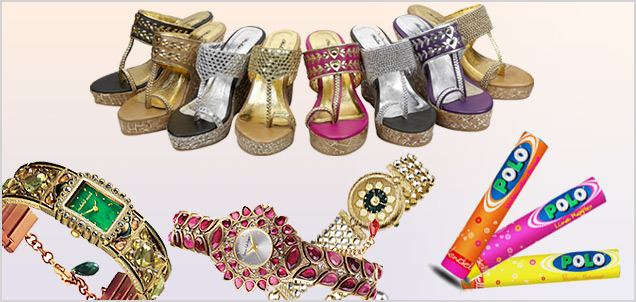
    Wendell Rodricks for Polo, Malini Ramani for Bata, Tarun Tahiliani for Timex… Some of the top Indian fashion designers have moved from their familiar territory of creating haute couture to creating new lines for popular brands.


    Wendell Rodricks has designed four new flavours called the Polo Fashion Flavours for Nestle’s Polo and has even given a funky new look to the staid-looking green and blue packaging of the mint.


    Malini Ramani, who is known for her bohemian style, has associated with Bata to come out with a new collection of footwear called Malini Ramani for Bata.


    Tarun Tahiliani has designed a special collection for Timex to help the brand break away from the sporty image it is associated with.


    Giving his views on this trend, Harish Bijoor, brand expert and CEO of Harish Bijoor Consults Inc. said: “I would call it bringing bizarre into branding. Fashion designers have no connect with the (product) category and it’s a stretch to think of them designing footwear or a designer mint. This is done to just get eyeballs and media share, and not necessarily about gaining market share.”


    For brands, it may be an effort to garner eyeballs, especially now, when they jostle with numerous others to grab the consumers’ attention.


    For Bata the association came at a time when they were looking at opportunities at designer footwear market inIndia. This, in fact, is the first time that Bata India has roped in a designer to design a special collection for them.


    On the reason behind associating with a fashion designer, Rajeev Gopalakrishnan, Group Managing Director, Bata India Limited, said: “The designer market is unique and full of innovations and Bata, as a brand, believes in constant innovations to bring forth the best for their customers. Therefore, we decided to rope in Malini Ramani, who is one of the most coveted designers in the country.”


    The footwear major has had a positive feedback of its association with Malini Ramani and hopes to further strengthen this association and even look for similar opportunities with other designers in future.


    Mr Gopalakrishnan added: “With the increasing demand for footwear in the Indian market, it is essential for any brand to introduce various designs and variety often. BataIndiaoffers various footwear ranges in every category. We bring out new designs for our customers as per the global trends and standards every month. The entire collection is changed every quarter to cater to the changing needs of Indian consumer.”


    Besides the Malini Ramani collection, BataIndiahas genuine leather casual collection for men under Bata and North Star Collection for the young customers. For customers with an active lifestyle, Bata launched a new collection under the Weinbrenner brand with personalized branding. It has Marie Claire collection for women, Power brand for the sports enthusiasts and variety of designs in attractive colours for children under Bubblegummers and Baby Bubbles, besides school shoes for children.


    For Timex the association with Tarun Tahiliani was to give break to the stereotype image that the brand has been associated with. VD Wadhwa, MD & CEO of Timex Group India, said: “Timex has been perceived as a sporty and outdoorsy brand since its inception and we want to move beyond that image. To strengthen our connect with the women costumers; we associated with ace designer Tarun Tahiliani. The aim of this association was to establish credibility amongst the women customers at comparatively higher price points and cash in on the wedding and festive season.”


    Mr Wadhwa stated that the response has been tremendous as far the collection is concerned. In fact, many costumers have come back asking for more options in this line. Though Timex doesn’t have any plans to add to this collection with other designers.


    “Marketers are increasingly leaning on homegrown designers for business associations to launch signature or limited edition lines. All this is done to attract the young and ambitious Indian consumers who would happily pay a premium price to stand out in the crowd. Indian designers are the best bet, since each one of them has a specific style and can fuse Indian and international designs brilliantly to develop an aspirational product,” said Mr Wadhwa.


    Fashion designer Manish Malhotra has also been featured in La Opala Diva ads and there is a possibility that he may design for the crockery brand, though the plan has not been finalized yet.


    One may even recall that few years ago, Sabyasachi had designed Bombay Dyeing’s new bed and bath range. It is clear that the marketers have started tapping the designers to give a fresh appeal to their products.


    It could be to create an aspirational value or tap consumers that have remained away from the brands and lure them in. In a cluttered market, this may be the way to at least garner eyeballs and somewhere succeed in getting an increase in sales too.


    Polo image: Nestle.in, other images: courtesy company spokespersons