By Shruti Pushkarna
 The International Day of Persons with Disabilities is around the corner. For the past three years or more, I have been nudging readers to initiate a dialogue on disability inclusion, or take a small step which goes beyond good intent. Just anything that translates into action signifying the desire to alter mindsets towards disability and accept diversity that exists in each one of us.
This year, I have drawn up a list of people who have done far more than that. These are individuals who not only lead by example, but inspire people like me to do more. Of course this is not an exhaustive list, and pathbreaking work in the domain of disability empowerment and inclusion has been an outcome of the efforts of thousands, if not millions.
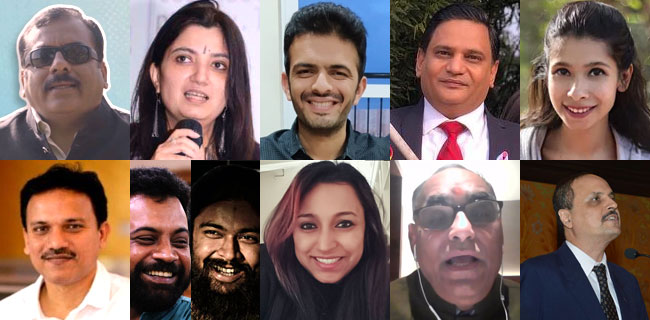
But here’s my list of 10 heroes who deserve a hearty applause for their efforts on this December 3.
1. Bhavesh Chandubhai Bhatia
 A visually impaired entrepreneur who is the founder of Sunrise Candles based in Mahabaleshwar. Bhavesh has a vision impairment due to retina macular degeneration. A rehabilitation centre that taught candidates to make candles rejected Bhavesh because of his disability. Unfurled, Bhavesh set up his own venture in 1994. Today, he employs more than 10,000 visually impaired men and women, churning out a business of 350 crore per annum.
2. Shilpi Kapoor
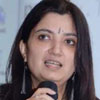 A social entrepreneur and advocate of accessibility, Shilpi is the founder CEO of BarrierBreak. Her organisation is focused on making technology accessible to persons with disabilities. Shilpi actively promotes the use of assistive technology and ensures that digital platforms are designed to include persons with different disabilities. Fifty per cent of her accessibility testing team is comprises people with disabilities. Shilpi is recognised as one of the Top 15 Women Transforming India by the Niti Aayog.
3. Prateek Khandelwal
 In May 2014, Prateek met with an accident which led to a spinal cord injury. This left him with paraplegia, making him physically disabled. This is when he realised for the first time how inaccessible the country is built up to be. And he decided to retrofit and ramp up the nation. Based in Bengaluru, Prateek founded a company in 2018, RampMyCity. Instead of complaining, he decided to become part of solution generation. RampMyCity is a start-up that makes mainstream places like offices, residential complexes, schools, colleges, restaurants, parks, et cetera accessible.
4. Dr Satendra Singh
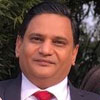 An Indian doctor and a disability rights activist, Dr Satendra is well-known for his work in promoting inclusion in healthcare and education of persons with disabilities. He is a Professor of Physiology at the University College of Medical Sciences and Guru Teg Bahadur Hospital, Delhi. He has been instrumental in bringing about many reforms, including the inclusion of disability competencies in the new medical curriculum in India. He received the National Award in 2021 by the President of India for making elections in the country accessible to persons with disabilities.
5. Alina Alam

The founder CEO of Mitti Café, Alina is on the Forbes list of 2020 30 Under 30- Asia- Social Entrepreneurs. Her café provides persons with disabilities a space to exhibit productivity. With outlets in 26 locations across Bengaluru, Kolkata and Delhi, Mitti Café is managed by over 250 adults with physical, mental and psychiatric disabilities. Each of these cafes also provides experiential training to persons with disabilities and entrepreneurship opportunities for mothers of adults with intellectual disabilities, who come from low income families. Earlier this month, Mitti Café launched a new outlet inside the Supreme Court of India, with the support of CJI DY Chandrachud.
6. Guruprasad Pawaskar
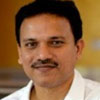 In January this year, an inclusion marvel was created by the Goa government. One of the key figures to bring the first Purple Fest to life was the State Commissioner of Persons with Disabilities in Goa, Guruprasad Pawaskar. With astounding success in its first edition and participation from all stakeholders including PwDs, enablers, changemakers, government officials, corporate employers et cetera, Purple Fest is going global in January 2024. As someone who worked closely with Pawaskar during the Purple Fest 2023, I was amazed at the zeal and hard work put in by a government representative to make a success out of the event. He worked day and night, tirelessly, barely leaving the venue. And now his team is gearing up for a bigger production next year.
7. Alok Dixit and Ashish Shukla
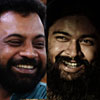 In 2013, Ashish and Alok started the ‘Stop Acid Attack’ campaign and connected with acid attack survivors (consciously avoiding the term victim) from different parts of India. This campaign culminated into the formation of an NGO, Chaanv Foundation which used crowdfunding platforms to support the survivors. These were people who struggled to find jobs because of the apathy meted out by the society due to their visible facial deformities. So the idea to open a café to give them employment, was born. Sheroes Hangout Café in Noida (Uttar Pradesh) Stadium is helping acid attack survivors rebuild their lives with dignity. Sheroes also has branches in Lucknow and Agra.
8. Rupmani Chhetri
 More than 2000 Indians have worked as international volunteers with the United Nations, but deaf activist Rupmani Chhetri is the first disabled Indian volunteer who worked in Ukraine. She was born in Nepal and later moved to Darjeeling. Her family tried everything under the sun to make their daughter talk which made her feel sick. She is determined to improve the lives of deaf individuals, so they can freely communicate and feel a sense of belonging. Rupmani is the co-founder of a start-up named SignAble Communications, which helps deaf people access sign language interpreters in real-time through a mobile application. She aims to bring down the communication barriers with technology and training.
9. Thakur Datt Dhariyal
 A civil servant who served more than three decades in the Ministries of Defence, Home, Shipping, and Social Justice and Empowerment, Dhariyal was the longest serving Deputy Chief Commissioner of Persons with Disabilities till 2014. During his tenure as the State Commissioner for Persons with Disabilities, Delhi, he is well known for delivering pathbreaking judgements on disability policy and implementation of the Rights of Persons with Disabilities Act 2016. Dhariyal is a walking-talking encyclopaedia when it comes to the laws pertaining to disability empowerment. He not only understands the legal fine print, but has been instrumental in actioning implementation level changes to make places accessible in the capital. He has helped resolve many cases of discrimination of the rights of persons with disabilities. One can say that as the Deputy CCPD and the SCPD, he has been the most effective bureaucrat, driving inclusion.
10. Dr Sam Taraporevala
A retired Associate Professor and Head of the Department of Sociology and Anthropology at St. Xavier’s College Mumbai, Dr Sam is a person with blindness. His parents however, chose to educate him through mainstream institutions. While he was teaching, he was curious to notice the sudden decline in numbers of blind students in the college. Realising that they lack the means to study and interact effectively in a mainstream environment, Dr Sam launched the famous Xavier’s Resource Centre for the Visually Challenged (XRCVC). Today, as XRVCVC’s Executive Director he is spearheading social advocacy, creating awareness and addressing the various access challenges faced by students with low vision and total blindness. Among other accomplishments, Dr Sam’s work has resulted in the amendment of the Copyright Act, India in 2012, deployment of 30,000 accessible ATMs in India, and opening up of Science, Technology, Engineering, and Mathematics (STEM) education for persons with blindness in the country.
Wondering why MxMIndia publishes a disability advocacy column? Well, we strongly feel that the media can dramatically transform the world for persons with disabilities. This series attempts to help bring forth issues that the media must champion to create a truly inclusive and accessible India. Writing this column is Shruti Pushkarna, a former journalist and now a disability inclusion advocate based in New Delhi. Her views here are personal. To access the archives of her 80-odd columns, please visit: https://www.mxmindia.com/category/ columns/shruti-pushkarna/
If you have a view on the issues raise or would like to align with MxMIndia on this cause, write to us at editor [at] mxmindia.com.