
Tag: Barack Obama

  • Is Gaming the Silver Bullet that can change Brand Marketing in 2021?

    Barack Obama used in-game advertising hoardings in the game Burnout Paradise among others, during his 2008 Presidential campaign


    By Bhuvi Gupta


    Bhuvi GuptaThis is the first time I am going on the record to admit that I have spent a lot of time playing online. Luckily though, these obsessions were recognised before they became addictions after an unhealthy time spent on Farmville, Angry Birds and lastly Candy Crush, before I admitted that I would not go down the slippery rabbit hole that can be gaming and have kept myself away since 2015.


    I am definitely the exception. In the last few years, driven by increased digital penetration and bandwidths, (and this year COVID-19) mobile gaming in India has exploded. As per a report from app intelligence firm Sensor Tower, Indians installed 7.3 billion games, nearly 17% of all worldwide downloads in the first nine months of 2020, beating countries like USA and Japan to the number one position.


    Basis the Google-KPMG Media Report 2020, the Indian gaming industry will cross USD 1.1 billion in 2021. With around 500 million people in India having smartphones (give or take a few million) and around 300 million+ gamers, there is no denying that this market is growing with the lockdown having helped accelerate the growth. The biggest USP of mobile gaming is the level of engagement that the audience has while playing a game. A GroupM- Mobile Marketing Association report (link – https://www.groupm.com/mobile-marketing-association-and-groupm-launch-mobile-ecosystem-report-2020/) highlighted that gamers are more than twice as likely to pay attention to advertisements placed in mobile games at 41 percent, as compared to ads placed on the internet at 17 percent, in magazines or on billboards at 15 percent each.

    This implies the inherent value of digital impressions becomes much higher.


    Marketing during gaming takes three forms primarily –

    :: Integrations – which are well-integrated into the narrative like branded ‘Virtual Real Estate’ like banners within the game, branded items like clothes or accessories worn by avatars, and fully branded modes or levels

    :: Advertisements for additional lives, etc. which can be typically purchased on ad exchanges

    :: Events such as e-sporting leagues
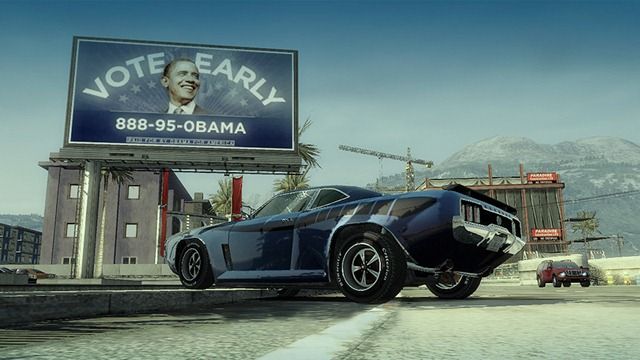
     

    Barack Obama used in-game advertising hoardings in the game Burnout Paradise among others, during his 2008 Presidential campaign


    Barack Obama used in-game advertising hoardings in the game Burnout Paradise among others, during his 2008 Presidential campaign.


    In India, Gaming in India can primarily be classified into four heads-

    :: Fantasy Gaming – which already has 100 million users with companies like Dream 11, Mobile Premier League dominating.

    :: Action games – such as PUBG and Fortnite. While Fortnite doesn’t have as many users in India it has been the front-runner in terms of brand integrations globally.

    :: Real Money Gaming – like online Rummy, Poker, and Ludo King. This comes under the purview of gambling and hence basis Indian law is subject to laws as dictated by states. While skill-based games such as Poker and Rummy are usually permitted, games of chance are prohibited. The recent PayTM First Games ban on the Google Play Store was also related to the definition of what constitutes ‘Gambling’

    :: Live Trivia apps – such as Pocket Aces owned Loco


    Why Gaming?


    With more people coming online there is ad fatigue that takes place due to the high number of ads users see. Many users also use ad blockers, and hence awareness and engagement with even well-targeted ads is low as the audience is just waiting to skip the ad.


    This is as opposed to the active audience that plays online games, where they are tuned to engage with the gaming platform to maximise scores. By using product integrations, or branded levels, brands can also help create immersive experiences for the target audience.
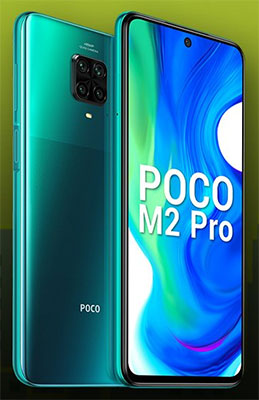
     

    Poco introduced their new launch, POCO M2 Pro via the game Tappy birds. A weeklong tournament called ‘Tappybird showdown’ was held where the mobile phones were placed inside the game, and players had to collect the phone to earn extra cookie points.

    Secondly, as the market is still nascent, brand integrations remain relatively unexplored. With 5G coming into India in the next 5 years, gaming will become immersive and hence technologies such as AR/VR will help create a value-added gaming environment, which is perfect for marketing.


    Poco introduced their new launch, POCO M2 Pro via the game Tappy birds. A weeklong tournament called ‘Tappybird showdown’ was held where the mobile phones were placed inside the game, and players had to collect the phone to earn extra cookie points.


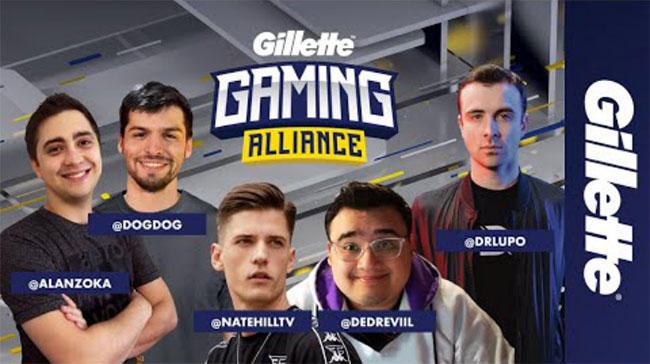
    Thirdly, emergence of e-sporting leagues and tournaments and live game streaming allows brands to leverage gaming influencers, do cause marketing, sponsorships etc. for a well-defined audience. The Google-owned YouTube has a vibrant community of gaming live streamers such as Tanmay Bhat, Gagandeep Singh (Sikh Warrior), Manasvi Dalvi (Manasvivi) etc. in India. Globally such campaigns are have already become common, for e.g. P&G’s Gillette has hosted the Gillette Gaming Alliance on Amazon-owned live streaming platform Twitch in 2019 and 2020 with a team of five Twitch influencers to create content for their fans, and highlight other campaigns and causes.


    Lastly, just like in digital advertising, brands can target users on the basis of demographics and geographies, which makes in game advertising all the more effective. There is also high prevalence of gamers in Tier2 and Tier 3 cities, which can be leveraged by brands.
    While it may seem that Gaming is more relevant for youth-focused brands, the 35+ age group has high usage in more traditional games such as LudoKing, Online rummy and Poker. Hence, depending on the target audience, brands should choose games online to create impact.


    The timing is right, the lockdown has helped accelerate user growth, and Indians brands must strike when the iron is hot to make the most of a relatively undiscovered avenue for advertising before it gets too crowded.


    Bhuvi Gupta is a marketer with over 10 years across industries, of which the last six have been in Media & Entertainment. She has been a part of many launch marketing campaigns – specifically at the Times of India group, Republic TV and the latest in marketing a Bollywood film. She will write on A&M (mostly marketing, but often on advertising too) every other Tuesday. Her views here are personal. She tweets at @bhuvigupta3



  • BM study finds almost two-thirds of world leaders are on Twitter

    By A Correspondent


    Burson-Marsteller, the global public relations and communications firm, released “Twiplomacy” – the first-ever global study of world leaders on Twitter. The study shows that almost two-thirds of world leaders have a Twitter account. However, whilst the social network offers direct interaction between users, almost half of world leaders don’t follow any of their peers.


    “Twiplomacy” is the first research of its kind, aimed at identifying to what extent world leaders use Twitter. Burson-Marsteller analyzed 264 government accounts in 125 countries.


    Data used was taken in July 2012 from the accounts of 264 heads of state and government and their institutions in 125 countries world-wide looking at over 30 variables using Twitonomy. Burson-Marsteller used Doesfollow to analyze Twitter relations between world leaders and MyFirstTweet to identify the first tweet of each world leader.


    The findings indicate that over a quarter (76) of all world leaders and governments are following Barack Obama. However @BarackObama mutually follows only Norway’s Jens Stoltenberg and Russia’s Dmitry Medvedev but hasn’t established mutual Twitter relations with other world leaders. European Union president Herman van Rompuy (@euHvR) is the best connected world leader, mutually following 11 other peers. Australian prime minister @JuliaGillard is the second best connected leader.


    Russian President Putin, Rwandan President Kagame, Singapore Prime Minister Lee, Dutch Prime Minister Rutte and 35 other accounts do not follow any other Twitter user; effectively cutting themselves out of the conversation.


    On the other hand Ugandan Prime Minister Mbabazi and Rwandan President Kagame are the most conversational world leaders on Twitter with 96 per cent and 93 per cent of their tweets being @replies.


    “This study illustrates how Twitter is closing the communication gap between us and our world leaders. On the one hand, it allows heads of state and government to broadcast their daily activities and government news to an ever growing audience. On the other hand it allows citizens direct access to their leaders. Consequently, it is now, more than ever, critical for these leaders to get it right on the social network”, said Jeremy Galbraith, CEO of Burson-Marsteller Europe, Middle East and Africa.


    The study found that politicians often discover Twitter during election campaigns but once elected, these accounts tend to go silent, such as the accounts of Brazilian president Dilma Rousseff @DilmaBR and French president Francois Hollande @FHollande who have abandoned their followers since taking office. There are 120 personal accounts, however only 30 world leaders tweet personally and then only occasionally.


    “16 of the G20 leaders have are actively using Twitter for public diplomacy, but it is sad to see that the heads of state and government in China, Saudi Arabia, Indonesia and Italy still do not have joined the Twitterverse”, said Matthias Lufkens, Burson-Marsteller’s Digital Practice Leader in Europe, Middle East and Africa.


    Twitter is also used by small nations to put them on the world map and tweet eye-to-eye with their peers. The president of the Dominican Republic unilaterally follows 71 other world leaders. The president of Portugaland the prime minister of Trinidad and Tobagoboth unilaterally follow over 50 other peers in the hope that they will return the favour and the young Republic of South Sudan hopes to gain international Twitter recognition by following 16 peers.


    Twitter is most popular in North and South America with 80 per cent of governments active. Barack Obama is the most followed world leader with 17,115,077 followers, globally in 5th place just behind Britney Spears. Venezuelan president Hugo Chavez is in second place with 3,152,608 followers, followed by the White House, Queen Rania of Jordan and10 Downing Street, all having over two million followers.


    Other key findings include

    • Out of the 264 accounts of heads of state and government, 90 have never ever sent a retweet and 99 have never sent @reply
    • US President Barack Obama was the first world leader to sign up to Twitter on March 5, 2007 followed the same month by @EPN, the account now used by Mexico’s president-elect Enrique Pena Nieto.
    • Most popular tweet: “Same-sex couples should be able to get married.” – President Obama”, retweeted 62,047 times on May 9, 2012
    • World leaders tweet in 43 different languages. English is used by 34 per cent followed by Spanish (15 per cent). However Spanish and Latin American leaders tweet three times as much as their English counterparts
  • [MJR] Jingoist of the year award to Times Now

    By Ranjona Banerji


    For some reason best known only to Times Now, the channel decided to huff and puff over a Barack Obama campaign ad, which said that not only did Republican presidential candidate hopeful Mitt Romney outsource jobs to Mexico and China as a CEO, but as governor he also outsourced a task to a call centre in India.


    My god, the insult – Obama has spent, said Times Now, a million dollars to “trash India”. This news played over and over again on the channel all evening, even as it had to compete with the other “big story which we are tracking” – the release of Sukma district collector Alex Paul Menon by the Maoists (that’s another example of a TV extravaganza).


    On the Newshour last night, there was Goswami, filled with nationalistic pride, surrounded by Chidananda Rajghatta of The Times of India looking a bit embarrassed, Pramit Pal Chaudhuri of Hindustan Times looking smug and embarrassed, Mohandas Pai, once of Infosys, looking amused and not sure if he could tap sufficiently into his inner jingoist and a few other guests.


    Goswami launched full steam into his heartfelt anguish at this perfidy by Obama – when the facts said that Indian companies contributed millions of jobs and billions of dollars to the US economy (a few gazillions and who knows, India might solve all the US’s economic problems). But guest after guest pointed out that all this was election rhetoric and that anger with outsourcing was now normal campaign guff and that whoever won would do little to change US policy.


    Goswami, as he watched his argument crumble, smiled wryly and changed tack. He was not, he said, talking about the inner workings of the US election process. He was bothered about perception and stereotyping. Luckily he found one guest who weakly agreed, sorta kinda.


    After 15 minutes of sound and fury signifying nothing, and guaranteeing a good laugh for all viewers, the debate petered out as everyone just repeated the same thing. Goswami ended by asking why the Indian government could not spend some money to issue a counter ad. Indian pride, one can only hope, was restored amongst those viewers who spend their time picking up stones and weeds everywhere, hoping to find an insult to India and then demand reparation.


    On Friday morning, interestingly, only The Times of India was interested in this story.

    (An aside: the other fight for Indian pride was on the internet over Hollywood star Ashton Kutcher and some chips ad where he mimics an Indian. The Indians won because on the internet, power operates differently!)


    * * *


    Stewart by the way, took on the sex scandals in the US secret service, hardly guffaw-inducing stuff compared to Goswami.


    * * *


    Meanwhile, the collector: all day TV told us that the kidnapped by Maoists collector Alex Paul Menon was about to be released. We were treated to some pictures of some bush and scrub with very bad communication lines and no collector. Then in the evening an exhausted man appeared, only to be mobbed by eager reporters. This is one of the fault lines of modern journalism and you have to feel for both parties. The media needs the story and the collector needed some rest. He looked as he himself said, “shattered”.


    Since Zee had most of the pictures, everyone had to credit it. Headlines Today and NDTV, instead of showing the bush and scrub, showed us Menon’s father-in-law. The CNN-IBN website told us that the collector was freed hours before he appeared out of the wilderness.

    No explained whether that was inside information or a false start to the race.


    Jai Hind!