
Tag: Balika Vadhu

  • Anupamaa: The Big Hindi GEC Breakthrough?

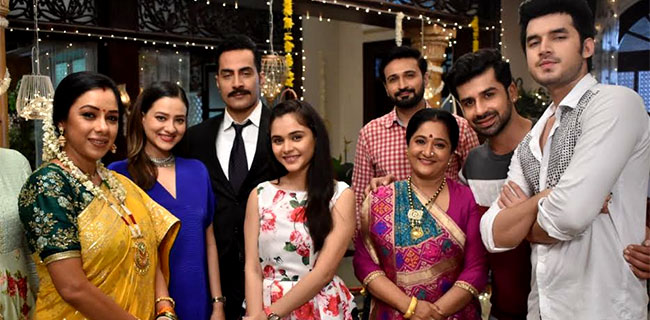
    A still from Anupamaa, the Star Plus show


    By Shailesh Kapoor


    Shailesh Kapoor

    While this weekly column has extensively covered the Hindi GEC category over the last eight years, pieces dedicated to a single show have been rare. If at all, they have been about a non-fiction show like KBC, or about a long-running fiction show like Balika Vadhu or Taarak Mehta Ka Ooltah Chashmah. Nothing launched since the start of this column in 2012 has been worthy enough for 500 words of its own. And those who follow this column regularly will know that the general sense of mediocrity that plagues Hindi GEC fiction content has been my pet peeve over the last 5-6 years.


    But here it is, a piece on a newly-launched fiction show that breaks through the mediocrity the category has learnt to unapologetically espouse over time. It’s the 10pm daily on Star Plus, and it goes by the name Anupamaa. An adaptation of a hit Star Jalsha show, Anupamaa was originally slated to launch in early 2020, but had to be deferred because of the lockdown. It was one of the first new shows to launch as things began to open up and shoots resumed July onwards. Less than three months into its tenure, Anupamaa is the top-rated show on Star Plus, more than 40% ahead of the next original show on the channel.


    Now that has happened before with some other shows too. But something a lot rarer happened this week. In the August report of Ormax Characters India Loves, a monthly character-popularity track for the Hindi GEC category, the protagonist Anupamaa has taken the second rank on the fiction list. Character popularity is the Holy Grail of GEC content. It takes months, sometimes years, for characters to build an emotional affinity with the audience. Entering the Top 5 within six months of launch is a huge achievement, and entering Top 2 within two months an unprecedented one.


    When I watched the show in its first week, my first reaction was: Wow, this looks so different from the rest of the genre. It was, in many ways, a reaction very similar to what I felt watching Balika Vadhu for the first time in 2008. Then, and even now, the Hindi GEC category has been guilty of a certain visual and thematic sameness that is omnipresent across shows, across channels. Some shows look ‘richer’ than others. But by and large, the protagonists are all in their early 20s, the costumes are fairly stock, the music largely similar too, the conflicts way too familiar, and the acting and the dialogue consistently mediocre.


    In that first viewing itself, Anupamaa seemed to belong to another space. Top performances grabbed my attention first. In particular, Rupali Ganguly as the female lead here is arguably one of the Top 3 stand-out Hindi GEC fiction performances in the last 20 years. The other distinctive feature, of course, was the age of the protagonist. In her mid-40s, Anupamaa is a mother of three grown-up children. That’s a life-stage a Hindi GEC female protagonist usually reaches five years into a show’s lifetime, after at least two leaps. Instantly, this separates the show from the rest of the lot, which are essentially romantic dramas played out in a family context. The writing seemed two notches higher than the category’s accepted level too, especially the dialogue.


    But as I started watching the show regularly, it seemed evident that this is that rare show that has a saga-like feel to it. After Balika Vadhu and Yeh Rishta Kya Kehlata Hai, no other show has a premise or a protagonist so fascinating that you know that you can do a long-running show around her, without losing the point and dragging the show meaninglessly. Already in the two months, the show has covered several social themes like patriarchy, parenting and class difference. It’s like the old days of reading a novel. The story can keep evolving, chapter by chapter, and enter different spaces. But the audience loves the protagonist(s) so much that they are always invested.


    Will Anupamaa manage that? Will it be one of the top shows in 2025 too? It’s, of course, too early to say that. But if there’s one show in the last decade that seems to have a strong foundation that longevity needs, this is it. The show’s name translates to “incomparable” in English. And unless the makers mess this one up, it holds the potential to live up to that translation over time.


    It could be a matter of introspection why such success came from a show from a regional market. Much like one can wonder why Bollywood can’t make its own Bahubali. But that’s another topic for another day.



  • Colors: Ten Years of a Glorious Journey


    By Shailesh Kapoor


    It will be 10 years, to the day, tomorrow (July 21, 2018) from the launch of Colors in India. To say that the launch of Colors has been the most significant TV channel launch in India since satellite TV came in would be stating the obvious. The launch was that and a lot more. Let’s rewind.

     

    The 90s were the fledging decade for Hindi GECs, with a low consumer base restricted to the top urban centres. In 2000, when Star Plus brought in Kaun Banega Crorepati and (what came to be known as) the K-serials, they ‘massified’ television, making it relevant to a wider audience set pan India. By 2005, however, fatigue was setting in fast. Audiences K-serials of the times were fueling negativity in the name of drama. Incidents of marital tension in real-life couples because of what they saw in these serials were not uncommon. Neither were stories about broken remotes.


    In 2006, K-serials (and non-K ones of their ilk) widened their net to Zee TV, but it was still more of the same. The ground was getting prepared for a change that will shake up the category. Ideally, one of the top existing players of the time should have done it. But they didn’t, paving way for a new entrant to disrupt and rule.


    There was a lot to like about Colors when it launched. The first, and the most memorable, visuals in my mind are from the first week of Balika Vadhu. The show looked nothing like the K-serials. K-serials were generally red-hued and ornate, set indoors, and had a lavish but claustrophobic feel to them. Balika Vadhu was earthy in its tone and hue, its characters spoke a language that was authentic, and unlike anything you saw in the K-serials, its visuals were open and refreshing, even in the indoor scenes. That the protagonist was a child multiplied the differentiating factor further.


    Khatron Ke Khiladi (KKK), the tentpole launch vehicle, did its job. In the four weeks it was on air, it set the ground for viewers to sample Balika Vadhu and Jai Shri Krishna, aired back-to-back in the 8-9 PM slot, creating a base of loyal fiction audiences very early in the channel’s life.


    But KKK was only the start of the channel’s long and successful journey with non-fiction content. The channel quickly launched Bigg Boss to follow it up. Over this decade, Bigg Boss has emerged as the channel’s flagship non-fiction show. If it was not for Colors, one may have never seen Bigg Boss on Indian television again after the first season on Sony in 2006-07.


    With Balika Vadhu, the channel found a content space that it could bank on. It was a curious mix of social issues and child protagonists. Uttaran was the next big success, with some of the episodes touching 7-8% TVR, an unreal number even in those times. While there were other successes too, like NaaAanaIss Des Laado, the channel went a little overboard in trying to replicate its success formula in the 2009-10 period, after it had become a clear No 1 in early 2009. So, when Star Plus came up with its ‘RishtaWohi, SochNayi’ proposition in late 2010, it managed to cease the initiative back.


    But Colors was not a fad that would go away. Through the eight years since then, the channel has managed to keep the category leaders Star Plus and Zee TV on their toes, topping them on viewership in several weeks, including currently. This performance has largely come on the back of content outside the traditional fiction space, driven by reality shows and weekend series like Naagin, now in its third season. The channel has never shied away from innovating, and the launch of a live prime-time format Rising Star in 2017 is a testimony of that.


    The Colors’ journey is one of many glorious achievement, though there have been the odd disappointment here and there too. I often wonder how this category would have shaped up if this channel had not launched. The answer is that the category would have poorer without Colors. Less differentiated, less vibrant.


    Congratulations to everyone at Viacom18 and Colors, who has been a part of this journey, including the founding team, that has moved on since. Hope the next decade is even more remarkable, even more colorful.


  • Mediaah Report Card on Ambika Soni: 7/10

    By Pradyuman Maheshwari


    Although I would hold her responsible for the mess that we have in digitization, Ambika Soni was among the better I&B Ministers we have had in the last decade.


    In my report card, I would give her a 7 on 10.


    In fact had it not been for digitization and the lack of gamechanging vision, she’s could’ve scored higher.


    Remember she took over from Anand Sharma and earlier Priyaranjan Dasmunshi who had made life tough for industry practitioners.  Ms Soni’s tenure came as a breath of fresh air. Reportedly, the advisory she received from her predecessors was that she shouldn’t go easy on media biggies, but she would’ve none of that.


    Everyone has a view on the content dished out on television and in the print media. Parliamentarians, legislators and politicians of all hues, consumer and advocacy groups, corporate, citizens, et al would engage with her to act on their demands. For instance, Balika Vadhu in Colors was found by some to be glorifying child marriage or Sach Ka Saamna and Bigg Boss were found to be unfit for family viewing. Ms Soni heard the complaints and kept the complainants at bay. The general entertainment channels must thank the former minister to ward off a variety of pressures.


    I think just letting various players do their job with a nudge here and there was an achievement. Ms Soni also ensured that entertainment and news broadcasters work out an effective self-regulatory mechanism. This had had its share of hiccups in the past, but in her tenure it happened.


    Ambika soni

    But though her progressive outlook ensured that the industry benefitted, various factors pull her down in this appraisal. In fact, according to one magazine study a few years back, she was judged to be a non-performer.


    Let’s look at the areas where Ms Soni failed:


    1. Doordarshan. The pubcaster had turned 50 in 2009 and there was an opportunity to make it a more professional BBC-like body. Didn’t happen.

    2. Radio. News on FM radio is not allowed due to some silly Home Ministry objections even as there are several cable channels in every nook and corner of the country.

    3. Paid news. If paid news is being discussed much it’s thanks to the Election Commission and a section of the fraternity. The minister had an opportunity to cleanse the system, but she didn’t want to upset the holy cows in the business

    4. Tougher on measures: Had she adopted a sterner stand and asked the industry to act faster, we wouldn’t have seen an NDTV taking TAM to court as BARC would’ve been set up and offered the necessary guidelines.

    5. Digitization. Agreed it’s a bold measure and it’s in her tenure that it gained momentum and was being executed. But the fact that it didn’t was all thanks to the way her ministry went about the task. Even as there are just two days to go, 100 per cent digitization will take another two or three months to happen in the four metros.


    Could this embarrassment have been avoided? Yes, of course.


    I am also shocked at how and why she quit less than a week before what was decidedly the biggest thing in Media and Entertainment in the last decade. Bigger than DTH and other policy initiatives. Yes, it’s a good idea that a senior political leader goes back to help the party in the run-up to the elections, but why do it when the Sunset Date is just a week after?


    Why did the Prime Minister allow her to do so? Why did the UPA chairperson allow it?


    This, I guess, is the reality check for all of us in the media. The powers that be don’t really care.


    As for Madame Soni’s score in my report card. 7/10. And a red line for being irresponsible and leaving the ministry a week before her biggest project was being executed.


    Pradyuman Maheshwari is Editor-in-Chief, MxMIndia. The views expressed here are his own. Inbox him at pradyumanm@mxmindia.com or use the messageboard below


  • Anil Thakraney: Balika Vadhu: 1000! Wow!

    By Anil Thakraney


    I don’t watch many TV soaps these days, and to claim that I am too busy for such mindless entertainment will be a fashionable excuse to give. The truth is that most serials haven’t caught my attention in recent years, simply because the plots are either uninteresting or rehashed. But one soap has made the cut for me, I still watch it whenever I am at home at 8pm. And that’s Balika Vadhu.


    And I was staggered to hear that the serial has just completed 1000 episodes. That’s a lot of airtime by any stretch of imagination. While it may no longer be No 1 on the ratings chart, it’s equally true that Balika continues to hold the nation’s living rooms enthralled. The loyalists have remained with it for years.


    The story of Balika is indeed the story of Colors itself. The show provided a massive launch platform for the channel, and the latter hasn’t looked back since then. I think the main reason the soap has held its own for so long is that when it first hit the small screen, viewers had begun to tire of all those over-the-top saas-bahu dramas set in a Juhu villa. The garish make-up, the hamming, the shrieks of the women in the huge household, dead characters suddenly springing to life, etc… the nation was ready for some real freshness.


    Balika quietly came and filled the vacuum. The setting was rural, the characters very real. Simple people who acted simply and were true-to-life. The child marriage story was, of course, the novelty. It worked, and the characters instantly became household names. But what’s most important is that the makers of the show did not lose steam along the way. Even as there’s been a time jump, the characters remain grounded in reality, and we connect with their problems and their life dilemmas. In one word I would say Balika’s success is embedded in its sincerity. Sincerity of its actors and its directors.


    I am not sure how much longer the serial will continue. 1000 episodes is already a huge run. But I am certain to be there till the last ball is bowled.


    * * *


    PS: To celebrate this year’s Cannes Film Fest, some art directors have re-created posters for iconic films. Wonderful. Gives me an idea: Why don’t contemporary art directors from our ad world re-create posters for legendary ads from the bygone era?

    Should be fun. Perhaps a competition can be held to make this happen. This will also

    help art directors in ad agencies make their presence felt.


    Link: http://www.booooooom.com/2012/05/08/little-white-lies-x-colette-movie-posters/

  • 1000 episodes, and counting!


    By Meghna Sharma


    Avika Gaur

    In 2008, when general entertainment channel Colors, was launched by Viacom18 – a joint venture between Viacom Inc and the Network18 Group, there was much promise of  a new spectrum of emotions and entertainment. While there were high profile reality shows on offer, the one serial that caught everyone’s attention was Balika Vadhu, a story of Anandi, married off in a rich family as a child. The show will complete 1,000 episodes today (May 14), a feat not many shows have accomplished in the Indian television industry.


    Ashwini Yardi

    Balika Vadhu show caught everyone’s attention because of its simple story and real emotions. Anandi captured the hearts of millions, making it the No 1 show at that time slot. Talking about Balika Vadhu, former programming head of the channel, Ashwini Yardi recollects: “It is the only show I said yes to in 30 seconds. Balika Vadhu is a cult show that portrays the journey of a child bride into womanhood. Even when the channel was launched, the show wasn’t promoted or marketed as much as the other shows. So, it has achieved everything on its own.”


    Child marriage isn’t something new, many young girls and boys are forced into it even today and the government and activists have tried to curb this social evil. Through the show, the writer and the channel wanted to convey the side-effects a child marriage can have on one’s life.


    Purnendu Shekhar

    “The realism in the characters and storyline is what made the show connect with its audience. We have never compromised of the plot and concept of the story to gain TRPs. Balika Vadhu is the first show which raised a social issue as its main plot on a primetime. And we wanted to educate people as well as entertain them,” says Purnendu Shekhar, the writer of the show.


    Agreeing with Mr Shekhar, Prashant Bhatt, fiction head, Colors says: “The story is the hero. The concept of the show decides how the look and treatment of the show will progress. So much so that the cast, the sites, the look, the makeup, even the language is completely tied to the concept. Balika Vadhu brought about authenticity, consistency and meaningfulness and that has worked. Today, Anandi, Sumitra, Dadisa, Bhairon and many others are household names solely because of the way the characters have been portrayed; the actors literally live their roles. The dialogues and its delivery has raised the bar completely. In totality, the show is an honest effort from our end to highlight issues to a mass audience and its acceptance is a great high for us.”


    Monaz K Todywalla

    Of the 197 weeks of being on-air, it’s been the No 1 show in the slot for 172 weeks. According to Monaz K Todywalla, general manager, Madison Media, the reason why the show has worked well for so long is: “The simple storyline of Balika Vadhu, in its early days was a refreshing change from the high drama soaps that existed. The show started off a new trend of addressing social problems that exist within the fabric of the country; people empathize with the story of a young girl who was married at a young age – the twists in her life deal with problems that women in India face. More importantly, because Anandi doesn’t play a victim, but fights odds to emerge a winner.”


    Deepak Netram, vice president, Lodestar UM, reasons why Balika Vadhu has been able to cut across masses. “The show was a milestone in the GEC space. It redefined a lot of trends and was a winner for the channel for a long time in many aspects. The show targeted a certain TG and that’s the audience many advertisers want too,” he said.


    OTHERS IN THE 1000+ EPISODES CLUB

    Kyunki Saas Bhi Kabhi Bahu Thi – April 2005
    Kahaani  Ghar Ghar Ki – Aug 2005
    Kasauti Zindagi Ki – May 2006
    Kumkum – April 2007
    Woh Rehne Wali Mehlon Ki – June 2009

    At 1,000 not out, Mr Shekhar shared that it wasn’t easy to keep freshness alive in a daily soap: “When I had written the show for Doordarshan in 1992, the show was supposed to have only 25 episodes. I feel till the time the viewers continue watching and enjoying the show, we’ll continue to write.” For the DD version, the young couple were supposed to grow-up in the fourth episode itself, whereas on Colors the show took a time-leap in the 517th episode.


    Jaahnavi P Paal

    But not everyone believes that the show must be allowed to continue till the ratings become negligible. TV analyst and columnist, Jaahnavi P Paal rues that Indian soap operas tend to lose the plot and drag. I guess the same has happened with Balika Vadhu too. Today, many avid viewers of the show have lost interest in it. Maybe that’s why it has lost its  number 1 spot. I’m a firm believer that a show must end at a proper time instead of being dragged.


    However, there’s no denying the fact that as a serial Balika Vadhu changed the trend with its interesting and unusual concept. Social awareness through primetime benefitted the show as well as the channel.