Tag: Bal Mundkur

  • FCB Ulka celebrates 60 years in India

    By Our Staff


    FCB Ulka Group is celebrating its 60th anniversary.  It may be recalled that Ulka Advertising was established in 1961 by Bal Mundkur with just seven people and a clear vision of building an agency that put creativity at the centre of everything it did. The agency has now metamorphosed into the FCB Ulka Group, which ranks among the Top 5 networks in the country with over 750 employees, spread across six offices, partnering 120+ clients. The group is marking the 60-year milestone with the launch of a special logo, which is a tribute to FCB’s ‘Never Finished’ philosophy.


    Speaking on the occasion, Rohit Ohri, Group Chairman & CEO, FCB India said, “I would like to take this opportunity to salute the outstanding leadership of the FCB Ulka Group. The organizational culture that has been built over the years has stood the test of time and brought us to our 60th year anniversary. I’m truly proud of our journey and excited about the possibilities of the next 60 years,” adding: “While this is an important milestone, we look at it as a new beginning. A time to renew our commitment to creativity, and a reminder to ourselves to always be ‘Never Finished’…”

  • The media planner has become a zombie: Shashi Sinha


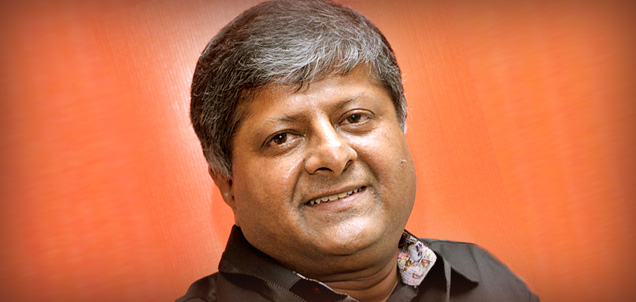
    Shashi Sinha has done a lifetime in the business of advertising and media. It’s been an interesting journey for an engineer who went from selling booze to crunching complicated numbers. The CEO of Lodestar UM shares his views on many important issues, including media research, the demise of the full service agency, key challenges facing media buyers in today’s market and how he managed to restore some credibility in the creative awards. The 54-year-old, who’s usually soft-spoken and politically correct, candidly speaks his mind on this occasion. Media buyers and creative directors must pay close attention. He makes some very valid points.


    By Anil Thakraney


    You work for two companies?

    I work for the Draft FCB group where I handle Lodestar. And recently I have taken charge of a creative agency called Interface. But my primary responsibility is Lodestar.


    Whom do you report to?

    I have dual reporting. I report to the Draft FCB Global CEO, Laurence Boschetto. On the Universal McCann side, I report to a gentleman called Jim Hytner who’s based in London.


    Dual reporting is always a tricky thing…

    It is tricky. Since they are sister companies you have to keep both masters happy. One of my strengths is getting along with people and ensuring that their objectives are met. I have been doing this for five years now. As long as the combined operation is successful, things are okay.


    Cut to the past. What attracted you to advertising, when you were a sales manager with the UB group?

    I actually came into advertising for the wrong reasons. I grew reasonably fast in the UB group at a young age and I was in sales there. But I wanted to migrate to marketing and that would have been an effort. Then a friend said to me I should work in advertising as I would get to work on many brands at one shot. And so I joined the ad world in 1986 and stayed on.


    And you started out as an account planner in Ulka. How did media happen?

    In those days planning was an unknown concept. Bal Mundkur used to run the agency at the time, and he thought planning was an airy fairy function, that it had lost steam. He asked me to do some ‘real work’. So I started doing odd jobs like running the financial advertising cell, selling sponsored prorgammes, etc. Later I shifted to client servicing. Along the way my interest in media grew. When the FCB guys decided to make India the regional hub, Anil Kapoor said the time had come for me to fully move to the media function.


    Share an interesting memory of Bal Mundkur.

    He had balls. Today our revenues and profits are huge and yet I would not take a decision which Bal took in the late eighties. The servicing team handling a large multinational client was very unhappy, they said they were being treated like shit. Bal wrote a six-page hand-written letter to the client explaining why the agency would like to part ways with them. When he told me about it, I was horrified. I asked him to instead change the team on the account. But Bal said, “No, it is a matter of pride.” (After some prodding Shashi reveals the name of the client. It was Glaxo.)


    You are involved in many activities, you run the GoaFest awards, now you are heading the Ad Club as well.  You have excess time on hand?

    (Laughs.) I have enjoyed it for the last three years but it’s getting to me now. I believe when you take something on you must give it your best. I took on GoaFest last year because it was in a mess. So one had to get some credibility back, I had a point to prove.


    I guess next year you would not want to do it.

    I will definitely not run the awards next year.


    Why has the Bombay Ad Club gone dead in the last few years? I recall they used to hold many events in the past.

    You are right, it has ended up becoming an awards-only body. The regular interactions have reduced. The agenda for the future is to make it broad-based. The Delhi market has become very big and it’s a starved market. So we can collaborate and do things. As soon as GoaFest is over you will see a lot of action happening in the Ad Club.


    Do you miss the days of the full service ad agency?

    I do. In fact, I’ll let you in on a secret. I want to go back to the integration system with Interface, and the response I have got so far is very good. I genuinely believe that full service is the final solution. The best ideas come when you are sitting around the table.


    Shashi, after all these years of happily running a media buying agency you are suddenly talking of integration.

    One has been playing to a role. One is building the media agency, building one’s clients. But the best quality works happens in a full service agency.


    And the media buying market has become like a sabzi mandi. How much fun can that be for someone who comes from the old school?

    This is the unfortunate downside of globalization, global clients and global processes. Truth is that internationally advertising is not a hot profession any more, it comes way down the totem pole. Though in India it still has a pedigree, there’s some respect left. Ten years later it may not be there.


    One super media innovation you are most proud of having effected.

    It’s always teamwork so it’s embarrassing to say I did it. We have enabled many, but the one I am most proud of was for Nerolac Paints about five years ago. We took up a Mumbai local and deposited the shades onto the train. Nerolac deposited their paint on the outside of the train and made a shade card out of it. It was a wonderful idea.


    How many years do you give the print medium in this country?

    I can’t say about Bombay, Delhi and Bangalore, but as a country, print will be here for a very long time. The smaller towns are under-leveraged. Secondly, even if there’s internet access, there’s no power supply in these places. So how much can one use the computer, how much can one read on the mobile? If the time spent in Bombay on a newspaper is 15 minutes, for a town in UP it would be forty minutes. The entire family reads it.


    Key challenges the buyer faces in a highly fragmented media market.

    Everyone chases the rate game and how to buy it cheap. To me that’s stupid. For most of the organized media there are metrics in place to measure the media efficiencies. So in media terms how many consumers we’ve reached is all bull. The big challenge is to find whether that’s working for my brand or not. That, no one is able to answer.


    That’s the media planner’s job. And the industry has killed the planner.

    Correct. The problem is that the media business has become all about volumes, the business has become transactional. The planner today has become a zombie, a computer programmer.


    How can the industry improve media research in this nation? There are too many question marks on television audience measurement and print readership studies.

    Someone has to put money on the table, it’s as simple as that. The solutions are all known, I know very bright and talented people in research, what needs to be fixed is known. The problem is: No one is wiling to invest. Today, if television measurement costs Rs 20 crores, what if Rs 100 crores was spent on it? Or, for readership surveys, which cost Rs 4 cores today, what will happen if they had Rs 15 crores? So it’s nothing but lack of funds. Neither the newspapers nor the media agencies nor the clients want to put down that kind of money. And that’s the only problem.


    GoaFest will be a sub-continental event this year?

    This being a tough year, we’ll have to see how to bring Pakistan and Bangladesh in. We have to see how many of them will come, it’s early days yet so I don’t know the answers. We are also trying to get the clients in.


    On the awards, how did you lick the problems of self voting and media leaks?

    On the problem of self-voting, it was very simple, it didn’t need a very bright mind. We stopped the practice of raising hands during the judging, and they had to vote on a piece of paper. So if a judge voted for his own agency’s work, we would block that score.


    You must be very disappointed with the creative directors who were indulging in this.

    Yes, 110 percent. In the Effies, the majority of the judges are the clients. And they are not as desperate to win as the creative directors. Which is why the creative directors take short cuts. And as long as you allow short cuts to happen, people will get even more emboldened. As far as the issue of the leaks goes, we solved it from the media end, because it’s very difficult to nab the person who was doing it. I reached out to various people in the media and got a commitment from their senior leadership that they won’t do it. Also, the switch to secret voting format helped.


    And yet, Lowe refuses to take part. Which means you still haven’t been able to crack the core credibility issues.

    Balki has taken a position and his problems are beyond the purview of someone running the awards. I am just a process coordinator. If he says he does not like his peers judging his work, that he doesn’t respect them, I can’t do anything about it. I can only clean up the processes. But forget Balki, there are other people who have their own agendas for not entering the awards, they fire over the awards committee’s shoulders. Privately they’d say to me they don’t have a good enough body of work so they won’t take part. But their public posture would be very different.


    Can’t you change the composition of the jury? Does it have to consist of creative directors?

    I would definitely like to bring the clients on the jury. Perhaps 50 percent of the panel. But I have been told by creative directors that ‘these are our awards’. You must understand that one is running an industry association and there will be many voices. And so it’s like a democracy; I may have a point of view but there are nine other people voting.


    One rival media buying agency head you admire.

    Jasmin Sohrabji (Managing Director, OMD India). She is far younger than I am but I respect her for building something from the start. She’s built the company from scratch in the last five years, and she’s done a terrific job.


    What are the future goals you’ve set for yourself?

    I think there’s a huge opportunity in the content space. And one would like to do something that’s related to advertising. It could be digital or television content. We have taken some baby steps in that direction but haven’t been able to ignite it. In fact, I have told our global parents they should offer quasi-entrepreneurial opportunities to the team members. In the sense that people within the company are given pilot projects to run, in which they have some stake.


    One big life regret.

    It’s not a regret but sometimes I wonder if after completing my IIT I made the right decision to stay on in India. I had the opportunity to get a scholarship to do my MBA abroad, and I could have stayed on there.


    Why? Don’t like working in India?

    Nothing like that. But the scale of operations abroad is dramatically different. The quality of life is good out here, but one is a big fish in a small pond.


    Click here to view all Goafest 2012 stories
     

  • Industry veterans remember Ulka founder Bal Mundkur

    By a Correspondent


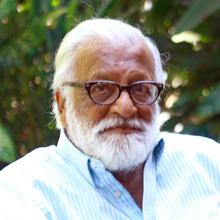
    Draftfcb Ulka Group held a prayer meeting in memory of the late Bal Mundkur, veteran adman and founder of what is today Draftfcb Ulka. The prayer meet was held on Thursday, January 19, 2012 at Yashwantrao Chavan Pratisthan in Nariman Point, Mumbai.


    Piyush Pandey, Executive Chairman and Creative Director, South Asia Ogilvy & Mather India; Alyque Padamsee, theatre personality and ad film-maker; Gerson da Cunha, stage and film actor, social worker and author; and theatre veteran Dolly Thakore were some of the notable personalities from the advertising and media fraternity, other than the leadership team from Draftfcb Ulka who attended the prayer meeting.


    Shashi Sinha, CEO, Lodestar UM remembered the late Mr Mundkur as a man who was always a leader, and never a follower. A man who was very generous, always ready to help those who needed help, and a man who did not work for money alone but, also for a lot of noble causes which he did not give up even after his retirement. Mr Sinha pointed out that Mr Mundkur had left his cushy job to start his own agency, and that he named the agency – Ulka – at his mother’s suggestion.


    A two-minute silent prayer was observed in memory of Mr Mundkur which was again followed by close friends, associates, former colleagues etc. sharing their thoughts and memories of the late advertising veteran.


    Mr da Cunha highlighted the recently released ‘Ad Katha’, a special volume tracking the history of Indian advertising, as one of Mr Mundkur’s huge achievements. Mr da Cunha was also quick to point out that a lot of people not just owed Mr Mundkur the brands he created for them, but many owed him their career as well. Mr Mundkur has created great professionals, he said, while dedicating the 300-page ‘Ad Katha’ to the memory of Mr Mundkur.


    Mr Alyque Padamsee was also among those who spoke about Mr Mundkur at the prayer meet, saying he remembered Mr Mundkur as a man of rumbustious character. A man who had big ideas and was determined to see each one through. Mr Padamsee also added that his inspiration comes from Mr Mundkur, who was always ready to defend someone – ie, if you believe in something then stand up and fight for it.


    Mr Mundkur passed away in Goa on January 7, 2012 due to heart failure. Mr Mundkur had founded Ulka in 1961, ten years after he joined the world of advertising. In a span of another ten years, Ulka had become the fourth largest agency in the country, and by far the largest independent Indian start-up.


  • Bobby Sista, Alyque Padamsee & Gerson da Cunha on Bal Mundkur

    While tributes keep pouring in for the ad legend and intrepid explorer who was ahead of his time, MXM asked his peers from the golden era to look back at the Bal Mundkur they knew.


    Gerson da Cunha, stage and film actor, social worker and author:

    Bal Mundkur was a man of immense energy; he was tireless. Once he decided to do something nothing would stop him. For instance, take the case of the book Ad Katha. There have been three previous attempts by the Indian advertising industry to write this book but every time it resulted in failure, because either the money could not be collected or nobody would be available to take on the writing task or both. But the key among the two was finding the money. Bal Mundkur then sat down and wrote off a series of letters to people asking them to donate money towards the cause. As soon as he collected the money it became a serious project and people began to join him. That’s what I mean: when he decided to do something he would go ahead and achieve it. The next important thing about the book was the drafting of the letter for the book. Otherwise you and I could also write to people and they would give a damn, but to Bal they responded. In fact many of them owed things to Bal – he had built a brand, he had given them a job, etc. So the book in a way represents the kind of person that he was.


    In fact we both met about a year ago in Goa and he told me about this book. He said to me, “Let’s do it.” I responded in the affirmative and thus began our quest. While I was in charge of the content, he was in charge of the money. While we were working on the book, I’ll never forget what he told me halfway through that project. He said, “You know Gerson, I have done many good things in my life but this by far is the best thing that I have done.” And he did it – he completed the job, and he left us.


    Also, there is something else about Bal Mundkur. There are people who, when they leave this life, take something irreplaceable away with them. For example Behram Contractor or BusyBee, as he was fondly known. When he died, he took away with him the bentwood Irani shops, the cuisines – that extraordinary part and spirit of Bombay, as it was known then, which no longer exists. He took it with him and went away. Or Mario Miranda, for example. He took with him a part of Goa and a part of Bombay – Colaba especially, and went off. What Bal has taken with him is a much more complex thing. Yes, it is an era of advertising that was professional, that was innocent… there was not the kind of cut-throat rivalry that was today. Even people competing for the same account were polite and would meet each other up for a drink in the evening. So that professionalism and innocence that existed in the advertising space then has gone with Bal Mundkur.


    He was also involved with a lot of public causes – for the crippled children, did his bit for cancer patients… in fact he he was the first to do a remarkable campaign around cancer. And there were many other causes that he supported. Not just advertising and marketing, he was involved in other facets of life like hosting seminars, promoting the industry to the outside world… he even got the Trinity College of Cambridge choir here.


    There was also a generous side to Bal Mundkur. He knew the value of money but what he did with that is what makes him even greater.


    Bal Mundkur has definitely left a void and he has taken a part of the world of advertising that we once knew.


    Bobby Sista, Founder and Executive Trustee, Population First:

    It’s not really easy to describe Bal Mundkur but he was certainly one of the most colourful and charismatic personalities in advertising. He was not your ordinary guy – he could be arrogant, he could be short-tempered, he could be very charming, he could be very helpful… all of these things, but certainly he was a very good adman.


    Bal Mundkur and I go back a long way. We were closely involved in mooting the idea for forming the Advertising Club of Bombay in the early days. We also discussed the idea of starting an agency together before he floated Ulka. We almost came close to an agreement and everything else was done but then there was a last-minute hitch and it didn’t work. A year or two after that he started Ulka. So while he became fully dedicated towards Ulka, I started working for a client. But we remained friends.


    He was very talented in what he did. Such was his stature that he could even walk into the cabin of an MD with full confidence and if certain things didn’t work out he wouldn’t hesitate in calling it off.


    I do know that he was highly respected by the advertising profession. He certainly brought in a new angle to how advertising could be created. He had that kind of leadership quality – making people think differently and come up with good work.


    One of his noteworthy works includes his effort around the book Ad Katha. I remember that when he conceptualised the idea, he came and spoke to me about it first. He wanted to form an advisory council to get help on this book. He was supposed to have named his book History of Indian Advertising. Bal had even written about 180 pages of the book by then. But then he got in touch with Gerson da Cunha and they went through 2-3 different changes before they renamed the book to Ad Katha. I am happy that he was able to complete the book and launch it at Ad Asia along with 1,500 people from the industry.


    Also, one of the things that you could say about Bal Mundkur and his extracurricular activities was that he was a great fund-raiser. He had the ability to collect funds for various causes, including for seminars around advertising, both in India and abroad.


    Alyque Padamsee, theatre personality and ad film-maker:

    Bal Mundkur was a pioneer who started his own Indian ad agency, even though all the ad agencies at the time were foreign-owned. He built Ulka Advertising into one of the big five agencies of the time. He was not only a superb account management honcho, but also an extremely creative genius. Bal Mundkur was known as a very frank and fearless adman, and pushed his ideas across with charm and force.


    Photograph: Shreta Arora/O Herald O
    
    
  • Mediaah!: RIP, Bal Mundkur

    By Pradyuman Maheshwari


    I was sad to learn of Bal Mundkur’s passing on Saturday. I got in touch with Mundkur thanks to my colleague Vidya Heble (her tribute @).

    We were doing a cover feature on 50 years of Ulka for Impact, and while we had interviewed the new captains, we couldn’t have done the story without speaking to the man who started it all: Bal Mundkur.


    Vidya and Rishi Vora met him for the story and since we didn’t get him photographed here in Mumbai, I asked former colleague and editor of O Herald O in Goa Sujay Gupta to do a quid pro quo. We would give him the story and he gets us the pictures. Mundkur wasn’t too happy with the story appearing in the Herald, I figured later.


    He had wanted to speak to me about the book project that he had undertaken. He also wanted to subscribe to Impact, and sent in a cheque for the subscription as well as wanted some 20 copies of the issue that carried the article.


    We would’ve done it without the cheque, but Mundkur insisted.

    Speaking to him on phone meant investing at least half an hour, because you had to hear him out and convince him about what your point of view.


    I met him on a Saturday morning at the Orchid. He gave me his room number a week in advance, and the first question I asked him when I met him was how did he know which room he was going to be in. “Because, young man, this is my room,” he said. And he then regaled with me with a countless stories, each of which threw light on a different facet of his personality.


    On how we was a naval officer, an aviator, a music enthusiast… how he got into advertising, his pet peeves and the projects back in Goa. I spent some three hours with him. Possibly three-and-a-half. I could’ve spent an entire day soaking in the old stories. But there was a lunch to be at and Mundkur too had a meeting to head to.


    The room at Orchid (near the domestic terminal of Mumbai airport) was given to him by hotelier Vithal Kamat who Mundkur said he had helped financially ages ago (note: info not verified).


    He spoke about his book, and how it was meant to be a volume on Ulka. But he firmly believed that no such historical account could go without talking of the other greats of the time (note: info not verified). He insisted on it and chose to get on to the Ad Katha project and finally succeeded in launching it at Ad Asia.


    I didn’t really stay in touch with him, though tried calling him after his book Ad Katha’s release. I also wanted to speak to him about MxM and seek his blessings.


    I also wanted a personally autographed copy of the book. I guess I’ll never get that. I am happy of course that I could spend some time with him.

    Perhaps we should request Vidya to write a biography on the great man. Am sure it will be an uputdownable account.


    Amartya Sen on what’s wrong with the Indian media

    Nobel laureate and Bharat Ratna Amartya Sen writes a loooong 2000-plus-word review of the Indian media and what’s wrong with it (@http://www.thehindu.com/opinion/op-ed/article2781128.ece).


    The last para of the piece sums up his argument:

    If the first problem I referred to, that of accuracy, is one of improving the performance of the news media through better quality control, the second, transcending class bias, concerns the media’s role in reporting and discussing the problems of the country in a balanced way. The media can greatly help in the functioning of Indian democracy and the search for a better route to progress including all the people – and not just the more fortunate part of Indian society. What is central to the functioning of the news media in Indian democracy is the combination of accuracy with the avoidance of bias. The two problems, thus, complement each other.


    It took me a second read to get a grip on what he was trying to say.

    While being told about the inaccurate reportage is embarrassing, I don’t agree with his second view on class bias. More on that some other day… you don’t want another 2000 words on the issue, do you?


    Vij is back at afaqs

    Guess we know why only afaqs carries the story about Sandeep Vij, co-founder of afaqs.com, quitting DDB Mudra. He is all set to do so, the story informs. And where’s he going? Well, to get back to Banyan Netfaqs! Private Limited (BNPL) which runs! and The Mobile Indian. “He plans to help usher BNPL into its next phase of growth in the online media space,” the report says.


    Should we be getting worried?


    Buzz me if you have a story to tell and gossip to share. Confidentiality assured. Andar ki baat will stay under. There are various ways you can reach me: pradyumanm[at]mxmindia.com, BBM @ 23050B5D, Whatsapp/Gtalk pradyumanm[at]gmail.com, @pmahesh, 98338 76278.
     

    Disclaimer: Although Pradyuman Maheshwari is CEO of MxMIndia other than being editor-in-chief, he chucks those hats while writing Mediaah! So, the views expressed here are entirely his own and not those of the website and the team that runs it (especially the National Sales Head!).


  • Obituary – Bal Mundkur: Slogans, spice and a bite of ‘song’

    By Vidya Heble


    “Bal Mundkur has passed away.” It seemed an impossible thing to believe, but the fell hand had indeed taken him, on the morning of January 7, 2012.


    It was on a winter day many years ago when I first met Bal Mundkur at his home, Surya, on the banks of the river Mandovi in Goa. He was, of course, a legend and I trembled inwardly at actually meeting him, albeit in a personal capacity.


    His career as a naval officer and aviator had been followed by an illustrious innings in advertising, which he had famously given up to retire in Goa. ‘Retire’ was only figurative, because he proceeded to put his unrelenting energy into designing and building his house, and then lending his prodigious talent to projects which he felt would benefit society, including restoration of a fort and setting up of a museum. He even found his way into an offbeat little film (http://wn.com/rare_indie_goa,_ma_cherie_part_1) which is quintessentially ‘Bal’.


    “For the Royal Society for Asian Affairs, where he contributed an article on ‘Incredible India: The Inconvenient Truth’, he described himself “as neither an activist nor a frustrated journalist but as a dispassionate commentator”.


    People in Goa looked on him with awe, and he was known as a man of exacting standards and uncompromising expectations. Even my “Hello”, I felt, would be subjected to scrutiny. But he was delighted to meet a fellow Konkani, and dwelt pleasurably on the joys of Konkani food, much of which he was not allowed to eat by then. Pickle, chutney and spicy food was out of bounds, but Uncle Bal, as I called him, managed to sneak teekha stuff onto his plate now and then. When he discovered that I can cook, he extracted from me a solemn promise to make him some standard Konkani dishes, among them potato ‘song’ – a simple dish of cubed potatoes cooked in well-sauteed onions, tamarind and a lot of chilli. I made a mental note to tone down the chilli for Uncle Bal, who of course read my mind and said, “Don’t forget, lots of chilli!”


    But Uncle Bal had so much else on his plate that he never did find the time to come over for a Konkani meal. With time and circumstances, I didn’t meet him again for some years. But being in the business of media news meant, inevitably, that our paths would cross professionally. When I rang him up after a long interval, to ask for an interview on Ulka’s anniversary, he remembered the long-promised ‘song’, and once again we assured each other that I would cook and he would eat, one day.


    As always, however, Uncle Bal had too much going on in his life. One never knew where he would be next – dashing between Goa and Mumbai, scooting off to Europe or South-East Asia or somewhere else – or what project he would take up. Perhaps fittingly, his last offering was the history of Indian advertising, Ad Katha, which was released at Ad Asia 2011 in New Delhi.


    But those who know him, know that he would not have rested after this. That fertile brain would have been working on something else, and he would have been ringing people up with exhortations to participate, to donate, to sponsor. His zeal was unwavering and his passion, perpetual. Somewhere he might even have found time to stop for a bite of ‘song’.


    We will all remember Bal Mundkur in different ways. I’ll recollect him with a dash of spice.


  • Bal Mundkur: Tributes by Shashi Sinha & Bunty Peerbhoy

    By Tuhina Anand


    Shashi Sinha, CEO, Lodestar UM

    Bal Mundkur did what he believed in and did that pretty well. He was passionate about advertising per se and was not among those who would look at action from far but get personally involved with work that he took charge of. I had the opportunity to work with him for 5-6 years and I can recall that ion those days advertising was really different ball game yet even then he would be pushing boundaries and not hesitate in taking chance. He would lead from the front and give his ideas to better creativity. He got into advertising pretty late but when he got into it he followed it from his heart.


    Bunty Peerbhoy

    I have known Bal very closely. I remember an interaction with him which he had with my father one day at Habour Bar in Taj where he was sitting alone. My father introduced me to him and he asked him how much I was being paid by my father. As a trainee, my father replied that I was being paid Rs 90. He made an offer to me to join him where he would pay me Rs 500. My father was stunned but Bal was unfazed. He said, “You are underpaying a smart young man, I am offering him what he deserves’. That was my first interaction. Though there is an aside to this story and that is when my father introduced me to Bal, I was sheepish because those days I used to play cards with Ulka people and Bal would drop in at times so in that sense we had met before but it was an introduction which I definitely didn’t want my father to know of.


    I have spent time with him and known him both professionally and personally. He has also been a speaker at the memorial lecture that we conduct every year in memory of my father called the Ayaz Peerbhoy Memorial Lecture. He was a lovable incorrigible person who always challenged the convention. He never shied away from being blunt. At time when agencies were doing speculative campaign he came out strongly saying that while people in advertising may talk against it but when it came to doing one for a prospective client they would not shy away from doing it. He stressed on the fact that one should not say things that they don’t mean. He always spoke his mind. He was certainly among one the colorful men of our business whose language too was equally colorful…but that was Bal.


  • Remembering Bal Mundkur


    By A Correspondent


    Founder of Ulka Bal Mundkur, 86, passed away on the morning of January 7, 2012 of heart failure at his residence, ‘Surya’, in Reis Magos, Goa, overlooking the Mandovi River.


    The agency, now Draftfcb + Ulka, celebrated its 50th anniversary last year and is ranked the third largest advertising group in the country.


    Mr Mundkur was originally a naval officer, and later a commercial airline pilot. A modelling offer from his brother, who worked at Levers, marked his entry into the world of advertising which he joined in 1951. Ten years later Mr Mundkur founded Ulka, which means shooting star, and the agency’s career was indeed starry. In a span of 10 years, Ulka became the fourth largest agency in the country, and by far the largest independent Indian start-up.


    A release from Draftfcb + Ulka says, “An avid collector of all things rare and beautiful, Bal’s prized chess set starred in Satyajit Ray’s celebrated Shatranj Ke Khiladi. Bal was not just a businessman, but he was also an extremely passionate crusader for a wide range of causes, from a building for a cerebral palsy hospital to bringing the choir of Trinity College, London on a tour across India.


    “In the nineties, Bal retired… and moved to Goa, where he continued working for causes close to his heart – which included helping set up Asia’s very first Museum of Christian Art in Goa.


    “Bal remained full of energy and enthusiasm till the end – at 85 he set up the Centrum trust, which recently published Ad Katha, the story of Indian Advertising over the decades.


    “Bal has moved on, but he will live on in the hearts of those who knew him.”


    Read:

    Obituary – A dash of spice

    http://www.mxmindia.com/2012/01/obituary-bal-mundkur-slogans-spice-and-a-bite-of-song/


    Tributes – Warmly remembered

    http://www.mxmindia.com/2012/01/bal-mundkur-man-and-memories/


    Mediaah!: RIP, Bal Mundkur

    http://www.mxmindia.com/2012/01/mediaah-rip-bal-mundkur/


    Photograph: Shreta Arora/O Herald O

  • Bal Mundkur passes away

    Bal Mundkur
    Bal Mundkur

    By A Correspondent


    Bal Mundkur, veteran adman and founder of what is today DraftFCB Ulka, passed away in Goa today. Mr Mundkur founded Ulka in 1961 and was recently seen mingling with the fraternity at Ad Asia 2011 where he also released Ad Katha, a special volume tracking the history of Indian advertising.


    He will be cremated tomorrow (Sunday).


    Notes a citation on the 50 years of the agency (at http://ulka50years.com/history.html):


    “50 years back, a gentleman felt that there was a need for an Indian agency that would challenge the then agency stereotype. He was convinced that the main cities had abundant talent and a community of entrepreneurial clients would embrace an agency that could do pioneering work based on the principal of ‘accountable marketing.’


    Bal Mundkur founded Ulka in 1961 and within the first ten years, the agency made a smooth transition from a creative hot shop to a large mainstream agency. Today, the agency is in the top 5 with 50 of its brands being category leaders.”


    * Please stand by for detailed report


    Also read: Seminar” href=”http://www.india-seminar.com/2004/543/543%20bal%20mundkur.htm” target=”_blank”>An Outsider in Goa (an article in Seminar magazine, published in 2004)


    Photograph: Shreta Arora/O Herald O