Tag: Bajaj

  • We must thank Rahul Bajaj for the resurrection of advertising


    By Vikas Mehta


    Vikas MehtaIn today’s age of data and empirical evidence, classical advertising is losing its relevance. Not everyone is convinced about the role of traditional advertising. The number of likes, shares, retweets, enquiries is all that matters. Talking about emotional connect only just does not make sense.


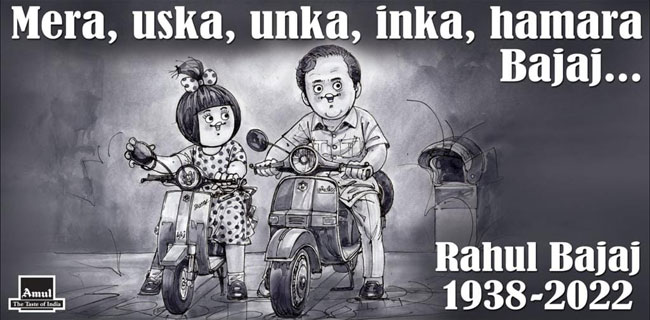
    The power of communication, specifically advertising, was never better illustrated than now, after the passing away of Rahul Bajaj on Saturday. All posts, messages and some memes too talked about the iconic ‘Hamara Bajaj’ campaign in the same breath as Rahul Bajaj. It’s seems as if the man had ruled the two wheeler industry because of Hamara Bajaj. It seems the enormous success the brand was accorded was all due to Hamara Bajaj. It seems that Hamara Bajaj was the embodiment of Rahul Bajaj. Nationalist, outspoken and proud Indian businessman.


    Nothing can be further away from the truth.
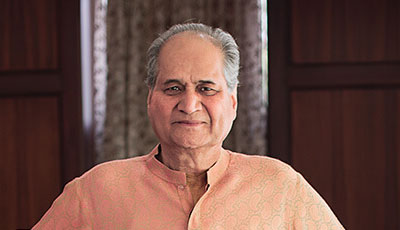
     

    Rahul Bajaj
    Rahul Bajaj

    Bajaj became the dominant two-wheeler player in India for decades because of the ‘licence raj’. It was the government prerogative to decide how much production capacity even private players could have in India. Demand be damned. Some bureaucrats would decide the India needed to produce only x number of scooters. So if someone was doing that (read Bajaj), where was the need for more players? It suited Bajaj. They need not invest in R&D because the consumer had no choice. They needn’t have expanded because not only did the government not allow it but by creating an unmet demand, a huge black market was created for Bajaj scooters. Bajaj dealers were rolling in cash and so was, one suspects the company.


    So, Rahul Bajaj, in the guise of nationalism was against liberalisation. He had openly declared war on liberalisation policies by forming an informal Bombay club of businessmen who felt threatened by  competition due to liberalisation.


    And the arrival of Hero Honda seemed like the death knell for Bajaj. It was Rajiv, his son, who shrewdly bailed his company out. He first discontinued scooters, the product on which Bajaj was built and then invested heavily in R&D. Some collaborations like with Kawasaki, to gain time, was the first indicator of the direction that Rajiv sought.


    And of course Hamara Bajaj, a simple advertising campaign, gave a temporary respite to the beleaguered scooters. Actually it was not as much nationalistic as it was about India rising. For a scooter brand which had thrived on protectionism, to cash in the liberalised India sentiment was as ironic as it could get.


    And it gave space to Rajiv and his team to get into a hitherto, niche 175-200cc motorbike segment.


    It was actually not a resurrection. What came out of the ashes of the now tainted scooter legacy was Pulsar. It is public knowledge that Rahul disagreed with Rajiv on discontinuing scooters. To give credit to the man, he allowed Rajiv a free hand. But when Pulsar was born and Bajaj as a brand seemed to have been relegated into the background, Rahul did put his foot down. It was not to be Pulsar but Bajaj Pulsar.


    The last 48 hours seem to have vindicated traditional advertising. In spite of all the facts above, every newspaper – English or vernacular, every social media commentator on Facebook or LinkedIn was trying a play of words with Hamara Bajaj. So, while we pay our tribute to the departed, let’s not forget what made the man pass into folklore was a simple advertising campaign which has transcended time, and which has once again shown the power of advertising.


    Vikas Mehta is a senior advertising and marketing services professional and educator based in Dehradun. He writes off and on for MxMIndia. His views here are personal

     

  • Bajaj Finserv launches #LoanFlexibleHai campaign

    By A Correspondent


    Bajaj Finance Limited has unveiled its latest #LoanFlexibleHai campaign. Highlighting the Flexi Personal Loan offering, the campaign allows consumers to learn more about this industry-first offering by playing an interactive game.


    Notes a communique: “Through the campaign’s 15-day window, from December 1- 16, 2019 Bajaj Finance Limited aims to provide customers with an interactive medium that helps showcase visually, how a single, flexible loan can be of assistance during various life stages.”


  • Saare Jahaan Se Achhca…


    It’s Independence Day on Saturday. There are several brands which have done some splendid work in independent India, but there are some which stand out amongst these. Presenting a selection of these…


    Why Airtel wants to be everybody’s friend


    By Ravi Balakrishnan


    Airtel may want to be remembered for its snazzier, youthful advertising, but one of its definitive commercials is the barber’s shop ad from the mid-2000s. As the trademark Airtel ring tone sounds, customers and the barber hastily reach for their phones. But the call is actually for the chaiwalla, subtly establishing the brand’s ubiquity and ability to cut across classes.


    Over the last two decades – Airtel turned 20 this July – it has grown to be India’s largest mobile network. For lakhs of Indians, it’s been the first telephone connection of any sort. No mean feat in a hyperactive market that at one point in 2009, had close to 10 players and has been through supposedly giant slaying trends like mobile number portability.


    According to Srini Gopalan, lead – consumer business, Airtel owes it all too keeping its core essence intact. He explains, “Human connections are at the heart of the brand. Over the years, we’ve been able to capture this in multiple memorable ways.” For instance, Express Yourself starring AR Rahman to the more recent Har Ek Friend which acknowledged that friends were a new form of family. It’s a singleminded stance at variance with many newer entrants who initiated price wars or took potshots at other players. Says Gopalan, “While others have obsessed about specific technology or the competition, we have obsessed about customers, providing a great network and service.”


    Of course, there’s a lot more to Airtel than a few well-liked ads. It has tailored itself to various target audiences offering internet and videos at Rs 1 for the population that’s getting online for the first time. It claims to have started providing 4G to its 3G subscribers at no extra cost. Gopalan explains: “I don’t think the basic formula has changed from when Sunil Mittal started this business. We’d rather keep that intact and customise product, communication and service rather than be different things to different people.”


    How Amul, the taste of India, buttered generations of toast


    By Ravi Balakrishnan


    Few brands can stake as much of a claim to literally having fed India as Amul. Its ubiquitous butter shows up in bread baskets at fine dine restaurants and at streetside sandwich and snacking stalls that advertise their ‘made with Amul’ credentials on large chalk boards as an assurance of quality.


    Amul Butter came into its own in 1966 when its agency DaCunha Communications, perhaps unwittingly, created what would go on to be one of advertising’s longest running campaigns. The Amul Butter girl was initially a foil to a sexy milkmaid mnemonic of arch rival Polson’s. Topical ads were introduced a year after the Amul girl first appeared and continue to date.


    Along the way, the campaign has become less about butter and more about what Amul stands for. A good move since butter is no longer Amul’s flagship product, accounting for a mere 10 percent to 11 percent of its Rs 21,000 crore turnover of which 50 percent is cornered by milk. It’s arguable if the campaign flogs more product. But the ads – now also freely available via Facebook – have become an amusing, sometimes sentimental, sometimes sardonic document on life in India over the last five decades. Rahul DaCunha, director, DaCunha Communications observes, “The advertising has stayed consistent and the Amul girl has truly become the daughter of India: there’s a possessiveness people have about her. Too many advertisers let go of concepts too soon. That we’ve stayed consistent while updating the campaign every year has helped.” While hoardings are still a mainstay, on Amul’s Facebook page there are sometimes new topical ads every day that are eagerly discussed and shared.


    Amul has staved off competition, which has intensified particularly over the last decade and a half. According to managing director RS Sodhi “Our business strategy evolved 68 years back by Dr Veghese Kurien is C2C or cow to consumer. When both producers and consumers are with you, you are not afraid of competition. We do not replace expensive natural ingredients with synthetic cheap ones like other companies.”


    Which explains why Amul and its moppet are one of the few Indian brands that have survived the slog from pre to post-liberalisation India, a culling that consigned many former market leaders to history books.


    Ambassador – the first Indian car still lives


    By Delshad Irani


    In May 2014, Hindustan Motors stopped manufacturing the car with Sophia Lorenesque curves, the Ambassador, due to fast declining demand. For almost six decades, the Ambassador traversed across India, carrying multiple generations of Indian families. She’s still around, though, thanks to government and military officials, taxi drivers ferrying natives and tourists and Amby aficionados.


    The story of the first Indian car began in 1957, when BM Birla owned Hindustan Motors (established in 1942) manufactured the first Ambassador, modelled on the Morris Oxford. It was a matter of prestige to own one, especially after a five-year waitlist. She was a symbol of a liberated, new India, forging ahead in nothing less than a beautiful tank, so to speak. You couldn’t find a tougher passenger car. And still can’t. In 2013, the BBC show Top Gear put this to test – before Jeremy Clarkson famously punched his way out of favour. The Ambassador went up against Maruti Suzuki, Hyundai, Toyota and Honda, all in service as cabs around the world, in a deadly taxi shootout. While the rest emerged dismembered, the Ambassador crossed the finish-line intact and in good spirit. The irony: It was the advent of the Maruti 800 in the mid-80s and 90s that heralded the decline of Ambassador as the queen of Indian roads. Of course, changing consumer likes killed the Ambassador, too. Unchanged over the years, a car reminiscent of the bowler hat isn’t everybody’s cup of tea. And competition grew from two (Premier Padmini and later the Maruti 800) to today’s smart sedans, SUVs, MUVs, hatchbacks for every taste and type of Indian clan. Just 2,200 Ambassadors were sold in the year ended March 2014, according to reports.


    However, the Ambassador’s legacy is one adopted by others as their own. Even before Maruti pitched itself as the “people’s car” with an outpost in every cranny, it was the Ambassador that could be mended by the sides of highways with a spanner and some ingenuity. Today, however, Ambassador parts are increasingly rarer, expensive and harder to source. The Amby is also the original ancestor of supersize, utility vehicles, which can accommodate the entire family, pets and luggage for holidays through temperamental terrain. With room to spare for Ego. So, you see the Ambassador’s not quite dead. Long live the Queen.


    How Bajaj scooters gave Indian middle-class its first two-wheeler


    By Shephali Bhatt


    If you lived through the 80s and 90s without witnessing a family of four (man, wife and two kids) on a Bajaj Chetak, it’s safe to assume you weren’t living in India. Bajaj Auto gave India its first family car: only it was actually a scooter.


    The journey of bringing mobility to people in a country marred by poor transportation began in 1961. Bajaj got a licence from Italy’s Piaggio to manufacture and sell Vespa in India. Around early 70s, Piaggio went ‘No can do’ on renewing licence which led to the launch of Bajaj Chetak. In 1977, Chetak raced ahead of every other player in the two- and four-wheeler category securing sales of over 100,000 units in a year. Ten years later, this number had soared to 500,000 and by the time we hit the 90s and liberalisation set in, Bajaj Auto was selling 100,000 scooters per month. The brand had practically attained the status of ‘Chunnu Munnu de Pappa di Gaddi.’


    Bajaj scooters succeeded because they were active in a scarcity economy, says Suman Srivastava, founder of Marketing Unplugged consultancy and CSO of FCB Ulka. Incidentally, it’s the first brand he worked on. “The 70s was a rationing era which made Bajaj the undisputed king. They had a product at a reasonable price and the consumer badly needed it. You had to wait for a decade to get a Chetak,” he recounts. “When Rahul Bajaj, then MD of Bajaj Auto (now chairman) took over the reins and started focusing on scooters, his main fight was with the Bombay Club to grant him licence to expand capacity, to sell overseas. The product was always in short supply,” Srivastava adds.


    So what if Lintas’s marketing genius of ‘Buland Bharat ki Buland Tasveer -Hamara Bajaj’ was only a holding operation, acted upon when scooter sales were plummeting in the wake of 100cc bikes? It did its job. With confirmed reports of Bajaj Chetak making a comeback next year, one can be certain the scooter’s success wasn’t a flash in the pan. It is a ‘Lambi race ka ghoda’ indeed.


    How Thums Up still manages to be the king of colas


    By Amit Bapna


    There are people who won’t drink their favorite rum, Old Monk, if it’s not served with Thums Up, leaving many a barman wondering if the tippler’s loyalties lie with the rum brand or the cola? Launched in 1977, Thums Up continues to have a hold across the length and breadth of the country and remains an enigma that marketers, over the years, have tried to unravel on the success recipe of the brand. It also remains a case study for the Atlanta based Coca-Cola company that has not faced such a situation anywhere in the world – of having a homegrown brand take on the might and muscle of the big brother (Coca-Cola) and continue to be the winner. According to Debabrata Mukherjee, vice president, marketing & commercial, Coca-Cola India and South West Asia, “Thums Up has had a clear ‘masculine cola’ positioning and the brand has continuously adapted to the relevant codes of masculinity over the years that have worked very well for it.”


    The brand launched by the maverick Ramesh Chauhan was already a force to reckon with when it was acquired by the Coca-Cola Company in what was possibly the most famous deal of the early 90s. A person familiar with developments of the deal says on condition of anonymity, “Coke by buying the largest cola brand in the country was hoping to get the entire cola equity transferred to it.” That it didn’t pan out that way was something that the cola giant had not bargained for while closing the deal. Says KV Sridhar, chief creative officer, SapientNitro, “In a country like India it is not cola that is culturally rooted: what is rooted is the strong taste of Thums Up – a product made for the Indian palate.”


    Neither pulling the plug by reducing distribution strength nor scuttling advertising budgets – something that the parent Coca-Cola has known to have tried many times – worked in the case of this brand that continues to own the mind and heart space for millions in the country. Points out Sourav Ray, chief strategy officer, Havas Worldwide, “Relative to Coca-Cola, Thums Up had more freedom but less budget which worked as the perfect tonic for the marketing team to create a differentiated positioning for the brand, focus, think out of the box and freely express themselves.”


    Source:The Economic Times

    Copyright © 2015, Bennett, Coleman & Co. Ltd. All Rights Reserved

    Licensed to republish


  • Leo Burnett rides away with Bajaj Discover

    By A Correspondent


    Leo Burnett has been appointed as the AOR by Bajaj Auto for the Discover business.


    Commenting on the win, Saurabh Varma, CEO, Leo Burnett said, “It is a privilege to work with Bajaj Auto again. We are committed to using the power of HumanKind and integrated thinking to create a larger share of the future for this iconic brand.”


    Raj Deepak Das, CCO of Leo Burnett said, ‘Bajaj is an iconic brand and gives us an incredible opportunity to create purposeful and participative work’.


    The mandate will see Leo Burnett crafting communications for Bajaj Discover that spans across disciplines including ATL, digital, retail and activation. The agency had created some memorable campaigns for the brand including Bajaj Calibre – The Unshakeable when they worked with Bajaj Auto from 2001 to 2008.


  • The Anchor: Sneha Iype recalls 8 memorable characters on Indian television


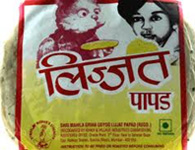
    #1 “Hein hein hein … hein hein hein…” Remember the head-bobbing rabbit from the Lijjat Papad commercial of yesteryear? That had to be the most memorable of the lot for me.
    The jingle got under one’s skin and in those days on television there was no escaping the ingratiating opening laugh of the rabbit with the papad.

    The rabbit and the jingle obviously catapulted sales and recall hugely for this amazing Shri Mahila Griha Udyog Lijjat Papad cooperative movement in its initial years, today a big marketing movement story by itself.


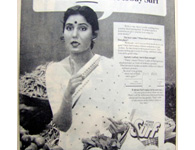
    #2 “Surf ki kharidaari mein hi samajhdaari hai…” Lalitaji is probably the most iconic symbol of Indian advertising. She stood for the discerning middle-class woman who made smart decisions for her home and boldly presented her case. Unforgettable.
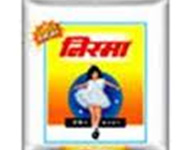
     

    #3 “Doodh ki safedi Nirma se aaye…” The girl in white swaying to the ultimate melodious jingle was such a success that even after all these years the client can’t seem to let go of the tune in any of their communication. It’s obviously their trademark. Nirma was synonymous with the happy, hummable jingle.
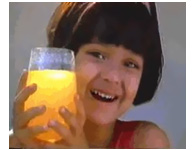
     

    #4 “I love you Rasna…” Rasna came up with an idea of showing the mother-child relationship through their product. This gave birth to the very famous commercial featuring the Rasna Girl (Ankita Zaveri). The ad was revolutionary in more than one sense. Not only did it position Rasna as a family product, but also introduced the tagline “I Love You Rasna”, which became immensely popular among the masses. Rasna kept this tagline for many years to come.
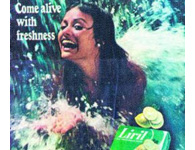
     

    #5 “La la la la, la la la la la…” Sing it aloud. It’s truly refreshing.

    Yes, that’s what Liril did in 1985. It broke out of the sari and put model Karen Lunel in a swimsuit under a waterfall, creating history for the brand and for Indian advertising. Another case where the brand was synonymous with freshness and lime because of its pathbreaking visual and music.


    #6 “Jab main chhota ladka tha, badi sharaarat karta tha, meri chori pakdi jaati…” Roshni ki duniya ka sartaj Bajaj. A most endearing film and a truly enjoyable one too. I can still watch it and enjoy it.

     

    #7 A boy and his dog. They were an icon for the “wherever you go our network follows” line. Vodafone , in those days “Hutch”, launched with this amazingly simple campaign and showed no phone in a commercial that communicated network. A big hit.
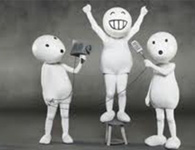
     

    #8 The Zoozoos were the IPL season 1 superstars. They stood for innovation and a great media tool with the release of one ad a day through the IPL series. They blew the minds of millions, giving Vodafone a huge edge in the advertising of their value added services. Very fresh and very cool too.


    Sneha Iype is Executive Producer, Nirvana Films