Tag: Bahubali 2

  • Dubbed & Delivered: K.G.F, Doctor Strange & more


    By Shailesh Kapoor


    Shailesh KapoorThe success of K.G.F: Chapter 2 has emerged as the big entertainment headline of 2022 so far. The film has gone on to do exceptional box-office in multiple markets, including overseas. In the Hindi language, the film is now the second biggest domestic grosser of all time, after Bahubali 2: The Conclusion.


    Both K.G.F: Chapter 2 and Bahubali 2 are films from southern parts of India, made originally in Kannada and Telugu respectively. RRR, another Telugu film, is also a big grosser of this year. By the time 2022 ends, we may have seen a few more of their ilk.


    Doctor Strange: In The Multiverse Of Madness released last week to opening collections in India that no Hindi film has been able to achieve since the pandemic started. A large share of the film’s collection has come from the language-dubbed versions, i.e., Hindi, Tamil and Telugu.


    Can one call this the breaking of the ‘language barrier’? Technically, that will be an inaccurate description, because the language of consumption is the local language of comfort, not the language in which the content has been originally been produced.


    In our yet-unreleased report titled ‘The Ormax OTT Audience Profiling Report: 2022’, a typical paid streaming audience (SVOD) is watching content in 2.3 languages. But if you include the languages in which dubbed or subtitled versions are being watched, this number doubles to 4.6. The equivalent numbers are 1.8 and 2.3 for AVOD audiences. The big difference is the D-word: Dubbing.


    Dubbed content has been around in India for two decades now, with Hindi movie channels thriving on Hindi-dubbed versions of South Indian action films. These films found a core audience (typically men in the smaller towns and the lower socio-economic strata) over time, and the ratings from this core group fueled more acquisition and programming of such content over the years. Licensing fees of South Indian dubs have seen upward revision to the degree of 10X, perhaps even more, over the last 15 years.


    But South dubs on Hindi movie channels were treated with a touch of condescension by the cosmopolitan audience, which includes the media fraternity, ranging from advertisers to Hindi-language content creators. “Set Max” (as Sony Max is popularly called) entered the pop culture for its love for such films, along with its love for Sooryavansham, a Hindi film that has its origins in the South of India too. There were ratings, but a perception of legitimacy, if one can call it that, was missing.


    Things started to change around 2015, for two parallel, unrelated reasons. The first reason was the Bahubali franchise. The first Bahubali film that year raised the bar on South Indian dubbed content overnight, and by several notches. Around the same time, the Marvel Cinematic Universe had started building a loyal teenage and youth fanbase in India, leading to dramatic growth in Hollywood box office in India, which has multiplied by a factor of 3 from 2014 to 2019.


    The next big boost came during the pandemic, when streaming consumption skyrocketed, and a large section of audience started sampling content (both films and series) in non-native languages, via dubbing or subtitling options. This included not just Indian languages and English, but also other foreign languages like Korean, Spanish, German, etc. The Spanish series Money Heist was the most-watched Netflix content in India in 2021, ahead of all Indian series and films. Money Heist was available to watch in English, Hindi, Tamil & Telugu in the India market.


    Dubbing has unlocked a world of content that was hitherto inaccessible to the wider Indian audience. The possibility that the next big content wave may come from an unexpected part of India, or the world, is now a real one.


    It doesn’t make the task of content creators any easier. The Hindi film industry has been facing an identity crisis of sorts, as it sees Hollywood and South Indian films outperform, while big-ticket Hindi films struggle to find audience in their native markets, let alone down South in the dubbed versions.


    But the audience is not complaining. And that’s why, you can expect a lot more action on this front in the coming times.

     

  • Avengers: The Marvelous India Story

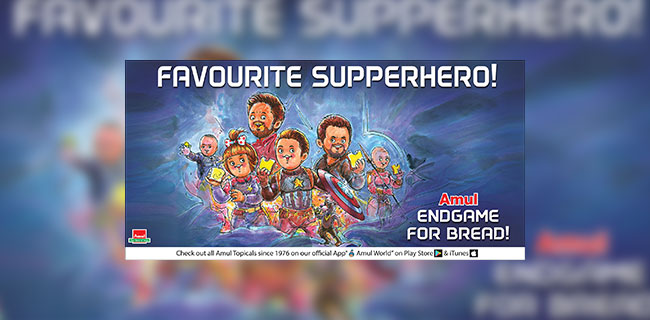
    An Amul ad capturing the popularity of the latest Avengers release


    By Shailesh Kapoor


    Two weekends ago, Avengers: Endgame released in India as easily the most-anticipated Hollywood film ever. At a staggering 52 Cr+ business on the first day (net of GST), the film beat the record of the previous film in the franchise (Avengers: Infinity War) by a wide 60% margin. Not only that, it beat the biggest Hindi opener till date too, surpassing the opening-day collections of Thugs Of Hindostan, without having the benefit of a huge nationwide holiday like the Aamir Khan film.

     

    Avengers: Endgame is on course to do 375-400 Cr business in India, which will beat the lifetime box office record held by Avengers: Infinity War by about 150 Cr. Normally, such records are broken after a gap of a few years, because ticket rates go up and new multiplexes open up, giving films a wider number to achieve on the same demand. But that’s not the case in the Avengers example. The market scenario is largely similar to last year, barring a reduction in GST on movie tickets. A steep 150-Cr growth in just 12 months clearly highlights the growing equity and stature of brand Marvel in India.

     

    If one was to do a list of the most powerful media brands in India, there’s very high chance that Marvel will top it. In a country where the language barrier itself limits the reach of International content, how the Marvel Cinematic Universe (MCU) has managed to penetrate itself, through not just metros or mini-metros but the smallest of towns, is a testimony of what genuine movie craze can be. The language accessibility helps, and the dubbed versions have contributed more than 40% of the box office of Avengers: Endgame. But even with that, the mainstream, mass status MCU has acquired in India, one film after the other, is an achievement to marvel at.


    This genuine movie craze is about a deep and organic connect built with the characters in MCU. There are films like Thugs Of Hindostan, and the various Salman Khan films, where the lead star has massive appeal, and if you prop up the promotions leading up to the release, you build the requisite “hype” and the film opens well, and thereafter, the content takes over to decide how long its legs are.


    But there’s a difference between “hype” and “craze”. MCU films, especially the bigger ones, are success stories based on craze, not hype. As was Bahubali 2. But almost every other film that’s big-ticket is a hype product. Hype doesn’t lead to genuine craze. It propels audience to visit the theatre, often because it’s the in-thing to do, and one doesn’t want to miss out on riding the hype wave. It’s an inorganic, marketing-driven way of getting a film to open well. More like a consumer push.


    But when there’s genuine craze, the hype builds organically on its own. Avengers: Endgame was being marketed by crazy fans in digital media and the real, offline world. The much-written about late night and early morning shows on the opening day could have been a marketing ploy by another film, but in this case, it was a certification of the craze that existed. A consumer pull that’s so strong that the film belongs to its audience even before they have seen it.


    We are in a push marketing era in general. Bombarded with messaging across online and traditional media, consumption of content and brands is often a function of one brand outshouting the other. In such a marketing climate, Avengers: Endgame is a rare exception that stands out. Can anything Indian, on TV or in films, match up to this level of craze anytime soon?


  • Bahubali 2 & 2.0: Indian Cinema’s New-Age Flagbearers


    By Shailesh Kapoor


    The teaser promo of Shankar’s 2.0 was released last morning. The film, to be released in Tamil, Hindi and Telugu (besides other dubbed versions), is a sequel to the much-successful 2010 Tamil film Enthiran, which released in a dubbed Hindi version titled Robot.

    A lot seems to have changed in these eight years. 2.0, which has been an ambitious project in the making for a while now, has been conceived and shot as a Tamil-Hindi bilingual. One of Hindi cinema’s top stars, Akshay Kumar, plays the principal antagonist in 2.0. At a rumoured budget of Rs 500+ crore, 2.0 is touted to be the most expensive Indian film till date.

    And yet, 2.0 seems like a winning proposition at the outset itself. Like last year’s mega-success Bahubali 2, 2.0 will rely on its immense spectacle value, which will make it a compelling and unmissable big-screen experience. Bahubali 2 released in Hindi as a dubbed Telugu film, and had no Hindi starcast on its credentials. Yet, the Rajamouli film did nett business of more than Rs 500 crore in India from the Hindi version itself, a number higher than any regular Hindi film by a staggering Rs 130 crore.

    2.0 is more inclusive, because it’s not a dubbed film but a bilingual, and because of Akshay Kumar’s significant presence, adding star value in the Hindi markets. There’s also the additional 3D factor, which leads to higher ticket prices and higher box-office as a result. There is a high chance that the Hindi version of 2.0 may get close to, if not overtake, Bahubali 2’s Hindi collections. Even if it falls 100 crore short, the top two ‘Hindi’ films in India will be from the South of India.

    One way to look at this is to question whether all is right with the Hindi film industry. But that’s another topic for another day. There are two positive trends to spot here. The first one is about the rise of big-screen spectacles as the dominant form of theatrical content, and the second is about the language boundaries bridging.

    Both these trends find strong evidences in the story of Hollywood’s growth in India in recent years. Hollywood has moved towards big-screen spectacles as its primary genre of success worldwide. With digital content having come in, just a good story is not reason enough for audiences to visit the theatre. Yes, the odd film can run well in theatres based on the strength of its story alone, but the Top 10 grossers in Hollywood every year, for the last five years, have been big-screen spectacles, often in the superhero genre.

    In India too, it’s the superhero, fantasy and horror genre, aided by quality visual effects, and often a 3D experience, that has led to more than 20% year-on-year growth in Hollywood footfalls since 2013, even as Hindi footfalls have stagnated.

    It was generally believed that the costs at which such spectacles are produced makes the genre prohibitive for Indian cinema. But with Bahubali 2 and now 2.0, that assumption has been challenged. If you have a multi-lingual revenue model, the costs that a big-screen spectacle film needs can be truly justified, especially because these genres are immensely popular on satellite television too.

    Which is where the second trend becomes crucial. These films, while made by South Indian directors, are Indian films, than just South Indian films. This is especially true for 2.0, which was conceptualised as a multi-language project right from its inception. Spectacle films are not overtly dependent on nuances of language and culture, and hence, find it easier to travel across diverse markets in India, giving them unprecedented reach. After all, the collective size of audience base in India across various language is more than three times that of any single language.

    Multi-lingual big-screen spectacles are set to be growth drivers of Indian cinema. The question is: Do we have more directors with the imagination and creative vision of someone like a Rajamouli and a Shankar to make this happen on a more regular basis?


  • Bahubali 2 &the Rest: Bollywood’s H1 Box-Office Review


    By Shailesh Kapoor


    The first half of 2017 has ended. It has been an unusual half-year for Bollywood at the box-office. It is the period in which the industry got its biggest “Hindi” film till date. Bahubali 2’s Hindi version became the first film in the Hindi language to cross the Rs 400 crore nett mark at the domestic box-office. And it didn’t stop at that. It went further and crossed Rs 500 crore too. The film will end its run at staggering 36% higher than the earlier record holder Dangal (Rs 375 cr). And this is just the Hindi version of what technically is a Telugu film.


    Should Bahubali 2’s box-office be counted as a part of “Bollywood”? How the year has gone so far hinges on this judgment call. The table below shows the H1 (Jan-Jun releases) box office business of Hindi films in the domestic market since 2013.


    Year

    H1 Box Office (Rs Cr)

    2013

    1,115

    2014

    1,095

    2015

    1,015

    2016

    1,020

    2017 (with Bahubali 2 – Hindi)

    1,450

    2017 (without Bahubali 2 – Hindi)

    940


    As can be seen, the H1 business has not grown over the 2013-16 period, despite increasing ticket prices. In fact, there has been a de-growth of about 10% in this period. If we don’t count Bahubali, this year has seen a further de-growth of 8%.


    Bahubali 2 (Hindi) accounts for 35% of the H1 box-office alone. The Hindi film industry will like to own the film as one of its very own. After all, India has a penchant for staking their claim over all things it has any remote connection to, and Bollywood should be no different. But that doesn’t take away from the fact that a Telugu film is the potential face-saver for the industry in what otherwise is a poor year so far. A poor year so far despite the presence of big Salman Khan and ShahRukh Khan films in this period. These stars normally hit the theatres in H2 with their releases.


    Tubelight has been a shocker to the industry, and many other films including Raees have underperformed. There’s very little to show by the way of genuine success, barring Badrinath Ki Dulhania and Hindi Medium. Besides Bahubali 2, of course.


    The industry opposed the GST slabs (28% and 18% for tickets priced above and below Rs100 respectively) in some statements a few weeks ago. But these slabs are significantly better than the prevailing Entertainment Tax rates, which varied by states, but averaged to 39% for a typical Hindi film. An 11 percentage-points drop in tax is definitely a positive news.


    But what the Tamil Nadu government has done could set a dangerous precedent for other states. They have levied a local state-level tax of 30%, over and above the GST. Is it even allowed? Theoretically, all states could do this for all goods and services. Or is cinema the convenient scapegoat here?


    This uncertainty looms large, even as TN theatres go on strike. It may be time for the central government to come in and clarify its position, or at least issue an advisory. Otherwise, we may see an extended period of stand-off in many states – the last thing Bollywood needs coming out of an H1 that Bahubali 2 salvaged for it.


  • Bahubali 2: The Giant Arrives Today

    By Shailesh Kapoor


    Before the Hindi version of Bahubali: The Beginning released in 2015, not many Hindi film audiences knew about SS Rajamouli. Some may have seen Eega’s Hindi version (Makkhi) and enjoyed Hindi remakes of his Telugu films, Rowdy Rathore in particular being a big success. But the man behind these films was irrelevant.


    What Bahubali 1 achieved was rare and exceptional. To begin with, it broke a North-South divide that had existed in our cinema for eons. No South film had got theatrical traction among Hindi audiences. Robot managed some footfalls, but its lifetime Hindi collections were lower than recent films like Phillauri or Begum Jaan. To cross Robot’s 20 crore mark was easy for Bahubali 1. But the film went on to become the first dubbed film to cross the 100 crore mark, a five times improvement!


    Over these two years, Hindi film viewers have become familiar with Rajamouli and his work. His vision of Bahubali is something these newly-acquired fans have made their own. Of course, the first film left us with that one unanswered question, on ‘Why Katappa Killed Bahubali?’. But that’s just a catchphrase at best. Bahubali 2 is not about that answer alone. It’s a lot more than that.


    The film is set to open in the 35 crore range in the Hindi version alone today, which is seven times the opening of the first part. 200 crore is a foregone conclusion, and 300+ is entirely in the realm of possibility, especially given that there’s no major event film till Tubelight in June. (The first film had to face BajrangiBhaijaan within a week)


    That a dubbed film with no popular Hindi star can do this level of business puts our flawed star system in perspective. Escalating star prices make many film projects unviable at the onset, where a best-case scenario (great content and a open release window) would mean breakeven. Only a few stars today have the ability to open on their own strength, but since they cannot be doing all the films that are being made, the next lot benefits from their star power, creating economics which are fundamentally flawed and anti-growth.


    In the last three years, when footfalls have fallen and the business has stagnated, a common reason given for the industry’s stagnation is that the audiences are moving to digital. Bahubali 2 is set to prove how flawed that argument is. Of course, more audiences will embrace digital with time. But when there’s good content that deserves a visit to the big screen, they will opt for it wholeheartedly, even at escalated ticket prices.


    Bahubali 2 may not start a trend, because after all, there’s only SS Rajamouli, like there’s only one RajkumarHirani. But it definitely shows a mirror to Bollywood on how the power of original ideas can dwarf the power of stars and the packaging gloss. Bahubali 1 is already the highest grossing Indian film ever. After Bahubali 2, the Top 2 in the list will be both non-Hindi films.


    It’s a separate matter that Bahubali has been adopted by Bollywood as one of its own, and its Hindi version collections will be counted in Bollywood stats. And it is this difference of 200-300 crore that could ensure that the industry has a stronger 2017 than 2016. Now that’s an irony!