Tag: Babri Masjid

  • Ranjona Banerji: Nation’s Shame, and Now?

    By Ranjona Banerji


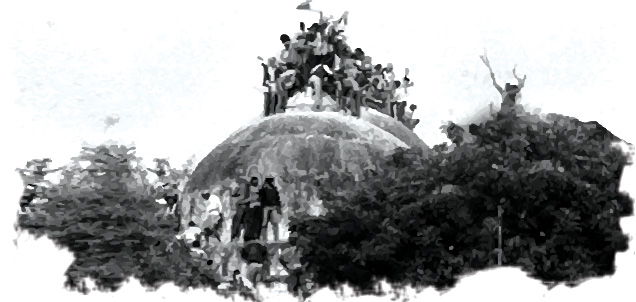
    “The scenes will return, like deranged ghosts, to haunt those of us who were at the graveside to witness the burial of a secular dream. The screams of exultation with each blow of a pickaxe, each thrust of a rod, each dome that came crashing down…

    “3 p.m. Sadhvi Rithambara starts singing and dancing and, as if in a trance, repeats over and over again a mesmeric exhortation: “Ek dhakka aur do, Babri Masjid tor do” (Give another shove, and tear down the mosque). A village lad from Kanpur district rushes past with a piece of brick held aloft like a trophy. “These are Babar’s bones,” he shouts in unholy glee…

    “A red cloud of dust settles on the rubble, all that remains of the Ram Janmabhoomi-Babri Masjid shrine. And, all that remains of the myth of Hindu tolerance.”

    These are excerpts from Dilip Awasthi’s report, in India Today magazine, on the demolition of the Babri Masjid, December 6, 1992.


    The magazine cover read: “Nation’s Shame”, as I was reminded by my former boss Inderjit Badhwar on Twitter, who was then editor of India Today. He now runs India Legal and more.


    I only use India Today as an example to demonstrate that 1992 was a different India, for the media at least. You can compare this report to India Today as it is now, as well as to its TV spin-offs to see the change for yourselves. 1992 was 28 years ago. A whole generation and more have grown up in between and never known what that India was. A whole media generation and more does not know what the media was. No relentless 24-hour news television. No internet. No social media. Those who could, watched the demolition on the BBC World Service. But there were witnesses.

    A special CBI court on September 30, 2020 acquitted all the 32 accused in the Babri Masjid demolition, including the LK Advani and Murli Manohar Joshi. The judge said there was no conspiracy and the demolition was not “pre-planned”. The CBI put forward 351 witnesses and 600 documents as evidence, apparently not good enough. The judge however did say that the demolition was an “egregious violation of the rule of law”.

    Justice Manmohan Singh Liberhan, who led the commission of inquiry into the demolition from 1992 and submitted his report in 2009, said this to Indian Express on September 30, 2020: “I found it was a civil conspiracy, I still believe in it. From all the evidence produced before me, it was clear that the Babri Masjid demolition was meticulously planned… I remember Uma Bharti categorically took responsibility for it. It was not an unseen force that demolished the mosque, human beings did it,”

    He also said his “findings were correct, right, honest, and free from fear or any other bias”.

    “For posterity, it is a report that will provide an honest account of what took place and how. It will be part of history.”


    According to Justice Liberhan’s report, the accused had either actively or passively supported the demolition.

    https://indianexpress.com/article/india/justice-liberhanbabri-masjid-demolition-6657370/lite/?__twitter_impression=true

    Between then and now, between the action and the decision, the changes to India’s population, sense of self, of identity, and to India’s media have been incalculable and not all for the better. The fact that the media itself now sees the likes of LK Advani, Murli Manohar Joshi and the planners and implementers of his Rath Yatra and Ram Janmabhoomi movement to be comparatively benign speaks to how much we forget and choose to forget. The comparison is made to Narendra Modi and Amit Shah as the fount of Hindu majoritarian hatred. But they are only the inheritors of a tradition laid down long before their time in power. Even the 2002 Gujarat riots when Modi was chief minister of Gujarat happened under the watch of AB Vajpayee as Prime Minister of India and his deputy, Advani.

    The role of Bal Thackeray and the Shiv Sena in the demolition and the subsequent riots in Bombay cannot be forgotten either.

    Already however, you will find from within the media itself, the blame being laid on the Congress government in power at the Centre in 1992 and PV Narasimha Rao as Prime Minister. And on Rajiv Gandhi who as Prime Minister opened the locks of the mosque to allow Hindu prayers. This blame cannot be escaped. But it is a sideshow compared to the RSS’s Hindutva agenda carried out by the BJP, VHP, Bajrang Dal, Shiv Sena and all those of the “mob” that did the actual demolition.

    In the Indian Express article linked above, there is a photograph of the BJP’s Uma Bharti and Murli Manohar Joshi celebrating the demolition. It is possible that the CBI’s investigation was full of loopholes. But whatever the “mob” did that day, not all the acquitted actually wept with sorrow. Many were extremely happy at the actions of their own “kar sevaks” as we can see.

    We saw how today’s media celebrated when the Supreme Court handed the land to the destroyers of the mosque to build a Ram temple in 2019, especially our friends in television.

    You could replay that 1992 India Today headline for the media now: Nation’s Shame.


    Ranjona Banerji is a senior journalist and commentator. She writes on MxMIndia on Tuesdays and Fridays, except this week because it’s a ‘no edition day’ tomorrow. Her views here are personal. She can be reached via Twitter at @ranjona


  • Ranjona Banerji: Right and Wrong!

    By Ranjona Banerji


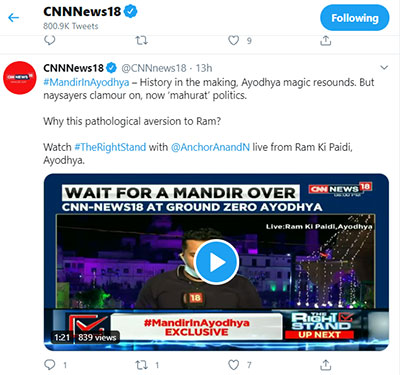
    CNN-News 18 carried a series of tweets advertising its show The Right Stand on Twitter on Monday. These are quotes:

    Why this pathological aversion to Ram?

    In secular garb, anti-Hindus cling to straws.

    Old anti-Hindu rhetoric in secularism garb.

    History in the making, Ayodhya magic resounds.


    In case you missed the context, CNN-News 18 claims to be a “news” channel which one presumes means there are journalists somewhere within.

    Which of these four statements corresponds to journalism?

    Is an anti-Hindu a thing? Is criticism of religions or religious customs banned in India? Is “magic” now an accepted reality which “resounds”?

    One understands that this particular show and its anchor represents a “Hindutva” perspective, that mangled version of Hinduism invented by the Sangh Parivar. The same version that assassinated Mahatma Gandhi in 1948. How would The Right Stand have interpreted that? “Magic resounds at Birla House as Gandhi is shot dead”? “Why this aversion to bullets”? “In secularism garb, India clings to anti-murderer straws”? “Old anti-Hindutva rhetoric in anti-murderer garb”?

    The same version of Hindutva also murdered rationalist and anti-superstition crusader Narendra Dabholkar in 2013.

    “Why this aversion to Hindutva bullets?” would have been an apt teaser for The Right Stand had it existed at the time.

    The story of the demolition of the Babri Masjid starts in colonial India in the 1800s. It is complicated and it is entangled. But the responses of colonial India and that of Constitutional India are not the same and cannot be. India is not a religious state. The BJP and its partners want exactly that. They want to destroy the Constitution and create a theocratic state. Any journalist would see that.

    But not of course most Indian journalists.

    CNN-News18 is only one example. It may be, in its show The Right Stand, a vile example of the rise and triumph of religious intolerance and majoritarian pride. But it is one of many. This does not mean that journalists cannot be religious. But your personal life is not your professional life. And the impact of this temple for the Hindu God Rama, at Ayodhya is political. Not religious. If you feel that “magic resounds” then at least have the courage to quit as a journalist and return as a Hindutva publicity agent. (I joke, I know.)

    Is it remarkable that any journalist today does not know about the impact of the demolition of the Babri Masjid and the scars that India still bears? Indian newsrooms have worked hard over the past 12 or 13 years to demolish institutional memory, to remove anyone who carries the scars of covering India by asking questions. I do not know what they teach in those journalism schools which are now mandatory for jobs in media outlets. Judging from the results, either they do not teach our history of coverage or young journalists are not allowed to practice what they have learnt once they get jobs.

    The history is out there for anyone to find out about. It needs little extra work, because 1992 was before we had this plethora of TV channels (which is why many of us watched the BBC in horror at what was unfolding), before Google, before internet archiving. It’s how some of us did our research before it was all available at our fingertips.

    Meanwhile, let me remind you, the virus still rages, the economy is still in a state of collapse, China’s still in threatening mode, and if it’s not Ayodhya, it’s one death that TV channels are obsessed with.

    There is news everywhere. But not if you’re a star struck propagandist for destructive forces.

    Incidentally, the most common meaning for the term “ground zero”, used by CNN-News18 to describe Ayodhya, is that spot in the ground directly above or below an exploding nuclear bomb.

    I’ll leave you with that thought.


    Ranjona Banerji is a senior journalist and commentator. She is also Consulting Editor, MxMIndia. Her views here are personal

  • The Demolition, 25 years after


    By Ranjona Banerji


    Tomorrow marks the 25th anniversary of the demolition of the Babri Masjid. Sitting here today, you can see the aftershocks of that calamitous event have not yet left us. India has not been the same, nor will be, by the likes of it. The fissures that tore into India’s social fabric have not just remained, but they have widened. The actual destruction began with the Ram Janmabhoomi movement in the late 1980s. But it was December 6, 1992 that cemented the end.

    And for the India media, that was a watershed moment, in more than one way. Although the world’s media were gathered at Ayodhya, as “kar sevaks” and BJP and RSS workers thronged around the mosque, ostensibly for one more rally, there were no Indian 24-hour news channels. If it is possible to imagine such a world. For another, Indian broadcast news was still controlled by the government. Mobile phones did not exist either.

    However, the 1991 Gulf War had brought satellite television to India and it was through the BBC World Service that most people saw or heard about the mosque coming down.

    But to backtrack. As fissures of Hindu-versus-Muslim started again in India on a major scale since 1947, with the LK Advani-led Rath Yatra or Carriage Procession (in a car) across India towards Ayodhya, the Indian media began to separate itself into Hindu versus the rest. Until then, journalists were perceived as largely left-leaning and the general trend was to examine the government and for managements, usually to give in to the government. The Emergency in 1975 was a big lesson about the dangers of giving in, not that everyone has learnt from that.

    But the sort of all-out sycophancy that one sees in today’s new channels was largely missing. It owes its existence to the changes that developed in the media after the demolition of the Babri Masjid. It is not that India had not had Hindu-Muslim riots before that. Since Partition, there were eruptions, large and small. The scale post-Babri however was horrific and to everyone’s surprise, the main focus of this hatred from Bombay, India’s commercial capital until then considered to be a city apathetic to India’s political upheavals.

    The riots that broke out in December 1992 in Bombay – as it still was then – were an eye-opener for journalists. It was one thing to have arguments of “us” versus “them”, to have colleagues wearing badges which read “Garv se kahon hum Hindu hain” (Declare that you are Hindu with pride). It was another to have colleagues who celebrated communal bigotry. The other shock to the media was that no one saw it coming. Bombay was the sort of the city, one believed, where everyone lived together, jostling for space and giving up identity to make a living. Clearly not.

    The January 1993 riots were a different story. They were a planned, calibrated attempt to change the city, to carefully attack its Muslims. It was also a push by the Shiv Sena (and riding on Bal Thackeray’s coattails, the BJP), to further establish itself in Bombay as not just the champion of Maharashtrians but also specifically Hindus.

    However, when you compare the media then and now, it definitely covered itself better then. The riots were reported, at great personal risk. The government was taken to task for its inaction, from the Centre to the states. Even without relentless TV coverage, the chief minister of Maharashtra was replaced.

    For those of us who lived through those times, the future was evident, even for those of us who refused to acknowledge it. Today, one is amazed by the lack of knowledge and of a sense of contemporary history among young journalists. Even 10 years ago, I have had young journalists explain to me that the riots were a direct consequence of the bomb blasts of March 1993. They were unimpressed that I was an eye-witness, as they were absolutely certain of their facts, having been brought up on a diet of Hindu-Muslim hatred and the enormous and dangerous romanticisation of Bombay’s underworld by Bollywood. You can still see it in the obsession of some news channels (and newspapers) with gangster Dawood Ibrahim even as India faces more real and very dire challenges.

    The demolition of the Babri Masjid legitimised sectarian hatred in India and all those who had held back on their communal thinking now felt free to air their prejudice and bigotry. And now, 25 years later, we see it around us and accept it as normal, even in the media.

    Lest we forget, once, we were better than this.


    Ranjona Banerji is a senior journalist and commentator. She is also Consulting Editor, MxMIndia. The views here are her own.


  • Memories of Ayodhya, December 6, 1992


    By Ananya Saha


    Twenty years have passed since the Babri Masjid demolition. While the Ayodhya verdict did bring some cheer to the country, December 6 1992 has been engraved as a blot to India’s history. Two journalists, who were present on the scene, recall the horrific incident.


    Mark Tully former Bureau Chief for BBC in New Delhi was also present on the scene.


    My memory is of the complete failure of security to control the situation and of the extremely violent and disgusting slogans which were being shouted by the people who attacked the mosque. Lotof violence and damage was done to journalists. And I myself was surrounded by these so-called Kar Sevaks. There was an argument whether to beat me up or let me go. Eventually, a compromise was reached and they decided to lock me up in the temple room. That is my recollection.


    It was a sad day for India. It was a sad day for me because I have maintained that India is naturally, culturally, a secular country. But I believe that India has returned to its secular moorings. I think there are many lessons to be learnt from Ayodhya.

    Ajay Jha, currently, is the Delhi Bureau Chief for Gulf News. He was working with Mid-Day in 1992 and witnessed the demolition of Babri Masjid in Ayodhya in 1992.


    It feels that it happened just the other day. Even after 20 years, people feel anxious of the day. It was a blot for the country.


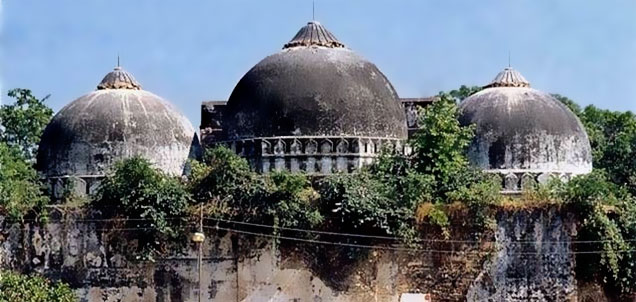
    I was staying at a hotel in Faizabad. I reached the spot about 9’o clock in the morning. It was, of course, not very easy to reach there due to security and administration. But finally when I reached there, I saw people running out of the Babri Masjid campus and shouting ‘Kaam hogaya’ (work is done).  As I went inside, I saw a mob atop tombs dancing and celebrating. There were three tombs at Babri Masjid. Then they started demolishing one of the central tombs. They were using iron bars to break it, which implies that they were prepared for the demolition. It continued for over three hours. It was not easy for them to demolish it.


    Suddenly I saw that lot of journalists were being assaulted. The reason, I was told, was something different. I was not the eyewitness to the reason. I was told that some foreign TV crew had apparently thrown biscuits towards the crowd that was hungry. They were angry that foreign media saw them as poor and hungry and second, that it should not go out to the world that demolition is going on until work is finished. Hence, the journalists were thrown out of the complex. Journalists were assaulted and mobbed. Probably, I was the only person who remained there throughout the evening.


    The first thing I did was to throw the pen and paper away. I started pretending that I was one of the Kar Sewaks. They looked at me suspiciously, and when asked I told them I had come from Delhi, they asked me to do kar seva, which I did.


    When they had demolished two tombs, they realised that it was already 1’o clock. They wanted to finish the work the same day because in winters it gets dark early, and it wouldn’t be possible for them to carry on after dark. After a while, we heard another noise telling the people, ‘sab hat jaao’ (everybody move away). It never came out in any of the enquiries but I can say it for sure, out came the huge dynamite sticks to blow up the remaining two tombs. The area was cleared. I could not see who said it, but heard it clearly, ‘ek dhakka do aur babri masjid tod do’ (give one push and destroy Babri Masjid).


    Finally, when everything was demolished by 3:30, lot of celebration was evident.


    While the demolition was going on, Advani requested the crowd to not carry on the destruction it in the name of Lord Ram. Whether it was union call or it could be that he created a monster he could not control. At least for public consumption he was urging the public to get off of the tomb.  But nobody would listen to him. In the evening when I left, I carried with me a small-sized brick on which was engraved 1516 in Hindi, the year that the brick was made.


    I had to walk a long way before I could reach Faizabad and file my report. It was very tough day. Interestingly, I reached there again the very next day around 9’o clock and I couldn’t see or find a single brick. Entire place was transformed overnight. They cleared everything and you could not recognise the area. Complicity of UP govt, administration, police, and to some extent govt also was evident. Policemen were present but were only watching what was happening. It was responsibility of Kalyan Singh govt, Narasimha Rao govt. local administration: everyone was working together towards the same aim that the mosque has to go and it went. It was all done in a planned manner – they brought their rods and what not to tear it down.


    I was told that dynamite sticks were brought from Punjab and that was the time that militancy in Punjab was at peak and it could have been done with Sikh militants.


    When I came back to Delhi, people used to come and worship the brick that I had as a reminder of the day. When riots had started next day, we were told to write timid reports so as not to create Hindu-Muslim tension.  I did visit Ayodhya thereafter as well. I still get the same feeling that what was the need to demolish it? It was a structure of mosque but it was temple inside. Now, you cannot get inside. You could not get the ‘mandir’ you wanted, and Hindu fanatics did not get anything by damaging a functional temple. You have to stay 50 metre away from structure, and only ‘pandit’ can do a ‘pooja’ on your behalf.


    Yes, BJP came to power after that, so probably that was the achievement. It was a power game, a political campaign.


     Image: Artist Rafiq’s impression of what happened on December 6