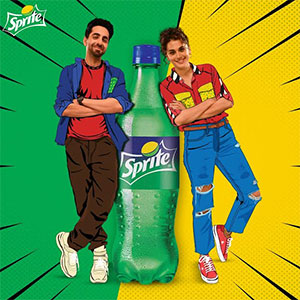
Coca-Cola India has launched a new brand campaign for its sparkling beverage – Sprite. The campaign features actors Taapsee Pannu and Ayushmann Khurrana in four films – each depicting the funny and annoying sides of the relaxing-at-home experience.
Commenting on the new campaign, Shrenik Dasani, Vice President – Sparkling Category, Coca-Cola India and South West Asia, said: “The launch of this new campaign, underscores our consumer centric approach. Our brands have always sought to add value to various consumption occasions and given the evolving reality, we are now ready to connect with our consumers in new situations and bring forth some more relatable moments in the ‘new normal’ of their lives. As Sprite is known to do, we wanted to offer a tongue-in-cheek, bold and contemporary take on life at home with your favourite screen.”
Actor Ayushmann Khurrana has released a digital film #RakhiForSisters for men’s grooming brand The Man Company.
Said Hitesh Dhingra, Founder and CEO, The Man Company: “The #RakhiForSisters campaign is our attempt to acknowledge the protecting roles that doting sisters invariably play for their brothers. It is also our effort to convey that it is ok to relook at certain traditions and bring them in sync with the modern reality of gender equality. We at The Man Company take pride in contributing meaningfully to the broader conversations on evolving gender roles and the evolving understanding of positive masculinity,”
India has been under a full lockdown since March 24, 2020. After three subsequent extensions, a relatively unsuccessful Unlock 1.0 & 2.0 in June and July, spikes in positive cases are forcing many Indian cities to go under full lockdowns, again.
As the economy degrows, unemployment rises and sales decreases and every subsequent FY21 GDP forecast is worse than the previous one, the future seems bleak and unlikely to bounce back soon.
Basis a GroupM report released in June 2020, India’s GDP will contract by 3.7% and subsequently overall advertising spends will decline by more than 20% this year. This follows, as advertising in current scenarios is an after-thought, with most companies focused on reviving production and distribution. The drop in advertising has led to unprecedented job losses in the ad-dependent media industry, so much so that industry body International Advertising Association (IAA) has been running a campaign, ‘Let’s Advertise’ to spur advertising, since June 2020.
The campaign seems to have made some impact – brands in the Health & Hygiene categories or those that can pivot their messaging to sound Covid-wise have started advertising. However, this is a small portion of the market, and for the economy to revive, brands which can afford to, should, play a bigger role in recovery.
As Keynesian economics espouses, spending spurs consumption during times of economic downturns. If brands (which can) spend monies, this will spur demand, and the money will help the economy as a whole. In such pandemic times, the messaging of many brands is irrelevant, a great way to remain visible is by running Public Service Announcements (PSAs) campaigns.
While a decade ago, PSAs were issued by govt bodies, with the advent of social media, brands regularly run socially relevant campaigns because they help the brand earn respect and hence brand equity while also doing social good. Due to their affirming messages, PSAs also have higher than average trend-worthiness, i.e. audiences share these ads more because it helps them feel good about themselves to do something socially relevant.
With the notable exception of Mumbai Police PSAs, most PSAs released by government bodies in India, are pedagogical spiels, which are not engaging, even when starring celebrities.
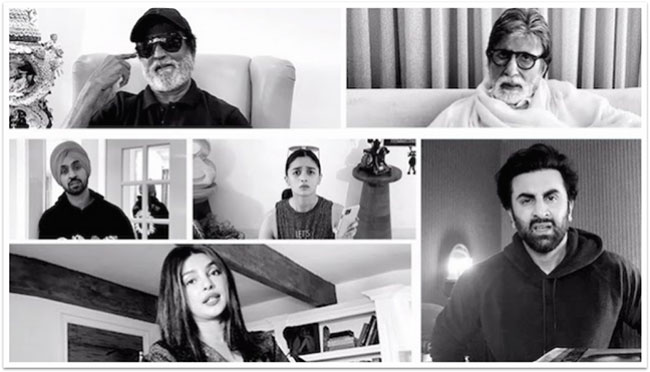
In March 2020, just as the lockdown was announced, the Maharashtra government released a pedagogical PSA on Covid-19 headlined by the biggest stars of Bollywood including Amitabh Bachchan, Ranveer Singh, Ayushmann Khurrana, Alia Bhatt, Akshay Kumar etc. A month later, Sony launched a PSA with a similar Bollywood lineup but a much better storyline. (The PSA can be viewed here – https://www.youtube.com/watch?v=OQk0VrL2I-w
Short film – ‘Family’, conceptualised and virtually directed by Prasoon Pandey for Sony Network starring celebs from across the country used storytelling creatively to communicate the importance of staying at home. It was telecast in April 2020. https://www.youtube.com/watch?v=ju7ku–S6F4
Hence, in Covid-stricken times, effective PSAs can help brands kill many birds with one stone – create brand equity, earn public goodwill, spur good behaviour, meet annual CSR target spends as mandated by Indian law and, most importantly, help the economy recover. Earned goodwill will also spur trials for those whose loyalties lie with competitors.
Budget-struck brands can collaborate with other brands; conduct digital-only campaigns to give the push to the economy to help its recovery.
As brands with diverse target audiences release PSAs, different strata of society will get targeted which will help in overall compliance. This is backed by research conducted by 2019 Nobel laureates in Economics, Abhijit Banerjee and Esther Duflo. In a paper released last month, they have shown that frequent celebrity messaging, in addition to the existent large-scale government messaging on Covid-19, can positively impact behaviour by nudging people to follow best practices. The research also shows that there are spillovers of good behaviour in the entire community even when a few are targeted.
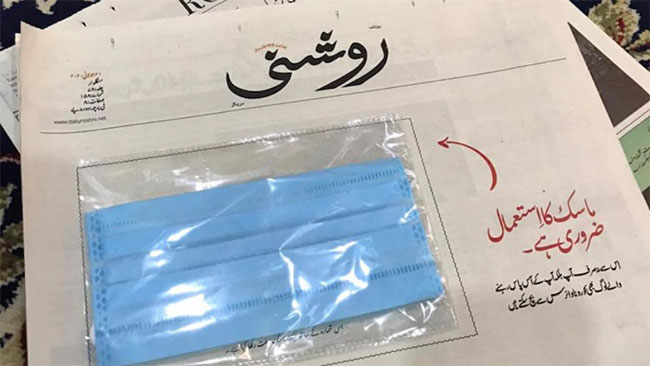
In a CSR initiative, waiting to be replicated by national dailies, Kashmir ‘s Urdu newspaper Roshni, affixed a mask on the front page of the paper on July 20 to drive home the message about mask usage. Kashmir was under complete lockdown from 22-27 July, due to a rise in Covid cases.
VIRALITY TO BEHAVIOURIAL CHANGE
The challenge even for good PSAs is translating virality to behavioural change. The ease of communication brought on by social media has made armchair activists of the majority of the population. However, while these activists enable knowledge-sharing with other people they don’t bother much with acting upon the gained knowledge before moving on to the next trending topic. Which is why, despite the dangers of inobedience, many who wear a face mask, style it as a chin-guard.
Hence, brands should be careful to create PSAs which are not just a retelling of facts, but facts communicated in way to appeal to their targeted audience, whether it is through high quality storytelling, a new ‘Hook Step’ or a ‘Challenge’ which is creative enough to warrant sharing. Basis the research by Banerjee and Duflo, leveraging brand ambassadors signed on for lavish multi-year contracts will also help to drive behavioural change. So brands, any takers?
Bhuvi Gupta is a marketer with over 10 years across industries, of which the last six have been in Media & Entertainment. She has been a part of many launch marketing campaigns – specifically at the Times of India group, Republic TV and the latest in marketing a Bollywood film. She will write on A&M (mostly marketing, but often on advertising too). Her views here are personal. She tweets at @bhuvigupta3
Vacation ownership firm Club Mahindra has unveiled a digital campaign titled #LoveIndiaSeeIndia. As part of the campaign, the brand will now engage with audiences through the eyes and voice of actor Ayushmann Khurrana.
Talking about the campaign, Ramin Saherwala, Chief Marketing Officer, Mahindra Holidays and Resorts India Limited, said: “All of us have fond memories of our favourite travel destinations and experiences, and it is during these times that there is a sense of nostalgia about them. This film builds a resonance with the audience and evokes a strong desire to relive their travel memories and recreate magical moments with their loved ones.”
Leading detergent brand Tide has appointed actor Ayushmann Khurrana as its brand ambassador for India. The partnership has launched with the first Tide advertisement featuring the actor, for the Tide Ultra variant designed specifically for the washing machine.
The association begins with a new line of Tide advertisement featuring Ayushmann Khurrana playing different members of a family in a fun, unique manner.
Said Khurrana in a statement: “Tide is an iconic power brand whose values resonated with me. For my first advertisement with the brand, we came together and tried to push the envelope, attempting something unique and engaging. You can see me play the roles of multiple family members in a warm, fun narrative. And this is just the start!”
On June 12 midnight, as the Amitabh Bachchan and Ayushmann Khurrana-starrer ‘Gulabo Sitabo’ was released on Prime Video, ABP Spotlight created a show with anchor Shrivardhan ‘Sansani’ Trivedi who interviewed ‘animated’ renditions of lead characters of the film.
Mona Jain
Said Mona Jain, Chief Revenue Officer, ABP News Network: “At ANN, we are always exploring fresh and inventive formats to keep our viewers engaged. This new offering by our content division is a positive take from the daily onslaught of news generated by the pandemic, which takes a heavy toll on the nation’s mood. It will not only act as a means of entertainment & amusement amidst these trying times, but will also open doors for advertisers to fine-tune their media plans amid the ongoing shifts in consumer behavior and leverage exceptional reach across all platforms.”
Actor Ayushmann Khurrana in association with Peter England posted a short video emphasising the importance of wearing face masks while stepping out during this pandemic. This video marks the beginning of the actor’s association with the menswear brand from the Aditya Birla Fashion and Retail.
Speaking on the association, Manish Singhai, COO, Peter England said: “As a responsible brand, we have strived to do our part in this collective fight against this global pandemic. Various studies show that wearing face masks as part of everyday routine is now crucial to contain the spread of COVID-19. Hence we have leveraged our strengths and skillset to produce high quality cloth-masks which are the need of the hour. We have collaborated and begun a long journey with Ayushmann Khurrana and our association marks the union of two iconic brands that are synonymous with honesty and authenticity. Our journey starts with a message for a special cause, to raise awareness about the importance of wearing cloth based face masks. We believe that Ayushmann, being a popular style and youth icon, will help in getting this social message delivered to large set of Indians across the country”
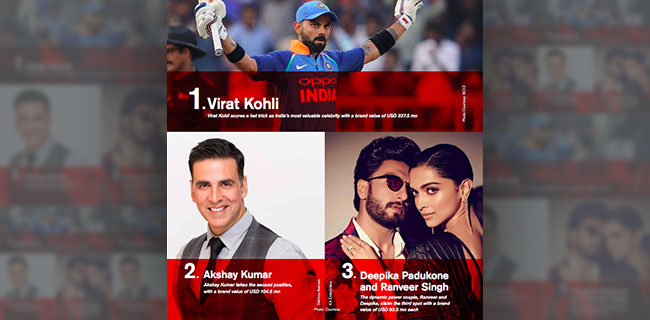
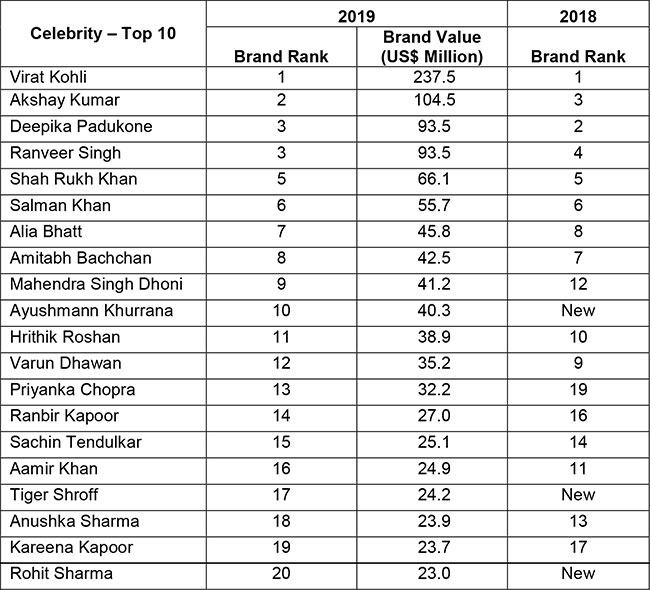
Consulting major Duff & Phelps has released findings of the fifth edition of its Celebrity Brand Valuation Study 2019: ‘New is Gold’.
The study provides a ranking of India’s most powerful celebrity brands based on brand values derived from their endorsement contracts.
Key findings from the report include:
• Virat Kohli retains the top position for the third consecutive year. His brand value rose by 39% to USD 237.5 million (mn) in 2019.
• Akshay Kumar jumps to second position with brand value of USD 104.5 mn (a jump of 55.3%).
• Power couple Ranveer and Deepika claim the third spot with a brand value of USD 93.5 mn each. Deepika retains her most valuable female celebrity status for the second consecutive year whereas Ranveer moves up a spot, to now occupy the same position as Deepika Padukone.
• Total value of the top 20 celebrity brands stands at USD 1.1 billion, with the top 10 contributing about 75% of the total value.
Said Aviral Jain, Managing Director, Duff & Phelps: “This year we saw the new generation celebrities make it to the top 20. Apart from the celebrities who were featured in last year’s study, this year, we have Ayushmann Khurrana (Rank 10), Tiger Shroff (Rank 17) and Rohit Sharma (Rank 20) with a cumulative brand value of USD 87.5 mn. The industry saw a wave of new faces and concepts with the effective usage of digital media to capitalise on millennials and Gen Z. Even though brands changed their approach of sticking to established actors by roping in new faces, overall the industry managed to stay on course with the perfect blend of traditional and new. The new pedigree of stars also ventured into investments by emerging as ‘starvestors’ (star investors), thus infusing capital in brands that resonated with their values.”
Commenting on the changing nature of the endorsement market in India, Varun Gupta, Managing Director and Asia Pacific Leader for Valuation Services, Duff & Phelps added: “This is the dawn of a new era for the media and entertainment sector. The industry has seen experimentation, be it celebrities moving from traditional mainstream endorsements towards investments in brands, the rise of digital format advertising campaigns, or the onset of over-the-top (OTT) stars who are breaking new ground in endorsements. Brands and celebrities have parallelly adopted the path of conscious advertising and filmmaking by choosing uplifting topics and making the narrative less window dressed, an important facet for today’s Gen Y and Gen Z.” Further, the study focuses on the rising trend of OTT since the upgrade of the India’s digital demography. Regional industries created ripples nationally and globally with OTT proving regional content is no longer a desired state, but a prerequisite for today’s consumer. The study also highlights the new tribe of celebrity endorsers who have become digital stars; they actively involve themselves in social causes and promote brands inclined towards fitness, health and wellness.
Actor Ayushmann Khurrana, brand ambassador of Nexus Malls, has launched his second ad campaign for the mall management company with the tagline ‘Shopping to sirf bahana hai, apno ko saath lana hai. It also earmarks the launch of Nexus Malls’ ‘Asli Happyness Wala Sale’ across all its nine assets.
Said Nishank Joshi, Chief Marketing Officer, Nexus Malls: “As they say ‘Family is a gift that lasts forever’ and what could be a more opportune time than Christmas to celebrate this gift. At Nexus Malls, we have always believed that the true spirit of festivities lies in celebrating it together with your family & friends and through our latest ad campaign we aim to convey the same message amongst our patrons. During this period, across all our malls, we will create multiple engagement initiatives with family bonding at its core. We would like to urge all our patrons to visit our malls and indulge in the festive frenzy.”
Ogilvy Mumbai is the creative agency, and Chrome Pictures was the production house for the ad.
Balaji Wafers has rolled out its latest brand campaign that stars actor Ayushmann Khurrana. The integrated ad campaign will see Ayushmann promoting the core proposition of Balaji Wafers “Kam Hawa, Wafers Zyaada and flavours wah wah”.
The ad campaign comprises a series of three films that has been conceptualised and executed by Publicis Beehive and have been shot by production house, Prodigious. Meanwhile, Publicis Entertainment, the branded content and entertainment marketing arm of Publicis Groupe has been responsible for getting Ayushmann Khurrana on board as the brand ambassador.
Commenting on the ad campaign, Shyam Virani, Director, Balaji Wafers said: “Publicis Beehive has come up with yet another brilliant idea and execution, to take Balaji Wafers’ promise of quality and quantity to the next level. Their recommendations have always been spot on and completely in sync with our growth plans. We are also very excited about the association with Ayushmann Khurana and admire his ability to connect with the masses that helps us achieve our brand promise of being a favourite snack of the country.”
Disruption has been best used to describe dramatic events and thoughts. Something unusual and mostly bad. Something that is contrary to the pattern your mind is accustomed to. Jean-Marie Dru used disruption to define an unexpected but strategically sound strategy and gave it a positive spin. Since then, the operative meaning of the word has been repeatedly bastardised just like consumer insight. People use it for even a minor tangentially thought. But, how do you disrupt a disruptive world? How do you keep enhancing and leveraging disruption, when disruption is a hygiene factor? Maybe the duration of the disruption could be the differential to create impact and desired results.
Living Life in an Auto-pilot SOP mode.
Saw the Gentleman clip from ‘The Man Company’. Here Ayushmann Khurrana, the actor with a Midas touch, talks about who is a Gentleman and what makes a man a gentleman? Sounds somewhat near to what Gillette statement of toxic masculinity, but it is okay. They call it disruptive now days. Questioning anything is disruptive!
Sometime back, Divya Butta delivered a sensitive poetry on gender inequality. Everyone appreciated it. Some opened the cupboards of #MeToo. There was a high voltage buzz supporting it. People took to streets, lit torches and candles during Nirbhaya case. An OTT platform even made a heart-wrenching film on it. And then the movement was left to fend for itself.
More recently, watched a clip where they used a man instead of a woman to demonstrate how to detect breasts cancer. Then there was the clip on mensuration, the visual had a woman with bleeding from mouth. It tried raising a simple question ‘if it was the blood coming from the mouth, you would do something about it’ and refocused on our reaction to period hygiene.
Disruptive Communication, Not Disrupting Enough.
Were they disruptive enough? Did they really made you think? Well some of them did. Disruptions make you temporarily step out of your self-induced auto-pilot mode in Life. The lethargic organ – your mind tends to find new pattern by connecting dots ina differential way. Leading to a new algorithm of understanding an reaction being re-written in your mind-space.
Unfortunately, all the above examples and many more remained at the level of being appreciated. Yes, we enjoyed. Forwarded it in groups and maybe commented on them. I hope that was not the real objective.
‘Touch the Pickle’ and ‘Share the load’ or ‘Toxic masculinity’ or ‘Jaago re’ were a lot better, because they were properly amplified, discussed and debated. They even in operation for a longer period.
However, even with these superb creative, we the audience went back to awake-sleeping mode. A state in which we are awake but are as good as sleeping. We are touched by the communication, we pledge and say the politically nice words that everyone wants to hear. And then, the messages slip out of our consciousness. We get back to our inactive inert mode. Just like the way we do with the many workshops and seminars; appreciate them and in the absence of any repeated reminder, forget to implement the learning
At the end of it, the newly acquired understanding is pushed under the tons of real-life issues, templates and the SOPs we are required to follow. That is the reality. That is the reason we don’t see changes in people approach to Life.
Why Disruption Failed to Succeed?
Our mind is the most lethargic organ. Its love for patterns is well documented. It has its own algorithm of seeing and experiencing thing. And then creating its own rules by generalising, distorting and deleting part of the information and associated emotions.
In fact, our mind appreciates status quo. It loves templates, and it hates surprises. Any information or experience not falling in the expected pattern creates dissonance. It irritates and frustrates our mind, forcing it to address the disruption differently. Which means it gets busy realigning the existing algorithm. A temporary code is written for future re-evaluation.
In case the disruption continues to present itself across thought points and local surroundings, it hardens the algorithm. Otherwise, the autopilot ( earlier practised algorithm) takes charge of the code.
Disruption In Marketing and advertising is no different.
In marketing and advertising, a one-off unsustained disruption rarely succeed in changing the attitude and approach or the viewpoint of the target group. In spite of the buzz value and dominance across earned/shared media space, disruption needs sustained push to make an impact. Otherwise, the ‘Ooh, Aha and Wah’ remain suspended in social media and timeline.
Disruption Needs Engaged Follower
Disruption works best with observant people. People who are willing to accept and admit other viewpoints may exist. We call such tribes by different names from prosumers to influential to early starters and many more. Sometimes, all you need is to plant the disruptive thought with them. They will then own it and get you the movement to over-ride the existing behavioural / reaction auto-pilot algorithm.
How Do You Identify such a Follower?
However, you have no way of identifying the followers you need for your disruption. Digital with their differential KYC (know your consumer) based on their behaviour, choices and reactions can help identify this crowd. Unfortunately, you can’t really be sure while buying aggregated data. But, at least you have something to start with. You can further use demonstrated behaviour to filter-out the mass and reach the real core set of real followers.
Now, if you can create some re-marketing programme addressing the core curious followers, you are maybe able to create a self-fuelled communication programme. It is then, a sustained effort may help building the desired brand momentum and ultimately a positive brand involvement.
The Disruption Followers.
This initial set of consumer who is curious, observant, engaged, self-charged and willing to experiment are your assets. You need to just focus on engaging and interesting them. Don’t worry about another set still working on an auto pilot. They are risk-averse, they are not looking forward to new experiences and information. They want someone else to experience and validate before they would react, experiment and adapt something in Life. To get them to act, you need them to question their Life. You need a disruption like an earthquake of greater than 7 on richter scales.
Disruption Must Overcome Selective Observation.
There is too much information that the brain is interacting with. With every day, the quantum of information the brain has to address is increasing. You are keeping it more engaged than ever before. It is trying desperately to rework and model its work cycle and algorithms. the situation a worsening by the day. The information is being served to you as per your desire and algorithm created by deep understanding of you. The aperture of curiosity, intelligent debating, inferring and decision making is being dulled by every day.
Your brain finds that too many things are outside its circle of control and influence. It is no longer interested in observing and understanding. The mind is least interested in reacting to things it can’t do anything about. It hates when it is on the mercy of happenings it has no say in.
The brain then orders the closure of senses, logic, rationale and emotional gates to un-necessary information, curiosity and experiences. We just watch, push and forward our comments where we are expected to react. Still, we don’t observe, don’t evaluate, don’t re-act beyond what our internal SOP demands. We have a shield around us all the time.
One needs a sustained series of acts, expressing maybe the same thing in many different point-of-views to make us act. As the consumer’s tribes and societies, we have different locks and different levers to open. None of the research can exactly pinpoint what will work. And hence we need to work harder, more creatively.
Consumer sects are like religion. Different paths lead to the same destination. Hence, you need different expressions to define and search the levers. In fact, many acts are required to build the desired brand momentum.
Meanwhile, with the advent of social media and information, inferences overload, the consumers have declined to take an active interest. They are outsourcing their decision making to influencers. They are selective. They come back to the people they trust when they face a dilemma. They have a separate subset of people to trust for a differential problem, issues and opportunities. They are willing to make a less informed decision if the push comes from a more authentic source.
Disruption Is A Way Of Life A Skill?
Disruption requires a clear understanding of current ground realities. And that is the easy part of the job. It involves knowing the product, usages, insights, misuse, expectations, pain-points, love bubbles, talk –points etc. One can invest and pick the right details to want.
The tough part comes in knowing which of these levers when disrupted will create a high tide and which will lead to the tsunami of impact and impressions.
It needs critical accessing of every possible learning and observation. One of them is to arrive on to a collective well-informed conclusion, which will help to take the initiative forward. Hopefully, these initiatives are potent enough to break through the shield of selective hearing, watching and learning.
Hygiene factors in the path of disruption.
Know Your Subject. No matter what you’re trying to disrupt, you’re going to do it most effectively when you know your subject. What you know is the foundation. It is essential to know how the TG interacts with the product/brand/service/solution.
Slow Down – Look Outwards. Don’t rush. Don’t be stressed to deliver. Train yourself to devote time, efforts and energies into breaking every probortunity into smaller, manageable details.
Believe a disruptive solution exists. Try Something New. Be observant. Raise the bar of expectation. Use yourself as the Guiana pig for the experiment. Think how will you cut out the distractions that may lead to dilution of impact. Minimise distraction and amplify focus.
Test Your Disruption. Prototype disruption. Do a small test run. Review, tweak and redesign necessary changes. Be willing to revise the disruption and expectations.
Keep a record. Be brutally honest at the test stage. Be collectively naked among the team members. Do not let emotions and biases creep in. It is advised to observe and write every detail. Do not trust your memory. Go beyond mere watching and feelings. Probe on a deeper level.
Think Again and again. Post observation, you need to be able to think through the observations, maybe revisit your understanding of the subject and new observations. Question, reason and analyse your observations. They have the power of making or breaking the solutions.
Follow the OODA Loop. Observe as much as you can, Orient yourself to analyse the collective learning and use it to update your current reality. Which is any way your perception adulterated with reality. Decide the course of action and then ACT; follow your decision.
Once you have done the first cycle of disruption, adapt PaRAM. Pause for a bit, while you collect everything that will help you understand impact, facilitation and barriers. Reflect on the process, expectations and result, Absorb your learning and then Move-on to refine the results.
Build the flexibility to be able to swiftly course correct. In this way, it will be easy to disturb and out-manoeuvre the competition.
In the real market situation, you are always in the OODA loop, even within the PaRAM process. Because thinking is not linear. There are crosswinds of expectation, results and changes operating all the time.
You Are Not The Lone Disruptor
If you are trying disruption, acknowledge that you are not the only one in-universe thinking of disruption. Be willing to face disruptions even in the process. Be prepared to give consistency and sufficient time before evaluating results. Disruption demands a quick orientation to a new, evolved understanding of the subject. It needs a willingness to tweaks solutions for continuous improvement.
Disruption is about being proactive, but taking a conscious open-eyed decision and willingness to learn on the go. Be willing to fail. Be willing to redefine.
Unfortunately, being human means, there are blinkers ate every stage. There is complacency generated from success and lethargy from failure. At every step blinkers close in, auto-pilot and naysayers voices get louder. To succeed, you will need to overpower auto-pilot and just keep driving towards the objective.
Titan’s eyewear business has announced actor Ayushmann Khuranna as its new brand ambassador. The actor will be endorsing all the three categories comprising frames, sunglasses and lenses and feature in an upcoming multi-media campaigns for the same.
Commenting on this development, Ronnie Talati, CEO – Eyewear Division at Titan said: “Titan as a brand and eyewear as a category caters to consumers from 6 to 60 years age bracket and represents a grounded, inclusive and pioneering persona. Given this context, there could not have been a better ambassador to personify Titan’s Eyewear business than Ayushmann Khurrana. “
Added Shalini Gupta, Marketing Head – Eyewear Division at Titan: “We are extremely delighted to welcome on board Ayushmann, the most celebrated actor of mainstream cinema pushing the boundaries of typical Bollywood content. His commitment to his craft reflects Titan’s unflinching commitment to quality and design excellence. He is a celebrated actor, singer, and writer – a versatility that resonates so well with Titan. “
 Coca-Cola India has launched a new brand campaign for its sparkling beverage – Sprite. The campaign features actors Taapsee Pannu and Ayushmann Khurrana in four films – each depicting the funny and annoying sides of the relaxing-at-home experience.
 India has been under a full lockdown since March 24, 2020. After three subsequent extensions, a relatively unsuccessful Unlock 1.0 & 2.0 in June and July, spikes in positive cases are forcing many Indian cities to go under full lockdowns, again.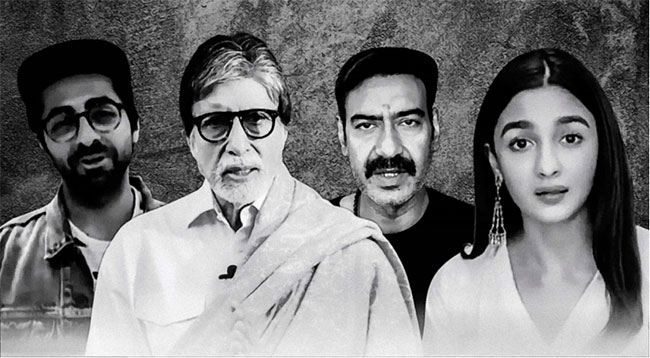

 Disruption In Disruptive World.
  Titan’s eyewear business has announced actor Ayushmann Khuranna as its new brand ambassador. The actor will be endorsing all the three categories comprising frames, sunglasses and lenses and feature in an upcoming multi-media campaigns for the same.