Tag: Ayodhya

  • Ram Mandir Consecration: Opportunities drowned in Moment Marketing?


    With apologies to none at all

    By Vikas Mehta


    Vikas MehtaJanuary 22, 2024, I guess, will become a watershed day in the Indian history. It was a culmination of a well-orchestrated movement led by the state and I think it may become a celebrated case study in marketing too. But my article today is not about the temple consecration or how it became a marketing case, lest I be accused of sacrilege, it is about how brands did or did not latch onto this moment marketing occasion. And as I live in Dehradun, close to the heartland of the temple movement, I shall look at it from this viewpoint.


    I take back my words. This was not a moment marketing case. It could have been an opportunity to take the whole occasion as an opportunity and drive maybe even a long-term marketing campaign for a brand. But, unfortunately, that’s not what happened. Brands and companies by sheer shortsightedness turned it into just moment marketing.


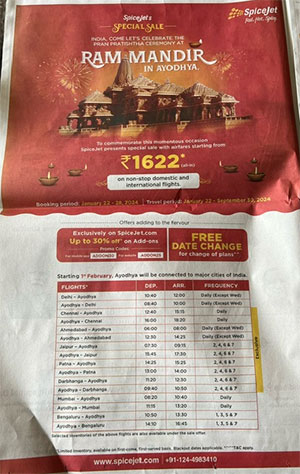
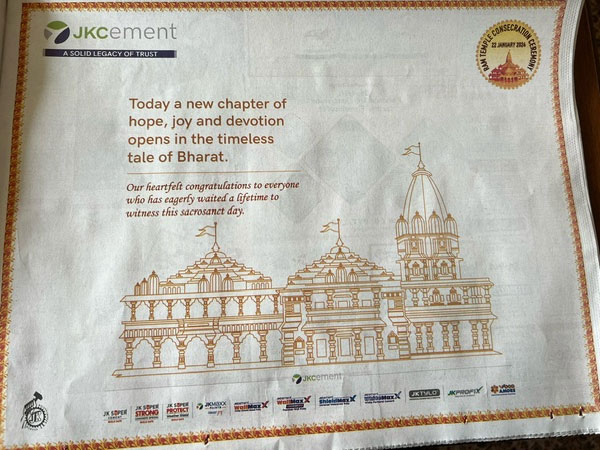
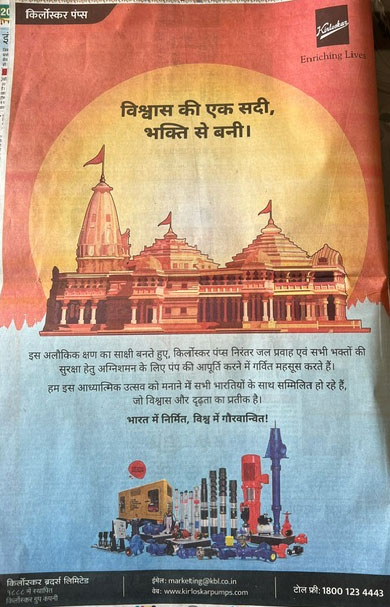
    Ok, I take back this also. As the first thing that I noticed was that very few national level brands did anything at all. There were some lame or limp attempts at moment marketing by the likes of Kirloskar, Dabur Amla, Dabur Gulabari, JK Cements, SpiceJet and Amul. These were the only national brands that were visible to me. Dabur Gulabari was the one brand which used some brand properties and kept it strictly related to the temple. SpiceJet used the occasion to give some discounts and freebies along with the schedule of Ayodhya flights. But the rest were just about cautious congratulatory messages. As I said limping moment marketing.
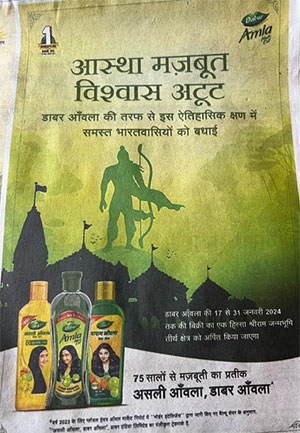
     

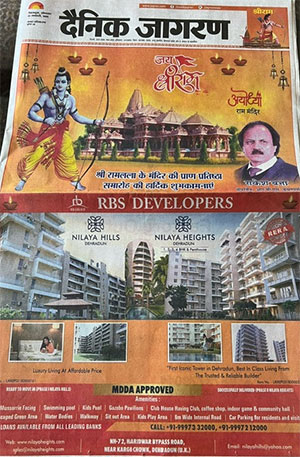
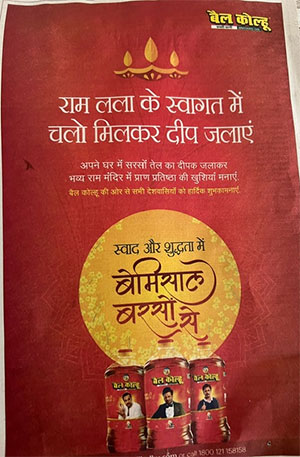
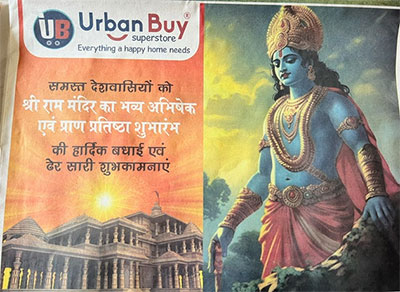
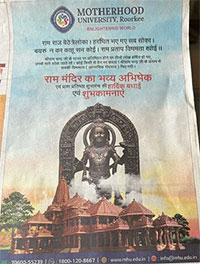
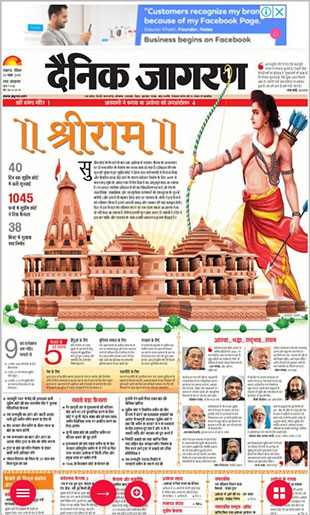
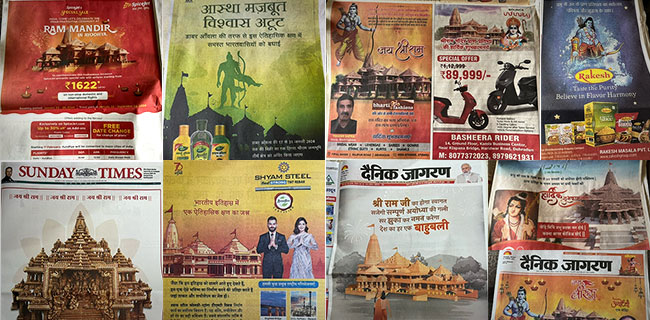
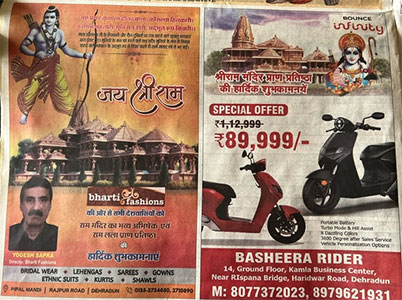
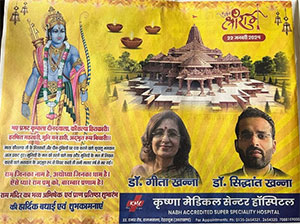
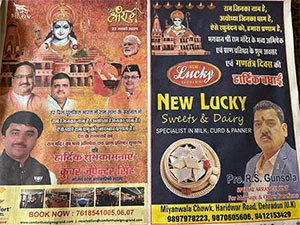
    It was local brands that ruled the roost. On the day, Dainik Jagran had two newspapers. One was a regular newspaper with some news in between a plethora of local ads. Sadly, even these were forgettable. But what was interesting was one the diversity of categories. From food masalas to construction companies to personal product companies to local fashion brands to local politicians to two-wheeler dealers to local cooking oils to local dairy and sweets brands to local jewellers to local event management companies to pan masala to resorts to medical centres and even local grocery stores. Some educational institutes, hearing aid centres, and local construction material retailers and brands added to the confusion. In my estimate, the news was maybe 45% and the ads took up rest of the space.

     

    The second newspaper was full of various articles on the temple. Historic angle, legal angle, the development in the city of Ayodhya… all of this was highlighted. And this was also full of ads as well, though maybe the ratio (of ads to editorial content) was more equal.


    A few weeks ago, a news portal had asked me to predict about what brands will do around the consecration ceremony. And my first instinctive reaction was that they will play it safe. Most brands will not do anything. Some will pay lip-service and a few who may have been involved with the construction of the temple may talk about their contribution. It looks I was correct in my initial thinking. Though I found it quite puzzling why brands which contributed to the building of the temple kept quiet. Initially I though JK Cement had contributed to the structure. But they did not mention it in their ad and I also read somewhere that no cement has been used in the construction. They too had just a congratulatory message.
     

    Why did most brands stay away? Because religion being a divisive subject, brands did not want to seen to be taking sides. And MNC, global brands are worried about repercussions in other markets too. That’s the main reason which explains the total absence of multinational or foreign brands. They did not want to alienate certain sections of the society and the world. Therefore, the few national brands that did advertise were Indian origin brands and some like Kirloskar did play up its Indianness. So, nationalism was the message. But that still does not explain the absence of many brands who have almost positioned themselves on nationalism. Kajaria Tiles, for example.
     

    Patanjali was the other brand which has for long played the nationalism card. Surprisingly, they were very low key. One press ad which looked like a 3-in-1 did appear. It spoke about an offer. About Ayurveda. And then some resolutions to take on this auspicious occasion. The last point was just about nationalism, whereas in my mind it could have been about some healthy resolutions combining the occasion and Ayurveda.

     

    The local brands had nothing to lose. Most of the brands who advertised, hardly advertise. So, this was a one-off which they could afford. Interestingly, the messages were quite brazen. Many of the ads had big mugshots of the owners. For once, some two-wheeler dealers found an opportunity to put their mugshots along with the product photo. Ditto for real estate developers, medical centre owners, dairy and sweet centre owners, construction material dealers. It was an opportunity to show themselves as Ram Bhakts. And I think that was the most important point for them. Announcing to the society and their circle of acquaintances about their religious and I suspect, even political beliefs.
     

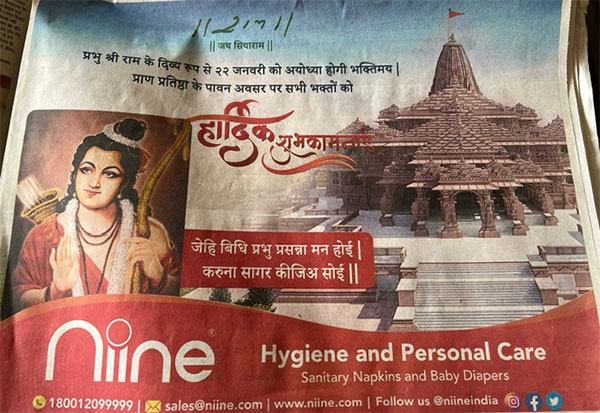
    There was a local brand for sanitary napkins and diapers, which also advertised. Would any national or MNC brand have the guts to associate an ostensibly (unfairly labelled) unclean product with Mandir?
     

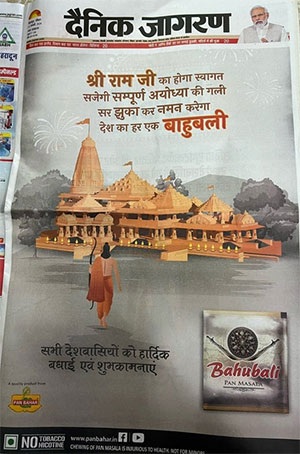
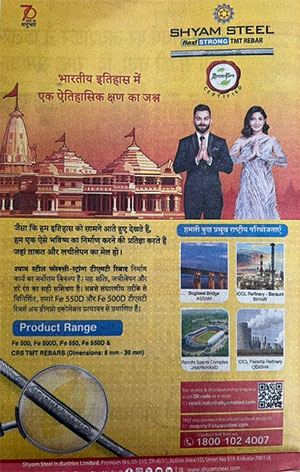
    Take Bahubali Pan Masala, and the brand is not about a surrogate. It openly says masala in the headline, very cleverly almost like a rhyme and has incorporated its brand name in it. Ayodhya ki galli and Bahubali. Shyam Steel has a prominent photo of Virat Kohli and Anushka with hands folded juxtaposed with a shot of the temple.
     

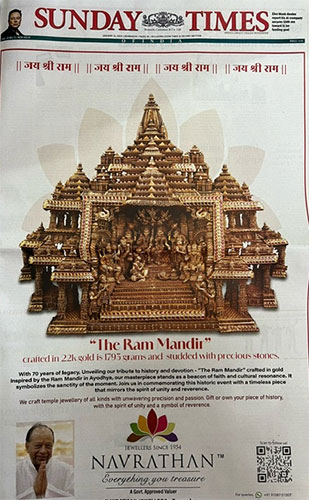
    And then there was one jeweller, based out of Bengaluru who had a full-page ad selling a model of Ram Mandir made in 22k gold weighing 1795 grams, studded with precious stones. The brand spoke about its 70 years of legacy and also had a mug shot of its owner with folded hands. Want more information and want to order? A QR code was provided. Religion, commerce and technology… a heady mix.
     

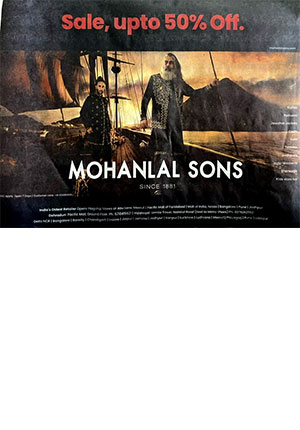
    In all this hullabaloo, there was another twist in the story. Republic Day was just four days later. And this is the time when durables, online stores, supermarkets etc have sale offers. And the advertising for the same starts a week before. Some of them tried gamely on Jan 22 too. But they were drowned out in the cacophony of the mandir ads. In fact, I don’t see many more brands or offers coming our way around Jan 26 as brands know that consumers have spent money for the Ram Mandir event. Every society, every mohallah, every market had some ceremony or an event or even bhandaras (free food). And it was all organised on the back of donations. People spent on bhagwa (saffron)-coloured clothes, flags, lights, diyas and crackers. Everyone contributed something somewhere. So, I guess Republic Day sales will be muted.

     

    Yes, I am being critical of brands. So, what more could they have done? For starters, they should not have looked at this as moment marketing. They should have seen this as maybe a property to associate with and organised activities around it. CSR? Offers and discounts to spur sales and not just to pay lip-service?  And do it according to the category and brand values. Patanjali could have set up shop at the railway stations, airports and bus stations and given wellness or Ayurveda products at good reduced rates while offering a loyalty programme. And rather than dress up the crew as Ramayan characters and earn derision, Indigo could have offered substantial discounts to all senior citizens travelling during a time period. Maybe tie up with some old age homes and offer few free seats per flights. Haldiram could have organised free bhandaras….


    The problem was that big national brands saw this as an aberration. A one-off. I think they have not realised that this day will be celebrated every year. Not just in a religious sense but also in a nationalistic and political sense. If the brands had looked at it through a long-term prism, they could have not only done more but also gained empathy and set the cash tills ringing. Let’s not forget that big brands including some MNC brands have thrived during Kumbh Melas. But this time they lost out on the big picture. The small brands did not see the big picture but they saw this as an opportunity to loosen the purse strings a bit and proudly proclaim their arrival.


    Frankly, moment marketing became the Achilles Heel for brands.


    Vikas Mehta is a Dehradun-based business strategist and educator. He writes on MxMIndia every other Monday, but sometimes on other days as well. His views here are personal.
     

  • Need to factor in Access for Disabled at the Ayodhya Ram Mandir

    Courtesy tweet by Shri Ram Janmbhoomi Teerth Kshetra


    By Shruti Pushkarna


    Shruti PushkarnaI have worked in television newsrooms for most part of my journalistic career. Despite several misgivings, I enjoyed the energy in that space, especially while handling major coverage like the elections, Union Budget or any special programming. The increased tabloidisation of news may have compelled me to quit, but as they say, old habits die hard. The mind is still drawn to TV channels on ‘big news days’.


    August 5, 2020 was one such historic event for the country when Prime Minister Narendra Modi (and the whole jingbang) reached Ayodhya to lay the foundation stone of the Ram temple. Most TV stations started their countdown to the ‘bhavya bhoomi pujan’ a day before. Special graphics dipped in hues of yellow and orange flashed on the screens. Anchors dressed in ethnic attire welcomed the audience to this ‘sanskari saffron shindig’.


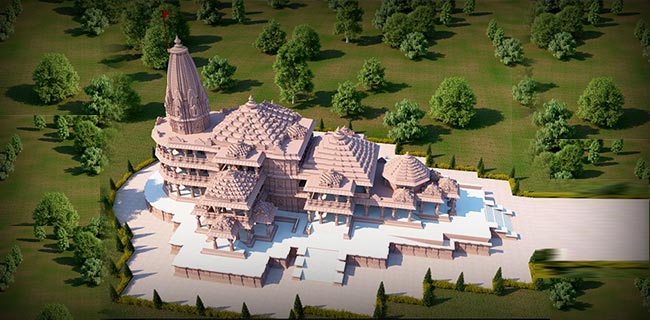
    Now before you judge me for tracking every minute detail of this cringeworthy display, it was sheer morbid fascination. Watching the ornamental sets emerge in news studios, I observed various aspects of the still-to-be built temple. Some news anchors even gave a virtual tour from the front to the inner sanctum, moving from one floor to another. Looking at the 3D model, the first question that crossed my mind was whether accessibility needs had been taken into account at the designing stage.


    Reporters caught up with the architects responsible for the construction, gushing over the massive structure, highlighting it from various angles. A series of steps without ramp or railing were visible in the montage of images. But no one enquired how a disabled, elderly, pregnant woman, chronically ill patient or an injured person with a temporary handicap would access this place of worship.


    Political/ religious/ spiritual leaders delivered speeches citing Lord Ram’s principles of fairness, his equal love for all and his special attention towards the vulnerable. The Modi errr Ram-bhakt journalists played up the rhetoric in a loop without considering if everyone had truly been included in this grand scheme of things.


    Shouldn’t we expect the media to analyse, review and bring forth the areas that have been left unaddressed or ignored?


    As per Census 2011, the disabled population stands at around 27 million and the elderly constitute 104 million. The actual latest numbers would be much higher. How can establishments shirk responsibility of providing everyone the right to free movement with dignity?


    I have written about accessibility in the past but let me reiterate some points in this context. It’s important to note that there are proper laws and grievance mechanisms in place to ensure inclusion. Section 45 (1) of the Rights of Persons with Disabilities Act 2016 mandates “all existing public buildings shall be made accessible in accordance with the rules formulated by the Central Government…”


    As defined in the Act, public building means “a government or private building, used or accessed by the public at large, including a building used for educational or vocational purposes, workplace, commercial activities, public utilities, religious, cultural, leisure or recreational activities, medical or health services, law enforcement agencies, reformatories or judicial foras, railway stations or platforms, roadways bus stands or terminus, airports or waterways.”


    Section 44 also mandates that “No establishment shall be granted permission to build any structure if the building plan does not adhere to the rules…”


    In fact, a judgment was passed by the State Disability Commissioner for Persons with Disabilities in October 2019, directing several religious places across Delhi to provide proper accessible facilities at the sanctum sanctorum, the points of distribution of prasad, material for worship like flowers, toilets, parking etc.


    Following the Accessible India campaign flagged off by the PM in his first term, the Ministry of Urban Development issued Harmonised Guidelines and Space Standards for Barrier Free Built Environment for PWDs and the elderly in February 2016. A Delhi-based NGO has also crafted detailed procedures for making religious places accessible, keeping in mind the needs of persons with different types of disabilities.


    While all is hunky-dory on paper, who will ensure the implementation on ground? Considering Ram didn’t discriminate, shouldn’t his followers guarantee an equal right to worship to all?


    Since the construction hasn’t begun yet, one can only hope that accessibility standards are followed and persons with disabilities as well as the elderly can visit the site with ease.


    Shruti Pushkarna is a former journalist (part of the founding team of MxMIndia) who has moved full-time to the social sector. She heads operations of the New Delhi-based Score Foundation where she works as Director-Programmes & Communications. She writes for MxMIndia every other Thursday. Her views here are personal. She can be reached via Twitter at @shrutipushkarna


  • Ranjona Banerji: Right and Wrong!

    By Ranjona Banerji


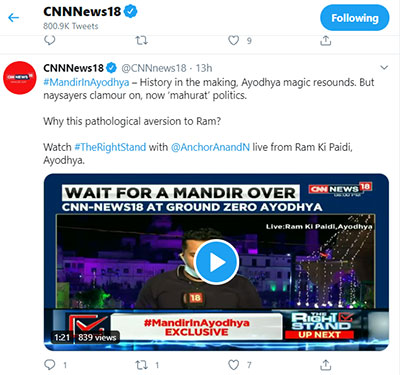
    CNN-News 18 carried a series of tweets advertising its show The Right Stand on Twitter on Monday. These are quotes:

    Why this pathological aversion to Ram?

    In secular garb, anti-Hindus cling to straws.

    Old anti-Hindu rhetoric in secularism garb.

    History in the making, Ayodhya magic resounds.


    In case you missed the context, CNN-News 18 claims to be a “news” channel which one presumes means there are journalists somewhere within.
    Which of these four statements corresponds to journalism?

    Is an anti-Hindu a thing? Is criticism of religions or religious customs banned in India? Is “magic” now an accepted reality which “resounds”?

    One understands that this particular show and its anchor represents a “Hindutva” perspective, that mangled version of Hinduism invented by the Sangh Parivar. The same version that assassinated Mahatma Gandhi in 1948. How would The Right Stand have interpreted that? “Magic resounds at Birla House as Gandhi is shot dead”? “Why this aversion to bullets”? “In secularism garb, India clings to anti-murderer straws”? “Old anti-Hindutva rhetoric in anti-murderer garb”?

    The same version of Hindutva also murdered rationalist and anti-superstition crusader Narendra Dabholkar in 2013.

    “Why this aversion to Hindutva bullets?” would have been an apt teaser for The Right Stand had it existed at the time.

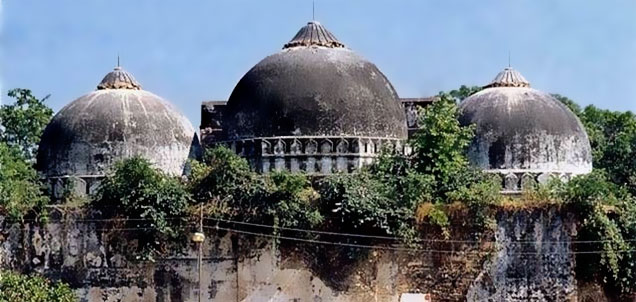
    The story of the demolition of the Babri Masjid starts in colonial India in the 1800s. It is complicated and it is entangled. But the responses of colonial India and that of Constitutional India are not the same and cannot be. India is not a religious state. The BJP and its partners want exactly that. They want to destroy the Constitution and create a theocratic state. Any journalist would see that.

    But not of course most Indian journalists.

    CNN-News18 is only one example. It may be, in its show The Right Stand, a vile example of the rise and triumph of religious intolerance and majoritarian pride. But it is one of many. This does not mean that journalists cannot be religious. But your personal life is not your professional life. And the impact of this temple for the Hindu God Rama, at Ayodhya is political. Not religious. If you feel that “magic resounds” then at least have the courage to quit as a journalist and return as a Hindutva publicity agent. (I joke, I know.)

    Is it remarkable that any journalist today does not know about the impact of the demolition of the Babri Masjid and the scars that India still bears? Indian newsrooms have worked hard over the past 12 or 13 years to demolish institutional memory, to remove anyone who carries the scars of covering India by asking questions. I do not know what they teach in those journalism schools which are now mandatory for jobs in media outlets. Judging from the results, either they do not teach our history of coverage or young journalists are not allowed to practice what they have learnt once they get jobs.

    The history is out there for anyone to find out about. It needs little extra work, because 1992 was before we had this plethora of TV channels (which is why many of us watched the BBC in horror at what was unfolding), before Google, before internet archiving. It’s how some of us did our research before it was all available at our fingertips.

    Meanwhile, let me remind you, the virus still rages, the economy is still in a state of collapse, China’s still in threatening mode, and if it’s not Ayodhya, it’s one death that TV channels are obsessed with.

    There is news everywhere. But not if you’re a star struck propagandist for destructive forces.

    Incidentally, the most common meaning for the term “ground zero”, used by CNN-News18 to describe Ayodhya, is that spot in the ground directly above or below an exploding nuclear bomb.

    I’ll leave you with that thought.


    Ranjona Banerji is a senior journalist and commentator. She is also Consulting Editor, MxMIndia. Her views here are personal

  • Did the Indian media pass the journalism test with the Ayodhya verdict coverage? (+NewsStand)


    By Ranjona Banerji


    A senior journalist called on Sunday, shocked that the Indian media was so triumphalist about the Supreme Court decision on Ayodhya. He expected both restraint and objectivity from a profession he had spent his life in. Although he is well aware of the direction the Indian media has taken since 2011, he still expected more from journalism. He discussed the post-Babri Masjid demolition riots in Bombay, in 1992 and 1993 and the impact it made on the city, the nation, our lives.
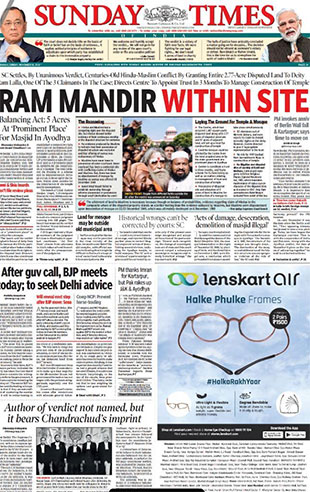
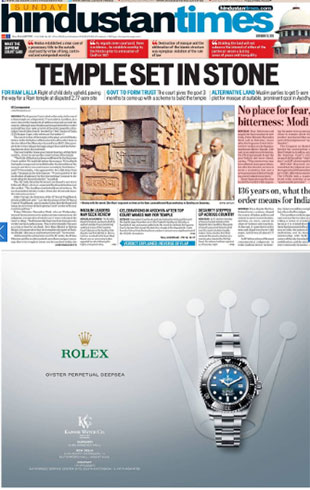
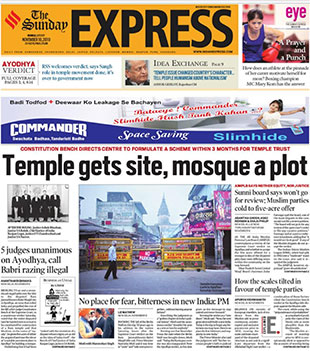
    Television let’s say is a gone case. They have increasingly over the past six years pushed an aggressive Hindu line, have attacked Muslims, Dalits and other religious and social minorities for demanding rights given to us all in the Constitution, some anchors have actively gone out of their way to engender hatred and social division. So who really had expectations from the TV media who toe and encourage the Modi government, BJP and Sangh Parivar lines?

    That Rajdeep Sardesai would be “objective” on India Today so that Rahul Kanwal and Gaurav Sawant could carry on with their majoritarian, state-sponsored agenda? That NDTV would try its hardest to be fair without aggravating the vindictive government into attacking it with more cases? I don’t have to name all the channels. You know what they do. May be that’s why you watch them. May be you have no option but to work for them because you have to make a living.

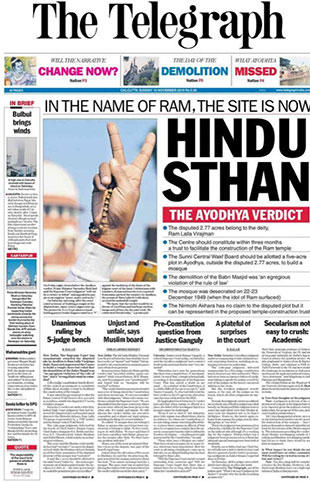
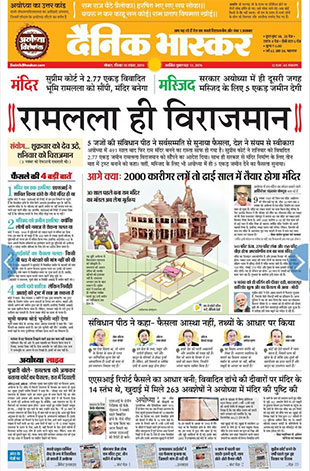
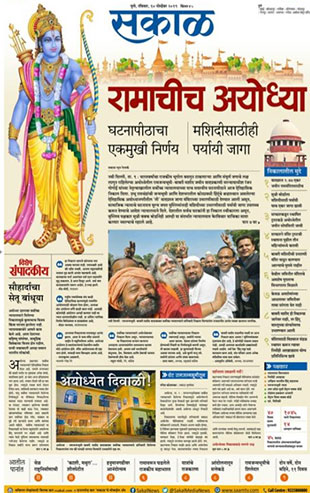
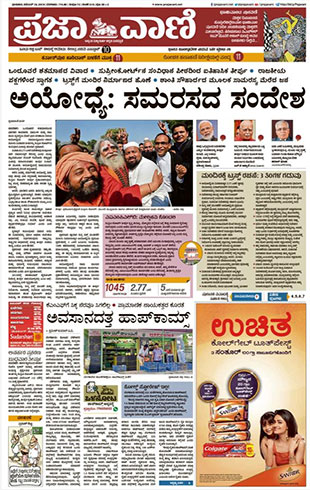
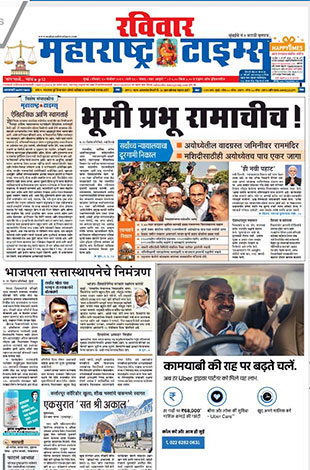
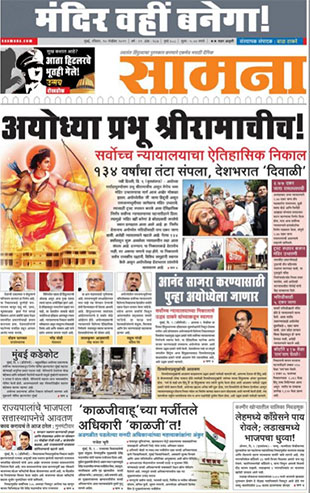
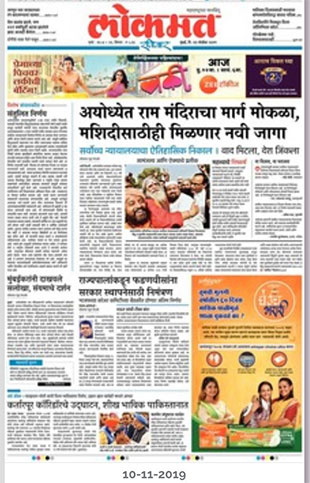
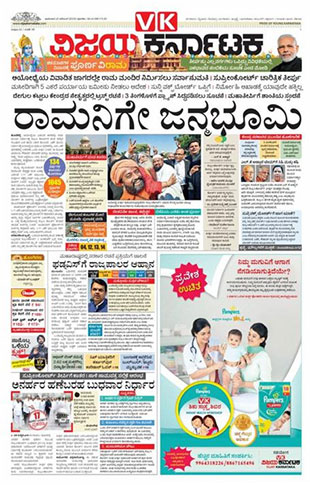
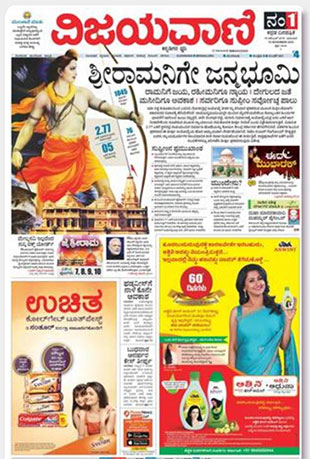
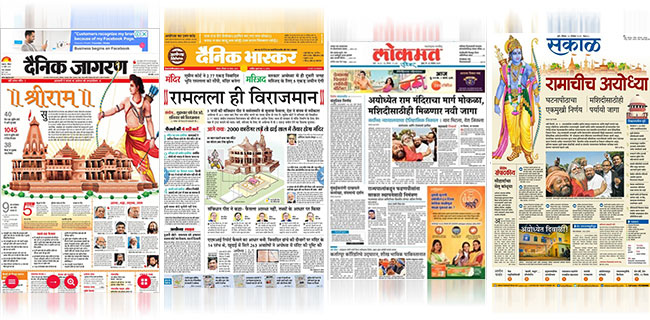
    And then, our newspapers. Most of them, especially the language papers, presented front pages that looked like tacky calendar art that made a mockery of Amar Chitra Katha illustrations, like the worst that Ramanand Sagar gave us in his serialisation of the Ramayana. Others carried agency photos of some unkempt men in apparently celebration mode. The Hindus had won was the sentiment and the Muslims better suck it up. Am I being crude? Remember there is a criminal case still ongoing about the demolition of the Babri Masjid. Who are the accused? But of course, it is more than likely that all those VHP, BJP, Bajrang Dal, Shiv Sena worthies will now be acquitted even though we all saw what happened that day in Ayodhya in 1992. And no doubt our TV patriots will rejoice.

    The inherent contradictions in the Supreme Court judgment are beyond my understanding of the law. I have searched for explanations and analyses of the judgment and while several outline these contradictions, so far I have not come across a cogent explanation for this judgment. And this is the Indian media’s other failure. Many journalists in their personal capacity have said things like: This chapter has now been closed, so now we can get on with it”. But get on with what? As journalists with even a slight knowledge of history, we should know that “closure” is not as easy as a Hollywood romcom’s tips on how to get over a cheating boyfriend. There are consequences and an aware media would tackle them. The very fact that we have an overwhelming number of newspapers sticking paintings of Lord Ram on their front pages is evidence of media failure when India most needs them.

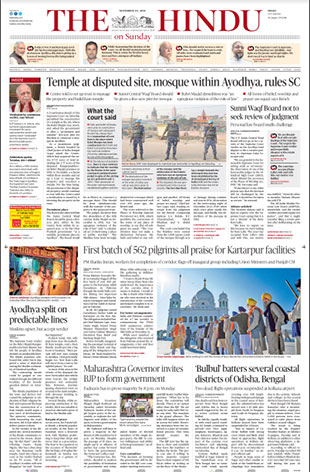
    Even the venerable Hindu has an editorial about the importance of “closure” and that the Supreme Court chose peace over justice.

    If this is the argument that even intelligent people accept then what they are saying is that the fear of a backlash from Hindu forces was so strong that the esteemed judges decided to dump principles of justice. What that says about the future of our democracy, the already fragmented social fabric of India and the power of the Constitution is too scary to even think about.

    The court had its own reasons. But the Indian media has once against failed a basic journalism test.


    Ranjona Banerji is a senior journalist and commentator. She is also Consulting Editor, MxMIndia. Her views here are personal. 


  • The Demolition, 25 years after


    By Ranjona Banerji


    Tomorrow marks the 25th anniversary of the demolition of the Babri Masjid. Sitting here today, you can see the aftershocks of that calamitous event have not yet left us. India has not been the same, nor will be, by the likes of it. The fissures that tore into India’s social fabric have not just remained, but they have widened. The actual destruction began with the Ram Janmabhoomi movement in the late 1980s. But it was December 6, 1992 that cemented the end.

    And for the India media, that was a watershed moment, in more than one way. Although the world’s media were gathered at Ayodhya, as “kar sevaks” and BJP and RSS workers thronged around the mosque, ostensibly for one more rally, there were no Indian 24-hour news channels. If it is possible to imagine such a world. For another, Indian broadcast news was still controlled by the government. Mobile phones did not exist either.

    However, the 1991 Gulf War had brought satellite television to India and it was through the BBC World Service that most people saw or heard about the mosque coming down.

    But to backtrack. As fissures of Hindu-versus-Muslim started again in India on a major scale since 1947, with the LK Advani-led Rath Yatra or Carriage Procession (in a car) across India towards Ayodhya, the Indian media began to separate itself into Hindu versus the rest. Until then, journalists were perceived as largely left-leaning and the general trend was to examine the government and for managements, usually to give in to the government. The Emergency in 1975 was a big lesson about the dangers of giving in, not that everyone has learnt from that.

    But the sort of all-out sycophancy that one sees in today’s new channels was largely missing. It owes its existence to the changes that developed in the media after the demolition of the Babri Masjid. It is not that India had not had Hindu-Muslim riots before that. Since Partition, there were eruptions, large and small. The scale post-Babri however was horrific and to everyone’s surprise, the main focus of this hatred from Bombay, India’s commercial capital until then considered to be a city apathetic to India’s political upheavals.

    The riots that broke out in December 1992 in Bombay – as it still was then – were an eye-opener for journalists. It was one thing to have arguments of “us” versus “them”, to have colleagues wearing badges which read “Garv se kahon hum Hindu hain” (Declare that you are Hindu with pride). It was another to have colleagues who celebrated communal bigotry. The other shock to the media was that no one saw it coming. Bombay was the sort of the city, one believed, where everyone lived together, jostling for space and giving up identity to make a living. Clearly not.

    The January 1993 riots were a different story. They were a planned, calibrated attempt to change the city, to carefully attack its Muslims. It was also a push by the Shiv Sena (and riding on Bal Thackeray’s coattails, the BJP), to further establish itself in Bombay as not just the champion of Maharashtrians but also specifically Hindus.

    However, when you compare the media then and now, it definitely covered itself better then. The riots were reported, at great personal risk. The government was taken to task for its inaction, from the Centre to the states. Even without relentless TV coverage, the chief minister of Maharashtra was replaced.

    For those of us who lived through those times, the future was evident, even for those of us who refused to acknowledge it. Today, one is amazed by the lack of knowledge and of a sense of contemporary history among young journalists. Even 10 years ago, I have had young journalists explain to me that the riots were a direct consequence of the bomb blasts of March 1993. They were unimpressed that I was an eye-witness, as they were absolutely certain of their facts, having been brought up on a diet of Hindu-Muslim hatred and the enormous and dangerous romanticisation of Bombay’s underworld by Bollywood. You can still see it in the obsession of some news channels (and newspapers) with gangster Dawood Ibrahim even as India faces more real and very dire challenges.

    The demolition of the Babri Masjid legitimised sectarian hatred in India and all those who had held back on their communal thinking now felt free to air their prejudice and bigotry. And now, 25 years later, we see it around us and accept it as normal, even in the media.

    Lest we forget, once, we were better than this.


    Ranjona Banerji is a senior journalist and commentator. She is also Consulting Editor, MxMIndia. The views here are her own.