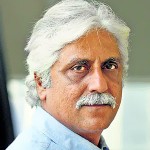
Tag: Ayaz Memon

  • Lokmat Media ropes in Ayaz Memon as Editorial Advisor, Sports

    By A Correspondent


    Lokmat has roped in Ayaz Memon as Editorial Advisor, Sports to bring in high quality latest sports analysis, updated coverage, sports opinion columns – all contributing to the vision of providing best sports coverage to readers from a regional perspective. Memon is one of India’s most best know sports writers and a keen cricket enthusiast.


    Speaking on having Memon with Lokmat, Karan Darda, Executive Director, Lokmat Media, said, “Lokmat, largest newspaper of Maharashtra and Goa, has always endeavoured to provide best quality content for its readers and advertisers alike. We have always strived hard to give the best coverage to our readers in sports. Our infographics and inside stories differentiate our content for sports lovers. Ayaz’s analytics on sports and his vision will help us present some of the best sporting events in a unique way making it relevant for advertisers too.”


    Said Memon: “I am delighted to be associated with Lokmat. It has a mighty presence in Maharashtra and an exciting forward-looking agenda to meet the expectations of new age media consumers which whets my appetite.”


  • Panel discussion deliberates role of media in promoting culture of giving

    By A Correspondent


    The Mumbai Press Club recently organized a panel discussion that deliberated the role of media in promoting a culture of giving. The panel discussion touched upon important topics like Is news today turning morbid? Is the focus solely on crime and scams? Is there space in the media for sunshine stories? More importantly, can the media foster a culture of giving in society? The discussion was held in the run up to Daan Utsav (formerly the Joy of Giving Week) celebrated from October 2-10.


    The panelists included Ajay Piramal, Chairman, Piramal Group, Mid-Day editor Sachin Kalbag, Raheel Khursheed, head, politics, government, news at Twitter India, Ingrid Srinath, CEO, HIVOS India (former CEO, CRY) and actor Gul Panag. The panel was moderated by senior journalist Indrajit Gupta.


    Venkat Krishnan N, founder, Daan Utsav, pointed the vast spectrum of people who had participated in the joy of giving festival, from CEOs to farmers in Gujarat who gave 4000 litres of milk to parts of the country that needed it.


    India has always had a culture of giving since the days of the Ramayan and Mahabharat, shared Ajay Piramal who has hitherto been shy of talking of the philanthropy he has been involved with. He chose to discuss it openly in order to promote a culture of giving.


    Charity is not about spending a lot of money. It is about giving whatever you can at any given point of time, said Gul Panag, who spearheaded Social Outreach Accreditation Program to bring the common man, NGOs and corporates together. “Many NGOs fall short when it comes to instituting programs for weekend volunteers,” said Panag.


    Raheel Khursheed spoke of the role that social media plays in expanding conversations and connecting people who want to give. While getting blood for trauma victims was once a nightmare, Khursheed said that it’s now a matter of tweets and re-tweets, with blood being procured at tremendous speed. He even spoke of a teacher from a remote school in Kashmir who got laptops from a stranger in Mumbai thanks to social media.


    Ingrid Srinath shared that the advent of social media has seen journalists reach out to her for stories rather than her having to pitch them to journalists. She spoke of CRY’s unique initiatives to network with the media, from cricket matches with CEOs and journalists to stories on profit and marketing initiatives that many NGOs shy away from.


    Sachin Kalbag spoke of Mid-day’s role in focusing on local initiatives and on good news rather than solely on the bad. He spoke of his paper’s role in spreading awareness about malnutrition in Melghat that resulted in the Bombay High Court taking suo moto cognizance of the tragedy of 3,000 children and thereafter directed the state government address the situation.


    The panelists were unanimous that media fared poorly when it came to spreading a culture of giving. Panag said she never read newspapers first thing in the morning as the flood of bad news ruined her day. When asked to wear the editor’s hat, Panag said that she would want two sorts of stories to make it to the paper every day. Stories of giving by the very rich and the very poor, from CEOs to chaiwalas. This, she feels, would help foster a culture of giving among most people who fall in between the two extremes.


    Senior journalist Ayaz Memon said research showed that it was not simply editors but readers who crave bad news. Memon, who gave the vote of thanks, pointed to the need for changing the narrative.


  • Is Cricket a big hit in Hindi? Time for Tamil, Telugu, Bangla…?

    By Johnson Napier


    After a brilliant display of form in the just-concluded Champions Trophy, the men in blue have made it clear where they intend to be at the moment. And that’s at the top. Having won the confidence of their fans in a big way, their success is now being consumed in a language with an even wider scope – Hindi.

    After sampling preferences over the past few seasons, broadcasters have now taken the plunge by relaying cricket feed in Hindi, which has matched up to its English counterpart and attracted its set of fans too. MxMIndia speaks to a cross-section of experts to analyze how Hindi cricket commentary has fared in the recent past in India (in alphabetical order of their last names).


    P Balakrishna, COO - Allied Media

    I am sure that there has been a positive impact that has been created by broadcasting commentary in Hindi. Let’s not forget that Hindi is the language which has the biggest and largest penetration as far as the pan-India market is concerned. All it has done is brought the game closer to the viewer. At the end of the day, while English commentary has its own charm but in terms or reach and understanding of the language, Hindi is of course the language that can connect with all HSM markets. While I am not sure on the numbers, I am sure that it has resulted in an incremental viewership numbers. What is critical with a game of cricket which has a huge mass connect is that the language of Hindi definitely has its charm of creating a strong impact with the audiences.


    As for it being relayed in multiple languages, I do not see any scope for commentary to be expanded to other markets as largely between Hindi and English most of the markets are covered in India. If you see the non-Hindi markets, English has a very good penetration including in the South and the East. Doing commentary in other regional languages won’t really result in any rise in viewership or even monetary-wise.


    Mona Jain, CEO, Vivaki Exchange

    India has been performing very well so from that point of view there are audiences right now on that medium. In terms of brands who want to reach out to the audience through medium of Hindi, it could be a little low-key as of now as it is not a peak season and only those with deep pockets could be taking the plunge on the Hindi medium.

    Also, cricket is very popular in the northern region so having a feed in that language makes sense; it also is the primary language at the moment. But it’s too early to discuss whether we need commentary in Tamil or Telugu or Bengali. There have to be enough numbers (audiences) out there for broadcasters to take that decision.


    Hemant Kenkre, PR Professional and cricket columnist

    I think it is great to have commentary in Hindi on major sports channels. In the past, All India Radio always combined English with Hindi with noted Hindi commentators like Jasdev Singh. During the Champions Trophy Indian cricket legends like Kapil Dev and Sunil Gavaskar (for the first time in Hindi) reached out to many viewers who are comfortable in Hindi.

    The reach for Hindi channels is much more than that of any other language – which may have prompted Star to hire former Indian cricketers (including non-Hindi speaking commentators) to attract eyeballs. It is too early say how other languages will work but going by the success of Hindi, it is a matter of time before sports broadcasters look at other languages too.


    Ayaz Memon, editor, veteran cricket writer & commentator

    I think Hindi commentary has managed to create a huge impact in the recent past. You can see it happening in the recent India-West Indies-Sri Lanka Series and also the just-concluded Champions Trophy where it was well-received. In the earlier days, and as research would prove while a lot of people used to watch cricket on television in English they used to mute it and hear the commentary in Hindi on radio. So Hindi enables one to reach out to a far bigger and wider audience base which, I am sure, has seen an incremental hike in the numbers in recent past.

    At the end of the day, when you pay the price for buying rights then your objective is to reach out to as large a number of audiences as possible. And if you can do that by broadcasting content in different languages then why not. It would be a sensible thing to do by broadcasters as India is a very diverse country that boasts multiple languages. Unlike countries like England that can air only in English or Pakistan in Urdu, we have an advantage of airing content in multiple languages and we should take advantage of that.


  • Recall: My favourite Sachin moment


    We had published this feature on April 24, 2013 on the occasion of Sachin Tendulkar’s 40th birthday.  Still makes for great reading -Editor

    By Johnson Napier


    On the field, he has often let his bat do the talking while off it his humility towards people and causes is what has made him dear to his followers. Not new to milestones, Sachin Ramesh Tendulkar adds another one to his kitty as he embraces a new figure in his life – 40! While his current form and interest in pursuing the last stretch of his international career is debatable, he sure has given his fans countless experiences to cherish.


    MxMIndia spoke to a few well-known cricket writers and columnists who’ve tracked the master blaster ever since he made the glorious 664 for the past 24 years since he made his international debut for India and got them to share their most cherished experience of the man all hail as the God of cricket.


    Ayaz Memon, editor, veteral cricket writer & commentator

    I’d like to share my earliest experience with Sachin Tendulkar, even before he got into the international team and which showed his commitment and passion for the game. In 1989, when the selectors were picking the team to tour West Indies they had decided not to include Sachin Tendulkar in the squad. Not that he wasn’t good, but the selectors thought that he was too young to face the West Indies bowlers who were too fast and terrifying at the time. They felt he was too young to face them at a raw age of 15. Subsequently when we interviewed him from Sportsweek magazine, he sounded very distraught at being left out. When we told him that the selectors were being considerate that you may get hit or injured by the pace attack and therefore left you out, his response to us was amazing: If I would’ve got hit I would’ve learnt faster. That is something that has stayed with me as it shows the intensity and passion of the man for the game.


    There’s a line from Shakespeare’s ‘Merchant of Venice’ that I am reminded of for him: With mirth and laughter let old wrinkles come.”


    Clayton Murzello, Sports editor, Mid-day

    My most memorable memory of Sachin would have to be the interview he gave me in his car after his arrival from the 1996 tour of England. He said – on the record – that he was ready for the captaincy. Not many players come out in the open and express their captaincy intentions like that and certainly not Tendulkar. But I guess I was lucky.


    My message to him as he celebrates his 40th birthday is: follow your heart.


    Boria Majumdar, sports commentator and Sr. Research Fellow at the Univ. of Central Lancashire & Adjunct Professor Monash University Melbourne

    I’ve had the opportunity and privilege of meeting Sachin Tendulkar on numerous occasions. While there are many memorable instances to share the one that I cherish the most was in Melbourne. I was waiting and watching the Indian team practice in sweltering heat at about 44-45 degrees. After the practice when all the players were drenched and were leaving the venue, there were a lot of fans shouting out and wanting to meet Sachin. While other players had gotten in the team bus Sachin Tendulkar went and obliged a few fans by signing autographs for them. When I asked him about his decision to hang on for some time he said: what would you rather do? Would you rather not be in my position and have people come up to you requesting an autograph. If one autograph of mine brings smiles to their faces I would much rather have that. That for me is modesty and humility personified. Though he is big icon, at that point in time he cared for his supporters. More than a cricketer his humility is what stands apart for me. The lesson I learnt is whoever you are or whatever you become you should not forget your roots.


    I hope he enjoys his game as he has done in the past 24 years and will do so again probably when India tour South Africa later this year. The message and wish is that while he plays his 200th Test match, Sachin would stand and play a good innings against the best bowing attack that one would remember for a long time.


    Sambit Bal, editor, ESPNcricinfo

    I remember an incident in 2005 when I was scheduled to do a 15-minute interview with Sachin Tendulkar at one of his promotional events. When I landed at that place, it was thronging with journalists who were trying to speak to him and I said it wouldn’t be possible for me to do an interview here. I recommended to him as to why don’t we do the interview in your car? He agreed immediately and the interview went on for well over two hours. In fact I wasn’t done with him when we reached his home and I said to him that I wasn’t done as yet. He requested me to come home and finish the interview. I sat for an hour more in his house and that is easily one of the better interviews that I have done of him.


    What was striking about the interview was that a lot of people at that time were predicting that he had just 2-3 years of cricket left in him and when I asked him what is it that he cherished the most in his 15-year-long career he said: there is still one thing left to cherish and that is to win the World Cup and experience what it feels like to achieve the feat. But we all know how India fared in the 2007 World Cup and I thought that Sachin would never get another chance for a shot at the World Cup. But then I remembered what he said in 2005 and when in 2011 India went on to win the World Cup, it was an unbelievable experience. So I was part of a personal history that he shared with me.


    As for now, all I wish is that he goes out on a flourish as he hasn’t got a lot of cricket left. I hope he gets the end that he deserves.


    Hemant Kenkre, cricket writer and commentator, VP – LinOpinion

    The most endearing fact about Sachin Tendulkar is that he has always batted for his friends. I remember that just a year after he started playing international cricket, he obliged to do an ad for one of my family members for free. That was a brilliant gesture on his part that he extended towards our family, especially since he was very young and at that stage of your career you wouldn’t want to do things for free. That is the best personal experience that I can share of the man.


    Another professional experience that comes to mind is when he first started playing among the men, if I may state it that way, in the then famous Kanga League. He was very young and I remember that the first ball he faced from the Ranji Trophy bowler, he hit him straight behind for a huge six. That was the arrival of Sachin Ramesh Tendulkar. It just showed how much confidence he had in his own ability. A star had already been born at that time.


    And what can one wish for somebody who has everything in life today – I just wish that he keeps on batting for India as long as he can. The thing about his career is that you get to remember some moments in your life every year, thanks to his landmarks.”


  • Enough backers for payback series?


    By Johnson Napier


    The India-England cricket series that kicks off from November 15, 2012 is being billed as a revenge or payback series by most scribes who follow the sport closely. Be it the media, analysts, critics or even players/commentators, virtually all are going gaga about how the current series would be the one to watch out for as India will be fighting to prove its mettle as being the best in the business. The fact that the men in blue were thrashed badly by the Englishmen the last time they played each other makes the cause even more compelling. But is the prevailing sentiment as positive as is being made out to be, or will it be a tough ask for the channel as it begins its quest to draw in more audiences? And, more importantly, what is the response that can be solicited from the advertisers who of late are opting to stay aloof from their association with the sport?


    To begin with, the good news is that the tournament begins at a time when most of India is in the mood for celebration what with the festival season already underway. So while partying, visiting relatives and relaxing would be top of mind for most it would also mean being able to sit at home and watch Sachin Tendulkar or Virendra Sehwag get India off to a roaring start. And that’s what is leading everybody to believe that the Series will at least kick off on a high note.


    Ayaz Memon

    Anticipating a huge response, senior journalist, sportswriter and now commentator Ayaz Memon is hopeful that the current series will be a success. As Hindi commentator for the current series, Mr Memon sounded positive: “I feel the pressure is more on India as they have to prove a point on the home turf. The fact is that India hasn’t lost a home series since 2004, and also the record since the last 12 months hasn’t been good so the pressure is squarely on the Indian team. Also the team is not in peak form as can be inferred from their recent performances across other tournaments. So one can expect the Indian team to put up a compelling fight, to say the least.”


    Backing up his claim, Mr Memon said that the channel has been doing a good job promoting the series. “I will be doing commentary for Star in Hindi and I can tell you that they have done a good job in building up the tournament and promotion-led activities. Even on the print platform the exposure has been pretty good. But we will have to wait and see how it pans out over the next few weeks. But I am sure that the viewership will be higher than the previous Test matches. The fact that you have Sachin Tendulkar playing in the series along with Yuvraj, Harbhajan and also Kevin Pietersen from England etc, I think it will be a marquee series.”


    Balakrishna

    Backing Mr Memon’s optimism is PM Balakrishna, COO, Allied Media, who said, “From a cricket and sentiment point of view, I feel people are looking forward to the series. It is being touted as the Grudge Series going by the promotional activities that are being carried out by the broadcaster. The audience really wants to see India thrash the English. So based on the hype, I expect to see more crowds at the stadium and also more ratings for the broadcaster.”


    But while the initial sentiment seems bright it is definitely not easy predicting results before the start of the tournament. The prediction becomes even more difficult when the series begins with a Test match and not ODIs or T20 that can guarantee some decent TVRs. When asked about the possible ratings that can be expected, Mr Balakrishna said, “Test matches have never been about ratings like ODIs or T20. But maybe because of the fact that this is a long holiday week, one can expect high ratings at least from the initial match itself. While it would be difficult to hazard a guess, I would be happy to go with an average TVR of 2-3.”


    Kartik Sharma

    Kartik Sharma, Managing Partner, Maxus India was more forthright, saying, “Any cricket tournament involving India is always unpredictable but exciting. As Indians, we obviously want our country to win but a sport like cricket is always difficult to predict. If you ask me, the sentiments are purely driven by the results of the first few matches. And going by our ability to digest defeat, we Indians don’t really fare well in that department. By that I mean that if we lose a match or two, we tend to divert our attention to other sports or television properties. But then again, this being a festival/holiday season I expect at least the first few matches to have a decent viewership as people will be at home and thus would be able to watch the matches. By nature, Test matches anyway do not draw in more audiences compared to what the T20 or ODI matches do. So I am expecting an average TVR of 2+ for Test matches and an average TVR of 4+ for ODIs.”


    Mahesh Ranka

    Presenting another factor that could guarantee ratings or dismiss them, Mahesh Ranka, CEO, Indus Sports asserted that it may even depend on the opponent playing against India: “If it is Australia or even England, there could be some decent ratings expected, as these teams are ranked higher compared to what a Bangladesh or Zimbabwe series would draw. The thing about England is that we lost to them badly when we went there so hopefully, we can look forward to avenging that result through the current series. And if India happens to win the first match, you could expect more audiences (in the range of 20-30 percent more on the base figure) who will come in for the second match, and so on.”


    But in the overall analysis, Mr Ranka is of the opinion that the current series will not have anything great to offer in terms of viewership, at least as far as the Test matches go. “The ratings that Test matches have thrown up in the recent past kind of puts everything under the scanner. Though people (particularly media) tend to hype any tournament, Test matches have never really managed to draw in the audience (viewership). That’s because people have their own mindset behind watching any match and advertisers will always have to move along taking into account the risk of losing out on viewership.”


    On the interest shown by advertisers, Mr Ranka said, “From an advertiser’s perspective, one has to always look at why cricket is typically watched: it is brought for reach. There are two things to that. Firstly it is the festival season where advertisers have monies to spend and whether it is cricket or no, they will eventually spend at this time of the year. The rates that could be expected for Test matches in the current series would be in the range of Rs 50,000 to 1 lakh for ten seconds.”


    Taking a diplomatic stand Mr Sharma said, “The advertiser sentiment depends on the packages that are being offered by the broadcaster and there are various deals in store. But I wouldn’t be able to comment if the rates are more or less compared to the previous tournaments.”


    Presenting a bullish outlook, Mr Balakrishna said that from the advertiser’s standpoint, the sentiment seems pretty positive. “Against the backdrop of digitization, one genre that is the least affected always is cricket, as the sport is not always about being CPRP-led but also about hype and other such factors. So I do see a positive resonance to the whole series from an advertiser standpoint. Also, I am sure that the channel would have factored in the tough economic scenario and therefore would have come up with a competitive package for the advertisers, making it a win-win for both of them.”


    So whether it will be a winner or a dampener, what the India-England Series is managing to do is turn the spotlight back to cricket. Which is a good move considering that the recently held Champions League tourney didn’t go down too well with audiences. The icing on the cake would be if India manages to whitewash the team from England. TVCs have been saying that India “Angrezon ki band bajaayega” – that is, will thrash the English. Music to our ears or hitting the wrong notes? The game will tell.


  • Ranjona Banerji: Why HT scores in Mumbai

    By Ranjona Banerji


    For Mumbai, The Times of India has to be the primary English newspaper. But seven years ago, a very serious challenge was mounted by the Hindustan Times and DNA. For at least five of those seven years, DNA was well ahead of Hindustan Times in circulation and readership and for a while, even had the Old Lady of Boribunder worried. But since then, Hindustan Times has overtaken DNA and left it behind as a third contender. The difference between the two papers is not much in terms of numbers – a few thousand copies, not hundred thousands – but it represents how much DNA has lost, its recent rise in IRS calculations notwithstanding. I’m not counting Mumbai Mirror in this race since it is not a standalone newspaper.


    So far it has seemed that DNA’s loss was HT’s gain – through no major effort of its own. But lately, HT’s efforts to make a niche for itself seem to be paying off. Unable to compete with the TOI for blanket coverage of city news – and severely hampered by the no-poaching pact between their managements – HT had specialised in packaging and focused campaigns. Now it seems to be taking a surer route – re-introducing the city to its readers.


    Monday’s newspaper has an excellent exploration of changing trends in the Girgaum area by senior journalist Smruti Koppikar. It’s good to see Ayaz Memon’s insightful and incisive column on “So Bo” (how I hate that phrase!) back in HT, shifted to Monday’s city pages from its earlier Sunday slot. HT Cafe is clearly trying to be less PR-driven than its competitors and ruffling a few feathers with its stories. And HT sports section – although this has little to do with Mumbai – is one of the better ones.


    That leaves HT’s edit page, which for my money is too skewed towards India’s TV stars and has far too little analysis or informed opinion – in my humble opinion!


    There are many ways for a newspaper to gain ground and many of those have to do with circulation, branding and management. But for editors, you have to grab the hearts and minds and HT Mumbai seems to be working that out for itself after seven years.


    **


    Mohd Junaid Ansari asks in what passes for the humour column on The Times of India’s edit page: “Aren’t we all a little bit in love with Hina Rabbani”. This takes off from the gossip that Pakistan foreign minister is involved in a love affair with the Pakistan president’s son and putative heir, Bilawal Bhutto Zardari.


    Attractive as Rabbani is, I would contend that only men and lesbians are likely to be in love with Rabanni. Even accounting for female foeticide, dowry deaths and accounting for same-sex selections, roughly half the human race might prefer to not to be in love with a woman. Some might even pick Bilawal over Rabani. We do count you know, even in a male-dominated world!


    **


    Arvind Kejriwal and Prashant Bhushan and other members of the new un-named political party and what’s left of India Against Corruption are bound to be disappointed with the media’s reaction to their allegations against Congress president Sonia Gandhi’s son-in-law Robert Vadra.


    Although TV has given the story playtime, newspapers have been tepid. The main reason is the allegations are unsubstantiated and it requires some work to find out just how the connections between Vadra and DLF work. It looks as if Kejriwal and friends just threw a pebble into the pond to see how many ripples it would create.


    Now instead of taking it further, the anti-corruption crusader and politician is encouraging people in Delhi to break the law.


    Ranjona Banerji is a senior journalist and commentator based in Mumbai. She is also Contributing Editor, MxMIndia


  • Press Club Bombay honour bigger than Padma Shri: Vinod Mehta

    By A Correspondent


    Acknowledging to the audience that his heart still favoured Mumbai over Delhi and it was Mumbai that saw him at his pioneering best, Vinod Mehta, now advisor to the Outlook Group, was a picture of pride and fulfilment as he received the coveted Lifetime Achievement Award bestowed on him by the Press Club of Mumbai on May 4.


    Receiving the award from Kapil Sibal, Union Minister of Communications & IT, Mehta thanked the members of the fourth estate and said that this award means more to him than even the Padma Shri. Mr Mehta was felicitated for his selfless contribution of more than 35 years to his passion – journalism. Mr Mehta joined a host of winners from the fourth estate that were honoured by the Press Club for outstanding contribution to the trade.


    The evening also witnessed two special awards being given to late Pradeep Vijaykar (formerly with Times of India) and eminent journalist Madhu Shetye for their outstanding contribution to the domain. Gurbir Singh, President of Press Club of Mumbai delivered the keynote address while veteran sports journalist Ayaz Memon was the emcee for the evening.


    Prior to the awards ceremony, the evening witnessed a scintillating panel discussion on the role that media was portraying in the country and whether it was headed in the right direction. The panellists included Arnab Goswami of Times Now, who moderated the session, Vinod Mehta of Outlook Group, Kumar Ketkar of Divya Marathi and Uday Shankar of Star India.


    Mr Goswami began by stating that there is no shortage of attention being showered on media but expressed concern when he said that never has the media done so wrong. “The question that all journalists and editors need to ask ourselves is, are we doing everything right today? Is the chase for news headed in the right direction?”


    Replying to his question, Mr Mehta said: “There is no problem with the direction, what is essential is for us to judge the media in the environment it works in. The judiciary and press media still function with a degree of idealism and integrity but there is so much of self-congratulation that is happening; that is something that is slightly out of proportion.”


    Expressing his views on the issue of responsibility, Mr Mehta said: “Where the young journos are concerned, I feel they have a good sense of idealism and integrity but if there is somebody who has to take the blame for the current state of affairs, it is the editor. Even if somebody from the team has committed an error, the editor has to take ownership of that and find a solution to it. The problem is that the editors have forgotten what their job is and are pursuing their own agenda. The need of the hour is self-examination; we need to introspect and be accountable for our actions.”


    Replying to Mr Goswami’s query on whether there was unity between members of the fourth estate and the role that editors essayed, Kumar Ketkar said: “It is the editors who stop news from being published and not the management as many think. The editors try and control their reporters and that should not be the case.” Mr Ketkar cited the example of the slain BJP leader Pramod Mahajan, who was shot by his brother a few years ago. “When his brother was arrested for his murder, he had written a letter from the jail explaining his stance and he wished to supply the letter to all in the media. I was told that most editors had agreed to play up the letter in their publication and so I went ahead and planned a big editorial spread for the news. But the next day, I was surprised to see that only my paper had carried the news. This shows the lack of unity existing between the media players today.” According to him, “The media today is not clear on the role that it has to essay. They are not mature enough and lack understanding skills. Journalists themselves are timid and lack courage.”


    Uday Shankar, CEO of StarIndia went on to describe how television as a medium emerged in a big way first during the 90s and then again during 2008-09. “A lot is being said about how news television has been crowded space but I feel it managed to rediscover its own agenda during 2008-09. I cannot understand when some people say media doesn’t do self-introspection. If that is what is claimed, then how come they’ve come to rediscover themselves? Personally, I feel media has done the right thing by chasing news. If there are people who still have questions about the role of news channels, then I cannot understand whether media should be responsible for what it does or whether it should concentrate on doing the right thing?”


    The panel went on to discuss how urban centres led by metropolitan cities were receiving maximum attention from the media and how stories from the rural and less important towns were being ignored in a large way. The need of the hour, the panel highlighted, was to bring out stories from these small cities and towns which were inspirational in nature.


    Winnerspeak:

    Ashish Khetan, Editor – Investigations, Tehelka

    “I bagged the top award for my story on the national rural health mission scam that was unfolding in UP. The story was not about the bonds between the corporation and ministers but how corruption was actually killing people. The funds which were allocated for improving healthcare for the needy and rural people were being siphoned off and embezzled by the whole gravy train of bureaucrats, including politicians. Unfortunately the story did not get much play in the national media because it was centered around the poor but I feel the story was more important than 2G, CWG or other scams that were covered by the media.”


    Abhijit Sathe, Sr Asst Editor, Mumbai Mirror

    “I won the runners-up award for Crime (Pradeep Shinde award) for my story Hiranandani vs Hiranandani. The award means a lot to me. The story was a big one that chronicled infighting between families of one of the biggest names in business today. I exposed how two siblings were sabotaging each other’s interests. I am greatful that I was selected for, and eventually won the award.”


    Rafique Baghdadi, Business India

    “More than react to the win, I would like to say this: more than 62 years ago, a lady called Ms Panna Shah, had done a PhD in Indian Cinema and since then there is nobody who has done that course in the industry as yet. It’s high time the business houses, film industry and the state government should give grants and scholarship to aspiring candidates to pursue that course.”


  • Dream start for Satyamev Jayate


    By Meghna Sharma


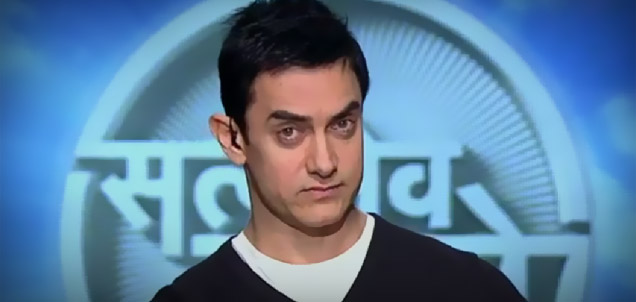
    On World Laughter Day, Aamir Khan was able to achieve just the opposite – make Indians wake up to the social evils we only talk about in hushed tones and cry while consuming  the harsh reality we all run away from. The much-awaited Satyamev Jayate premiered yesterday (Sunday, May 6) morning after a well-orchestrated marketing campaign. As expected, the show was a hit among the masses and media personalities. MxMIndia spoke to a cross-section of mediapersons and experts for their reactions to the show – and to know if the show will be able to sustain the hype and curiosity it has generated.

     

    Anita Nayyar

    TRPs, no problem

    Most media planners are happy with the show – personally as well as professionally. They feel that the show was able to generate enough curiosity by making people switch on their television sets on a Sunday morning and will continue to do so.


    “The show had a huge amount of emotional quotient, but the way the issue was dealt in the episode will be able to impact people and many of them will wait for the next episodes too. The way everyone is talking about it, I’m sure that the channel will be able to get its TRPs. Apart from the Aamir factor, the issues being discussed on the mass-reach channel will also help it,” said Anita Nayyar, director (customer strategy), BCCL.


    Mediaah! Thank you, Star Plus. Thank you, Aamir Khan

    Anil Thakraney: Oprah Khan

    Agreeing with Ms Nayyar, another senior media planner felt that that the show has the potential of becoming the highest TRP generator in the morning slot. “It’s an episodic show, so a lot depends on how each episode is produced. The show, though a little over dramatic at certain portions, will catch people’s attention,” said the media planner, requesting anonymity.


    The show was telecast on nine channels – of Star the network, Doordarshan and ETV Telugu  and was also dubbed and had subtitles to reach out to various parts of the country.


    Chandradeep Mitra, managing partner, Anvention and who is now based in Kolkata, liked the show and felt that even though it is not pure entertainment and deals with uncomfortable topic, it will be a hit among the masses. “The show was telecast with subtitles in Bengali on Star Jalsa, which helped it retain its genuineness. People here are comfortable with Hindi, so language won’t be a problem. After the initial hype, a lot will depend on how it is written and talked about on the social and mass media. Also, the topics will show how the show will do in the future. For instance, the first episode would have an impact on the Hindi-speaking belt,” he said.

     

    Anil Sathiraju

    Another media planner who saw the show on Star Plus and a regional channel, Star Vijay, felt that only Aamir Khan will be able to catch people’s attention down south. “It might not catch people’s attention as everyone is expecting, but it’s unpredictable.  Although, one look at the show and one can see that the actor and his team have done their homework well,” said Anil Sathiraju, head – south, Mudra Max Media.


    Many also felt that it’s a bold step by an entertainment channel to deal with such a topic and to such an extent. The money spent on the show is no secret. “Aamir is a popular actor, but I don’t think the show will be able to garner the same kind of popularity and following like other weekday prime time shows on similar channels. But hats off to the channel and the actor for taking up such a bold step and deal with social issues no one wants to talk about,” said Sundeep Nagpal, founder director, Stratagem Media.


    Marketers’ paradise?

    The 10-second advertisement slots for the show were said to have been sold at thrice the usual rates. The main sponsors have already paid a huge sum to be associated with the show. According to the marketers, the tear-jerker has the mass-appeal and the pull.


    Lloyd Mathias

    The show has been ‘trending’ on Twitter the whole of Sunday and has an ever-increasing number of followers on Facebook too. So, on the popularity front, the show has been able to reach out to its target audience. At least the socially networked intelligentsia for sure.


    Former CMO, Tata Teleservices, Lloyd Mathias said that the show is a huge marketing property. “The hype created before and after the show, is a clear signal about the impact it has created. Apart from the Aamir Khan factor, even the issues bieng dealt with have created uniqueness and curiosity.  So, every marketer will be glad to be associated with the show.”


    Sanjay Tripathy

    Even Sanjay Tripathy, executive vice president – Marketing & Direct Channels, HDFC Life, felt that marketers would be glad to jump onto the bandwagon: “Every show has a certain TG and marketers advertise with them according to their TG. Satyamev Jayate is a show which has appeal across sections – class, age, region and religion. So, even though the show is not at a prime time slot and not a pure entertainer, people will watch it. So, why wouldn’t any advertiser want to be part of it?


    More than a tear-jerker

    The first episode dealt with the issue of female foeticide – not something people aren’t aware of. Sociologist, human right activists and media commentators are glad that someone is talking about such taboo topics on such a platform. And since, an actor of certain credibility and reputation is bringing it to the masses, there might be some change in the society.


    “The portrayal of the issue was sensible and the personal experiences of the three women on the show were heart wrenching. Till now, such topics were only debated by academicians and activists. But now it’s in the public domain. And it has shaken up the people. However, now the concern is, will it be able to find a solution for such highly-prevalent evils of our society? A follow-up is needed so that the show doesn’t just become another tear-jerker,” said Sarla Bijapurkar, sociologist.

     

    Ranjona Banerji
    Ayaz Memon

    Ranjona Banerji, senior journalist and contributing editor, MxMIndia, felt that sustainability is a challenge now. “A lot of times, after a hard-hitting start, many shows tend to bend towards populist themes. So, I hope the show doesn’t do that or run behind TRPs. The show will have the similar constituency of followers like Anna Hazare. Thus, change in a society might happen, but a lot will depend on how the show progresses from here.”


    Agreeing with her is Ayaz Memon, veteran journalist and editor, who too believes that sustainability is a challenge the show will face if it wants to be different: “Very rarely do people want to watch ‘reality’, but the show was able to catch almost everyone’s attention on Sunday. Apart from sustainability, another challenge the show will have to overcome is how quickly it is able to capture the youth’s attention, because one doesn’t know what will happen after three weeks.”


    If that’s not enough, Teesta Setalvad, journalist and activist feels that the show was great, but there were loopholes in it too. “For instance, in the show Aamir Khan said that he will write a letter to the CM, but in reality he can’t do much about it. It’s the chief justice who can make a difference and take action. Also it didn’t tell people where to go when such issues happen, no matter how weak the organization might be. Apart from that, the show was excellent and a good start in creating awareness.”


    Photograph: Video grab from SatyamevJayate.in


    > The Importance of Being Aamir Khan

    > Why SJ will rule weekends; Stratagem analysis: Weekday Show #23 > Weekend Show #1

    > SJ is Aamir’s baby, completely: Satyajit Bhatkal (director of the show)

    > High EQ at Aamir Khan talk show Satyameva Jayate

    > Airtel slashes SMS rates for Satyamev Jayate

    > Anil Thakraney: Aamir wants to play God



  • Hungama’s Cricket Stock Exchange in 2nd season

    By A Correspondent


    Hungama Game Studio has announced the second season of its awardwinning Cricket Stock Exchange (CSX).  Sponsored by Maruti Suzuki, CSX currently boasts over 150,000 registered users and attempts to be to cricket fans just what the stock exchange is to investors.

    A virtual trading game where users can trade (buy and sell) shares of their favourite cricket players and teams, CSX bagged the best online game award at WAT awards and the Indian Digital Media Awards. Considering the millions of hungry cricket fans in the nation, the inspiration behind CSX (Cricket Stock Exchange) was to offer consumers a format to experience and enjoy cricket in a new avatar. The concept behind the game is of buying and selling virtual shares of players and teams. The shares fluctuate depending on the real life performance of the players on field and also on expert articles written and published by Cricketwallah and Hungama’s proprietary algorithm. CSX was conceptualised with leading cricket journalist Ayaz Memon (who writes as Cricketwallah) and includes the International Cricket World Cup, IPL teams and Champions League T20.


    Commenting on the success of the game, Shashank Srivastava, Chief General Manager – Marketing, Maruti Suzuki India, said: “Maruti Suzuki India has been associated with CSX for two seasons. This game is unique as it combines all elements of cricket (scores, predictions, expert analysis and the game itself) and allows us to associate with a product that has good engagement levels with our consumers. The association with Ayaz Memon lends huge credibility to the property. Maruti Suzuki CSX has also won 2 digital awards for best gaming product. In the last season of Maruti Suzuki CSX, starting May 3 to July 10 2011, we saw phenomenal traction and engagement levels with 1.44 lakh registered users and 7.76 lakh unique visitors.”


    Said Ayaz Memon: “I am delighted to learn that participation in CSX has grown exponentially in the past two years. With new and improved features, it has become not only more fun but also more challenging. While the premise of the game is basic, it still needs a good understanding of the current form of players and also cricket logic.”


    In the current season of CSX, the gameoffers new features like casual games, introduction of mini applications, Predictor and Forecaster to increase interactions while matches are in progress and an independent market place to maximize trading across the site. It also offers its registered users a chance to participate in contests, leader boards, cricketing statistics provided by  leading statistician Mohandas Menon.

  • Anil Thakraney: Sachin coverage sucks

    By Anil Thakraney


    As expected, the entire Indian media went orgasmic as soon as ‘God’ hit that very elusive 100th hundred. Quite understandable. This man is a national hero and he needs to be celebrated.


    However, there were two aspects of the mad coverage I found quite annoying. One, each time Sachin reaches a milestone, the media (both, print and electronic) regurgitates the same old childhood pictures and the same old tired cliches about the man. And the same old ex-cricketers sing the same old praises. even in a euphoric state of mind, it becomes difficult to handle all this recycled stuff. Surely there’s an innovative way to celebrate the hero’s achievements. Surely there are untold incidents from the man’s life that can be dug out if one cares to do the hard work. Something to ponder on for editors and programming heads. Because, unwilling to retire, Tendlya will reach even bigger landmarks, and we need some freshness going.


    Having said that, I must point out that cricket expert Ayaz Memon was the only one who told us something refreshing about the cricketer. This was in his column for the Hindustan Times. Memon mentioned how, as a young lad, he (Sachin) would jump over the wall of a cricket ground rather than use the main entry door. The master’s reason? Why wait for something you enjoy so much in life. Superb. It gave you a powerful insight into the passion the player feels for the game, the reason he’s reluctant to retire even after two decades. We need more such gems in the media.


    Secondly, I was rather upset by the behaviour of the young TV reporters who were ‘granted’ quick interviews by the great man, soon after the mega ton. They were grovelling at his feet, like crazed fans. Guys and girls, that’s NOT the way the media is expected to conduct itself. Sure, the man enjoys a godly status, but a couple of tricky questions badly needed to be put to him. Like, did his search for the Big 100 bring the scoring rate down, which ultimately cost the team the match with Bangladesh? Does he agree with that?  Like, he claims personal landmarks are never on his mind. So then how come he closes his shop while batting in the nineties? Not one reporter would ask him these things. They were busy fawning. Repeat: That’s not the job of the media.


    Net net: Sachin Tendulkar is our biggest contemporary hero. No doubt about that. Now let’s pay him tributes that befit his own stature.

     

    ***


    PS: You should never, never piss her off. It’s worse than hell when she’s scorned. Here’s an American lady who passed on a sweet message to her philandering hubby through a hoarding. Wish Indian ladies did ditto. Tired of watching all those ugly thopdas of our politicians. 🙂


  • Media, PR professionals to debate ethics at global conclave

    By A Correspondent


    With the role of Public Relations professionals coming under scanner in the context of the 2G scam, a global conclave of PR professionals, to be held on February 13 at Trident, Mumbai, will debate the various issues concerning them.


    PR – Interface or Interference? is the theme of the conclave to be hosted by the Public Relations Council of India (PRCI). “We expect over 250 PR and media professionals and academicians to attend the conclave,” said M B Jayaram, Chairman emeritus and chief mentor of PRCI.


    Veteran media and PR professional Mr B N Kumar, who is also the conclave chairman and head of Mumbai chapter of PRCI, said: “The conclave assumes significance in view of the debates on its theme and panel discussions on social and digital media and government and political public relations.”


    Maharashtra DGP Mr K Subramanyam will inaugurate the conclave while veteran jiournalist-editor Mr H K Dua will deliver the key note address. Others speakers include Mrs Rajashree Birla, Chairperson, The Aditya Birla Centre for Community Initiatives and Rural Development, Mr Tony Good, Executive Chairman, Good Relations and veteran journalists Mr Ayaz Memon, Mr Kumar Ketkar and Mr D K Raikar.


    Importance of PR and corporate communications is growing in leaps and bounds. The profession is no longer what it was even a couple of years back and the technological advancement in the present digital world has added a new challenging dimension to the profession. With the availability of new tools for communication and PR, the corporate communication or PR professionals runs the risk of being outdated if they become complacent even for a short time.


    “Add to this, the dilution of media ethics, the growth of investigative journalism, the fight for eye ball share, the TRP focus, and the high cost of square millimeters in print and millisecond on TV and you have yet another dimension to the profession,” said Mr Jayaram.


    The conclave will thus offer thought leadership and empower the PR practitioners to upgrade their skills and knowledge to manage communication. This conclave is also an opportunity to meet some high profile communication experts of national and international distinction, and exploring the immense potential of PR, he added.


    Another highlight of the conclave is the presentation of its signature annual Chanakya Awards and PR Hall of Fame recognitions. There will another set of awards for corporate collaterals like annual reports calendars and communication campaigns.


    PRCI is a national body of Public Relations, Corporate Communications, Advertising and Media Practitioners, Event Managers and academicians. Established in 2004, PRCI strives to enrich the professional development of media practitioners and provide networking opportunities to further the course of the profession. With its headquarters atBangalore, PRCI has 21 active chapters and many more are in the offing.


  • Dog days for pet mags

    By Archita Wagle


    From the Queen of England downwards, celebrities and their equally famous dogs are almost a cliche. Paris Hilton is frequently seen carrying her pet chihuahua Tinkerbell, who has a book called The Tinkerbell Hilton Diaries: My Life Tailing Paris Hilton to her credit. Closer home Gul Panag’s beagle Milo has a Twitter account. Amitabh Bachchan posed with his Piranna Dane, Shanouk, for the cover of Dogs & More anniversary issue, which was launched recently.


    It’s not just celebs, though, even ordinary people are increasingly getting pets to be a part of their families and participating in their activities. It should logically follow that these owners would be in need of news, views and information resources for their four-legged friends.


    But the pet magazine market is, albeit niche, also extremely small, especially when compared with the growing interest in pet parenting.


    As Shivani Darshan, publisher-editor of the now defunct Furs, Fins and Feathers said, “The pet industry is still a mom & pop kind of industry in India. Abroad, the industry has seen a growth of around 30-40 percent, but in India it is still at a very nascent stage.”


    Veteran journalist and dog lover Ayaz Memon concurs: “The idea of having a pet magazine in India is not fully fleshed out. Even the idea of having pets is not familiar inIndia, it is just growing.”

     

    The pet industry, though not very big, is dominated by dogs, as can be seen from the fact that most of the magazines in the market are predominantly for dog owners.


    Shweta Khurana, editor of Dogs & Pups said, “When we conducted our survey before launching our dog magazine, we found that dogs constituted the maximum number of pets. Also I am a dog lover; the magazine was just a way of turning my passion into a profession.”


    Dogs & More was started by Farzana Contractor, who is also the editor of the magazine. The idea for launching Dogs & More came to Ms Contractor when she realised that dogs teach us a lot about loyalty, patience and ability to love without question. Ms Contractor’s love affair with dogs started seven years ago. “I adopted a dog seven years ago, after a friend suggested it to me as a solution for the depression I was experiencing after losing my husband 10 years ago. I adopted a furry little black Lhasa Apso, and my life changed.”


    Magazines such as Dogs & More or the Delhi-based Dogs & Pups are effort to influence the people to get pets. These magazines, mostly bi-monthly, are reasonably priced and offered at a monthly subscription to the readers. But even then the concept is not taking off. “Considering the expenses related to taking care of a dog, this subscription fee is pretty reasonable. The content is nicely balanced,” said Ms Contractor.


    But a common grouse is that the revenues being generated are not enough. “Unlike a Cosmopolitan, which gets plenty of advertisers, we don’t get so many advertisers. The content is not a challenge but getting revenues is… that’s why we are still a bi-monthly. The content is not a problem,” said Ms Khurana.


    But Jaisurya Das, media professional and dog lover, disagrees: “The marketing strategy adopted by the pet magazines is not right. First, their advertising is not done right. They tend to approach only those connected to the pet businesses like vets, groomers, trainers and so on for advertising in the magazines. What is stopping them from advertising FMCG products? The reader who picks up a dog magazine will also consume the FMCG product. They should think of the end audience while going for advertisements, not the advertiser.”


    Ms Darshan however has a different point: “The industry we function in is still very unorganised, the advertisers we approached want free ads. I was bearing most of the cost of printing and distribution. In the end, we had to take a call and decided to stop printing the magazine.” The anniversary issue of Furs, Fins and Feathers on March 2011, which featured Paris Hilton and Tinkerbell on the cover, was the last one.


    Mr Das also points out that one more reason for bare minimum survival of the dog magazines in India is the visibility factor. “The pet lovers are not going to go out and seek out dog or pet magazines. These magazines should be available at the vets, pet shops, dog groomers and so on. The magazines should have tie-up offers with dog products to hook in the readers. Right now, they are surviving mostly on subscription.”


    Mr Memon agrees: “The information given in these magazines is very basic. It is good for those who have just got their first pet. If I need more in-depth information it is readily available on the internet. I feel that there is a lot of scope for dog magazines to grow.”