Tag: Ashit Kukian

  • Radio City hosts Business Titans – Chapter 3

    Radio City has concluded its ‘Radio City Business Titans – Chapter 3’ event, commemorating 63 achievers, commitment to championing entrepreneurship and innovation across the country. The event, held from July 19 to 21 at Yas Island, Abu Dhabi, was supported by the Maharashtra Industrial Development Corporation (MIDC) and was graced by the presence of Uday Samant, Minister of Industries. It brought together industry leaders, visionaries, and budding entrepreneurs under one roof to celebrate success stories and share insights into the future of business in India.

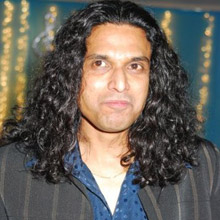
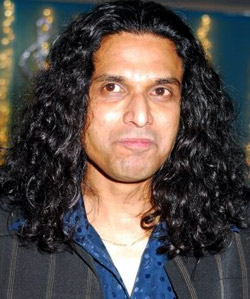
    “We are thrilled with the overwhelming response to the Business Titans event,” said Ashit Kukian, CEO, Radio City, “It is heartening to witness the passion and dedication of our participants, who embody the spirit of innovation that propels India’s business landscape forward. The energy and enthusiasm displayed by the firms reaffirm our belief in the power of collaboration and idea-sharing. Radio City remains constantly passionate towards nurturing talent, building a culture of entrepreneurship, and providing a platform for future business leaders to thrive. We look forward to continuing our journey of inspiring and supporting the next generation of entrepreneurs.”

  • Ashit Kukian takes over as CEO of Radio City

    By A Correspondent


    Ashit Kukian has taken charge as CEO of Radio City. This follows the exit to Abraham Thomas who has moved on to pursue other business interests.


    Kukian was the COO of the company till 2015. And has previously worked with various organisations including Berger Paints, Garnier, Johnson and Johnson etc. He will report to Apurva Purohit, Director and Mentor of the Company.


  • Nikhil Gandhi joins Times Network as President – Revenue as Ashit Kukian exit

    By A Correspondent


    Nikhil Gandhi

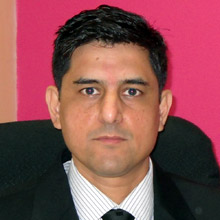
    Times Network has announced the appointment of Nikhil Gandhi as President – Revenue. He will report to MD and CEO MK Anand. His key responsibility willbe growth of profitable monetisation of the entire bouquet of channels in the network. He replaces Ashit Kukian, who has left the organisation.


    Commenting on his appointment, Anand said:“It gives me great pleasure to welcome Nikhil into the Times Network family as President – Revenue. His strong  leadership skills, people management abilities and operational expertise along with his extensive background in the M&E space will definitely add value to the network.”


    He further added that, “Ashit Kukian has decided to move on and pursue other opportunities and we would like to wish him all the best for his future endeavour.”


    Commenting on his new role, Gandhi, who has worked with Anand at Disney/UTV, said:“Leading the revenue vertical of a network that is growing and leading the Media and Entertainment space is exciting. My efforts will be to propel Times Network to greater heights and achieve the business objectives.”


  • Times Network appoints Ashit Kukian as President – Revenue

    By A Correspondent


    Ashit Kukian

    Strengthening its senior management leadership, Times Network announced the appointment of Ashit Kukian as President – Revenue. This is his second stint with the network after a hiatus of 10 years. In his new role, he will interact closely with the Content, Distribution, Marketing and other enabling functions to ensure that business objectives are met. The Ad Sales and Branded Content teams of the Times Network will directly report to him and he will report to MK Anand, MD & CEO, Times Network.


    M K Anand

    MK Anand, MD & CEO, Times Network said, “It gives me great pleasure to welcome Ashit back into the Times Network fold as President – Revenue. His guidance, industry insights and operational expertise will help us achieve our aggressive growth targets and meet the business objectives through traditional and non – traditional revenue streams as we move into the future. I am sure his extensive background in media management and experience over two decades in the print, television & radio industry will add great value to the growth of Times Network.”


    Commenting on his new role at Times Network, Ashit said, “I am extremely excited to take on the new role with Times Network. As an individual helming the revenue vertical of a network that is growing by leaps and bounds, I will try my level best in giving my inputs, industry insights and operational expertise in the best possible manner. Using my experience garnered across print, television and radio I am sure I can lead the team in adding value to the growth of the network channels and businesses.”


    Ashit has had a 13 year stint with BCCL in the past where he managed several important roles. He was a key figure of the team that launched zoom Television in 2004. He went on to serve Radio City 91.1 FM as President & Chief Operating Officer for 10 years. Ashit has done his Bachelor of Science from Mumbai University and is passionate about reading and travelling.


  • Scarecrow bags creative mandate of Radio City 91.1 FM

    By a correspondent


    Scarecrow Communications has won the creative mandate for Radio City 91.1 FM, one of the leading radio networks in the country. The account was won following a multi-agency pitch that included top agencies of the country and will be handled by the agency’s Mumbai branch.


    Ashit Kukian

    Talking about the development, Ashit Kukian, President & COO, Radio City 91.1 FM said, “Radio City is a robust media brand and it is a matter of great pride that after 13 years of inception, we are now considered synonymous to the category. With radio industry poised for the next phase of growth, we see a need to further augment the brand Radio City and therefore called for creative partners. We were overwhelmed with the enthusiasm and participation of the creative agencies. We narrowed down on Scare Crow communications after evaluating their past credentials and their radio understanding and are confident that they would partner our efforts.  We look forward to some great work from them.”


    Manish Bhatt

    On winning the account, Manish Bhatt, Founder Director, Scarecrow Communications, said “We are very ecstatic about this win, as Scarecrow has a soft spot for radio as a powerful communication medium. The fact that we won this account soon after we were crowned ‘The Agency of the Year’ at Mirchi Kaan, 2014, is truly the icing on the cake and what makes it a special achievement for us. Radio City being one of the big players of the industry, it gives us the challenge and excitement that we look for in building a brand”


    Arunava Sengupta (Joy), Founder Director, Scarecrow Communications, added, “This win is very significant as to work on a Radio brand it is very important to have knowledge of local nuances of different cities as radio needs to connect at a local level. I am really looking forward to deepening the connect that Radio City already has along with the brand team.”


  • Fourtifying media & brands with research


    By Meghna Sharma


    In today’s world where there are plenty of brands for consumers to choose from, an in-depth knowledge about the target audience is as much as a necessity as breathing for any brand to become successful. Research now plays an increasingly important role in a brand’s lifeline.


    Entertainment industry today is growing at a fast pace and with number of options available to the TG, the brands need to know what will make the TG choose them over others.


    Ormax Media, a media & entertainment research and consulting firm, entered the industry four years ago (July 28, 2008) with a motto of helping brands understand and retain not only their target groups, but also help them grow in their respective fields.


    Clients Speak
    Raj Nayak, CEO, Colors

    Raj Nayak

    Ormax Media has opted for a very focused media research approach, which was a definite need gap for the industry, especially TV. Ormax has managed to capitalise on this opportunity with their innovative and robust tools specifically designed to cater to these needs. At Colors we have always had a research-oriented approach towards content development. In that context, we have been working with Ormax Media since the very beginning (interestingly both Colors and Ormax Media came into existence around the same time!).


    It has been a fruitful association so far, and I would believe this to be true for both the parties. While working on some really interesting projects together, there has been a lot of learning that has enabled us to know our viewers even better. An effective promo creative measurement tool, which builds in the crazy timelines of the creative getting ready and it hitting on-air, is something which I feel is still a need gap at this point of time. Keeping in line with their record for building research tools which have catered to the needs of the industry, this is one area where we see tremendous potential for Ormax.

    ____________________________________


    Chandramohan Puppala, business head, Saam TV

    Earlier, most of the companies used to rely on gut feelings or follow TAM to get an idea about what their audience wants. However, one couldn’t predict the change in trends or know their TG’s mindsets. It was a big challenge for channels, especially regional channels, to know their viewers. It was an even bigger challenge for regional channels, where Hindi was also the majority language. For instance, in Maharashtra, Hindi is also spoken by people. Also, in smaller markets, no matter how the sampling is done, choices differ from region to region. Hence, when research entered the entertainment industry, it helped channels to have a direct connect with the audience and guided them on how they can change their course to gain the most.


    Ormax Media adapts very quickly to what the clients’ want and provide a customized research which enhances their role among their TG.

    ____________________________________


    Ashit Kukian, COO and president, Radio City

    Ashit Kukian

    For any industry today, research is an important element. However, it is important for an organization to be very clear about what they want as an end result. The brief we gave to Ormax and their own learnings have made it a win-win situation for both. The inputs we get from research are visible in the results. So, as the industry gets more mature, there is going to be a robust growth in the field of research as well.

    ____________________________________


    Jai Lala, principal partner, Mindshare

    Jai Lala

    Since there is no syndicated data available, there can be a lot of fangs to it, especially in the television industry. Take sports broadcasting for instance, there are a lot of ground partners, so it is a complicated process. Hence, research helps us to understand the market and how to maximize from an event. Last year, for IPL we had done a joint research with Ormax Media and it was quite fruitful for us.

    ____________________________________


    Atul Phadnis, founder and CEO, What’s On India

    Atul Phadnis

    Ormax Media is spearheaded by people like Shailesh Kapoor who have practical knowledge about channels. So, it gives the organization an uncanny ability to know what the key questions are which need to be answered. This helps them to not only know what a channel wants, but also how the research must be conducted. Also, the organization offers customized and structural services which have helped the industry grow.


    As the firm celebrates its four years of existence, MxMIndia spoke to the founders to get an insight on how research has evolved over the years and how the journey has been for Ormax Media so far…


    Vispy Doctor

    “Till a few years ago, the phrase ‘consumer knowledge’, which is our prime derivable, wasn’t a common phenomenon. When we went to media clients in the entertainment space, for many of them research was a new thought.  So, we had to explain how it could help them create better products which will help them grow,” recalled Vispy Doctor, founder and managing director, Ormax Media.


    Over four years, Ormax Media has worked with 76 leading media and entertainment brands as business partners. In the first year, it focused on television, and GECs in particular. In the second year, the focus was expanded to other television genres as well as radio. In the third year, Bollywood became the priority. And now, at the end of the fourth year, the organization is set to offer unique and relevant offerings.


    Shailesh Kapoor

    Elaborating on Ormax’s four years, Shailesh Kapoor, CEO said: “The first four years of Ormax Media have been very eventful and successful. We have received great support from the media & entertainment industry, especially in our endeavour to create unique research products and approach entertainment research in ways that are unconventional and challenging, but also result oriented.”


    Growth matters

    The entertainment industry has its pros and cons and one of the biggest ‘cons’ of the industry is that it comes with a fairly low success rate – as low as 15 per cent. Therefore, the organization hopes to help the industry increase its success rate, even if by a small percentage.


    “Since we have been able to explain it to our clients, they have appreciated and accepted the concept of research. Hence, our growth has been fairly steep, and I can say that we are growing at a fairly high rate of 75-80 per cent, as we add more and more partners in our kitty,” said Mr Doctor.


    According to Mr Kapoor, the television industry has its cyclical changes, but is in a fairly stable state, vis-a-vis what it would have been 5-6 years ago. However, he does add that the definition of “stable” in television is very different from that in packaged goods and other sectors.


    As for the film industry, it is in an evolution stage, much like what the TV industry was in the late 90s and early 2000s. And one can see exciting times ahead for Bollywood, especially in research, where it has seen growing acceptance year-on-year.


    As far as Radio is concerned, it hinges a lot on the Phase 3 licenses. “Media & entertainment is a growing business, and research will continue to become more and more important as the market matures. We are all set for the challenges ahead,” Mr Kapoor added.


    Procedure: Easy or difficult?

    The organization offers a number of research products for various sectors of the entertainment industry. The list includes broadcast television networks, radio networks, film studios, newspapers, media agencies, DTH service providers, digital entertainment companies and production houses.


    So, when asked how difficult or easy the research procedure is for each variant, Mr Kapoor explained: “The larger GECs are the easier ones, as they are far more professional and they understand the value of research. Whereas in the more touchy-feely areas like films and creative companies, it becomes a little difficult as it is more about sentiments. However, it is difficult to rate them as it might be easier to work for a GEC, it might be more interesting for a film.”


    He added: “As a good service company, it becomes our job to orient ourselves to the client’s needs, but without compromising on the research rigor and correctness. That’s the balance that may be easy or tough. But it’s a part of our job.”


    A correct sample size plays is essential for any research to become successful and come out with results which will benefit the researcher. So how does the organization choose its sample?


    “For every client, the TG might different so we have to be careful about what attributes are they looking for in a sample size. For example, for a serial, it might be cultural overtones. So, how that serial is perceived in a city like Mumbai will be very different from how it is perceived in a small town like Indore. And if we are able to find this difference and collate preferences, it will help the channels,” explained Mr Doctor.


    Expansion plans

    The organization’s focus is to consolidate through new clients and repeat business. It now has 21 products for various sectors and plans to entirely focus on these products and getting them to become bigger and better in their own right. Also, it plans to target media agencies and advertisers through products like Celebritix, which was launched on July 25.


    “I’m often told that whichever channel you go to, Ormax gets mentioned in conversations consistently. We have a young team which made this happen. Four years ago, I would have bargained for much lesser. But again, this is only the start, and we know that we can achieve a lot more than what we have so far…” said Mr Kapoor.


  • The Half-Year That Was


    By A Correspondent


    It’s July 2 today, and the first six months of the year have passed. While the slowdown has impacted spends in a major way, most of the 182 days from Jan to June have been eventful. On the positive side: new television channels, new agencies – media and creative, consolidation, people and account movements, government issues, digitization, awards… the list could go on. And on the negative: a channel being shut, pink slips, pay cuts, appraisals deferred, digitization delayed… the list could go on here too.


    We have already embarked on the second half of the year, but as we do that, here’s a quick look at how industry captains review the half-year. We present you the half-yearly review in two parts… the first today and the second mid-week… on Wednesday.


    As you would gather, there is much gloom in the industry, though no despair. Not yet.


    ADSPENDS:


    Nagesh Alai, President, Advertising Agencies Association of India (AAAI) & Executive Director, India Operations, Draftfcb Ulka Group

    Nagesh Alai

    If I were to summarize the indications of the economy, then one has seen softness beginning last November and December leading to a situation of downturn. The macro-economic indications like rupee falling, impact in production and fall in demands have also reflected in the consumer behaviour in a negative way. The last quarter of 2011-12 (Jan-March) has seen a fall in GDP to 5.3 per cent. All this have impacted the manufactures as well as service providers, with the mood being that of postponing a decision. While some would have thought that the situation would not impact FMCG, but that one has seen a resistance from that sector too.


    So in terms of advertising, the impact being in terms of ad outlays and remuneration; while the latter has been up for constant negotiation and any further would only impact the quality of service being provided, it’s the latter that is being hit now. I think this year one would see a growth of maximum 10-12 per cent as compared to 14-15 per cent in the past. While print and TV still comprise 80 per cent of the spends, but advertisers are looking at newer mediums, where the spends is not high and get better mileage for monies being spent.


    I personally believe that even if government were to take corrective measures, one will only begin to see the recovery by mid-2013. The mood can be aptly summarized as being that of cautious approach.


    PRINT:


    Narendra Kumar Alambara, COO, Thanthi Group

    Narendra Kumar Alambara

    In terms of the regional publications, I would say that the past six months have been good and bad. If one looks at readership and circulation, the regional dailies have seen an increase vis-à-vis the English language publications. However, there is a need to be bold and unconventional when it comes to regional publications, both by those selling this space and advertisers themselves. In today’s time when every paisa has to be accounted for in terms of returns, I think regional publications would have been an excellent answer to have targeted reach because of the value they provides for the money and reach.


    However, we have failed to do that. Today when most media houses are not restricted to being uni-dimensional and have different platforms for advertisers be it television, print, digital and even regional newspapers and channels under their umbrella; I think the solution lies in integrating various offerings, including the regional to get a better value and growth.


    Krishna Prasad, Editor-Outlook

    It’s difficult to put a number as yet on the kind of growth that has been witnessed, but you will always see print being challenged by television and other mediums. As far as the past six months are concerned, I would say the growth of print has been at par. By this I mean that even though most advertisers have huge monies, they are shying away from advertising with this medium. This is somewhat similar to what was observed during 2008, where companies didn’t have any reason to opt for cost-cutting, but were up for it. Many advertisers are seeing this downturn as a reason to go easy with their spending and not be too extravagant.


    Most newspapers today, especially in Delhi like Delhi Times, Hindustan Times and others appear chunky in their appearance, which gives you a sense that all is well but that may not necessarily be the case. Most of them are actually going slow with their spending and are trying to play it safe. I expect things to look better from October onwards – around the festival period. So largely, the growth of media will be dominated by how the economy transforms itself; it’s not operating in a vacuum. That’s the best case scenario.


    But the worst case scenario is that it may take a little bit longer for things to get better; perhaps with the elections coming up soon, with the country seeing a new Finance Minister and the markets going topsy-turvy, the print industry may still take some time to stabilise itself.


    RADIO:

     

    Prashant Panday

    Prashant Panday, CEO, Radio Mirchi

    The radio industry has been hit just as hard as any other segment. Maybe a little less than print and a little more than TV. The economic slow-down and the policy freeze has made advertisers a little wary. They are not exactly cutting spends, but they are demanding more from broadcasters. A broadcaster can either cut prices or offer more for the same. In some sectors, the advertising cut has been more severe like telecom, real estate and so on. But there are other segments that have done better – like core retail, and even auto.


    Given the economic conditions, and the lack of new frequencies, radio has done as well as it possible can.

     

    Rabe T Iyer

    Rabe T Iyer, Business Head, BIG FM

    The last financial year was alright, but the last three months have been pretty flat. The reason for that is because categories like BSFI, Auto and some of the campaigns of the usual summer categories were a bit slow. Nevertheless, we expect the next three to six months to be a good run. This is because people ultimately want to keep their goods moving, and hence the next three to six months are going to be good. The last three months were flat for the industry because the dollar exchange hit the sentiments and some categories which were expected to fire up in the month of May-June have taken some more time, mainly because of the overall economy conditions and the sentiments attached to it, and also because of the fluctuating dollar prices. This has directly impacted the ad spends, not just on radio, but across the portfolio on media brands.

     

    Ashit Kukian

    Ashit Kukian, COO, Radio City

    The last six months has been very good for the radio industry. One of the reasons I would say is because the core advertising categories in radio namely: Telecom, FMCG, and Entertainment channels to name a few, had increased their advertising spends on radio.


    DIGITAL:


    Chhaya Balachandran Aiyer, CEO and MD, BCWebWise

    Chhaya Balachandran Aiyer

    More and more brands are getting ready to seriously look at digital media and those who have been using it already, are increasing their spends. Digital is expected to deliver more cost-effectively. Amazingly, even production charges of films are expected to be cheaper, if they are being produced by digital agencies. It would help if brands which see real value in digital and see it delivering, also realize that results won’t come if they tighten their purse strings so much. Fortunately, there are a few clients who have realized the quality v/s quantity value and are waking up to the real digital age and extending their budgets.



    Rajiv Hiranandani

    Rajiv Hiranandani, Co-founder and Executive Director, Altruist, Mobile2win

    I think the mobile industry has underperformed in last six months, as per the overall outlook was supposed to be, in terms of number of handsets sold and amount of value-added services (VAS) consumed. Mobile industry has seen its slowest growth, and this has been also because of the negative outlook in the economy. Some of the reasons have been people waiting for better handsets models, the overall mood of economy not being good, and mobile VAS seeing a lot of restrictions in terms of TRAI guidelines.


    OOH:


    Noomi Mehta, Chairman and Managing Director, Selvel One Group

    Noomi Mehta

    The last six months have not been good for the out-of-home (OOH) industry. The month of June, however, has seen a significant improvement, which is perhaps because the IPL campaigns in the months of April and May have fructified. Otherwise, I believe, the industry figures have been down. The markets, by and large, seem to be in a depressed state, along with the economy. Going forward, one of the basic steps needed to improve the industry’s performance is the need for a common currency for measurement. OOH is part and parcel of the country’s economy, and hence it will also be subject to the same pressures as the economy.


    Image: Rafiq

     

  • Radio City renews sales alliance with Friends FM

    By A Correspondent


    Radio City, the FM radio brand promoted by Music Broadcast Private Limited (MBPL) has renewed its strategic sales alliance with the Kolkata based Friends FM, the FM radio arm of ABP (Ananda Bazar Patrika) for another one year term. The strategic sales alliance between the two stations has completed nearly three years.


    Of the 20 cities, Kolkata remains the only big market where Radio City is not present, thus the sales alliance allows Radio City to extend its sales reach to Kolkata as well. Besides Friends FM, Radio City is also in sales alliance withGwaliorbased FM radio station, Suno Lemon.


    Speaking to MxMIndia, Ashit Kukian, COO (Chief Operating Officer), Radio City said: “Strategic sales alliance has worked for us. We are already in our third year of strategic sales alliance with Friends FM and have, in fact, renewed it again. It helps a single station to sell their brand nationally because it is very difficult to sustain the cost of placing people nationally. As for Radio City , this alliance helps us reach out to a critical market – Kolkata where we are not present. Besides Friends FM, we also have a strategic alliance with Suno Lemon inGwalior, and once the third phase is rolled out, we will strategize how to reach out to rest of the markets.”


    Radio City had recently announced its decision to increase its ad rates by 15 to 20 per cent, which it believes will result in better ROI for its clients. Some of its telecom clients include Tata Docomo, Vodafone, Idea, and Airtel, while FMCG, Consumer Durables, Automobiles, Realty Estate and media are some other advertising categories that advertise on radio. The retail versus national advertising ratio in Radio City is currently around 35:65 per cent – 35 per cent from retail and 65 per cent from national advertisers.


    Currently, Radio City is present in 20 cities namely, Mumbai, Delhi, Bangalore, Chennai, Ahmedabad, Pune, Hyderabad, Lucknow, Jaipur, Vadodara, Surat, Sholapur, Nagpur, Sangli, Coimbatore, Vizag, Ahmednagar, Akola, Nanded and Jalgaon.


    In the last couple of years, Radio City is said to have established and rolled out a lot of 360 degree marquee campaigns. Following the season one success of its property, Gully Premier League (GPL), Radio City is back with the Season 2 of GPL. Season two of the GPL is said to have already registered more than 14,000 teams for the tournament. Mr Kukian also pointed out that BTL (Below the Line) activations which has been witnessing growth over the years, have contributed significantly to the overall revenues of Radio City : “Our BTL activations have also been growing from strength to strength, moreover our activations last year contributed significantly to our overall revenues. From a radio industry perspective, BTL activations could be around 12 to 15 per cent of the overall revenues, whereas the BTL activations of Radio City alone contribute around 10 to 12 per cent of its overall revenues.” Therefore we are very much in sync with the contribution of BTL activations in the overall revenues.


    Mr Kukian was also of the view that besides FTCs, a radio station, and Radio City in particular, has multiple sources of revenues, activations and on ground propositions are a couple of them. He was also of the view that in the long run, he expects to see further growth in the contribution of these other revenue sources in a radio station’s overall revenues. “Since the medium is high on reach and content, customised syndication of content can be another source of revenue for the industry. In addition to this, we can also look at digital content syndication and monitisation as an extended source of revenue for Radio City .”


    “As of today, 15 per cent of our revenue comes from other sources but, over a period of time I believe these revenue sources could contribute to around 22 to 25 per cent of the entire revenue,” he added.


    Mr Kukian said that 2012 has been the best year so far for the FM station since the last three or four years. He went on to add that Radio City has been consistent in its leadership position in both Bengaluru and Mumbai. In Delhi too, it witnessed an increase in listenership numbers: “According to IRS, Q4 2012 we are ranked first or second across most of the non-metro cities in which we are present in. So from a product perspective, it has been a great year. As far as the revenues are concerned, we have always been doing well, in fact this year we have almost doubled the growth over the market category. Even in terms of talent, we have witnessed consistency in the low attrition rates. And with phase III coming up, we are clear about expanding our network to many more markets and increase our foot print panIndia” he said.


  • 5 reasons why activation is a must-have extn on radio

    By Ashit Kukian


    #1 360-degree:

    No campaign is complete without engaging with the potential consumer. Radio activations are an efficient way to blend ATL/BTL communications through a common medium and, therefore, a proposition that is must-do.


    #2 Efficiency in cost:

    It is not as much about the investment, but what the investment is getting for you. If the critical differentiator is the cost, there are vendors who can operate at significantly less investment. However, the sheer reach of Radio, when coupled with an exciting on-ground activation, would get massive attention and therefore give an efficient cost per contact.


    #3 Customization:

    Radio offers customized brand solutions that can easily be adapted, scaled and executed. The amount of customization offered is far superior to that of any other medium. The cross-section of touchpoints that a brand can have makes radio activations attractive.


    #4 Whoever, wherever:

    Radio talks to a diverse set of listeners and can communicate to a cross section of demographics of people. This, in turn, enables almost any brand to engage with their target group.


    #5 Better acceptance of brands:

    The passion quotient of interaction of consumer with brands is higher on radio as the medium connects with its listeners at a far more emotional level than other mediums.


    Ashit Kukian is the Chief Operating Officer of Radio City.

  • Radio City Connect’s awareness campaign for Pune Strykers

    By A Correspondent


    Radio City Connect, the event activation cell of Radio City had organised an awareness campaign for the “Pune Strykers” hockey team at the SGS Mall in Pune. The team was launched on-air and on-ground at the same time. The team launch is said to have been a live event in the mall, along with a flash mob and studio shift. A Radio City studio was created in the mall wherein RJ Sonali went live and treated listeners with the grand proceedings of the launch.


    The entire team of ‘Pune Strykers’ introduced themselves to the audience on-ground as well as to the listeners on-air.


    Radio City Connect orchestrated a flash mob where the dancers grooved to the ‘Pune Strykers’ Anthem choregraphed by Piyush Malhotra, a renowned choreographer.


    Adding to the excitement, Radio City Connect incorporated ‘Minute to Win It’ games for contestants. Merchandises like miniature hockey, bags, key chains and pens were given during the entire activity.


    Moreover, a signature campaign was carried out by Radio City Connect that gave the audience a chance to articulate their love and blessings for the team by writing messages and signing on the board.


    Ashit Kukian, COO,Radio Citysaid: “We are delighted to launch the Pune Strykers Hockey Team. As a medium that enjoys immense local relevance and personal connect with listeners, we have been able to cultivate a strong expertise in on-ground activations. This is the first time a sports activity has been launched on-ground and on-air simultaneously. I am glad that the response was much more than what we had anticipated. Our effort to create awareness of the team by reaching out to maximum number of listeners and contribute towards adding popularity to the game of hockey has been successful. ‘Radio City Connect’ which is Radio City 91.1 FM’s full spectrum activations cell provides end-to-end 360 degree brand marketing solutions to all our clients. Our proficiency in executing on-ground activations has propelled this partnership with the World Series Hockey.”


    Mr. Manoj Choudhary, Franchise Owner, Pune Strykers and promoter of Jewel Products said: “World Series Hockey was conceived with the objective of reinvigorating the sport of hockey in India and creating a financially self-sustaining ecosystem for hockey to thrive and grow to become the “sport of choice” for young Indians. We chose Radio City Connect because our team spirit and attitude is synonymous with their brand attitude; leadership, energetic and pep.”


    More than 18,000 people are said to have attended this event which was covered by many leading publications and TV channels.


    World Series Hockey is a joint initiative between the Indian Hockey Federation and Nimbus Sport. An annual event, World Series Hockey will feature “city-based” teams playing against each other in a “home and away” league, culminating into a multi-header playoff to determine the World Series Hockey Champion.

  • FM radio: Waiting in the wings for how long?


    By Ritu Midha


    Television and print continue to be the mainstay of any media plan. The buzz around launch of new channels and publications (largely newspapers) is difficult to ignore. Digital media, too, has become a medium of ‘now’. Meanwhile, radio continues to struggle, with cost to operate being quite high while profitability is still an issue. Is it time, then, to ring the alarm bells? Is radio getting lost even before it has acquired a national footprint?


    Prashant Panday

    Radio: Today

    Prashant Panday, CEO, ENIL, emphasises: “There is no evidence of that yet, though if Phase III expansion gets delayed, this is bound to happen. The Indian media scenario has new brand launches happening all the time. Newspaper reports say that since August this year, the Ministry of I&B has given permission for 745 new TV channels – about half of which are news channels. Likewise, if you look at newspapers, there are editions opening across the country almost every month. It’s the same with outdoor sites and internet portals. In a scenario like this, if there is no addition in the number of radio channels, then the sector will get affected. That is one reason we are waiting for the 800 odd new radio licenses to be issued under Phase III. At present though, radio continues to grow, and its share continues to be just under 5 percent of total advertising spends.”


    Media planning and buying fraternity, in turn believes that radio as a medium is gaining popularity, and that is largely because of its content which touches a cord with the local consumers. Mohit Joshi, Managing Partner, MPG India, explains, “While there is not as much buzz about radio, I don’t think it is losing out. It has developed a unique role in the communication mix, which straddles ATL and BTL. Advertising support on the medium has been growing at 11 percent over the years.”


    Ashit Kukian

    Increase in FDI Limits: Low impact

    Media owners are of the view that increase in FDI in radio would not really impact the sector, unlike retail where the proposal for FDI in multi-brand retail has raised a storm. The common belief is that not many foreign players would be interested in the medium because of low profitability.


    Mr Panday says, “Remember, FDI only enters sectors where there is profitability and where the regulatory regime is favourable and stable. Today, most radio broadcasters are barely hitting EBITDA break-evens. This, after half the license period of ten years, is already over. I personally feel that the higher FDI/FII limit will help increase trading in listed radio stocks like ENIL and RBN, but apart from that, the impact might not be that high.


    Ashit Kukian, COO and President, Radio City, agrees, “The increase in FDI in radio sector from 20 to 26 percent is not really going to make any dramatic impact on the industry.”


    Vinish Joshi

    Slowdown: Whither goes Radio?

    While FM in India continues to struggle, impact of the slowdown, interestingly, on radio, as per the expert opinions might be the least, courtesy its local content. As per Mr Panday, with a slowdown in ad spends, the overall ad industry is unlikely to grow at more than 5-8 percent. His belief is that radio may grow slightly higher at 10-12 percent. “Almost all sectors are seeing a slowdown. We attributed the slowdown in the 1st quarter to the higher spends in the preceding 4th quarter on account of the cricket. However, the 2nd quarter also has been weak,” he says.


    Vinish Joshi, GM, Mediacom, too believes that radio might see a higher percentage growth than other media – largely due to its reach and content. He says, “Increasingly FM-enabled mobile phones are driving radio growth in India and phase III is expected to extend radio’s reach to 294 towns and 839 stations. If any medium stands to gain from this slowdown, it is radio, as during the periods of slowdown, marketing activities get more focused. The concern remains on accountability, as marketing will also be more accountable during this period and comprehensive measurement tool for Radio industry will be critical.”


     Mohit Joshi

    Measurement currency: A catch-22

    Indeed, the tighter times lead to a lot more stress on RoI, and measurement currency becomes very important. The radio players feel that there is need for a more robust radio measurement system. Mr Panday says: “The present system is a diary system which has many flaws. What we need is an electronic measurement system which accurately captures listenership. We also need more sample sizes to better capture the heterogeneous habits of our cities.”


    This sentiment of the media players is shared by media planning and buying fraternity. While, they agree that attempts being made to capture a larger listener base are commendable, they believe that it needs to broaden further.


    Mohit Joshi says, “Effort is already on for increasing the coverage of the network of the current Radio Measurement systems. Today, when we have radio stations across most of the key cities, the coverage also needs to mirror that growth. The better the data, the easier it would be to establish the role of Radio.”


    It would be interesting to find out how much is the fraternity ready to invest in improving the measurement system and currency. It is a known fact that research and measurement is cost-intensive. With RoI being an issue, most of them might find it difficult to make a major investment in anything.


    FM stations: Same, same – no different

    Radio, at the moment is suffering from me-too syndrome – which to a large extent can be attributed to investment constraints. There is definitely a need for differentiation – enter localised communication.


    Mr Kukian says, “Radio as a medium has the ability to create customized communication for pocketed audiences and impact millions of Indians due to its wide coverage and personal connect. This coupled with the medium’s innovation quotient gives it one up over other media in terms of fulfilling advertisers’ requirements.”


    Vinish Joshi shares a similar opinion, but he qualifies, “Inserting rapid-fire weather forecasts and traffic reports is just providing minimum local content. Local radio, by my definition, is the real interaction of radio personalities, announcers, the people on the air, with listeners both on and off the air. As long as radio maintains its local presence, something that other syndicated forms cannot provide, there will always be a need for its services.”


    Unfortunately local content on radio, largely restricted to traffic reports and contests, seems to be similar on all the stations. The reason for this, yet again, is operating costs and limited number of stations. The game might change once there are more radio stations post Phase III.


    Mr Panday states, “Very little content differentiation will happen unless more frequencies are released. Let’s take an example. Suppose only 10 TV channels were allowed by law. Which channels would exist then? My guess is that the 4-5 GECs would still exist, there would be 1-2 news channels and 2-3 other channels. The reason for so much content differentiation in TV is that there are so many channels. The second reason is that broadcasters are allowed to own and broadcast several channels, so that the cost of operating smaller format channels is reduced.”


    He continues, “In radio however, we suffer from restrictions on both the above mentioned requirements. There are only 7-8 channels in the major markets and broadcasters are allowed to operate only one channel per market. The Phase-III regulations are going to relax the second condition, but till the number of channels increases significantly, we cannot expect much content differentiation. And if the auctions happen the way they are planned – e-auctions for one frequency in Delhi and two in Mumbai – then the license fees will shoot up and niche formats will become unviable. The government needs to release more spectrum BEFORE auctions are conducted. We have even given them a formula to do this – just reduce the “separation” between two adjoining radio channels from the 800 kHz at present to 400 kHz.”


    If the separation between two adjoining channels is helved, the number of channels would double – broadcasters will be able to compete better with TV and print, the government will get more license fees through auctions. And it just might help in increasing FDI investments in the sector by raising the bar and the competition.


  • The Anchor: 6 reasons a listener can never fall out of love with radio

    By Ashit Kukian

    #1 Radio gives listeners different genres of music and a fresh playlist all through the day. And that is further packaged with warm and friendly RJs, topical banter, guest appearances and lots of surprise elements to keep listeners wowed every minute of every day.

    #2 Radio is credited with being the ‘Theatre of the Mind’ since it engages one’s imagination more actively than a visual medium does.

    #3 The level of engagement and interaction that Radio enjoys with its listeners is incomparable to any other medium.  From conversing with listeners on a daily basis, to celebrating their joyous occasions of life, Radio touches the lives of all its listeners.

    #4 Radio provides listeners with Infotainment – relevant and topical information presented in as entertaining a way as possible. Radio then serves as a mood-enhancer by catalyzing one’s mood and uplifting the spirit of the listener who tunes in.

    #5 Listeners can relate to the medium in a very personal and intimate way. It can be a loyal friend to some and a confidant to others. So much so that you’ll often find listeners confiding in RJs about their deepest fears and problems.

    #6 Being a local medium, Radio fits seamlessly into the fabric and framework of the city. It serves as a lens through which listeners can get a glimpse of the pulse of the city.


    Ashit Kukian is COO, Radio City 91.1 FM.