Tag: Arjun Rampal

  • Reviewing the Reviews: Inkaar

    Inkaar

    Key Cast: Arjun Rampal, Chitrangada Singh

    Written By: Sudhir Mishra

    Directed By: Sudhir Mishra

    Produced By: Viacom 18 Motion Pictures


    Some said yay, some said nay, some said maybe. But all critics were in agreement over one thing – that Sudhir Mishra took a topical and sensitive issue like sexual harassment and botched it. Several female critics used the term ‘trivialise’ and most were disappointed with the bizarre, dithering climax.


    The film got between two- and three-star ratings, nonetheless, maybe because it is a Sudhir Mishra film and he has made good films in the past.


    Anupama Chopra of the Hindustan Times felt let down. “There are too many cheesy parties where everyone gets drunk, and the climax is a staggeringly disappointing cop-out. It undermines everything that has gone before. What, you wonder, was the whole war about? Arjun and Chitrangada work hard to give Inkaar heft. Both struggle to bring conviction to their characters. But ultimately the film remains a dish half-baked.”


    Rajeev Masand of IBNLive commented, “The performances are of the skim-on-the-surface variety. Arjun and Chitrangada look like a dream and valiantly tackle difficult roles, but you get the idea that they’ve bitten off more than they can chew. Despite the bold, controversial theme, Inkaar fizzles out once the fireworks fade, not least because of its awkward climax – in the office restroom, of all places!”


    Sukanya Verma’s review in rediff.com was understandably angry. “In a sexual context, to judge sociable from suggestive and vice versa in a part-liberal, part-conservative society is highly precarious. One person’s idea of harmless flirtation could be another’s criteria for inappropriate conduct. But under NO circumstances is exploitation okay. No matter what line of work one is in, at some point, every individual has to decide on his/her own as to where they want to draw a line and when they need to object. Instead of expounding on the opaqueness of this matter with sensitivity and substance, Inkaar trivialises something so serious and rampant as sexual harassment into a terrible joke. I wouldn’t have so many issues with Sudhir Mishra’s new film if it wasn’t so irresponsibly promoting Inkaar as something it’s not. Especially now.”


    Shubhra Gupta of the Indian Express was left unimpressed too. “The tough questions that the film had started to lay out for us, about what constitutes sexual harassment, the pressures to succeed in a demanding workplace, the moral and ethical dilemmas that have to be faced to reach the pinnacle, all get buried under a hurried, compromised end. Inkaar could have been truly radical. But it becomes a film that prefers to cop out, rather than deliver on the promise it held out so bravely in its initial passages.”


    Aniruddha Guha of DNA was dismissive. “Sudhir Mishra seems to be in a weird space as a filmmaker right now. His penchant for simple storytelling and real, complex characters have resulted in some great films, and he tries to juggle his strengths with more mainstream elements in Inkaar. Nothing wrong with that, except that the result is an unfortunately botched attempt at portraying a relevant issue, even as Mishra struggles to strike a balance between style and substance. The film starts out with promise, but a jarringly loud background score, hammy actors and a cliched ending ruin whatever chance Inkaar had at being considered watchable.”


    Srijana Mitra Das of the Times of India wrote, “You know those cakes that look gorgeous in pictures but collapse when they bake? Inkaar is like that. Polished-looking, its edges – the tension of feeling harassed at work, office politics, ego flashes – hold rather well. But its centre collapses in a soft mess.”


    According to Saibal Chatterjee of NDTV, “Much of the film’s strength, for whatever it is worth, stems from its unbending and ambitious career woman-protagonist who stands up to the tyranny of Alpha males in a high-profile corporate set-up where the glass ceiling is an everyday, if only subliminal, reality. It is in the motivational detailing of this character that Inkaar goes off-track. For a film that is remarkable in many significant ways, it ultimately disappoints because, despite showing the nerve to deal squarely with a demanding subject, it eventually chickens out of the prospect of going the whole distance to a coherent and radical conclusion.”


    Janhavi Samant of Mid-day ranted, “The biggest problem area with Inkaar, and most films revolving around workplace issues, is the portrayal of the female protagonist. For such an ambitious woman, Maya is shown to be a clueless trainee, remarkably insecure about her own rise, a paranoid leader, and prone to frequent emotional outbursts in work situations. Another problem area is the many brazen generalizations about scorned women, how flirting is natural when beautiful men and women work together all hours of the day, the fine line between camaraderie, flirting and harassment. Maybe a little more time in an actual office observing day-to-day dynamics between colleagues of the opposite sex or interacting with mature women professionals would have added a little insight to the plot. One expected more maturity from a Sudhir Mishra film.”


    Anuj Kumar of The Hindu wrote, “Mishra has a knack for hitting where it hurts, but here, after a point, he strikes more on the surface than at the soul. When he delves into the motivations and impulses of his characters, the drama is not consistently satisfying and the climax is a disappointment because in an attempt to leave with a ray of hope, Mishra tones down the denouement. After going almost all the way, he takes the ‘escapist’ route.”


    Pratim D Gupta of The Telegraph liked the film but pointed its flaws. “Inkaar has an excellent first half, which really puts you in the middle of the flashy, fierce world of advertising and in the ring with these two drop-dead-gorgeous individuals looking for more than love in their lives. Or so we are made to think. And while the tempo is kept up in the second half, the rest-room resolution is a disappointing and cliched copout that kind of subverts the whole serious issue of sexual harassment at the workplace.”


    Karan Anshuman of Mumbai Mirror stood out with a four-star rave, “Inkaar is not about office politics as you might imagine, even though many moments shape an accurate portrayal. It is not about sexual harassment in the workplace as it is being marketed though that is the searing crucible in which complex, often unnatural dollops of human emotion are left to sputter and interact, never coalescing. Everything else is an elaborate backdrop. And finally when the truth unravels – when motives come to light – I had a great urge to watch the film again. And with movies, this urge supersedes all flaws.”
     

  • Reviewing The Reviews: Chakravyuh

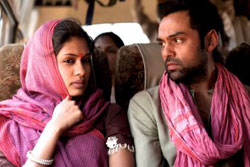
    Chakravyuh

    Key Cast: Abhay Deol, Arjun Rampal, Manoj Bajpayee, Esha Gupta, Anjali Patil, Om Puri

    Written By: Prakash Jha, Anjum Rajabali, Sagar Pandya

    Directed By: Prakash Jha

    Produced By: Prakash Jha


    Prakash Jha films cannot be dismissed outright. For the better part of his career, Jha has tried, not always with success, to capture the bleak reality of small-town India. Because he is not a typical Bollywood all-business-no-brain type, his films are viewed, at least by critics, with some respect. Still, for the informed viewer, it is hard not to be sceptical of Jha’s Maoists-for-Dummies film Chakravyuh, especially since the plot comes from Jean Anouilh’s Becket which is also the base for Hrishikesh Mukherjee’s Namak Haram. Jha’s film may have a point of view, but lacks both finesse and a strong emotional core. The ratings from the wise ranged from 2.5 to 3. And poor Arjun Rampal comes in for major flak!


    Shubhra Gupta of the Indian Express rightly analyses, “Jha makes it easy for us to hate these black villains, and stay safely ambivalent about the others: the Naxals have a valid point of view, but killing cops, or anyone else, is not good; the cops need to prevent the innocent villagers from becoming victims, but it’s a war, and there will be casualties. You can see the director’s job is cut out because he is on a tightrope: too much overt justification or sympathy for either side would receive flak from the other. But this makes Chakravyuh, with entirely predictable character-arcs and outcome, a lesser film than it could have been.”


    Suprateek Chatterjee in the Hindustan Times writes, “Some performances, such as those by (Manoj) Bajpayee and (Anjali) Patil, are restrained and manage to add some authenticity and dignity to the proceedings. Alas, all of this is undone by the film’s frenetic pacing, raucous background score (nary a silent moment, with many cues sounding suspiciously similar to Hans Zimmer’s The Dark Knight score) and puerile writing. There’s no intelligent layering here; characters arrive on screen, announce who they are and what they do – and then proceed to do exactly that. Also, this might seem like a minor quibble, but in 2012, can we expect at least half-decent visual effects? Shots of explosions in this movie look like they were created by first-year animation students.”


    Priyanka Roy of The Telegraph writes, “This is a film that doesn’t really know what it wants to be. Director Prakash Jha ventures bravely into the dark and under-exposed world of Naxalism, but Chakravyuh is a victim of Bollywood excess, reeking of jingoism, larger-than-life characters and the inevitable song-and-dance, all of which tend to drown out the message that the film strives to put across.”


    Meena Iyer of The Times of India is kind: “Chakravyuh is a hard film to make and marks must be given to Jha for sticking his neck out. Staying true to the subject, he gives us an insight into uncomfortable truths unfolding in our backyard. He is one of the few filmmakers with such audacious work to his credit. Jha must also be complimented for the scale and performances he has extracted from his lead cast. The men – Manoj, Arjun and Abhay – are compelling; of the girls, Esha starts on a shrill note but improves later. Newbie Anjali Patil shines. You may not like this movie if socio-political entertainers are not your cup of tea.”


    Shabana Ansari of DNA fence-sits: “A socio-political thriller set in the country’s red corridor where Maoist insurgents oppose industrialisation because it leads to the displacement of the tribal population, Chakravyuh has its heart in the right place. Jha has once again woven fictional elements and characters with real incidents and people to present a film that touches the right chords. But somewhere along the way, he succumbs to what can only be described as the Bollywood’isation’ of a socially relevant subject – there’s male bonding, dialogue-baazi, non-stop action, blazing guns, and also an irreverent item number thrown in! No, really!”


    Sukanya Verma of rediff.com is unimpressed: “Jha steers clear of innovation and opts for the soft-corner-for-the-girl cliche and not some radical shift of ideals to convey Kabir’s sudden craving to switch sides. Chakravyuh, despite a decent premise, is a victim of clumsy plot and inordinate length. Apart from ambiguous purpose and the topsy-turvy dynamics of Adil and Kabir’s friendship, dialogues fail to dazzle and songs appear out of place. It’s almost hilarious when Om Puri’s waxing eloquent about ‘Aam aadmi ke liye kuch bhi nahi hai’ (There’s nothing for the common man) is immediately followed by Sameera Reddy’s furiously shaking belly in a needless item song targeted at frontbenchers. The irony is unmistakable. In the end, Chakravyuh is nothing more than an average action flick in the garb of relevant cinema where socio-political turmoil is nothing more than a prop and gun-toting militants in uniforms and bandanas hollering ‘Lal Salaam’ fill up the frames.”


    Karan Anshuman of The Mumbai Mirror was one of the positives: “The film is massive. Hundreds of coordinated extras fill up scenes. Yet, one feels Jha’s method is getting somewhat repetitive. The technical formula that served him well so far is beginning to look dated with an overall neatness missing. Do such films need item numbers any more? Must the effectiveness of the message come at the cost of style? But then again if a Bhansali can produce a Rowdy Rathore, give me a Chakravyuh over it any day. Watch this film for its lucid, dramatic presentation of a nation’s problems. The commercial aspects notwithstanding, at the heart of it, Chakravyuh is the first effective film on the Naxal-Maoist question.”


  • Reviewing the Reviews: Heroine

    Heroine

    Key Cast: Kareena Kapoor, Arjun Rampal

    Written & Directed By: Madhur Bhandarkar

    Produced By: Ronnie Screwvala


    People finally caught on – that Madhur Bhandarkar tells the same story again and again and that he is also very misogynistic. Films about films seldom do well. Either star-struck people don’t want to see their idols toppled from their pedestals, or that filmmakers are hardly ever able to tell the truth about a complex world and resort to cliches and banalities.


    His latest, Heroine, bored almost all critics, annoyed quite a few and got written off by all but Taran Adarsh as fake and superficial. It got a 2 to 2.5 star rating, with just the Times of India and Bollywoodhungama going over the standard. The word the cyberworld coined for this film –Zeroine.


    Shubhra Gupta of the Indian Express wrote, “The only reason to watch Madhur Bhandarkar’s films is for the way they go behind the headlines and show us the dirt and the hurt that’s usually brushed under frayed rags and burnished carpets. In his better moments, Bhandarkar has let us see the stuff that’s crawled out from underneath clearly, and we’ve overlooked the tackiness because it has added to the understanding of the subject. Heroine, Bhandarkar’s pass at Bollywood, does none of this. It remains a string of drab cliches, despite a strong performance from leading lady Kareena Kapoor.”


    Anupama Chopra of The Hindustan Times sneered, “It’s supposed to be our window into the muck, the Machiavellian politics and the Faustian bargains that a life in the limelight necessarily entails. This seemed, to me at least, like a perfect fit of maker and material. After all, what better subject for steamy scandal than the life of an actress? But sadly, Heroine never rises to the occasion. Bhandarkar and his team of co-writers – Anuradha Tiwari, Manoj Tyagi and Niranjan Iyengar – bung in every possible element of masala. There’s alcohol, affairs, a sex tape and even – gasp – a lesbian one-night stand. But Heroine doesn’t even deliver the frisson of a good Stardust story. It’s limp and, more incredibly, boring.”


    Baradwaj Rangan of The Hindu commented, “Madhur Bhandarkar’s latest thesis mounted on the points that fame is a terrible thing that slowly eats up your soul, journalists are unprincipled scum, privileged people smoke non-stop and drink non-stop and have casual sex non-stop, city people are generally evil, and gay men have the limpest wrists. Acknowledging the positive dimensions of fame would leave Bhandarkar with nothing to expend his moral outrage on. (And I have to wonder if that well isn’t running dry. After all these films, all these fulminations against the seedier side-streets of our society, how much more moral outrage can one man still possibly have?) ”


    Rajeev Masand of IBNLive wrote, “Heroine, directed by Madhur Bhandarkar opens with genuine promise, but very quickly collapses into a heap of lazy stereotypes. Sadly, the film offers no original insight into the minds of movie stars or the inner workings of the Mumbai film industry – this is a movie that might well have been made by an avid reader of gossip rags; it hardly feels like the work of an experienced filmmaker. At least with Page 3, Corporate and Fashion, Bhandarkar cast an outsider’s eye on different worlds. What’s his excuse for doing such a sloppy job on an industry he belongs to?”


    Sukanya Verma writing in rediff.com quipped, “As always Bhandarkar intersperses the frames with backbiting industry types holding a drink in hand and fake smile on lips, philandering actors, haughty star wives, catty co-stars, snooping journalists, shrewd politicians and ruthless agents. Same old jibes, insecurities, conflicts, threats and scandals. Not to forget his constant obsession with homosexuals as objects of ridicule, be it in Heroine’s visibly effeminate fashion designer, gossip-hunting reporter or a multi-purpose sex toy. The latter even remarks, ‘Is industry mein zip aur zubaan dono sambhal ke kholni chahiye (One should open their mouth and zips with equal care).’ I am not sure if this is Bhandakar’s idea of comic relief but the hall roared with laughter.”


    Aniruddha Guha of DNA ranted, “Heroine, though, is not just like Fashion, but resembles every film Bhandarkar has ever made before, and in the most terrible way. In other words, if you take every bad moment in every Bhandarkar film ever made, put them together in a two-and-a-half-hour long loop, the result will be a lot less distressing and a lot more entertaining than Heroine. All stock Bhandarkar characters return: overtly feminine male hairstylists / fashion designers, loud cops, bitchy rumour-mongers, vengeful mediapersons. Many of these are played by actors who make up the background crowd for one scene, only to be re-arranged and repeated again in others.”


    Saibal Chatterjee of NDTV wrote, “This is a glossy picture postcard that has seen better days – still good to look at but frayed at the edges and utterly lifeless. The foremost problem with Madhur Bhandarkar’s Heroine is that behind its gossamer exterior, it is weighed down by banalities that don’t quite add up. In conveying the ebbs and tides of the life of a self-obsessed, impulsive and troubled Bollywood diva, the film taps into the tropes that constitute the Bhandarkar formula. The novelty has worn off. So, all that the audience is left with is an overwhelming sense of deja vu.”


    Meena Iyer, writing in the Times of India was kinder than most. “Heroine would have been crisper had it not digressed to cover every Bollywood insider account. When the maker attempts to show mainstream cinema’s condescending attitude towards art-house films, precious screen time is lost. Mahi’s attempt to play a prostitute and say scandalous lines are clearly attempted to woo the front-benchers but the gig lacks conviction. The music is a complete letdown and even the item song Halkat Jaawani fails to give the required ‘rise’ to proceedings. Of course the saving grace of the film is Kareena who not only looks drop-dead gorgeous but is also adept as the girl interrupted.”


    Taran Adarsh of Bollywoodhungama.com was the only rave. “On the whole, Heroine is yet another hard-hitting motion picture from Madhur Bhandarkar. For persistently choosing women-centric themes, for consistently winning national acclaim and most significantly, magnetizing moviegoers in large numbers to view his cinema, the efforts of the maverick film-maker deserve to be lauded. Watch Heroine for Madhur’s imposing direction, for Kareena’s superlative performance, watch it also for its fearless, inspiring and enlightening storyline divulging the scandalous realities of the movie industry. Try not to miss it! ”