By Shubhangi Mehta
Commercial advertisers often seek to generate increased consumption of their products or services through “Branding”, which involves the repetition of an image or product name in an effort to associate certain qualities with the brand in consumers’ minds.
The marketing mix has been the key concept in advertising. Suggested by Professor E Jerome McCarthy in the 1960s, the marketing mix consists of four basic elements, famously called the Four Ps. They are Product; Price, representing the process of determining the value of a product; Place representing the variables of getting the product to the consumer like distribution channels, market coverage and movement organization; and Promotion, the process of reaching the target market and convincing them to go out and buy the product.
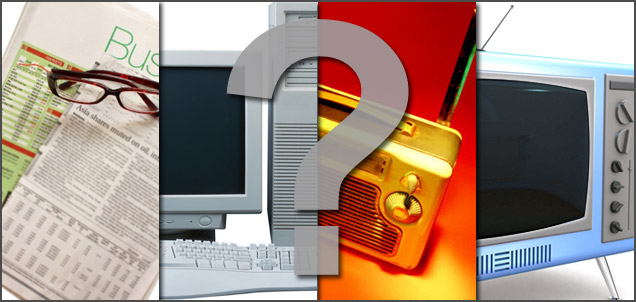
There is a plethora of ways to do this. The modes of advertising include television, radio, online, OOH and then these further have various categories in them.
Television is generally the first choice for most of advertisers, but what about radio, digital and OOH?
 |
| Prasoon Joshi |
 |
| Abraham Allapatt |
Prasoon Joshi, Executive Chairman, McCann Worldgroup, commented, “It’s all about the requirement of a brand, it depends on a particular brand as to what marketing mix is to be used. There might be a brand for which I may not even use television, but might go in for a local newspaper etc. Hence it is not possible to choose a particular medium over others across the board.”
Abraham Allapatt, Head – Brand & Corporate Communication, Future Generali India Life Insurance Company Limited, said, “Frankly, one cannot definitively state that one of these mediums is the best (after TV) simply because each of them has pros and cons. Radio is good if one wants to reach out to young/upwardly mobile urban customer prospects with a limited budget – especially if you have a powerful/simple message and creative to deliver, but it’s limited in terms of reach.
“Similarily when we talk about print, it can target specific audience and is quick in reach but again it is a little expensive as compared to other media (cost per reach) and it is relatively limited in terms of reach at an overall level versus TV.
“OOH is a powerful reminder medium for topical messages but is a relatively disorganised sector/medium. There is no science to measure impact/effectiveness. Large agencies use some tools to add some science to measurement, but it is still not too dependable.
“Digital is focused down to the individual and is measurable accurately and instantly. It is very good for reaching young, urban, upmarket segments, plus it is cost-effective and an image driver. The only issue is that it is still limited in reach to large cities/income segments.”
 |
| Apurva Purohit |
Apurva Purohit, CEO, Radio City 91.1 FM, said, “Radio as a medium has the ability to impact millions of Indians due to its wide coverage. And that’s just one of the multiple benefits of the medium! It enjoys a deep personal connect with listeners, allows marketers to create customized and local communication for pocketed audiences, and offers extensive on-ground engagement prospects to supplement advertising campaigns. Such offerings make the medium superiorly effective and attractive for marketers.
“Radio has an edge over other media due to the local relevance that the medium offers. Advertisers seek to maximize efficiency of their marketing spends by looking at micro targeting communication to consumers in focus markets. Radio serves as a key medium to fulfil this need with its ability to create customized and local communication for the relevant target audience.
“Another important feature that gives radio a one-up is that it’s an anytime access medium. Hence, advertisers can reach their consumers anywhere, anytime. Different sets of people tune into radio at different points of time and therefore the medium is consumed across the day. This is unlike print which is mainly consumed in the morning and TV which is mainly consumed at night.
“Of course, the medium’s cost-effectiveness is unquestionable. Radio is far more inexpensive than print. If you need a local media plan you will pay six times on print, while at one-sixth you will get the same kind of reach and frequency on Radio.”
 |
| Sanjay Tripathy |
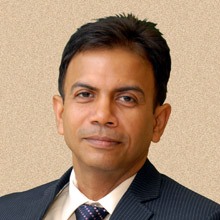
Sanjay Tripathy , Executive Vice President – Head Marketing and Direct Channels at HDFC Life, said, “Choosing a medium will always be the prerogative of a brand marketer depending on his/her key objectives. While Television is the most preferred medium for marketers because of the kind of reach and opportunity for quality of communication it provides, Print comes a close second because of its ability to provide detailed information about the product/ service. This medium is also hugely preferred because the circulation and readership numbers are measurable unlike Radio and OOH, which are usually used for local, last mile reach. Contrary to popular perception, in a highly populous country like India, print still has a lot of scope for growth in the interiors where literacy is still catching up. Print provides flexibility in terms of customisation as per the regional target audience. However, the characteristics of the target audience influence hugely in terms of ‘where’ would the marketer best capture their attention, leaving a lot of scope for exploring different media channels. Especially in case of digital – the new-age innovative medium, which is my personal favourite and which, I believe, has a lot of potential over all the other media. Going forward, as most people are spending more and more time online and on social media, these will emerge as preferred media for brand engagement.
Kalyan Kumar, CMO Games 24×7.com, said, “Being an e-commerce company, our vote will definitely go to digital. Digital is growing rapidly and has a great future scope. If there was a medium to be chosen after television, then hands down, my vote goes to digital.”
Ranjeev Vij, Vice President, Head – Proximity, said, “We cannot isolate and say that digital is the only preferred choice. It works best when used in tandem with traditional media. For example look at “Quaker Mission to Make India Heart Healthy Campaign” done by BBDO/Proximity India in 2009 where TV and print ads were linked to the website (www.goodmorningheart.com) and the website led people to social media sites, which helped create buzz, conversations and relationships between consumers and the brand. What digital does brilliantly over other medium is that it helps build relationships and brings customers close to brands by enhancing user experience. Digital is best used to ‘amplify’ everything we do to the power of millions.
“For marketers Digital provides real-time access to data and analytics, instant feedback on campaigns, product/service quality, etc. along with better understanding of consumer journey and behaviours. This data if mapped properly can help brands massively multiply the results of their marketing initiatives.”
News paper image:Â Nuttakit
 By Apurva Purohit