Tag: Anurradha Prasad

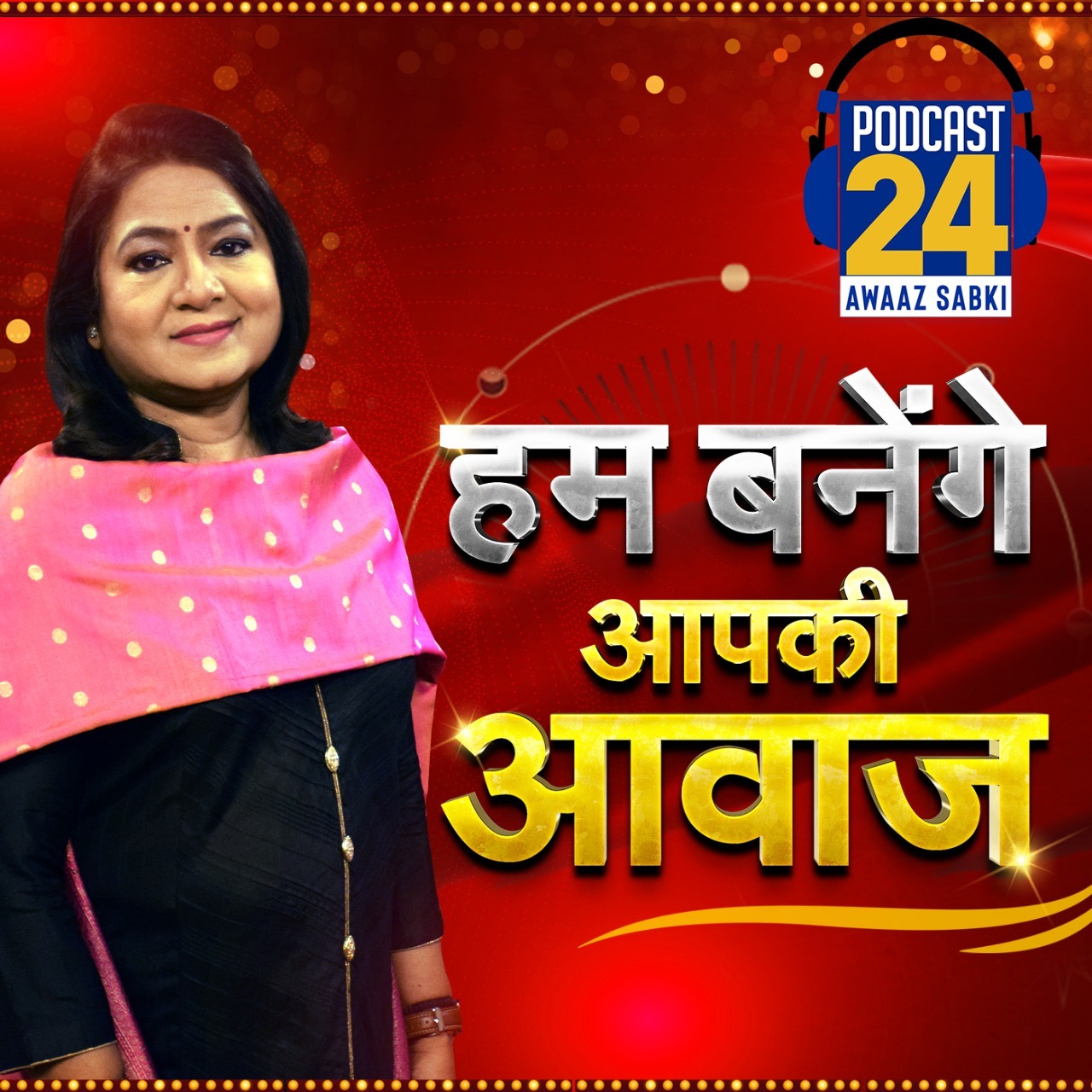
  • News 24 launches Podcast 24 – Awaaz Sabki

    By Our Staff


    News 24, the umbrella brand of Bag Network, has launched its new digital platform: Podcast 24 – Awaaz Sabki. The podcast will cover news and stories on a variety of subjects including politics, Bollywood, crime, women, health, history, education and sports. It will also provide a platform to discuss and deliberate on a range of important and relevant social issues.


    Said founder and CEO Anurradha Prasad: ” Podcast 24 – Awaaz Sabki will bridge the gap between news and our listeners by curating content that is current and relevant to our audience.”


    Listeners can access the Podcast 24 through all major podcast apps such as Spotify, Amazon, Google etc. The channel can also be accessed through the News 24 website.


  • NBA announces officebearers for 2018-19

    By A Correspondent


    The News Broadcasters Association has announced its office bearers for 2018-19 after its AGM held this week:

    – Rajat Sharma: President (Chairman & Editor-in-Chief (India TV) – Independent News Service Pvt. Ltd.)

    – MV Shreyams Kumar: Vice President (Joint Managing Director, Mathrubhumi Printing & Publishing Co. Ltd.

    – Anurradha Prasad: Honorary Treasurer (Chairperson-cum-Managing Director, News24 Broadcast India Ltd.)


    The other Members on the NBA Board are:

    MK Anand, Managing Director & Chief Executive Officer – Times Network – Bennett, Coleman & Co. Ltd.; Rahul Joshi, CEO News & Group Editor-in-Charge – TV18 Broadcast Ltd.; Avinash Pandey, Chief Operating Officer – ABP News Network Pvt. Ltd.; I Venkat, Director – Eenadu Television Pvt. Ltd.; KalliPurie Bhandal, Vice-Chairperson & Managing Director – TV Today Network Ltd.; Sonia Singh, Editorial Director, NDTV – New Delhi Television Ltd andAshok Venkatramani, Managing Director – Zee Media Corporation Ltd.

  • Tasks before Rajat Sharma as head of the News Broadcasters Association


    By A Correspondent

    Veteran journalist and Chairman and Editor-in-Chief of India TV Rajat Sharma was elected President of the News Broadcasters Association for 2017-18. This happened at the NBA Board Meeting soon after the 10th Annual General Meeting (AGM). Sharma was also President of the NBA from 2014 to 2016. Last year, ABP News Network MD and CEO Ashok Venkatramani was elected President and later India Today Group CEO Ashish Bagga took on that role. Both Venkatramani and Bagga quit their respective organisations while being President.


    MV Shreyams Kumar
    Anurradha Prasad

    Meanwhile, MV Shreyams Kumar, Joint Managing Director, Mathrubhumi Printing & Publishing has been elected Vice President and Anurradha Prasad, Chairperson-cum-Managing Director, News24 Broadcast India Ltd is the Honorary Treasurer.


    Said Sharma in a statement: “I thank all members for electing me as the President of the NBA. As President, I hereby take the opportunity to reassure members that we shall walk together in bringing in more credibility and independence to the news broadcasting industry.I shall put in my best efforts to make the fraternity more accepting of our contemporaries, striving for healthy competition.”


    Other members of the NBA Board are: M.K. Anand, Managing Director & Chief Executive Officer  – Times Network – Bennett, Coleman & Co. Ltd, K.V.L. Narayan Rao, Group CEO & Executive Vice Chairperson NDTV Group, Rahul Joshi, CEO News & Group Editor-in-Charge, TV18 Broadcast Ltd, Rajiv Singh, Executive Director & COO – Zee Media Corporation Ltd, Avinash Pandey, Chief Operating Officer -  ABP News Network Pvt. Ltd and I Venkat, Director, Eenadu Television Pvt. Ltd.


    In most industry associations, unless there is a very specific reason for the move, it’s the Vice President who takes on the President’s role in the next election. Interestingly, MK Anand was Vice President for 2016-17 and was likely to have taken over as President, so the move to elect Sharma is noteworthy.


    Sharma, it was rumoured, was unhappy with the earlier dispensation of the NBA and had in fact even skipped some Board meetings. A few months back, the NBA had advised its members in the English news space to opt out of the BARC ratings if they felt aggrieved by the BARC decision to publish the Republic TV numbers despite requests to BARC to not publish it. At that juncture, MxMIndia believed that the NBA took an incorrect decision and we wondered why the various NBA Board members who had no direct interest in English news television didn’t object to the NBA advisory. We later learned that Sharma and a few others were not party to the NBA decision, so perhaps our original comment was unfair on him.


    Rajat Sharma and his team of officebearers of the NBA have a job on hand, given the way the business has been growing. Here’s a partial list of tasks before them:

    1. Landing Page and Dual LCNs: While there has been a settlement on the dual LCN issue, many channels have invested big monies on netting better viewership thanks to deals on landing pages. It is important to have an NBA policy on the issue and a very clear advisory needs to be issued in this regard
    2. Self-Regulation on News Channels: While each channel can have its own editorial policy and it should be free to align itself with a political formation or ideology, the role of the self-regulator becomes critical, as very often guests on shows feel truly aggrieved because they are damned on live nightly news
    3. BARC numbers: There has been some discussion whether the weekly ratings issued by BARC should be made more infrequent – perhaps fortnight or even monthly as the sample size of news television-watchers is very low
    4. Given that the stakes are very high for every channel, it’s important that efforts are taken for the greater common good of the fraternity. Employee welfare and safety of journalists is critical.
    5. The biggest threat to news television is from digital. News videos are now freely accessed on the Web, via apps and even on Twitter and Facebook. Sharma and his team need to look at integrating their broadcast and digital operations to work together and forge ahead.


  • BAG Network launches ‘E-Newspaper of India’

    By A Correspondent


    Described as “A newspaper that never sleeps”, E-Newspaper of India is a product meant for the digital consumer who is constantly on the move, and is refreshed multiple times in the day – at 1pm, 7.30pm and 12.30am.


    E-Newspaper, which is available at www.enewspaperofindia.com, has been brought out by the BAG Network, the media house that has rolled out news channel News 24, Bollywood channel E 24, spiritual channel Darshan 24 and Radio Dhamaal.


    Anurradha Prasad

    Speaking on this occasion, Anurradha Prasad, editor-in-chief of the paper and Chairman of BAG Network, said that in the digital era, time is of essence for the person on the go. “Newspaper reading should not be like finding a needle in a haystack. E-Newspaper of India sifts the big news from a mountain of news stories,” she said.


    Ms Prasad said that in this digital age, news keeps changing at breakneck speed. “And we want the digital consumer to read today’s newspaper now, not tomorrow, to read the news even as it is happening,” she said.


  • Anurradha Prasad re-elected AROI president for 2nd term

    By A Correspondent


    Anurradha Prasad

    The AROI (Associations of Radio Operators for India) has re-elected Ms Anurradha Prasad as its President for the second consecutive term. Ms Prasad was re-elected unopposed at the Governing Body Meeting of the AROI held earlier this week.


    Talking to MxMIndia about her immediate plans as President AROI, Ms Prasad said her basic agenda would be about brand building for the radio industry. “Radio in India is one medium that has been completely ignored,” she noted. The third phase of FM radio which is expected to kick-start shortly will also be among her key focus areas and part of her agenda. She further stated, “I will endeavour to placing the radio industry on the correct roadmap of the advertising world. We must evangelise and educate the advertisers about the benefits of using radio as a medium and how they can effectively reach out to their consumers.” Ms Prasad is also the Chairperson cum Managing Director, B.A.G Network.


    In addition to this development, AROI has also created four initiatives for further enhancing the future growth of the Indian radio industry.


    The ‘Self Regulation and Content Complaint Redressal’ initiative will be led by Apurva Purohit, CEO, Radio City.


    The second initiative which deals with the ‘Measurement System’ will be led by Tarun Katial, CEO, Reliance Broadcast Network.


    ‘Brand Building’ of the radio industry will be jointly led by Harrish Bhatia, CEO, MY FM and Harshad Jain, Business Head, Fever 104 FM.


    Prashant Panday, CEO and Executive Director, ENIL (Radio Mirchi) will be leading the setting up of ‘Outstanding Policy Initiative and Control Agency Accreditation’.


    AROI will also be forming an initiative which deals with the ‘Copyright and Music Royalty’ issues. This initiative is to be led by Rahul Gupta, Director, Radio Mantra.


  • Radio broadcasters thumbs up to Copyright Bill

    By A Correspondent


    The Copyright Amendment Act which was passed recently in Lok Sabha has come as a huge relief, not only for the artists, musicians and content creators, but also for the Indian radio fraternity.


    This bill will allow the Copyright Board to decide the royalty rates for the broadcasters, which until now was decided by the PPL (Phonographic Performance Ltd.). PPL is the copyright society with respect to sound recordings. While the bill is clearly beneficial for the rightful owners of the copyright, how much profitable will it be for the radio broadcasters, will be known only once the copyright board decides on the rates that the broadcasters may have to pay for the copyright owners.


    The Copyright Amendment Act 2012 allows artists, song writers and performers to claim the royalties for content creation. While the bill has also made it mandatory for both radio and television broadcasters pay royalty to the copyright owners each time their content is broadcasted, what it also ensures is that unlike before, the amended Copyright Act will allow broadcasters to pay music royalties on a pro-rata basis. As a result, it will help broadcasters generate more revenues.


    What they say:

    Speaking to MxMIndia, Ms Anurradha Prasad, Chairperson cum Managing Director, B.A.G Network and president of Association of Radio Operators for India (AROI) said: “We welcome the Copyright Amendment Act because it will bring a sea change in the industry. The radio industry has been bleeding because of the huge royalties it has to pay for the music. Therefore, it is a great step forward, and I believe it is a win-win situation for the entire chain because it will bring in more transparency and, as a result, more revenues will be generated.”


    Mr Vipul Pradhan, CEO of PPL said that while he welcomed the amendment that the royalties be given to the rightful owners of the content, what he is not pleased with is the statutory licensing for users as it would take away the monetizing rights of the music companies, nevertheless, PPL will abide by the law. “We welcome the Copyright Amendment Act and we will follow the new law. We welcome the first part of the amendment which allows the rightful owners of content to get their royalties. However, it is the second part of the amendment – the statutory licensing for the users is something that we are not happy about.”


    “The statutory licenses for the users are basically the people who are using our content as business activity which is where I think the statutory license of content for radio or television is something that is not desirable. We will see how the statutory licenses for users will impact the music companies in the long run. So, while we welcome the move to allow artists and content creators to claim their royalties for their work, it is the statutory licensing for users that concerns us because it will take away the monetization rights of the music companies, which in the long run could affect the creation of these rights,” he added.


    Rabe T Iyer, Business Head, Big FM explained: “It is a constructive and beneficial step in truly recognizing the real owners of music and not just the labels who pitch and buy them. It is also a fair distribution of rights which will lead to increasing talent pool, greater accountability of quality and continued effort to innovate. I believe it will provide greater flexibility for radio stations to play music recomposed or readjusted by creators of songs and it will allow more artists, song writers to get their dues.”


    Mr Amitabh Srivastava, Country Manager, Radio Netherlands noted that this move is very much in sync with industry requirements as it would resolve most of the royalty issues faced by the radio industry. Mr Srivastava also said that unlikeIndia, the international model of intellectual property rights is quite rigid as it ensures that the owners of the copyright get their due shares, and that with the passage of this legislation we can expect international standards in copyrights as well. “This bill is more beneficial for content owners than the radio broadcasters. This bill will bring legitimacy in the royalty issues and it will promote more self generating content which is not happening right now. So, it is a welcoming change because when copyright is legitimized, even the broadcasters will be allowed to create their own content which we do not see taking place as of now.”


    Shreyams Kumar, Director Mathrubhumi said: “We don’t mind paying money to the artists, but paying money to the music companies which does not reach the rightful owners is what we don’t approve. Thus the Copyright Amendment Act is a welcome move as it will lead to more transparency in the music and broadcast industry. This amended act will definitely be a cost saver for the radio industry and it will certainly help the radio industry in the long run.”


    Ms Monica Nayyar Patnaik, Joint Managing Director at Eastern Media Ltd and Mr Naval Toshniwal, CEO Tomato FM and Vice President, Pudhari Publications were of the view that this bill is a step in the right direction which will benefit the radio industry and act as a cost saver for the industry.


  • Industry gears up for India Radio Forum 2012

    By A Correspondent


    It is that time of the year, when radio players across the country meet to discuss issues pertaining to the industry, listen to ideas from advertisers and agencies, celebrate creativity in radio advertising and commemorate the medium itself. The seventh edition of India Radio Forum (IRF), organized by Partners in Media Asia (PIM), will be held on May 22 at JW Marriot Hotel in Mumbai.


    Amitabh Srivastava, Country Manager – South Asia, Radio Netherlands Worldwide who has been attending the IRF since the last four years and plans to do so this year, explained that radio is still at a nascent stage, thus such forums on radio are good for the industry as it discusses critical issues, it provides a good platform for all stakeholders, and in the long run, such forum on radio will benefit the industry. He further said that in the last four years that he has attended the annual event, he observed that IRF has ensured that every stakeholder participates in the event. He also said that smaller stations have been given their due weightage and their issues have also been discussed at various events.


    George Sebastian, COO, Club FM and GM Marketing, Mathrubhumi and Ravindran Nair, Director Programmes, Radio Mango would also be among the attendees at IRF 2012. When asked whether smaller stations have been isolated at the IRF this year, Mr Sebastian said that he has been attending the IRF since its inception and found that even the issues of smaller stations are addressed at the IRF. “IRF used to be a full day event, now it has been reduced to a little more than a half day. This is the only regret I have towards IRF. Such events most certainly benefit the industry, particularly the awards which recognizes good talents.”


    Mr Nair of Radio Mango said: “IRF helps maintain the vitality of radio stations, it gives one insights into how radio has developed in other parts of the world; it also provides ideas and new ways to monitise contents as well as gives us the client perspective about the medium. The only irony, however, is that the IRF has been reduced from a two day event to merely one day.”


    Unlike previous years, Mr Naval Toshniwal, CEO Tomato FM and Vice President, Pudhari Publications will not be attending the IRF this year. Ms Monica Nayyar Patnaik, Joint Managing Director at Eastern Media Ltd is also among the few industry veterans who would not be attending the IRF this year for personal reasons.


    Speaking to MxMIndia, Ms Patnaik was of the view that such forums do benefit the industry as it helps one learn from each other, helps find solutions to overcome issues and challenges, provides creative ideas and that awards also contribute in a bigger way in recognizing ones creative talents.


    Another industry player who did not wish to be mentioned was of the view that such events do help the industry positively, however, it all depends on implementing the lessons learnt from the various presentations made and panel discussions. “IRF is a good forum, but the industry must learn to implement what is discussed at such events, which has not happened so far. There has to be an action plan to implement all that is discussed at such events, only then will we see the industry grow even further.”


    Anurradha Prasad, President of Association of Radio Operators for India (AROI) and Chairperson cum Managing Director, B.A.G Network will also not be able to attend the IRF this year due to prior commitments. She, however, added that right now everything boils down to the passage of the Copyright Bill in the Lok Sabha. It has already been passed in the Upper House (Rajya Sabha), and once it is passed in the Lower House (Lok Sabha) too, and becomes law, it will significantly improve the growth of the Indian radio industry.


    The speakers list at IRF 2012 comprises of industry veterans not only from the radio industry, but also advertisers, and veterans from the creative and media agencies. IRF 2012 will kick-start with the CEO Roundtable, wherein industry biggies will discuss the current strength and weaknesses of the radio industry, and strategic options to improve the business and their vision for the industry in the coming three years. The panelists will include Apurva Purohit, CEO, Radio City; B Surendar, Sr. VP & National Sales Head, Red FM; Harrish Bhatia, CEO, My FM; Harshad Jain, Business Head, Fever FM; Joy Chakraborthy, CEO, Oye FM; Prashant Panday, CEO, Radio Mirchi and Rabe Iyer, Business Head, Big FM. This session will be moderated by Atul Phadnis, CEO, What’s-On-India.


    The second session at the forum – ‘It’s the Message, not the Medium: Growing your Advertising Revenues,’ will delve on important creative attributes that make radio commercials more effective and the unique qualities of radio as an advertising medium. Jason Brownlee, Founder, Dollywagon Media Sciences will be the speaker of this session.


    Another interesting session at this year’s IRF is ‘Radio and Social Media’, a panel discussion on the effect of social media on the listeners and the radio industry. This session will be moderated by Suman Srivastava, Founder & Innovation Artist, Marketing Unplugged. The panelists of this session include Premjeet Sodhi, COO, Lintas Media Group; Raj Nayak, CEO, Colors – Viacom18; Satbir Singh, Managing Partner and Chief Creative Officer, Euro RSCG; and Tushar Vyas, Managing Partner, GroupM South Asia.


    There will also be a session on ‘Maximising Radio’s Asset: How to Gain Share of Market Spend’. This session will be moderated by Apurva Purohit, CEO,RadioCity. The panel members are Ajit Varghese, Managing Director – South Asia, Maxus and Motivator; Arpita Menon, Head – Media Planning & Buying, STAR TV; and Shubha George, COO, MEC. This session aims to provide the client point of view and that of media planners and buyers on radio’s critical role in meeting market challenges and opportunity it presents in achieving a better ROI and sales goals.


    ‘The Radio Pitch Challenge’, the last session just before the 2012 ‘Excellence in Radio Awards’, will see planning teams from media agencies invited to pitch a compelling and effective presentation to the judges. Each team will talk about a product or service in five minutes or less. They will present 16 slides with only 15 seconds per slide, ending with a radio promo not more than a minute long. The winning team will be awarded two tickets worth over Rs1,00,000 to the 2012 Singapore Formula1 Grand Prix.

  • @FF12: Day 3: Industry expects thoughts to lead to pertinent actions

    By A Correspondent


    The last day of FICCI Frames 2012 was an eventful day — insightful sessions, a lot of networking, sharing of ideas, deals being cracked — and amongst all of this, the highlight was the session on Women in Media and Entertainment.


    The day started off with a keynote presentation by Ashok Chawla, Chairman, Competition Commission of India (CCI). He said that the media and entertainment (M&E) industry was one of the fastest growing sectors inIndiawith an expected CAGR of 14-15 per cent. He then proceeded to outline the role of the CCI and its importance: “CCI is an overall market regulator whose objective is to ensure that market forces operate with transparency and fair play. It has been put in place to identify the boundaries of behaviour of the industry.


    Mr Chawla opined that self-regulation was of prime importance to avoid infringement of law or market practices and cautioned industry players that consumers should be given primary importance.


    Taking on the Digital threat

    The next session was on “Sustaining Long-term Newspaper Loyalty” by two biggies — N Ram, former Editor-in-Chief, The Hindu and Girish Agarwal, Director, Dainik Bhaskar Group, who shared their views on the future prospects of the newspaper industry.


    Mr N Ram started off his speech by stating that there was ‘anxiety and gloom’ over the fact that journalism was seeing a meltdown in the mature markets. He outlined two media world phenomenon next, where the less developed countries are witnessing increase in circulation of newspapers unlike the mature market. But he added a word of caution when he said that TV, even in the developing world, is going through a crisis which it has so far covered by showing entertainment as part of news. Inspite of this, Mr Ram was optimistic that the medium term prospects for the media industry are looking good.


    As is been spoken widely about, the key factor for the decline in the newspaper is the increasing popularity of the digital media. Mr Ram called this the Digital Age Paradox and added that in recent times the newspapers have seen an increase in the readership of their online editions but have witnessed a “double squeeze” on their revenue, as they have had to subsidise digital journalism, which in turn is cannibalising their circulation.


    On how to sustain loyal readers, he tipped, “Stick to the basic principles of journalism – they can build a relationship with the readers, which it can rent out to the advertisers. And most important – “newspapering” should not be reduced to consumer marketing of news.”


    Mr Girish Agarwal took the stage next. Contrary to Mr Ram’s belief, he said that Indian newspapers are growing in their circulation and readership. He spoke about the need to engage the ‘consumer’ by asking “How relevant are we (newspapers) to the reader?”


    He opined that a newspaper cannot rest on its past glory but should move ahead by acknowledging and understanding what the consumer wants and giving him what they think he needs. On how to keep pace with changing times, Mr Agarwal said that newspapers should have global vision and hyper local content.


    After the speeches the floor was opened to the audience who questioned Mr Ram and Mr Agarwal about threat perception of the culture of medianet and media houses being bought over by MNCs. Mr Ram denounced paid news as a rogue practice which has been rubbished by the Press Council. Mr Agarwal said that ethically media should report anything that may be perceived as defaming by the parent company but the ground reality is not always so rosy.


    Women to the fore

    A big highlight of Day 3 was a session titled   ‘Women in Media & Entertainment circa 2012: Leading from the front’.

    The panel members of this session were Vidya Balan, Actor; Anurradha Prasad, Managing Director, BAG Films; Jeni Tosi, CEO, Film Victoria; Ekta Kapoor, Creative Director, Balaji Telefilms; Barkha Dutt, Group Managing Editor, NDTV; and Usha Uthup, Singer. The session was moderated by Rajeev Masand, Entertainment Editor, CNN-IBN.


    This session discussed the journey of each of the above eminent women personalities and the challenges they faced during their journey. As the moderator, Rajeev Masand put it: “Traditional media, for long, was dominated by men, but not any longer. It’s become outdated.”


    All the eminent women personalities claimed that despite all their challenges they had an incredible journey and the results have been fruitful.  Ms Tosi observed that there would always be obstacles in a woman’s journey but, at the same she also admitted that at times a little bit of luck and timing also plays a part in one’s success nevertheless, she must also be hard working and committed to succeed.

    According to Ms Dutt, the real heroes are the women who came before them i.e. those who made a mark and their presence felt in the male dominated industry.


    One of the topics discussed at the session was whether ambition for men meant one thing and another for women, and how society reacts to ambitious women. Ms Ekta Kapoor agreed that ambition for men is a virtue, but for women it is seen as something negative. “I never took being a woman as a disadvantage. Today I am successful not in spite of being a woman but, because I am a woman,” she added.


    Ms Prasad said: “Today women have become mature, and so have their families. Women have to juggle multiple roles. Had I thought that since I am a woman, I cannot take on a task, then I would not have been successful. If you are happy with what you are doing, you will be successful in life.”


    Ms Uthup was of the view that what has really changed is the audience. “The field of Arts has been a level playing field for women. You really don’t have gender bias. I believe if we want change to take place, the people need to be awakened. Men and women must work together, but then there are things that women can do and men can’t and there are things men can and women can’t do.”


    Ms Balan said: “The Indian actress today has been humanized; she is getting to play a part in the story. I have never seen my gender as a disadvantage, all I knew was I had to be strong to move ahead in life. There is a wide variety of roles for women today and the fact that there is no model code for women any more is liberating.”


    While all these eminent women had plenty of inspiring stories to share, each of them have had to overcome their own tough challenges, change the societal mindset about women being weak and docile, to climb their way to the top.


    The road is set for 2013


    In a session which ran parallel to the one on Women in M&E, a panel of regional TV experts got together to discuss growth avenues. Moderated by Nachiket Pantvaidya, Executive Vice-President, Star Pravah and with speakers like K Madhavan, Managing Director, Asianet and Sharada Sunder, EVP – Regional Channels, Zee, the session concluded that “Regional was the new National.” One issue which was discussed in the session was how to attract talent and also how does regional broadcast channels attract youth, the single largest segment inIndia.


    A session on GEC regulation discussed dos and don’ts as far as content is concerned, what is permissible and what not. It included Justice AP Shah, Prof Jonathan Askin, Ashok Nambissan of Sony Entertainment Television and Naresh Chahal of IBF.


    The general feedback from delegates was that Frames 2012 had pertinent topics discussed. One hopes that industry put the many ideas and resolutions discussed to action.
     

  • Much needs to be done to make radio top-of-mind: Anurradha Prasad

    Anurradha Prasad is the Chairperson cum Managing Director, B.A.G Network. She is also the President of Association of Radio Operators for India (AROI). In conversation with MxM India’s Robin Thomas, Ms. Prasad spoke at length on the overall FM phase III developments, self regulation for FM radio in India, the challenges and road ahead for the radio industry in India.


    With positive changes such as the Union Cabinet accepting Ministry of Information and Broadcasting’s (MIB) FM phase III proposal, FDI limit being raised marginally, news to be allowed on private radio stations, and government’s nod to e-auction, as the AROI President, what are your views on the overall development in the industry?

    Phase III is an important step forward in the development of radio industry in India. However, much more needs to be done to make radio a top-of-mind media for Government and Advertisers.


    How could it have been better?

    Issues such as extension of time period and the resulting extension fees for existing radio operators have not been addressed. Phase III players will get a 15-year license, as was repeatedly demanded by AROI. However, the existing operators, who convinced the Government that the 10-year period is too less for even recuperate investments, feel let down due to this. Further content freedom allowed to all other media continues to be denied to FM radio.


    When is FM phase III expected to be rolled out? What are your expectations from it?

    The MIB has already constituted inter-ministerial committees to execute the policy. Time lines can be best advised by them.


    The government seems to be reluctant in allowing complete independence to FM radio on news and current affairs. What do you think is holding them back? 

    The issue is of setting up a monitoring system so that radio content can be monitored by the government. Once this is ready, we don’t think government will have any reason to limit news on FM radio.


    Unlike the print or the television, radio is said to be a highly regulated medium. Shouldn’t the radio industry also be self regulated rather than be regulated by the government?

    Yes, radio should be self regulated and that is why we are formulating our own codes so that national interest is kept sacrosanct in radio content.


    Can you throw some more light on the self-regulation and content code? Will the code of ethics be restricted only to AROI members?

    We will share details once the code is formulated and approved by the members. As all operators are members, there is no distinction between AROI and the industry.


    RJ Mentions is seen by some as a breach of ethics, especially because the station fails to inform the listeners that it is a plug. Do you agree?

    We cannot generalize as this can be decided only on a case to case basis. But we will formulate guidelines.


    Do you think radio stations are far too much dependent of advertising revenues? Are there any other sources of revenues that can be explored? 

    It is a fact that all forms of media are dependent on advertisements. Radio, being free to air, is slightly more dependent. However, radio will open up over 200 new markets this year to marketers. I think the immediate focus has to be in these markets. Combination of ground events, backed by radio, could be another revenue source.


    Has the music royalty issue finally laid to rest by the copyright board? What is the revenue sharing ratio between FM stations and music companies?

    Only those operators who had approached Copyright Board have got the benefit. The judgment is also under appeal from music industry. However, with statutory licensing being planned by HRD Ministry, the other operators can take immediate advantage thereafter.


    What according to you are some of the challenges before the radio industry? What steps need to be taken to overcome them?

    The main challenge is to change the mind sets, especially of advertisers, for whom radio is still at the bottom of their media plans. The industry needs to highlight the advantages of radio and showcase some marketing successes built on radio campaigns.


    Is employee retention one of the challenges facing the radio industry? Is there a talent crunch?

    There is always a talent shortage in media. However, like in television, radio, too, managed to operate over 240 stations on a non-existent talent base. AROI, on its part, is setting up a Skill Development Council for talent development, in association with Government & FICCI.


    What is the road ahead like for the radio industry?

    Right now the focus will be on closing pending issues – with BECIL, Prasar Bharti – as also the upcoming bid for 800 stations. In the longer run, radio is set to emerge as a strong competitor to both print and TV, with its uniqueness as both a local and national media, as well as the only media that is consumed even while consumers are engaged in other activities such as driving, working or playing.