
Tag: Anita Nayyar

  • U-turn to comfort zone!


    By Tuhina Anand


    Anita Nayyar

    After a fabulous five-year stint at Havas Media, Anita Nayyar is returning to the agency post a four-month stint at Bennett Coleman & Co Ltd (BCCL). The news of her joining BCCL as Director, Customer Strategy was seen as a big leap and an opportunity for her to be on the other side of the table. Her decision to come back and reclaim her old role as the CEO for Havas Media for India and South Asia hence came as a surprise. The fact that post has been vacant ever since she left in April this year evidently made it easier.


    On her part, Ms Nayyar maintains that she was missing the pace of her agency life; after all she has been with media agencies for more than two-and-a-half decades. “There was nothing wrong at BCCL. In fact, it was an interesting assignment and BCCL is a fantastic organization and they took good care of me. However, I have realized that my heart lies in being on the other side of the table and that is on the agency side,” she told MxMIndia.


    “In fact, the stint made me understand the issues from a publication point of view which often we fail to see as we have not been a part of it. It gave me an opportunity to see a new side of business and will surely help me in the way ahead,” she added.

     

    CVL Srinivas

    CVL Srinivas, Chairman, SMG India and MD, LiquidThread, APAC, moved to Private Treaties at BCCL after Maxus and now with SMG. Talking about his moves, Mr Srinivas said: “I moved at a time when I was to head to Singapore to run Maxus Asia-Pacific. I had chosen a successor to head Maxus India and completed the handover, so it was a good time to sit and evaluate career options. Having worked in media agencies for 13 years on the trot, I felt it was time to get out of my comfort zone and explore the world outside. I had always done roles that involved scaling up businesses, building teams, so I thought working with or for start-ups would be a good way to build on my strengths and yet do something different.


    On the stint at Private Treaties (now called Brand Capital) ending soon, Mr Srinivas commented, “I consulted for a few start-ups before joining Times Treaties where I had a two year stint. In all, I was outside of media agencies for a good four years. I chose to come back because of the role that was offered to me by SMG. It seemed to have all the right ingredients at that stage of my career.”


    It is not uncommon of an advertising person to move to the client side of the business but only few switch to the media side of the business (print and broadcast primarily) and more importantly even rarer come back to the agency once again. However, as we understand that it’s not the case of sour grapes for comebacks.

     

    Karthik Lakshminarayan

    Karthik Lakshminarayan, COO at Crest (Madison Media) re-joinedMadisonwhere he had worked for close to eight years post his foray into broadcast and production when he was with Colors, FoodFood and Fremantle Media. For him the decision to join broadcast was, as he puts it: “A challenge thrown to be a part of a launch and do something completely different and radical from Media Planning and Buying which I was doing for over 14 years and was adept at.”


    However, the decision to come back was, “purely because it was Madison as it was a home-coming. Any other agency would not have been the same or felt the same.”


    A senior industry person who had been in a similar situation pointed that while hiring an agency person is desirable for media houses as they come with multiple experience of working on various brands, but the difficulty begins once you are inside the publication or broadcast company. There is a huge cultural difference, because the kind of monies the media houses deal with is humongous as compared to what the agencies deal with. In his words: “The agency people are bound by certain set of responsibilities, it’s like a relay race where you do your work and then hand the baton to the next yet at the same time be part of a team, however the media house is huge and set of responsibilities diverse hence making the transition becomes difficult. Also, one could be a CEO of the agency and be well recognized but the same person will get lost in the media house where there are many biggies ruling the roost.”

     

    Suresh Balakrishnan

    Talking of the scale of business being different, Suresh Balakrishna who joined back LMG as CEO of Brand Programming Network after a decade of being with print explained, “The media houses definitely means operating on much bigger canvas and the scale of monies involved being huge. You learn to be a business man as there are hard trade-offs and you need to take hard calls on driving the bottom line as well as the top line. So the pressure involved in definitely higher. ”


    While that’s the view of people who have made a comeback, the recruiters have a different take. An advertising industry recruiter on anonymity said: “I can’t really think of many who have made a transition and then come back to the media agency. Yes for us, those willing to come back especially at senior level are good prospects for recruitment considering the dearth of talent besides they are value for money. There is comfort in coming back to your old set up.”


    However she added: “I do think that people who are willing to come back are usually those who are having a tough time in their current set up.”


    On the other hand, those who made the switch and then came back to agency feel that the experience only helped them in their career. As Mr Srinivas puts it: “I learnt a lot at BCCL. Firstly, to get a first-hand experience of being on the media owner side was very helpful. Secondly, I worked with some very fine minds at Private Treaties and got a much better understanding of how businesses are built and brands created from scratch. And being part of India’s largest media company (when one is not used to such scale on the agency side) was a huge learning in itself.”


    Mr Balakrishna too added, “The learnings at media houses have been immense as I had  joined HT around 2001 which was a time when media houses were just getting professional in their approach and this was an aggressive phase of growth. Mint and DNA were challenger brands as they were not the leaders so one had to be literally on our toes thinking all the time to take away whatever possible from competition to establish ourselves.”


    However he added that his decision to join back was primarily because he felt that while he had acquired depth of learning he was missing the width of learning that an agency offers. One gets to work on different categories and with market becoming increasingly competitive and clients keeping a vigil on ROI the media agency business has become only more organized and scientific in their approach.


    Imaging: Rafiq, Images: Clipart

     

  • End of Season 1 of Satyamev Jayate: The good, the bad and the ugly truths of life

    By Meghna Sharma


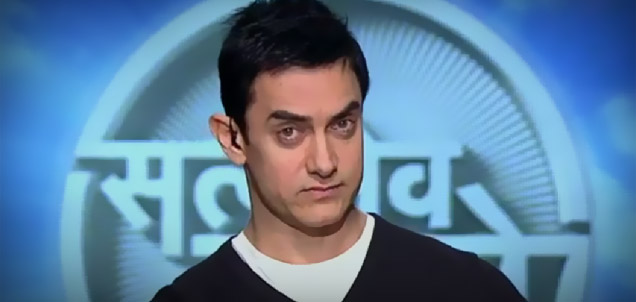
    In the past 13 weeks, one show has done what no other show has been able to in a long time – get people face-to-face with the ugly truths of our society. Aamir Khan’s television debut, Satyamev Jayate, was the most-talked about show even months before it was aired. It was touted to revolutionize the Sunday morning slot on the Indian television.


    From the very first episode till its last episode on July 29, the show was able to create a lot of buzz. People shared their views on the social ills the show highlighted on social networking sites. The news channels and newspapers carried expert views and opinions on the show. It didn’t back down from highlighting the fact that a country of one billion lives like ostriches when it comes to taking action against such evils.


    However, inspite of all the hue and cry, one question still remains on everyone’s mind: was it really effective?


    MxMIndia spoke to industry experts, journalists and even activists after the show was aired on May 6 and almost all of them gave it thumbs up. Now that the show has ended, we got in touch with the same people to know their opinions…


    TRP: the only yardstick?

    Chandradeep Mitra

    For any channel and show, the TRPs it gets are the yardstick at which its popularity is measured on. Star India’s Satyamev Jayate which premiered across nine channels – Star Plus, Star Pravah, DD National, ETV, Star Utsav, Vijay, Star Jalsha, Star World & Asianet – got a rating of an average 4 TVR for the CS4+ in the Hindi speaking markets and an average of 4.9 TVR for the All 4+, according to the TAM viewership data. But, as the weeks rolled on, the ratings dipped.


    Many, however, feel that such shows cannot be measured by TRPs as they are much bigger than that. “For a show like this, ratings alone cannot be the yardstick. One must not forget that the it was a non-entertainment show and was aired on Sunday mornings.  For a slot and content like that, the show did very good,” said Chandradeep Mitra, managing partner, Anvention.


    Anil Sathiraju

    He added: “We must look at the social impact it created and I’m sure it will remain in people’s memories for a long time. Apart from the buzz created on social networking sites and getting eyeballs, I’m sure now companies will also increase their CSR activities as it highlighted the work done by a few.”


    Similarly, Anil Sathiraju, Head – south, Mudra Max Media, too feels that content and impact are more important than the ratings: “What the show has done to the morning slot is evident enough, that it made people sit up and take notice. And I’m sure now most channels, including Star, will want to revive the slot and come up with shows which will not make the slot redundant.”


    Sundeep Nagpal

    The show wasn’t developed and promoted for TRPs, said Sundeep Nagpal, founder director, Stratagem Media. “It was applicable for the masses and not many shows of such genre have been created. Hence, it would be wrong to judge it on the ratings…it’s much more than that. It bought out the issues which are prevalent but under the surface. For example how many of us in Mumbai knew about Khap panchayats? The show is a turning point in the Indian television history.”


    The much-hyped show even went on to charge an exorbitant amount for the 10-second advertisement slot which was sold at thrice the usual rates. “For an advertiser, the show was the best medium to reach its audiences. For the first time, a show was created, which in turn created two new stakes – timeslot and a new category of a show. So, many didn’t hesitate in paying that extra for the quality they were getting in return,” explained Llyod Mathias, director GreenBean Ventures and former CMO of Tata Teleservices and Motorola.


    Aamir Khan vs Content

    Anita Nayyar

    According to the media planner, Anita Nayyar, who is moving back to her former agency Havas from Bennett, Coleman & Company (BCCL) by August, initially the show got the hype only because it was anchored by the actor and the fact that the concept of the show was well hidden. However, for a show like Satyamev Jayate, it’s the content which plays a bigger role.


    “Satyamev Jayate is a socially relevant show and in the beginning, I think, it did mobilize people. However, in between it lost its public appeal. And I’m not surprised as such shows only appeal to a certain section of the society. Hence, it wasn’t even able to garner the TRPs it deserved,” said Ms Nayyar.


    She explained that though the show was anchored by a popular actor like Aamir Khan there was a gap between enlightenment and mobilization. “The show was supposed to mobilize people, but it was only able to highlight the evils which we all know exist. Nonetheless, it was a good show.”


    Voicing the same opinion, Sarla Bijapurkar, sociologist, believes that if one has to score Aamir Khan vis-a-vis the content of the show, Aamir would win. “Public memory is very short and everything will be lost if there is no follow-up. For instance, take the episode where diktats of Khap panchayats were highlighted. Has anything changed? No, we still have such bodies making people’s lives miserable. Sometimes, when one hears or reads about such instances, it makes you wonder if we, as a society, take two steps backward for every one step taken forward.”


    “For me, the show will only mean something if it is able to do a follow-up on the issues highlighted. Also, instead of raising a new issue every time, I think, they should have focused on fewer and discussed about different dimensions related to a particular issue. Maybe, then it would have been able to brought about a change,” said Ms Bijapurkar.


    Waiting for a change…

    Ranjona Banerji

    However, there are many who think that the show was a success and was able to do more than just generate public interest and will eventually lead to some change as evolutions don’t happen overnight.


    Ranjona Banerji, a senior journalist and contributing editor, MxMIndia, feels that the show did justice to the concept though there were a few dodges like the show being too emotional, sometimes. The first two episodes – female foeticide and child sexual abuse – were able to create a lot of public interest. “Apart from these two episodes, the episodes which moved me were the ones on disability and senior citizens. The show did the work of a journalist and was even able to answer a few questions. Hopefully, they’ll tweak the show a little bit and come up with a second season – better and stronger.”


  • No (or low) ads on HD. Anybody complaining?


    By Meghna Sharma


    While there is no denying the importance of advertisements in a world where subscribers are unwilling to pay subscription fee for channels, there exist many viewers who are tired of innumerable ads interrupting their favourite soaps or sporting. The good news for them is that their ordeal has been put to an end through HD channels. At least for the moment


    With various broadcasters launching HD variations of their channels, many upper-end subscribers are shifting to HD set-up boxes or subscribing to an HD channel. However, as there are no free lunches in the world, these channels come at a premium.


    What media planners think?

    Most media planners feel that since HD channels come with a certain cost attached to them, it is but obvious that they cater to a limited audience.  So, most channels are aware of it and their target group.


    Anita Nayyar

    Talking about the HD channels’ reach, Anita Nayyar, director (customer strategy), BCCL, agrees that not many avail of the facility. However, with digitization being made compulsory, especially in the four metros things might change. “Unlike the West, inIndia a broadcasters make most of their money through advertisements, and not distribution. So, if HD channels reach only a certain section, then how will a channel make its revenue?”


    Ms Nayyar added: “Today, one might pay a premium cost to watch an ad-free telecast, but in the near future, if availability doesn’t increase then channels won’t have an option but to make exception to the rule. They will be forced to show advertisements; however, they might charge a higher cost or have a limited time slot.


    On the other hand, Hiren Pandit, managing partner of Group M, felt that broadcasters with HD channels aren’t feeling the pinch, since they want to cater to a different audience: “Apart from the top-notch TG, most broadcasters have non-HD channels as well, so they capitalize through them. And over a certain period of time, they’ll be able to cut losses.”


    Agreeing with Ms Nayyar and Mr Pandit, Janardhan Pandey added: “It’s not just about reach or money, there is another reason which plays an important part in making HD channels a hit and that’s viewers’ psyche.  A person who might be able to afford HD package might still go for cheaper option because he/she might feel why pay more when the same can be watched at a lesser cost. For them, a few advertisements don’t matter.”


    Marketers’ foresight

    A brand reaches its target audience through advertisements and in today’s time one can reach a cross-section of society through television. Hence, most marketers spend their most of their ad-revenue on TV.


    Karthi Marshan

    Karthi Marshan, EVP & Head Group Marketing, Kotak Mahindra Bank said: “Our estimate is that of the 136mn cable and satellite homes in India, 44mn are DTH. Of these, about 8 lakh are currently HD subscribers. That is less than 2% of DTH homes and a tad over 0.5% of all C&S homes. Now whether this affects a marketer or not depends on who is her core TG. For the average brand with SEC A & B as their TG this probably does not matter much, but yes, premium and super premium brands do stand to miss out on what could be core TG due to the fact that some of the HD channels still don’t run advertising.”


    He added: “The next question that marketers will have to contend with is broadcasters expecting to be paid separately or additionally for these audiences. While brands will make the argument that we have bought programs or channel presences and hence our ads should carry seamlessly to HD as well, broadcasters may well have a tenable argument to the effect that they are in the audience delivery business, and a premium audience can and should command a premium for access.”


    Similarly, Ashutosh Tiwary, EVP- Strategic Marketing, Godrej, feels that one needs to observe the situation over a period of time to know what will happen next: “If the ratings and numbers of non-HD channels on which the media deals are based, get affected due to HD feeds, then HD channels will probably will have to air the ads to make up. However, if HD numbers prove to be totally incremental, then the converse might hold true. Overall, if viewer retention and engagement goes up due to higher quality and reduced clutter, HD might require specific treatment.”


    While Simeran Bhasin, marketing head, Fastrack and new brands at Titan said that as a consumer she loves to watch her favourite programmes on ad-free HD channels, but as marketer she’ll have to look for other methods to reach the TG. “HD is here to stay and marketers will have to figure out ways to reach out their consumers. Because with technology available everywhere, one can easily switch-off their TV sets to watch something online which is accessible without any interruptions. So, marketers will have to sooner or later adapt to survive.”


    Vipin Mehra, former sales head, Pidilite, said: “It’s very important for any brand to send constant reminders to its TG about its existence, especially in today’s competitive market. So, brands will prefer a channel which will help them in doing so.”


    Keeping their fingers crossed

    Creative people on the other hand aren’t very happy with HD channels as they affect their work/business, but feel that things will change for good.


    KS Chakravarthy, director, DraftFCB Ulka, felt that though one might want to enjoy an ad-free telecast, it’s just a passing phase because channels have to make revenue which comes from advertisements. KV Sridhar, National Creative Director at Leo Burnett, too agreed with Mr Chakravarthy, adding: “When and as HD channels availability increases, broadcasters might be forced to start showcasing advertisements as well.”


    Who’ll be the ‘real’ beneficiary?

    Advertisements or not advertisements, broadcasters have to follow a business plan and many feel that they’ll have to succumb to it. “One or two networks have begun taking a smattering of ads, and this will only grow, I am guessing,” said Mr Marshan. A business is run on revenue and if it cannot be generated, then changes have to be made. However, for the time being, the viewer can enjoy an ad-free programme.

    One will just have to wait and watch.


  • Dream start for Satyamev Jayate


    By Meghna Sharma


    On World Laughter Day, Aamir Khan was able to achieve just the opposite – make Indians wake up to the social evils we only talk about in hushed tones and cry while consuming  the harsh reality we all run away from. The much-awaited Satyamev Jayate premiered yesterday (Sunday, May 6) morning after a well-orchestrated marketing campaign. As expected, the show was a hit among the masses and media personalities. MxMIndia spoke to a cross-section of mediapersons and experts for their reactions to the show – and to know if the show will be able to sustain the hype and curiosity it has generated.


    Anita Nayyar

    TRPs, no problem

    Most media planners are happy with the show – personally as well as professionally. They feel that the show was able to generate enough curiosity by making people switch on their television sets on a Sunday morning and will continue to do so.


    “The show had a huge amount of emotional quotient, but the way the issue was dealt in the episode will be able to impact people and many of them will wait for the next episodes too. The way everyone is talking about it, I’m sure that the channel will be able to get its TRPs. Apart from the Aamir factor, the issues being discussed on the mass-reach channel will also help it,” said Anita Nayyar, director (customer strategy), BCCL.


    Mediaah! Thank you, Star Plus. Thank you, Aamir Khan

    Anil Thakraney: Oprah Khan

    Agreeing with Ms Nayyar, another senior media planner felt that that the show has the potential of becoming the highest TRP generator in the morning slot. “It’s an episodic show, so a lot depends on how each episode is produced. The show, though a little over dramatic at certain portions, will catch people’s attention,” said the media planner, requesting anonymity.


    The show was telecast on nine channels – of Star the network, Doordarshan and ETV Telugu  and was also dubbed and had subtitles to reach out to various parts of the country.


    Chandradeep Mitra, managing partner, Anvention and who is now based in Kolkata, liked the show and felt that even though it is not pure entertainment and deals with uncomfortable topic, it will be a hit among the masses. “The show was telecast with subtitles in Bengali on Star Jalsa, which helped it retain its genuineness. People here are comfortable with Hindi, so language won’t be a problem. After the initial hype, a lot will depend on how it is written and talked about on the social and mass media. Also, the topics will show how the show will do in the future. For instance, the first episode would have an impact on the Hindi-speaking belt,” he said.


    Anil Sathiraju

    Another media planner who saw the show on Star Plus and a regional channel, Star Vijay, felt that only Aamir Khan will be able to catch people’s attention down south. “It might not catch people’s attention as everyone is expecting, but it’s unpredictable.  Although, one look at the show and one can see that the actor and his team have done their homework well,” said Anil Sathiraju, head – south, Mudra Max Media.


    Many also felt that it’s a bold step by an entertainment channel to deal with such a topic and to such an extent. The money spent on the show is no secret. “Aamir is a popular actor, but I don’t think the show will be able to garner the same kind of popularity and following like other weekday prime time shows on similar channels. But hats off to the channel and the actor for taking up such a bold step and deal with social issues no one wants to talk about,” said Sundeep Nagpal, founder director, Stratagem Media.


    Marketers’ paradise?

    The 10-second advertisement slots for the show were said to have been sold at thrice the usual rates. The main sponsors have already paid a huge sum to be associated with the show. According to the marketers, the tear-jerker has the mass-appeal and the pull.


    Lloyd Mathias

    The show has been ‘trending’ on Twitter the whole of Sunday and has an ever-increasing number of followers on Facebook too. So, on the popularity front, the show has been able to reach out to its target audience. At least the socially networked intelligentsia for sure.


    Former CMO, Tata Teleservices, Lloyd Mathias said that the show is a huge marketing property. “The hype created before and after the show, is a clear signal about the impact it has created. Apart from the Aamir Khan factor, even the issues bieng dealt with have created uniqueness and curiosity.  So, every marketer will be glad to be associated with the show.”


    Sanjay Tripathy

    Even Sanjay Tripathy, executive vice president – Marketing & Direct Channels, HDFC Life, felt that marketers would be glad to jump onto the bandwagon: “Every show has a certain TG and marketers advertise with them according to their TG. Satyamev Jayate is a show which has appeal across sections – class, age, region and religion. So, even though the show is not at a prime time slot and not a pure entertainer, people will watch it. So, why wouldn’t any advertiser want to be part of it?


    More than a tear-jerker

    The first episode dealt with the issue of female foeticide – not something people aren’t aware of. Sociologist, human right activists and media commentators are glad that someone is talking about such taboo topics on such a platform. And since, an actor of certain credibility and reputation is bringing it to the masses, there might be some change in the society.


    “The portrayal of the issue was sensible and the personal experiences of the three women on the show were heart wrenching. Till now, such topics were only debated by academicians and activists. But now it’s in the public domain. And it has shaken up the people. However, now the concern is, will it be able to find a solution for such highly-prevalent evils of our society? A follow-up is needed so that the show doesn’t just become another tear-jerker,” said Sarla Bijapurkar, sociologist.


    Ranjona Banerji
    Ayaz Memon

    Ranjona Banerji, senior journalist and contributing editor, MxMIndia, felt that sustainability is a challenge now. “A lot of times, after a hard-hitting start, many shows tend to bend towards populist themes. So, I hope the show doesn’t do that or run behind TRPs. The show will have the similar constituency of followers like Anna Hazare. Thus, change in a society might happen, but a lot will depend on how the show progresses from here.”


    Agreeing with her is Ayaz Memon, veteran journalist and editor, who too believes that sustainability is a challenge the show will face if it wants to be different: “Very rarely do people want to watch ‘reality’, but the show was able to catch almost everyone’s attention on Sunday. Apart from sustainability, another challenge the show will have to overcome is how quickly it is able to capture the youth’s attention, because one doesn’t know what will happen after three weeks.”


    If that’s not enough, Teesta Setalvad, journalist and activist feels that the show was great, but there were loopholes in it too. “For instance, in the show Aamir Khan said that he will write a letter to the CM, but in reality he can’t do much about it. It’s the chief justice who can make a difference and take action. Also it didn’t tell people where to go when such issues happen, no matter how weak the organization might be. Apart from that, the show was excellent and a good start in creating awareness.”


    Photograph: Video grab from SatyamevJayate.in


    > The Importance of Being Aamir Khan

    > Why SJ will rule weekends; Stratagem analysis: Weekday Show #23 > Weekend Show #1

    > SJ is Aamir’s baby, completely: Satyajit Bhatkal (director of the show)

    > High EQ at Aamir Khan talk show Satyameva Jayate

    > Airtel slashes SMS rates for Satyamev Jayate

    > Anil Thakraney: Aamir wants to play God


  • Will the name change work for MCCS?


    By Johnson Napier


    The media has been agog with news of the two looking at options beyond the relationship, only for them to dodge the belief. But all doubts were put to rest on Monday when media giant Ananda Bazaar Patrika (ABP) finally announced it was shedding the Star branding from its slew of channels.


    Star India and ABP agreed to discontinue the Star brand affiliation with Media Content and Communications Services (MCCS). Of the many reasons that were doing the rounds, the one that was loud was discontent over editorial content, leading to the two calling it quits. Star had reportedly served notice in January 2012 (see Mediaah!).


    As a result of this decision, Hindi news channel, STAR News will now be rechristened ABP News, while Bengali news channel STAR Ananda will become ABP Ananda and Marathi news channel STAR Majha will be called ABP Majha. The three 24-hour news channels are owned by the Media Content and Communications Pvt Ltd (MCCS) – a joint venture between the Ananda Bazar Patrika Group and STAR India Pvt Ltd. MCCS, formed in March 2003, is a 74:26 joint venture between ABP TV and STAR News Broadcasting.


    While the move will enable ABP to venture out in the news broadcast space on its own as it wishes to promote and establish its own brands through its subsidiary company – MCCS, for Star the focus will be on building their brand on their core business, i.e. general entertainment. A release issued on behalf of Star Group read: Given the current regulatory environment and structural issues ailing the Indian cable and satellite television market and the news genre in particular, Star took this extremely difficult decision to withdraw its brand from the genre.”


    According to the release, the discontinuation will come in effect in phases from a period of 2-4 months and the partners will work together to ensure a smooth transition during this period.


    Speaking to MxMIndia Ashok Venkatramani, CEO, MCCS, said, “No, it’s not a set back at all. With the Marathi and Bengali channels, Majha and Ananda as suffixes are unique and have grown in popularity and acceptance. Of course, that’s not the case with Hindi where the suffix is ‘News’ and hence generic. So, yes, Hindi is a challenge on a relative scale, but not so with Marathi and Bengali. (see interview)”


    But while the three channels have identified a name for themselves in the respective markets and have been engraved in the minds of the viewers for a long time, it will be interesting to see how a name change exercise will impact the course for the network over a period of time.

    “The first 180 days of a brand name change are the most crucial and critical days. It is in these frenetic days of frenetic brand activity that a name change can be made successful or not,” writes note brank expert and consultant Harish Bijoor in an exclusive analysis on the name change for MxMIndia. “No wonder then that you see a flurry of advertising activity that goes in to establish a new name solidly in the mind of the consumer.”

    Drawing implications over the new announcement, Anita Nayyar, CEO India & SouthAsia, Havas Media said that the popularity of the channels may take a beating if they toy around with the content and if the change is not expressed loudly and clearly to the viewers. “One will have to assess the extent to which the two have called a split in partnership. But if you see the association, Star, as such is a name that has been engraved in the minds of the people for a long time, and therefore it will be tough for the viewers to overnight respond to the change in a positive way. If they announce the change in a big way and do tremendous activity and promotions around it and create awareness levels, then only will the audience respond to the change. Otherwise past examples have shown that no matter how big a brand or name, if the change in name is not relayed properly to the masses, it will see a decline in popularity and fortunes.”


    On the impact it would have on the advertisers, she said: “It will be a wait-and-watch game for the advertisers. I feel the current deals will go on as scheduled but new deals will depend on what the change will hold in store for the brand.”


    Mona Jain, CEO, Vivaki Exchange, said: “I don’t see the change having any impact on the popularity or the ratings as such. First, one will have to see what is the exact nature of the deal? If the team and other infrastructure related activity remains the same then there wouldn’t be an impact as such. Also, what is important is the quality of content that is played on these channels. If there is no change from the previous deal, then the viewer will continue to stick to the channels the way they used to earlier. We will have to see how it pans out over the course of time.”


    According to Tarun Nigam, Executive Director, India North, Starcom Worldwide, this could be an opportune time for ABP to make a name for itself in this arena. “I don’t see this development having any impact on what is currently being offered. If the content remains the same, if there is no breakdown in team and so on, then it shouldn’t matter at all. In fact I think this is a perfect opportunity for ABP to finally make a name for themselves in the news broadcast space, as they already are a big name in the print space. They, anyways, are a very strong and deep-rooted organization and have sustained themselves as a commendable force to reckon with.”


    According to Nigam, in a market like Kolkata where ABP are a dominant force, this deal will enable ABP to showcase more regional offerings that they specialize in, which will only catapult the interests of the viewers at large. “One will have to wait and see what will be effects of the change in other markets like Maharashtra,Delhiand others. For all you know, ABP might just emerge a stronger player in these markets as well.”


    The ball, for now, seems to be in ABP’s court as they finally get to pursue their dream of going solo and 360-degree in the news space. With healthy ratings and a roster of loyal advertisers willing to cling on to them, the priority for ABP is now to endorse an enduring message to one and all and go loud with their promotional activities announcing the new shift. Till then it is wait-and-watch.


  • The Anchor: Anita Nayyar on 6 things she has learnt from being in the media business

    It seems like a lifetime that one has been in the media business. One learns from every profession but it’s a different learning if one has had a dramatic shift in professions. From being a Microbiologist & Pathologist to the business of Media has been a long and interesting journey.

     

    Passion pays:

    Passion pays tremendously. Inspite of a dramatic shift in profession I realize that it was/is my passion to excel in whatever I do, has paid off in my career.


    Adapt as you progress:

    Key to success is to be always ready to adapt oneself especially in the fast moving and evolving industry like media. From full service to media brands, from implementation to strategy and planning, from traditional media solutions to integrated solutions, from media to communications, from media planning to communication planning.


    Eye for detail:

    As they say “God lies in the details”. In the fast paced, unorganized world of media and advertising unplanned and non implement-able big ideas fail to make impact of any kinds.


    Hardwork & Dedication:

    There is no shortcut to success. Hardwork and dedication are the key ingredients to a good professional recipe. Especially when you don’t have any mentors. Get known by your work.


    Multiple solutions:

    It is important to always have multiple solutions; it reduces the chances of failure.

    Alternates are keys to media solutions.


    Never repeat mistakes:

    In media you are allowed to make a mistake only once hence, never ever repeat a mistake, it costs.


    Anita Nayyar is the CEO, India & South Asia at Havas Media


  • Anita Nayyar quits Havas, to join BCCL as Head of Customer Strategy

    By A Correspondent


    Havas Media CEO – South Asia Anita Nayyar is moving on and is joining Bennett Coleman and Company Ltd (BCCL) as Head of Customer Strategy.


    A Havas Media spokesperson has confirmed the development. While a hunt is on for Ms Nayyar’s replacement, Mr Mohit Joshi, until now Managing Partner of MPG India, has now been elevated to Managing Director.


    “It is a challenging role and I will be able to utilise all the learnings of 28 years from the agency side,” Ms Nayyar told MxMIndia indicating that she will continue to be based in Delhi.


    Ms Nayyar has been with Havas since 2007 and prior to this was Executive Director at Starcom and Vice President at Mudra Communications.


    Said Mr Vishnu Mohan, CEO, Havas Media APAC, “After five years, Anita leaves behind an organization seven times stronger with several specialist brands that today are over 40% of group’s portfolio and a strong talent force that are leaders in their own right. We thank her for her stewardship and wish her every success in this new stint on the other side after 28 years in the agency business. We are at present in the process of identifying a suitable leader for this role and should make an announcement to that effect shortly.”


  • Sleepwell appoints MPG as its media AOR

    By A Correspondent


    MPG India, a flagship brand of Havas Media, has been appointed as the media AOR for Sleepwell.


    The account, worth upwards of Rs20 Crores, will be handled by MPG Delhi. On MPG’s appointment, Manoj Sharma, Head of Marketing, Sleepwell said: “We are happy to partner with MPG. We found their approach very thorough and insightful. Their strategic thinking is driven by MPG proprietary tools which provide a holistic communication perspective. Most importantly, their extremely passionate and enthusiastic team made us choose them as our media partners.”


    Commenting on the win, Anita Nayyar, CEO of MPG South Asia said: “It is a great privilege to be working with Sleepwell. One of the key factors that helped us win this business was our strategic approach to communication using our proprietary tools. It’s a great win for MPG to kick-start the second quarter.”


    Sleepwell is a flagship brand of Sheela Group, it is ISO 9001 certified as well.


    For the records, Sleepwell was erstwhile with Motivator (Group M).


  • MPG India appoints Ruma Sengupta as Director of Strategy

    By A Correspondent


    MPG India, the flagship brand of Havas Media, has announced the appointment of Ruma Sengupta as Director of Strategy.

    Based out of Mumbai, Ms Sengupta will work closely with MPG’s four key offices in Mumbai, Delhi, Bangalore and Chennai, to take charge of the agency’s strategic offering and product development in keeping with the vision of Leading New Thinking. She will also take custodianship of Havas Media’s proprietary tools and processes.


    Ms Sengupta will report to Anita Nayyar, CEO of Havas Media South Asia and also work closely with the regional strategy team based out Singapore.

    Ms Sengupta joins the agency with 15 years of experience and expertise across marketing, branding, sales, strategy, MR and analytics. She was most recently the Director of Business Insight for Synovate, where she was responsible for key international clients across FMCG categories. Prior to this, she has worked as Business Head for IMRB International. Her diverse experience also includes working in senior marketing roles at Adlabs Films Limited owned by Reliance ADAG and United Spirits Limited at UB Group.


    Ms Sengupta’s longest stint has been with Ranbaxy Global Consumer Healthcare where she launched OTC & DTC business and managed it successfully through marketing and sales-distribution.

    Commenting on the appointment, Ms Nayyar said: “Havas Media is well-known for the high quality of its strategic product and tools and Ruma has the right credentials and attitude to take control of our strategic offering. Her flair is evident from her extraordinary background having worked with top research agencies like Synovate and IMRB. Her previous experience in spearheading marketing and innovation capabilities with brands is a plus.”


    MPG anchors Havas Media, the world’s fastest growing global media network and recipient of the network Service Award at the 2010 Valencia Festival of Media. MPG provides media planning & buying, strategic consulting, branded entertainment and interactive marketing services for a range of clients in every region of the world. With offices in 109 countries, MPG consists of over 3,500 media professionals working across a broad variety of disciplines and categories.


    Havas Media, the global media network of Havas, is one of the world’s fastest growing media groups having grown from 10 markets in 1999 to 122 markets in 2012. Havas Media services its clients through a portfolio of specialist global networks and agencies. The group is organised to maximise local market dynamics whilst leveraging the extensive global insight and strategic support under its Meaningful Brands framework and analysis.


    The companies within Havas Media include: MPG (Havas Media’s global media communications network), Arena Media (Havas Media’s tailor-made communications network), Havas Digital (Havas Media’s global interactive network) and Havas Sports & Entertainment (Havas Media’s global sports and entertainment communication network).


  • Woman power at MxMIndia’s roundtable for Big CBS Love

    By A Correspondent


    Much has being spoken about how the media-advertising industry being one of the few industries in India that has seen many women professionals coming to the fore and showing the way to the younger and the aspiring lot to stand their ground for excellence, despite myriad challenges.


    To celebrate the spirit of women in the advertising-media domain, MxM India conceptualised a roundtable conference for Big CBS Love, in a half-hour show that was aired on Bloomberg-UTV on March 8, 2012.


    Eminent women professionals such as Punitha Arumugam, CEO, Madison Media, Anita Nayyar, CEO, MPG India, Shubha George, COO, MEC South Asia, Anisha Motwani, Director and Chief Marketing Officer, Max New York Life Insurance shared their views on the role of women in the industry.


    Ms Arumugam pointed out that advertising attracted a lot of women as against other industries, while Ms Nayyar and Shubha George referred to how Roda Mehta played an inspiring role. Ms Motwani, who started out in advertising, then joined the automobile industry and moved from there to insurance, remarked how women even today can’t ignore their responsibilities towards their families. Ms Motwani, who had taken a sabbatical after marriage for two years, said working women need to believe in themselves, their ability and not give up.


    On reasons why women have done so well in advertising and media, Ms Nayyar said: “Over the years, it is evident that when it comes to client relations and numbers – women have done very well. And since advertising has a casual sort of environment, it gives that extra advantage and scope for women to double up as a key member at home and the workplace.”


  • Video Report: The ‘AdAsian’ experience


    [youtube width=”320″ height=”250″]http://www.youtube.com/watch?v=iaNsKVHeQpI[/youtube]

    By Shruti Pushkarna


    Whether it was Swami Sukhabodhananda’s inspiring words of wisdom, Joseph Tripodi’s ‘engaging’ presentation or Will Sansom’s ‘Contagious’ ideas, there was something for everyone to take home from the AdAsia 2011 conference that concluded yesterday in New Delhi.


    Were expectations met? Did this AdAsia wash away the Jaipur 2003 memories? Did the Dilli chaat and the manganiyas charm the foreign delegates enough? Could it have been better? For answers to all of the above and more, MxM India caught up with some AdAsia veterans as well as first-timers on the last day of the congress.


    It was an experience to remember for quite a few, especially for the strong line-up of speakers. While first-timer Anita Nayyar, CEO-India & South Asia, Havas Media, was impressed with the creative line-up of speakers and topics, for Alok Agarwal, COO, Cheil Worldwide, India, some great content came from the non-advertising lot. He said, “…the presentations made by the non-advertising people were far fresher in their thinking…”

    Looking at the line-up, a few turned up at the congress in the hope of interacting with the industry icons. But the format of the sessions didn’t leave too much room for interaction. Coming from Pakistan, Mehwish Rafi, Chief Strategy Officer, Adcom Pvt Ltd, had a different picture in mind before she attended the sessions. But nevertheless, the sheer association with the ‘AdAsia family’ as she calls it, made it a great experience for all the 90 delegates from Pakistan.

    AdAsia loyalist, Raymond So, CEO, Mastershub, also came with huge expectations which he admitted were almost met but for the cultural experience. Recalling his grand Jaipur experience, he said, “…Jaipur had given me an excellent experience, the cultural exposure was great…and this time because of the hotel arrangement, it wasn’t as impressive as the previous AdAsia.”

    Sonal Dabral, Creative Head Asia & Chairman Bates 141 India, like most others was impressed with the content coming out of AdAsia 2011 but sharing his experience from Cannes, he gave some interesting feedback on how the content could have been showcased better. Stressing on the keyword of the trade, ‘advertising’, he said, “…I don’t think the separate seminars that happened were properly advertised… if we are in the business of building expectations, of teasing people, to creating desire about a product, I think that should have been done for each of the seminars.”

    For Chris Thomas, Chairman and CEO of BBDO in Asia, Middle East & Africa, the biggest takeaway from the conference was the vibrancy in the industry in Asia. Referring to the great work and conversations shared through the three-day congress, he said, “…there is absolutely a passion for the work, there is a sense of creativity and new techniques to be applied, and I think Asia is demonstrating its vibrancy and its importance on the world stage, and particularly in India.”

    Paresh Nath, Owner, Delhi Press, admitted to have had a great time at AdAsia 2011 as well. He said that the conversations were not just about advertising but about “communication” which happens to be an integral part of publishing.

  • Magazine readership looking up

    By A Correspondent

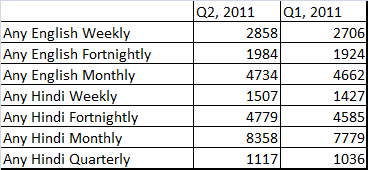
    Magazines have been witnessing a bit of rough weather of late. It is not an Indian phenomenon but is being witnessed worldwide. However, this IRS Q2, 2011 shows an increase in readership of both Hindi and English magazines as compared to Q1, 2011. Here is a quick look at AIR for the same:

    Readership in this duration has increased for Kannada and Telugu publications also. For Assamese, Gujarati and Marathi it has gone down – while for other languages the response is mixed.

    Keeping the focus on English and Hindi magazines for the purpose of this article, is it safe to assume that this IRS marks the revival of magazines? Says Anita Nayyar, CEO – Havas Media, India & South Asia, “This IRS certainly indicates better health for magazines but not necessarily revival.”

    Rajni Menon, Associate Vice President, Carat Media India, too believes that it is not really the revival of magazines and mentions two reasons for marginal upward trend for the magazines. She said, “The Week and Business World have been actively working towards increasing readership and it has had an impact in the market. Secondly, new magazines which were not captured in IRS earlier, eg 2010 Q2 IRS did not cover the following magazines – Outlook Profit, Economist, People, Life Positive. The biggies like India Today, Outlook have seen only marginal shifts only.”

    However the experts believe that there is definite scope of growth in niche and special interest publications, which have shown an upward trend. Ms Nayyar said, “Niche magazines are doing better than mass magazines.” Ms Menon endorsed this, “There has been growth in numbers for niche magazines : India Today Travel Plus, Good Housekeeping, Femina WTW, so that could show an indicative trend along with the fact that one does see more new magazines on the stands every few months. Travel, Women, Lifestyle. “

    However, a major issue faced by media planners and buyers is that a number of niche magazines are not tracked in IRS. As per Ms Menon, “We still can’t make a definite decision on magazines because there are so many in the market which are not covered by IRS. Mainline magazines like Open and Tehelka are yet to be covered, so seeing new niche magazine get covered is a long shot.

    Ms Nayyar too stated that niche and special interest publications are set to grow, but most niche magazines are not tracked.