Tag: Anilkumar Sathiraju

  • Wavemaker collaborates with One Mercuri to turn South

    By Our Staff


    Wavemaker India has unveiled a specialised unit in collaboration with One Mercuri which will focus on helping brands leverage the entertainment and content businesses in south India. The unit will open up a whole new world of collaborations and opportunities for brands and creators.


    This is an effort to help corporatise the business of ‘south entertainment’, by way of providing brands structured access to entertainment content from South India, right at the conception stage. It will deliver on creating Original Content IPs, enabling better brand associations in films and OTT content (audio & video), bringing in an era of measurement and collaborations with writer rooms, among other things. The partnership will be a catalyst in developing the symbiotic relationship between brands and the South entertainment industry – one that has under-delivered so far.


    The unit will be based out of Wavemaker’s Bengaluru office and led by Anilkumar Sathiraju under the leadership of Karthik Nagarajan.


    Commenting on the launch of this new unit, Ajay Gupte, CEO – South Asia, Wavemaker, said: “We have always focussed on paving newer ways to provide innovative solutions to our clients and partners. Creativity, Content and Collaboration are the three pillars of this newly launched specialised unit. We see huge potential in content, partnerships, digital content and content creators / influencers in the next few years. With this unit, our aim is to create a new wave in the entertainment and business space”.


    Added Sriram Bakthisaran, MD & Group CEO, One Mercuri: “A resurgence of quality content from the region which is home to the four thriving film industries besides a large entertainment-hungry viewership, a larger than life fan following base seen nowhere in the world and the content coming out from this region  fast attracting global interests and gaining prominence on pan India scale and with our already significant presence in the south market having serviced some of the biggest production houses and the celebrities in the past, we feel we are better placed to expand our offerings than before as we jointly venture out to feed all stake holders including the consumer, the production houses as well as the brands. As Wavemaker has all the experience and knowhow with their global exposure, I am very confident that this collaboration will only elevate the industry and set standards for several to follow and benefit.”


  • Reality goes Regional… and how!


    By Ananya Saha


    Kaun Banega Crorepati might have been adapted from the international Who Wants To Be A Millionaire, but that is not where the adaptations stop. Suvarna TV, the Kannada general entertainment channel, has adapted the reality show into Kannadada Kotyadhipati, Vijay TV in Tamil Nadu has a version in Neengalum Vellalam Oru Kodi, and so does Asianet, which has the Malayalam version of KBC – Ningalkkum Aakaam Kodeeswaran. ETV Marathi has launched the Marathi adaptation recently. And it is not only KBC. Bigg Boss was recently launched on ETV Kannada and an announcement has been made for a Bangla variant of the show with Mithun Chakraborty as host. Many reality shows in the past have been adapted into regional languages and channels, and the trend seems set to grow.

    MxMIndia spoke to industry professionals for their view on regional adaptations of reality shows.


    Dhruv Jha, GM- Content & Experiences, Lodestar UM

    The regional adaptations do well, and they open well. It is to do more because of the kind of buzz that is generated on national scale – they are able to replicate it in some manner, and then it’s more like ‘we are not far behind’ and ‘if you can have a Bigg Boss, so can we’. And there is an aspirational level at the state and regional level that the channels also feel ‘our stars also deserve a Bigg Boss’. I believe the initial ratings were good, though I am not sure of the ratings now.


    I am sure that there are brands buying into it. If initial TRPs are generated, if there is a buzz, then regional adaptations are able to monetize. Strong national brands that are strong regionally, they are able to look at this option. I know of brands who are looking at AFP (advertiser funded programming) model and they are looking at programming in region – if it the format that is going to work, then there will be brands investing into it.


    All said and done, most of the reality shows on national GECs are also adaptations. Truly adapted, it can be as good – in any language or market. And the channel or programme would have to consider local culture, sensitivity and sensibilities while adapting.


    Anuj Poddar, AVP and Business Head – Regional Channels, Viacom18

    KBC is a proven format that continues to be successful; audiences have not tired of watching six seasons in Hindi. So why should the Marathi audience (even if they have watched it before in Hindi) not watch KHMC when it is tailormade for them? Format shows are adapted all the time, across the world, across regions.


    But let me also give you a specific fiction example: “Uttaran” from Colors has been remade as “Asava Sundar Swapnancha Bangla”. For that I asked the team to answer 2 questions: “How will we make it different enough and more relevant so that viewers who have seen the Colors version will yet watch the remake on ETV Marathi?” and “How will we make it as similar or true to the original Colors version so that the elements that made it work in the first place are not lost in the remake?” We made sure we had the answer to both these questions and a healthy balance on both these seemingly opposite aspects. If you get that right then the viewers will come. And if the viewers come, the advertisers will follow.


    KHMC (Kon Hoeel Marathi Crorepati) is completely tailored for the Marathi audience. The questions, while being based on overall general knowledge, are inclined towards the culture and history of the Maharashtrian heartland. Our objective with this show is to also create awareness of the rich heritage and history of this Maha – Rashtra amongst people. The contestants are naturally Marathi-speaking people. The auditions have been done across Maharashtra. So in every way, the show is adapted to the regional audience. Having said that, the grandeur and the magic of the original format is all there – no compromises on that!


    The KHMC format is hugely back-end intensive. I must admit that before getting into it I did not realise how much logistical work goes into the show. And what we have achieved is probably the fastest ever mounting of this format so far, because we had a specific time-window that we had to catch. So my full compliments to my team and to Big Synergy for having pulled this off. The challenge of course is that such formats come with well-established quality benchmarks that the audience expects – if you compromise on that, they would feel cheated. And yet, the resources available to a regional channel are fewer than to a national channel – so it is a tight balancing act. Having said that, I am confident that the Marathi and other regional markets will scale up further.


    Harneet Singh Rajpal, Vice-President – Marketing, Domino’s Pizza India

    For any brand, particularly a mass brand that is present across the country, it is very important to have a regional connect. While presence on national television gives a wider reach across the country, to engage a consumer at a regional level it makes sense to advertise on regional properties, especially for the brands that have regional presence through regional channels on the shows that have been adapted and already follow on the success of national shows.


    Domino’s spends close to 20 percent of our total media and television ad budget on regional channels. This would mean the 7-8 markets that we are present in.


    Anilkumar Sathiraju, AVP & Head South, DDB Mudra Max

    The adaptations of big ticket shows are being accepted by many, be it audience or advertiser for that matter and the response is, in my opinion, a positive one. Not sure about whether the channel is able to make profits, but yes, they are investing heavily and the channel dependence on that particular show is becoming very critical and important


    Challenges as such that the show should be accepted by the audience regionally/locally, else its no point, cos it might just not work. Therefore channels are obviously looking at what kind of content appeals to the local audiences and thereon adapting the same


    KBC in Tamil did ‘average’ in 1st season, later on seasons it’s doing pretty ok. In Malayalam, KBC did quite well, in Karnataka it was a bigger success than Tamil Nadu. May be it’s because the audiences were used to a personality such as Big B that nobody else was accepted. In today’s scenario if you look at what a Big Boss has done in Karnataka, we have something to talk about. The original Big Boss in Hindi was accepted anyways but when it came to adapting it to Kannada, initially am sure people couldn’t accept it, but now the program as such is doing well in the market place.


  • HBO’s ad-free channels: good enough to pay more for?

    By Meghna Sharma


    The campaign to promote the launch of two channels – HBO Defined and HBO Hits – by HBO Asia and Eros International Media has started. The premium advertising-free movie channels plan to redefine the pay TV movie space in the country.


    The channels available on DTH operators – Dish TV and Airtel Digital TV – bring the best of Hollywood and Bollywood together. The channels are currently on air and are available for a free preview in the initial phase of the launch.


    HBO Defined and HBO Hits will showcase content through HD and SD feeds on Dish TV and SD feed on Airtel Digital TV. These will be offered at a special introductory price of Rs 49 and Rs 69 for SD and HD services, respectively.


    MxMIndia finds out if there is a market for such ‘premium’ channels in India and if they’ll be survive the competitive market:


    Anilkumar Sathiraju, AVP and Head South, DDB Mudra Max

    While there is a market for ad-free channels, am not too sure how long will they be able to survive. Today, in a scenario where 600+ channels exist, there are many channels which are still yet to make a mark. In that situation, while viewers are likely to sample an ad-free channel(s), I am unsure if they will be able to sustain for long.


    Divya Radhakrishnan, managing partner, Helios Media

    HBO is a subscription based channel globally. It started accepting ads due to the distribution structure of the Indian TV industry. Now with digitization and DTH getting seeded across homes in India, the viewers are getting used to pick and pay for their channels and not just a bundled offering from the cable operator.


    As much as it’s not a good thing to hear for our business, ad avoidance always adds greatly to TV viewing experience especially in the movies and sports space. Hence if reasonably priced, it will have takers in the high-end homes. Mainstream channels in their HD avtaars get talked about more for its minimalistic ads more than the channel clarity.


    Having said that, the content will need to be extremely compelling for the consumer to shell out more bucks. Old titles, repeated zillion times on TV in the past coming in an ad-free environment may not hold that much appeal however latest releases may do so.


    Dhruv Jha, GM (Content and Experiences), LodestarUM

    There is an emerging space, I have heard consumers/viewers comment, “Let’s watch it on HD, virtually no ads.” Movie viewing experience without ads can be more pleasurable. There is a discerning viewer and with rising incomes and free time being at a premium… pay for channels will start playing in a niche targeted segment.


  • Indo-Pak series: Another historic thrash-a-thon?


    By A Correspondent


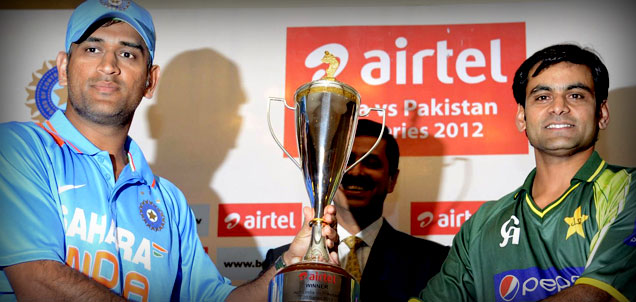
    Tensions of other sorts are usually forgotten when India and Pakistan meet on the cricket pitch. This time it is a battle of one-upmanship as the two countries are clashing after a gap of five years.


    While the Indo-Pak series of three ODIs and two T20s is a short tour, it is creating enough ripples among cricket-crazy fans. What makes it more enthralling is the fact that India had beaten Pakistan in both formats of the game the last time they landed here during the 2007-08 tour. Of the three Tests that the two played against each other, India won the series 1-0, having drawn the remaining two. As for the ODIs, it was a 3-2 victory in favour of India that did the country proud.


    While it was Saurav Ganguly who was at his superlative best in the Test series that enabled India to take the lead, it was the young Yuvraj Singh who shone with the bat in the ODI format, making him earn the prestigious man-of-the-series award.


    Going by speculation doing the rounds, for broadcaster ESPN-Star the tournament was a success even before it took off. According to some reports, the channel has managed to sell out maximum inventory at two to three times (totalling more than Rs 1.5 billion) the rate compared to the just concluded India-England series. This augurs well for the network given that it has to pay Rs 322.5 million per match for the five match series.


    Sanjay Kailash

    To a query from MxMIndia, Sanjay Kailash, EVP, ESPN Software India Pvt Ltd, said, “We are delighted with the response from advertisers to the India-Pakistan series. India-Pakistan is always extremely sought after and the series therefore was sold at a premium. We have monetised India-Pakistan ODIs at a rate which is double as compared to the historical industry average. Even rates for India-Pakistan T20 are double than the most sought after T20 tournament in the country.”


    Anilkumar Sathiraju

    Sharing his excitement about the series, Anilkumar Sathiraju, AVP & Head, DDB MudraMax, Media, said that on the ratings front he expects the series to be a big hit. “It will be quite good. I am expecting it to be a positive and a good series. Ratings will definitely see a spike as it is India-Pakistan at the end of the day. The fact that a few advertisers are quite gung-ho about it makes it more exciting.”


    Divya Gupta

    Divya Gupta, CEO, Dentsu Media, too had some words of praise for the series irrespective of the fact that India had put up a drab performance in the recent past. She said, “An India-Pakistan series is in a realm of its own; evokes emotions, fervour and fever like none else. It doesn’t matter whatever Team India has achieved /not achieved in the recent past. It is a marquee game, event, media property that viewers and marketers and broadcasters are betting on; and deliver it will.”


    Anita Nayyar

    Giving a more detailed outlook on the series, Anita Nayyar, CEO, Havas Media India & South Asia, said the fact that the series is taking place after many years is in itself a great pull. “From a viewing perspective three of the five matches are scheduled on holidays which will help the cause of viewing. Also the ODIs start at 8pm-primetime making viewers more available. In fact, most India-Pakistan matches have delivered ratings in the range of 5-6. This series should do similar numbers; however, with TAM data not being available the deliveries will be guess estimates.”


    Ms Nayyar’s summation of the series is probably what will matter at the end of this historical sporting tie-up. “Ratings or no ratings, the competition between India and Pakistan has always generated huge interest for both viewers and advertisers, and is considered a safe investment. It is a good way to bid adieu to a tough year and a fine beginning to a new one.”


    If the first T20 encounter between the India and Pakistan in Bengaluru last evening (Dec 25) was any indication, the contest on field is going to be tough. While every match going down to the wire may not be good news for weak hearts, it’s sure to see ratings soar. And advertisers and broadcasters happy.


    Photograph: Fotocorp


  • Could Indian mags go the Newsweek way?


    By Ananya Saha


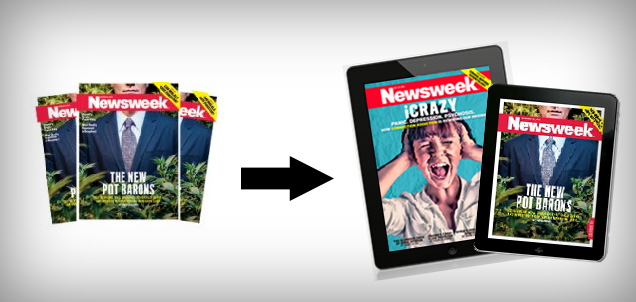
    Newsweek, founded nearly eight decades ago, is moving to a digital-only product from 2013. According to editor-in-chief Tina Brown, it cost $42 million a year to manufacture, print, distribute, and manage the circulation of Newsweek.


    Newsweek is in the best position to go completely digital due to their strong online presence through Daily Beast. But the news has sounded an alarm bell for print magazines all around the world. As news becomes a 24/7 affair and people prefer online access, the readership of news magazines is on decline the world over. It is no wonder then that magazines are reaffirming their presence in the online space too. With Kindle usage on the rise, e-magazines are creating waves.


    Tarun Rai

    Even as Indian print industry continues to see new launches, the readership is on the decline (though a minor slide), as recorded by recent IRS figures. “I am not very surprised at the decision. I believe the issue for Newsweek is the nature of the magazine it is. As a result, the relevance of a weekly ‘news digest’ has diminished. It is not a question of print or digital – it is a question of the nature of some magazines that may not be as relevant today. The same cannot be said for lifestyle and special interest magazines,” opined Tarun Rai, President of the Association of Indian Magazines and CEO, Worldwide Media.


    Suggesting that print media still has a bright future, Paresh Nath, Editor and Publisher, Delhi Press said, “It is more of a failure of a publisher than the sunset of an industry. Printed books and material will continue to be relevant as they were in the last several hundred years.” Agreeing that the digital market for Newsweek may have matured earlier than the publishers expected, Pradeep Gupta, chairman and managing director of CyberMedia, said, “In the market they are operating in, digital is growing very rapidly and therefore Newsweek has moved in that direction.”


    The predicament of the dawn of the digital era has been repeated often in the Indian context.


    “I am happy to say that magazines are already re-inventing themselves for the digital world. Abroad as well as in India. All our magazines are available in their digital versions. We are also aggressively developing various magazines’ apps and will be launching them soon. We see an opportunity in reaching a new younger audience through our digital initiatives,” said Mr Rai.


    Even while most magazines have moved towards digital and print versions simultaneously, the print version remains important for reaching the wider audience of readers and advertisers. Time magazine also has responded with their online version adaptable to any platform and any size, particularly for mobile reading. Varghese Chandy, Chief General Manager, Marketing Advertising Sales at Malayala Manorama said, “Reinventing needs to be done not only for news magazines, but every single product for its survival.”


    According to Anilkumar Sathiraju, AVP & Head, DDB MudraMax – Media, South, revenue will still come from print version since revenues from digital in India are still at a nascent stage, even though digital penetration is increasing rapidly. Going forward, he predicted that revenues will still be higher from offline magazines.


    Magazine have the most engaging format with the deepest touch points according to various international surveys. The growing numbers of tablets reassert the fact that this is the platform that gives the closest magazine-reading experience. Mr Chandy said, “However, monetizing the digital platform will be a greater challenge even for Newsweek.”


    While the industry believes that magazines should be ready for the digital era, Mr Nath holds an interesting view: “Magazines do not need to reinvent themselves due to the digital onslaught. Digital delivery of content is like delivering content in Times Square by shouting when hundreds of voices are simultaneously trying to convey the same or similar things. When crowds assembled in Tahrir Square, Cairo, it was thought that the digital media is a powerful weapon, as sentiments were whipped up not by newspapers but by digital media. What is the end result? Muslim Brotherhood that conveys thoughts through printed material ultimately got into power. Very little original content is created on digital media. It only copies and pastes and does so millions of times over. Magazines or print versions of newspapers do not know how to overcome the shouting match where noise and not seriousness is the basic currency. When the time of reckoning comes, people will have to go to the print version, and magazines and newspapers will remain relevant. Magazines have to find out how to outgrow the noise.”


    Delivery is still an issue – from readers visiting libraries in the past for content consumption, to wanting the content delivered to them. “Print brands have given up the will to fight and are trying to join the digital crowd that has weapons stolen from print itself. Yes, the world of delivery has changed, not consumption of content,” said Mr Nath.


    But with readers wanting immediate access to content, 24×7, digital is only going to grow. It is time that that magazines move faster towards the digital era, according to Mr. Sathiraju.


    The way forward

    “In India, spend on magazines continues to grow because of an increase in literacy, increase in disposal income and lower internet penetration. Therefore, Indian publishers are embracing digital formats. Print advertising is currently 10 times the digital advertising in India. Over the next five years, the penetration of digital will increase. And that is why CyberMedia has reoriented its strategy around creating of a media mesh,” predicted Mr Gupta.


    Mr Nath said that the question of digital versus print comes from the English-educated class in India. He said, “Long ago in India, content used to be created and consumed under the banyan tree. Now it is in front of a screen but the quality of this content is poor, one-way, where hundreds speak and no one listens. In India among the English educated there is a problem as this class cannot enjoy English content (is there any English Indian serials or English Indian movies or English Indian music?) whether in print or on digital media. This class keeps shouting that print is dying as it does not know how to ‘read’ in any language.”


    The view might hold true but the increased consumption of magazines on digital platforms cannot be ignored.


    “It’s anybody’s guess as to when the digital versions of magazines will become bigger than the printed ones. I firmly believe that the lifestyle and special-interest magazines space will continue to grow in both. It is the sunrise sector of Indian media. And both the print as well as the digital versions will grow, allowing our content to reach an even wider audience,” said Mr Rai.


    As Mr Chandy concluded, “The Indian print industry needs to be ready for the future. Currently online penetration is single-digit. This is likely to change in the near future, especially in the metros.” Thus, publishers need to be platform-agnostic and essentially become content managers. Their primary task will be to reach the audience through whichever platform is relevant.


  • TAM to cross 10,000 Peoplemeter mark soon

    By Meghna Sharma


    In a country like India with numerous channels on air and where television watching is an obsession, it is vital for broadcasters and advertisers to know how well the channels and the various programmes on them fare. TAM, a joint venture between AC Nielson Research Services (Nielsen Company) & Kantar Market Research, was mandated by the broadcast and advertising industry to do exactly that. Over the last decade-and-a-half, TAM has been optimizing coverage of the growing TV audience across the country by increasing breadth (expanding to cover larger number of new markets) and depth (enable deeper level of analysis in existing data markets).


    By the year end, the TAM Media Research plans to increase its sample size by nearly 2000 households. The present expansion is in alignment with the above thought process and is an attempt to bring insights on audience engagement with TV Content. “The current Indian broadcast landscape is dotted with some very different and complex influencing factors like the need to dive deep into untapped semi-urban/rural markets and the upcoming mandate of digitization,” says LV Krishnan, CEO, TAM Media Research.


    He adds, “With digitization, we are already seeing increase in not only the channels entering the distribution pipe but also audiences trailing more content across newer genre of channels. As the long tail of unique content channels explode in 100% digital markets (Phase I being the Metros), TAM will be enhancing the sample size in these digital markets (Metros) to throw more light into audience consumption of these unique content channels. This enhancement will benefit micro targeting of viewer groups for not only broadcasters with their content but also advertisers interested in specific audience groups for their brand communication.”


    Keeping this in mind, TAM will be taking a few steps. The first initiative being taken is to increase the panel size in Mumbai, Delhi, Kolkata, Chennai, Bengaluru and Hyderabad totalling 650 homes. This will increase the SEC AB sample size in these metros by around 60%. All additional 650 homes will be recruited among C&S SEC AB homes.


    But that’s not all. As part of the initiative, TAM will expand in the less than class I India markets too. In the annual January 2012 establish report, the fastest growth for digital TV platform continued to be from less than Class I towns (with population of less than one lakh) and semi-rural markets in the Hindi belt markets. “This affirmed our hunch of the need to beef up representation in the semi-rural markets. Since 2009, we have been covering Maharashtra in the ‘Less than Class I’ geographic stratum. To this stratum, we are now adding seven more states: Gujarat, Madhya Pradesh, Punjab, Haryana, Himachal Pradesh, Rajasthan and UP. These will be reported as individual states except for Punjab, Haryana, Himachal Pradesh which will, as usual, be reported together as PHCHP,” adds Mr Krishnan. The increasing the sampling across these five new markets will be 1110.


    With this expansion, TAM will practically complete covering the entire urban stratum for the Hindi Speaking Market group. This also means that TAM will now cross the 10,000 Peoplemeter deployment mark and will be add 63 more towns to the existing base number of (162) sample towns with this expansion. Now, it will cover 225 towns.


    However, there are some who feel that an increase of a sample size of 2000 is not enough. “From the current sample size of around 8000, an increase of around 2000 more does brings up the number, but considering the size of the country it’s not an ideal number to know the ‘correct’ pulse of the viewers,” feels Anamika Mehta, COO, Lodestar UM.


    Agreeing with her, Tarun Katial, CEO, Reliance Broadcast Network Ltd., adds, “With the current sample size, it is very difficult to map the evolving choice of consumers. And right now TAM does not represent the digitalized packages. Therefore, until and unless it is done universally it won’t be able to ‘help’ like it should be. I would want TAM to look at their international counterparts to learn from them how they tackle the issues.”


    Even Sunil Lulla, MD and CEO at Times Television Network believes it’s high time that TAM woke up and smelled the coffee. “We are delighted that finally the industry pressure has worked. Many broadcasters, including us, have been telling TAM about various issues which affect our rating process. So, we hope that this increase in sample size, though small but relevant, will benefit and mark a beginning of improvement and swift growth of the system.”


    There are many who feel that the move by the TV audience measuring firm should be welcomed and shouldn’t be criticized. “We should understand what a tedious process it is. And over the years, TAM has been working to help the industry. TAM has been working with the over 8000 sample size for years now, so we should give them credit for increasing it. This move will not only increase the household numbers but also increase the cities which will make the sample more robust,” points out Anilkumar Sathiraju, Mudra Max Media, Head – South. As proposed, TAM has started preparing to implement both the initiatives in the full swing. Both the data cuts are targeted to be made available starting January 2013.


    Mr Sathiraju adds, “However, there is no denying the fact that over 10,000 sample size for a country with over one billion population isn’t correct. And I hope and wish that this will lead to a quicker growth in the next level of the phase. It is a challenge and hopefully won’t take years.”


    Mr Krishnan is of the view that the measures initiated will benefit broadcast. “Over the last three years, in our annual baseline (Establishment) study we conduct and release in Week 1 of January, we are witnessing a tremendous growth of Cable & Satellite TV and Digital TV platform penetration. This growth is fuelled by the growing aspiration to engage in multiple Content – Entertainment & Information, that these platforms are providing on a simple TV screen. In the Jan 2012 report, the fastest growth for Digital TV platform has come from less than Class I towns (with population of less than 100,000) and Semi Rural markets in the Hindi belt markets. Once access and engagement with multiple content happens, it is pertinent to measure the behaviour to help broadcasters, in particular, the regional language broadcasters for aligning content to these audiences. It also satisfies advertisers and nedia agencies needs as their need to target brand communications to consumers in these markets become a reality. Also, these new markets from TAM will give you a closer picture to the Rural India’s TV consumption habits in the Hindi heartland.”


    Meanwhile, with the imminent digitization in the four Metros, Mr Krishnan explains that in a market in Mumbai and  Delhi, with already 25% of the TAM panel and market digitized, his team and he are seeing new patterns of viewing settling in. “More viewers are glued to genres of their choice and landing straight on their favourite stations. Time spent with TV and within specific genres are increasing too. This will mean that there is enough scope for more channels to either get launched within the existing genres or new genres with Unique Content will launched soon in the new 100% digital era (given that creating access to the Content will be easy!). Tier packages will get formed and purchased by the potential viewers, thus sub-segmenting the audiences into more fractions! To capture these new behaviour trends, TAM is increasing the metro samples by almost 60% and in markets like Mumbai and Delhi, TAM is almost doubling the sample!! This will help broadcasters and bdvertisers to not only understand audience content consumption patterns but also target their programming and brand communications very well.”


    So what next? The preparation to implement both the initiatives is in “full swing”. Both data cuts will be made available starting January 2013.Also, with an eye to aid the understanding of the digitization progress, TAM has initiated The TAM DASES (DAS Estimation Study) : A study focused on the Phase 1 markets (as notified by the I&B Ministry for DAS implementation). Wait for it!