Tag: Andy Kaplan

  • Mother-of-all-deals! Sony acquires Ten from Zee @ Rs 2.6k crore, Zee to exit sports for 4 yrs

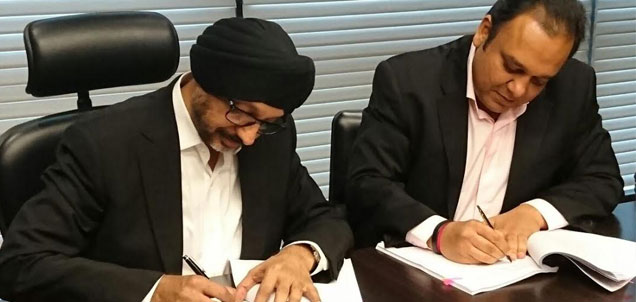
    NP Singh of Sony Pictures Network and Punit Goenka of Zee Entertainment signing the agreement for the sale of the Ten Sports​ bouquet


    By A Correspondent


    Okay, we did know that the Zee group was keen on hiving off its sports channels. And we did know that Sony Pictures Network has major plans with sports, and has been hungry for acquisitions. But this announcement was big by all standards, and involved two broadcast superpowers.

    On Wednesday, Sony Pictures Networks India (SPN) announced that SPN and its affiliates have entered into definitive agreements to acquire TEN Sports Network from Zee Entertainment Enterprises Limited (ZEE) and its subsidiaries for 385 million US dollars. The completion of the acquisition is subject to regulatory approval.

    The Ten Sports channels being acquired include Ten 1, Ten 1 HD, Ten 2, Ten 3, Ten Golf HD, Ten Cricket, Ten Sports that operate in several countries including the Indian sub-continent, Maldives, Singapore, Hong Kong, Middle East, Caribbean.

    What this means is that the Zee group which had pioneer private league sports with the Indian Cricket League,  will now exit sports for the moment. For, as part of the deal, there is a non-compete clause which prevents Zee from getting into sports. This will also prevent Zee from participating in the auctions for the Indian Premier League due next year.


    It may be noted Ten Sports holds broadcast rights to major cricket boards (South Africa, Pakistan, Sri Lanka, West Indies and Zimbabwe). In addition, Ten Sports holds rights to wrestling (WWE), football (UEFA Champions League, UEFA Europa League, French League, English Football League Cup), tennis (WTA Events, ATP events), golf (European Tour, Asian Tour, Ryder Cup, US PGA Championship, LPGA Tour, Professional Golf Tour of India and Golf Channel Block), athletics (Asian Games, Commonwealth Games), motor sports (Moto GP) and cycling (Tour de France) events.


    Commenting on the acquisition, NP Singh, CEO, Sony Pictures Networks India said: “I welcome Ten Sports to the Sony family. The acquisition of Ten Sports Network will strengthen SPN’s offering for viewers of cricket, football and fight sports, complementing our existing portfolio of international and domestic sporting properties. It also aptly demonstrates SPN’s commitment to providing a broad range of sporting entertainment to fans across India and the sub-continent.”


    Andy Kaplan, President, Worldwide Networks, Sony Pictures Television added: “India has been a strong driver of Sony Pictures’ growing networks business for two decades, and sports continue to play a significant role in that growth. The acquisition of TEN Sports, following the launch of SONY ESPN channels, will mean that our Indian networks would reach over 800 million viewers and broadcast many of the most popular and prestigious sporting events in the world.”


    Punit Goenka, Managing Director, Zee Entertainment Enterprises Limited (ZEE) said: “This is a landmark deal for Zee and a step towards a strategic portfolio shuffle as we grow our general entertainment business both in the domestic and overseas markets. While we have grown our sports business over the last 10 years through acquisition of content at competitive prices, our focus now is on transforming ourselves into an all-round media and content company, comprising of five verticals, viz. broadcast, digital, films, live events, and international business; and we continue to move rapidly towards our set business goals. While I have always been proud of our sports business, I strongly believe that Sony will add more value to it by taking it to even greater heights. I wish them all the success.”


    According to industry and market observers, the move should help shore up the bottomline for Zee Entertainment. Sports has been a downer for Zeel, having not been able to measure up to the power of Star India in terms of rights for various sporting events, said an analyst on anonymity. “It’s better to not be a laggard, then just be in business for the sake of having your fingers in every pie.”


  • MSM rebrands itself as Sony Pictures Networks

    By A Correspondent


    In sync with its intent of becoming the leading choice of television entertainment in India, Multi Screen Media (MSM) has rebranded itself. The rebranding includes both, the name as well as logo change.


    Subject to regulatory approvals, Multi Screen Media Private Limited (MSM) will be renamed as Sony Pictures Networks India Private Limited (SPN).


    Andy Kaplan, President Worldwide Networks, Sony Pictures Television (SPT) said “Our channels in India represent an important part of Sony Pictures Television’s global portfolio and we are proud to be part of the fabric of the diverse Indian culture. As we celebrate bringing the best entertainment to viewers in India for 20 years, it’s only fitting that these networks be branded as part of our Sony family. Like the Sony brand, which stands for innovation, creativity and delight, SPN brings the same qualities to our viewers.”


    NP Singh, CEO, Multi Screen Media (MSM) added: “As MSM, we’ve served television audiences worldwide for the last 20 years, during which time we pioneered new formats, new shows and actually set the trends for television entertainment. We changed the dynamics of how cricket and cinema were viewed on Indian television and contoured a variety of genres in TV entertainment. So, while ‘Kaun Banega Crorepati’ and ‘Dus Ka Dum’ created new waves in television gaming, ‘Boogie Woogie’ and ‘Indian Idol’ brought the commoner’s talent on the telly. We were also the first ones to embrace the cultural fabric of India by providing SAB – an out-and-out family humour channel.”


    “The strategic intent behind rebranding Multi Screen Media (MSM) into Sony Pictures Network (SPN) is to align with our parent company and thereby accrue the benefit of global synergies. The new logo is our way of creating a picture from a pixel; a campaign from an idea and a revolution in progressive television entertainment. Going forward, Sony Pictures Networks will steer its helm on three levers, namely – General entertainment, sports and digital. With a comprehensive bouquet of varied channels, we are equipped today to serve India’s population both, in the urban and rural areas as well across geographies.”


  • #Frames2013: It’s the best time to be in the content business: Andy Kaplan

    By A Correspondent


    There’s so much that has emerged in the recent past that it is mandatory for the broadcast industry in India to stay updated and geared for a promising tomorrow. Most of these developments have come from multinational brands which have made quite an impact on the way the M&E ecosystem functions in India.


    Presenting the experiences and practices adopted by his network, Andy Kaplan, President, Worldwide Networks, Sony Pictures Television had the stage to himself at a special session on ‘The future of television’ on the second day of FICCI Frames 2013.


    Sharing his outlook he said, “I think there has never been a better time to be in the content business. A few years there were barely any players that you wanted to sell your content to but today there are hundreds of players available that provide us many more opportunities. In the US market, there is a change that has been observed in the secondary revenue stream where if a show is there on a network long enough then there is syndication carried out with cable and TV stations but now there are a lot of new players in that world that are supplementing their revenue streams or are replacing them like Netflix, Amazon etc. So the way the content providers are looking at the world is completely different. It is providing them enough opportunities and is thus a good place to be in.”


    Highlighting his opinion on the issue of revenues facing the business, Mr Kaplan said, “Where revenues are concerned around content I do not think they are going down but are rather coming in from other places. But there are the challenges of infrastructure because one needs to be equipped with different areas of expertise from the distribution side that allows one to monetize these opportunities and have more sophistication and knowledge and transparency into all of these other businesses.”


    On the influence that localization has over global, Mr Kaplan said, “From an international network standpoint there is the localized model that we follow around content. So while we buy a lot of programming from our own we also buy from other studios as well. Our job is to pull in the best programmes that we can and deliver the best networks to our audience and maximise our ratings and eventually revenues as well. The good news is that there are a lot of people in the content business who want to sell their content and as we become more successful in these markets we want to become more important buyers. Also each of these markets throws up different nuances where content acquisition is concerned and where we are concerned we are always faced with a challenge of balancing the local with global. We resort to using research and focus groups and whatever local knowledge we get about our networks in each market to maximise our ratings. As an adjunct to the global programming we also have our own local programming because that is what will drive higher ratings and give us an opportunity to have a broader conversation with the advertisers.”


    On the ways that Sony has managed to stay relevant and close to its consumers, Mr Kaplan said that it is important for broadcasters to keep themselves available across platforms. Sharing his experiences from his offering, Crackle, Mr Kaplan said, “Crackle has been around for five years and is a non-linear network where one can watch movies, television programmes etc. It is streamed content and is advertiser-supported. While most players have a subscriptional or transactional role we are a purely advertiser-supported entertainment website. It’s all about being available on all platforms and being able to garner more eyeballs. That’s what the advertisers too look out for. The good thing is that the advertisers are dying to get into this world either because they think that they have the audience matrix they want to reach or either because it is the next big thing. But whatever it is, Crackle in the US caters to male 18-49 yrs and that’s where most advertisers are also comfortable being focused towards.”


    Mr Kaplan went on to highlight the role of India in fostering his growth in the region and the role that content will play in making broadcast a space to vie for.


  • Uday Shankar @ CII summit: 100 billion dollar dream is worthy dying for

    Text of Star India CEO Uday Shankar’s keynote address at the CII Big Picture Summit in New Delhi on October 29

     

    Good morning. Mr. Amit Khanna, Mr Andy Kaplan, Ms Shabana, my dear friends Andy Bird, Ronnie, the remarkable team of CII that has organized this fabulous event, friends from media, ladies and gentlemen.


    I am truly privileged to have this opportunity to speak to this august gathering.


    What makes it even more of an honour is the theme of this summit. Because, over the years we have come together on multiple forums to engage on critical and interesting issues facing the industry – taking a specific aspect of it: be it content creation, content regulation or more recently digitalization.


    But what is special about this summit is that – first and foremost it is one of those rare occasions where the whole industry has come together to look at the big picture. What is even more important is not only that we trying to paint a big picture, but we are also trying to paint a bold picture because of the tangible goal that the industry has set for itself: “A 100 billion dollar media and entertainment industry”


    Let’s see where we are and how difficult it is to get there.


    We are a 15 billion dollar industry  today, which includes television, print, radio, digital media – growing at around 14% a year. This, by some accounts has been impressive – benefiting immensely from the tailwinds of GDP growth of the last decade.


    At this rate, we will still take 15 years to get to 100 billion dollars. Obviously we want to get there much faster.The question is: Why and how do we do that?


    I do not pretend to have a ready reckoner with all the answers – I hope that over the next two days some of the best minds from Indian and global media will exchange notes on this.


    The benefits of pursuing this dream are obvious to the industry– larger size should lead to bigger profits, bigger share holding value and more wealth. It is easy for the industry to get motivated about the goal.


    Today, at $15 bn as an industry, we are about half the size of Google – a 10-year-old company ($26 billion revenues)


    Let’s not even go that far: if the entire Indian media industry was a company, it would rank 7th or 8thin India!


    Media and industry is a globally growing industry – but our participation in that eco-system is zero and India is hardly factored into the global thought process of technology or content.


    In the late 90s – when I first went to IBC in Amsterdam I remember that the first thought that struck me as a young television professional was the complete lack of attention for Indian visitors. No matter how early you made the appointment – the people one got to meet were hardly ever the most senior people. They showed little patience or enthusiasm. I notice how – 15 years later, because India is now a fast growing market, there is a clear shift in their focus. I do not frequent the IBC – however, with striking regularity I get invitations from technology and product vendors.


    However, it still has not changed as much as it should Technology is still not developed keeping India in mind. They are still not keen on developing products for the country, which is not the deal with China or the United States for example.


    Similarly, even in programming – Hollywood studios ARE keen to sell to India. However, because it is not meaningful in size – there is no customization in any aspect: sales, product contracts or content – to suit the needs of the Indian buyer. Not being able to sell to India has no material impact on their top lines. As a result, we are not able to fully exploit the potential of that content. Taking this argument a bit further – Hollywood content is sold in two categories as premium and classic. That classification in India does not work. But explaining it to them continues to be a struggle and there is no third bucket for the Indian consumer. Not having the scale does not give us a top seat at the table – our ability to maneuver business discussions the way we would like tois severely constrained.


    The question naturally follows: How do we achieve this scale?


    To start with – we are drunk on our own volumes: largest number of newspapers in circulation, largest number of television viewers at 400 million, 100 million digital consumers. Digital in particular – is an indictment of our creative and strategic limitations – we have 600 million mobile screens and yet we do not have a unique content proposition for the medium.


    So, our ability to convert that into corresponding value is disappointing – of course some of that value will come through economic growth but there is nothing that stops us from creating more value out of our volume today.


    And do remember, even at these volumes our reach as a % of population is not spectacular: we still have 100 million households with no television, their time spent on it is abysmally low when compared to global standards, 350 million people read the newspaper – but that tells how many do not read!


    Scale brings with it not only value but also greater reach. One place to look for scale is to gaze outside India. Our friends in the pharma sector have shown how this possible: 50% of the pharma sector revenues come from outside of India. These are from developed markets like US, developing ones like Brazil and newer markets like Africa.


    Our media and entertainment industry serves – what is arguably the world’s toughest media market: catering to a diverse culture, language, value systems and sophistication of tastes. If a pan-Indian broadcaster acquires the expertise to speak to an audience in over 5 or 6 languages, why should it not allow us to go beyond the Indian diaspora?


    However, whether it catering to an audience beyond Indians or just scaling for the domestic market – we all know that it is not that simple.


    In television for example we will need lots more content and will come not only by scaling production but a fundamental transformation of the eco-system – resources, talent etc: all have to evolve dramatically. For example – the production infrastructure in Mumbai studio space, access to talent is creaking and is unable to keep pace with the demand. However, it is not a problem that the industry can solve in isolation – it requires intervention from municipal corporations, state government, central government and perhaps even the initiative and support from other states. Similarly, look at distribution – for years this industry has reeled under the impact of analog. Finally the needle has moved when the UPA Government understood the needs for digitalization and passed an act to enforce this. Again – we are seeing how important it is for all state Governments to actively participate in this endeavor. The nature of the business is such that it is wide-spread and far-reaching in its relevance and impact.


    For all of this to happen, the entire society – whose interest the Government is supposed to represent must help us in this.


    Usually, it is easy to make the case to the Government and the Politicians when the benefits to society are clear and immediate. However, if the benefits accrue over the long-term and inflict short-term pain – I am one of those who believe that this is a struggle to get them behind us. So it is even more critical for us to establish a clear case for a 100 billion dollar M&E industry.


    Two of the goals that all establishments are worried about are financial resources and jobs.


    The sheer scale of a $100 billion dollars can generate over 5 billion dollars in taxes (assumption: 15% EBIT; 30% tax rate). Let us look at what that means: it is more than half the current allocation for NREGA (8 billion). The Government has passed the Right to Education act and as part of that efforts on Sarva Siksha Abhayan have been scaled up.


    At a 100 billion dollars our tax revenues would have been able to fund the entire budget of Sarva Siksha Abhayan (5 billion) or the National Rural Health Mission (6 billion).Perhaps, outside the I&B ministry, the media and entertainment sector is not taken seriously in the economic agenda of the nation. In the best of times it is seen a vehicle of glitz and glamour and most of the times as a source of irritation. At 100 billion dollars the significance of the industry will be difficult to ignore or undermine.


    The other big benefit will be in driving employment. For example, today we directly employ atleast 80 people when we do a drama on Star Plus and obviously this can be much higher depending on the scale of the show. This is just direct employment – you can imagine the number of people directly and indirectly that can be employed by the M&E industry.


    The beauty of the Media and Entertainment is that it does not place massive demands on technical and educational infrastructure. Most of us are born with the creative skills and this can be honed with marginal investment. This is quite unlike creating a pool of doctors, engineers and software programmers.


    We all know about the college drop-outs who have gone on to create enduring businesses – be it Microsoft or Facebook. While maybe not at that scale, the number of drop-outs who get embraced by the M&E industry and go on to be successful is a story waiting to be told.


    So, whether it is the industry or society this is a goal worth pursuing.

    Before we embark on this journey – we need to achieve clarity of vision and consensus on that clarity.

    Until that clarity comes in we will not have the commitment to pursue it.

    I look forward to the next two days to discuss such ideas and many more, which this august gathering will bring – to challenge status quo and put us on a trajectory to a 100 billion dollars.

    100 billion dollars is a dream, but it is certainly one worth dying for.