Tag: Ananda Bazar Patrika

  • NewsX kicks off show where guests will grill host MJ Akbar

    By A Correspondent

    He would anchor news-based shows on Doordarshan in the ’80s when he was with the Ananda Bazar Patrika group and later his appearances were at best sporadic. Until he joined the India Today group as editorial director when he was on nightly news more often.

    You can expect veteran editor M J Akbar to always come up (and carry off) concepts with a twist. On Sunday, news channel NewsX launched ‘Decode India with MJ Akbar’ where the guest leads the questions and discussions. The guest will question, argue, give his opinion and probe MJ Akbar on a topic of national significance. The inaugural episode of the 30-minute show featured controversial lawyer and politician Ram Jethmalani who discussed if there should be a referendum in Kashmir on the Indian Army.

    Mr Akbar is currently Editorial Director of The Sunday Guardian, which is part of the same media group that owns NewsX and a slew of other media titles.


  • Sabyasachi Ghosh joins Delhi Press as Ad Sales Director

    By A Correspondent


    Sabyasachi Ghosh

    Sabyasachi Ghosh has joined Delhi Press as the Advertising Sales Director. He will be leading the advertising sales function across the group publications.


    Mr Ghosh was previously at Ananda Bazaar Patrika for four years, where he was leading the advertising sales for ABP and Telegraph, and then later their magazines division. Prior to that, he spent close to 17 years in GroupM in various roles, spanning both domestic and international markets. He started his marketing career in Response division of Times of India in Kolkata in 1988. Ghosh has a BA in Economics from Jadavpur University and an MBA from IISWBM, Calcutta University.


    At Delhi Press, Mr Ghosh will be in charge of managing the entire revenue stream for the group from advertising and sponsorship activities for its magazine brands, online sites, events and reader activations. His mandate is to work out the strategic and tactical programs for unlocking the latent values in many of the group’s publications that are already leaders in their respective genres, developing marketing extensions around the existing portfolio, as well as nurturing some of the recent launches and acquisitions. He will be reporting to Anant Nath, Director of Delhi Press.


    Mr Ghosh’s appointment comes on the heels of induction of V. Natarajan as Vice President- Brand Marketing and Strategy. In this role, Mr Natarajan is spearheading the overall responsibility of brand management of Delhi Press magazines and the corporate brand and strategy at the group. He is leading the brand management team, which is responsible for ideating, developing and executing brand management programs for various group publications.The brand team, through its initiatives, is to support both advertising sales and circulation sales for developing marketing programs to facilitate increased consumer awareness and equity for Delhi Press magazines. Natarajan comes with a rich experience of over 20 years in brand & marketing having worked with The New Indian Express, Business Standard, and the ABP group. Natarajan has an MBA from Faculty of Management Sciences, Delhi and an engineering graduate from Jadavpur University. He will also report into the Director, Anant Nath.


  • Jaldi 5 with Raj Datta: TOI has a strong youth connect but ABP is undisputed leader

    It was launched with much fanfare in Kolkata yesterday. But will Ei Samay from The Times of India stable be able to create enough impact in the Ananda Bazar Patrika-dominated Bengal market? We spoke to Raj Datta, Senior GM, MPG-Kolkata for his first impressions on the new daily.


    Raj Datta

    On the qualitative front a lot of the editorial team has moved from ABP to TOI, almost to prove a point as DNA had done to TOI, giving ABP a run for its money. So they know the market, its people and the competition, a heady combination. Editorial content being good, the case would be to develop their weekend content and other sections.

    On the quantitative front, Ei Samay is offering very competitive introductory pricing. For a  six-month subscription, the package is Rs 175, as also special and bumper pricing helping to increase circulation potential and get  hold of those initial eyeballs. Re-subscription would remain to be seen, but undoubtedly they will garner a captive audience for the first six months, really quite a bit of time for a reader to get habituated to style and format.


    02 Will a Bengali newspaper from The Times of India stable will be able to dent the market?

    Historically and in numbers, ABP has been the undisputed leader in Kolkata with a sticky brand loyalty associated with them. TOI has had marketing muscle, been innovative and agile with a strong youth connect and flexibility to changing technologies and trends.

    Whether Ei Samay will dent the market or not remains to be seen but certainly they will dent the method of operation of the ABP group making them more aggressive, reactive and proactive. Already there has been a review in its pricing, something they have not with other entrants and Ei Bela launched to target a younger segment in a compact newspaper format akin to a Mid-Day.


    03 How was the response  for the launch issues= of Ei Samay?

    The first issue was out at an inaugural 72 pages, a first-timer for a newspaper anytime, anywhere. The editorial content was very good and it had some great innovations, like there was a French window on the front page which opened half way on both sides. It certainly hit you in one shot as it aimed to do. The response would have to be a wait and watch but certainly it’s something ABP will respond proactively to.


    04 About Ei Samay, Times group editorial director Jaideep Bose wrote, “It will be Ei Samay’s endeavour to champion its readers’ causes in every possible way — be it to enhance their quality of life, or help rejuvenate Bengal, or create opportunities for the young, or simply provide a platform for ideas and solutions.” Do you think the product epitomises this thinking?

    The recent IRS confirmed that ABP’s youth profile is poor, something which Ei Bela is positioned to counter-act to balance the absolute number rule with the problematic youth area panacea.

    Traditionally, TOI has had a strong youth connect with experience in marketing initiatives and the ‘power of ideas’ involving a younger audience. It knows how to bring in the celebrity and style, talk of where the next party, poetry reading or art show is happening; or come up with editorial sections by student or experts. It knows how to create events and awards to take center stage.


    05 How are advertisers responding? 

    Ei Samay’s pricing is extremely competitive and the packaging very attractive with add-on rates at just Rs.150-Rs.200 making it a value-for-money part of the advertising offering. It is essentially targeting Kolkota city over the rest of Bengal. Ei Bela by ABP is also targeted to the city and is offering competitive advertising rates as are the ABP group publications but TOI is being extremely aggressive on this front.

    The corporate business should be easy for TOI to garner with most of the companies having offices in other cities too, but the real fight is in the retail business, which is huge… like saris, jewellery, etc. And there are other Kolkota publications like Bartaman and Sambad Pratidin too.


    As told to Ananya Saha


  • IRS 2012Q1: Downward is the way for Language publications

    By A Correspondent


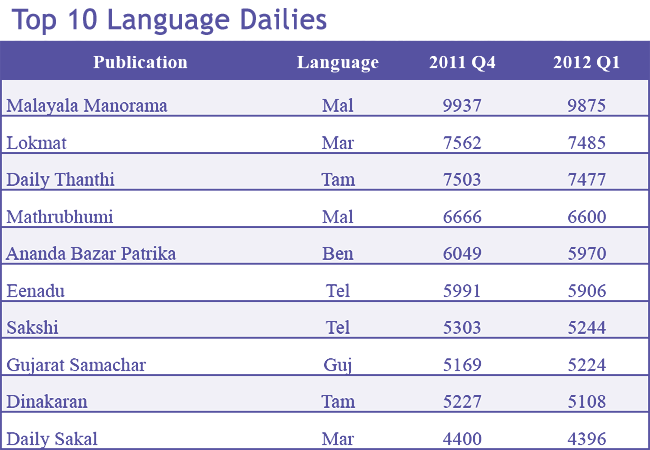
    Maybe it’s the shortage of ideas or lack of opportunities but language readership is certainly not seeing the best of times inIndia. Of the top 10 Language dailies to have made it to the list, just one newspaper – Gujarat Samachar – has seen growth; nine others have seen a decline in 2012Q2 readership over 2011Q1. Gujarat Samachar with an AIR of 5,224 is marginally better than its AIR number of 2011Q4 at 5,169.


    Leading the charts at the top is Malayala Manorama which has recorded an AIR of 9,875 as against an AIR of 9,937. Marathi daily Lokmat follows next with an AIR figure of 7,485 as against 7,562 it reported last quarter. Tamil daily Daily Thanthi is next with an AIR of 7,477 as against 7,503 recorded in 2011Q4. Mathrubhumi follows next with an AIR of 6,600, Ananda Bazar Patrika with 5,970, Eenadu with an AIR of 5,906, Sakshi with an AIR of 5,244, Gujarat Samachar with 5,224, Dinakaran with an AIR of 5,108 and Daily Sakal with an AIR of 4,396.


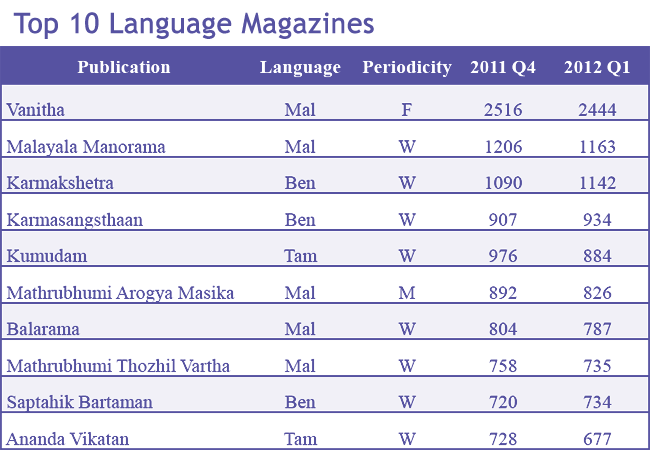
    Where magazines are concerned, three out of ten have shown marginal growth while seven have seen a decline. Vanitha leads at the top with an AIR of 2,444 followed by Malayala Manorama with an AIR of 1,163. Karmakshetra is third with an AIR of 1,142 while Karmasangsthaan is fourth with 934. Kumudam is fifth with an AIR of 884 while Mathrubhumi Arogya Masika is sixth with 826. Balarama follows with an AIR of 787 while Mathrubhumi Thozhil Vartha is next with an AIR of 735. Saptahik Bartaman is ninth with an AIR of 734 while Ananda Vikatan wraps up the list with an AIR of 677.


    Explaining the trend, Dinesh Rathore, Vice President, MediaVest Worldwide said: “As for language dailies and magazines seeing a decline, I think they have reached a saturation point; there is only so much that they can grow by. The percentage of people who speak Tamil or Malayalam in states other than their hometown is not that much, so there is not much enthusiasm by these players to launch editions in other states.”


    (AIR numbers; all figures in ‘000)


    (AIR numbers; all figures in ‘000)


  • Only the logo will change: Venkatramani


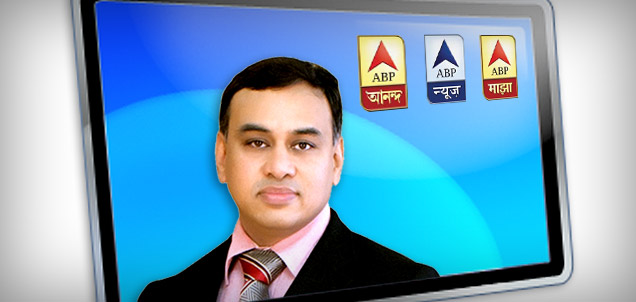
    As the clock strikes 12 midnight, the logo on popular Hindi, Bengali and Marathi news channels Star News, Star Ananda and Star Majha will change. In fact as the communication from the channels has been emphasizing, save the brandname, nothing else will. Following the announcement of the discontinuation of the Star brand affiliation with MCCS (Media Content and Communications Pvt Ltd), the the Ananda Bazar Patrika and Star India jv, the three 24-hour channels will be rechristened. Star News to ABP News, Star Ananda to ABP Ananda and Star Majha to ABP Majha.


    MCCS unveiled its new logos for the three channels and kicked off its communication campaign around the rebranding on May 7. The creative communication campaign was developed by Lowe Mumbai and the media buying plan was formulated by Mindshare. The aggressive communication campaign based on the theme, “Our Stars don’t change, our News does not change, only our Name changes”, was launched across media, on TV, Print, Radio, Outdoor and Internet to familiarize viewers and stakeholders about the new name and logo.


    Just hours ahead of the rebranding, MxMIndia spoke to Mr Ashok Venkatramani, CEO, MCCS on the acceptability levels of the new name, measures being undertaken to retain viewership and the road ahead for MCCS.


    What time will the change happen?

    Tonight. 12 midnight.


    Since you spoke to us the day the announcement was made to now, what are the reports that your front-facing sales and editorial forces bring you – in terms of acceptability of the name… especially for Star News to ABP News?

    So far the feedback has been positive and encouraging. If I were to divide the stakeholders into three parts – the viewers, the newsmakers and the media buyers and the trade, for the first segment which comprises viewers, the change has not happened. It’s going to happen from tomorrow. But since the time we announced, there has been no change in our ratings. We report daily news, and as long as it is the same set of people doing the same set of news in the same manner, I don’t expect much change there. The second constituent which is the newsmaker, there is absolutely no issue there because ABP is a very strong name in the newspaper and magazine industry. It’s been there for long and ABP has very strong news credentials. The third segment which is the trade and media buyers, feedback has been positive… virtually no problem with the large houses. There again, ABP is not a new name, everyone buys print so they know. So it has been positive, and it’s best manifested in the sales that have happened in the last couple of months. I am fairly confident that we will be able to pull this through comfortably.


    But the biggest component is the viewer, which is untested yet and that’s where the ratings come in.

    Frankly, unlike the entertainment media where your ratings are linked to some big property and the fate of the channel is linked to that property, in a news channel, where even before the name change there is a fair degree of clutter and poor differentiation. Over a period of time, each channel has established rating levels based on consistency of its content. And that consistency is driven by the way we report, the speed of reporting, the honesty, the faces or the anchors who come on our channel, the kind of programmes we have. Now those things don’t change, the reporting and the people are the same. To my mind, just a logo change in the corner doesn’t dramatically change impact of the news channel. And if you take the two regional channels, Ananda and Majha, they are clear market leaders, and there again nothing changes- the anchors are the same, reporting is the same, and the position of the channel in the EPG is the same.


    Any attempts to retain viewership… like contests et al? And any specific measures to retain advertisers? And for the distribution trade?

    No, we are not resorting to any short-term activity to garner quick eyeballs because our genre doesn’t subscribe to that. What we can potentially do is break big stories but there is already so much action happening. What we are doing is engaging with our trade, media buyers and distributors. We are having a series of meetings with them, small personalized interactions where we can chat and exchange views with them. It’s more of a personalized engagement with the constituents rather than any on-air activity for the viewer.


    Given that there is a change, are there any specific areas that you are changing in the new channels?

    It would be exactly the same and deliberately so. We just want to do one measure at a time, so at this point there is no change other than the name change. But as we progress into the new name and once the new name gets fully established, people start recognizing it, and then we will look at other measures like relaunching the channel, changing the look and feel etc.


    When is that likely to happen?

    Too early to say.


    Our columnists Anil Thakraney had commented that this is possibly a good occasion for changing some of the typical things that are common on Hindi channels, like over-sensationalizing etc. Are you thinking of doing that now?

    No, actually if you watch the channel, we have done that for the last one-and-a-half years now. This is a common misconception most people have because they don’t see Hindi news channels on a regular basis. This is a genre problem where we have a lingering perception. For example, I have got out of astrology for a year now, I don’t have a single programme on the channel which talks about astrology. It’s been more than a year-and-a-half since we got out of religion. Now we have not gone out on the rooftops and shouted about it but all these things we’ve already done. We have only hard-hitting news on our channel from 5pm to 10pm. And we’ve done this because we felt this is the right thing to do for a genre not because our name is changing. To my mind, in a news channel, these changes take time to notice.


    A programme like ‘Asar’ with Aamir Khan would’ve obviously started on Star News because it was a Star Plus show. Will the preferred partner status continue to exist even after June 1?

    Yes, in fact they are still our shareholders. Secondly, all such deals are purely on a commercial basis but obviously relationships were strong. In fact not many people know that Satyamev Jayate used to be a programme on Star News started by Uday Shankar when he used to be here. And we didn’t have a problem in them doing Satyamev Jayate, so the relationship continues. They continue to be our distribution partners, they continue to distribute our channels internationally.


    There is this news that Star might also exit the JV because they say it is not really worth their while to have a stake when they don’t have any say. Is that something that you have factored in?

    Actually I don’t want to comment on it because it’s a JV issue which only the JV partners can address. And I think it is best addressed by Star and ABP. But I guess any commercial investment by any investor has to be based on commercial returns. Now how an investor evaluates investment in the news business depends entirely on the investor.


    Have you done any brand studies or surveys on the acceptability levels of the new names?

    Yes, we have done research. A name change always has to be a combination of some research and some amount of strategy. One can’t entirely depend on research, it’s like naming a baby, where you look at the ‘granth sahib’ and pick up the alphabet and choose your name. So I think for us, given the fact that ABP is a serious player in the news business and they have long-term ambitions to be in news, including broadcast news, it did make sense to have a master brand which can be built going forward. So it was a combination of strategy and research.


    How active will ABP be, or will it be the same with you running the enterprise and ABP being on the board level?

    Nothing changes even on that front. Even now both the shareholders, Star and ABP continue to be the parents allowing MCCS to do its own thing. They were always available to be tapped, whenever we needed inputs. Any dealing with them is also at commercial terms. I don’t see any change in that.


    The campaign of the name change kicked off rather early, from the time you made the announcement… was it part of the original design or was it something which changed later?

    Obviously we saw it coming and we had a headstart of a month or so. A couple of months were good enough for us to churn out a campaign, so that’s how it was.


    Will see a more robust online presence of the MCCS channels now, including an English news website?

    If you look at our entire strategy, not just online, it is driven by a simple definition of who we are and what we are. We believe that we are not a television news company, we are a news content company. If we are a news content company, we should be platform-agnostic and we should be available on all platforms where a viewer might like to consume news. So we developed all these websites and developed 3G platforms, mobile downloads etc. so that we are available in all platforms. For us the allied platforms were not like profit centres, we were happy to get the revenue but at the same time we wanted to be present in all the platforms. The problem is that the online rights of Star News were international, which is why we didn’t get .in at that point of time. So we had to go with another name. Now going forward, our strategy remains the same.


    Any new channels coming up in the immediate future?

    We are working on newer options… frankly, it’s a question of the right timing. It is not related to this name change or the JV, it is an independent aspect which we in MCCS have been exploring and continue to explore. I would probably wait and watch because next six months are going to be a huge turning point. For example, if the entire digitization process goes on well as planned, it has a big impact on news channels and also our own company in terms of how we project the next five years. If the digitization process gets postponed or deferred then I will be a little more cautious. We do have plans but whether I press the button or not, I’ll probably wait and watch.


    Will it be organic or inorganic or both?

    It could be both, it’s a question of a right opportunity.


    Say, for instance, if a NewsX is available, would that be an option?

    I wouldn’t rule out anything but I would evaluate everything for the value it brings and how much it costs. If it makes business sense, why not. But it’s not as if we would be chasing any particular company or a set of channels or anything like that.


     

  • Radio City renews sales alliance with Friends FM

    By A Correspondent


    Radio City, the FM radio brand promoted by Music Broadcast Private Limited (MBPL) has renewed its strategic sales alliance with the Kolkata based Friends FM, the FM radio arm of ABP (Ananda Bazar Patrika) for another one year term. The strategic sales alliance between the two stations has completed nearly three years.


    Of the 20 cities, Kolkata remains the only big market where Radio City is not present, thus the sales alliance allows Radio City to extend its sales reach to Kolkata as well. Besides Friends FM, Radio City is also in sales alliance withGwaliorbased FM radio station, Suno Lemon.


    Speaking to MxMIndia, Ashit Kukian, COO (Chief Operating Officer), Radio City said: “Strategic sales alliance has worked for us. We are already in our third year of strategic sales alliance with Friends FM and have, in fact, renewed it again. It helps a single station to sell their brand nationally because it is very difficult to sustain the cost of placing people nationally. As for Radio City , this alliance helps us reach out to a critical market – Kolkata where we are not present. Besides Friends FM, we also have a strategic alliance with Suno Lemon inGwalior, and once the third phase is rolled out, we will strategize how to reach out to rest of the markets.”


    Radio City had recently announced its decision to increase its ad rates by 15 to 20 per cent, which it believes will result in better ROI for its clients. Some of its telecom clients include Tata Docomo, Vodafone, Idea, and Airtel, while FMCG, Consumer Durables, Automobiles, Realty Estate and media are some other advertising categories that advertise on radio. The retail versus national advertising ratio in Radio City is currently around 35:65 per cent – 35 per cent from retail and 65 per cent from national advertisers.


    Currently, Radio City is present in 20 cities namely, Mumbai, Delhi, Bangalore, Chennai, Ahmedabad, Pune, Hyderabad, Lucknow, Jaipur, Vadodara, Surat, Sholapur, Nagpur, Sangli, Coimbatore, Vizag, Ahmednagar, Akola, Nanded and Jalgaon.


    In the last couple of years, Radio City is said to have established and rolled out a lot of 360 degree marquee campaigns. Following the season one success of its property, Gully Premier League (GPL), Radio City is back with the Season 2 of GPL. Season two of the GPL is said to have already registered more than 14,000 teams for the tournament. Mr Kukian also pointed out that BTL (Below the Line) activations which has been witnessing growth over the years, have contributed significantly to the overall revenues of Radio City : “Our BTL activations have also been growing from strength to strength, moreover our activations last year contributed significantly to our overall revenues. From a radio industry perspective, BTL activations could be around 12 to 15 per cent of the overall revenues, whereas the BTL activations of Radio City alone contribute around 10 to 12 per cent of its overall revenues.” Therefore we are very much in sync with the contribution of BTL activations in the overall revenues.


    Mr Kukian was also of the view that besides FTCs, a radio station, and Radio City in particular, has multiple sources of revenues, activations and on ground propositions are a couple of them. He was also of the view that in the long run, he expects to see further growth in the contribution of these other revenue sources in a radio station’s overall revenues. “Since the medium is high on reach and content, customised syndication of content can be another source of revenue for the industry. In addition to this, we can also look at digital content syndication and monitisation as an extended source of revenue for Radio City .”


    “As of today, 15 per cent of our revenue comes from other sources but, over a period of time I believe these revenue sources could contribute to around 22 to 25 per cent of the entire revenue,” he added.


    Mr Kukian said that 2012 has been the best year so far for the FM station since the last three or four years. He went on to add that Radio City has been consistent in its leadership position in both Bengaluru and Mumbai. In Delhi too, it witnessed an increase in listenership numbers: “According to IRS, Q4 2012 we are ranked first or second across most of the non-metro cities in which we are present in. So from a product perspective, it has been a great year. As far as the revenues are concerned, we have always been doing well, in fact this year we have almost doubled the growth over the market category. Even in terms of talent, we have witnessed consistency in the low attrition rates. And with phase III coming up, we are clear about expanding our network to many more markets and increase our foot print panIndia” he said.


  • Anil Thakraney: Will ABP News eschew sensationalism?

    By Anil Thakraney


    So, STAR News is ABP News. Now the two partners have decided to separate. Cool! But my question is: Will this just be an exercise in name change, with all else continuing to be the same? Exactly as the messBombaycontinues to be after the name changed to Mumbai? Ditto with Bengaluru and Poschim Bongo. (As for the last, it’s getting messier with Didi in charge, but I shan’t say more, else she’ll get me arrested.)


    Well, I hope not. Now that Ananda Bazar Patrika has total control, I hope the Bengali group, known for its ‘respectable journalism’, extends that respectability to ABP News. STAR News, along with the other Hindi news channels, has always thrived on speculation and rabid sensationalism. It’s almost as if the category owners had decided that Hindi news watchers are restless morons, folks who will only come back if the content is absurd and outlandish. This is obviously not the case.


    The problem is, the channel owners DECIDED to be sensational; in their war for ratings, they chose that route. The viewer never asked for it. And in this march of madness, all the Hindi channels fell like nine pins, as each struggled to beat the other guy on dishing out dramatic stuff. Net result: There is very low credibility with the Hindi news channels. We visit them for tamasha, not authenticity.


    The point I am trying to make is this: ABP has that chance now to set things right. With the baggage of ‘STAR News’ off their back, they can re-engineer the channel, and ABP News can become that one Hindi channel that takes news very seriously. It can break the cycle of sensationalism, and position itself on the platform of credibility. In any case, with all the hair-raising content on display amongst the various channels in the category, this will provide ABP News a clear brand differential. So it seems to make sense from the marketing point of view as well.


    [youtube width=”400″ height=”200″]http://www.youtube.com/watch?v=HcOpfqEamrY[/youtube]

    Yup, India badly needs a Hindi news channel it can trust. And hopefully ABP News will try to be that. One sincerely hopes the name change doesn’t only mean a change of name. Like when Bombay became Mumbai. And continues to be a filthy slum city.


    * * *


    PS: Cute commercial from Audi. It’s inspired by the fairytale of how the ugly duckling changed into a lovely swan. Superb execution.


  • Pavan Varshnei quits ABP, hands over to Kaushik Banerjee

    By A Correspondent


    Pavan Varshnei, President, English language publications at ABP, has decided to move on with Kaushik Banerjee, Vice President of the ABP group, taking additional charge with effect from March 1, 2012.


    Pavan Varshnei joined ABP in 2008 to run Businessworld, and set up and launch Fortune India. Prior to joining ABP, he was the Publishing Director of the Business Division at the India Today Group and was credited with rapidly expanding the portfolio. He identified new segments and successfully launched four new publications: Scientific American, Harvard Business Review, Men’s Health and BT More. He also negotiated a joint venture with Germany’s Axel Springer Group to launch Auto Bild India.


    Before joining the IT Group, he was executive vice-president at Lintas India. He spent 14 years at Lintas, working across several Unilever brands, Maruti Suzuki, Electrolux, Joyco, Wills Lifestyle and Sony Ericsson. At Lintas, he also served as head of insight and oversaw the AOR (agency of record) media business for Bajaj Auto, Idea Cellular, UTI, Pantaloon and Parle Agro. Varshnei is a Chevening scholar from the London School of Economics, UK. He graduated from St Stephen’s College, Delhi, and holds an MBA with distinction from the Asian Institute of Management, Manila.


    Mr Kaushik Banerjee joined ABP in 2007 and oversees all SBU activities of Anandabazar Patrika. Armed with 15 years experience in sales and marketing, he had a long stint at Titan Industries, where he was instrumental in launching their range of alarm clocks in India. Thereafter, he moved to Duncans Industries Ltd in Calcutta, becoming the marketing head for their packaged tea division.


    After a short stint at Bombay Dyeing, he joined Idea Cellular Ltd. He them moved on to the Murugappa group where he became Vice-President, Sales and Marketing, working with the bathroom products and travel divisions. Mr Banerjee is a mechanical engineer from Jadavpur University and is an alumnus of IIM, Lucknow. The move took place earlier this month and an internal communique was sent out. Mr Banerjee is likely to relocate to New Delhi from Kolkata and Mr Varshnei has not yet revealed his plans for the immediate future.