Tag: Ananda Bazaar Patrika

  • Bengal (paper) tigers set to roar


    By Ananya Saha


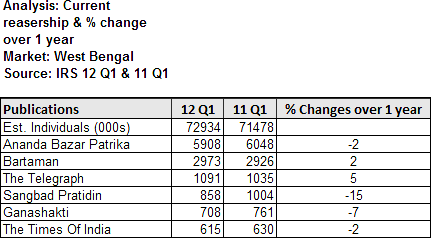
    Once the domain of Ananda Bazaar Patrika,West Bengal is now readying itself for an emerging newspaper war. The Times of India has trumpeted its entry into the traditional market with the announcement of its Bengali broadsheet Eyi Shomoy, and is putting its marketing muscle behind the promotion of the product. The Bengali broadsheet from BCCL will have to fight for numbers with Bartaman, Pratidin, Ganashakti and of course Ananda Bazaar Patrika.


    This is also for the first time that ABP’s dominance is facing a huge challenge. Whether as a gameplan or a coincidence, ABP has announced its evening tabloid Eyi Bela at the same time. The industry veterans are calling it mother of print battles: BCCL’s strong marketing and distribution against ABP’s loyalists. ABP currently dominates the print market with many of its publications aimed at each segment: Ananda Bazaar Patrika (Bengali daily), The Telegraph (English daily), Desh (Bengali magazine), Anandamela (Bengali children’s magazine), Anandalok (Bengali cinema magazine), Sananda (Bengali women’s magazine) and Sportsworld (English sports magazine).


    While some may argue that ABP is entrenched in this polarised Bengali market, others say that TOI will be able to make a definite dent in the market. Call it retaliation or just a good act, but ABP is said to be lowering rates, and increasing the pages of the newspaper. This is something that the Bengali newspaper has not ever done to counter any of the other newspapers’ entry. Meanwhile, it remains to be seen if TOI’s youthfulness will reflect on its Bengali broadsheet as it takes ABP on home turf.


    So far, the Bengali print market has been without any incident, and nobody has been able to impact it. A media veteran said that TOI will not have it easy. Why? “The Kolkata market is biased and opinionated. With its regional paper, TOI will not be able to address the local Bengali readers… It may do well in a Delhi or Mumbai where people do not have the time to read opinions.”


    ABP, moreover, has emerged as a clear (and consistent) leader in the market. It is true that when the English daily Times of India entered, ABP’s Telegraph did feel the jolt. Currently, in the market of 15-16 lakh readers, APB’s readership is close to 12-13 lakh, according to an analyst who has been observing the market keenly. But media specialists are sure that the TOI Bengali edition will pick up well when it launches, and managing two lakh copies initially will not be difficult for Eyi Shomoy. However, a media veteran noted that even with its marketing muscle, TOI’s Eyi Shomoy may find it tough to get the numbers until it  addresses the Bengali janata the way ABP’s Bengali daily does or is capable of.


    Currently, 70-80 percent of newspaper revenues are lapped up by ABP of the Rs 250 crore (rupee/advertisement) Bengali print market. The share of revenue by ABP is much more than readership, noted the media analyst. The idea of ABP’s launch of Bengali tabloid Eyi Bela is probably to target the lower-end advertisers in various districts and smaller cities. This may well become the golden opportunity of revenue for the paper, since it could attract a bulk of advertisers who are not able to advertise in high-priced media vehicles.


    Also, Eyi Bela is aiming to attract the growing youth population of the city. Industry analysts are divided given that the commuting culture in the city is different from Mumbai’s. “The evening segment dynamism is missing in this market,” noted an analyst.


    However, Sundeep Nagpal, Director, Stratagem Media, differs. He said, “I am actually surprised that no one launched an evening tabloid earlier in this market. Wherever there is a commuting culture, the tabloid can succeed. However, in this case, it is going to be the case of high distribution since an eveninger’s content cannot guarantee readership.”


    Even as the politically aligned market is going to see new entrant, the dynamics within the market is also undergoing a change: the rise of double-income couples, the need of smaller retailers to reach out to the aspirational class, evolving youth and rising city phenomenon. The evening tabloid may cater well to this segment.


    Media veteran Sajal Mukherjee shared his observation, “The West Bengal market is one of the oldest traditional markets inIndia. One might argue that the Bengali community is loyal to ABP but it is also true that readers want value for money. And loyalties shift depending on the value they get. In the Karnataka market, Prajavani had a stronghold where Vijay Karnataka challenged it and succeeded. Similarly, Divya Bhaskar was able to make a clear dent in the Gujarat market, which was led by Gujarat Samachar and Sandesh.”
     

    “If there is good marketing support in the new market, combined with good benefits to the readers, the loyalty will obviously be dislodged. TOI has had enough experience in the local markets, and it will be a good war to watch in Bengal,” Mr Mukherjee noted.


    What may also act in favour of TOI is that they will be able to offer a 360-degree national bouquet on good rate to advertisers. Mr Mukherjee opined that Eyi Shomoy has huge scope to gain the second spot in the market. TOI is already making itself familiar to the local audience by sponsoring ground events. This might work in the favour of the new broadsheet since people will be ready to subscribe to it. TOI is clearly aiming at growth for the future, and is not looking at short-term benefits. The industry veterans note that after Eyi Shomoy hits the 3-4-lakh mark, it might get troublesome for ABP.


    But ABP will not let go of its domain so easily. Will it result in a new strategy? Can Eyi Bela actually make a new market in Bengal? And will Eyi Shomoy’s challenge to ABP be tackled more forcefully? Advertisers and analysts might differ, but it is readers who are bound to get the sweetest deal.


  • Viewers’ thumbs up to ABP News: MxMIndia – Ormax Media survey of News TV viewers

    By A Correspondent


    It’s been a week since Hindi, Bengali and Marathi news channels, Star News, Star Ananda and Star Majha were rechristened ABP News, ABP Ananda and ABP Majha respectively. MxM India commissioned Ormax Media, leading consumer insights and consulting firm, to conduct a survey on news television viewers to elicit their response to the rechristening.


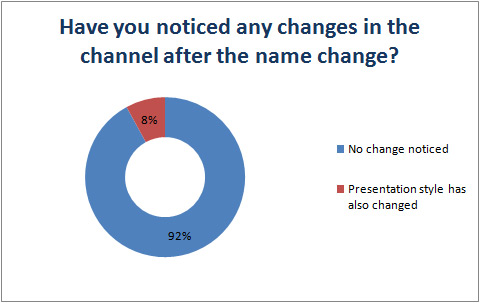
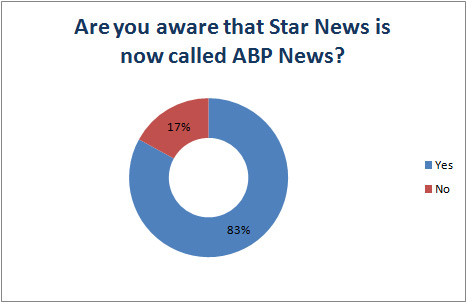
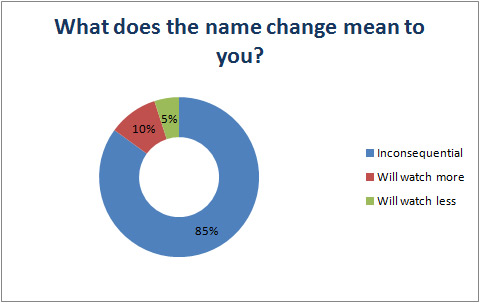
    And the findings are overwhelmingly in favour of ABP News: that people are aware of the change, 85 percent feel that the name change is inconsequential and 10 percent even find the new channel better than before! And most importantly viewers seem to be echoing the Star News line with 92 percent of those survey saying other than the name, nothing had changed in the channel.


    Clearly, the findings of the survey conducted by Ormax Media indicate that viewers in the chosen target group have adopted considerably well to the rebranding of Star News as ABP News. Commenting on the results, Shailesh Kapoor, CEO, Ormax Media said, “The high awareness for the brand name change is a significant achievement for ABP. They have managed to make a smooth transition. The results tell us that the consumers have taken the name change in their stride comfortably.”


    In an interview with MxM India when the name change was announced, MCCS CEO Mr Ashok Venkatramani had remarked that out of the three 24-hour channels set to be rebranded, the Marathi and Bengali channels, Majha and Ananda as suffixes are unique and have grown in popularity and acceptance but the same is not true for the Hindi channel where the suffix is ‘News’ which is a generic term.


    Ormax Media conducted the survey on a target audience of males in the age group, 24-44 years in SEC ABC, who are regular Hindi news viewers. With a sample size of 200 respondents, the survey was conducted in 14 markets: Mumbai, Delhi, Pune, Kolhapur, Ahmedabad, Jamnagar, Indore, Gwalior, Ludhiana, Jalandhar, Lucknow, Kanpur, Bareilly and Allahabad.


    The findings of the survey, categorized under ‘awareness’, ‘impact of name change’ and ‘any other changes’, are as below:


    AWARENESS

    As far as awareness of the change in name is concerned, of the 200 respondents, 83 percent viewers were aware that Star News had become ABP News


    IMPACT OF NAME CHANGE

    • When asked what the name change from Star to ABP means to them, for 85 percent of the respondents, the name change was inconsequential to their watching the channel
    • 10 percent of the respondents claimed that they will watch the channel more after the name change stating better logo and better presentation as primary reasons for the preference.

    Some responses from these 10 percent viewers are:

    • “Naya look achcha laga channel ka”
    • “Pehle se zyaada fresh lag raha hai”
    • “Mujhe channel ka naya logo bahut pasand aaya”
    • “Presentation ka tareeka kuchch alag sa laga mujhe achcha laga”
    • “Display achcha ho gaya hai”


    And just 5 percent of the respondents said that they will watch the channel less after the name change citing lack of credibility due to absence of the Star brand name as the main reason.


    Some responses from this group of 5 percent viewers are listed below:

    • “Star News bada naam hai, ABP kabhi suna nahin”
    • “Pehle ka naam achha lagta tha, abhi ka naam ajeeb sa hai”
    • “ABP mein woh attraction nahin hai jo Star mein tha”
    • “Jab Star News tha toh wahan news sabse pehle aati thi, ab pata nahin kya hoga”
    • “Pehle Star company ka channel tha, abhi lagta hai kisi politician ne le liya hai”


    ANY OTHER CHANGES?

    • When asked if the viewers had noticed any other change in the channel apart from the change in name, 92 percent of the respondents said that nothing else had changed in the channel besides the name.
    • Only 8 percent of the respondents believed that apart from the channel name, brand logo and presentation style had also changed.


  • Will the name change work for MCCS?


    By Johnson Napier


    The media has been agog with news of the two looking at options beyond the relationship, only for them to dodge the belief. But all doubts were put to rest on Monday when media giant Ananda Bazaar Patrika (ABP) finally announced it was shedding the Star branding from its slew of channels.


    Star India and ABP agreed to discontinue the Star brand affiliation with Media Content and Communications Services (MCCS). Of the many reasons that were doing the rounds, the one that was loud was discontent over editorial content, leading to the two calling it quits. Star had reportedly served notice in January 2012 (see Mediaah!).


    As a result of this decision, Hindi news channel, STAR News will now be rechristened ABP News, while Bengali news channel STAR Ananda will become ABP Ananda and Marathi news channel STAR Majha will be called ABP Majha. The three 24-hour news channels are owned by the Media Content and Communications Pvt Ltd (MCCS) – a joint venture between the Ananda Bazar Patrika Group and STAR India Pvt Ltd. MCCS, formed in March 2003, is a 74:26 joint venture between ABP TV and STAR News Broadcasting.


    While the move will enable ABP to venture out in the news broadcast space on its own as it wishes to promote and establish its own brands through its subsidiary company – MCCS, for Star the focus will be on building their brand on their core business, i.e. general entertainment. A release issued on behalf of Star Group read: Given the current regulatory environment and structural issues ailing the Indian cable and satellite television market and the news genre in particular, Star took this extremely difficult decision to withdraw its brand from the genre.”


    According to the release, the discontinuation will come in effect in phases from a period of 2-4 months and the partners will work together to ensure a smooth transition during this period.


    Speaking to MxMIndia Ashok Venkatramani, CEO, MCCS, said, “No, it’s not a set back at all. With the Marathi and Bengali channels, Majha and Ananda as suffixes are unique and have grown in popularity and acceptance. Of course, that’s not the case with Hindi where the suffix is ‘News’ and hence generic. So, yes, Hindi is a challenge on a relative scale, but not so with Marathi and Bengali. (see interview)”


    But while the three channels have identified a name for themselves in the respective markets and have been engraved in the minds of the viewers for a long time, it will be interesting to see how a name change exercise will impact the course for the network over a period of time.

    “The first 180 days of a brand name change are the most crucial and critical days. It is in these frenetic days of frenetic brand activity that a name change can be made successful or not,” writes note brank expert and consultant Harish Bijoor in an exclusive analysis on the name change for MxMIndia. “No wonder then that you see a flurry of advertising activity that goes in to establish a new name solidly in the mind of the consumer.”

    Drawing implications over the new announcement, Anita Nayyar, CEO India & SouthAsia, Havas Media said that the popularity of the channels may take a beating if they toy around with the content and if the change is not expressed loudly and clearly to the viewers. “One will have to assess the extent to which the two have called a split in partnership. But if you see the association, Star, as such is a name that has been engraved in the minds of the people for a long time, and therefore it will be tough for the viewers to overnight respond to the change in a positive way. If they announce the change in a big way and do tremendous activity and promotions around it and create awareness levels, then only will the audience respond to the change. Otherwise past examples have shown that no matter how big a brand or name, if the change in name is not relayed properly to the masses, it will see a decline in popularity and fortunes.”


    On the impact it would have on the advertisers, she said: “It will be a wait-and-watch game for the advertisers. I feel the current deals will go on as scheduled but new deals will depend on what the change will hold in store for the brand.”


    Mona Jain, CEO, Vivaki Exchange, said: “I don’t see the change having any impact on the popularity or the ratings as such. First, one will have to see what is the exact nature of the deal? If the team and other infrastructure related activity remains the same then there wouldn’t be an impact as such. Also, what is important is the quality of content that is played on these channels. If there is no change from the previous deal, then the viewer will continue to stick to the channels the way they used to earlier. We will have to see how it pans out over the course of time.”


    According to Tarun Nigam, Executive Director, India North, Starcom Worldwide, this could be an opportune time for ABP to make a name for itself in this arena. “I don’t see this development having any impact on what is currently being offered. If the content remains the same, if there is no breakdown in team and so on, then it shouldn’t matter at all. In fact I think this is a perfect opportunity for ABP to finally make a name for themselves in the news broadcast space, as they already are a big name in the print space. They, anyways, are a very strong and deep-rooted organization and have sustained themselves as a commendable force to reckon with.”


    According to Nigam, in a market like Kolkata where ABP are a dominant force, this deal will enable ABP to showcase more regional offerings that they specialize in, which will only catapult the interests of the viewers at large. “One will have to wait and see what will be effects of the change in other markets like Maharashtra,Delhiand others. For all you know, ABP might just emerge a stronger player in these markets as well.”


    The ball, for now, seems to be in ABP’s court as they finally get to pursue their dream of going solo and 360-degree in the news space. With healthy ratings and a roster of loyal advertisers willing to cling on to them, the priority for ABP is now to endorse an enduring message to one and all and go loud with their promotional activities announcing the new shift. Till then it is wait-and-watch.