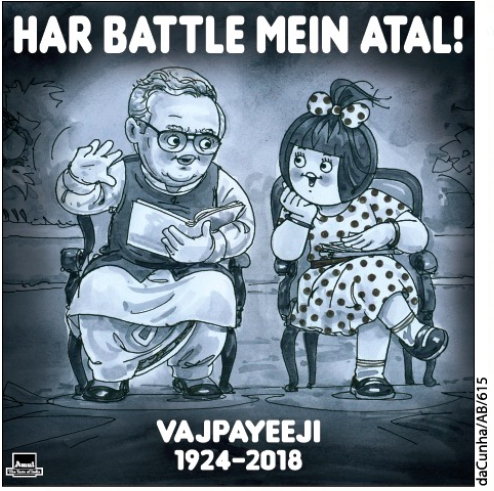
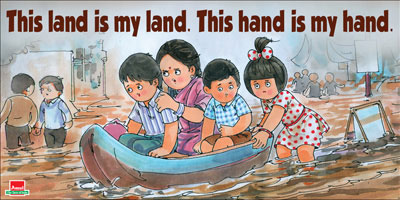
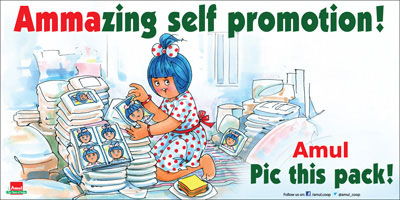
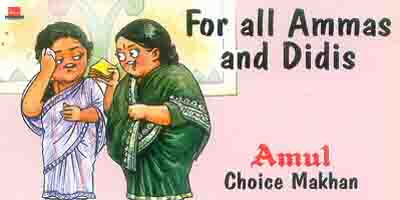
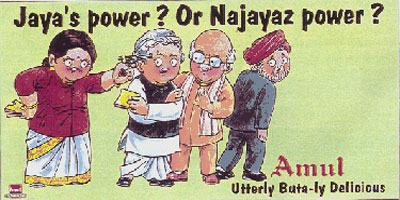
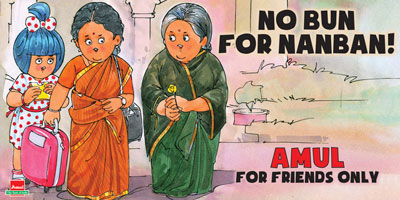
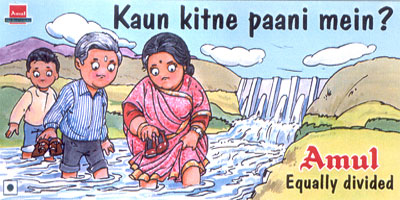
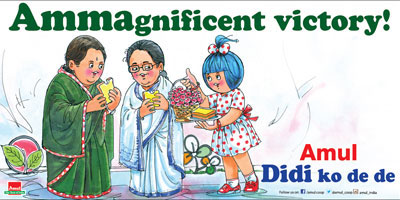
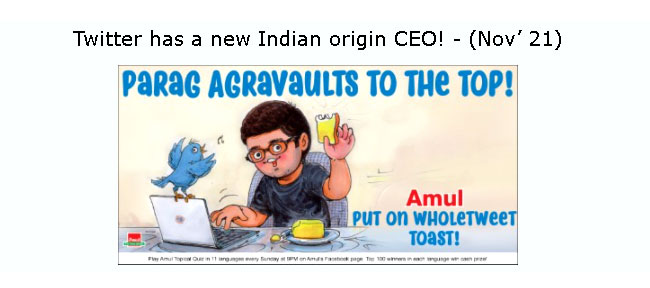
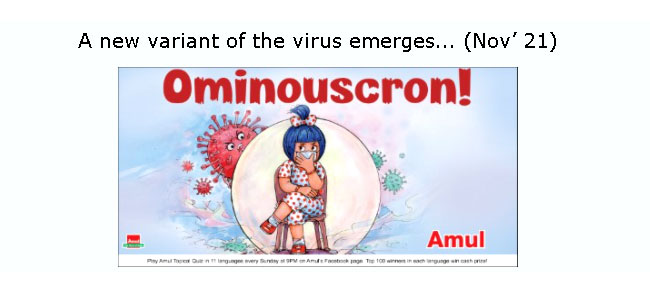
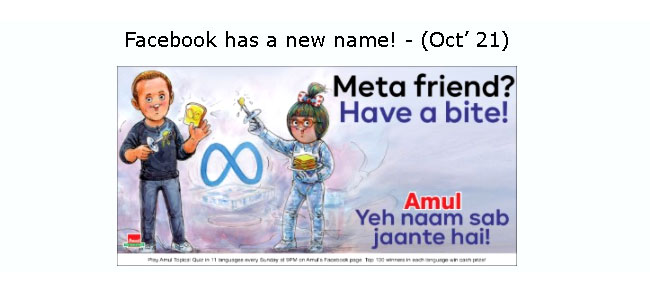
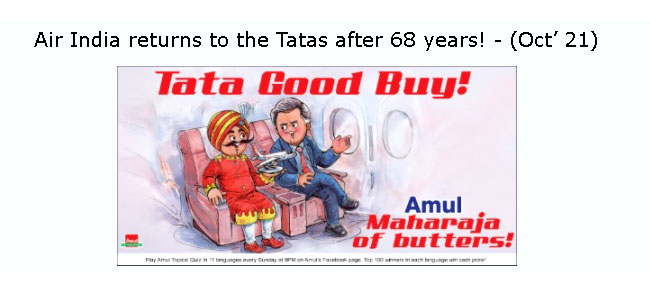
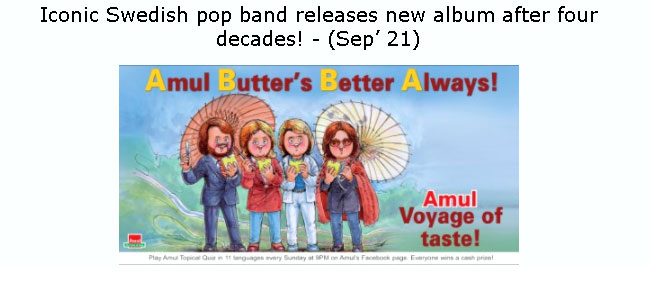
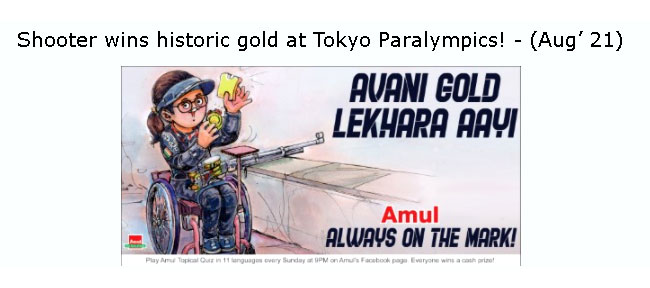
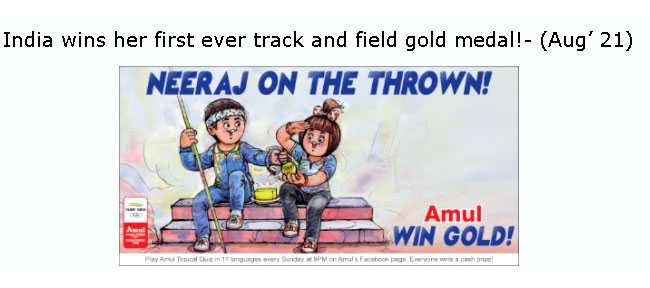
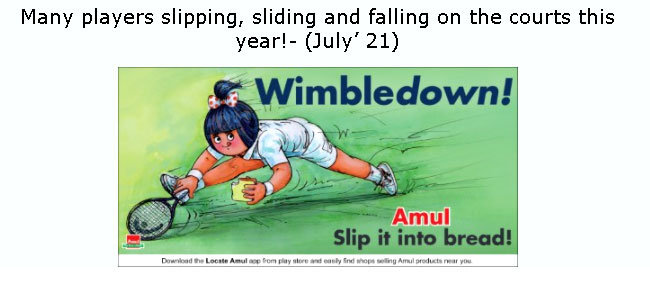
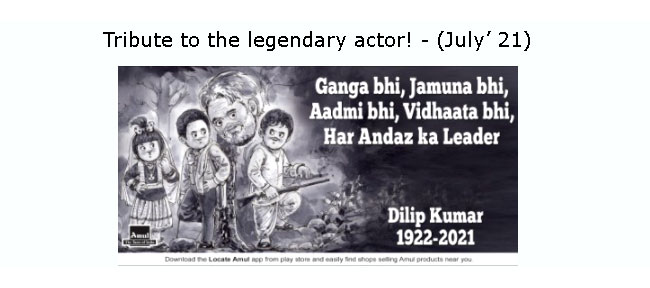
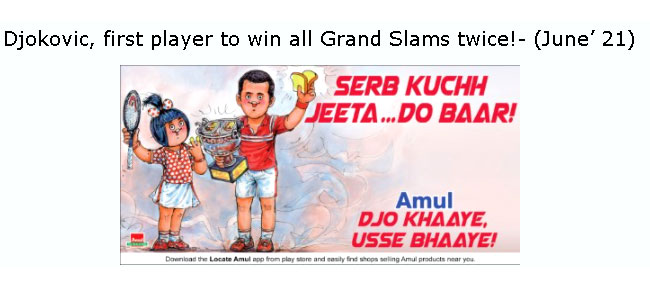
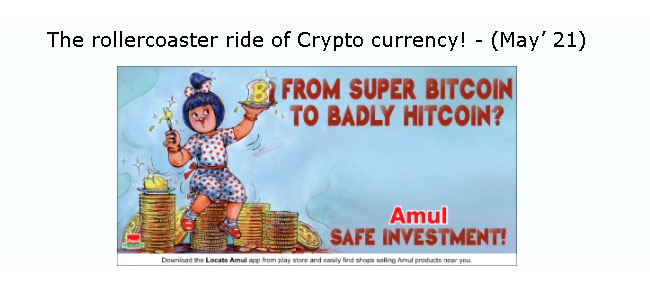
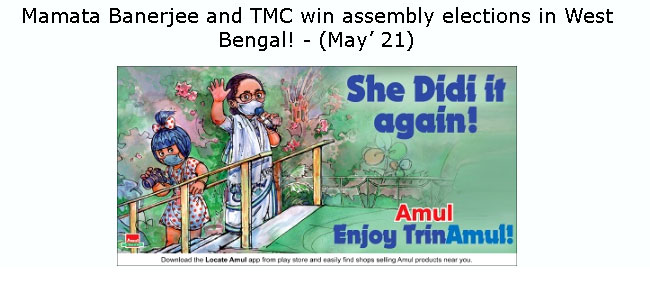
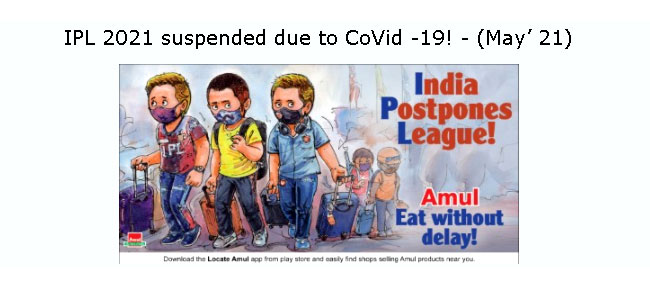
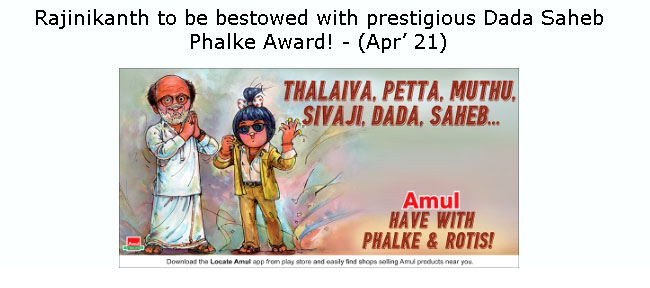
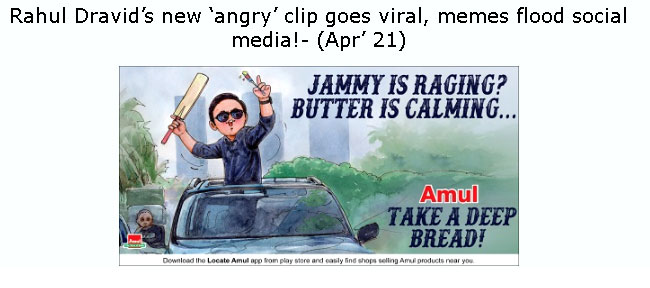
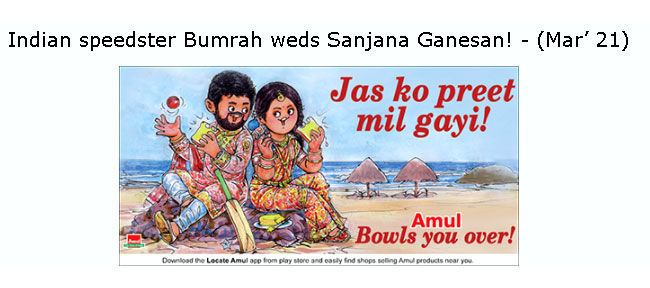
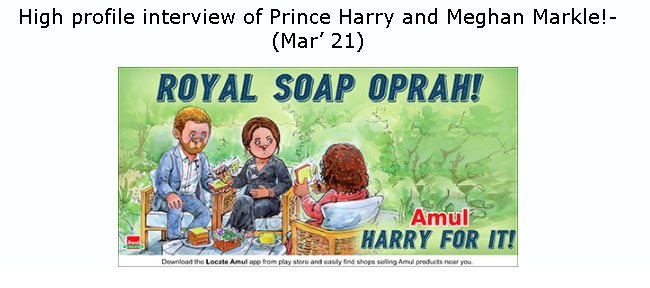
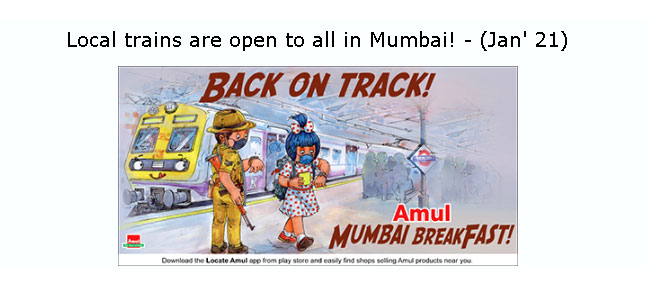
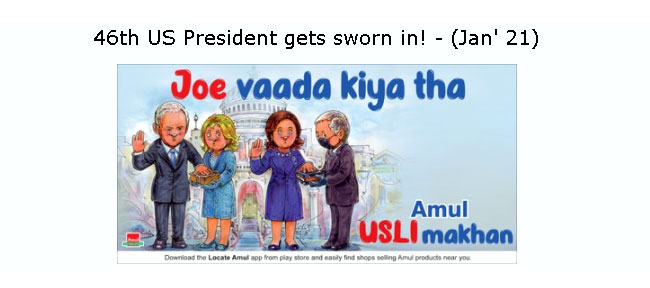
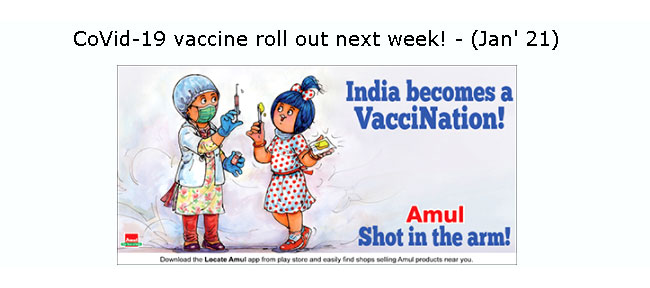
We love the Amul topical advertisements. Not just for the creatives, because in many ways they capture the mood of the nation, as well as touch upon critical events. Presenting what we think are the pick of the Amul topicals of the year. Twenty-one of them? Or perhaps a few more
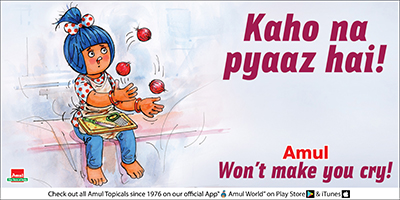
We love going to them rather than carrying the hundred thousand budget reactions. Most reactions are from people because their positions demand it, because journalists want their reactions or because their PR/marketing teams say it’s a good opportunity to earn some visibility. Often, the people quoted haven’t read the Budget in detail, haven’t digested the fine print, and haven’t read the footnotes in the document as also from interviews that are carried of the finance ministry mandarins.
And that’s one reason why MxMIndia did not carry any reaction to the Union Budget 2021-22. Instead we rely on the Amul topical ads as we often do, because they indeed reflect the mood of the masses.
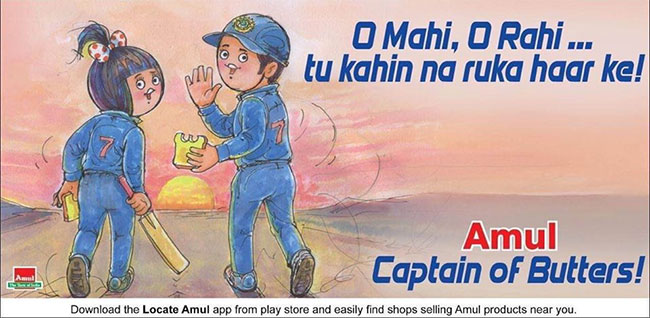
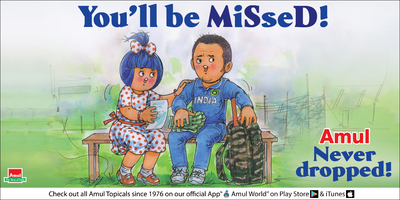
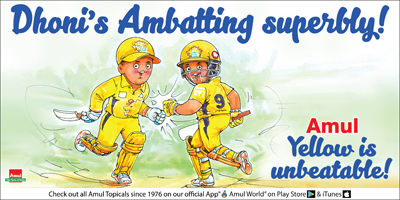
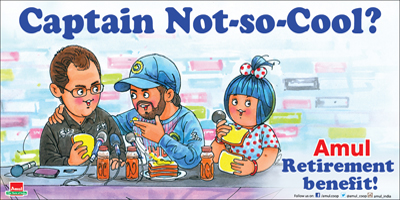
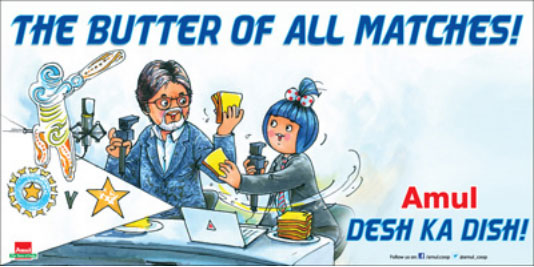
Former Indian cricket captain M S Dhoni starred in many Indian cricket milestones in recent years. As he announced his retirement on Saturday via Instagram, we play back the several Amul Butter topical ads crafted by the ace team at da Cunha. Let’s take a look
BCCI does not renew Dhoni’s contract! – (Jan’ 20)
Intense speculation on the retirement plans of the former wicketkeeper-captain… – (Nov’ 19)
MSD & Rayudu combine wonderfully for CSK! – (Apr’ 18)
Celebrating MSD’s return to form for Pune Rising Supergiant! – Apr’17
MSD steps down as ODI & T20 captain… (Jan, 17)
Dhoni turns interviewer at press con!
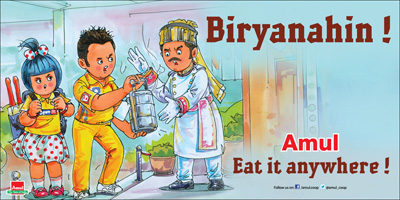
Dhoni denied home-cooked food by hotel ! – Sept’14
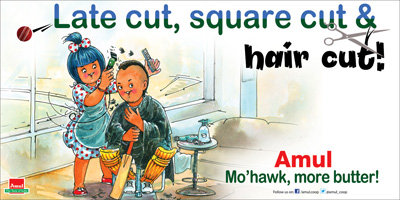
MS Dhoni’s new haircut – Sept.’13
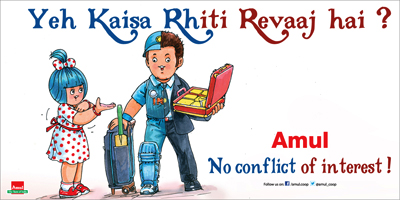
Controversy regarding Dhoni’s involvement in Rhiti sports – June’13
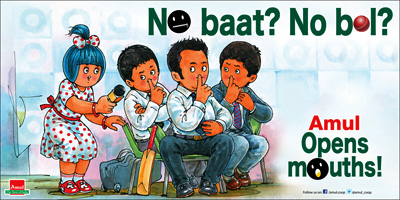
Dhoni maintains silence over spot fixing issues . – May’13
Controversy over Dhoni continuing as Captain – Dec’12
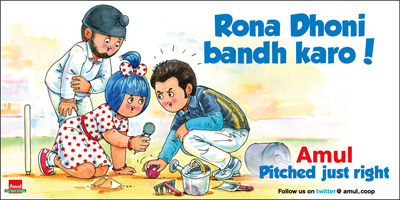
Indian captain asks curators to ‘doctor’ pitches – Dec’12
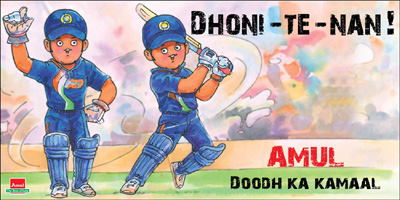
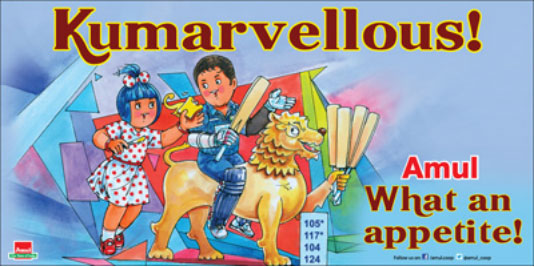
M.S.Dhoni scored a blistering 124 of 107 balls (9 fours, 3 sixes) in the second ODI against Australia. – Oct’09.
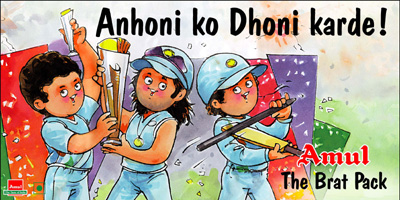
Team India celebrate after winning the inaugural ICC WORLD TWENTY 20, SOUTH AFRICA 2007 cricket World Cup in Johannesburg – September’ 07.
On Mahendra Singh Dhoni for his contribution to India’s good performance – February ’06
Cropped image of the last of the topicals from Amul in 2018
There are recaps and recaps and recaps. But perhaps the Amul ads which mirror the mood of the masses are the best to look back at the year that has been. Yes, we thought there would be one around the CAA/NRC protests that have impacted the country, but perhaps it was too sensitive to be tackled in an Amul ad. Though there is one around Jammu & Kashmir.
Do take a look at 19 of the Amul topicals this year. Enjoy
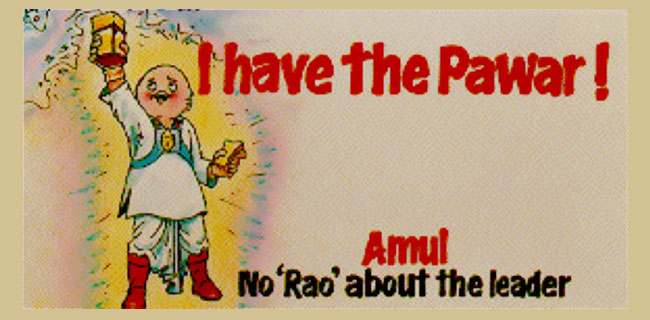
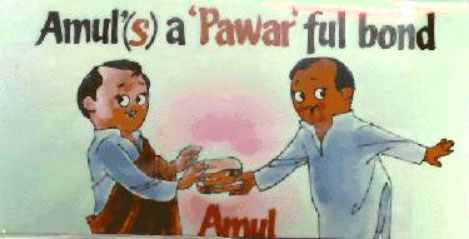
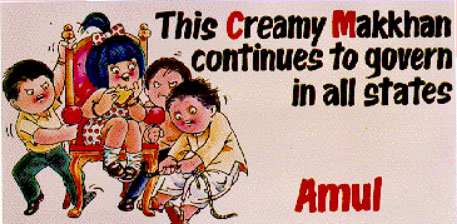
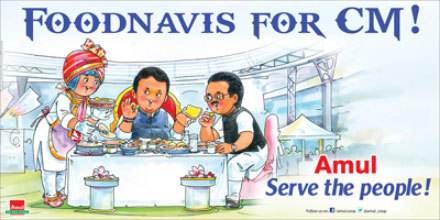
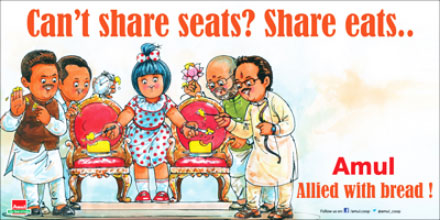
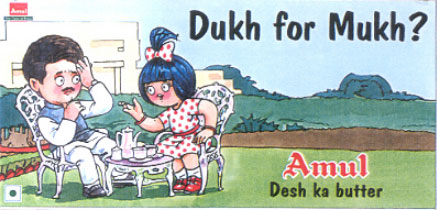
Once again we lean on the Amul topicals to tell the story – on Sharad Pawar, the race for the CM post and on the Shiv Sena. We were a little surprised though that there haven’t been, but guess doing a funny ‘un on the Sena is a serious matter…
This is when Sharad Pawar came back to the political arena in Maharashtra as Chief Minister (1986)
Return of Sharad Pawar as Chief Minister of Maharashtra in 1986
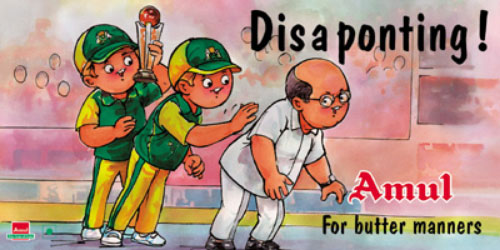
There was a furore when the Australian cricketers pushed the then BCCI President Sharad Pawar at ICC Champions Trophy prize distribution ceremony at in Mumbai in November 2006… the joke doing the rounds is that only Ricky Ponting & Co had the you-know-what to push Pawar!
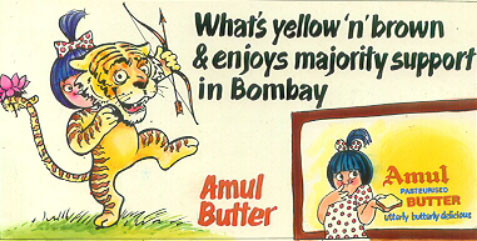
Amul reflects the Shiv Sena’s popularity in Mumbai. This was in 1989, when the city was still called Bombay.
Politicians fighting for the CM’s post… may not have been done for Maharashtra, but we all know what’s been happening over the last few days
Was a topical that appeared in October 2014
Remember there was a problem in Maharashtra in September 2014 too…
This was done when there was a change of CMs in Maharashtra in Jan 2003
The ratings for the India-Pakistan World Cup cricket match on June 16 are out. The hopelessly-one-sided game scored a whopping 18+ TVR (Urban All India). Ratings nearing 20 can only evoke nostalgia for those following the Indian TV market over the years. It’s in the first half of the decade of 2000s that one would see such numbers for daily shows, with Kyunkii… and Kahaani… leading the way for a while. Thereafter, the numbers progressively dropped, a trend that’s generally believed to be an outcome of the launch of more channels and the resultant fragmentation of content choices available.
The top Hindi GEC show moved from the 20-mark in early 2000s to the 10-mark late in that decade. In the first half of the decade starting 2010, the 5-6 level was aspiring enough. Today, even a 3-level is gold.
Movie ratings have also shown a downward trend, but nowhere close to soaps. The top movie could do 15+ rating about 15 years ago, the equivalent of which is a 7-8 rating today. That’s a 50-60% drop, vis-à-vis an 80%+ more drop when you compare the top Hindi GEC shows across the same two periods.
The popular belief has been that with the expansion of the measurement universe over the years, the true heterogeneity of the Indian market has a more and more significant impact on the TV ratings. That, combined with a multiplication in the number of channel options, would mean that fragmentation, and the resultant creation of a long tail, is inevitable.
The India-Pakistan match ratings challenge this notion head on. The message from the audience is clear: If there’s content that carries a certain level of appeal and viewer pull, India can be fairly homogenous after all. Yes, there are more options and more diversity in the universe today. But there’s always content that cuts through, because it enjoys that broad-based appeal. And hence, justifying sub-3 numbers as the best-case scenario is only a self-fulfilling prophecy, whereby content creators and broadcasters are justifying low ratings as a market behaviour, than questioning them as symptoms of a loss in the collective ability of the industry to make truly mass, pan-India shows.
One may argue that big-ticket sporting events have the ability that genres like drama, comedy and non-scripted content lack. That’s a fair argument too. But one is not expecting the top show to deliver 18-rating. Even the inert and one-sided India-South Africa match touched the 6-mark (averaged over more than seven hours, no less!). That’s surely a level a top Hindi GEC show should aspire to achieve. But today, even half of that is being celebrated as an outright success.
If these signs continue, we may soon be a television market where sports, news and movies become the staple, and drama the alternative. It has already started happening during events like the IPL, the elections and now the World Cup. It could be a matter of time when more routine days begin to exhibit this trend too.
If all the content creators can take a week’s break from their OTT pre-occupation and think about this, I’m sure they have the collective ability to come up with something worthy. The real question is: Do they have the will? Or has television already been reduced to a fuddy-duddy medium that’s not even cool to ideate about?
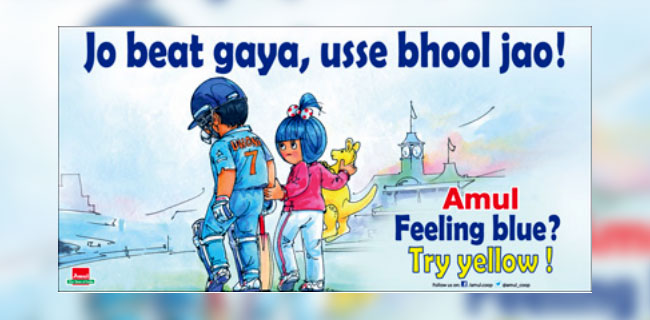
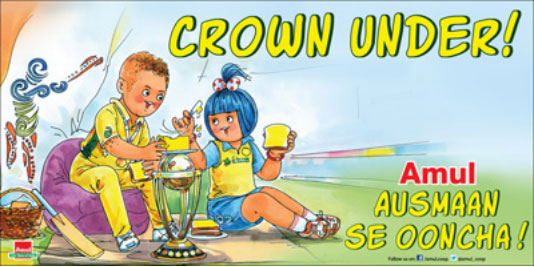
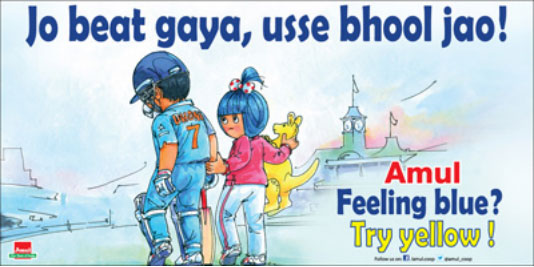
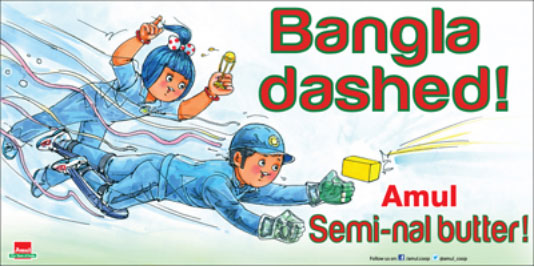
India didn’t go beyond the semi-finals in the 2015 edition of the World Cup. But even though we didn’t make it to the finals, it was a reasonably good showing. As the 2019 World Cup begins today (Thu, May 30), we bring you the story of the last World Cup via our fav Amul topical ads.
Fifth World Cup in OZ’s pouch.-March’15WC ’15. You win some! You lose some!India in the last four!Sangakkara breaks WC century record! – March’15India head their pool in WC 2015.- March’15First cricketer to hit a World cup double ton! – Feb’15Indian batsmen welcome return to form ! – Feb’’15Much awaited World Cup Indo-Pak game! – Feb’15
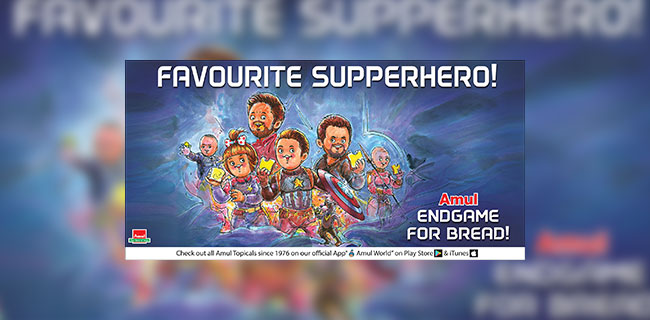
An Amul ad capturing the popularity of the latest Avengers release
By Shailesh Kapoor
Two weekends ago, Avengers: Endgame released in India as easily the most-anticipated Hollywood film ever. At a staggering 52 Cr+ business on the first day (net of GST), the film beat the record of the previous film in the franchise (Avengers: Infinity War) by a wide 60% margin. Not only that, it beat the biggest Hindi opener till date too, surpassing the opening-day collections of Thugs Of Hindostan, without having the benefit of a huge nationwide holiday like the Aamir Khan film.
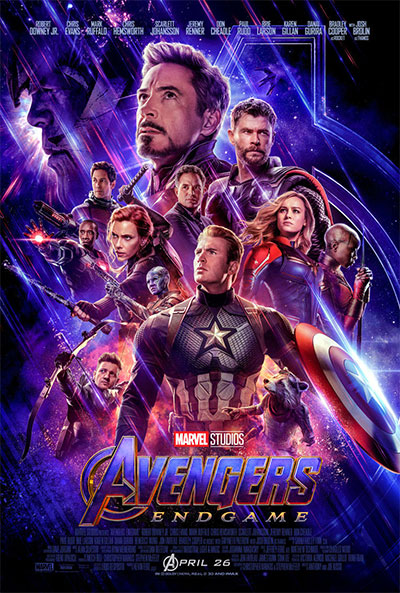
Avengers: Endgame is on course to do 375-400 Cr business in India, which will beat the lifetime box office record held by Avengers: Infinity War by about 150 Cr. Normally, such records are broken after a gap of a few years, because ticket rates go up and new multiplexes open up, giving films a wider number to achieve on the same demand. But that’s not the case in the Avengers example. The market scenario is largely similar to last year, barring a reduction in GST on movie tickets. A steep 150-Cr growth in just 12 months clearly highlights the growing equity and stature of brand Marvel in India.
If one was to do a list of the most powerful media brands in India, there’s very high chance that Marvel will top it. In a country where the language barrier itself limits the reach of International content, how the Marvel Cinematic Universe (MCU) has managed to penetrate itself, through not just metros or mini-metros but the smallest of towns, is a testimony of what genuine movie craze can be. The language accessibility helps, and the dubbed versions have contributed more than 40% of the box office of Avengers: Endgame. But even with that, the mainstream, mass status MCU has acquired in India, one film after the other, is an achievement to marvel at.
This genuine movie craze is about a deep and organic connect built with the characters in MCU. There are films like Thugs Of Hindostan, and the various Salman Khan films, where the lead star has massive appeal, and if you prop up the promotions leading up to the release, you build the requisite “hype” and the film opens well, and thereafter, the content takes over to decide how long its legs are.
But there’s a difference between “hype” and “craze”. MCU films, especially the bigger ones, are success stories based on craze, not hype. As was Bahubali 2. But almost every other film that’s big-ticket is a hype product. Hype doesn’t lead to genuine craze. It propels audience to visit the theatre, often because it’s the in-thing to do, and one doesn’t want to miss out on riding the hype wave. It’s an inorganic, marketing-driven way of getting a film to open well. More like a consumer push.
But when there’s genuine craze, the hype builds organically on its own. Avengers: Endgame was being marketed by crazy fans in digital media and the real, offline world. The much-written about late night and early morning shows on the opening day could have been a marketing ploy by another film, but in this case, it was a certification of the craze that existed. A consumer pull that’s so strong that the film belongs to its audience even before they have seen it.
We are in a push marketing era in general. Bombarded with messaging across online and traditional media, consumption of content and brands is often a function of one brand outshouting the other. In such a marketing climate, Avengers: Endgame is a rare exception that stands out. Can anything Indian, on TV or in films, match up to this level of craze anytime soon?
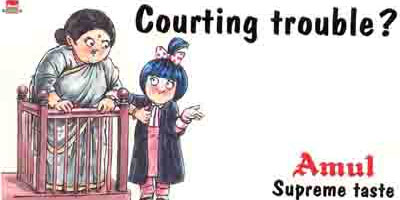
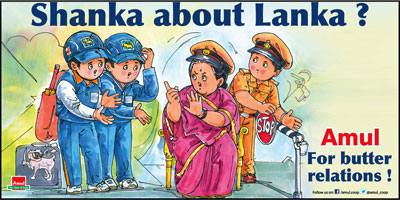
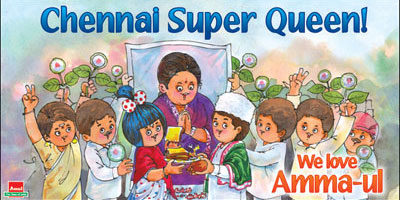
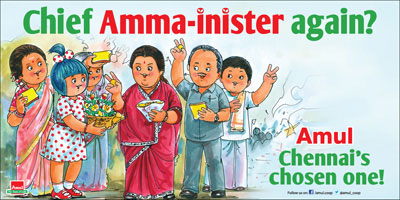
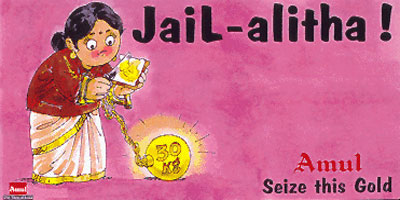
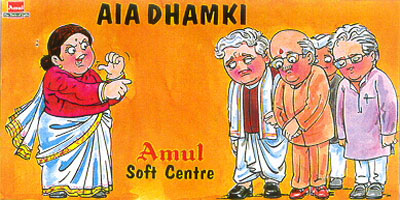
Not all of them are very positive, but like all Amul topical advertisements that reflect the prevailing mood or issues of the country (and the world), the late former Tamil Nadu Chief Minister J Jayalalitha featured at least 14 times to the Amul topical ads. As the nation and we pay homage to one of India’s most powerful and enigmatic political leaders, we reproduce these here, in random order:





















 Two weekends ago, Avengers: Endgame released in India as easily the most-anticipated Hollywood film ever. At a staggering 52 Cr+ business on the first day (net of GST), the film beat the record of the previous film in the franchise (Avengers: Infinity War) by a wide 60% margin. Not only that, it beat the biggest Hindi opener till date too, surpassing the opening-day collections of Thugs Of Hindostan, without having the benefit of a huge nationwide holiday like the Aamir Khan film.
 Avengers: Endgame is on course to do 375-400 Cr business in India, which will beat the lifetime box office record held by Avengers: Infinity War by about 150 Cr. Normally, such records are broken after a gap of a few years, because ticket rates go up and new multiplexes open up, giving films a wider number to achieve on the same demand. But that’s not the case in the Avengers example. The market scenario is largely similar to last year, barring a reduction in GST on movie tickets. A steep 150-Cr growth in just 12 months clearly highlights the growing equity and stature of brand Marvel in India.