Tag: Amitabh Kant

  • Bloomberg|Quint begins live streaming facility across its digital assets

    By A Correspondent


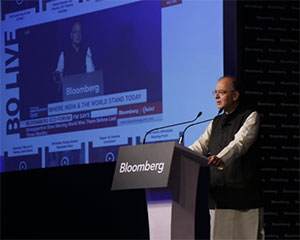
    Bloomberg|Quint announced the launch of its digital live streaming service in India, available on its website, the Bloomberg Terminal and Bloomberg Quint social platforms. At launch, Bloomberg|Quint live streamed the Bloomberg India Economic Forum, which featured Finance Minister Arun Jaitleyas keynote speaker.
     

    A panel discussion followed with Amitabh Kant, CEO of NITI Aayog (National Institution for Transforming India); Rashesh Shah, Chairman and CEO of Edelweiss Group; Shanti Ekambaram, President – Consumer Banking of Kotak Mahindra Ltd and R. Shankar Raman, Whole-time Director & Chief Financial Officer of Larsen & Toubro Ltd.


    The live streaming service is now available on www.bloombergquint.com and top social platforms, and pending regulatory approvals, will debut on leading cable and DTH platforms.


    Said Justin B. Smith, Bloomberg Media Group CEO: ”We set out to create India’s premier digitally-led multi-platform media company, so the launch of Bloomberg|Quint’s live streaming video content on our website is a step in achieving this,As global investors’ interest in India continues to grow, we look forward to extending our reach to bring high quality news programs on India to the global community, and international news to India’s increasingly digital audience.”


    Added Raghav Bahl, founder of Quintillion Media: ”Over the last few months, we have combined the best of Bloomberg and Quintillion Media to create what we think is the gold standard in news programming for India. Consumers can look forward to compelling video content on key India market developments and top business news and views, which they can watch in the office, at home or on the go on their mobile phones.”


  • Amitabh Kant, Chandrasekhar Radhakrishna, Harish Bhat, Nadia Chauhan & RS Sodhi to be felicitated at Goafest

    By A Correspondent


    The Advertising Club and the Advertising Agencies Association of India jointly announced the first ever Champions of Excellence who would be felicitated at the Goafest on April 7.  The awards “acknowledge and salute visionary advertisers who have taken the leap of faith and invested resources, ensuring that ‘Great ideas transform into Great advertising’”.


    The jury consisting of senior members of the Awards Governing Council of the Abbys at Goafest were unanimous in selecting Amitabh Kant, CEO, NITI Aayog,  Chandrasekhar Radhakrishna, Senior VP & Head of Communications and E- Commerce, South Asia Region – ‎Nestlé India Ltd, Harish Bhat, Chairman, Tata Global Beverages and Nadia Chauhan, JMD and Chief Marketing Officer, Parle Agro, RS Sodhi, Managing Director, GCMMF Ltd (Amul) as the first ever recipients of this new and prestigious industry award for their role in inspiring great advertising.


    Said Nakul Chopra, President AAAI: “For the first time we are honoring advertisers at the Goafest. This award is very special as it acknowledges the pivotal role played by these men and women we call “clients” but who have acquired a much larger status in the overall brand scenario. These are the select few individuals who have helped build and nurture brands, supporting their Agency partners every step of the way.


    Added Raj Nayak, President, The Advertising Club: “As an industry we need to salute these Brand Custodians who stake the reputation and money of their Brands on the creativity of their advertising agencies. They literally take that leap of faith every day. Having them at Goafest would be very inspirational for the audience.


    Said Ashish Bhasin, Chairman Goafest: “Wwe always celebrated advertising agencies, digital companies, production houses and media companies at the Goafest. Now with top advertisers being honored, the festival is more complete.


    And this is what Ramesh Narayan, Chairman, Awards Governing Council said: “This award really places the advertiser at the center of the communication effort, and rightfully so. The response for nominations from advertising agencies was quite good and I am confident this would go on to become one of the highlights of the Goafest in the years ahead. What is advertising without the advertiser?”


  • Big role for direct selling: FICCI-KPMG


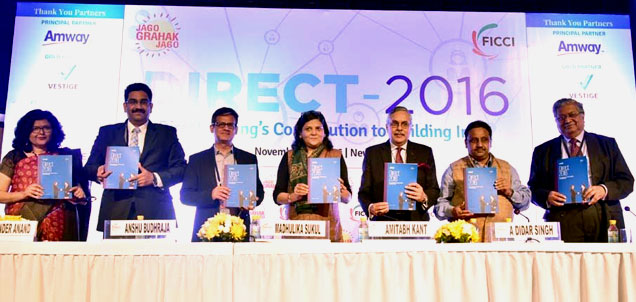
    The direct selling industry has recorded a high double digit growth of about 16 per cent over the past four to five years, notes a FICCI-KPMG report released on Wednesday. The market has grown to become a key channel for distribution of goods and services in the country, especially for health and wellness products, cosmetics, consumer durables, water purifiers and vacuum cleaners.


    Releasing the report titled ‘’The contribution of Direct Selling to Building India’’, Madhulika P Sukul, Additional Secretary, Ministry of Consumer Affairs said was delighted to see the contribution of the sector towards women empowerment and the figures of more than 60% women workforce associated with the sector has been astounding. Sukul urged the industry to join hands with MoCA and work towards the effective implementation of the guidelines for the sector that the ministry has come up with. The Additional Secretary promised that MoCA would continue to work towards the welfare of the consumers with active industry support and encouragement.


    Meanwhile, Amitabh Kant, Chief Executive Officer, Niti Aayog who was chief guest at the event said that direct selling will have to be given a great thrust as it empowers women, MSMEs and promotes manufacturing in India.  Kant applauded the efforts of the Ministry of Consumer Affairs to come up with the guidelines to govern the direct selling industry and is hopeful for its implementation by various states. He added that an effective and time bound implementation of the guidelines would act as a growth stimulator for the budding DS industry.


    He also urged the industry to embrace technology as the industry can deliver better and even faster once technology becomes its strength. He congratulated the direct selling industry for the efforts that they are putting in towards building the national economy and said that the sector is a major contributor towards the Indian growth story and promised to support the industry in addressing the hindrances and bottlenecks in due course of time. Also, he added that there is a huge opportunity that the industry raises in terms of pushing India towards the digital age.


    Later, Anshu Budhraja, GM, Amway India Enterprises presented the industry perspective and said the sector has immense potential in terms of the workforce that it trains and the job opportunities it generates. Budhraja said that the industry needs to work as per the gold standards, of which self-governance is a core concept. He congratulated MoCA for coming out with the much awaited guidelines for the sector and said that the guidelines would help in adding further value to the growth path of the industry. Anshu Budhraja added that “by 2025 the industry is expected to grow to ₹ 72000 crore from ₹ 7200 crore in 2016 providing 1.8 million self-employment opportunity.”


    Praveen Khandelwal, General Secretary, CAIT, emphasised on the need of having a retail policy that will encompass the cross sectorial approach and would help in adding avenues of growth for the sector. He said that there is a need to convert the guidelines proposed for the DS sector into laws towards which the Government is working relentlessly. Also, Khandelwal quoted that the passing of Consumer Protection Bill in the parliament would add more flavours to the development of the sector by reducing the mischief and [onzi operators. He also said that a board of internal trade that would look upon the matters associated with the internal trade and retail sector should be formulated with adequate representation from all the concerned stakeholders from the industry as well as the Government. Khandelwal said that retail, direct selling, e-commerce and SME’s are the four core pillars for the development of the national economy.


    FICCI Secretary General Dr A Didar Singh, Secretary General, FICCI said “Indian Direct Selling Industry is an important component of the Indian economy and acknowledging this, we at FICCI through our focused task force on direct selling is working dedicatedly towards the growth of this industry and seeking regulatory clarity for this new industry. FICCI is working closely with the Central and State Governments on the same and today’s conference is a step in that direction. I would like to congratulate MoCA for implementing the much awaited guidelines to govern the sector. I am certain that the effective enactment of the same would facilitate the further growth of the sector and act as a growth catalyst.


    Dr Singh said that Industry 4.0, or Industrie 4.0, is the current trend of automation and data exchange in manufacturing technologies. It includes cyber-physical systems, the Internet of things and cloud computing. Industry 4.0 creates what has been called a “smart factory” and urged the industry leaders to adhere to same. Dr. Singh also added that the bussing direct selling industry is exceptionally gender friendly and has been a crucial part of women empowerment.


    Direct selling, one of the oldest and traditional forms of selling, is a successful industry operating in over 100 countries, with a market size of USD180 billion. In India, the market was estimated at INR75 billion (2013‐14), and forms around 0.4 percent of the total retail sales in the country. To showcase the potential and highlight the opportunities and challenges faced by the DS industry, FICCI organizes its annual event on Direct Selling ‘DIRECT’ every year.


    The event witnessed intense panel discussions on the topics ‘’Way Forward Post Direct Selling Guidelines’’ and ‘’Direct Selling Contribution in Skilling, Women Entrepreneurship & As Food Distributors’’ which comprised of representation from wide array of concerned stakeholders including the Government and the industry.


    The panels suggested an effective implementation of the guidelines by the states in a time bound manner would yield wonders for the sector and would be an asset to it’s growth trajectory. Also, the sessions highlighted how the direct selling has evolved as a core pillar of the Skill India campaign and trains significant amount of workforce and makes them job ready. Also, the contribution of the DS sector towards the empowerment of women has been significant and the phenomenal number of 62% women workforce involved in the sector is remarkable.


    This year’s KPMG report takes a look at how the Direct Selling industry has positively contributed to several flagship schemes launched by the Government of India in the past 2 years, namely:

    :: Skill India: The Skill India scheme seeks to provide the institutional capacity to train a minimum of 400 million people by 2022. The Direct Selling industry annually trains over 5 million people in marketing and communication skills, personality development and leadership skills.

    :: Make in India: Many Direct Selling companies now make in India. Some rely on MSMEs for manufacturing their products, investing in & providing the right equipment and machines to the MSMEs for production. Driven by these initiatives, several MSMEs have now developed capabilities to cater to the needs of other MNCs and have commenced supplying to them, in the process promoting the Make in India initiative

    :: Women Empowerment: Due to the dominance of women centric products offered under Direct Selling, the industry provides self-employment opportunities to a large number of women. In 2015 alone it has provided self-employment to over 3 million female distributors. By providing income generation opportunities and trainings, Direct Selling promotes holistic development of women.

    :: Digital India: The Direct Selling industry is adopting measures in the digital sphere that not only benefit the Direct Selling entities, but also ensure ease of doing business for its distributors and improved experiences for its end consumers.  Mobile applications and websites have been launched by Direct Selling companies for its distributors to order products, monitor payments and access training modules.

    :: Startup India: Direct Selling entities, are now catering to global FMCG clients. Direct Selling has also promoted startups in avenues such as transportation and logistics, trainings, app development, etc.


  • Viacom18 joins hands with DIPP to launch launch MTV Kickstart

    By A Correspondent


    Viacom18 along with #StartUpIndia initiative of the government’s Department of Industrial Policy and Promotion (DIPP) have announced the launch of India’s largest outreach programme for young entrepreneurs. ‘MTV KICKSTART’ will be an annual programme that will equip the youth to start up. Supporting MTV, the iconic youth brand, in its unique initiative – MTV Kickstart, , #StartUpIndia will bridge the gap between ideas and investors and give young India a helping hand in making their entrepreneurial dreams come true.


    Said Amitabh Kant, Secretary, Department of Industrial Policy & Promotion (DIPP): “I am excited about our association with Viacom18’s MTV for instituting a platform called MTV Kickstart. The multi-platform programme will help us engage with the dynamic youth of India, help them start-up with ease and inspire a new generation to follow their dreams and become successful entrepreneurs.”


    Delivered through engaging and interactive content through television, web, mobile and social media, MTV KICKSTART will work towards educating the youth about the ecosystem of start-ups. The program will aim to educate through personal and informal interactions with start-up kings, investors, advisory and much more.


    Sudhanshu Vats

    Speaking about the initiative, Sudhanshu Vats, Group CEO, Viacom18 said, “Viacom18 has always been at the forefront of being the catalyst of change within the media and entertainment space in India. We are in the business of entertainment that enriches the lives of our audiences through meaningful content and by engaging with them across multiple platforms. We now wish to extend the catalyst role to the start-up space as well by being a part of the journey of young entrepreneurs who dream to create a better tomorrow for India. The government of India has done a commendable job at addressing the need of the hour by instituting initiatives such as #StartUpIndia to encourage young Indians to become entrepreneurs.”


    Explaining the concept of the initiative further, Ferzad Palia, Head – Youth and English Entertainment, Viacom18 said, “MTV Kickstart is our way of driving India’s growth story by helping its biggest asset – the youth – to write their own narratives for the Make In India initiative laid down by our government.


  • Jaisurya Das: Kappa, Meen Curry & the IAA Summit

    A glimpse from the streetfood festival hosted by Mathrubhumi group on Day 2 of the Summit


    By Jaisurya Das


    Shah Rukh Khan, Mammooty, Sachin Tendulkar, Sadguru Jaggi Vasudev and earthy crooner  Papon topped with pyrotechnics and Kappa – Meen Curry and you have glitz, glamour and intrigue like never before.


    Kerala – God’s Own Country – played host last week to over 700 Delegates from all over the country at the Silver Jubilee Summit of the International Advertising Association India Chapter. An eclectic mix of international speakers, top-notch professionals, academicians and students did the audience proud at every session.


    Srinivasan K Swamy, IAA India President, welcomed delegates while Faris Abouhamad, Global President and IAA chairman and Pradeep Guha, Summit Chairman & Area Director IAA Asia Pacific, gave their short and crisp Introductions to the Silver Jubilee Summit.


    Amitabh Kant; Secretary, Industrial Policy & Promotion , Government of India delivered a keynote address with almost a rehearsed élan. Kerala and tourism have always been synergistic, yet the transition from being known only for Kovalam (The ‘Done to Death’ beach near Thiruvanthapuram ) to a destination that has immense diversity, was a carefully planned strategy. “Brands are made by people,” said Kant.


    Now , we have to agree with that don’t we ?


    The sheer diverse plethora of eminent speakers (that includes the glam world) who spoke at the Summit rendered it Unique . Srinivasan Swamy and Pradeep Guha gushed about the immense response they got.


    While Cindy Gallop (Founder & Former Chair of BBH, USA and founder of MakeLoveNotPorn ) explained the need of a new world order, Paul McCarthy, author of Online Gravity, outlined how gravity giants attracted huge investments . Undoubtedly a reality that was seconded by Abhay Pandey, Managing Director, Sequoia Capital. Simon Kemp, Regional MD, ‘We Are Social’, Singapore, was emphatic about how social will disrupt all the fundamentals of the marketing mix. We would imagine it already has, Simon. We are still trying to find the method in the madness called social!


    That’s probably why Sanjiv Puri, President – FMCG, ITC Ltd, felt that building globally acceptable brands wasn’t easy. Understanding the equity of tradition is the essence, remarked Puri.
    A meaty day met its match when the Mathrubhumi group took over the evening and ferried the entire lot of delegates to the boat jetty at Marine Drive. Half-hour later, the boats approached what seemed like an enchanted island. It was Bolgatty, resplendent with exquisite lights and the resonance of the unmistakeable ‘Chhenda , the Traditional Drum.


    The overcast skies came alive with the startling pyrotechnics, much like the famed ‘ Trichur Pooram ‘ where neighbouring temples symbolically compete with each other using fireworks. This festival incidentally attracts visitors from across the globe.  More often than once it is the fireworks and the majestic elephants that has the audience spellbound, year after year.


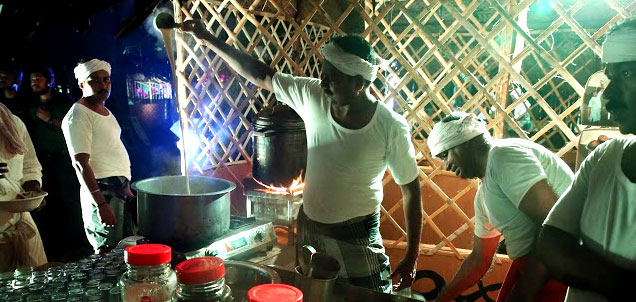
    Malayalam film icon Mammooty stole everyone’s heart with his inimitable baritone intonation and sheer presence. Street food in Kerala has its own charm, and the Bolgatty Island came alive with food stalls , picklesellers and the like. All that was served was homecooked or made right there , making it even more authentic and rich in flavour and tradition. Shreyams Kumar of Mathrubhumi played a perfect host and ensured every one was taken care of well.


    The third and final day of the Summit was a mixed bag of glamour, intrigue and emotion what with Sachin Tendulkar, Sadguru Jaggi Vasudev, Arnab Goswami etc sharing their experiences and views on ‘What’s Coming Next’.


    Tendulkar was his calm, composed self, in conversation with Prasoon Joshi. He talked about how a good advertisement could help him in addition to the brand and how he respected his father’s wishes and refused all tobacco and liquor ads. “Let the country talk about the past innings, you think about the next,” he said. ” Take that extra step, don’t give up” was his positive advise to all. The master blaster and Prasoon Joshi handed over the stage to the ever-charismatic spiritual leader Sadguru Jaggi Vasudev.


    His deep voice and incisive views enthralled the audience. “Why create the ghost, fight with it most of your life, and then win over it,” remarked Vasudev.  “Success is Joy. ” he said while advising the audience to be positive in life.


    Rahul Welde, Vice President-Media , Unilever Asia, Africa, Middle East, Turkey and Russia, was lucid in his talk focussed on the power of custom content. “Don’t be in the advertising business. Be in the content business,” he said with passion. Custom content is the future where speed is the new currency.


    One also saw the likes of 21-year-old Ritesh Agarwal, Founder & CEO, OYO Rooms, in conversation with Sam Balsara, Chairman, Madison. Sameer Nair, the man who brought Koun Banega Crorepati and Amitabh Bachhan to the small screen, and currently Group CEO, Balaji Telefilms, talked about how word of mouth is now word of social!


    The Chief Minister of Kerala Oommen Chandy was all praise for the IAA for having brought the Summit to Kerala. This, Chandy said, was the largest advertising conference to be held in the State.


    The Summit ended with Arnab Goswami talking about how his breed of journalism is disruptive. “You have to be like a pin prick for the society to change.” remarked the Newshour man.


    Kerala will indeed a special place in many hearts, be it the Kappa and Meen Curry or the diverse energy that came together for this Summit.


  • Why CEOs find social media a double-edged sword

    By Nikhil Menon


    Recently, the CEO of Southwest Airlines in theUShit on a novel idea to get customer feedback directly from the source. He put up a question on LinkedIn asking: ‘How can an airline make you, the flier, more productive?’ He got 137 answers from people; many of them detailed essays on what his airline could do to improve its customer experience.


    “That kind of real, authentic feedback is very hard to get when you’re the CEO,” said Hari Krishnan, CEO of LinkedInIndia, as he recounts this story. And there, in a nutshell, you have perhaps the single most important thing about social networks – they are a great leveller. They also blur the line between what was considered one’s professional and personal space.


    From Donald Trump’s tirades against Barack Obama to Michael Dell’s constant praise for Dell’s employees worldwide and Vijay Mallya’s defensive tweets hitting back at critics of his ailing airline, CEOs are stepping up to make themselves heard. And while these are early days inIndia, promoter-CEOs and heads of business families like Anand Mahindra, Mallya and Naveen Jindal are early movers. The list of appointed CEOs on social media like HCL boss Vineet Nayar and RBS India head Meera Sanyal, however, is still rather small.


    Prakash Iyer, CEO of Kimberly-Clark Lever, admits that Indian executives are one step behind foreign CEOs in cashing in on the social media phenomenon: “Whenever something new comes along, we tend to see the negatives more than the good things. But CEOs, no matter what generation or industry they’re from, have to realise that social media is here to stay. And if they’re not using it, they are missing something.”


    If that’s true for heads of private companies, it’s truer for senior bureaucrats inIndia, who are known more for shunning the spotlight than soliciting it. Considering that, Amitabh Kant is a maverick. The 55-year old CEO of the DMIC (Delhi Mumbai Infrastructure Corridor) has an active Facebook account with 1,500-odd friends, a Twitter account he occasionally updates and even a personal blog, amitabhkant.in. Mr Kant reads and writes extensively on his pet interests – travel, urbanisation, photography, technology and cuisine – and also likes connecting with people who share those interests: “Social media has been a powerful and enlightening influence on my work. I read and discuss articles on infrastructure and urbanisation around the world.”


    What’s more, he thinks that others of his ilk should follow suit. “What’s the point of resisting social media? It’s a highly transparent world,” he said, relaxing at hisDelhihome after his mandatory Sunday morning golf session. “And civil servants need to understand that, especially in the RTI (right to information) age. In fact, I feel that the government should ask every bureaucrat above the rank of joint secretary to compulsorily be on social mediums to become more accessible to the people.”


    As long as we’re in the realm of wishful thinking, Jessie Paul has a gem of her own. As the battle to decideIndia’s next president rages on, the managing director of Paul Writer jokingly urges people to consider her for the position. When asked about her ambition to occupy Rashtrapati Bhavan, she chuckled: “I am a woman, so I am in a political minority. Besides, I am a Tamilian, married to a Bengali, so I should be acceptable to both Jayalalithaa and Mamta di. Why not?”


    Her irrefutable logic is met with much hilarity and even endorsement by the people who follow her. But looking beyond her easy candour, what’s interesting is how the managing director of Paul Writer effortlessly wields social media across half-a-dozen platforms.


    For Ms Paul, who is a regular on content sharing and networking sites like Slideshare, Youtube, Facebook and Flickr, online networking sites are food and drink.


    The author of a book on frugal marketing and former Chief Marketing Officer (CMO) of Wipro was one of LinkedIn’s first users inIndiain the early 2000s. In fact, Mr Krishnan of LinkedInIndiasaid that Jessie Paul is a case study, in the way she created a network of CMOs in her earlier avatar to trade best practices. Ms Paul eventually quit Wipro and started Paul Writer, through which she gives companies the benefit of her experience on tackling the social media beast. “Social media is more than about making friends or killing time; there’s some serious knowledge sharing going on, and more importantly, there are huge business opportunities waiting to be explored there,” she said.


    Some may argue that given her marketing background, it should be no surprise that Paul is so comfortable with social media. And it’s also worth mentioning that Amitabh Kant hasn’t been a ‘typical’ insular bureaucrat either. It’s been easier for Paul and Kant to brand themselves because social media has always been core to their interests and professions.


    Mr Kant, a 1980 Kerala cadre IAS officer, was earlier Joint Tourism Secretary with the Ministry of Tourism. He was also part of the teams that came up with the ‘Incredible India’ and ‘God’s Own Country’ (Kerala) branding campaigns in his former avatar. Mr Kant has written a book, Branding India, and is now co-launching an online initiative to promote ‘ancient Indian cuisine’. “It’s important to have interests outside of work. And using social media doesn’t take really much time – not when you’ve got the whole world on your smartphone,” he said.


    Using social media for casual networking may be a stretch, given that many CEOs don’t even use it for work. Tanvi Bhatt, founder of Panache Studios, advises many senior managers on personal brand management, of which online reputation management is a part. She said that less than 5 per cent of the senior executives she meets have a social media account.


    “They’re not even on LinkedIn, which I find amazing. These days, clients and partners Google senior executives before meeting them face to face. And if they don’t find them online, they start having doubts about the person’s or organisation’s credibility,” she said.


    The reasons for not having an account vary. Some CEOs are conservative by nature. Others don’t understand social media – and prefer to be safe rather than sorry. And then there are those who feel ‘I don’t need to do this, I’m the CEO’. Ms Bhatt said: “A lot of them think in terms of ‘what’s in it for me?’, whereas they should be thinking ‘what can I share from my knowledge and experience with the world?”


    Rajiv Dingra’s company WATConsult was one of the early movers in the social media consulting space back in 2007. And while he’s done a lot of work with companies, getting CEOs to apply themselves to the socialscape has been frustrating. “Frankly, Anand Mahindra is the only top CEO doing a good job – he connects with interesting people on a personal level, addresses complaints and leverages customer testimonials. The rest are rather boring,” he says. But there are those, like 30-year old venture capitalist Kris Nair, who are the very opposite of boring.


    Mr Nair, who heads Opdrage Ventures and has invested $20 million in about 33 companies so far, is unapologetically himself. He speaks his mind on everything from entrepreneurship to poetry to physics, rails at ‘idiots’ with the odd four- or five-letter word thrown in for emphasis. Sitting at a posh coffee shop in Bandra, Mumbai, he pushes his iPhone across the table so I can get a look at all the social apps on it. After the first dozen or so, I lose count.


    “A lot of my deal sourcing happens through social media. So I have to speak to my target audience of entrepreneurs and members of startup communities in a language they understand. I can never be a ‘suit’ and keep saying the right things,” he said, adding the last line with obvious contempt. It hasn’t always been smooth sailing, however. Once Mr Nair wrote against the Anna Hazare-led agitation and that got him in trouble, with threats pouring in online and offline. Then there was the time one of the investors in his fund asked him to curb his freewheeling style on social media.


    “They were afraid I might leak confidential information. That didn’t make me stop, of course, but I have mellowed down for sure,” Mr Dingra conceded that at some level, he understands the concerns senior executives have. “Being on social network is like being in a press conference 24/7. People can be particularly myopic and unforgiving on the Internet. The media can take your words and twist them around. You need to have a thick skin and take the bad with the good.”


    Ms Paul added: “Unlike western consumers, some buyers inIndiaare still immature. People will target you online if the washing machine made by your company doesn’t work. You have to be pretty confident of your service, especially if you’re in a B2C model.”


    While the possibility of being targeted always looms large, Meera Sanyal, chairperson and country executive of Royal Bank of Scotland Group feels social media provides a quick and very interactive channel for customer feedback.


    “While some of this may not be complimentary- if one uses the opportunity to remedy problems swiftly, then the organisation can build really good relationships with clients,” she said, “Therefore, I do act swiftly upon complaints directed to me in my official capacity, but in general on social media, I interact as an individual, sharing personal thoughts and views.”


    Ms Sanyal stood as an independent candidate for elections fromSouth Mumbaiin

    2009. She may not have made it to Parliament as the people’s representative, but is tremendously popular among tweeple, or people on Twitter. She says she began using Twitter ‘on an experimental basis’ some years ago. While she was a little hesitant at first, with some coaching by youngsters at home and work, she’s now a total convert.


    “The 140-character ceiling forces crispness of thought and posts from across the world keep me updated on the latest news and candid views of some very interesting people,” she says. How To Draw The Line – The first and perhaps most important thing to know before creating an account is which medium works best for you. Do you want to make friends, build business contacts, be a thought leader, recruit people or just read the latest news from your industry?


    Jessie Paul offers an easy-to-remember guide. “Facebook and LinkedIn are about who you know, while Twitter, Pinterest, Slideshare and Google Plus are about what you know,” she said. If getting on to social media is the first step, the second and perhaps more important thing is to avoid making a fool of oneself. Mallikarjunadas CR, CEO of Starcom MediaVest Group, said he doesn’t know what to think when he sees his peers playing games or watching dodgy videos in the middle of the day.


    “You have to be aware that people will form opinions based on all this,” he said, quoting the example of a person from his network, a senior TV channel executive, who bad-mouths brands left and right. “As a professional, one has to be careful when criticising people, organisations or brands. You may need their business tomorrow.”


    Mr Kant doesn’t write on anything that may get him into trouble; preferring to remain with topics like his travels, macro-economic issues and the occasional book or malt that captures his imagination. And like any proud parent, he cannot resist the occasional FB pic of his daughter’s graduation fromOxford. But apart from his busy Facebook page, he is quite selective about the people he chooses to add to his networks. Mr Iyer of Kimberly Clark Lever says that it’s important to come out of the shadow of the company you represent and present your human voice.


    “Anand Mahindra isn’t out there to sell one more car. It’s about listening to others and learning from them.” Being offensive or shallow is a lesser crime compared to being boring, feels Ms Paul, who advises people to stay away from social media unless they have a content pipeline. While you may have a lot to share, it all depends on how you weave it in your conversations. The good news is top executives seem to be getting it. As social media catches on, few can resist its lure. As Paul said: “Every time I log in, it’s a party out there.”


    Source: The Economic Times

    Copyright © 2012, Bennett, Coleman & Co. Ltd. All Rights Reserved